

Review · ATHENS
Athens: Kerameikos E-Ticket & Audio Tour
Kerameikos is where ancient Athens met its dead. This quiet archaeological site traces the old cemetery and city gates, with tomb monuments, sacred roads, and museum pieces that make Athenian life and afterlife easier to understand. The offline audio tour lets you take it all in without joining a group.
I like the flexible site entry, since you may enter the archaeological grounds at any time on your chosen date. I also like that the $17.50 price includes both the site and museum, not just a phone-based commentary.
The catch is technical. You must download the app and audio before arriving, and one customer found the process too complicated to use. Bring a charged phone, headphones, and enough storage space, or the clever part of this ticket may sit unused.
Key points to know before visiting Kerameikos
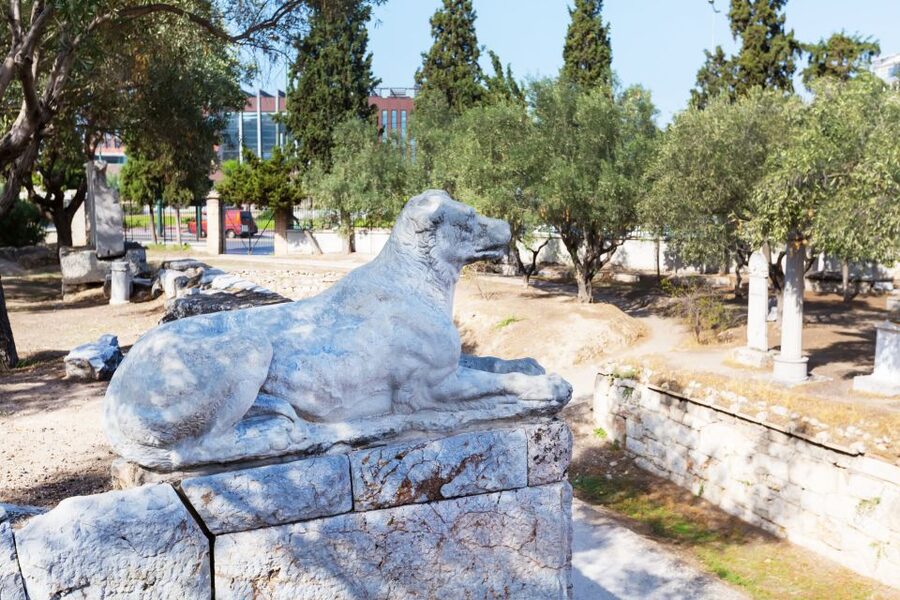
- The site and museum are included: Your ticket covers the open-air archaeological area and the Kerameikos Museum.
- The audio works offline: Download the content in advance, then listen without relying on a mobile signal.
- Entry to the site is flexible: The selected time applies to museum entry, while the archaeological grounds may be entered anytime that day.
- The tour explains ancient beliefs: Stories connect tombs, grave markers, gates, monuments, and Athenian ideas about death.
- You need your own equipment: The provider supplies no smartphone or headphones, and each device needs its own booking.
- The tour takes about one to two hours: You control the pace, with no live guide or fixed walking group.
Why Kerameikos deserves your time
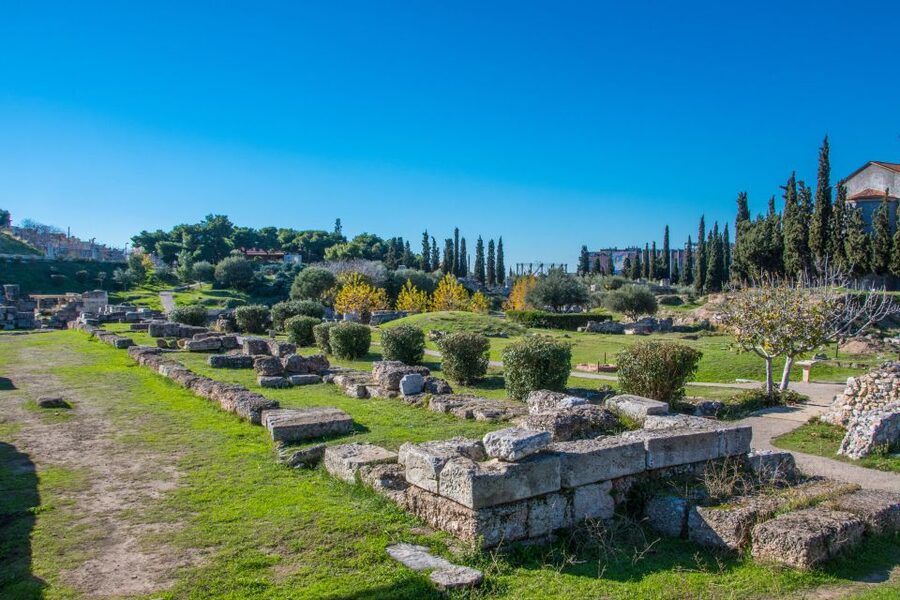
Many people visit Athens for the Acropolis, then hurry past the city’s older burial ground. That is a mistake if you want to understand how Athenians organized public life, travel, worship, and remembrance.
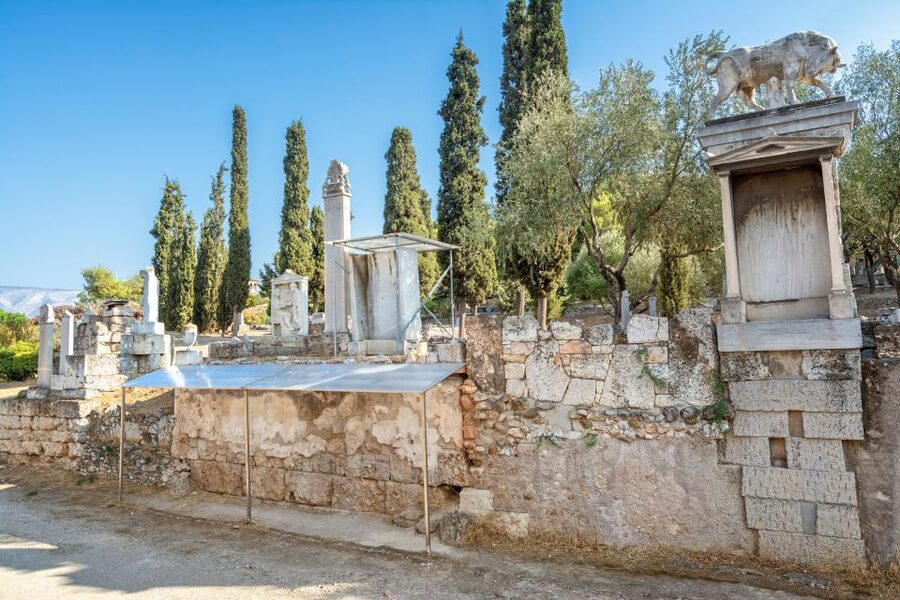
Kerameikos occupied an important area outside the ancient city walls. The site contains streets, gates, graves, monuments, and remains connected to the movement of people into and out of Athens. It is not a polished monument with one obvious viewpoint. Instead, you read the place through fragments and stone markers, which is exactly where the audio commentary helps.
I like the way this experience gives you time to pause. You are not trying to keep up with a guide or a large group. You can stop at a grave stele, listen to its story, look around, and then move on when you are ready.
The experience also suits visitors who want more than labels on display cases. The audio content explains beliefs about death and burial, along with the role of monuments and sacred areas. That context gives meaning to stones that might otherwise look like a scattered pile of ruins.
More Smartphone Audio Tours in Athens
- Athens: Ancient Agora E-Ticket and Audio Tour
★ 3.9 · 413 reviews - Athens: Roman Agora & Ancient Agora E-ticket & 2 Audio Tours
★ 4.1 · 107 reviews - Acropolis Self-Guided Smartphone Tour w/Audio & 3D(No entry)
★ 3.9 · 62 reviews
Entering through the Sacred Gate
The Sacred Gate is one of the key places to watch for. Gates were practical structures, but in ancient Athens they also carried religious meaning. This was a controlled passage through the city’s defenses and a route connected with sacred travel.
The audio tour points you toward the setting and helps explain why the gate matters. You can look at the surviving remains while listening to the wider story of movement, ritual, and the boundary between the city and the cemetery.
Do not expect a complete gateway rising above you. Archaeological sites often require patience and imagination, and Kerameikos is no different. The value comes from understanding how this entrance related to the surrounding roads, graves, and public spaces.
The Sacred Gate is especially useful early in your visit because it helps establish the layout. Once you understand that Kerameikos was not simply a collection of tombs, the rest of the site becomes easier to read.
The Pompeion and the public side of death
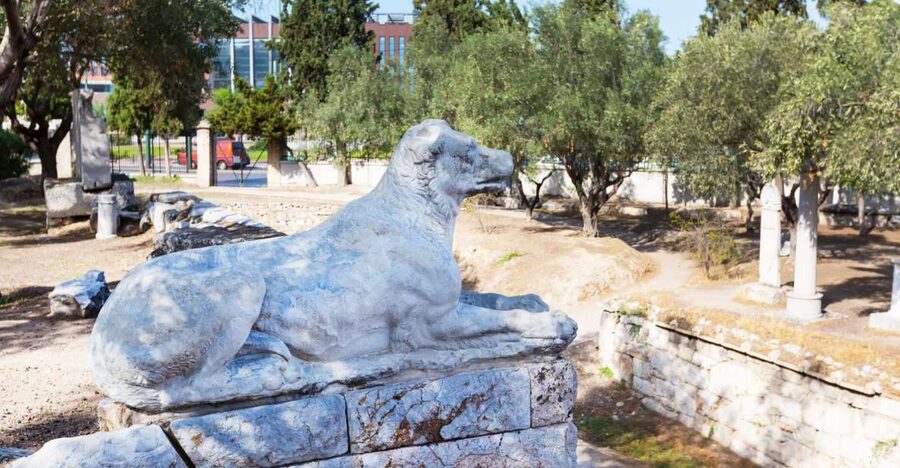
The Pompeion adds another layer to the visit. Its remains are linked with civic and religious activity, so Kerameikos was not only a place for private mourning. Public ceremonies and important processions also shaped this part of Athens.
This is one of the stronger reasons to use an audio guide. Without context, the Pompeion may appear to be another low ruin. With an explanation of its purpose, you can picture the site as part of a working city, not an isolated cemetery.
I would listen carefully here rather than rushing from one monument to the next. The stories about Athenian customs are likely to be more useful than a simple list of construction dates. The tour is designed to explain how people understood the boundary between public duty, religion, and personal loss.
The Pompeion also helps balance the visit. Kerameikos is famous for graves, but the remains show that ancient life included ceremony, travel, and civic organization alongside burial.
Grave Stele of Dexileos
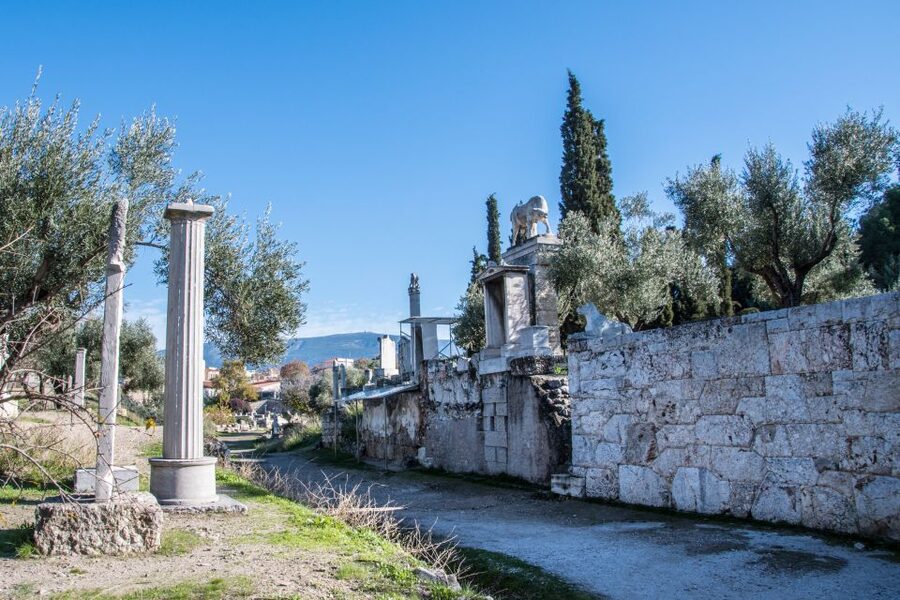
The Grave Stele of Dexileos is among the most memorable named monuments included in the tour. A grave stele is not just a marker telling you who lies nearby. Its design could present a person’s identity, status, and place in Athenian society.
The audio commentary gives you a way to look at the monument as a deliberate public message. Notice the difference between simply seeing a carved figure and asking what the image says about courage, family, honor, and memory.
This is also a good stop for visitors who enjoy ancient art but do not have specialist training. You do not need to know every sculptural term to appreciate the basic question: how did a family want this person to be remembered?
The tour’s storytelling approach is useful here because monuments can be emotionally distant when viewed without names or human detail. Dexileos gives the cemetery a personal focus.
More Smartphone Audio Tours in Greece
- Athens National Archaeological Museum E-Ticket with Audio Guide
★ 3.0 · 57 reviews - Acropolis Museum E-Ticket and Multilingual Audio Guide
★ 4.0 · 42 reviews - Athens: Roman Agora E-Ticket and Audio Guide
★ 3.9 · 41 reviews - Acropolis E-Ticket with Audio Guide & Athens City Audio Tour
★ 3.5 · 28 reviews
Tomb of the Lacedaemonians
The Tomb of the Lacedaemonians brings attention to people from outside Athens. Its presence helps remind you that Kerameikos was connected to wider Greek conflict and contact, not only local families.
The name refers to Lacedaemon, the region associated with Sparta. The monument therefore opens a window onto the political and military world surrounding Athens. The site is not merely about individual death. It also reflects the way communities recorded outsiders, enemies, and people caught up in larger struggles.
Listen for the explanation of why the tomb was made and how it fits into the cemetery. The available material is presented through stories and anecdotes, which should make this stop easier to grasp than a short museum caption.
I would not rush past it simply because it is less famous than the Acropolis or the Parthenon. Kerameikos is valuable precisely because its smaller monuments connect personal remembrance with the larger history of ancient Greece.
Tritopatreion and Athenian beliefs
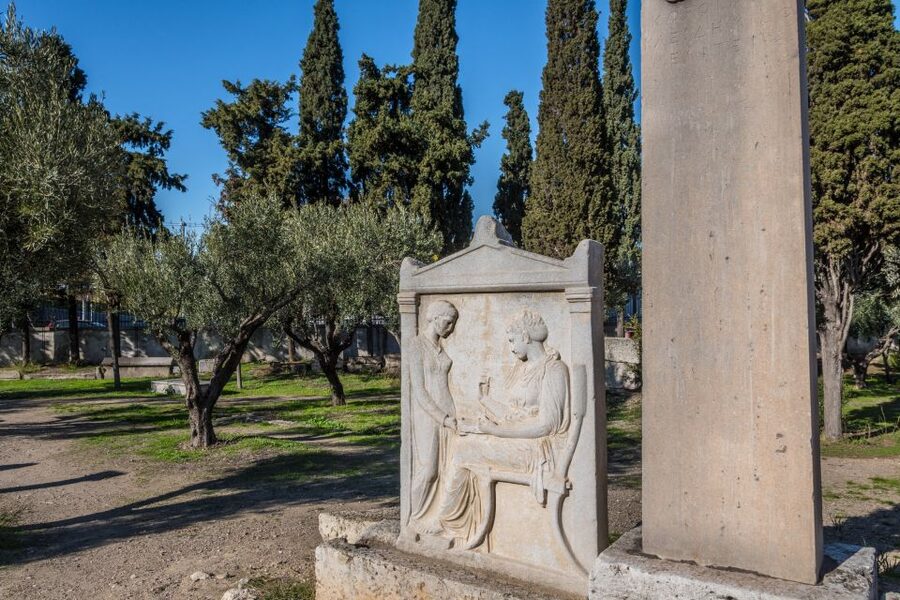
The Tritopatreion is another stop where the audio content can add real value. The name points toward religious beliefs and ancestral figures, giving you a chance to consider how the Athenians understood family lines, ritual duty, and the unseen world.
This part of the visit may be harder to interpret on your own. Religious terms can be unfamiliar, and the remains may not explain their purpose at a glance. The audio guide gives you a plain route into those ideas through background information and stories.
I appreciate that the tour is not limited to architecture. It tries to explain what the site meant to the people who used it. A cemetery is not only a place where bodies were placed. It was also a setting for memory, ritual, family identity, and beliefs about what came after death.
If you have children or teenagers with you, this may be one of the stops where a short explanation makes the biggest difference. The subject is serious, but it gives young visitors a way to connect ancient monuments with familiar questions about family and remembrance.
Grave markers and the human scale

The grave markers are where Kerameikos becomes most personal. Large monuments can impress you, but smaller markers often reveal more about ordinary hopes and family relationships.
Look for the details that the audio tour draws out. A marker may show a person, an object, an activity, or a relationship. Those choices tell you how families wanted the dead to be seen by people passing along the road.
This is an ideal section for taking your time. The tour lasts about one to two hours, but you do not have to treat that as a race. Pause the audio if you want to inspect a stone, take notes, or simply absorb the setting.
The open-air site can feel more demanding than a compact museum because your attention moves between ruins, markers, and the surrounding ground. Comfortable shoes and a charged phone will make the visit easier, though the supplied information does not specify the exact walking surface.
The Kerameikos Museum completes the visit
The ticket includes the Kerameikos Museum, and that is important. The outdoor remains show you where the monuments belonged, while the museum gives you a closer look at artifacts connected with the site.
Plan to use the museum time slot carefully. The selected time is binding for museum entry, but you may enter the archaeological site at any point on your chosen date. That arrangement gives you useful flexibility: you can visit the outdoor area before or after the museum, as long as you arrive for the museum at the booked time.
The museum is also the place where small objects can carry the story. An artifact seen behind glass may explain burial customs or daily life in a way that a weathered outdoor ruin cannot.
Because the audio tour is downloaded to your phone, you can use the content before or after the visit as well. You might listen to the relevant section outside, then return to the museum display with a better sense of what you are seeing. You can also revisit the information later, though the audio does not replace the value of looking closely at the objects in person.
How the audio tour works in practice
This is a self-guided phone tour, not a live walking tour. After booking, you receive an email with instructions and a link to download the app and audio content. The files require about 100 to 150 MB of storage.
That setup is convenient once it works. The content is available offline, so you do not need to depend on a strong connection inside the site. It also lets you pause, replay, or move at your own speed.
The setup is the weak point. One customer found the download process too complicated and did not use the audio. I would install the app before leaving your hotel, download the tour over Wi-Fi, open it once, and check that the content plays. Do not wait until the gate.
You need an Android phone running version 5.0 or later, or an iPhone that meets the stated compatibility requirements. The audio does not work with Windows Phones, iPhone 5 or 5C and older models, older iPod Touch devices, iPad 4 and older models, or the first iPad Mini.
The booking is per device, not per person. If two people want to listen separately on two phones, plan accordingly. You also supply your own headphones and smartphone.
The audio is offered in English, Greek, German, Italian, French, and Spanish. That is useful for couples or families who do not all want the same language, though each device still needs access to the tour.
Price, timing, and practical value
At $17.50 per person, the price is reasonable if you want both entry and interpretation. You are paying for access to the archaeological site, the museum, and the downloadable content. You are not paying for transport, food, a live guide, or equipment.
The strongest value comes from the combination. A basic admission ticket may get you through the gate, but the audio gives you a way to understand why the Sacred Gate, Pompeion, grave monuments, and Tritopatreion matter. If you already have a detailed guidebook or plan to hire a live guide, the extra cost may be less useful.
The one to two hour duration fits well into an Athens sightseeing day. You can treat Kerameikos as a focused visit rather than an all-day commitment. Because site entry is flexible on the chosen date, it can also fit around other plans more easily than a tour with a fixed group departure.
There is no transportation included, so you arrange your own way to the site. There is also no live guide or formal meeting point. The activity begins with your own entry and ends back at the site area, rather than taking you to another Athens attraction.
Free and reduced admission tickets must be obtained at the on-site ticket booth and do not receive skip-the-line privileges. If that applies to you, this phone package may not be the right ticket choice.
Kerameikos is wheelchair accessible, which makes the visit possible for visitors who need step-free access. Still, the supplied information does not describe every surface or route in detail, so you may want to confirm current conditions if you have specific mobility needs.
Large bags and oversize luggage are not allowed. Bring only what you need for the visit, especially your phone, headphones, and perhaps a small bottle of water if permitted on the premises.
Who should book this Kerameikos experience?
I would choose this ticket if you like exploring at your own pace and want historical explanation without joining a group. It works especially well for independent visitors, couples with different walking speeds, and anyone who prefers listening in a familiar language.
It is also a good match if you want to focus on ancient burial customs rather than only famous temples. Kerameikos offers a more personal look at Athens through graves, family memory, religion, and public ritual.
I would hesitate if you dislike phone-based tours or do not want to manage an app. The audio is optional in the sense that you can visit the site without using it, but the price is easier to justify when you actually download and listen.
Book only after checking your phone compatibility and storage. Since the activity is non-refundable, a few minutes of preparation matters.
Should you book the Kerameikos e-ticket and audio tour?
Book it if you want an affordable, flexible visit to a major Athenian archaeological site and appreciate a story-led explanation. The inclusion of the museum, offline audio, and flexible outdoor entry gives you good control over the day.
Skip it if you want a personal guide, transportation, or a fully managed experience. The main risk is not the ancient site. It is the app setup. Download everything in advance, bring headphones, and you should be ready for a thoughtful one to two hours among Athens’ gates, tombs, monuments, and memories.
FAQ
What does the Kerameikos ticket include?
It includes entry to the Kerameikos archaeological site and museum, plus an audio tour for an Android or iOS smartphone.
Is there a live guide?
No. This is a downloadable, self-guided audio tour. There is no live guide or group meeting point.
How long does the visit take?
The stated duration is one to two hours. You control the pace and may pause or replay the audio.
Can I enter the archaeological site at any time?
You may enter the archaeological site anytime on the selected date. The chosen time slot applies specifically to entry into the museum.
What languages are available for the audio tour?
The audio guide is available in English, Greek, German, Italian, French, and Spanish.
Do I need my own smartphone and headphones?
Yes. You must bring a compatible, charged Android or iOS smartphone and your own headphones.
Does the audio work offline?
Yes. You download the content to your phone for offline use. The tour requires about 100 to 150 MB of storage.
Is Kerameikos wheelchair accessible?
Yes, the site is listed as wheelchair accessible. Large bags and oversize luggage are not allowed.
New audio tours around Athens
- Temple of Olympian Zeus: Self-Guided Audio Tour on your Phone (without ticket)★ 4.0 · 8 reviews
- Ancient Agora of Athens: A Self-Guided Audio Tour★ 3.5 · 3 reviews
- Self Guided Tour In Athens With 100 Captivating Audio Stories★ 4.0 · 4 reviews
- Athens Ticket Pass: Acropolis & 6 Sites with 5 Audio Guides★ 3.5 · 84 reviews
- Audioguided tour of Athens’ alternative neighbourhood of Exarchia★ 5.0 · 2 reviews
- E-ticket for Kerameikos with Audio Tour on Your Phone★ 5.0 · 4 reviews
- Mycenae, Epidaurus & Nafplio Full-Day V.R audio guided Tour★ 4.5 · 248 reviews
- Athens Acropolis Museum Reserved Entry Ticket and Audio Tour★ 3.0 · 2 reviews
Athens Audio Tours, compared.

Athens: Cape Sounio & Poseidon Temple Trip with Audio Guide
Read our review →
From Athens: Delphi Full Day V.R. Audio Guided Tour
Read our review →
Athens: Acropolis Museum Ticket with optional Audio Guide
Read our review →
From Athens: Small-Group Delphi, Museum & Arachova Day Trip
Read our review →
Athens: Peloponnese Highlights Day Trip and V.R. Audio Guide
Read our review →
Athens: National Archaeological Museum Ticket w/ Opt. Audio
Read our review →
Acropolis & Parthenon Entrance Ticket w/optional SG Audio Tours
Read our review →Browse the lists this tour appears in