
Review · ROME
Rome: Castel Sant’Angelo Entry Ticket with Audio guide
Castel Sant’Angelo is one of Rome’s best surprises: an emperor’s tomb turned fortress, prison, papal refuge, and viewpoint. Inside, you move through nearly 2,000 years of changing power before climbing to the roof for one of the city’s finest views of St. Peter’s and the Tiber.
I like the reserved entry, especially at busy times, and the phone-based audio guide, which lets you stop and listen at your own pace. The main drawback is value: the official admission is €16, while this experience costs about $31, so you are paying a sizable premium for the booking service and audio option. The terrace also requires stairs, and this visit is not suitable for wheelchair users.
Key points to know before you book
- Hadrian’s original tomb: See the core of the monument built for Emperor Hadrian, later altered into a military stronghold.
- Papal passageways: Look for the castle’s links with the Vatican, including the protected routes used by popes during danger.
- Great rooftop views: Climb to the terrace for Rome, the Tiber, Ponte Sant’Angelo, and St. Peter’s.
- Audio at your own speed: The app works on your charged smartphone and offers English, Italian, French, Spanish, German, and Chinese.
- A useful time saver: Reserved admission can avoid the ticket queue, though the benefit changes with the season.
- Plan for stairs: The upper levels and terrace are reached on foot, with no suitability for wheelchair users.
Why Castel Sant’Angelo is worth your time

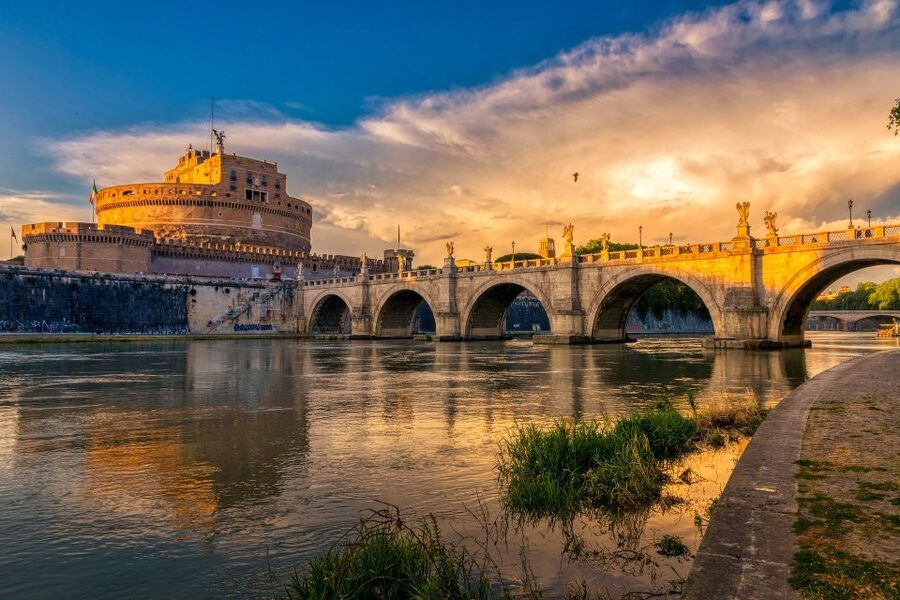
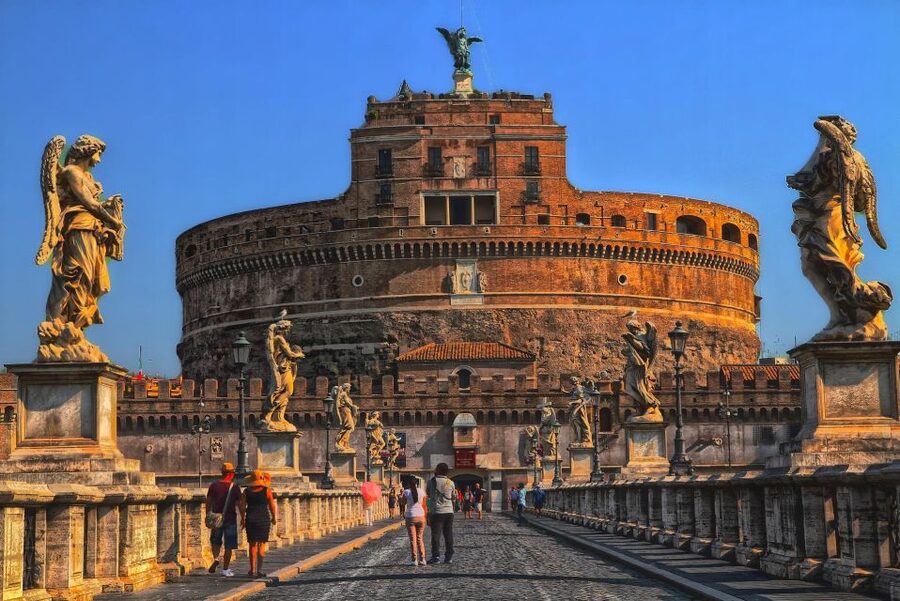
From the outside, Castel Sant’Angelo can look like a huge, stern cylinder beside the Tiber. Inside, it is far more interesting than its plain exterior suggests. The building began as the Mausoleum of Hadrian, also called Hadrian’s Mole, around the second century. It was designed as the burial place of Emperor Hadrian and members of his family.
Later rulers changed its purpose. The tomb became a fortress, then a prison, and eventually a papal stronghold connected to the Vatican. That mixture gives the visit its appeal. You are not looking at one clean period of Roman history. You are seeing layers of imperial Rome, medieval defense, Renaissance decoration, and church power in the same building.
I would allow two hours for a sensible visit, but you can easily stay longer if you read the displays, use the full audio guide, or pause at the views. Some people spend three or four hours here, especially if they take their time in the rooms and stop at the café.
The castle is close to Vatican City, so it pairs neatly with a Vatican visit or a walk across Ponte Sant’Angelo. You can also treat it as a stand-alone stop. Its location beside the river makes it easy to recognize, and the bridge outside gives you an excellent first view before you enter.
More audio tours around Rome:
- Rome: Colosseum & Forum with Audio Guide App -Optional Arena
★ 4.2 · 24,770 reviews - Rome: City Sightseeing Hop-on Hop-off Bus with Audioguide
★ 4.0 · 16,045 reviews - Rome: St. Peter’s Basilica & Dome Entry Ticket & Audio Tour
★ 4.2 · 7,537 reviews
Arriving with reserved entry
The practical benefit of this experience is simple: you receive a reserved ticket rather than buying basic admission at the castle. On busy mornings, the ticket line can be long enough to matter. Several visitors have saved around half an hour, while others arrived in quieter months and found little or no queue.
That means the ticket is most useful from spring through early autumn, on weekends, and during popular holiday periods. In February or at very early hours, the saving may be modest. You are paying for convenience, not a guaranteed dramatic shortcut every day.
Punctuality matters. The meeting point can change according to the option you book, and the ticket is sent to your WhatsApp or email, normally 24 hours before the visit. Check your messages before setting out, especially during the Jubilee period, when restoration work may alter access routes.
Bring your passport or identity card, even if you do not expect to need it. Large bags, luggage, baby strollers, weapons, and sharp objects are not allowed. Comfortable shoes are a must, since this is a large building with stairs and hard walking surfaces.
Hadrian’s tomb and the castle’s many lives
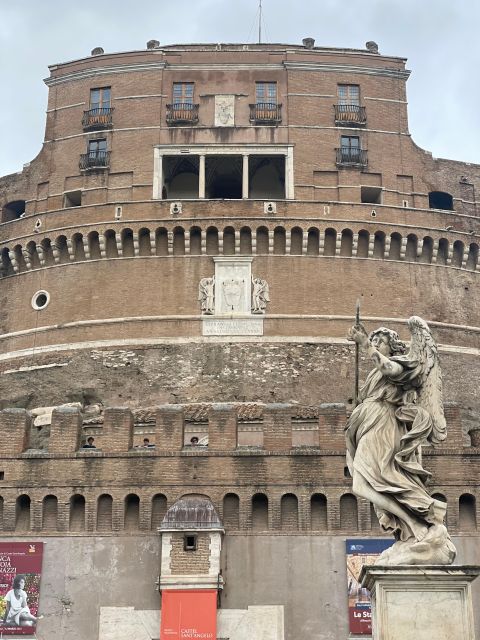
The first major idea to keep in mind is that this was not originally a castle. Hadrian’s mausoleum was a grand imperial tomb, built to project power even after death. The later fortress walls and military additions can make the original purpose easy to miss, so the audio guide is useful here.
The route gives you a sense of the building’s heavy structure. You move through broad ramps, defensive areas, interior rooms, and passages that show how the monument was adapted over time. The experience is less about one perfectly preserved room and more about seeing how Rome reused an important building for changing needs.
The papal connection adds another layer. Castel Sant’Angelo was tied to the Vatican by protected routes, allowing popes to reach safety when Rome was threatened. The Papal Corridor, commonly linked with the Passetto di Borgo, is one of the reasons the castle matters beyond its ancient Roman origin.
Access to specific corridors or routes can change, particularly during restoration or special operations. Do not assume every passage will be open on every date. Even when a particular route is closed, the castle’s rooms, defenses, historical displays, and upper levels provide plenty to see.
The interior can feel spare in places and richly decorated in others. You may find painted rooms, artwork, stonework, and signs explaining the building’s past. The contrast is part of the charm. This is not a single-purpose museum, but a working piece of Rome’s past that was repeatedly altered.
How the smartphone audio guide works
The optional audio guide is app-based, not a traditional headset collected at the entrance. That is convenient because you keep your own pace and do not need to return equipment. It also means you are responsible for bringing a charged phone and headphones.
Download and set up the guide before reaching Castel Sant’Angelo. Do not wait until you are standing at the entrance with a weak signal, a dead battery, or a group waiting behind you. Bring your own headphones, since they are not included.
The guide is available in English, Italian, French, Spanish, German, and Chinese. It is especially helpful if you want context while moving through the castle but do not want to join a fixed group. You can pause, replay sections, and spend more time in rooms that interest you.
A few practical points matter:
- Charge your phone fully before leaving.
- Download or open the app in advance.
- Bring headphones.
- Keep your ticket and audio access details easy to find.
- Use the written information too, since the phone guide is not the only source of explanation.
The audio option is not essential for everyone. The castle has information panels and signs, and some people prefer to wander without a phone in hand. If you enjoy following your own route, the ticket alone may be enough. If you want the building’s Roman and papal connections explained as you go, the audio upgrade makes more sense.
Same sights, a different narrator:
- Colosseum, Roman Forum & Palatine Hill with Audioguide App
★ 4.4 · 6,291 reviews - Vatican & Sistine Chapel Ticket with Optional Audio Guide
★ 4.1 · 5,405 reviews - Rome: Castel Sant’Angelo Entry Ticket & Digital Audioguide
★ 4.7 · 5,347 reviews - Rome: Castel Sant’Angelo Entry Ticket & Audio App
★ 4.3 · 4,952 reviews
The Archangel Michael and the castle’s name
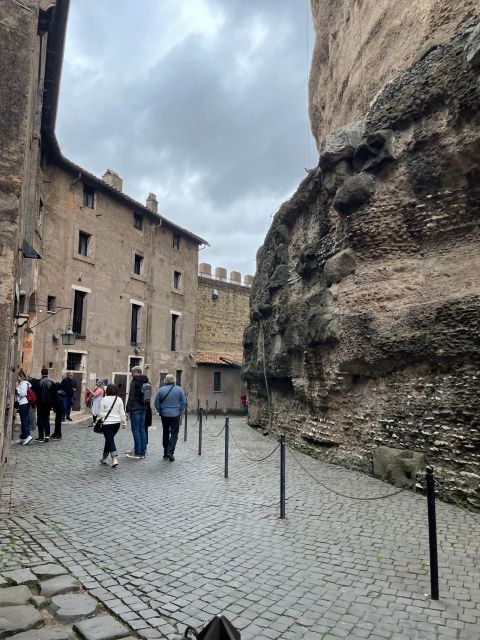
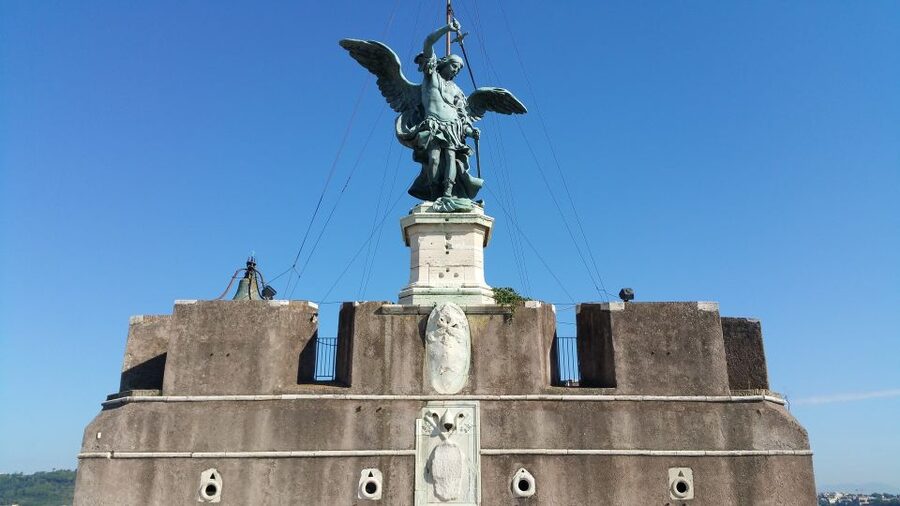
The castle’s present name comes from a story linked to the plague of 590. According to the legend, Archangel Michael appeared above the mausoleum and sheathed his sword, signaling that the plague had ended.
You will encounter this story as part of the castle’s identity, not as a claim that can be verified like an architectural date. It shows how the monument moved from imperial tomb to Christian symbol. The angel statue on the roof gives the story a strong visual finish, and it is one reason the building is so recognizable from the river.
This legend also helps explain why the castle feels tied to both ancient Rome and the papacy. Its importance was not frozen in the second century. Each age added a new meaning, and the audio guide can help you connect those changes without treating the building as just another old ruin.
The climb to the terrace
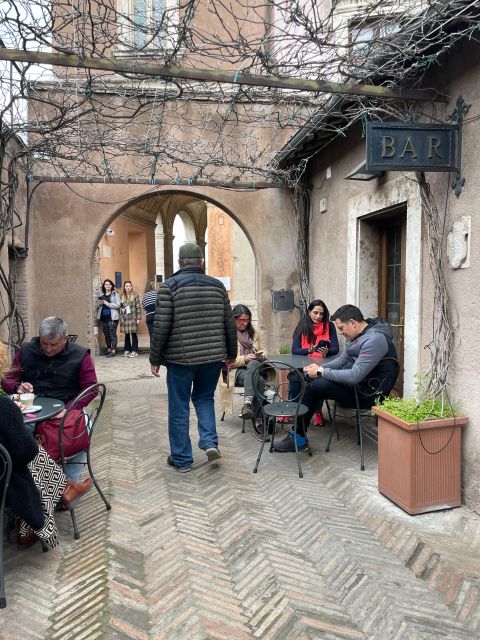
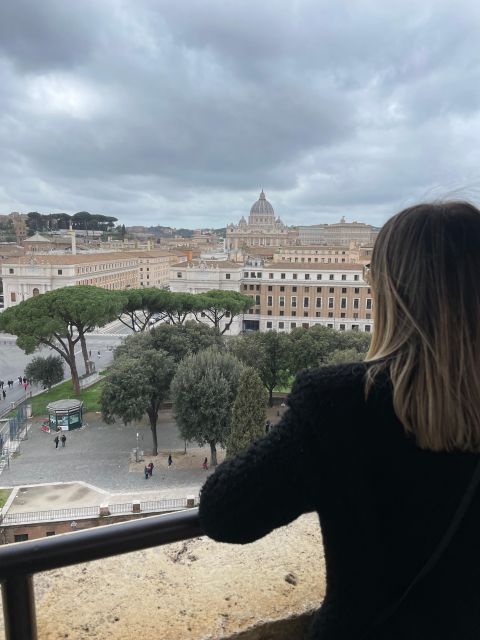
The best reward comes near the top. From the terrace, you get broad views over Rome and the River Tiber, with St. Peter’s and the Vatican area especially prominent. Ponte Sant’Angelo spreads out below, lined with its famous angel sculptures.
This is a good place to take photographs, but give yourself time to simply look. The view explains the castle’s location better than a map can. The Tiber, bridge, Vatican, and historic center fit together from above, while the thick fortress walls remind you why this site mattered militarily.
The climb is not suitable for every visitor. You will need to use stairs to reach the panoramic terrace, and the activity is specifically not recommended for people with mobility impairments or wheelchair users. A person who manages stairs comfortably should still wear good shoes and avoid rushing.
The terrace can be exposed to strong sun, and the café areas can be busy. Drinks and snacks are available, but prices can be high. One 330-milliliter bottle of cola was priced at €5, so I would not plan on the café as a budget refreshment stop. The view is the real reason to pause there.
When to visit and how long to stay
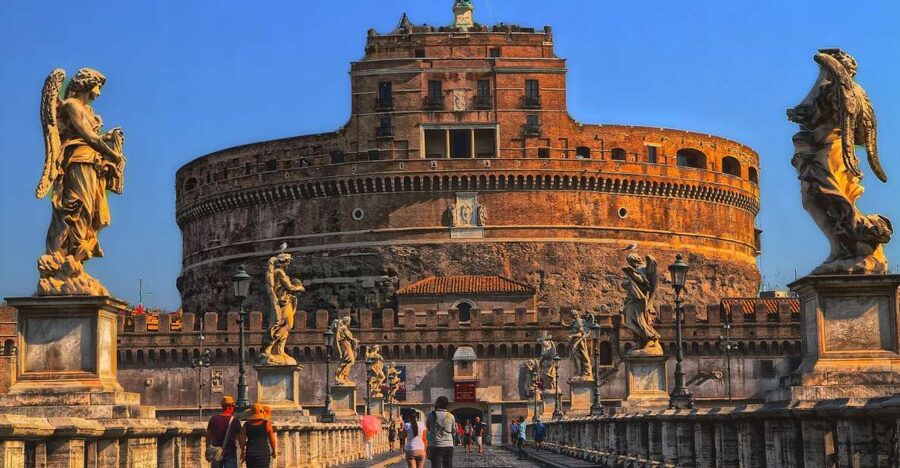
The advertised duration is two hours. That is enough for a focused visit with the main rooms, displays, audio stops, and terrace. If you read nearly everything, take photos, or stop for a drink, plan on three hours or more.
Early morning is a smart choice when your schedule allows it. The castle can be calmer then, and the terrace is more pleasant before the strongest heat. Late afternoon can also work well if you want softer light over the river, but check the entry time carefully. Last admission is at 6:30 PM.
The best choice depends on your priorities:
- Choose early morning for fewer people and cooler conditions.
- Choose midday if you need to fit the castle between other sights, but expect more heat and possible queues.
- Choose late afternoon for warmer light and a chance to watch the city change color, while allowing enough time before the last entry.
- Allow two hours minimum if you want the visit to feel unhurried.
- Allow three hours or more if you enjoy reading, photography, and café stops.
Restoration work connected with the Jubilee may change access routes or close parts of the monument. Check the latest messages sent with your booking before you go.
Is the $31 price fair?

The advertised price is about $31 per person. Basic official admission is €16, so this is not the cheapest way to enter Castel Sant’Angelo. The difference pays for reserved distribution, the optional audio guide, customer support, and third-party booking costs.
I would consider it fair when you value convenience, are visiting during a crowded period, or want an audio guide in your language. The ability to avoid a long ticket queue can matter on a hot day, and the app lets you explore without being tied to a guide’s pace.
I would think twice in the quiet season, especially if you are comfortable buying a standard ticket and reading the information inside. In that case, the premium may not feel worthwhile. The experience is not a bargain admission ticket. It is a convenience package built around a famous site.
There is also a live guide option in English or Spanish, with small-group availability. One particularly praised guide was Dimosthenis, whose archaeological background and added materials helped explain the ancient architecture. Guide assignments can vary, so book the live option only if you specifically prefer personal commentary over independent exploration.
Free cancellation is available up to 24 hours before the activity for a full refund. That gives you some protection if your Rome plans shift, but you still need to follow the stated cancellation deadline.
Who should book this experience?
I would recommend it to first-time visitors who want a clear introduction to Castel Sant’Angelo without spending time figuring out the ticket system. It also suits independent sightseers who like audio commentary but dislike being hurried through a group tour.
History fans will appreciate the change from mausoleum to fortress to papal refuge. Photographers will enjoy the terrace and Ponte Sant’Angelo views. Families with older children may find the fortress shape and angel legend easier to engage with than a more abstract museum, though strollers are not allowed.
I would not choose it for anyone who cannot manage stairs, needs wheelchair access, or is carrying large luggage. I would also skip the audio option if you prefer to keep your phone away and are happy using the signs inside.
Should you book Castel Sant’Angelo with the audio guide?
Book this experience if you want a straightforward visit, a reserved ticket, and explanations in your own language. The strongest reasons are the terrace views, the unusual mix of Roman and papal history, and the freedom to explore at your own speed.
If you are visiting in a quiet month and care mainly about saving money, basic admission may be the better choice. For most people visiting at a busy time, though, the time saved and the ready-to-use audio guide can justify the extra cost. Just arrive on time, prepare your phone, wear comfortable shoes, and leave room in your schedule for the rooftop view.
FAQ
How long does the Castel Sant’Angelo experience last?
The stated duration is two hours. You may spend longer if you listen to every audio section, read the displays, take photographs, or stop at the café.
Is the audio guide included?
The smartphone audio guide is included only when you select the audio guide option. It is available in English, Italian, French, Spanish, German, and Chinese.
Do I need to bring headphones?
Yes. Headphones are not included, and you should bring your own for the smartphone audio guide.
What languages are available for a live guide?
The live guide option is available in English or Spanish. Small-group availability is also offered.
Is Castel Sant’Angelo suitable for wheelchair users?
No. The activity is not suitable for wheelchair users or people with mobility impairments. You need to climb stairs to reach the panoramic terrace.
Can I cancel for a full refund?
Yes. You can cancel up to 24 hours before the activity for a full refund.
New audio tours around Rome
- Rome: St. Peter’s Basilica and Dome Entry + Audio Guide★ 4.5 · 13 reviews
- St. Peter’s Basilica: Hosted Entrance & Digital Audioguide★ 4.1 · 35 reviews
- Sorrento & Pompeii Day Trip from Rome Audio Guide Tour★ 4.2 · 50 reviews
- Rome:St. Peter’s Basilica Hosted Entry + Official Audioguide★ 3.4 · 10 reviews
- Colosseum, Roman Forum, Palatine Hill access and AudioGuide★ 4.7 · 12 reviews
- Rome+Jubilee Audioguide – TravelMate app for your smartphone★ 4.2 · 38 reviews
- Rome:Ostia Antica Skip-the-line Ticket & Audioguide★ 4.3 · 11 reviews
- Rome: St. Peter’s Basilica Entry Ticket and AudioGuide★ 4.4 · 57 reviews
Rome Audio Tours, compared.
Rome: Colosseum & Forum with Audio Guide App -Optional Arena
Read our review →
Rome: City Sightseeing Hop-on Hop-off Bus with Audioguide
Read our review →
Rome: St. Peter’s Basilica & Dome Entry Ticket & Audio Tour
Read our review →
Colosseum, Roman Forum & Palatine Hill with Audioguide App
Read our review →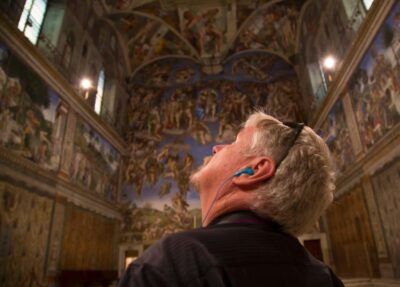
Vatican & Sistine Chapel Ticket with Optional Audio Guide
Read our review →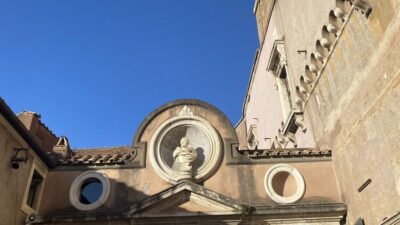
Rome: Castel Sant’Angelo Entry Ticket & Digital Audioguide
Read our review →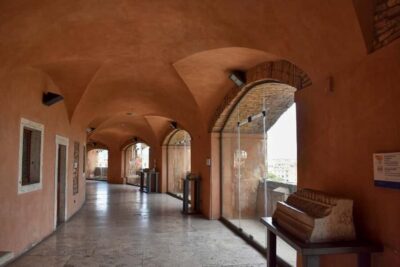
Rome: Castel Sant’Angelo Entry Ticket & Audio App
Read our review →
Rome: Hop-on Hop-off Sightseeing Bus Tour with Audioguide
Read our review →Browse the lists this tour appears in