

Review · ROME
Rome: Castel Sant’ Angelo Ticket and Audio Guide
Castel Sant’Angelo is one of Rome’s best places to see how ancient, Renaissance, and later military history share one building. The visit begins with Hadrian’s cylindrical mausoleum, then leads through fortress rooms, frescoes, terraces, and high viewpoints over the city and the Tiber.
I like the skip-the-line entry, especially when the ticket queue stretches out, and I like the freedom to set your own pace with the audio guide. The main drawback is that the booking details can be confusing: some tickets may carry a specific entry time, so do not assume the ticket is valid all day.
Key points to know before you go

- The line-saving ticket matters: You can show the barcode at the entrance instead of waiting to buy an admission ticket.
- The audio guide uses your own phone: Download the app and tour before arrival, with 100 to 150 MB of free space.
- Sala Paolina is a major highlight: Its well-maintained frescoes add a strong Renaissance chapter to the ancient monument.
- The upper views are excellent: Terraces, Rome rooftops, and the cafe or bar make time at the top worthwhile.
- The visit is self-paced: You are not tied to a live guide or a fixed group route.
- Accessibility is partial in practice: The site is listed as wheelchair accessible, but stairs make several areas difficult or impossible to reach.
Why Castel Sant’Angelo deserves time

Castel Sant’Angelo is not simply another old Roman building to tick off. Its original purpose was grand and solemn: Emperor Hadrian built the structure as a mausoleum. Over time, the tomb became a fortress and then a papal refuge, giving you several layers of Rome in one stop.
The building’s shape helps tell the story. The broad, round form comes from its ancient role as a monumental tomb. As you move through the castle, the sense of the original mausoleum gives way to defensive spaces, decorated rooms, and elevated terraces.
I recommend allowing enough time to pause rather than racing from room to room. The audio guide gives you background and anecdotes, but the building itself needs attention too. Look at the changing scale of the rooms, the thick defensive character, and the contrast between plain stone passages and decorated interiors.
The experience is listed as valid for one day, but that does not necessarily mean you can arrive at any hour. The most useful practical rule is simple: read the time shown on your actual ticket. One booking may appear flexible, while another may assign an entry slot. If the time looks wrong, contact the provider before going to the castle.
More audio tours around Rome:
- Rome: Colosseum & Forum with Audio Guide App -Optional Arena
★ 4.2 · 24,770 reviews - Rome: City Sightseeing Hop-on Hop-off Bus with Audioguide
★ 4.0 · 16,045 reviews - Rome: St. Peter’s Basilica & Dome Entry Ticket & Audio Tour
★ 4.2 · 7,537 reviews
Entering with the skip-the-line ticket
Your meeting point is the main entrance of Castel Sant’Angelo. The ticket is delivered by email, and you show the barcode at entry. This is the part of the booking that earns its keep.
The standard admission line can take a long time, with one visitor reporting an hour-long wait to buy a ticket. A prepaid skip-the-line ticket lets you bypass that purchase queue. You still need to arrive at the entrance and pass the site’s checks, but you avoid wasting a large part of your day standing outside.
I would have the ticket open before you reach the entrance. A screenshot may be useful if your connection is poor, though the supplied information specifically confirms an electronic ticket by email. Keep your phone charged and the brightness high enough for the barcode to scan.
There is an important wrinkle. Some users found the ticket easy to use and flexible, while another found that the printed entry slot controlled access despite the claim that it was valid throughout the day. Treat the entry time on the voucher as binding unless the provider confirms otherwise.
Following the audio guide through Hadrian’s mausoleum

This is a self-guided visit, not a tour led by a person. You download the app and audio content to your own Android or iOS phone before arrival, then listen through your headphones as you explore.
The guide is available in English, German, Italian, French, Spanish, and Chinese. It includes offline text, audio narration, and maps. That offline feature is useful inside a large stone building, where phone reception may not be reliable and you do not want to spend the visit chasing a signal.
The narration is designed to explain the monument’s ancient role and later changes. You can stop, replay sections, and move at your own speed. That flexibility is valuable here because the castle contains both obvious highlights and smaller spaces that you may want to examine without keeping pace with a group.
The audio guide has limits. Some people enjoy having a human guide explain details as they appear, and others stop using the app after a while. That is not a failure of the site. It is simply the tradeoff of a low-cost, independent format. You get control and privacy, but no guide is there to answer questions or point out a detail you missed.
Before leaving your accommodation, install the app and download the tour. You need 100 to 150 MB of free space. The audio tour does not work with Windows phones, iPhone 5 or 5C and older models, iPod Touch fifth generation or older, iPad fourth generation or older, or the first iPad Mini.
Sala Paolina and the decorated interiors
Sala Paolina is one of the strongest reasons to visit the castle rather than admire it only from outside. The room contains well-maintained frescoes, offering a sharp change from the austere structure of the old mausoleum.
Take time here. The frescoes provide a sense of the building’s later decorative and papal chapters, while the audio narration can help connect the room to the broader story of Castel Sant’Angelo. If you are interested in art, this room may hold your attention longer than the fortress corridors.
The audio guide gives you a useful framework, but you do not have to listen continuously. I often prefer to pause the narration in a decorated room and look carefully before moving on. You can then restart the commentary when you are ready.
The self-guided format works particularly well for this part of the visit. A group may move on just as you begin to notice something. Here, you can linger, move slowly, or skip a section without holding anyone up.
Same sights, a different narrator:
- Colosseum, Roman Forum & Palatine Hill with Audioguide App
★ 4.4 · 6,291 reviews - Vatican & Sistine Chapel Ticket with Optional Audio Guide
★ 4.1 · 5,405 reviews - Rome: Castel Sant’Angelo Entry Ticket & Digital Audioguide
★ 4.7 · 5,347 reviews - Rome: Castel Sant’Angelo Entry Ticket & Audio App
★ 4.3 · 4,952 reviews
Terraces, Rome views, and the cafe

The upper levels provide some of the visit’s most rewarding moments. From the terraces and viewpoints, you can look across Rome and gain a better sense of the city’s scale. The view is a useful counterpoint to the enclosed rooms below.
The panoramic outlook is also where the castle’s location becomes clear. You get a different perspective on Rome than you do from street level, and the elevated setting gives the visit a natural pause near the end.
There is a cafe or bar where you can sit and take in the view. It is a practical bonus, especially if you have spent a long time walking through the building. I would not plan the entire visit around the cafe, since availability and seating can vary, but it gives you a place to rest when you need one.
Bathrooms are also available. That sounds minor, but it matters during a longer sightseeing day, particularly if you are visiting with older family members or children.
How much time should you allow?
The ticket is valid for one day, and the self-guided format means you are not pushed through on a strict group schedule. The supplied details do not give a fixed visit length, so I would plan enough time to see the main rooms, listen to selected audio sections, enjoy Sala Paolina, and reach the viewpoints without rushing.
Your pace will depend on how fully you use the guide. If you listen to every section and stop for photographs, the visit will take longer. If you focus on the main rooms and views, you can move more quickly.
The site rewards a slower visit more than a hurried one. The building is the point, not just the admission stamp. Give yourself time to compare the ancient mausoleum structure with the later decorated and defensive spaces.
Is $31 a fair price?

At $31 per person, this is not the cheapest way to enter Castel Sant’Angelo. The value depends mainly on how much you care about avoiding the ticket queue and having narration in your language.
The price makes more sense on a busy day, when buying a ticket on site could cost you a long wait. It also suits you if you want a ready-made explanation without paying for a private or group guide.
The value is weaker if you qualify for free admission or a reduced ticket. Visitors under 18 can enter free, as can visitors with disabilities accompanied by someone from a health and social assistance service. EU citizens aged 18 to 25 may qualify for reduced admission. This supplier does not provide the free or reduced tickets, so check your eligibility before paying for the adult product.
That point is especially important for accessible visits. A companion or eligible visitor may be entitled to free entry, yet the booking price may still be charged if you purchase this product without checking first.
Accessibility and practical limits

The activity is marked wheelchair accessible, but you should treat that description with care. Several parts of the castle are reached by stairs, and some areas may not be accessible to a wheelchair user.
The site can still be worthwhile if you are visiting with someone who can walk a little, since the accessible areas, staff assistance, cafe, bathrooms, and views may make a visit possible. But do not assume you will reach every room or terrace.
Staff may be helpful, but the physical layout remains the limiting factor. If full access is essential, contact the provider or site before booking and explain your needs clearly.
Large bags and luggage are not allowed. Pets and smoking are also prohibited. Bring only what you need for the visit, plus your charged smartphone and headphones.
Who will like this visit most?
This ticket suits independent sightseers who want to avoid a long queue and dislike being tied to a group timetable. It is also a good match for anyone who enjoys stopping often, taking photographs, or skipping audio sections that are less interesting.
It works well for first-time visitors who want a basic explanation of the monument without arranging a live guide. The six-language audio option makes it useful for many international visitors.
Art lovers should make Sala Paolina a priority. Photographers and anyone who enjoys city views will likely value the terraces and upper viewpoints. The cafe and bathrooms also make the stop easier to fit into a long day.
I would think twice if you prefer lively interaction with a guide. The app can explain the main story, but it cannot respond to questions or adjust the route for your interests. I would also reconsider if your phone is old, your battery is unreliable, or you do not want to use headphones.
Booking advice for a smoother visit
Download the app and audio tour before you leave for Castel Sant’Angelo. This avoids using mobile data at the entrance and lets you check that your phone is compatible.
Charge your phone fully, clear 100 to 150 MB of storage, and bring headphones. Do not count on borrowing equipment, since neither the smartphone nor headphones are included.
Check the ticket carefully for its date and entry time. The safest approach is to arrive for the time printed on the voucher, even if the booking page suggests all-day validity. If there is a mismatch, contact the provider before the visit rather than trying to solve it at the gate.
Finally, do not buy the adult ticket automatically for someone who may qualify for free or reduced admission. The supplier does not issue those discounted tickets, so this is something you need to verify before booking.
Should you book Castel Sant’Angelo with the audio guide?
I would book it if you want fast entry, flexible pacing, and a useful introduction to one of Rome’s most layered monuments. The skip-the-line access is the clearest benefit, and the frescoes, terraces, cafe, and city views give the visit plenty of substance beyond the audio commentary.
I would choose a live guide instead if personal explanation and questions matter more to you than independence. I would also avoid this particular adult ticket for anyone eligible for free or reduced admission until the pricing is confirmed.
For most independent visitors, $31 is reasonable on a busy day, especially when the alternative is losing an hour in a ticket queue. Just prepare the app in advance, bring headphones, and treat the ticket time as important.
FAQ
Where does the audio tour start and end?
The self-guided audio tour is designed to start and end at the main entrance of Castel Sant’Angelo.
Is a live guide included?
No. This is a self-guided audio tour on your smartphone.
What languages are available?
The audio guide is available in English, German, Italian, French, Spanish, and Chinese.
Do I need my own smartphone?
Yes. You need an Android phone running version 5.0 or later, or a compatible iPhone or iOS device.
Do I need headphones?
Yes. Headphones are listed as something you must bring, and they are not included.
How much storage does the audio tour require?
You need approximately 100 to 150 MB of free space to download the tour.
Is the ticket valid all day?
The activity is valid for one day, but you should check the entry time shown on your ticket. Some tickets may have a specific time slot, so do not assume all-day entry.
Is Castel Sant’Angelo wheelchair accessible?
The activity is listed as wheelchair accessible, but stairs make several areas inaccessible. Visitors who use wheelchairs may not be able to reach every part of the castle.
Can children enter free?
Participants under 18 are eligible for free admission, but free and reduced tickets are not provided by this supplier.
Can I bring luggage or a pet?
No. Pets, smoking, luggage, and large bags are not allowed.
New audio tours around Rome
- Rome: St. Peter’s Basilica and Dome Entry + Audio Guide★ 4.5 · 13 reviews
- St. Peter’s Basilica: Hosted Entrance & Digital Audioguide★ 4.1 · 35 reviews
- Sorrento & Pompeii Day Trip from Rome Audio Guide Tour★ 4.2 · 50 reviews
- Rome:St. Peter’s Basilica Hosted Entry + Official Audioguide★ 3.4 · 10 reviews
- Rome:Ostia Antica Skip-the-line Ticket & Audioguide★ 4.3 · 11 reviews
- Colosseum, Roman Forum, Palatine Hill access and AudioGuide★ 4.7 · 12 reviews
- Rome+Jubilee Audioguide – TravelMate app for your smartphone★ 4.2 · 38 reviews
- Rome: Vatican Museums & Sistine Chapel Entry with Audio App★ 4.3 · 240 reviews
Rome Audio Tours, compared.
Rome: Colosseum & Forum with Audio Guide App -Optional Arena
Read our review →
Rome: City Sightseeing Hop-on Hop-off Bus with Audioguide
Read our review →
Rome: St. Peter’s Basilica & Dome Entry Ticket & Audio Tour
Read our review →
Colosseum, Roman Forum & Palatine Hill with Audioguide App
Read our review →
Vatican & Sistine Chapel Ticket with Optional Audio Guide
Read our review →
Rome: Castel Sant’Angelo Entry Ticket & Digital Audioguide
Read our review →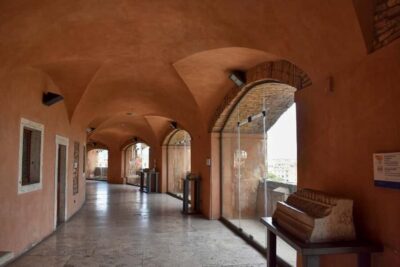
Rome: Castel Sant’Angelo Entry Ticket & Audio App
Read our review →
Rome: Hop-on Hop-off Sightseeing Bus Tour with Audioguide
Read our review →Browse the lists this tour appears in