

Review · GREECE
Athens: National Archaeological Museum Ticket & Audio Guide
The Mask of Agamemnon, gleaming Mycenaean gold, and the great bronze statue of Zeus or Poseidon are only the opening act at Athens’ National Archaeological Museum. This ticket and phone-based audio tour gives you a clear route through thousands of years of Greek art without tying you to a group.
I like the fast, simple ticket entry and the audio guide’s focus on major works rather than every case in the building. I also like that you keep your own pace, pausing when a statue catches your eye or skipping a display that does not speak to you. The tradeoff is that the guide covers highlights, not every room, and some people find its directions a little confusing.
Key points to know
- The Mask of Agamemnon and Mycenaean gold provide a memorable start for anyone interested in Homeric Greece.
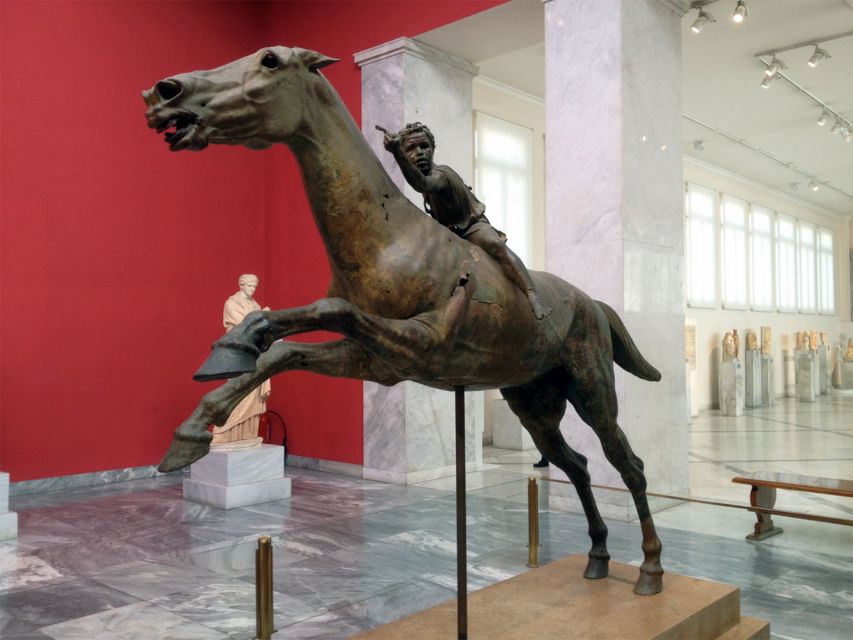
- The bronze gallery includes some of the museum’s most powerful works, including the Zeus or Poseidon statue and the horse rider.
- The downloadable audio tour works offline, so you can listen without relying on a strong connection inside the museum.
- You choose the pace and length, from a brisk 45-minute highlights visit to four hours of careful viewing.
- The audio guide is available in six languages: English, French, German, Greek, Italian, and Spanish.
- A café in an inner courtyard offers a useful break after the galleries.
Why this museum deserves a place in your Athens plans

Athens has famous ancient sites outdoors, but the National Archaeological Museum lets you see the objects that make those sites meaningful. Here, you are not looking at a single temple or hillside. You are following Greek art through many eras, from early metalwork and Mycenaean burial treasures to Classical sculpture, Roman portraits, pottery, tools, and jewelry.
I find the museum especially useful early in an Athens visit. After seeing the Acropolis or the Ancient Agora, the displays give you a better sense of how people made objects, worshiped gods, buried their dead, and represented the human body. The museum also helps connect mainland Greece with works found in other parts of the country.
The collection can feel large even if you are not a specialist. A first-time visit is much easier if you accept that you will not see everything. The audio route is designed to cut through the sheer number of objects and bring you to the pieces with the strongest stories.
More History Audio Tours in Greece
- Delphi: Archaeological Site & Museum Ticket with Audio Tours
★ 4.3 · 721 reviews - Athens: National Archaeological Museum Ticket w/ Opt. Audio
★ 4.4 · 713 reviews - Athens: Ancient Agora E-Ticket and Audio Tour
★ 3.9 · 413 reviews
Getting in with the pre-booked ticket
Your regular admission ticket is sent by email, along with instructions for downloading the audio tour. At the museum, you use the ticket according to the instructions provided for your chosen option. Buying ahead can be useful when the ticket counter has a long line.
Do not confuse a ticket queue with the security queue. A pre-booked ticket may get you past the ticket booth, but you still need to follow the museum’s security procedure. One practical tip is to arrive with a small bag and allow time for the entrance check, especially during busy periods.
The ticket supplied with this experience is a regular ticket for all ages. If you qualify for free or reduced-price admission, this product is not the best choice. Go directly to the museum ticket booth instead, since the online option does not provide that concession.
Your ticket does not include transportation, food, a live guide, a phone, or headphones. You need to arrive with a charged Android or iOS phone and headphones. The audio content includes text, narration, and maps that can be used offline.
Starting with Mycenaean gold and the Mask of Agamemnon
The Mycenaean displays are likely to be your first major stopping point if you follow the highlights route. This is the world of large gold objects, burial goods, weapons, and metalwork from the Bronze Age. The workmanship is striking, but the objects also raise practical questions about status, ceremony, and power.
The Mask of Agamemnon is the famous draw. Its name links it to the legendary king from the Trojan War, although the museum presents it as an archaeological object from the Mycenaean period. The audio narration helps turn a familiar name into a story about excavation, ancient burial customs, and the way modern imagination has shaped our picture of Homeric Greece.
I recommend slowing down here rather than rushing toward the better-known statues. The gold can look almost theatrical, but the surrounding objects show a wider picture of the society that produced it. You might also find the displays useful if you have already visited Mycenae, since they put smaller and more portable objects beside the remains of the citadel.
Following Greek art through changing eras

The museum’s rooms generally guide you through a long historical sequence, though the route can feel maze-like in places. The chronological arrangement is helpful because you can watch artistic ideas change over time, but the building is large enough that you may need to check the map and signs more than once.
The audio tour presents selected objects rather than giving equal time to every gallery. That is its strength when you have limited time. You get a manageable route and explanations that are easier to absorb than trying to read every label in every room.
It is also the source of one limitation. If you expect an explanation for each display, you will be disappointed. The route skips some rooms, and you may find yourself returning to galleries after the narration ends. I see that as a fair trade for a shorter visit, but it matters when you are comparing this option with a live guide or a longer museum visit.
Written labels appear in Greek and English, and signs point toward important works. Still, I would download the map and audio content before entering. That gives you a backup if you lose the route or need to find a particular room again.
More Museum Audio Tours in Greece
- Athens: Acropolis Museum Ticket with optional Audio Guide
★ 4.4 · 2,652 reviews - From Athens: Small-Group Delphi, Museum & Arachova Day Trip
★ 4.8 · 2,476 reviews - Parthenon & Acropolis Museum with Audio or Live Tour Option
★ 4.1 · 2,446 reviews - Athens: Acropolis Museum Ticket with Audio Guide
★ 4.1 · 835 reviews
The bronze statues that reward a slower look
The bronze gallery is one of the museum’s strongest sections. Bronze statues from antiquity are especially valuable because so many ancient works in museums are made of marble or survive only in fragments. These figures retain a sense of movement and presence that can be easy to miss in a quick walk.
The statue identified as Zeus or Poseidon is a major highlight. The open pose leaves you wondering what the figure once held, and that uncertainty is part of the work’s appeal. The audio guide gives you the historical setting and the competing identification, allowing you to look closely rather than treating the statue as a simple picture of a god.
The horse rider is another memorable stop. The combination of rider and animal gives the gallery a different energy from the calmer marble figures. I would not rush through this room simply because the audio route has moved on. Pause the narration if you want to study the modeling, balance, and details.
The guide’s stories work best when you use them as a prompt, not as a command to keep walking. Listen, look, and then spend a few minutes on the object before moving on.
Marble sculpture, pottery, jewelry, and daily life
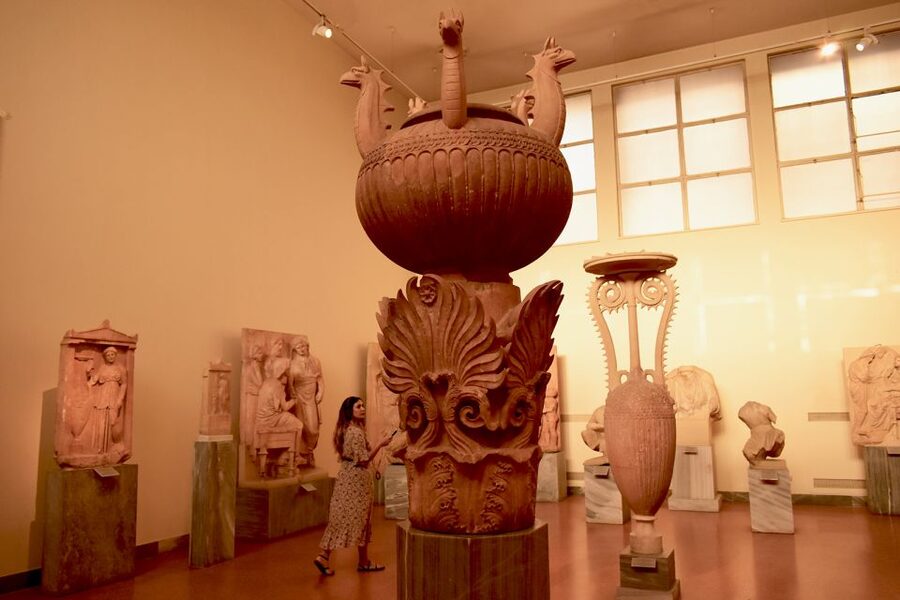
The museum is not only about famous statues. You will also see pottery, jewelry, tools, and objects that give ancient Greece a more ordinary human scale. These displays help explain how people lived, worked, decorated themselves, and marked important events.
Marble sculpture naturally attracts attention, especially when a figure remains in good condition after centuries of damage and repair. Yet fragments can be just as useful. They show how much you must imagine when looking at ancient art and how museums use drawings or reconstructions to suggest the original appearance.
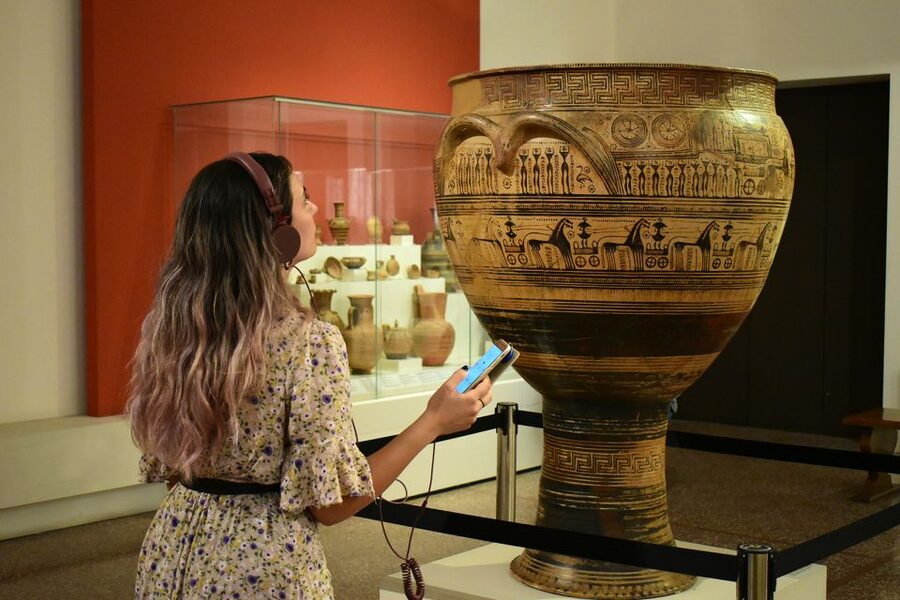
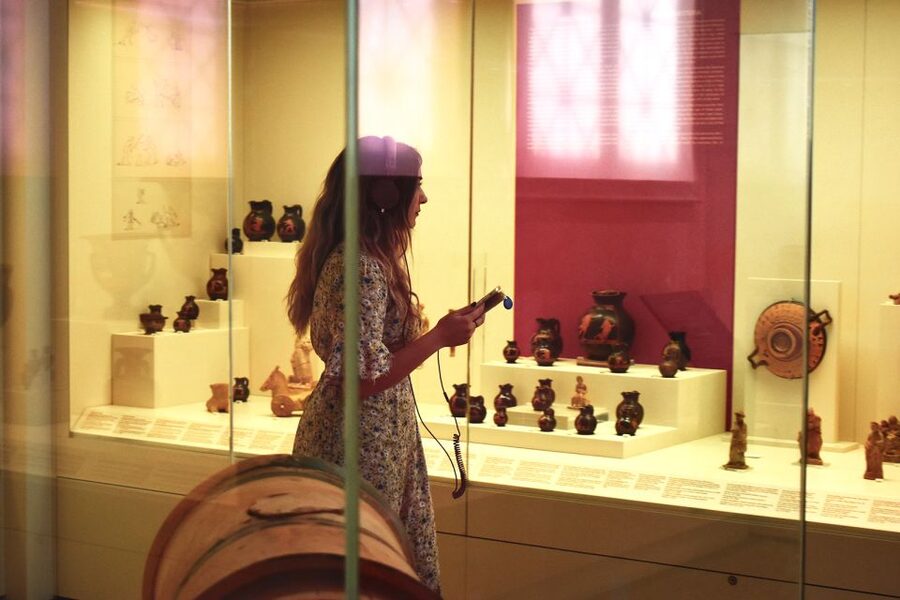
Pottery and smaller objects are easy to skip when a large statue is nearby. I suggest giving them time if you want to understand more than the idealized version of ancient Greece. Painted vessels can show clothing, athletics, mythology, ceremonies, and daily activity in a way a single statue cannot.
The audio tour offers context without requiring you to read every label. Its storytelling approach is particularly useful when an object has a complicated background, a disputed identity, or a story that is not obvious from its appearance.
The Roman galleries and Hadrian’s connection to Greek art
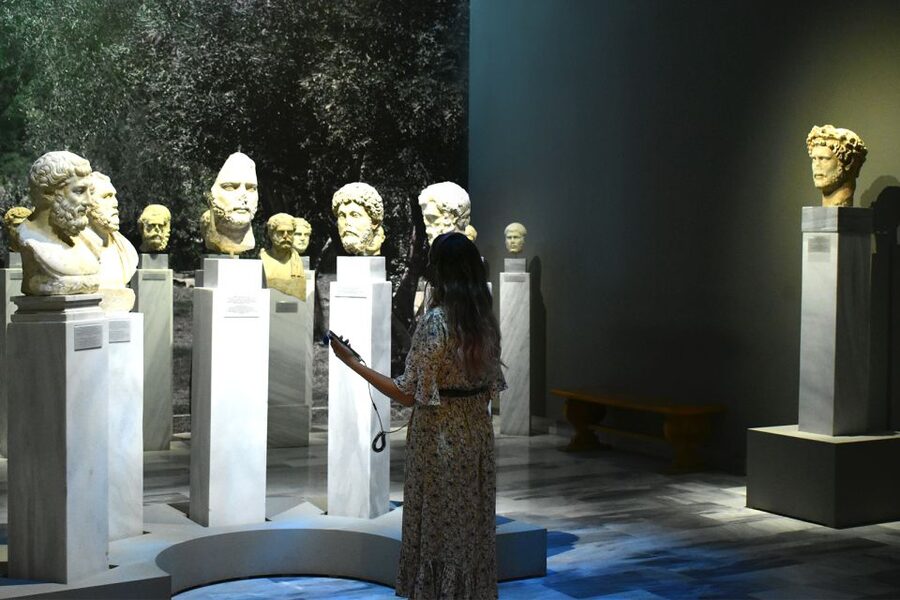
Although the museum is centered on Greek antiquity, the collection also includes Roman works. Displays connected with Emperor Hadrian are especially interesting because they show Rome’s admiration for Greek culture and art.
Hadrian is often associated with the preservation and revival of Greek forms. His portraits and related sculptures help show how Roman power did not simply replace Greek artistic traditions. Roman patrons copied, collected, and adapted Greek models, creating another layer in the museum’s long timeline.
This section is a good reminder that ancient Greece was not an isolated chapter. Greek art continued to influence Roman taste, architecture, portraiture, and education. If your main interest is Classical Athens, you might give this area less time. If you want to understand how Greek ideas traveled beyond Greece, it deserves a careful look.
Temporary exhibitions may also be on display during your visit. Their availability and content can change, so do not plan your entire visit around one unless you have confirmed it separately.
How long should you spend inside?
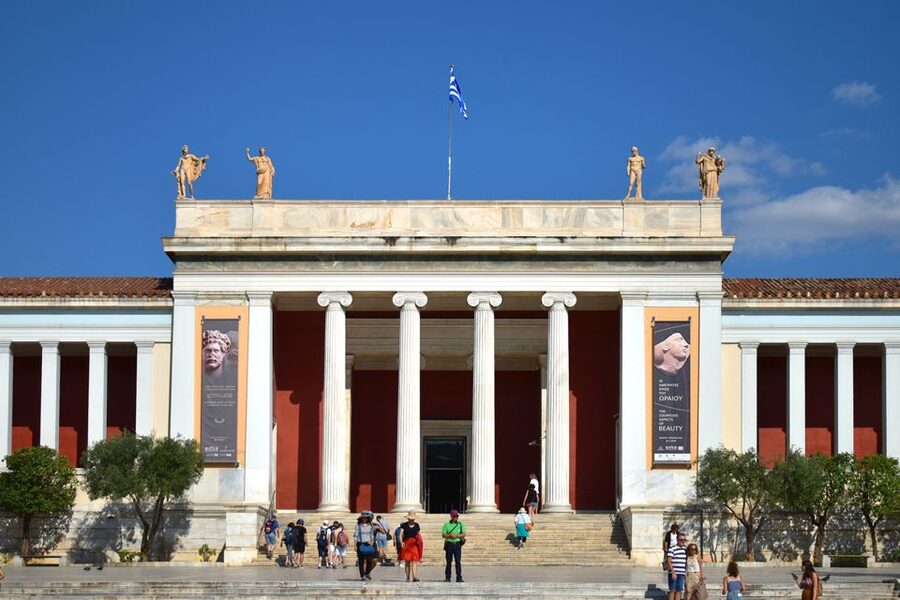
The advertised duration ranges from 45 minutes to four hours. That broad range is useful because the right length depends on your priorities.
A 45-minute visit is a quick highlights run. Use the audio guide to reach the best-known objects, including the Mask of Agamemnon, bronze statues, and selected sculpture. This can work for a short stop between other Athens plans, but you will miss rooms and may feel hurried.
About 90 minutes is a practical middle ground. You can follow the main audio route, stop for photographs where permitted, and give the principal objects enough attention without trying to cover the whole museum. This is the length I would choose for a busy sightseeing day.
Allow two hours if you want a calmer visit. That gives you time to pause, read some labels, revisit a room, and explore beyond the audio guide’s selected route. Three hours or more suits anyone with a serious interest in archaeology, sculpture, or ancient societies.
The museum can feel overwhelming if you arrive without a plan. I would rather see a focused selection carefully than race through every gallery and remember none of it.
Using the phone audio guide well
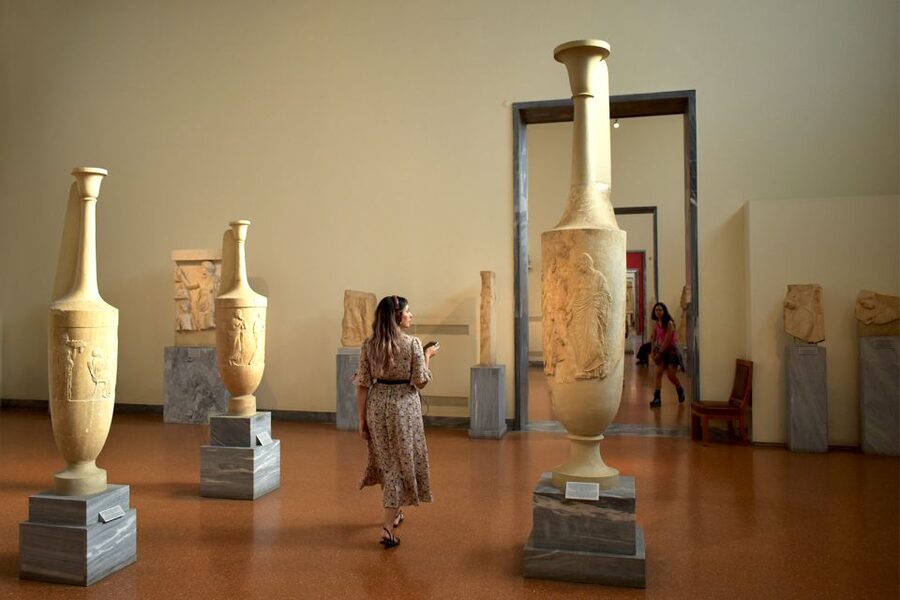
Download the ticket and audio content before you arrive. Check that your phone is compatible, fully charged, and has enough storage for the offline material. The guide does not work with Windows phones, iPhone 5, iPhone 5C, or older models, older iPod Touch devices, iPad 4th generation or older, or the first-generation iPad Mini.
The narration is available in English, French, German, Greek, Italian, and Spanish. You listen through your own headphones, so this is a quiet and private way to move through the museum. If you are visiting with a companion, remember that one phone and one pair of headphones can make shared listening awkward unless you bring a splitter or separate devices.
The app includes maps, text, and audio. I suggest looking at the map before starting, then checking it whenever the route seems unclear. Some sections can be confusing, and the building may not feel perfectly straightforward on a first visit.
The audio can be used again before or after your museum visit. You could listen to a few sections beforehand to learn the names of key objects, then return to the narration inside. You can also use the material afterward to review what you saw.
A useful break at the courtyard café
The ground-floor café has an inner courtyard with greenery and art. It is a practical place to pause after the galleries, particularly if you have chosen a three- or four-hour visit.
Food and drinks are not included in the ticket, so treat the café as a separate purchase. Its location inside the museum is useful because you do not need to leave the building and find somewhere else for a break.
I would plan the café stop around your energy rather than treating it as part of the audio route. A short rest can make the second half of a large museum much more enjoyable.
Who will get the most from this experience?
This suits you if you want to visit independently but still want structure. It works especially well for first-time visitors who do not know which objects matter most, and for repeat visitors who want a fresh route through the collection.
It is also a good fit for history students, mythology fans, art lovers, and anyone who prefers listening to a story rather than reading every information panel. The narration adds useful context while leaving you free to pause and look.
You may want another option if you require a live guide, need a highly detailed explanation of every room, or qualify for reduced admission. The audio guide is not a full replacement for personal help, and its route does not cover the entire museum.
At $31 per person, the value depends on how much of the audio content you use. The ticket alone may be less useful to someone who qualifies for a concession or already has another guide. For a visitor who wants easy pre-booking, offline narration, and a highlights route, the price can be reasonable, especially when a ticket-counter queue is long.
The booking is non-refundable, so check your date, phone compatibility, and entry instructions before paying.
Should you book the National Archaeological Museum audio tour?
I would book it if you want a self-guided visit with a clear focus on the museum’s best-known works. The combination of a pre-booked regular ticket, offline maps, and narration makes a large collection easier to handle, and you can stay for as little as 45 minutes or several hours.
I would skip this particular package if you have free or reduced-price admission, already own a guide you prefer, or want an expert beside you for questions. For everyone else, bring headphones, charge your phone, arrive with a little time for security, and plan at least 90 minutes. The Mask of Agamemnon may bring you through the door, but the bronze statues, smaller objects, and long sweep of Greek art are what make the visit worthwhile.
FAQ
How long does the National Archaeological Museum visit take?
The stated duration is 45 minutes to four hours. A short visit covers the audio tour highlights, while two to four hours gives you time to explore additional rooms at your own pace.
What does the ticket include?
It includes a regular museum entry ticket, a self-guided smartphone audio tour, offline text, audio narration, maps, and free time to explore the museum.
Is there a live guide?
No. This is a self-guided audio tour. You listen on your own Android or iOS phone using your own headphones.
Which languages are available for the audio guide?
The audio guide is available in English, French, German, Greek, Italian, and Spanish.
What should I bring?
Bring comfortable clothing, a charged smartphone, and headphones. You also need to download the ticket and audio content using the instructions sent after booking.
Can I use this ticket if I qualify for free or reduced admission?
No. The product includes a regular ticket for all ages. If you qualify for free or reduced-price entry, go directly to the museum ticket booth.
New audio tours around Greece
- Kos Scavenger Hunt and Highlights Self Guided Audio Tour★ 4.5 · 17 reviews
- Half-Day Ancient Olympia VR Audio Tour from Katakolo Cruise Port★ 3.5 · 57 reviews
- E-Ticket to Heraklion Archaeological Museum with Audio Guide★ 4.5 · 26 reviews
- Knossos Palace & Archeological Museum: E-Tickets with Audio Tours★ 4.0 · 18 reviews
- Kasos Audio-Tour from Karpathos by Art and Walk★ 4.5 · 4 reviews
- Delphi: Self-guided Audiovisual Tour with 3D Representations★ 5.0 · 5 reviews
- Delphi Self-guided Audio Tour on Your Phone (no ticket)★ 3.5 · 10 reviews
- Delphi: Archaeological Site & Museum Ticket with Audio★ 3.5 · 24 reviews
Greece Audio Tours, compared.

Athens: Acropolis Ticket with Optional Audio or Live Guide
Read our review →
Athens: Cape Sounio & Poseidon Temple Trip with Audio Guide
Read our review →

From Athens: Delphi Full Day V.R. Audio Guided Tour
Read our review →
Athens: Acropolis Museum Ticket with optional Audio Guide
Read our review →
Athens: Acropolis Ticket & Optional Self-Guided Audio Tours
Read our review →
From Athens: Small-Group Delphi, Museum & Arachova Day Trip
Read our review →
Parthenon & Acropolis Museum with Audio or Live Tour Option
Read our review →Browse the lists this tour appears in