
Review · ROME
Rome: Ostia Antica Archaeological Park Ticket & Audio App
Ostia Antica gives you something Rome’s busiest ruins often cannot: room to wander through an entire ancient city. You can walk along old streets, enter apartment blocks, inspect mosaics, and picture ordinary Roman life beyond the emperors and monuments. I like the well-preserved frescoes and mosaics, and I like that one ticket also covers the Castle of Julius II, the Museum of Ships, the Imperial Ports, and the Necropolis of Porto. The main drawback is scale. The site is huge, the paths are uneven, and the route is not always clear, so you need sturdy shoes, water, and patience.
The digital audio guide adds useful context, especially since the ruins can be hard to read without explanation. It may not always point you cleanly from one building to the next, though, and there is no transportation included between the separate sites. The photo postcard is a nice extra, but the real prize is having time to explore Ostia without rushing from one famous monument to another.
Key points to know before you go
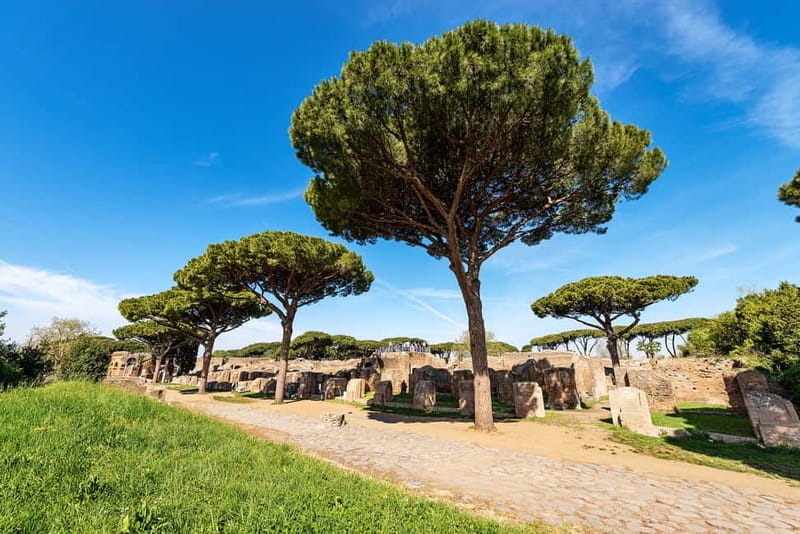
- Ancient city streets you can walk through: Ostia Antica lets you see homes, public buildings, villas, baths, and shops in their original urban setting.
- Mosaics and frescoes are major highlights: Many decorative floors and wall paintings remain clear enough to show how Roman buildings once looked.
- The ticket covers five archaeological destinations: Included sites are Ostia Antica, the Castle of Julius II, the Museum of Ships in Fiumicino, the Imperial Ports of Claudius and Trajan, and the Necropolis of Porto on Isola Sacra.
- The ticket is valid for multiple days: The supplied information gives both seven and eight days from first admission, so confirm the exact validity when booking.
- The audio guide is useful but not perfect: Bring a charged smartphone, and carry a map if you can.
- Plan for a long walk: Uneven paths and the size of the archaeological park make comfortable shoes and water essential.
Why Ostia Antica feels different from Rome’s headline ruins
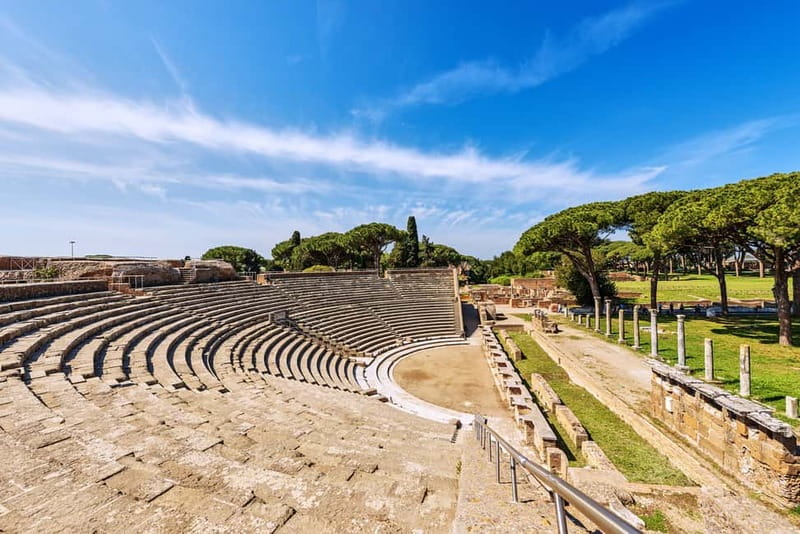
Ostia was Rome’s ancient port city at the mouth of the Tiber. According to tradition, King Ancus Marcius founded it in 620 BC as a Roman colony. Over time, river silt covered much of the settlement, helping preserve its buildings, mosaics, and painted decoration.
That setting gives you a more ordinary view of Roman life. At the Colosseum, you mainly see a grand arena. At Ostia, you can move through the fabric of a town: apartment buildings, villas, bath complexes, streets, and public spaces. I find that scale especially useful because it helps you understand how people lived, not just what emperors commissioned.
The site is also large enough to reward curiosity. You are not restricted to a short viewing platform or a single monument. You can pause over a mosaic, enter another building, then follow a street farther into the park. That freedom is the central benefit of this ticket.
More History Audio Tours in Italy
- Colosseum, Roman Forum & Palatine Hill with Audioguide App
★ 4.4 · 6,291 reviews - Rome: Colosseum, Ancient Rome Tour or AudioGuided Tour
★ 4.4 · 2,879 reviews - Colosseum, Roman Forum & Palatine Hill Entry and Audioguide
★ 4.1 · 2,475 reviews
Entering the park and finding your way
You begin by exchanging your voucher at the Ostia Antica ticket office. Bring a valid passport or ID card, since identification is required. You also need a charged smartphone for the digital audio guide.
There is no fixed group itinerary described for this experience. Instead, you explore on your own, using the audio app and the archaeological remains as your guide. That makes the visit flexible, but it also puts more responsibility on you. The paths are uneven, and the route around the site is not always obvious.
I recommend taking a map if you can get one and deciding on a few priorities before walking too far. The park is extensive enough that casual wandering can turn into a full-day outing. That is not a complaint if you have the time, but it matters if you have a tight Rome schedule.
The on-site cafe can also be difficult to spot. If you plan to spend several hours here, carry water and a small snack rather than assuming you will quickly find refreshments. Comfortable shoes are not optional. Smooth trainers may be fine for some people, but sturdy walking shoes will make the uneven surfaces easier.
Roman apartments and the texture of daily life
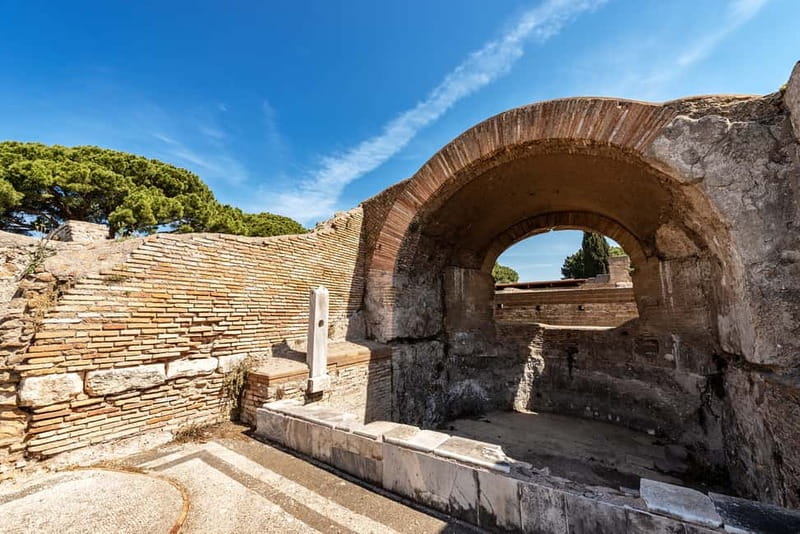
One of Ostia Antica’s most interesting features is its two-story apartment blocks. These buildings remind you that ancient cities were not made only of temples, villas, and monuments. Many people lived in practical, crowded urban housing, much as they do in large cities today.
Walking beside these structures gives you a sense of street-level life. You can look at the layout of rooms and imagine how shops, homes, and public spaces worked together. The remains do not recreate every detail, so you need to use the audio guide and your own imagination. Still, the surviving walls and floors make the city easier to understand than an isolated ruin.
The audio guide is particularly helpful here. It can explain what a building was used for and why a plain-looking section matters. At times, though, it can be difficult to match the commentary to the exact building in front of you. Keep your phone ready, pause the narration when needed, and do not feel obliged to follow every point in a strict order.
Villas, baths, and the Procoio area
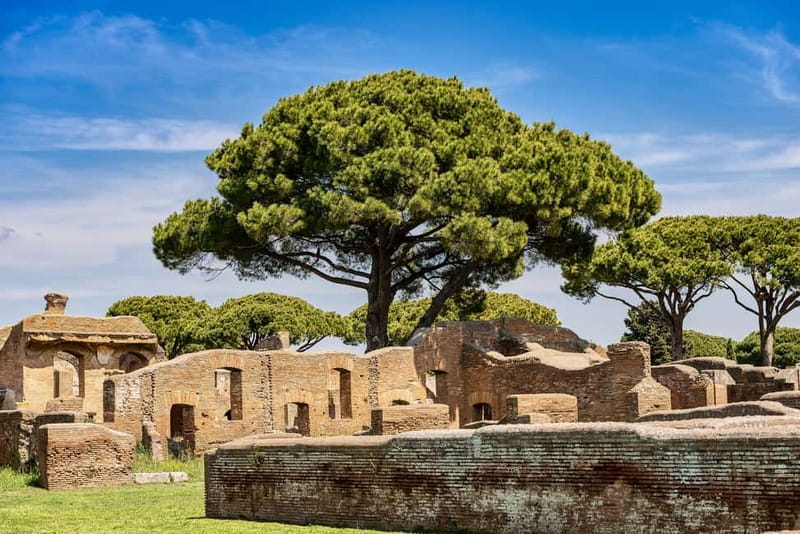
The seaside villas of Procoio add a different side of Ostia. Compared with the apartment blocks, villas suggest more private space and a higher level of comfort. Their remains help you compare the homes of wealthier Romans with the denser urban buildings elsewhere in the city.
The Procoio area also contains a large bath complex. Roman baths were not just places to wash. They were social and public spaces, and the surviving layout gives you a better idea of the scale and planning involved.
Another highlight is the amphitheater, lined with striking theatrical masks made from stone. These carved masks bring a bit of character to the site, especially after long stretches of walls and foundations. They also show how decoration and public entertainment were part of Roman civic life.
The best approach is to slow down here. The most impressive features are not always the largest walls. A carved mask, patterned floor, or faded wall painting can tell you as much about taste and culture as a major public building.
More History Audio Tours in Rome
- Rome: Colosseum, Roman Forum & Palatine Hill Visit + Audio Guide
★ 3.5 · 1,522 reviews - Rome: Roman Forum Super Pass Entry with Audio Guide App
★ 4.2 · 750 reviews - Colosseum, Roman Forum, Palatine Guided Tour or AudioGuide Option
★ 4.5 · 631 reviews - Colosseum, Roman Forum & Palatine Hill Admission With Audio Guide
★ 4.5 · 586 reviews
Mosaics and frescoes worth your attention
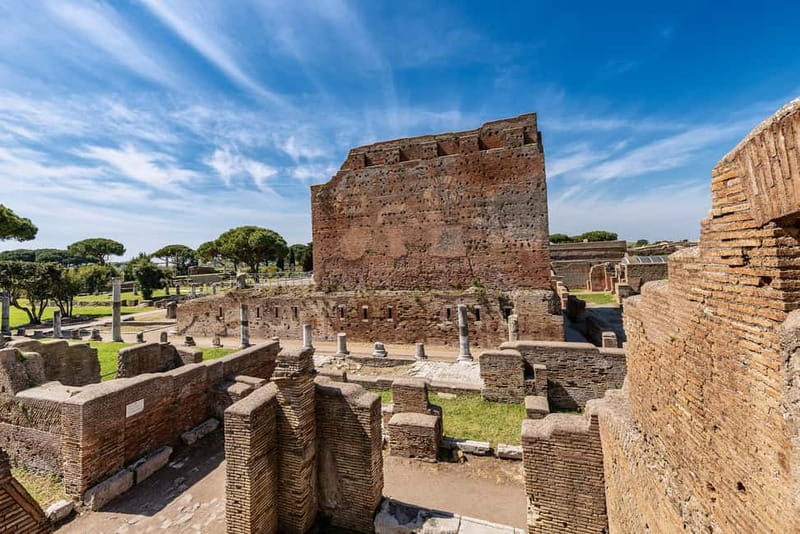
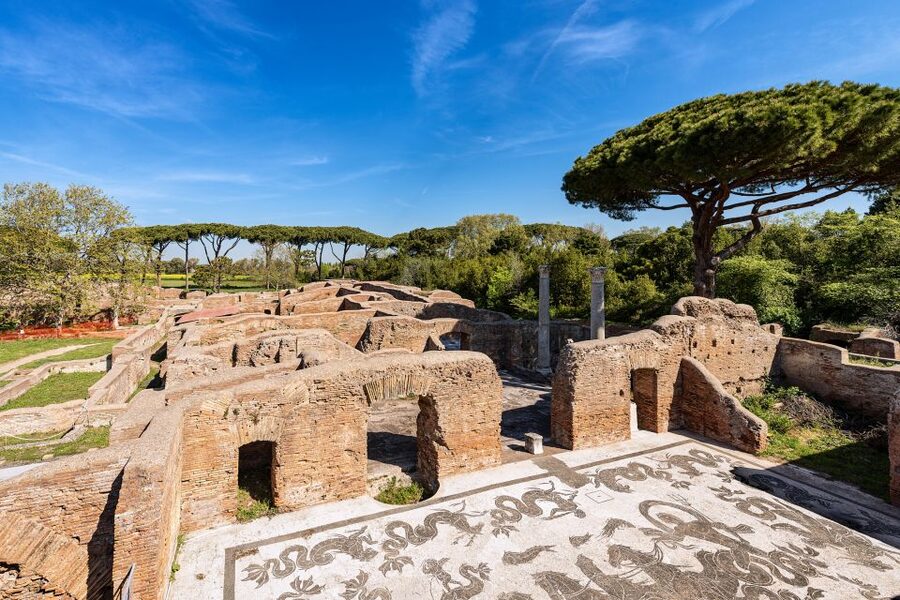
Ostia Antica is especially rewarding for anyone who enjoys detail. Well-preserved mosaics appear across the site, and some are clear enough to show patterns, figures, and decorative choices. Frescoes add color to rooms that might otherwise seem like bare stone shells.
I suggest looking down as often as you look ahead. It is easy to hurry along the main streets and miss a mosaic underfoot. The decorative floors are among the strongest reasons to visit, since they make the buildings feel connected to real people and real rooms.
The frescoes can be more fragile and unevenly preserved. Some spaces may give you only fragments, while others retain enough painted surface to suggest the original effect. The audio guide can help you understand what you are seeing, but you should also give yourself time to study the remains without listening continuously.
This is where Ostia can feel more personal than a checklist of major monuments. You are not only looking at architecture. You are seeing the surfaces people chose to decorate and the spaces in which they spent their daily lives.
The four additional sites included with the ticket
The ticket is broader than Ostia Antica alone. It also includes the Castle of Julius II, the Museum of Ships in Fiumicino, the Imperial Ports of Claudius and Trajan, and the Necropolis of Porto on Isola Sacra.
The Castle of Julius II offers a change from open archaeological ruins. It is a historic fortified site and can be a useful addition if you want something different from streets, villas, and mosaics.
The Museum of Ships in Fiumicino focuses on ancient vessels. It gives you another way to think about the port system and the movement of goods and people connected with Ostia.
The Imperial Ports of Claudius and Trajan expand the story beyond the city itself. These ports show the wider infrastructure that supported Rome. You can place Ostia in a larger setting instead of seeing it as an isolated settlement.
The Necropolis of Porto on Isola Sacra brings attention to burial practices and the people who lived around the port. Together, these sites make the ticket valuable for anyone with enough time to visit more than the main park.
There is one practical catch: transportation is not included. The admission covers the sites, but you must arrange your own way between them. For many people, Ostia Antica will be the main visit, while the other locations work best as optional additions across the ticket’s validity period.
The eight-day or seven-day validity detail
The headline information says the ticket is valid for eight days from first activation. The detailed conditions also describe it as valid for seven days from first admission. Since those statements do not match, check the current terms at the time you book or exchange the voucher.
Either way, the multi-day structure can improve the value of the $27 price if you can use the added sites. A single visit to Ostia Antica may already take several hours, especially if you stop for the mosaics, use the audio guide, and walk beyond the most obvious route. Having additional days gives you a chance to return or visit another included location without trying to force everything into one day.
If your Rome visit is short and you only plan to see Ostia Antica once, the price still makes sense for a self-guided archaeological visit of this size. If you want a guided tour with a person explaining each building, this is not that product. You receive an entry ticket and digital audio guide, so the experience is flexible but independent.
The photo postcard is a small but pleasant extra
You can turn one of your own digital photos into a postcard to send to friends or family anywhere in the world. It is a simple feature, but it gives you a souvenir tied to your own visit rather than a standard shop purchase.
Take a photo you will still like after the walk, perhaps a mosaic, a street view, or a striking architectural detail. The postcard will not replace the archaeological experience, but it adds a personal finish and may appeal to families or anyone who likes sending physical mementos.
How long should you allow?
The ticket itself is valid across multiple days, but Ostia Antica deserves more than a quick stop. One of the main practical warnings is the amount of walking. The ruins are extensive, and the paths are not always even or easy to follow.
You can visit the key areas in less time if necessary, but you will have to skip some streets and buildings. An all-day visit is realistic if you want to explore at a relaxed pace, listen to the audio guide, and stop to study mosaics and frescoes.
Bring water, wear comfortable shoes, and keep your phone charged. These are basic preparations, but they directly affect how much you enjoy the park. A low battery can cut off your audio guide, and thin shoes become uncomfortable on uneven ground.
Who should book this experience?
I would choose this ticket if you like archaeology, ancient cities, architecture, or self-guided sightseeing. It suits you especially well if you prefer to set your own pace and spend ten minutes studying a mosaic instead of moving along with a group.
It is also a good choice for repeat visitors to Rome who want something beyond the central monuments. Ostia offers a fuller sense of urban Roman life, with apartments and villas alongside public buildings and decorative art.
I would think twice if you dislike long walks, uneven paths, or sites where the route requires some effort to follow. The audio app helps, but it does not remove the need to orient yourself. You may also prefer a live guide if you want constant explanation and help identifying each structure.
Should you book the Ostia Antica ticket?
Book it if you want a spacious archaeological visit with excellent mosaics, surviving frescoes, Roman apartments, villas, baths, and an amphitheater. The $27 price is strongest when you use the extra included sites during the ticket’s multi-day validity.
Before booking, confirm the stated validity period, since the supplied details give both seven and eight days. If you accept the self-guided format, bring ID, a charged smartphone, water, a map if available, and sturdy shoes. For a patient explorer, Ostia Antica can be one of the most satisfying ways to see how a Roman city actually worked.
FAQ
What does the ticket include?
It includes entry to Ostia Antica Archaeological Park, the Castle of Julius II, the Museum of Ships in Fiumicino, the Imperial Ports of Claudius and Trajan, and the Necropolis of Porto on Isola Sacra. A digital audio guide is also included.
How long is the ticket valid?
The supplied information states that it is valid from first activation, but gives both eight days and seven days in different sections. Confirm the exact period when booking or exchanging your voucher.
Do I need identification?
Yes. You need to present a valid passport or ID card.
Is transportation included?
No. Transportation is not included, including transport between Ostia Antica and the other included sites.
Do I need a smartphone?
Yes. Bring a charged smartphone to use the digital audio guide.
Are the paths easy to walk?
The paths are uneven. Comfortable or sturdy shoes are recommended, especially because the archaeological park is extensive.
Can I cancel the booking?
You can cancel up to 24 hours in advance for a full refund, according to the supplied booking conditions.
Can I visit the sites more than once?
The ticket is described as allowing one admission to each included site and museum during its validity period.
More Smartphone Audio Tours in Rome
- Rome: Colosseum Access with Official AI App & Arena Option
★ 3.5 · 2,964 reviews - St. Peter’s Basilica, Optional Dome Access & Rome Audio App
★ 3.8 · 2,052 reviews - Rome: Colosseum Express Entry with Audio Guide App
★ 4.0 · 1,507 reviews - Pantheon Full Experience With Host & Interactive Audio App
★ 4.3 · 587 reviews
More Smartphone Audio Tours in Italy
- Rome: Colosseum & Forum with Audio Guide App -Optional Arena
★ 4.2 · 24,770 reviews - Rome: Castel Sant’Angelo Entry Ticket & Digital Audioguide
★ 4.7 · 5,347 reviews - Rome: Castel Sant’Angelo Entry Ticket & Audio App
★ 4.3 · 4,952 reviews - Rome: Pantheon Priority Entry Ticket & Audio Guide App
★ 4.1 · 3,234 reviews
New audio tours around Rome
- Rome: St. Peter’s Basilica and Dome Entry + Audio Guide★ 4.5 · 13 reviews
- St. Peter’s Basilica: Hosted Entrance & Digital Audioguide★ 4.1 · 35 reviews
- Sorrento & Pompeii Day Trip from Rome Audio Guide Tour★ 4.2 · 50 reviews
- Rome:St. Peter’s Basilica Hosted Entry + Official Audioguide★ 3.4 · 10 reviews
- Colosseum, Roman Forum, Palatine Hill access and AudioGuide★ 4.7 · 12 reviews
- Rome+Jubilee Audioguide – TravelMate app for your smartphone★ 4.2 · 38 reviews
- Rome:Ostia Antica Skip-the-line Ticket & Audioguide★ 4.3 · 11 reviews
- Rome: Vatican Museums & Sistine Chapel Entry with Audio App★ 4.3 · 240 reviews
Rome Audio Tours, compared.
Rome: Colosseum & Forum with Audio Guide App -Optional Arena
Read our review →
Rome: City Sightseeing Hop-on Hop-off Bus with Audioguide
Read our review →
Rome: St. Peter’s Basilica & Dome Entry Ticket & Audio Tour
Read our review →
Colosseum, Roman Forum & Palatine Hill with Audioguide App
Read our review →
Vatican & Sistine Chapel Ticket with Optional Audio Guide
Read our review →
Rome: Castel Sant’Angelo Entry Ticket & Digital Audioguide
Read our review →
Rome: Castel Sant’Angelo Entry Ticket & Audio App
Read our review →