
Review · ROME
Rome: Roman Forum Super Pass Entry with Audio Guide App
Ancient Rome makes the most sense when you walk through its old civic center, then climb Palatine Hill and look down on the ruins below. This pass gives you far more than a quick stroll past the main Forum: you can enter imperial houses, see frescoes, visit museums, and follow an audio guide at your own pace.
I especially like the access to special sites such as the House of Augustus and House of Livia, along with the chance to visit the new Roman Forum Museum. I also like the freedom to choose your entrance and spend several hours exploring without being tied to a guide.
The main catch is that this is a large archaeological area with confusing paths, changing routes, and some closed sections. The audio app can help, but you need to download it before arrival and allow at least three hours, preferably half a day.
Key points to know before you go
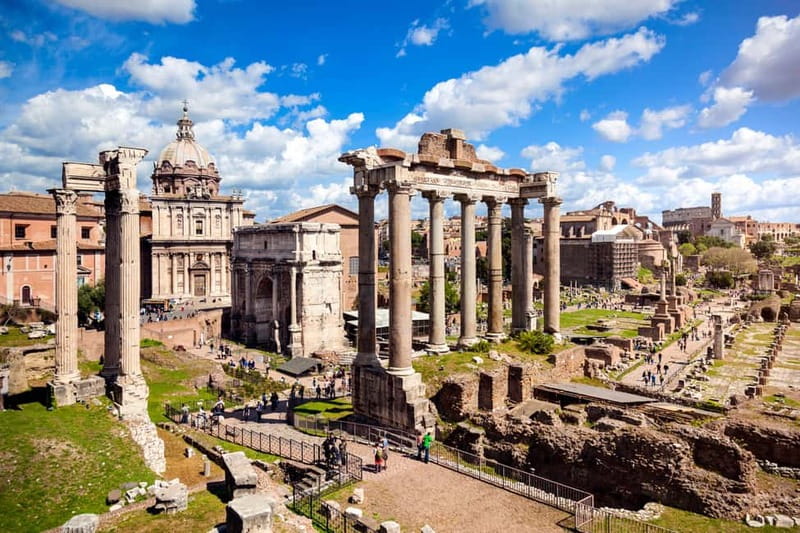
- Special rooms make the $25 pass worthwhile: See frescoes and imperial spaces that a basic walk through the ruins may not include.
- Palatine Hill adds the best views: Look across the Forum and toward the Colosseum from Rome’s most famous hill.
- The ticket is flexible before use: You have 30 days to validate it, with no time reservation required.
- One day begins at validation: Once you enter, the pass is valid only for that day.
- The audio guide is self-guided: It can start automatically near important places, though the map may take time to understand.
- The Colosseum is not included: You need a separate ticket for Rome’s most famous amphitheater.
What this Roman Forum pass actually covers

At $25 per person, this is not simply an entry ticket to the central Roman Forum. It combines access to the Forum, Palatine Hill, Imperial Forums, museums, archaeological houses, ongoing exhibitions, and several special sites.
That distinction matters. You can see the main ruins from public paths, but the extra rooms give you a closer look at Roman domestic life, imperial decoration, and religious customs. The pass is best for you if you want to spend real time with the site instead of taking a quick photo and moving on.
The ticket does not include the Colosseum. That is important when you compare it with a combined Colosseum and Forum ticket. You will need to arrange the amphitheater separately, but this pass may suit you better if you already have Colosseum plans or want to give the Forum the attention it deserves.
The pass is valid for 30 days from purchase, but that does not mean you can return for a month after entering. It is a one-time admission, and once validated, it works for that day only. There is no time reservation, which gives you useful flexibility during a busy Rome schedule.
More History Audio Tours in Italy
- Colosseum, Roman Forum & Palatine Hill with Audioguide App
★ 4.4 · 6,291 reviews - Rome: Colosseum, Ancient Rome Tour or AudioGuided Tour
★ 4.4 · 2,879 reviews - Colosseum, Roman Forum & Palatine Hill Entry and Audioguide
★ 4.1 · 2,475 reviews
Choosing an entrance and getting oriented
You can present your voucher at several entrances. Options include Via Sacra near the Arch of Titus, Via di San Gregorio, Via del Tulliano, Via del Foro Romano, and Piazza della Madonna di Loreto near Trajan’s Column.
There is no representative waiting at the meeting point. You go directly to an entrance and show your voucher. This keeps things simple, but it also means you should not expect someone to explain the route or point you toward the first audio stop.
Your entrance affects the order of the visit. Enter through Via Sacra and you may begin in the Roman Forum. Enter elsewhere and you might reach Palatine Hill first, then follow the route in reverse. The audio app and numbered stops do not always make this immediately clear, so take a few minutes to identify where you are before setting off.
The site is large enough that a poor starting point can cost you time. I recommend opening the map before entering, checking the location of the museum and special sites, and deciding whether you want to begin with the Forum or Palatine Hill.
Walking through the Roman Forum
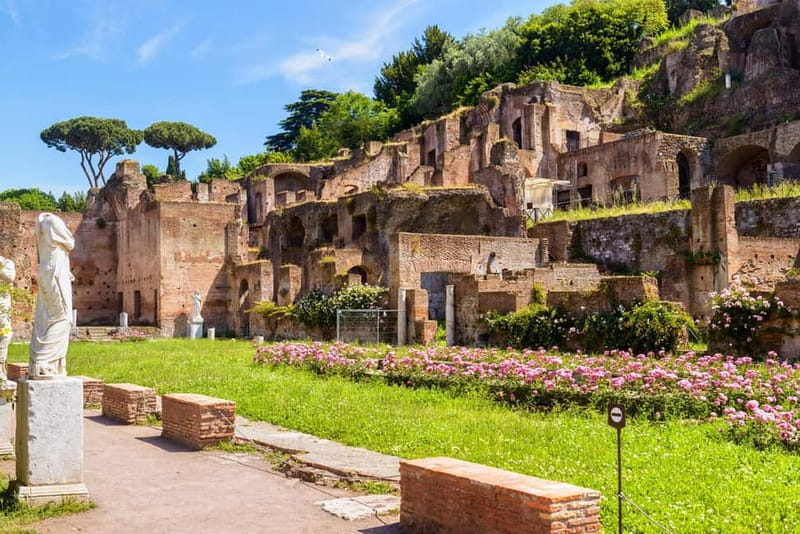
The Roman Forum was the center of public life in ancient Rome. Today, you walk among columns, foundations, temples, government buildings, and fragments of monumental streets. The remains can look scattered at first, but the audio guide helps explain how these pieces once worked together.
The main route brings you close to several important buildings. You can see the Temple of Romulus and enter the Curia Iulia, the former meeting place of the Roman Senate. These sites help turn the Forum from a field of stones into a place where political decisions, religious ceremonies, and public business took place.
The Roman Forum Museum adds useful context. Its exhibits display objects and information that help connect the ruins to daily life and Roman construction. This is particularly helpful if you find that walls and foundations alone are difficult to picture.
The route is not a fast attraction. You will pause for views, read signs, listen to the app, and sometimes wait as other people move through narrower areas. Even when Rome is crowded, the archaeological zone has enough space that it may not feel packed once you are inside.
Some areas may be closed for conservation work or archaeological excavation. Routes can change, and the app may not always match the current path perfectly. Treat the digital guide as a helpful companion rather than an exact set of marching orders.
Palatine Hill and the views over Rome
Palatine Hill is the centermost of Rome’s Seven Hills and one of the strongest parts of the visit. The climb and uneven walking make this section more tiring than a museum, but the views reward the effort.
From higher ground, you can look back toward the Roman Forum and see the Colosseum from a different angle. The Palatine Museum also offers a break from the open-air ruins, with sculptures, frescoes, and displays about the hill and its long use.
The hill is where the scale of ancient Rome begins to register. You are not looking at one isolated monument. You are seeing layers of palaces, courtyards, gardens, religious buildings, and public spaces spread across a broad area.
Give Palatine Hill more time than you might expect. A guided walk that rushes through the Forum and skips much of the hill will leave gaps in your visit. With this pass, you can slow down and explore at your own pace, which is one of its main advantages.
The entire route covered by the Forum Pass is described as barrier-free, and the ticket is wheelchair accessible. Still, you should allow for a substantial amount of outdoor walking and uneven archaeological surroundings. The available route can also change when restoration work is underway.
More History Audio Tours in Rome
- Rome: Colosseum, Roman Forum & Palatine Hill Visit + Audio Guide
★ 3.5 · 1,522 reviews - Colosseum, Roman Forum, Palatine Guided Tour or AudioGuide Option
★ 4.5 · 631 reviews - Colosseum, Roman Forum & Palatine Hill Admission With Audio Guide
★ 4.5 · 586 reviews - Colosseum & Roman Forum Entry with Audio Guide
★ 4.3 · 429 reviews
The special sites and frescoed rooms
The extra-access areas are the main reason to choose this pass instead of a basic Forum admission. Access is restricted in some SUPER sites to protect valuable paintings, so these rooms may have limited entry even when the wider archaeological area is open.
The House of Augustus is one of the highlights. The imperial residence contains painted decoration that gives you a closer look at Roman taste and private spaces. The House of Livia offers another chance to see preserved frescoes and understand how elite homes were designed.
The Aula Isiaca and Loggia Mattei add more decorative detail. These are not large, sweeping monuments. Their value comes from the surviving surfaces, rooms, and fragments that show the artistry behind Roman interiors.
The House of the Vestals introduces a different side of ancient life. The Vestal Virgins served an important religious role, and the remains help you think about the people who lived and worked within the sacred center of Rome. This stop is easy to rush past, but the audio explanation makes it more meaningful.
Santa Maria Antiqua is another important stop, with preserved wall paintings and a long religious history within the Forum area. The Temple of Romulus and Curia Iulia are also included, giving you a varied route rather than one long sequence of similar foundations.
Domus Tiberiana offers remains connected with the imperial palace complex on Palatine Hill. The Domus Transitoria is closed and cannot be visited, so do not build your plan around seeing it.
Opening hours for several Palatine sites change by season. From March through September 2025, the Palatine Museum, Aula Isiaca and Loggia Mattei, House of Augustus, House of Livia, and Domus Tiberiana are listed as open from 9:00 AM to 6:00 PM, with last entry at 5:30 PM. Santa Maria Antiqua remains open until 6:30 PM, with last entry at 6:00 PM.
The House of Augustus is closed on Mondays, and the House of Livia is closed on Tuesdays. Check the current schedule before you go because these closures can change the best day for your visit.
Following the Imperial Forum route
The Imperial Forums are separate from the older Roman Forum and show how later emperors reshaped the heart of Rome. The route includes the Forum of Caesar and Forum of Nerva, among other remains.
The Forum of Caesar is especially useful for seeing how imperial power was expressed through architecture. The Forum of Nerva gives you another view of monumental planning, with surviving columns and architectural fragments that are easy to appreciate once the audio guide explains their original purpose.
This section makes a good closing route because it feels more ordered and ceremonial after the scattered remains of the main Forum. You can finish by looking back over what Rome built, altered, and reused across centuries.
The Imperial Forum route also connects naturally with the area around Trajan’s Column and Piazza della Madonna di Loreto. If you enter near that side, pay attention to where your pass applies and how the route links with the Forum entrances.
Using the audio guide app
The audio guide is included digitally with your booking confirmation. Download it before you arrive, and make sure you understand how to open the guide offline. A working connection is not something you want to depend on inside a large archaeological site.
The commentary is short and focused. That is useful when you want context without standing still for long lectures. In some areas, the audio begins automatically as you approach a notable building or statue.
The app is not perfect. The map can be hard to follow on a phone, and its numbered stops may not line up with your actual entrance. Parts of the route can also change because of excavation or restoration work. If you wander away from the suggested path, you may miss some audio points.
I suggest using the app in combination with the physical signs. Listen to the explanations for major buildings, then use the map as a broad guide rather than following it with complete precision. If the app becomes frustrating, the site signage is generally enough to keep you oriented.
This format suits independent visitors. You can pause, skip stops, repeat explanations, and spend longer in the areas that interest you. It is less suitable if you want a live guide who can answer questions and adjust the route for your group.
How long to allow and what to bring
Allow at least three hours. A half-day is better if you want to visit the museums, see the special rooms, climb Palatine Hill, and follow the Imperial Forum route without hurrying.
The area has a lot of ground to cover, and the attractions are spread out. Bring water and food planning into your schedule. Food and drinks are not included, and you may want something with you if you expect to stay for several hours.
Toilets can have long queues. That is a small but practical reason to use facilities before entering or to plan ahead rather than waiting until you are in a hurry.
Wear comfortable shoes and leave room in your schedule for pauses. The site is outdoors, and the visit involves walking between ruins, museums, viewpoints, and restricted rooms. Small dogs are allowed in special carriers, but dog prams are not allowed.
The ticket is wheelchair accessible, and the included route is described as barrier-free. Even so, check the current route if you have particular mobility needs, since archaeological work can alter access.
Is $25 good value?
For $25, the pass offers strong value if you use the special-access areas and museums. The House of Augustus, House of Livia, Palatine Museum, Forum Museum, and Imperial Forums give the ticket more substance than a simple entry to the main ruins.
The value drops if you only have time for a quick walk through the central Forum. You may not reach the smaller museums or the frescoed houses, and the pass cannot replace a Colosseum ticket.
I would choose this pass when I had at least a morning available and wanted to explore independently. I would not choose it for a tightly packed itinerary with only an hour or two. The site rewards patience, and the cost makes more sense when you use the access included rather than simply checking in and leaving.
The 30-day purchase window is helpful when planning a Rome visit. You can buy ahead, then choose your entry day without a timed reservation. Once you validate it, however, you have only that day, so do not activate it casually while passing by.
Who should book this pass?
This is a good fit for you if you enjoy archaeology, ancient politics, Roman architecture, and self-guided sightseeing. Families with older children may appreciate the freedom to move at different speeds, while independent adults can linger in the frescoed houses or skip sections that do not hold their attention.
It also works well after a rushed group tour. If a guide gives the Forum only a short visit, this pass lets you return and spend proper time on Palatine Hill and the special sites.
You should consider another option if you want a live historian, a fixed route, or a ticket that includes the Colosseum. The audio guide provides useful explanations, but it cannot answer questions or adjust the visit when a particular building catches your interest.
Should you book the Roman Forum Super Pass?
Book it if you want a full morning or half-day among Rome’s ancient sites and value independence. The best reasons are the special rooms, the preserved frescoes, the Palatine views, and the freedom to enter without a timed reservation.
Skip it if you only want the Colosseum, need a live guide, or have very little time. Download the app early, study the entrances, plan around the museum closures, and treat the $25 ticket as a day of walking rather than a quick attraction.
FAQ
Does the pass include the Colosseum?
No. Access to the Colosseum is not included and requires a separate ticket.
How long is the pass valid?
You can use the one-time admission within 30 days of purchase. Once you validate the ticket, it is valid only for that day.
Do I need to reserve a time?
No. The ticket does not require a time reservation.
Where can I enter?
You can present your voucher at entrances on Via Sacra near the Arch of Titus, Via di San Gregorio, Via del Tulliano, Via del Foro Romano, or Piazza della Madonna di Loreto near Trajan’s Column.
Is someone waiting at the meeting point?
No. There is no representative waiting there. You go directly to an entrance and present your voucher.
Is an audio guide included?
Yes. A digital audio guide app is included, and instructions are sent with your booking confirmation.
What special sites are included?
The pass includes the House of Augustus, House of Livia, House of the Vestals, Aula Isiaca and Loggia Mattei, Curia Iulia, Temple of Romulus, Santa Maria Antiqua, Domus Tiberiana, the Palatine Museum, the Roman Forum Museum, and the Imperial Forums.
Is the route wheelchair accessible?
The entire route included in the Forum Pass is described as barrier-free, and the activity is wheelchair accessible.
Is the ticket refundable?
No. This activity is non-refundable.
More Smartphone Audio Tours in Rome
- Rome: Colosseum Access with Official AI App & Arena Option
★ 3.5 · 2,964 reviews - St. Peter’s Basilica, Optional Dome Access & Rome Audio App
★ 3.8 · 2,052 reviews - Rome: Colosseum Express Entry with Audio Guide App
★ 4.0 · 1,507 reviews - Pantheon Full Experience With Host & Interactive Audio App
★ 4.3 · 587 reviews
More Smartphone Audio Tours in Italy
- Rome: Colosseum & Forum with Audio Guide App -Optional Arena
★ 4.2 · 24,770 reviews - Rome: Castel Sant’Angelo Entry Ticket & Digital Audioguide
★ 4.7 · 5,347 reviews - Rome: Castel Sant’Angelo Entry Ticket & Audio App
★ 4.3 · 4,952 reviews - Rome: Pantheon Priority Entry Ticket & Audio Guide App
★ 4.1 · 3,234 reviews
New audio tours around Rome
- Rome: St. Peter’s Basilica and Dome Entry + Audio Guide★ 4.5 · 13 reviews
- St. Peter’s Basilica: Hosted Entrance & Digital Audioguide★ 4.1 · 35 reviews
- Sorrento & Pompeii Day Trip from Rome Audio Guide Tour★ 4.2 · 50 reviews
- Rome:St. Peter’s Basilica Hosted Entry + Official Audioguide★ 3.4 · 10 reviews
- Colosseum, Roman Forum, Palatine Hill access and AudioGuide★ 4.7 · 12 reviews
- Rome+Jubilee Audioguide – TravelMate app for your smartphone★ 4.2 · 38 reviews
- Rome:Ostia Antica Skip-the-line Ticket & Audioguide★ 4.3 · 11 reviews
- Rome: Vatican Museums & Sistine Chapel Entry with Audio App★ 4.3 · 240 reviews
Rome Audio Tours, compared.
Rome: Colosseum & Forum with Audio Guide App -Optional Arena
Read our review →
Rome: City Sightseeing Hop-on Hop-off Bus with Audioguide
Read our review →
Rome: St. Peter’s Basilica & Dome Entry Ticket & Audio Tour
Read our review →
Colosseum, Roman Forum & Palatine Hill with Audioguide App
Read our review →
Vatican & Sistine Chapel Ticket with Optional Audio Guide
Read our review →
Rome: Castel Sant’Angelo Entry Ticket & Digital Audioguide
Read our review →
Rome: Castel Sant’Angelo Entry Ticket & Audio App
Read our review →