
Review · ROME
Rome: Skip-the-Line Castel Sant’Angelo Tickets & Audio Guide
Castel Sant’Angelo is one of Rome’s best history lessons because the building keeps changing character as you move through it. You begin with Emperor Hadrian’s mausoleum, pass through a fortress shaped by war and papal power, then reach terraces with wide views across the city. The audio guide helps connect those pieces instead of leaving you to guess what each room once did.
I like the six-language app and the staff help at the entrance, especially if you are not used to downloading tour content on your phone. I also like the freedom to explore without being tied to a live guide. The main catch is that this is not a fully guided tour, and you need a charged phone, headphones, internet access, and your ID. Late arrival can also mean no entry.
Key points to know before booking
- Hadrian’s tomb became a papal fortress: The building gives you several very different chapters of Roman history in one visit.
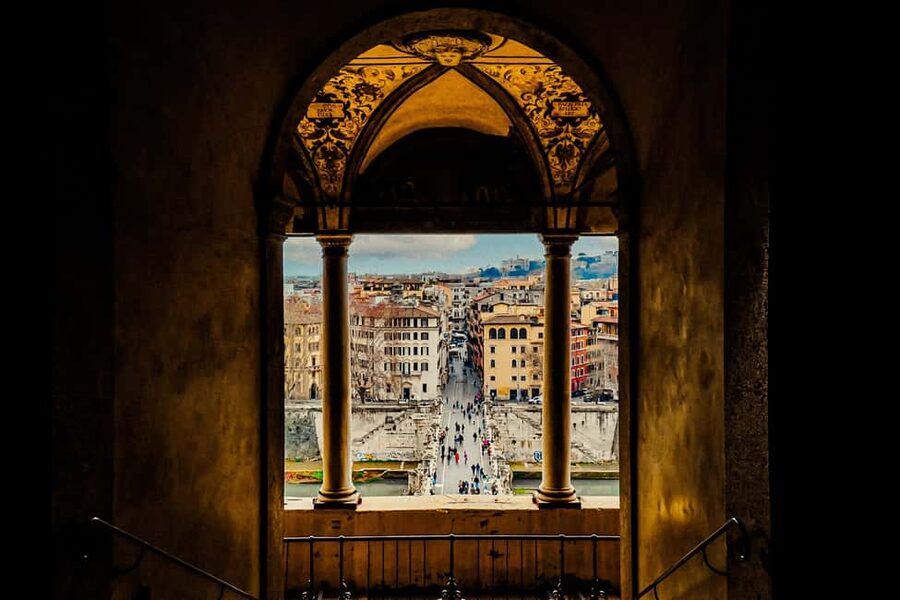
- The terrace is the payoff: After the enclosed rooms and climb through the castle, the views make the effort worthwhile.
- The audio guide is app-based: Bring your own headphones and download the content before arrival if possible.
- Skip-the-line means an express security check: You still meet staff at the entrance and must arrive 15 minutes early.
- The castle is a two-hour visit: That is enough for a focused look, but not a slow study of every display.
- Check accessibility carefully: The information describes the activity as wheelchair accessible in one place, but also says it is not suitable for wheelchair users or people with mobility impairments.
Why Castel Sant’Angelo is more than a castle
From the outside, Castel Sant’Angelo looks like a fortress beside the Tiber. Its original purpose was quieter and more solemn. Emperor Hadrian commissioned the structure as a mausoleum, and the enormous cylindrical form still gives the building its unusual shape.
Later, the site took on military and papal roles. That layered past is what makes the visit worthwhile. You are not simply touring one palace or one defensive stronghold. You are following the changes of a building that served rulers, soldiers, and popes across the centuries.
The audio guide is useful here because the architecture can feel confusing. A room may look grand, severe, or oddly plain, but the app gives you the story behind it through spoken explanations, images, and multimedia material. You can stop, replay sections, and set your own pace.
I would not expect a theatrical performance or a personal conversation with an expert. There is no live guided tour included. Instead, you get a self-guided visit with staff assistance at the start and an app that supplies the commentary.
More Skip-the-Line Audio Tours in Rome:
- Rome: Borghese Gallery Skip-the-Line Ticket & Audioguide
★ 4.3 · 4,318 reviews - Rome: Borghese Gallery Skip-the-Line Tickets with Audioguide
★ 4.6 · 2,562 reviews - Rome: Borghese Gallery Skip the line ticket and Audioguide
★ 4.3 · 1,535 reviews
Meeting the Crown Tours staff at the entrance
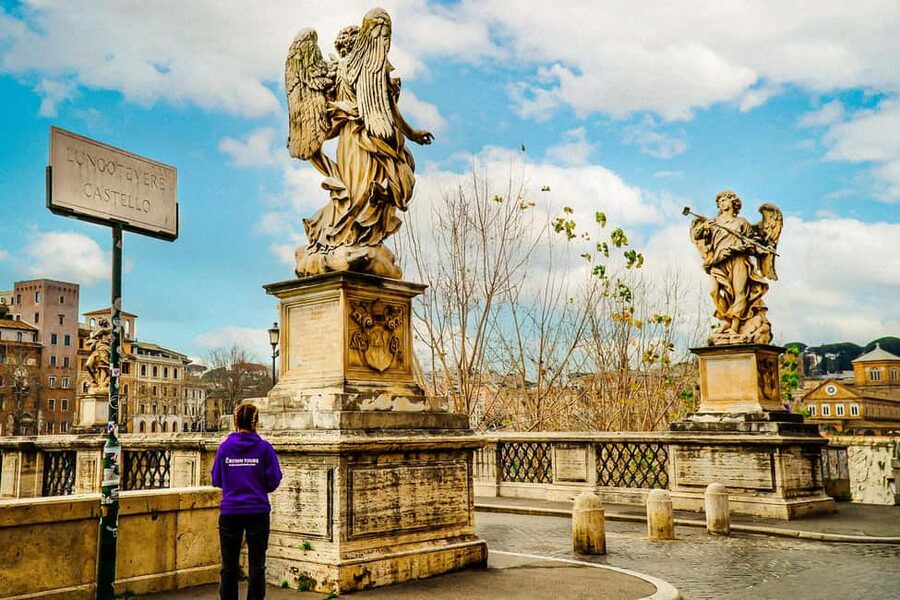
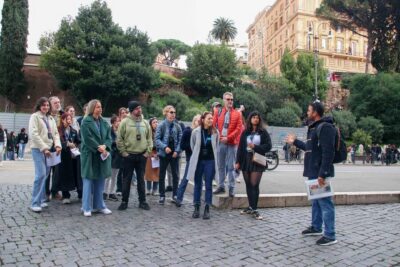
The meeting point is directly at the entrance to Castel Sant’Angelo, under the angel statue. Staff wear purple Crown Tours shirts, so they should be fairly easy to identify in the busy area around the castle.
Arrive 15 minutes before your booked time. This matters. The tickets are timed and nominative, which means the full names of all participants are needed and your ID may be checked. If you arrive late, participation is not guaranteed.
At the entrance, staff can help you download the audio guide app. You should still prepare before you go. Charge your phone fully, bring headphones, and make sure you have internet access for downloading the content. The voucher may also provide a link that lets you pre-download the audio guide.
This small bit of preparation can make a big difference. Nobody wants to spend the first part of a Rome visit staring at a loading screen while the castle waits. Bring a backup plan too: if your phone battery is low, the audio portion may become difficult to use.
The ticket includes an express security check rather than a promise that every line disappears. Security rules still apply, and large bags, luggage, glass objects, weapons, food, alcoholic drinks, and sharp items are not allowed inside. Smoking, intoxication, drugs, sleeveless shirts, and see-through clothing are also prohibited.
Inside Hadrian’s mausoleum

The first major chapter is the mausoleum. The massive structure was built for Emperor Hadrian and later became part of the fortified complex. The best way to appreciate it is to pay attention to the contrast between its original funerary purpose and its later military use.
You might find the lower and interior sections less immediately impressive than the decorated papal rooms. That is normal. These areas are valuable because they show the building’s bones and defensive character. The audio guide can help you understand how the monument changed rather than treating it as a series of unrelated rooms.
I like this part for its sense of transition. As you move through the castle, Roman imperial ambition gives way to medieval defense and then to papal display. The building itself becomes the timeline.
The app uses spoken presentations and images, so it can help you picture details that are not obvious from the walls. You can explore independently, but you do not have to navigate the story alone. The main limitation is that a phone screen is not always the easiest companion in a crowded or dim interior.
Papal chambers and the artistic side

The papal rooms bring a very different mood. Here, the castle shifts from heavy fortress to residence and place of ceremony. Ornate chambers and decorated interiors show how the popes used the stronghold as more than a military refuge.
The experience highlights works connected with artists such as Tiepolo and Titian. If you enjoy painting and decoration, give these rooms more time than a quick walk-through. The audio guide points you toward symbolism and historical meaning, which can make the art easier to read.
This is also where the app’s images and explanations have real value. Without context, a painted ceiling or formal chamber can blur into the next one. The audio commentary helps you notice why the room matters and what its decoration was meant to communicate.
Still, remember the format. You are listening through your own device, not following a guide who can answer questions or adjust the route to your interests. I find that ideal for independent visitors, but less satisfying if you want a lively discussion about art.
More audio tours around Rome:
- Rome: Colosseum & Forum with Audio Guide App -Optional Arena
★ 4.2 · 24,770 reviews - Rome: City Sightseeing Hop-on Hop-off Bus with Audioguide
★ 4.0 · 16,045 reviews - Rome: St. Peter’s Basilica & Dome Entry Ticket & Audio Tour
★ 4.2 · 7,537 reviews - Colosseum, Roman Forum & Palatine Hill with Audioguide App
★ 4.4 · 6,291 reviews
Climbing to the terrace for the Roman views
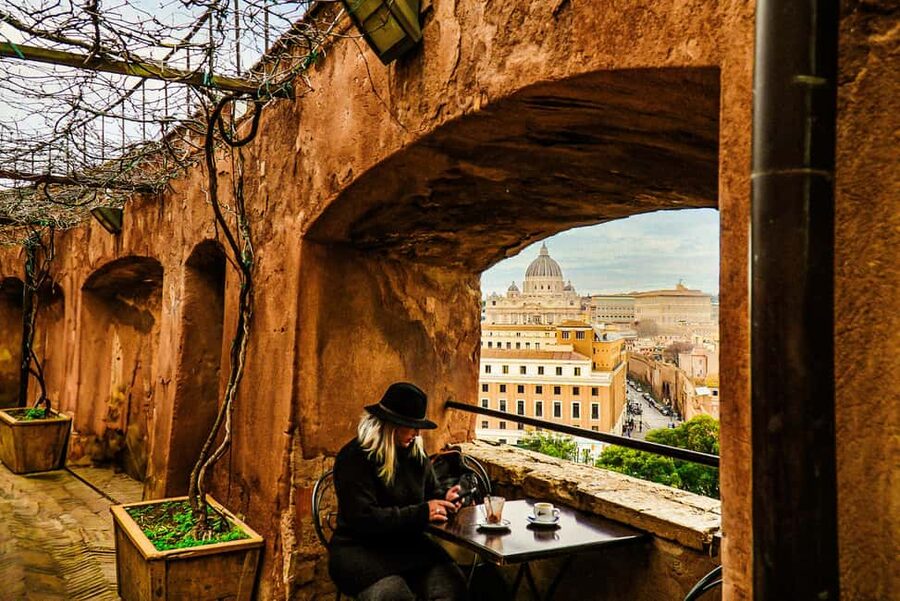
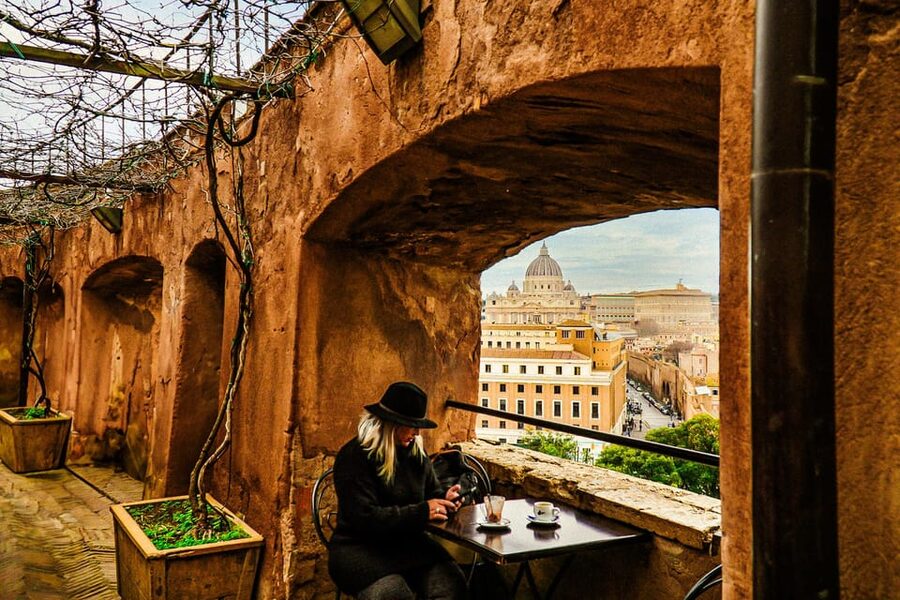
The terrace is the visit’s clear reward. After working through the enclosed parts of the castle, you reach an open viewpoint with broad views over Rome and the Tiber. The angel statue gives the site its familiar name and helps make the rooftop feel like a proper finale.
The climb is part of the experience, not just a way to reach the next room. You will be moving through an old complex with changing levels, so comfortable shoes are sensible. The supplied information does not give a detailed step count or route description, but it does warn that the activity may not suit people with mobility impairments.
Take your time once you reach the terrace. This is the place to pause the audio guide and look around. The view gives useful geographic context after the indoor rooms, and it is also one of the few points in the visit where the scale of Rome opens up around you.
The terrace is especially valuable if you are choosing between a quick exterior photograph and a full ticket. A photo from outside cannot give you the same sense of the building’s height, layers, and position beside the river. The climb does ask more of you, but that effort is part of why the final view feels earned.
How the two-hour timing works
The stated duration is about two hours. That is a sensible amount of time for a focused visit using the audio guide, with room for the mausoleum, papal areas, artworks, and terrace.
You should not read two hours as a strict guided schedule. The experience ends back at the meeting point, and the app lets you control your speed. You may finish earlier if you move quickly, or use the full period if you stop for the views and listen carefully.
I would allow extra time around the appointment for finding the entrance and handling security. The meeting instructions say to arrive 15 minutes early, and that is not wasted time. A late start can cost more than a few minutes because timed admission may not allow you to join later.
The visit works well as part of a day around central Rome. Castel Sant’Angelo is close enough to pair with other major sights, but the castle itself deserves attention rather than being squeezed into a rushed gap. If you want to listen to every audio segment and study the rooms, avoid placing it immediately before another fixed appointment.
What the $36.44 price buys you
At $36.44 per person, this is not a bargain entry ticket. The price makes more sense if you value a timed visit, help at the entrance, and commentary in your own language.
The skip-the-line element saves uncertainty, particularly during busy periods. It does not remove security checks, and it does not turn the visit into a private tour. Its value is mainly practical: you have a scheduled entry and staff to help you get started.
The audio guide adds more value than a simple entrance ticket if you want the building explained. It covers the main chapters, uses images and audio presentations, and comes in six languages: English, Italian, Spanish, French, German, and Chinese. You also get the freedom to pause or move on.
The price is harder to justify if you already know the castle well, prefer reading brief signs, or want a live guide. It also does not include food, drinks, hotel pickup, or earphones. Bring your own headphones rather than assuming they will be supplied.
The booking terms add flexibility. You can reserve now and pay later, and cancellation is free up to 24 hours before the activity for a full refund. Those policies can help if your Rome schedule is still changing.
Who will enjoy this format most
I would choose this experience if you like history but do not want to commit to a group tour. It gives you structure without forcing you to stay beside a guide or follow a fixed speaking pace.
It also suits visitors who want commentary in one of the six listed languages. Families may appreciate the freedom to pause, though every child needs an ID or passport information as required for the nominative tickets. The app’s images and stories can help younger visitors stay interested, but the castle still involves history, rooms, and climbing rather than a hands-on activity.
Art lovers should allow time for the decorated papal chambers and works associated with Tiepolo and Titian. View seekers should plan around the terrace. History fans get the strongest overall value because the same building covers imperial Rome, fortress life, and papal power.
I would be more cautious if you need a fully guided explanation, do not use smartphone apps comfortably, or have difficulty with steps and mobility. The activity information gives conflicting accessibility notes: one section calls it wheelchair accessible, while another says it is not suitable for wheelchair users or people with mobility impairments. Contact the provider before booking if access is important to you.
Extra combinations and nearby museum claims
The experience is focused on Castel Sant’Angelo. References to Museo Correr and the National Archaeological Museum should not be treated as included admission, since the listed inclusions cover only the castle ticket, audio guide, and entrance assistance.
There is also an option to combine Castel Sant’Angelo with a guided visit to the Vatican Museums and Sistine Chapel. That is described as a separate combo for people who want a larger art and history day. Confirm the exact package before paying, because the standard activity does not include the Vatican visit.
This distinction matters. Rome has plenty of bundled products, and the names can sound similar. Check the booking details so you know if you are buying the two-hour castle visit alone or a longer combination.
Should you book Castel Sant’Angelo with the audio guide?
Book it if you want a self-paced visit with a timed entry, practical help at the door, and a clear explanation of the building’s many roles. The terrace views, papal rooms, and story of Hadrian’s mausoleum make the castle worth more than a quick photo stop.
Skip it if you want a live guide, dislike phone-based tours, or cannot manage the castle’s physical demands. Before booking, charge your phone, bring headphones and ID, arrive early, and confirm the accessibility details if needed. For the right visitor, this is a useful, well-organized way to understand one of Rome’s most unusual monuments without surrendering your whole day.
FAQ
How long does the Castel Sant’Angelo activity last?
The stated duration is two hours. The audio guide allows you to move at your own pace within the visit.
Where do I meet the staff?
Meet the Crown Tours staff at the entrance to Castel Sant’Angelo, under the angel statue. They wear purple Crown Tours shirts.
How early should I arrive?
Arrive 15 minutes before your scheduled starting time. Tickets are timed, and late entry is not guaranteed.
Which languages are available for the audio guide?
The audio guide is available in English, Italian, Spanish, French, German, and Chinese.
Is this a live guided tour?
No. The activity includes a digital audio guide app, not a live guided tour. Staff assist you at the entrance with the app download.
What do I need for the audio guide?
Bring a fully charged smartphone, headphones, and internet access to download the content. You may also pre-download it through the link in the Crown Tours voucher.
Do I need identification?
Yes. Tickets are nominative, so bring an ID card or passport and provide the full names of all participants. A copy is accepted according to the activity information.
Is food allowed inside Castel Sant’Angelo?
No. Food and alcoholic drinks are not allowed inside. Weapons, glass objects, sharp items, and large bags are also prohibited.
Can I cancel the booking?
You can cancel up to 24 hours before the activity for a full refund. Reserve-now, pay-later booking is also available.
New audio tours around Rome
- Rome: St. Peter’s Basilica and Dome Entry + Audio Guide★ 4.5 · 13 reviews
- St. Peter’s Basilica: Hosted Entrance & Digital Audioguide★ 4.1 · 35 reviews
- Sorrento & Pompeii Day Trip from Rome Audio Guide Tour★ 4.2 · 50 reviews
- Rome:St. Peter’s Basilica Hosted Entry + Official Audioguide★ 3.4 · 10 reviews
- Colosseum, Roman Forum, Palatine Hill access and AudioGuide★ 4.7 · 12 reviews
- Rome+Jubilee Audioguide – TravelMate app for your smartphone★ 4.2 · 38 reviews
- Rome:Ostia Antica Skip-the-line Ticket & Audioguide★ 4.3 · 11 reviews
- Rome: Vatican Museums & Sistine Chapel Entry with Audio App★ 4.3 · 240 reviews
Rome Audio Tours, compared.
Rome: Colosseum & Forum with Audio Guide App -Optional Arena
Read our review →
Rome: City Sightseeing Hop-on Hop-off Bus with Audioguide
Read our review →
Rome: St. Peter’s Basilica & Dome Entry Ticket & Audio Tour
Read our review →
Colosseum, Roman Forum & Palatine Hill with Audioguide App
Read our review →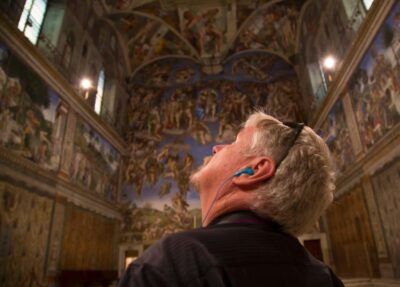
Vatican & Sistine Chapel Ticket with Optional Audio Guide
Read our review →
Rome: Castel Sant’Angelo Entry Ticket & Digital Audioguide
Read our review →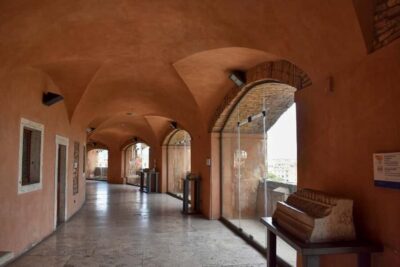
Rome: Castel Sant’Angelo Entry Ticket & Audio App
Read our review →
Rome: Hop-on Hop-off Sightseeing Bus Tour with Audioguide
Read our review →Browse the lists this tour appears in