
Review · ROME
Santa Maria Maggiore: Pope Francis Entry Ticket, Audio Guide
Santa Maria Maggiore gives you a rare chance to step from Rome’s busy streets into a vast, solemn church filled with some of the city’s oldest Christian mosaics. The fifth-century artwork high above the nave is the main event, but the marble floor, chapels, papal tombs, and quiet corners reward a slower look.
I like the way the ticket pairs skip-the-line entry with time to explore independently. I also like the audio guide, which explains details you could easily miss, including the legend of the August snowfall and the significance of the Crypt of the Nativity. The main drawback is that the ticket costs $17 for a basilica that is otherwise free to enter, so its value depends heavily on the length of the queue.
The meeting point at Via Liberiana 8, beside the church and the green kiosk, can be a little hard to spot. Once connected with the English-speaking host or greeter, though, the process is usually quick. The audio guide is useful, but the handoff can take time, and the optional dome panoramic view does not include an audio guide.
Key points to know before you book
- The basilica itself is free: You are paying mainly for quicker entry and, when selected, the audio guide.
- The oldest mosaics are the star attraction: Look up over the nave and triumphal arch for fifth-century Christian scenes.
- Bernini is buried here: The famous sculptor’s tomb is a quiet surprise inside the basilica.
- The Crypt of the Nativity adds a personal religious connection: It is linked with relics associated with the Nativity.
- You explore at your own pace: This is not a live guided tour inside the church.
- Dress for worship: Shorts and sleeveless shirts are not allowed, and the basilica may close or restrict access for religious services.
Why Santa Maria Maggiore is worth your Rome time
Rome has no shortage of churches, but Santa Maria Maggiore earns a place on your list because it brings together several different layers of the city in one stop. You get early Christian mosaics, Renaissance and Baroque decoration, papal memorials, a famous artist’s tomb, and a working house of worship.
The basilica is one of Rome’s four major papal basilicas. That status matters because this is not simply a pretty historic building preserved for sightseeing. It remains an active religious place, so you may find a more solemn atmosphere than in a standard museum.
The experience lasts about one hour. That is enough time for a focused visit, especially with the audio guide, but not enough for a slow study of every chapel and monument. I would treat this as a strong one-hour stop near Termini Station and the Esquilino district, not as a full morning attraction.
The $17 price needs a little thought. Since entrance to the basilica is free, the ticket is not a traditional admission charge. You are paying for a separate entrance, assistance from a host, and the audio guide if you choose that option. On a crowded day, avoiding a long wait can save both energy and valuable sightseeing time. On a quiet day, the same ticket may feel expensive, particularly if there is no queue.
More audio tours around Rome:
- Rome: Colosseum & Forum with Audio Guide App -Optional Arena
★ 4.2 · 24,770 reviews - Rome: City Sightseeing Hop-on Hop-off Bus with Audioguide
★ 4.0 · 16,045 reviews - Rome: St. Peter’s Basilica & Dome Entry Ticket & Audio Tour
★ 4.2 · 7,537 reviews
Meeting at Via Liberiana 8
The meeting point is at Via Liberiana 8, next to Santa Maria Maggiore and the green kiosk. This sounds simple, but the address has caused some confusion, so give yourself extra time to locate the host. One useful detail is that the representative may call before the scheduled time, and the English-speaking greeter helps connect your booking with the correct entrance.
You do not simply walk into the basilica and show a voucher at the main doors. The point of the meeting arrangement is to guide you to the separate entrance used for skip-the-line access. This is why arriving at the stated meeting point matters.
The group is limited to 10 people. That is small enough for the handoff to feel organized, though this is not a private tour. The host or greeter’s main job is to get you through the entrance process, not to lead a detailed explanation of the basilica.
A passport is listed as something to bring. Have it with you, along with your booking details, even if nobody asks to see both. Religious sites can also impose security or access rules at short notice.
Getting inside without the long wait
The strongest practical reason to book is the separate entrance. Santa Maria Maggiore is free to enter, but the ordinary line can stretch long. In hot weather, after a full day on foot, or during a crowded period in Rome, paying $17 to avoid a long wait can make sense.
The benefit is not guaranteed at every hour. One booking reported no regular line at the time of the visit, which meant the skip-the-line feature offered little advantage. That is the risk with any queue-skipping ticket for a free attraction. You are buying convenience in advance, not a guaranteed saving in every situation.
The process also may not be instant. One part of the visit involves waiting for the audio device before entry, and that handoff frustrated one customer. In other cases, the host got the group inside very quickly despite enormous crowds. Your experience will depend on the day, the entrance controls, and how busy the basilica is.
I would book this option when Santa Maria Maggiore is part of a tight schedule. If you have only an hour before a train, a reserved meal, or another timed attraction, avoiding an unpredictable queue has real value. If your schedule is open and you are passing by during a quiet period, you may prefer to try the free entrance first.
Looking up at the fifth-century mosaics
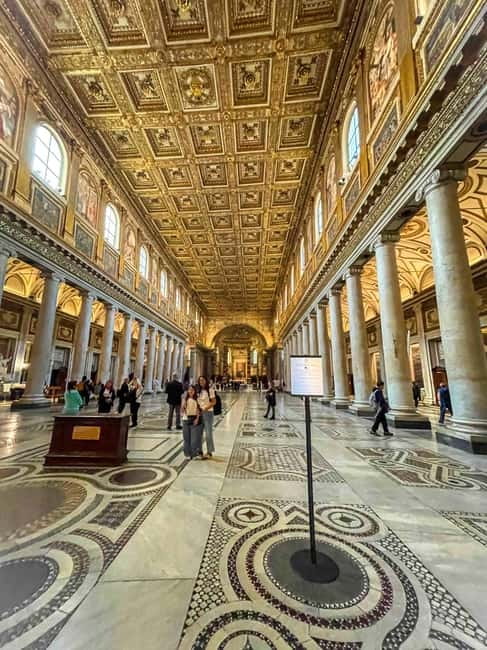
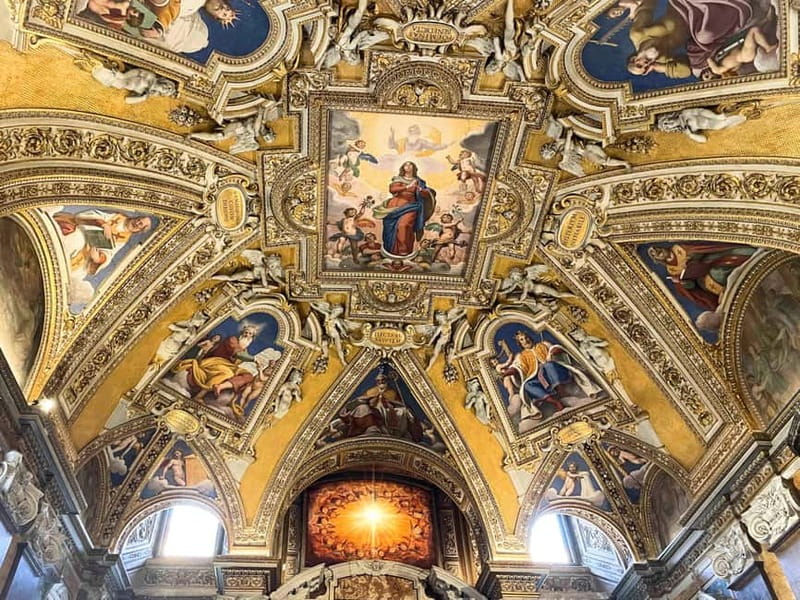
Once inside, start by looking upward. The mosaics in the nave and triumphal arch are among the oldest Christian mosaics in Rome, dating to the fifth century. Their position high above eye level means an audio explanation is especially helpful. Without context, you might admire the glittering surfaces but miss how early and important they are.
The mosaics are not the kind of artwork you can understand from one quick glance. Take time to notice the repeated figures, gestures, and scenes. The audio guide helps point out the religious meaning and the artistic details, which is where this ticket becomes more than a fast entry pass.
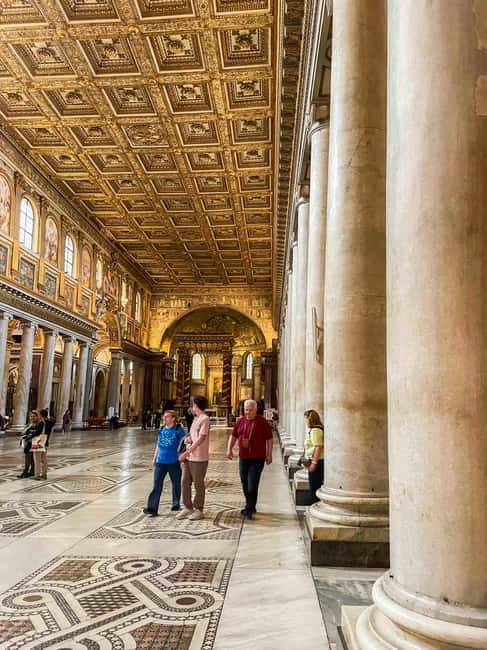
The basilica’s scale also matters. It can feel overwhelming at first, with a long central nave, rows of columns, decorated ceilings, and several chapels competing for your attention. The guide gives you a path through that visual load, although it is still self-guided rather than led by a person.
Some people reported that the audio guide explained altars, sculptures, and artworks they would otherwise have walked past. That is the right way to use it: not as background noise, but as a tool for deciding where to pause.
Same sights, a different narrator:
- Colosseum, Roman Forum & Palatine Hill with Audioguide App
★ 4.4 · 6,291 reviews - Vatican & Sistine Chapel Ticket with Optional Audio Guide
★ 4.1 · 5,405 reviews - Rome: Castel Sant’Angelo Entry Ticket & Digital Audioguide
★ 4.7 · 5,347 reviews - Rome: Castel Sant’Angelo Entry Ticket & Audio App
★ 4.3 · 4,952 reviews
Marble floors and decorated chapels
Look down as well as up. The marble floor gives the interior a patterned, polished foundation, and it is one of the details easily missed when your eyes are fixed on the ceiling and mosaics.
The chapels add a different mood from the main nave. They are more enclosed and often more ornate, with sculpture, colored stone, and memorial decoration. You are free to move at your own pace, so you can spend extra time in the areas that interest you and move quickly past those that do not.
That freedom is a major advantage over a fixed group tour. You do not have to wait while a guide finishes a long explanation, and you can pause for private reflection. On the other hand, there is no live expert beside you to answer questions or point out an obscure detail in real time.
One customer found a few locations inside the basilica difficult to identify. I recommend keeping the audio device or guide instructions in hand and matching each stop carefully. If you rush through the opening section, it can be easy to lose track of where you are.
The Crypt of the Nativity and papal tombs
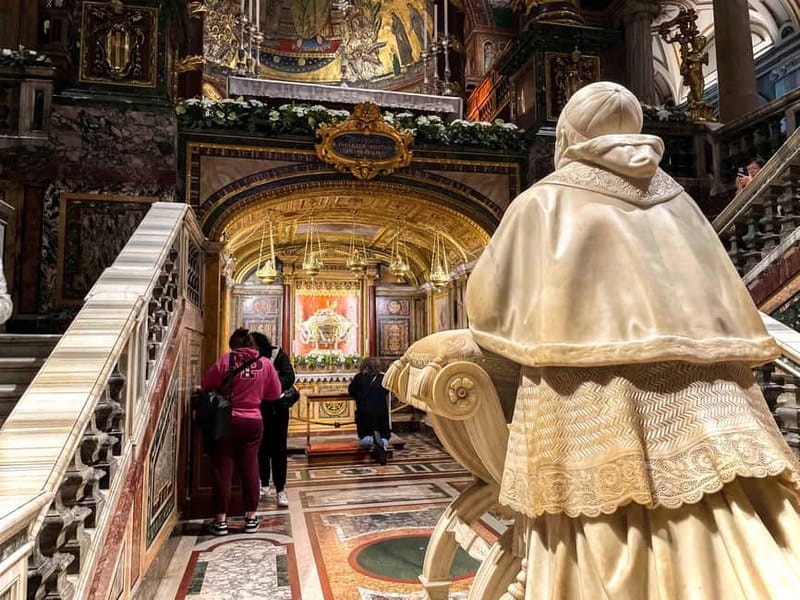
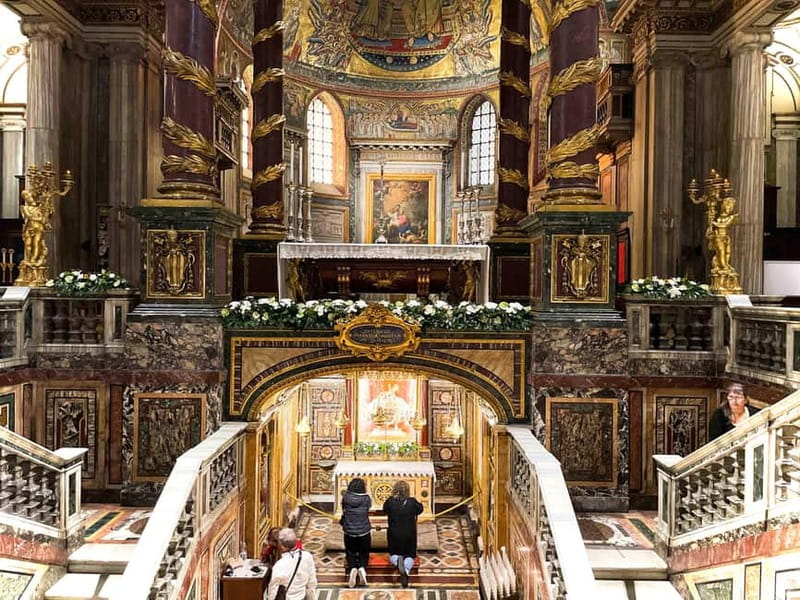
The Crypt of the Nativity is one of the visit’s most meaningful stops. It connects the basilica with the story of Christ’s birth and with relics associated with the Nativity. The space gives the visit a more personal, devotional character than a quick look at the architecture alone.
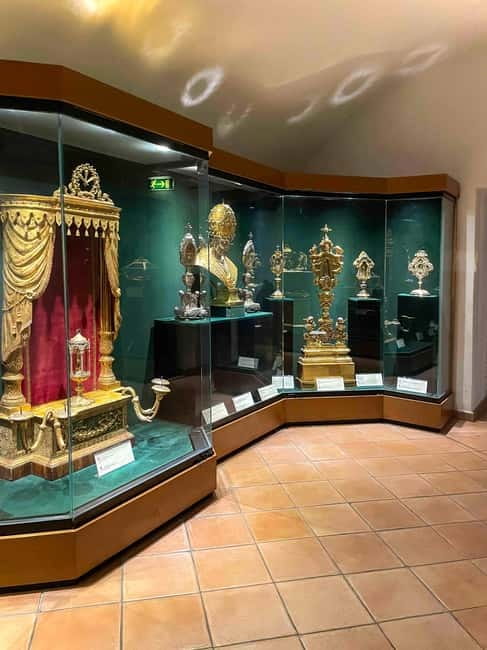
You can also see the tombs of several popes. These memorials remind you that Santa Maria Maggiore is tied closely to the history of the papacy, not just to Rome’s artistic past. The basilica’s identity is both ceremonial and spiritual.
The crypt and tombs may be especially important to you if religious history is part of your interest in Rome. If your main goal is architecture, they still provide useful context, but you may find the mosaics and marble interiors more visually striking.
Because this is an active church, behavior matters. Keep your voice low, avoid blocking worshippers, and be ready for certain areas to be restricted during services or ceremonies. The ticket does not turn a functioning basilica into a museum.
Finding Bernini’s tomb
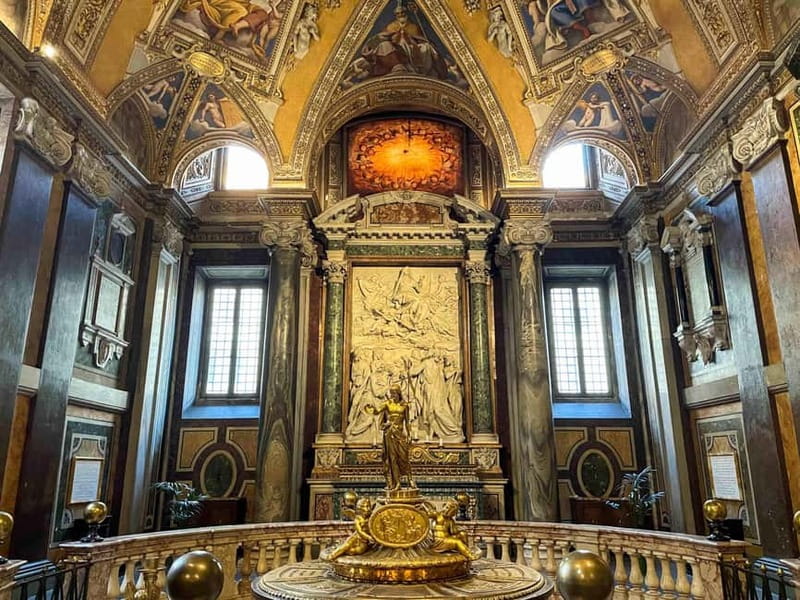
Gian Lorenzo Bernini is one of the best-known names in Roman art, famous for the dramatic sculpture and architecture that shaped Baroque Rome. His tomb inside Santa Maria Maggiore is much simpler and more restrained than the grand works associated with him.
That contrast makes the stop memorable. You see the final resting place of a major artist without a separate museum room or large monument competing for attention. The tomb is easy to fold into your route through the basilica, and the audio guide gives it useful context.
If you are building a Rome itinerary around Bernini, this is a worthwhile connection to places such as the city’s fountains, churches, and galleries. The listing does not promise a special Bernini-focused tour, so do not expect an extended lecture. Think of it as a short but significant stop within the larger basilica visit.
The August snowfall legend
The basilica’s origin is tied to the legend of a miraculous snowfall in August. According to the story, snow marked the place where the church should be built, an extraordinary event in Rome’s summer heat.
The legend gives you a memorable way into the basilica’s identity. It explains why the church is connected with Santa Maria and why the site has such lasting religious importance. The audio guide covers this story along with the building’s art and worship traditions.
You do not need to accept the legend literally to appreciate its role. Stories like this show how a religious building gathers meaning over centuries. They also make the visit easier to remember than a list of architectural dates.
Choosing the audio guide
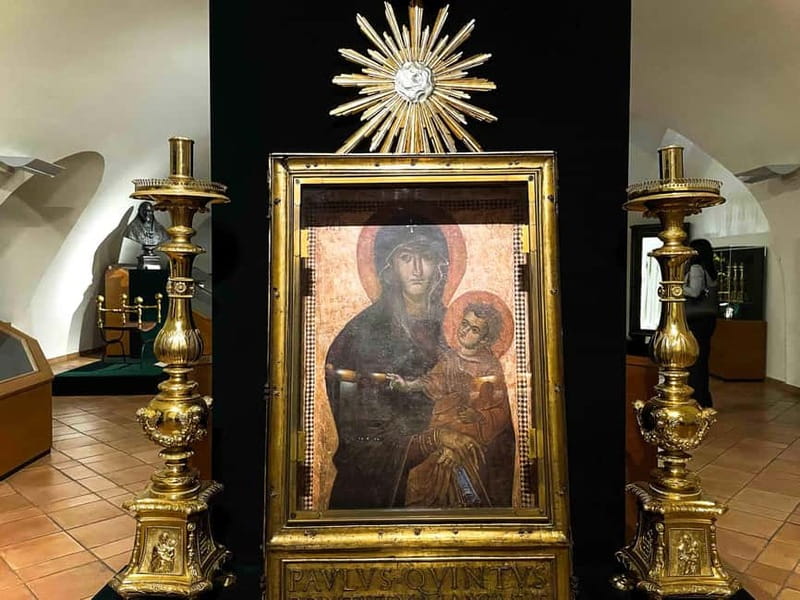
The audio guide is available in English, French, German, Italian, and Spanish when that option is selected. It is available on site, and the guide gives structure to what could otherwise be a rather confusing walk through a large basilica.
The audio content appears most useful for altars, sculptures, mosaics, and the main religious stories. Several highly positive experiences focused on the way it revealed details that would have been missed without explanation.
There are two cautions. First, the guide is not a live person, so it cannot adapt to your interests or answer questions. Second, there can be a wait to receive the audio device before entering. If you are in a hurry, that delay may offset part of the time saved at the entrance.
The dome panoramic view 360 option does not include the audio guide. Check the exact option before paying. If the guide is important to you, do not assume that every version of the ticket includes it.
Dress, timing, and the practical details
Santa Maria Maggiore is an active place of worship, so modest dress is required. Shorts and sleeveless shirts are not allowed. This is not a minor technicality: you can have the correct ticket and still face a problem at the entrance if your clothing does not meet the basilica’s rules.
Last entry is typically 30 to 60 minutes before closing. Since the visit is designed to last about an hour, do not arrive near the end of the day and expect a full, relaxed stop. Check the available starting times before booking.
The experience offers free cancellation up to 24 hours in advance and a reserve-now, pay-later option. Those terms are useful if your Rome schedule is still shifting, but they do not change the basic value question: you are paying for access and guidance at a church with free standard entry.
Who should book this experience?
I would recommend it to you if you have limited time, dislike queueing, or want help reading the basilica’s art without hiring a private guide. It is also a good fit if you want to visit independently but still prefer some explanation of what you are seeing.
It suits first-time Rome visitors who might otherwise walk through too quickly. The audio guide provides a clear reason to pause at the mosaics, chapels, crypt, tombs, and Bernini’s grave.
You may want to skip it if you are visiting at a quiet time, have no fixed schedule, or are happy to enter for free and explore without commentary. The lack of a live guide also matters if you prefer conversation and detailed questions.
Should you book Santa Maria Maggiore?
Book this ticket when avoiding a possible long queue is worth $17 to you. The basilica is free, but the separate entry can save time, and the audio guide adds real value by explaining artwork and religious details that are easy to miss.
My strongest advice is to choose the audio guide option, confirm whether it is included in your selected package, dress modestly, and allow time to find the host at Via Liberiana 8. If the queue is short when you arrive, the price may feel steep. If the line is long and your schedule is tight, the convenience can be money well spent.
FAQ
Is entrance to Santa Maria Maggiore free?
Yes. Entrance to the basilica is free, but there is usually a long waiting line. This ticket pays for skip-the-line access and, when selected, an audio guide.
What does the $17 ticket include?
The ticket includes skip-the-line entry to Santa Maria Maggiore. A multilingual audio guide is included if you select that option.
Is there a live guide?
No. This is a self-guided visit. An English-speaking host or greeter helps with the meeting and entry process, but there is no live guide leading the visit inside.
Which languages are available for the audio guide?
The audio guide is available in English, French, German, Italian, and Spanish when the audio guide option is selected.
Where is the meeting point?
Meet at Via Liberiana 8, next to Santa Maria Maggiore and the green kiosk.
How long does the experience last?
The stated duration is one hour. Check the available starting times when booking.
Does every ticket include the audio guide?
No. The audio guide is optional, and the Santa Maria Maggiore Dome Panoramic View 360 option does not include one.
What clothing is required?
Modest dress is required because the basilica is an active place of worship. Shorts and sleeveless shirts are not allowed.
Can I cancel the booking?
Yes. You can cancel up to 24 hours in advance for a full refund. A reserve-now, pay-later option is also available.
New audio tours around Rome
- Rome: St. Peter’s Basilica and Dome Entry + Audio Guide★ 4.5 · 13 reviews
- St. Peter’s Basilica: Hosted Entrance & Digital Audioguide★ 4.1 · 35 reviews
- Sorrento & Pompeii Day Trip from Rome Audio Guide Tour★ 4.2 · 50 reviews
- Rome:St. Peter’s Basilica Hosted Entry + Official Audioguide★ 3.4 · 10 reviews
- Colosseum, Roman Forum, Palatine Hill access and AudioGuide★ 4.7 · 12 reviews
- Rome+Jubilee Audioguide – TravelMate app for your smartphone★ 4.2 · 38 reviews
- Rome:Ostia Antica Skip-the-line Ticket & Audioguide★ 4.3 · 11 reviews
- Rome: Vatican Museums & Sistine Chapel Entry with Audio App★ 4.3 · 240 reviews
Rome Audio Tours, compared.
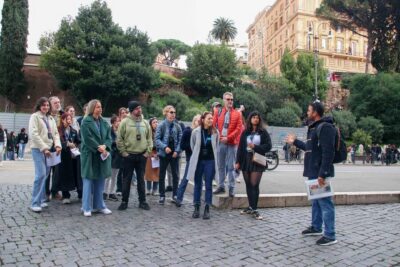
Rome: Colosseum & Forum with Audio Guide App -Optional Arena
Read our review →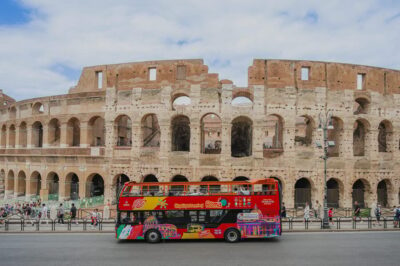
Rome: City Sightseeing Hop-on Hop-off Bus with Audioguide
Read our review →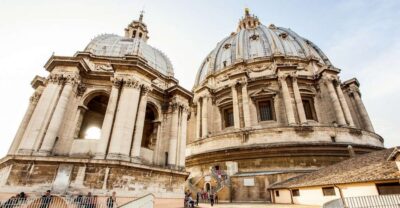
Rome: St. Peter’s Basilica & Dome Entry Ticket & Audio Tour
Read our review →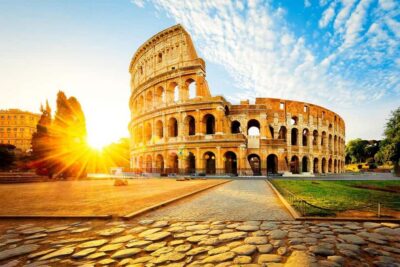
Colosseum, Roman Forum & Palatine Hill with Audioguide App
Read our review →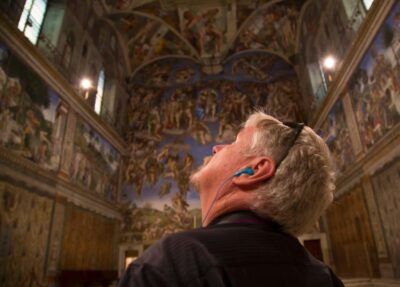
Vatican & Sistine Chapel Ticket with Optional Audio Guide
Read our review →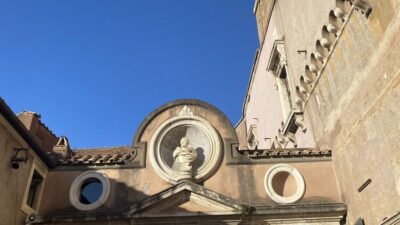
Rome: Castel Sant’Angelo Entry Ticket & Digital Audioguide
Read our review →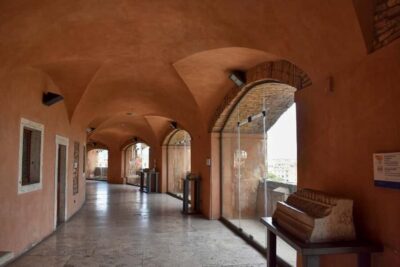
Rome: Castel Sant’Angelo Entry Ticket & Audio App
Read our review →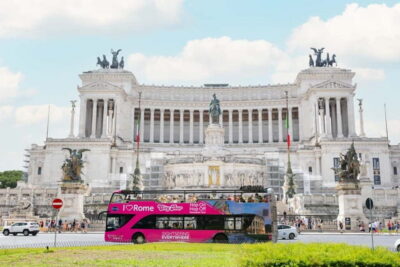
Rome: Hop-on Hop-off Sightseeing Bus Tour with Audioguide
Read our review →Browse the lists this tour appears in