
Review · AMSTERDAM
Amsterdam Self-Guided Audio Tour
Amsterdam’s best feature is its walkable mix of grand civic buildings, quiet courtyards, world-class museums, and everyday markets. This self-guided tour lets you connect those places in your own order, with short audio stops covering everything from Centraal Station and Dam Square to Anne Frank House and Zaanse Schans.
I like the very low price and the freedom to skip sights you do not care about. I also like the private format: no group, no fixed meeting time, and no guide hurrying you past a painting or canal view. The catch is that this is not GPS-guided, entry fees are extra, and the audio links can be used only for up to six days.
- 21 stops in one flexible plan: Mix famous museums with markets, parks, architecture, and historic houses.
- Two useful digital links: One opens the audio playlist on SoundCloud, and the other opens a Google My Maps route.
- A $6 starting price: The fee covers the audio content, not museum tickets or transport.
- English narration only: You listen through your own phone and headphones.
- No fixed route: Start and finish anywhere, visit only selected stops, and spread the tour over several days.
- Advance planning matters: Paid attractions often need separate admission, and the experience cannot be changed or refunded after booking.
A $6 introduction to Amsterdam on your own terms
At $6 per person, this is one of the least expensive ways to add historical context to a day in Amsterdam. You are not paying for a live guide, transport, or entry to attractions. You are paying for a set of audio explanations and a map that helps you make sense of the city.
That distinction matters. The audio can tell you why Centraal Station was built on wooden poles, what happened in the secret rooms behind the Anne Frank House bookcase, or how a Catholic church came to occupy a canal-house attic. It cannot open museum doors, reserve timed admission, answer a question on the spot, or steer you around a crowded street.
The tour is presented as a private activity for your group. You receive the links through the booking platform on your chosen date, before your start time. The links remain valid for up to six days, giving you room to divide the stops between several outings.
The current score is 3.2 out of 5 from five ratings, so I would treat this as a useful budget tool rather than a polished substitute for a personal guide. One strong response praised the engaging narration and the quick way it helped build a sense of the city. A separate complaint focused on the inability to change the booking date. Read the terms before paying, especially because the booking is non-refundable and cannot be amended.
How the SoundCloud and Google My Maps setup works
The first link opens a SoundCloud playlist containing the audio guides. The recordings are arranged in a suggested order, but you can play any stop whenever you like. You can listen before leaving your hotel, use the recordings while walking, or save the audio for the approach to a particular sight.
The second link opens an interactive Google My Maps itinerary. Use a web browser such as Safari or Chrome rather than the Google Maps app. Headphone icons mark the attractions, and each location includes a link to its matching audio recording.
Before you set out, open both links and test them. You need a charged smartphone, headphones, and internet access. The tour is simple once the links work, but a little preparation prevents you from standing outside a museum trying to find the right track.
This is not a GPS-guided walk. The map does not automatically tell you when to turn or start the next recording. You must choose the stop, navigate between places yourself, and manage the audio. That is a drawback for anyone wanting a hands-free route, but a benefit if you dislike rigid tours.
More Self-Guided Audio Tours in the Netherlands
- Amsterdam’s Red Light District: A Self-Guided Audio Tour
★ 4.5 · 9 reviews - Amsterdam Scavenger Hunt and Highlights Self Guided Audio Tour
★ 4.0 · 9 reviews - Self-Guided Audio Tour of The Red Light District
★ 5.0 · 5 reviews
From Centraal Station to NEMO and the maritime quarter
Centraal Station makes a sensible first stop. The audio focuses on the grand Victorian building, its foundation on thousands of wooden poles, and the political arguments over placing such an important gateway in the harbor. You also get background on decorative details, wartime resistance, and the station’s role in reshaping Amsterdam’s relationship with water.
Allow about 20 minutes for the recording, then look around before moving on. The stop is free, and the building is easy to reach by public transport. It works best as an orientation point rather than a full station tour.
The nearby OBA Library offers a sharp contrast. Its modern glass design and light-filled public spaces reflect Amsterdam’s newer approach to culture and city life. The audio explains how the waterfront district changed from an industrial area into a cultural center, along with the library’s design and sustainable features.
NEMO Science Museum continues the theme of engineering and water. The green, ship-shaped building was designed by Renzo Piano and sits above a tunnel. The audio explains the structure, the copper exterior, and the building’s role in urban renewal. Admission is not included, so you can simply admire the architecture and rooftop views, or buy a ticket if the exhibits appeal to you.
The National Maritime Museum occupies a 17th-century naval storehouse. Its audio brings in shipbuilding, navigation, trade, exploration, and the Dutch fleet. The building itself is a major part of the experience, but the museum requires a separate ticket. Give yourself more than the suggested 20 minutes if you plan to see the exhibits rather than just walk around the exterior.
War, faith, and Amsterdam canal houses
The Verzetsmuseum presents Dutch resistance during World War II through stories of secret newspapers, rescue work, and moral choices under occupation. The planned audio segment is short, about 10 minutes, while the museum deserves longer if you want time with its displays. Admission is extra.
Our Lord in the Attic Museum offers one of the city’s most unusual interiors. A complete Catholic church was built in the upper floors of a 17th-century canal house at a time when public Catholic worship was forbidden. The narrow stairs and cramped rooms are part of the experience, so take your time and watch your footing.
The recording explains the religious politics behind the house, the families who maintained the church, and the clever use of domestic space to conceal worship. This is a good example of why an audio guide can help: from the street, the building looks like another canal house. Inside, its purpose is far more surprising.
The Rembrandt House gives you a direct connection to the artist’s working life. This was Rembrandt van Rijn’s home and studio, restored to show domestic rooms, collecting habits, materials, and the financial problems that eventually forced him to leave. The audio places his work within Amsterdam’s 17th-century art market and explains how his techniques developed.
H’ART Museum provides a different view of art in a restored historic building. Its exhibitions bring contemporary work into a former 19th-century banking hall. The audio focuses on the building’s conversion, its collectors, and the way historic rooms can frame modern exhibitions.
Body Worlds is the most sensitive stop on the list. It displays preserved human bodies using plastination and raises questions about science, death, donation, and ethics. The recording explains the preservation process and donation program, but you should decide in advance if this subject is right for you. Admission is separate.
Dam Square, the Royal Palace, and Anne Frank House
Dam Square is a natural central stop. The audio traces its change from a medieval market to a setting for royal ceremonies, public demonstrations, wartime announcements, and civic gatherings. You can see the Royal Palace and National Monument from here, making the square a useful place to connect several chapters of Amsterdam’s past.
The Royal Palace itself was built as Amsterdam’s city hall during the Dutch Golden Age. Its costly construction, elaborate decoration, and difficult foundations show how a wealthy trading city wanted to present itself to the world. Later, the building became a royal residence and was tied to Napoleon’s European rule.
Admission is extra, and the palace is worth entering if you enjoy architecture, sculpture, and grand civic interiors. The audio points out ceiling paintings, maritime references, and the political shift from city government to monarchy.
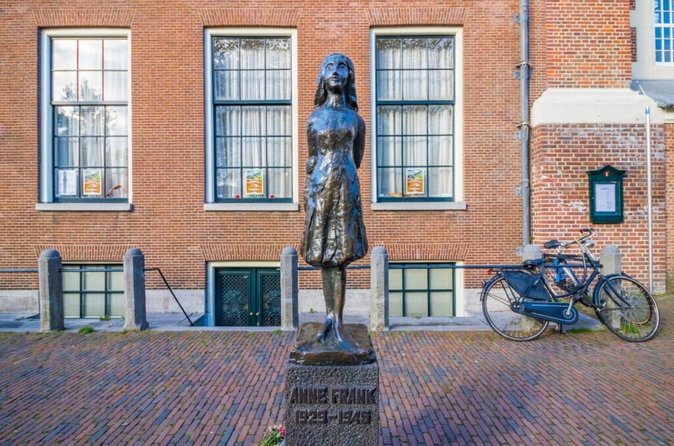
The Anne Frank House requires special planning. The audio provides context about the persecution of Dutch Jews, the people who hid behind the bookcase, Anne’s writing, and the preservation of her diary and rooms. It cannot replace entry to the house, and the ticket is not included.
This is one stop where you should not assume you can simply arrive and walk in. The supplied information gives no ticketing details, so check the museum’s current admission rules separately before building your day around it. Even with a ticket, allow quiet time afterward. The subject is serious, and the experience is not something to rush between shopping stops.
More Self-Guided Audio Tours in Amsterdam:
- Self-Guided Audio Tour Holocaust Series: The Jewish Quarter
★ 5.0 · 5 reviews - Self Guided Tours Amsterdam With 100 Captivating Audio Stories
★ 4.5 · 3 reviews - Houseboat Museum Amsterdam Self Guided Audio Tour
★ 5.0 · 3 reviews - Athens: Acropolis Ticket & Optional Self-Guided Audio Tours
★ 4.1 · 2,542 reviews
Begijnhof and the Museum Quarter
Begijnhof is a calm courtyard in the middle of the city. The audio introduces the Beguines, religious women who lived in a community without taking formal vows, and explains how the courtyard survived religious change and urban growth.
Look for the old wooden house and the evidence of Catholic and Protestant worship. The courtyard is free, but it is a place for quiet observation rather than loud conversation or a quick photo stop.
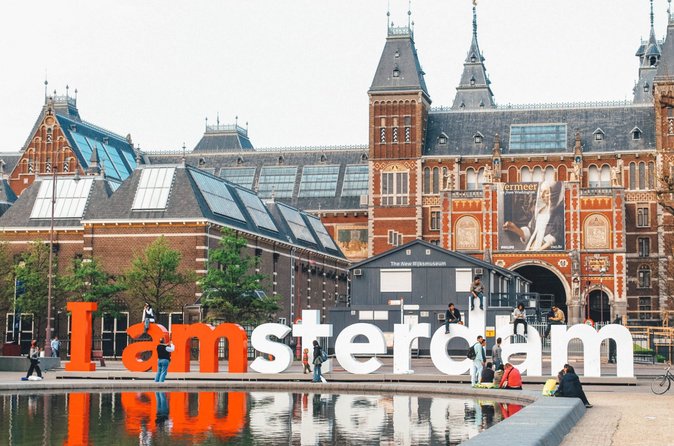
The Rijksmuseum is the largest commitment in the group. Its galleries cover eight centuries of Dutch art and history, with Rembrandt’s Night Watch as the best-known highlight. The audio also explains the building’s Gothic Revival design, renovation, conservation work, and the national identity tied to the museum.
Twenty minutes is enough for a preview, not a proper museum visit. If the Rijksmuseum matters to you, give it a separate block of time and use the audio as an introduction rather than trying to race through every room.
The Moco Museum offers a smaller, more contemporary contrast. Its exhibitions connect street art, digital installations, sculpture, and popular culture, with artists such as Banksy included in the description. The compact setting may suit you if you want modern art without committing half a day to a large institution.
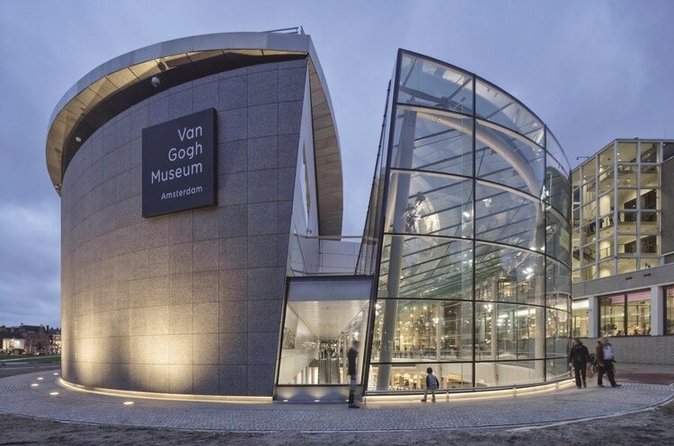
The Van Gogh Museum needs the same warning as the Rijksmuseum. The audio covers Van Gogh’s changing methods, relationships, mental struggles, pigments, brushwork, and posthumous fame. Those subjects can make the paintings more personal, but 20 minutes is only a starting point. Admission is extra.
The Stedelijk Museum shifts the focus to modern and contemporary art. The audio introduces De Stijl, CoBrA, experimental exhibitions, and the museum’s unusual bathtub-shaped extension. It is a good stop for readers who prefer ideas, installations, and recent art to old master paintings.
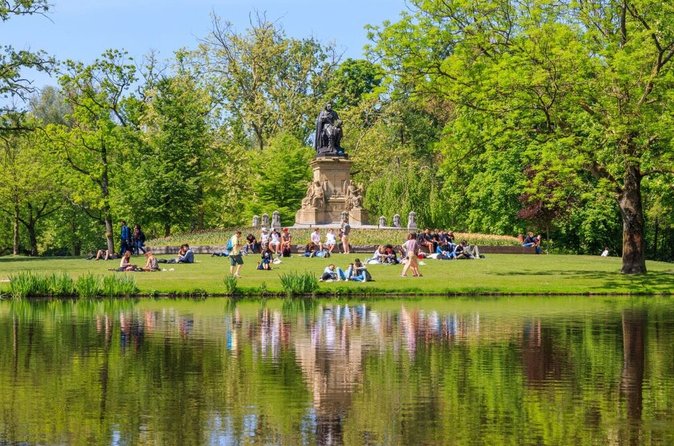
Vondelpark gives you space to pause. The audio connects the park with the surrounding museum district, concert hall, shopping streets, and 19th-century urban planning. Admission is free, and the park can break up a long museum day.
Food, views, and a trip beyond Amsterdam

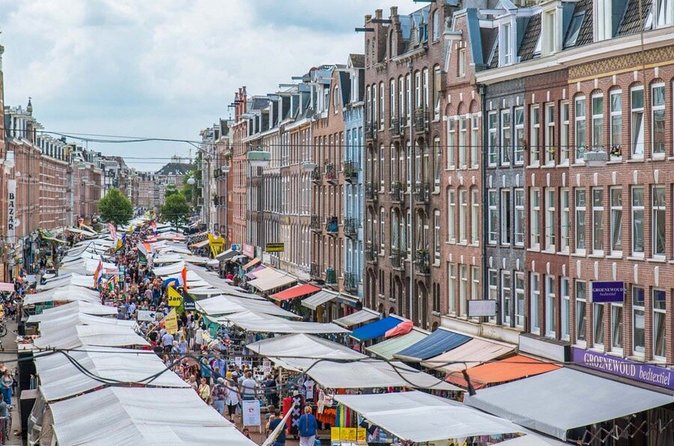
Albert Cuyp Market adds daily life to a route otherwise heavy on museums. You can browse Dutch cheese, seasonal foods, international specialties, and family-run stalls while listening to the market’s story. The audio also explains how immigration shaped the food on offer.
This is a place to use the guide lightly. Pause the recording, look around, and buy something if you want to sample the market rather than merely pass through it. The market is free to enter, but food purchases are your responsibility.
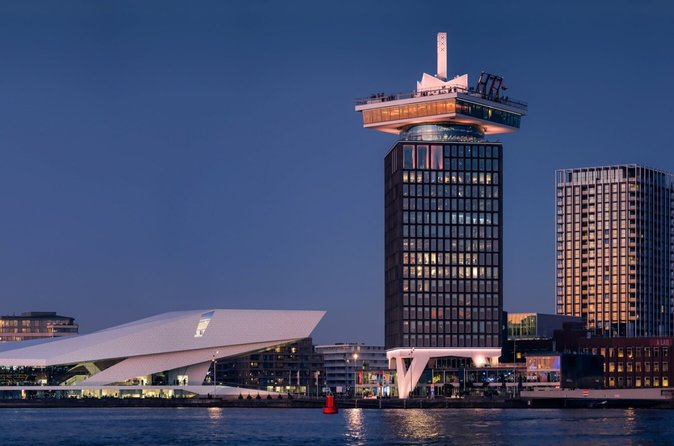
A’dam Lookout gives you a high view across Amsterdam’s canals, old neighborhoods, and newer development. The audio explains the tower’s change from broadcasting facility to observation deck, along with the city’s water management and building challenges.
Admission is not included. The value depends on your interest in city views and photography. If you already plan to visit other observation points, you may prefer to skip this stop and save the ticket cost.
Zaanse Schans is the one major outing beyond central Amsterdam. Its windmills, historic buildings, traditional crafts, cheese-making, and wooden-shoe demonstrations present a preserved view of pre-industrial Dutch life. The audio explains windmill engineering and how wind power supported industry.
Transport is not included, and the information does not provide travel directions or journey times. Plan this as its own half-day-style outing rather than assuming it fits neatly between central museums. It is also the stop least suited to a walking route through Amsterdam proper.
Who gets the most from this self-guided format?
I would choose this tour if you want a low-cost orientation and enjoy deciding your own schedule. It works especially well for independent visitors, couples, families with different interests, and repeat visitors who want to fill gaps without joining a group.
It also suits a long stay. You can spend one day around Centraal Station and the maritime quarter, another around Dam Square and the canal houses, and a third in the Museum Quarter. The six-day link period gives you room to match the route to weather, opening hours, and your energy.
I would be more cautious if you want a human guide, live questions, detailed directions, or included admission. The audio tracks are short, and the suggested 20 minutes per stop is not enough for the major museums. You also need to be comfortable managing your own phone, map, headphones, and tickets.
The English-only format is another limit. There is no guide language choice listed, so do not book expecting another language.
Is the $6 price good value?

Yes, if you use it as a flexible city primer. For the price of a small snack, you get audio coverage of 21 places, a suggested route, and the option to listen over several days. The strongest value comes from the free stops: Centraal Station, OBA Library, Dam Square, Begijnhof, Vondelpark, and Albert Cuyp Market.
The value drops if you expect a full museum tour. NEMO, the Maritime Museum, Verzetsmuseum, H’ART, Rembrandt House, Our Lord in the Attic, Body Worlds, the Royal Palace, Anne Frank House, the Rijksmuseum, Moco, Van Gogh Museum, Stedelijk, A’dam Lookout, and Zaanse Schans all require separate planning or admission costs.
Think of the $6 as an audio layer added to your Amsterdam visit, not as a ticket bundle. That is a fair deal, provided you understand the limits before booking.
Should you book it?
Book it if you want privacy, flexibility, and a cheap way to put historical context around Amsterdam’s major sights. I especially like it for a first day in the city, when you can use the free stops to learn the layout before choosing which museums deserve your money and time.
Skip it if you need a live person, a GPS route, transport, or a refund option. Check your date carefully because the booking cannot be changed or refunded, and test the links as soon as they arrive. With headphones, internet access, and a bit of planning, this is a practical budget companion, not a full guided tour.
FAQ
How much does the Amsterdam Self-Guided Audio Tour cost?
The listed price is $6 per person.
How many attractions are included?
The audio playlist and itinerary map cover 21 Amsterdam attractions, including Zaanse Schans.
Is this a GPS-guided tour?
No. It is a self-guided audio tour with an interactive map. You choose the order, route, start point, and finish point yourself.
How long does the experience take?
The suggested duration is about 3 to 9 hours, but you can split the stops across several days. The access links remain valid for up to six days.
What do I receive after booking?
You receive a private SoundCloud playlist link for the audio guides and a Google My Maps link showing the 21 attractions and their individual audio links.
Are entrance tickets and transport included?
No. Entry fees are not included, and there is no pickup, drop-off, or other transportation included.
What do I need to bring?
Bring headphones or earphones, a fully charged smartphone, and internet access. Open the map link in a web browser rather than the Google Maps app.
Can I change or cancel the booking?
No. The experience is non-refundable and cannot be changed for any reason.
New audio tours around Amsterdam
- Van Gogh Museum Ticket with Audio Guide and Unlimited Access Time★ 5.0 · 25 reviews
- Van Gogh Museum Amsterdam Entry with Optional Audio Guide★ 4.0 · 111 reviews
- Van Gogh Museum with Audio Guide★ 3.5 · 80 reviews
- Self-Guided Audio Tour of The Red Light District★ 5.0 · 5 reviews
- Combo Ticket: Rijksmuseum Amsterdam & 1h Cruise with Audio Guide★ 3.0 · 83 reviews
- Rijksmuseum Amsterdam Audio guide Tour with Unlimited access time★ 5.0 · 32 reviews
- Self Guided Tours Amsterdam With 100 Captivating Audio Stories★ 4.5 · 3 reviews
- Amsterdam Walking Tour with Audioguide on Your Smartphone★ 3.5 · 3 reviews
Amsterdam Audio Tours, compared.
Amsterdam: 75 Minute City Canal Cruise with Audio Guide
Read our review →
Amsterdam: City Centre Canal Cruise including Audioguide
Read our review →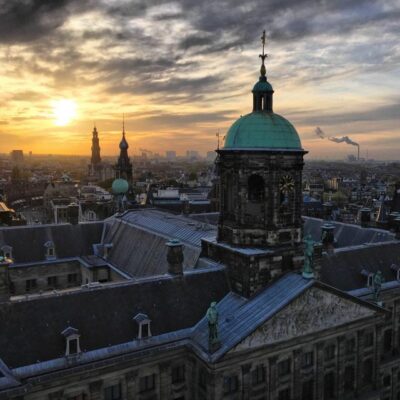
Amsterdam: Royal Palace Entry Ticket + Audio guide
Read our review →
Amsterdam: Heated Canal Cruise Including Audioguide
Read our review →
Amsterdam: Canal Cruise with Live Commentary & Audio Guide
Read our review →
Amsterdam Sightseeing Canal Cruise with Audio Guide
Read our review →
Amsterdam City Centre Cruise on heated boat with Audioguide
Read our review →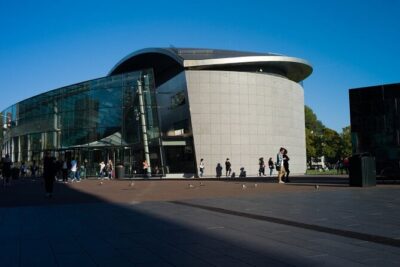
Amsterdam Van Gogh Museum with Audio or Guided Tour
Read our review →Browse the lists this tour appears in