
Review · ATHENS
Acropolis Parthenon Entry Ticket and Virtual Reality Audio Tour
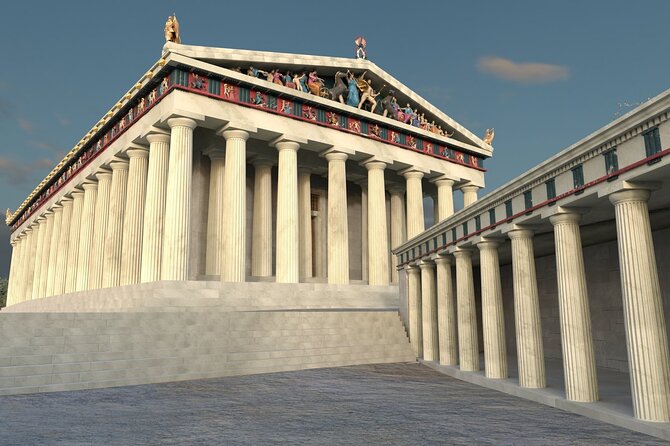
The clever part of this Acropolis visit is the way virtual reality brings ruined buildings back to life. You walk among the Theater of Dionysus, Parthenon, Propylaea, Erechtheion, Temple of Athena Nike, and Herodes Atticus Odeon while the app shows how these places may have looked in ancient times.
I like the freedom to pause, wander, and replay information instead of keeping up with a live guide. I also like the digital ticket, which is designed to get you past the ticket line and into the site with less fuss. The drawback is that you must supply your own phone and earphones, and the experience lacks the give-and-take of a personal guide.
Key points to know before booking
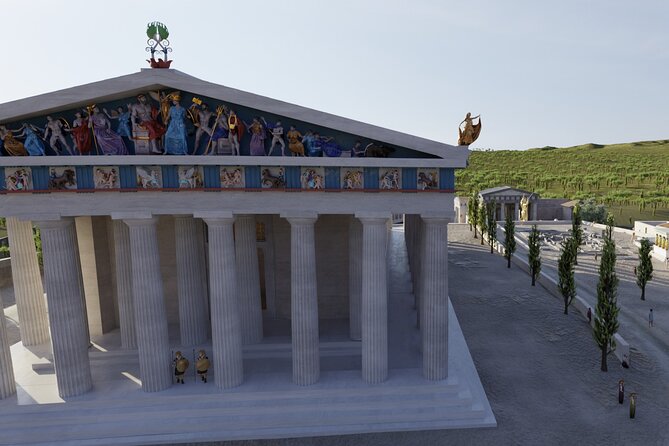
- VR reconstructions add lost detail: The app uses 3D images to show the Acropolis as it may have appeared in antiquity.
- Six major sights fit into about two hours: You visit the Theater of Dionysus, Parthenon, Propylaea, Temple of Athena Nike, Erechtheion, and Herodes Atticus Odeon.
- You explore at your own speed: Pause the audio, study the map, and take time for photographs without waiting for a group.
- The digital ticket is included: Entry to the Acropolis and Parthenon comes with the audio tour.
- You need your own equipment: A mobile phone and earphones are not supplied.
- The views are part of the experience: From the Acropolis, you can look across Athens toward the surrounding mountains and the Aegean Sea.
What this Acropolis experience actually gives you
At $54.42 per person, this is not the cheapest way to enter the Acropolis. The price includes admission plus a self-guided VR audio application, so you are paying for more than a basic ticket. The value depends on how much you want historical explanation and visual reconstruction, and how comfortable you are guiding yourself.
You do not get a live guide or instructor. That matters. A good human guide can answer questions, adjust the pace, and point out details that match your interests. This experience takes a different route. You receive a map, a planned route, spoken information, and 3D views that help you picture buildings that are now partly ruined.
I would see it as a middle option between a plain entry ticket and a private guided tour. You get structure without being tied to a group, but you also need to manage the app, phone battery, earphones, and timing yourself.
The visit begins at the south slope of the Acropolis, on Dionysiou Areopagitou Street. The activity ends back at the meeting point area. Transportation to the Acropolis is not included, so you must make your own way there using Athens public transport or another option.
The booking is offered in English, while the application provides information in nine languages. Since the supplied details do not name the available languages, check the language selection carefully before you pay if English is not your preferred choice.
More audio tours around Athens:
- Athens: Cape Sounio & Poseidon Temple Trip with Audio Guide
★ 4.4 · 4,521 reviews - Athens: Acropolis Ticket with Audio Guide
★ 4.0 · 3,575 reviews - From Athens: Delphi Full Day V.R. Audio Guided Tour
★ 4.6 · 3,028 reviews
Starting at the Theater of Dionysus
The Theater of Dionysus is a strong place to begin because it connects the Acropolis to one of ancient Athens’ most important cultural traditions. This was a theater dedicated to Dionysus, the god associated with wine and theater, and it is regarded as one of the oldest theaters in the world.
The stone seating and open performance space are easier to understand when you hear what once took place here. The audio guide gives the theater a role in the wider story of Athenian public life, rather than treating it as simply another archaeological stop.
This is where the VR feature can help most. Broken stone does not always tell you how a performance space worked. A reconstruction gives you a better sense of its former scale and purpose, while the narration explains why theater mattered in ancient Greek culture.
Allow roughly part of the first hour for this lower section and the climb toward the summit. The path is not described as difficult, but the ground can be uneven and slick. Comfortable shoes are a sensible choice, and carrying water is good advice, especially when the weather is warm.
Reaching the Parthenon

The Parthenon is the main event, and no screen can replace the first sight of the temple itself. Its size, position, and surviving columns make it far more powerful in person than in photographs.
The temple was dedicated to Athena and is one of the best-known symbols of ancient Greek civilization. It is also part of the Acropolis, a UNESCO World Heritage Site. The audio guide places the building within its architectural and cultural setting, while the VR images help you picture its earlier appearance.
That combination is useful because the Parthenon you see today is not the complete building of antiquity. The remaining structure tells part of the story. The reconstructed images add missing color, form, and scale, though you should treat them as visual aids rather than a time machine or a perfect record of every original detail.
You will have time to stop, listen, look around, and take photographs. This is one of the strongest reasons to choose a self-guided format. You do not have to leave the best viewpoint just because the group is moving on.
The summit also gives you wide views over Athens, the nearby mountains, and toward the Aegean Sea. I would save a few minutes to simply look outward. The city spreads far below, and that setting helps explain why the Acropolis has such a strong place in Athens’ identity.
Passing through the Propylaea
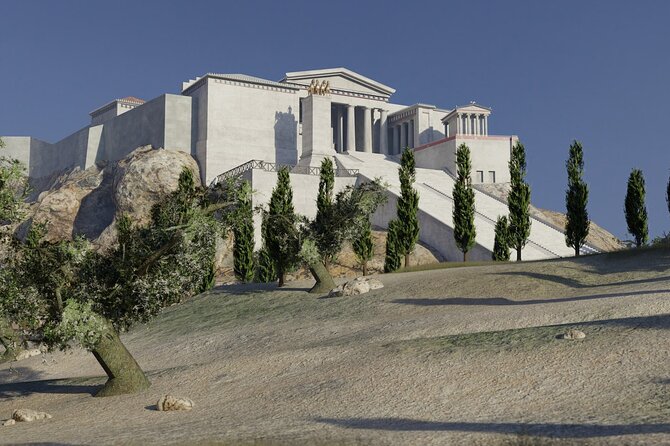
The Propylaea is the monumental gateway to the Acropolis. It was designed as the grand entrance, so it provides an important change in mood as you move from the approach into the sacred upper complex.
The structure is not as instantly familiar as the Parthenon, but it helps you understand that the Acropolis was planned as a major ceremonial center. The audio guide explains its role, while the route map helps you know where to go next.
A self-guided app is especially useful here because the Acropolis can feel confusing once you reach the upper area. The route gives you a basic order for the sights, and the map can prevent you from wandering past a building without realizing its importance.
The itinerary assigns about one hour to the main Acropolis section, including the Theater of Dionysus, Parthenon, and Propylaea. That is enough for a focused visit, but not enough for endless pauses, long photo sessions, or a slow archaeological study of every stone. If you want to linger, plan on spending longer than the approximate two-hour duration.
Same sights, a different narrator:
- Athens: Acropolis Museum Ticket with optional Audio Guide
★ 4.4 · 2,652 reviews - From Athens: Small-Group Delphi, Museum & Arachova Day Trip
★ 4.8 · 2,476 reviews - Athens: Peloponnese Highlights Day Trip and V.R. Audio Guide
★ 4.5 · 1,425 reviews - Athens: Acropolis Museum Ticket with Audio Guide
★ 4.1 · 835 reviews
The Temple of Athena Nike and the Erechtheion
The Temple of Athena Nike is smaller than the Parthenon, but its size makes it no less interesting. It was built for Athena in her role as the goddess of victory, and its position near the entrance gave it a clear symbolic purpose.
The VR presentation helps explain how a small temple could carry a large political message. Athens was presenting itself as ambitious and resilient, and the site’s setting made that message visible to anyone entering the Acropolis.
The Erechtheion offers a different kind of appeal. Its most famous feature is the Caryatids, female figures used as columns. Their shape makes the building easy to recognize, but the audio guide also connects the structure to the myths of Athena and Poseidon.
This part of the visit takes about 30 minutes in the stated plan. That is a useful target, though the Caryatids may tempt you to stop longer. Look closely at the design and listen before moving on. The VR images can show how the building’s unusual layout and decorative details fit together.
The app’s reconstructions are valuable here because the Erechtheion is not a simple rectangular temple. Its different levels, porches, and stories need explanation. Without context, you might notice the famous columns but miss the building’s larger mythological and architectural role.
The Herodes Atticus Odeon
The Odeon of Herodes Atticus is a Roman-era performance venue built by Herodes Atticus. It was used for music and theater, and unlike many ancient buildings, it still serves as a performance space today.
The restored stone auditorium is visible from the Acropolis route, although access and viewing conditions can vary. The audio section focuses on its use as a venue and its acoustic design, helping you think about how sound worked in an open-air theater long before modern equipment.
The VR view gives you another way to read the structure. Instead of seeing only a curved wall and seating, you can picture the building as an active place for performances. That makes this stop more than a quick photo opportunity.
The planned time here is about 30 minutes. You can use it to listen, take in the scale, and look back toward Athens. It is a fitting final stop because it links ancient performance with a venue that remains part of the city’s cultural life.
Why the VR app is useful, and where it falls short
The strongest feature is the ability to compare the ruins in front of you with 3D views of their earlier form. The Parthenon, Propylaea, and Erechtheion are easier to understand when you can see more than the surviving fragments.
The app also gives you control. You can pause the narration, repeat a section, and adjust your time at each stop. This suits independent visitors who prefer not to follow a guide waving a flag or calling a group together.
The map and route are practical additions. They help you keep track of the sequence, which is useful on a large archaeological site with several buildings close together. The audio information is available in nine languages, making the app more flexible than a tour that operates only in one spoken language.
Still, VR has limits. You are handling a phone while walking on stone paths, and you may need to look down at the screen at the same time you are trying to enjoy the real site. The reconstructed views can also draw attention away from the original ruins if you use them constantly.
Bring your own earphones. They are not included, and sharing audio from a phone speaker would be less practical in a crowded outdoor setting. You also need a charged mobile phone, since the ticket and audio application depend on digital access.
Timing, crowds, and the physical side of the visit
The experience lasts about two hours, but the site rewards a slower pace. If you are mainly interested in the Parthenon and the major temples, two hours can work well. If you want quiet moments, many photographs, or careful listening at every stop, allow extra time.
An early morning visit is a smart choice based on the practical conditions described in the experience. You can reduce exposure to the strongest heat and may find the site easier to appreciate before the day becomes busier. This is especially useful because much of the visit takes place outdoors with limited shade.
Wear comfortable shoes with a reliable grip. The stone paths can be slick, and the route includes walking uphill. Bring water, since the site experience is active rather than a short indoor museum visit.
The maximum group size is 50 people, although the self-guided format means you are not expected to move as one tight group. You can spread out at the stops and listen independently. That does not guarantee a quiet visit, but it gives you more control than a conventional group tour.
The activity requires good weather. If poor weather causes cancellation, you are offered another date or a full refund. You can cancel for a full refund up to 24 hours before the start time. Changes or cancellations inside that 24-hour window are not accepted for a refund.
Who will get the most from this ticket
I would recommend this experience to you if you want historical background but do not need a live guide. It works well for independent visitors, couples, families with older children, and anyone who likes visual explanations.
It is also a good fit if you have already read about the Acropolis and want to see how the buildings may have looked in their original setting. The VR component gives you more than a basic audio narration.
You may prefer another option if you want detailed conversation, archaeological debate, or help with questions on the spot. A private guide or small walking tour would give you more personal attention. You should also think twice if you do not want to use a smartphone during a major sightseeing stop.
The nearby Acropolis Museum is worth adding to your Athens plans. The cool interior and displays provide context for the buildings you see outdoors, and the two experiences work well together. The museum is not included in this ticket, so plan and pay for it separately.
Is the $54.42 price fair?
At $54.42, the price is reasonable for someone who values both entry and an enhanced self-guided program, but it is high if you only want access to the ruins. The key question is not the ticket alone. It is whether the VR reconstructions will help you understand the Acropolis better than a standard audio guide or your own research.
You receive the Acropolis and Parthenon entry ticket, the virtual audio application, and multilingual self-guided content. You do not receive transportation, a live guide, earphones, a phone, or reduced admission.
I like the flexibility built into the price. You can move at your own speed, and the app provides enough structure to keep the visit from becoming a walk among disconnected ruins. The value is weaker for visitors who already know the site well or who prefer to spend their time without a phone.
Should you book this Acropolis VR tour?
Book it if you want a straightforward way to see the major Acropolis sights and understand their earlier appearance without joining a live group. Arrive early, bring water, wear shoes with good grip, and carry your own earphones and charged phone.
Skip it if you want a personal historian, hotel pickup, or a lower-cost entry-only ticket. For many first-time visitors, though, the combination of digital entry, clear routing, spoken history, and 3D reconstructions makes the extra cost worthwhile.
FAQ
Where does the Acropolis VR tour start?
The experience starts at the south slope of the Acropolis of Athens on Dionysiou Areopagitou Street, Athens 105 58, Greece.
Where does the activity end?
The activity ends back at the meeting point area.
How long does the experience last?
The visit lasts approximately two hours. The planned timing includes about one hour for the main Acropolis stops, 30 minutes for the Temple of Athena Nike and Erechtheion, and 30 minutes for the Herodes Atticus Odeon.
What is included in the ticket?
The price includes entry to the Acropolis and Parthenon, a virtual audioguide application, and a multilingual self-guided audio tour.
Is there a live guide?
No. This is a self-guided experience using a virtual audio application. A live guide or instructor is not included.
Do I need to bring my own phone and earphones?
Yes. A mobile phone and earphones are not included, so you need to bring both if you want to use the audio and VR features.
Can I cancel for a refund?
Yes. You can cancel at least 24 hours before the start time for a full refund. Cancellations or changes made less than 24 hours before the start time are not accepted for a refund. If poor weather causes the activity to be canceled, you are offered a different date or a full refund.
New audio tours around Athens
- Temple of Olympian Zeus: Self-Guided Audio Tour on your Phone (without ticket)★ 4.0 · 8 reviews
- Ancient Agora of Athens: A Self-Guided Audio Tour★ 3.5 · 3 reviews
- Self Guided Tour In Athens With 100 Captivating Audio Stories★ 4.0 · 4 reviews
- Athens Ticket Pass: Acropolis & 6 Sites with 5 Audio Guides★ 3.5 · 84 reviews
- E-ticket for Kerameikos with Audio Tour on Your Phone★ 5.0 · 4 reviews
- Mycenae, Epidaurus & Nafplio Full-Day V.R audio guided Tour★ 4.5 · 248 reviews
- Audioguided tour of Athens’ alternative neighbourhood of Exarchia★ 5.0 · 2 reviews
- Athens Acropolis Museum Reserved Entry Ticket and Audio Tour★ 3.0 · 2 reviews
Athens Audio Tours, compared.

Athens: Cape Sounio & Poseidon Temple Trip with Audio Guide
Read our review →

From Athens: Delphi Full Day V.R. Audio Guided Tour
Read our review →
Athens: Acropolis Museum Ticket with optional Audio Guide
Read our review →
From Athens: Small-Group Delphi, Museum & Arachova Day Trip
Read our review →
Athens: Peloponnese Highlights Day Trip and V.R. Audio Guide
Read our review →
Athens: National Archaeological Museum Ticket w/ Opt. Audio
Read our review →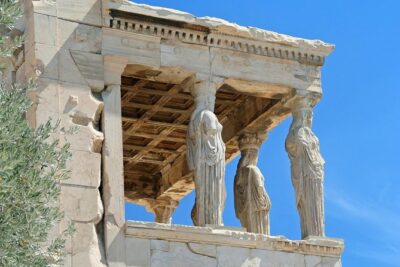
Acropolis & Parthenon Entrance Ticket w/optional SG Audio Tours
Read our review →Browse the lists this tour appears in