
Review · KRAKOW
Krakow Jewish Ghetto and Quarter Audio Guided Walking Tour
At Plac Bohaterów Getta, a square lined with empty chairs, this walk begins in one of Krakow’s most painful places. From there, your phone leads you through the former Ghetto, across Father Bernatek’s Bridge, and into Kazimierz, the historic Jewish Quarter. The route connects Holocaust history with present-day Jewish life, street art, film locations, and old synagogues.
I like the anytime GPS format, which lets you set your own pace and return to the tour later. I also like the route’s range: you get the Ghetto Memorial, the pharmacy linked with rescue efforts, Schindler’s List locations, Szeroka Street, Jan Karski, and the Old Synagogue for $9.99. The main drawback is simple: this is an app, not a person. One user found it easy to use overall but a little glitchy, so download and test it before you set out.
Key points at a glance
- A sobering start at Plac Bohaterów Getta: Hear how Krakow’s Jewish population was imprisoned, abused, deported, and murdered.
- A route from wartime memory to modern life: The walk crosses from the former Ghetto into Kazimierz, where Jewish institutions and cultural sites remain active.
- Schindler’s story is part of a wider history: The tour visits the filming passage and explains how Schindler saved Jewish workers.
- Murals add a modern layer: Mayamural and Blu’s Never Follow bring contemporary art into the route.
- You pay for access, not admission: The $9.99 fee covers the audio experience, while museums, food, drinks, and any entrance charges are extra.
- Your phone is the guide: You can go 24/7, repeat the tour, and listen to the virtual version after the walk.
Starting with the chairs of Plac Bohaterów Getta
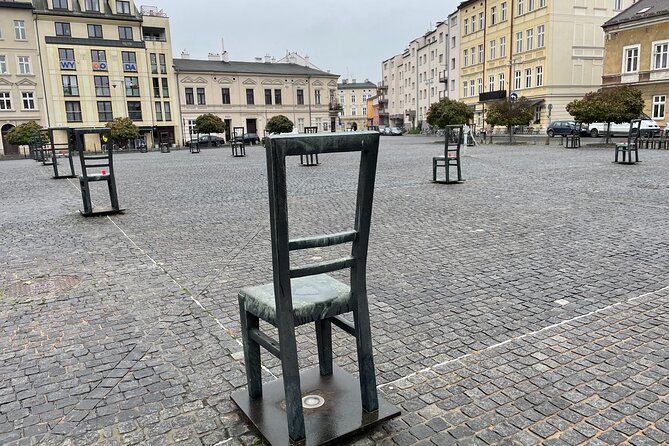
The tour begins at Plac Bohaterów Getta, also known as the Jewish Ghetto Memorial. Its rows of chairs represent the furniture and belongings left behind when Jewish residents were forced from their homes. Here, the audio sets out the story of the Krakow Ghetto, including the imprisonment, torture, killing, and deportation of its residents.
This is not a light opening. Give yourself a few quiet minutes before pressing play. The first two stops each take about 10 minutes, so the beginning is relatively detailed rather than a quick introduction.
The material is valuable because it gives the rest of the walk a clear purpose. You are not simply moving between attractive streets. You are following the route from a place of mass suffering into a neighborhood shaped by centuries of Jewish life.
More Audio Walking Tours in Krakow:
- Krakow: Old Town Audioguided walking Tour
★ 4.1 · 51 reviews - Krakow: Old Town Audio-Guided Walking Tour with Headset
★ 4.5 · 12 reviews - Krakow Walking Tour with Audioguide on Your Smartphone
★ 4.0 · 5 reviews
The Ghetto Memorial and the pharmacy that offered help
The memorial is also described as a place where people gathered, held on to hope, and faced the Holocaust together. That contrast matters. The story is not only about destruction. It also deals with the small acts of courage and mutual support that continued under extreme conditions.
The route then stops outside the pharmacy associated with the Ghetto. You hear about the person who ran it and the efforts made there to help save people. The pharmacy itself is not included as an interior visit, so you should treat this as an exterior history stop rather than a museum admission.
That arrangement keeps the tour inexpensive, but it also means the phone narration has to carry the emotional weight. Stand where you can see the building and listen without rushing. The experience works best when you allow the place, rather than just the words, to register.
Mayamural and Blu’s Never Follow
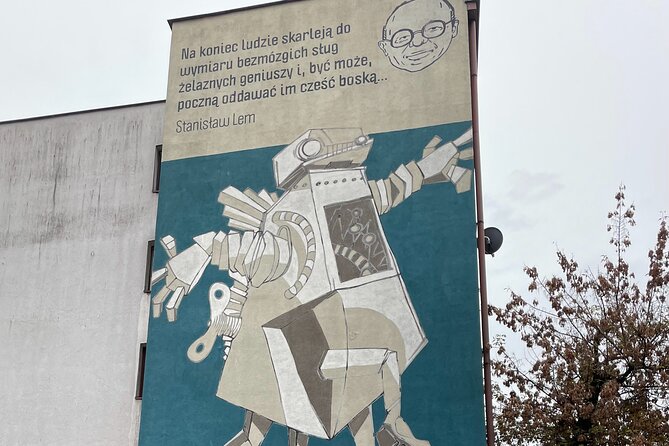
After the memorial sites, the route turns to two pieces of street art. Mayamural, known here as the Robot Mural, has a connection to the Krakow Ghetto that the audio explains. The stop takes about five minutes and gives the walk a sharp change of tone.
Next comes Blu’s Never Follow mural. You hear why it was painted in this location, along with discussion of myths and the targeting of Jewish people. These stops help show how modern artists continue to respond to Krakow’s difficult past.
I appreciate the inclusion of the murals because they prevent the route from becoming a string of memorials and plaques. Still, the art stops are brief. If you want time to study the work or take photographs, pause the app and spend longer than the suggested five minutes.
Crossing the Wisla by Father Bernatek’s Bridge
The route continues to the statue of Mayor Juliusz Lea, where you hear about his role in Krakow’s development. It is a short stop, about five minutes, and offers a civic perspective after the intense wartime material.
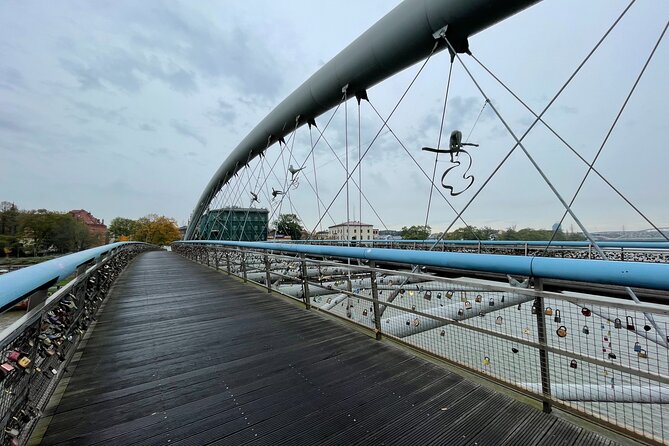
Then you cross the Wisla River on Father Bernatek’s Bridge. The audio explains the bridge and the figures suspended above it. This is one of the walk’s useful transitions: you physically leave the former Ghetto and enter Kazimierz, Krakow’s Jewish Quarter.
The crossing also provides a natural pause. You can stop the narration, look along the river, and gather yourself before the next group of Jewish heritage sites. The bridge is outdoors and free to cross, like every listed stop on the route.
More audio tours around Krakow:
- Krakow: Day or Night Vistula River Cruise with Audio Guide
★ 4.5 · 1,303 reviews - Krakow: Hop-On Hop-Off Bus Tour with Audio Guide
★ 3.6 · 703 reviews - Krakow: Wawel Hill Audioguide Tour
★ 4.3 · 582 reviews - Krakow: Sightseeing Cruise on Vistula River with Audio Guide
★ 4.4 · 480 reviews
Plac Wolnica and the entrance to Kazimierz
In Plac Wolnica, the tour explains the square’s founding and history. The stop lasts about five minutes, but its location helps you understand that Kazimierz is not a single museum area. It is a district with public squares, streets, religious buildings, community centers, and everyday city life.
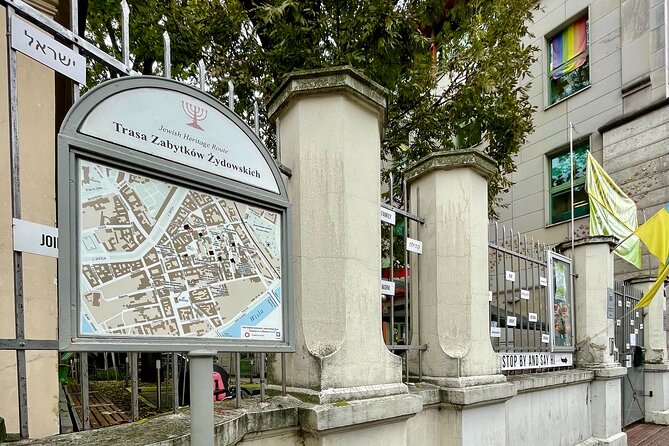
From here, the tour explores Jewish Quarter locations, including popular sites and less obvious points of interest. The route is designed to connect the district as a whole rather than send you directly from one famous building to another.
You should expect the app to guide you from place to place with spoken directions and location awareness. Keep your phone charged, and use headphones if you want to hear the narration clearly in city traffic.
Schindler’s List Passage and the story behind the film
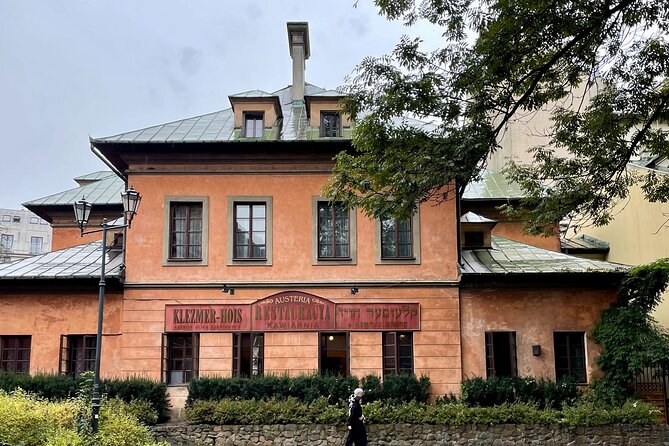
One stop focuses on Schindler’s List Passage, where scenes from the film were shot. The narration covers the movie, its locations, Oskar Schindler, and the ways he saved Jewish workers.
This is useful if the film is part of your reason for visiting Krakow, but the stop also keeps Schindler in context. His story is one part of the broader history of the Ghetto and the occupation, not a replacement for it.
The passage is an exterior stop, and no film-related admission is included. You get the location and the explanation through the app. If you want a fuller museum visit connected with Schindler, this tour does not include one, so plan that separately.
Tempel Synagogue and the Jewish Community Centre
The walk continues outside Tempel Synagogue. You hear about its history and its impact on the Jewish community in the past and present. Since the tour stays outdoors, you should not assume that entering the synagogue is part of the experience.
The Jewish Community Centre of Krakow is another important change of focus. The audio explains how it was founded by the current King of England and how it brings the community together while welcoming visitors.
This stop gives the tour a present-day connection. Much of the opening section concerns people who were persecuted and displaced. The JCC shows that Jewish life in Krakow is not only a historical subject. It continues through community work and public welcome.
Szeroka Street and the old Jewish heart of Kazimierz
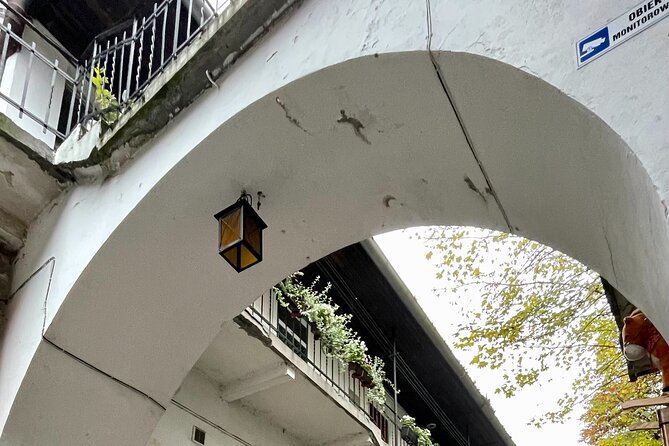
Szeroka Street receives about 10 minutes, making it one of the longer stops. Here, the tour discusses the Jewish people who lived in the area, the mikveh, the synagogues, and the street’s history.
This is likely the point where the district begins to make sense as a former neighborhood rather than a collection of isolated attractions. Listen for the connections between religious buildings, daily life, and the people who once used these streets.
The audio also covers a synagogue more than 500 years old and one of the oldest historic buildings in the area. The stop explains what happened there during World War II and what the Nazis did with Jewish headstones. Again, the experience takes place outside, so you hear the story without an included interior visit.
That limitation is worth keeping in mind. The tour gives you orientation and context at a low price, but you may want to return to selected synagogues or museums afterward. It works well as a first pass through Kazimierz, not as a substitute for every indoor attraction.
Jan Karski and the Old Synagogue
The statue of Jan Karski is another five-minute stop. Karski is presented as a spy who risked his life to gather information about the Nazis. His story adds the perspective of someone who acted as an eyewitness and messenger during the war.
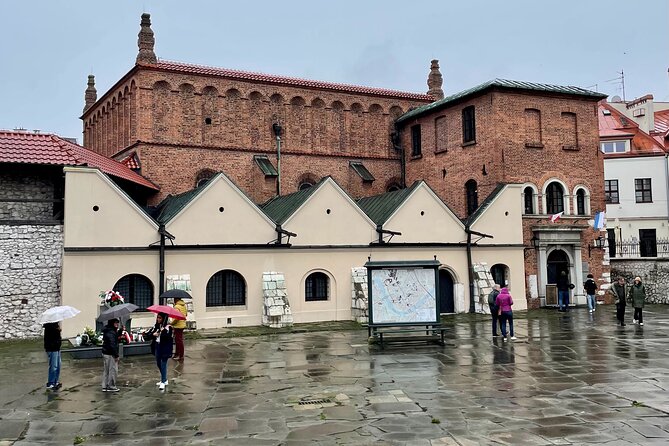
The final area includes the Old Synagogue. The building was rebuilt in 1570 by the Italian architect Mateo Gucci, with no connection to the modern fashion company of the same name. The narration describes it as a rare surviving example of a Polish fortress synagogue and explains its less visible, sunken history.
This is a strong ending because it returns the focus to the long life of the Jewish Quarter. You are not left with only wartime history. The route places the Holocaust within a much older religious and architectural setting.
Ending near the Galicia Jewish Museum
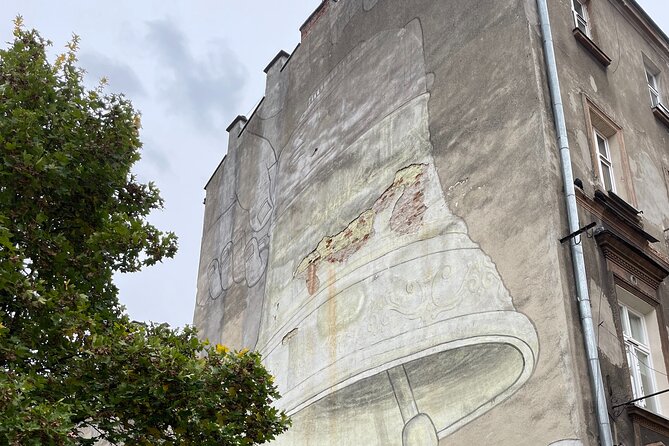
The walk ends at the Galicia Jewish Museum on Dajwór Street. The stated endpoint is also a bookstore and a place with a notable mural, giving you an easy reason to continue exploring after the audio tour finishes.
No museum entrance is included in the $9.99 price. You can decide for yourself if you want to go inside, browse the bookstore, or simply finish the walk nearby. The posted hours supplied for the endpoint run from midnight to 11:30 p.m. daily during the listed operating period, but you should check current opening details before planning a museum visit.
The ending is practical because it leaves you in the Jewish Quarter rather than sending you back across the city. You can continue sightseeing, stop for food, or use public transportation from the area.
What the $9.99 price really gives you
At $9.99 per person, this is inexpensive for a nearly two-hour route through two major Krakow districts. You are paying for professionally produced narration, GPS guidance, music, sound effects, and the ability to listen again after the walk.
The tour also never expires. You can take it at any time, repeat it on another day, or use the virtual version after finishing the physical route. That flexibility is worth more if you are staying in Krakow for several days or prefer to split the route into sections.
The price does not cover food, drinks, admission fees, or a human guide. It is also offered in English only. Group discounts are available, and the activity is private in the sense that only your own group participates, though there is no live guide accompanying you.
How the phone format affects the experience
The app guides you step by step and uses your location to help you move between stops. That is convenient, especially in a district where you may want to stop for photographs or take a short break.
The one recorded user experience described the app as easy to download and operate overall, but a little glitchy. I would take that seriously without making it a deal breaker. Download the app before arriving, check that your phone has enough battery, and allow extra time in case you need to replay a direction.
Music and sound effects add atmosphere, but they will not suit everyone. If you prefer a quiet visit, you can lower the volume or pause between stops. The advantage is control. You decide how quickly the tour moves, unlike a fixed walking group.
Who should choose this Krakow walk?
I would recommend it to you if you want a low-cost introduction to the former Ghetto and Kazimierz, especially if you prefer independent sightseeing. It suits first-time visitors who want a clear route, film fans interested in Schindler’s List, and anyone who wants to connect memorials with present-day Jewish institutions.
It also works for families or private groups who need the freedom to stop and move at different speeds. Service animals are allowed, public transportation is nearby, and most people can participate.
I would choose a human-led walk instead if you want to ask questions as you go, discuss difficult subjects with a guide, or receive help with navigation in real time. The app cannot respond to your personal interests or adjust the explanation when a particular subject needs more care.
Should you book it?
Book this tour if you want a flexible, affordable route that combines the Krakow Ghetto, Kazimierz, Schindler’s List locations, murals, memorials, and Jewish community sites. Its best feature is the bridge between history and the living district you see today.
Skip it if you need interior admissions, a live guide, or a polished app with no technical hiccups. For $9.99, though, the tour gives you a substantial walking route and lasting access to the audio. I would use it as an orientation walk, then return to the museum or synagogue that interests you most.
FAQ
Where does the tour start?
It starts at Plac Bohaterów Getta in Krakow, at the Jewish Ghetto Memorial.
Where does the tour end?
It ends at the Galicia Jewish Museum on Dajwór Street in Krakow.
How long does the walk take?
The estimated duration is about 1 hour 10 minutes to 2 hours.
Is a human guide included?
No. The experience is guided by a smartphone app with GPS location awareness. Only your group participates, but no live guide accompanies you.
Can I take the tour at any time?
Yes. The tour is available 24/7 because all stops are outdoors, and you can go whenever you choose.
Does the tour ever expire?
No. You can take it whenever you like, repeat it as many times as you want, and listen to the virtual tour after the physical walk.
Are entrance fees included?
No. Food, drinks, museum admissions, synagogue admissions, and other entrance fees are not included.
What is the cancellation policy?
You can cancel at least 24 hours before the start time for a full refund. Cancellations or changes made within 24 hours are not accepted for a refund.
New audio tours around Krakow
- Krakow Walking Tour with Audioguide on Your Smartphone★ 4.0 · 5 reviews
- Wawel Hill Audio-Guided Tour★ 3.5 · 19 reviews
- Wawel Hill Audio Guided Tour★ 3.0 · 2 reviews
- Krakow: Vodka Factory Museum – Entrance Ticket and Audioguide★ 5.0 · 3 reviews
- Krakow: Old Town Audio-Guided Walking Tour with Headset★ 4.5 · 12 reviews
- Krakow: Vodka Factory Museum Ticket & Audioguide and Tasting★ 4.3 · 38 reviews
- Krakow: Old Town Audioguided walking Tour★ 4.1 · 51 reviews
- Krakow: Private Panoramic Tour by Golf Cart with Audio Guide★ 4.4 · 5 reviews
Krakow Audio Tours, compared.
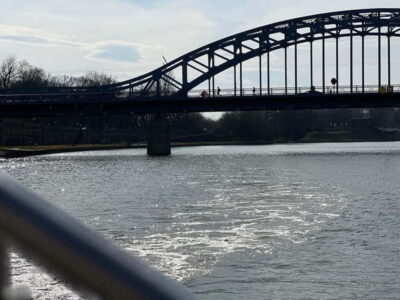
Krakow: Day or Night Vistula River Cruise with Audio Guide
Read our review →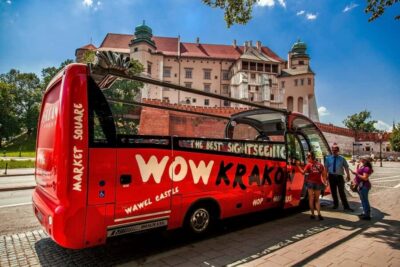
Krakow: Hop-On Hop-Off Bus Tour with Audio Guide
Read our review →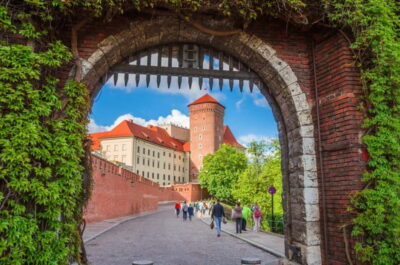
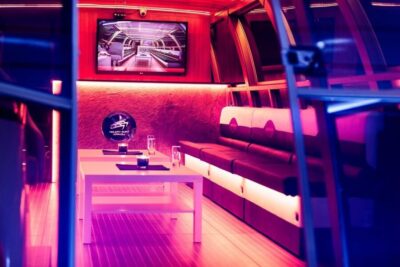
Krakow: Sightseeing Cruise on Vistula River with Audio Guide
Read our review →
Krakow: Vistula Night Cruise by Gondola w/ Audio Commentary
Read our review →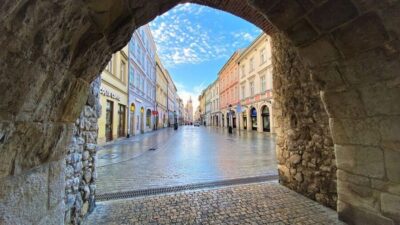
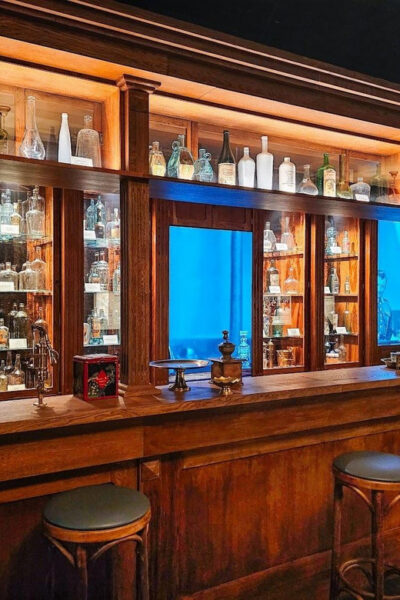
Krakow: Vodka Factory Museum Ticket & Audioguide and Tasting
Read our review →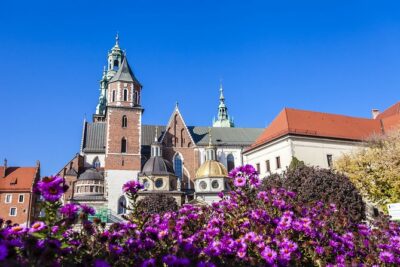
Browse the lists this tour appears in