
Review · ISTANBUL
Chora Museum Skip-the-Ticket-Line Entry with Audio Guide
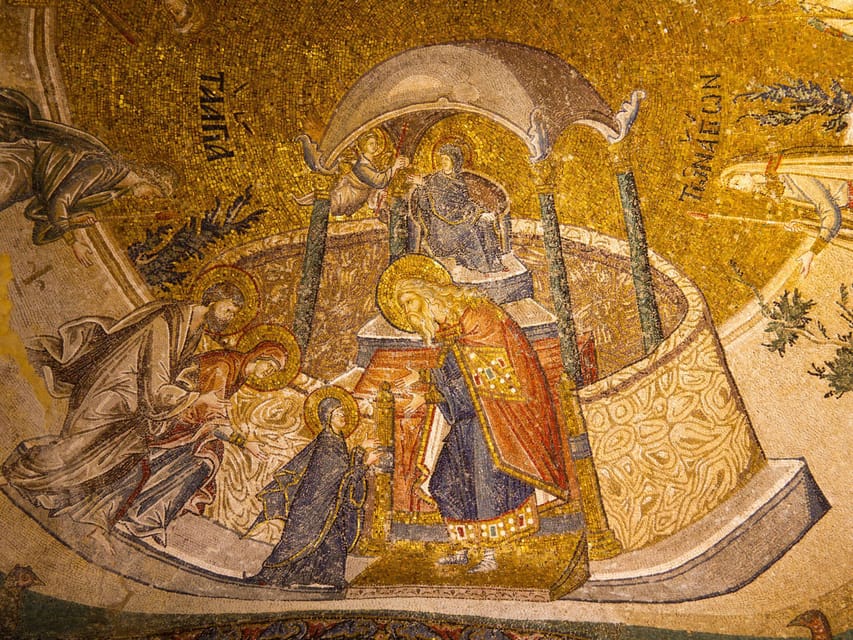
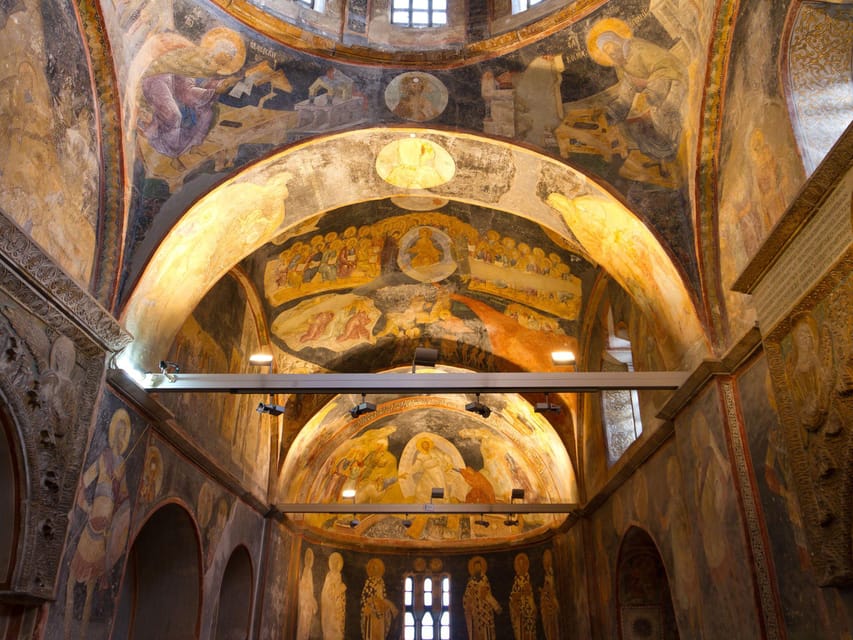
The Chora Museum preserves some of Istanbul’s finest Byzantine mosaics and frescoes, tucked into the Edirnekapı district away from the city’s biggest sights. You move through the former church at your own pace, using an audio guide in 25 languages to make sense of the paintings overhead and around you.
I like the QR ticket, which can save you from waiting at the ticket counter, and I like having time to study the art without being tied to a group. The main catch is that this does not skip the security check. Also, the entry codes and audio link arrive in separate emails, and a few people have had trouble with one or the other.
Key points to know before you go

- Fourteenth-century art is the main event: Look for detailed scenes from the Bible and the lives of saints.
- The QR code bypasses the ticket queue: You still must pass through mandatory security.
- Audio comes in 25 languages: English, Italian, Turkish, Arabic, French, Spanish, Chinese, Japanese, and many more are available.
- The building changed identities: It began as a Byzantine church, became an Ottoman mosque, and later operated as a museum.
- Friday is not an option: The Chora Museum is closed to visitors that day.
- Transport is separate: Take the T4 tram to Edirnekapı or use nearby bus routes.
Why the Chora Museum deserves your time
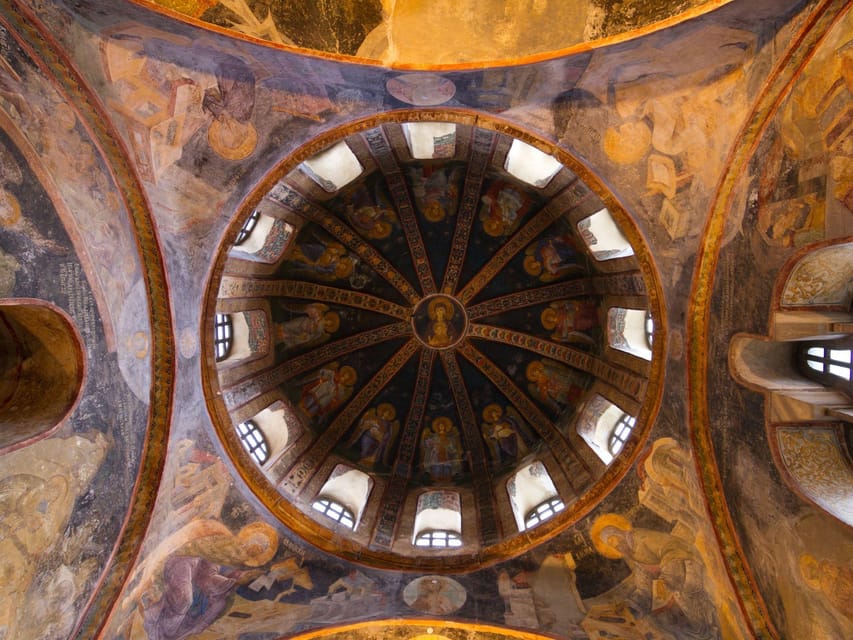
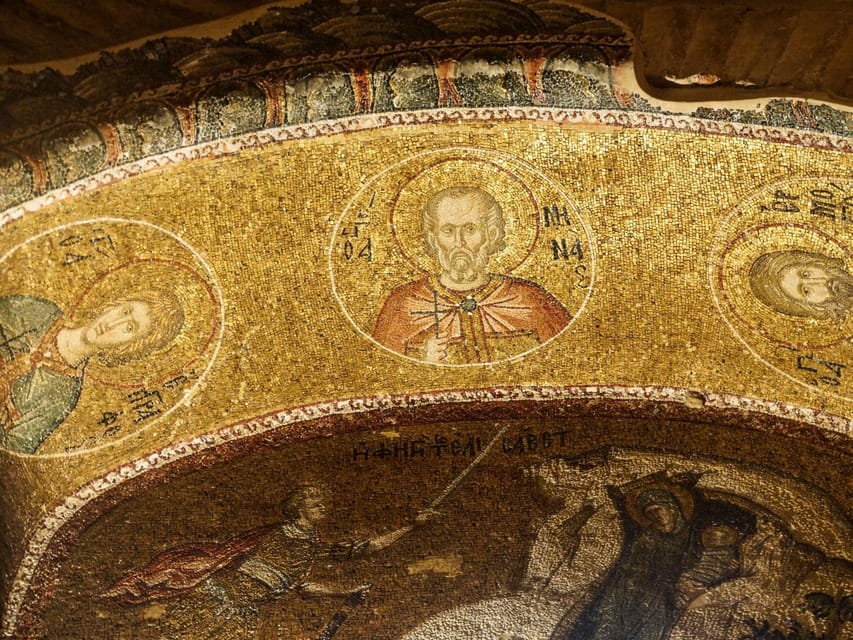
I would not visit the Chora Museum simply to tick off another old building. I would go for the art. The mosaics and frescoes show Byzantine artists working at a high level, with small figures, expressive faces, complex scenes, and careful decorative patterns.
The decoration dates mainly from a major reconstruction in the 14th century. That period produced some of the finest surviving examples of Late Byzantine art. The paintings are not just isolated ornaments. Together, they tell religious stories and show how artists used walls, ceilings, arches, and domes as one connected picture space.
You may find that the museum feels more rewarding after you slow down. At first, you might notice the gold tones and crowded scenes. Then the smaller details begin to appear: gestures, robes, faces, and the way each image fits into the building’s structure. The audio guide can help explain what you are looking at, especially if Byzantine art is new to you.
The setting also adds interest. Chora began in the 4th century as part of a monastery complex. Over many centuries, it changed from church to mosque and then to museum. Those changes affected the building and its decoration. Some Christian images were covered or altered during its years as a mosque, while other Byzantine work remained visible.
That combination gives you more than a single period to consider. You are looking at a Christian monument shaped by Ottoman use and later museum care. Istanbul is full of places where different eras overlap, but Chora presents that story in a small, concentrated setting.
More Museum Audio Tours in Istanbul
- Istanbul: Hagia Sophia History Museum Entry with Audio Guide
★ 4.1 · 102 reviews - Istanbul Archaeological Museums Entry Ticket & Audio Guide
★ 4.0 · 81 reviews - Turkish and Islamic Arts Museum: Entry Ticket & Audio Guide
★ 4.2 · 19 reviews
Inside the former church, look up first
Your first useful habit here is simple: look up. The most important work is above eye level, and it is easy to walk through while focusing only on the walls. Ceilings and domed sections carry much of the decoration, so give yourself time to scan each space before moving on.
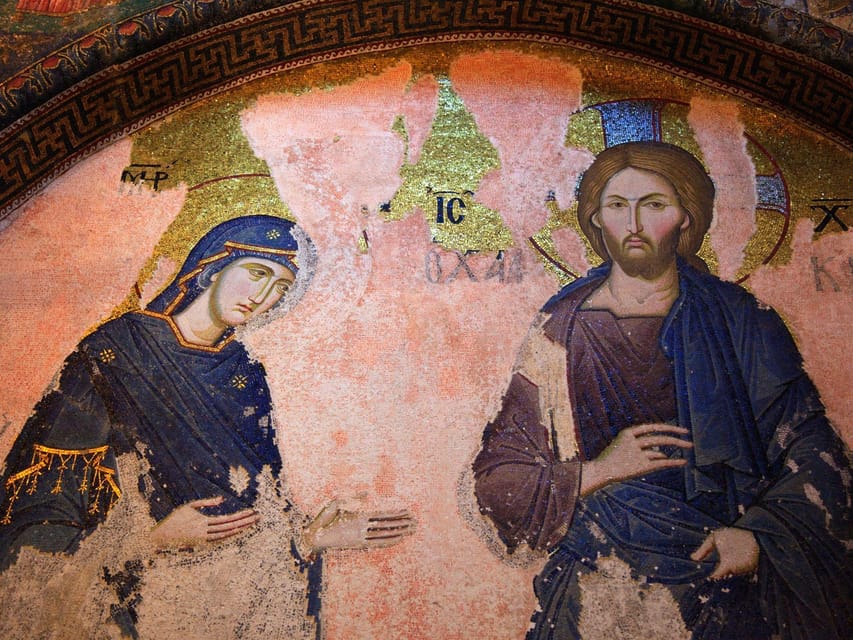
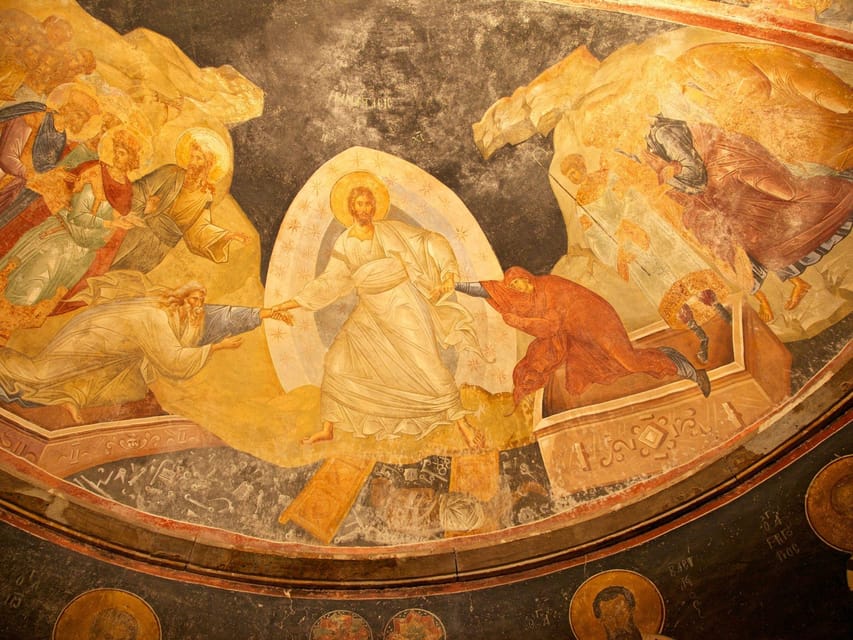
The mosaics use small pieces to form figures and scenes. From a distance, the effect can seem smooth. Up close, you can appreciate the patient work behind each image. The frescoes add another surface and another mood, with painted scenes that fill areas where mosaics were not used.
The subject matter includes events from the Bible, stories about saints, and decorative Byzantine designs. You do not need to know every story to appreciate the craft, but the audio guide can provide the missing context. It is especially useful when several scenes appear together and you want to understand their sequence.
I would keep your phone ready for the audio link, but I would not rely on the audio alone. The visual experience works best when you alternate between listening and looking. Pause the commentary when a detail catches your eye. The point of a self-guided visit is not to rush through every recorded section.
The exact order of your visit may depend on how the museum is operating that day. The supplied material describes entry and an audio guide, not a fixed guided route. You are not joining a live tour, and there is no guide leading a group from room to room.
What the church-to-mosque story adds

The building’s past is not a footnote. It changes how you read the art.
As a Byzantine church, Chora served a Christian religious purpose. During the Ottoman period, it became a mosque. That conversion brought changes connected with Islamic practice, including the covering or alteration of some Christian imagery. Later, as a museum, parts of the Byzantine decoration could be studied and presented again.
You can therefore see both preservation and change. The building is not a perfectly untouched time capsule, and that is part of its value. It shows how a monument can be reused, adapted, and understood differently over time.
The audio guide is helpful here because it can connect the building’s artistic details with its changing function. If you only take a quick look, you may notice beautiful surfaces without understanding why some areas look different from others. The historical explanation gives the visit more shape.
I also like that the experience does not force one interpretation. You can admire the Christian artwork, consider the Ottoman conversion, and recognize the later museum role without pretending that the building has only one story. That makes Chora particularly worthwhile for anyone interested in Istanbul’s religious and cultural past.
The QR ticket and the security line
The experience costs $35 per person. That is not a trivial admission fee for a short museum visit, so the value depends on what you want from your day. If you care about Byzantine art and would otherwise spend time waiting at a ticket counter, the skip-the-ticket-line feature may make the price easier to accept.
Your QR entry code is sent by email. The supplier sends the entry codes and the audio guide link separately, so check both your inbox and your booking messages before you set out. This detail matters. At least one visitor had entry codes that were not accepted and had to buy tickets locally to avoid missing a scheduled group connection. Another received the QR codes but not the audio link.
That does not mean your entry will fail, but it does mean you should not treat the email step as an afterthought. Open the codes before reaching the museum. If the audio link is missing, contact the supplier before you arrive rather than discovering the problem at the door.
The QR code skips the ticket line, not the security line. Security is mandatory for everyone, and you may still find a queue at the entrance. Build that possibility into your plans, especially if you have another fixed appointment afterward.
This is a self-guided admission, not a fully managed tour. You are responsible for getting there, showing the correct code, passing security, and starting the audio guide. In exchange, you are not tied to a group’s pace.
Same sights, a different narrator:
- Istanbul: Daytime or Sunset Sightseeing Cruise & Audio Guide
★ 4.8 · 14,430 reviews - Istanbul: Basilica Cistern Fast-Track Entry and Audio Guide
★ 4.6 · 7,521 reviews - Topkapi Palace and Harem Skip-the-Line-Tickets & Audio Guide
★ 4.3 · 4,745 reviews - Istanbul: Bosphorus Sightseeing Cruise Tour with Audio Guide
★ 4.6 · 4,704 reviews
Getting to Edirnekapı from central Istanbul
The museum is in Istanbul’s Edirnekapı district. The clearest public transport option provided for this experience is the T4 tram line, which stops at Edirnekapı. From the station, you walk a short distance to the museum entrance.
Several buses also stop nearby, including routes 31E, 37E, 38E, and 36KE. Your choice will depend on where you are staying and which side of the city you start from. Transportation is not included in the $35 price.
If you are coming from Istanbul’s Asian side, take a ferry from Kadıköy or Üsküdar to Eminönü. From there, connect with the T4 tram or a suitable bus route. Allow extra time for the ferry and transfer, since the museum is not beside the main waterfront sights.
The trip out to Edirnekapı is part of the experience. You are leaving the busiest visitor zone and reaching a historic district with a different pace. Still, do not assume the museum is a quick walk from every major attraction. Check your route before booking a tight schedule.
Choosing the right day and pace
The museum is closed on Fridays. This is the single most important scheduling rule. Check the available start times and select a day other than Friday.
The booking is valid for one day, rather than for a multi-day period. That gives you flexibility during the selected date, but it does not turn the ticket into an open-ended pass. If your Istanbul schedule is crowded, choose a date when you can reach Edirnekapı without rushing.
You can explore at your own pace. That suits you if you like stopping for details, replaying audio sections, or spending extra time with one scene. It is less suitable if you want a guide to answer questions in person or organize the visit from beginning to end.
The audio guide is available in English, German, Russian, Persian, Arabic, French, Italian, Chinese, Dutch, Spanish, Hindi, Romanian, Ukrainian, Korean, Turkish, Bulgarian, Polish, Swedish, Japanese, Indonesian, Greek, Hungarian, Portuguese, Urdu, and Croatian. Italian is specifically useful to note because the published language information has not always been consistent, yet Italian audio has been available.
How the price compares with the experience

At $35, this is best viewed as a convenience ticket with interpretation included, not as a bargain museum admission. The price covers the skip-the-ticket-line entry and audio guide. It does not cover transportation, a live guide, or the security queue.
I see the strongest value in three situations. First, you want to visit Chora but have limited time for a ticket counter. Second, you want explanations in a language other than English. Third, you prefer to set your own pace rather than join a group.
The value is weaker if you are comfortable buying admission at the door, already know Byzantine art well, or want a personal guide. You may also feel the cost more sharply if the audio link fails or the QR code does not work, so checking your materials before arrival is sensible.
Free cancellation up to 24 hours before the visit and the reserve-now-pay-later option make the booking less rigid. Those terms help if your Istanbul plans are still moving around. They do not remove the need to check the Friday closure and the separate email messages.
Who should book this experience
I would recommend it most strongly to art lovers, history fans, and independent sightseers who want a focused cultural stop. It also suits anyone who prefers audio commentary in a specific language, since 25 choices are offered.
Families and mixed-interest groups may appreciate the flexible pace, though the value depends on how many people in the group will actually use the audio guide. You can move through the museum without waiting for a tour leader, but each person needs to follow the entry arrangements.
I would be more cautious if you have a strict connection afterward. The security line cannot be skipped, and transport to Edirnekapı takes planning. I would also hesitate to book it on a day when a QR code or audio link problem would cause major trouble, unless you have enough time to sort it out.
Should you book the Chora Museum ticket?
Book this experience if the museum’s Byzantine mosaics and frescoes are high on your Istanbul list and you want an audio guide without committing to a live group. The art is the reason to come, and the church-to-mosque-to-museum story gives the visit unusual depth.
Skip it if you only want a quick, effortless attraction near Hagia Sophia or the Blue Mosque. Chora requires a trip to Edirnekapı, transportation is extra, Friday is closed, and the QR and audio messages need careful checking.
My practical advice is simple: choose a non-Friday date, download or open both emails before leaving, allow time for security, and take the T4 tram if it suits your route. If you do that, the $35 price can be fair for a quiet, self-paced look at some of Istanbul’s most important Byzantine art.
FAQ
Where is the Chora Museum located?
The museum is in Istanbul’s Edirnekapı district in the Marmara Region of Turkey.
How much does this experience cost?
The price is $35 per person.
How long is the ticket valid?
The ticket is valid for one day. Check availability for the available starting times.
Is the Chora Museum open on Fridays?
No. The Chora Museum is closed to visitors on Fridays.
Does the ticket skip the security line?
No. The QR ticket skips the ticket line, but security checks are mandatory for all visitors.
How do I reach the museum by public transport?
The T4 tram stops at Edirnekapı, followed by a short walk to the museum. Bus routes 31E, 37E, 38E, and 36KE also stop nearby.
Is transportation included in the price?
No. Transportation fees are not included.
Is a live guide included?
No. The experience includes an audio guide, not a live guided tour.
Which languages are available for the audio guide?
The audio guide is available in 25 languages, including English, Italian, Turkish, German, French, Spanish, Arabic, Chinese, Japanese, Portuguese, and Croatian.
How do I receive my entry ticket and audio guide?
You receive the two entry QR codes and the audio guide link in separate emails from Istanbul Tourist Pass. Check that you have both before arriving.
New audio tours around Istanbul
- Istanbul: Bosphorus and Golden Horn Cruise with Audio Guide★ 4.5 · 83 reviews
- Topkapi Palace and Harem Museum Ticket with Audio Guide★ 3.0 · 2 reviews
- Topkapi Palace Museum Skip The Ticket Line Tickets + Audio Guide★ 3.0 · 2 reviews
- Istanbul Walking Tour with Audioguide on Your Smartphone★ 5.0 · 6 reviews
- Istanbul Self-Guided Audio Tour★ 3.0 · 2 reviews
- Istanbul: Hagia Sophia Entry Ticket with Digital Audio Guide★ 4.5 · 7 reviews
- Dolmabahce Palace Skip the Ticket Line Entry with Audio Guide★ 4.0 · 6 reviews
- Istanbul Bosphorus Sightseeing Cruise with Audio Guide★ 5.0 · 67 reviews
Istanbul Audio Tours, compared.
Istanbul: Daytime or Sunset Sightseeing Cruise & Audio Guide
Read our review →
Istanbul: Basilica Cistern Fast-Track Entry and Audio Guide
Read our review →
Topkapi Palace and Harem Skip-the-Line-Tickets & Audio Guide
Read our review →
Istanbul: Bosphorus Sightseeing Cruise Tour with Audio Guide
Read our review →
Istanbul: Hagia Sophia Entry Ticket with Audio Guide
Read our review →
Istanbul: Topkapi Palace and Harem Ticket with Audio Guide
Read our review →
Hagia Sophia Skip-the-Line Ticket & Blue Mosque Audio Guide
Read our review →
Istanbul: Dolmabahce Palace and Harem Fast-Track & Audio
Read our review →Browse the lists this tour appears in