
Review · GREECE
Olympia: The Famous VR Glasses Tour (+Audio Guide)
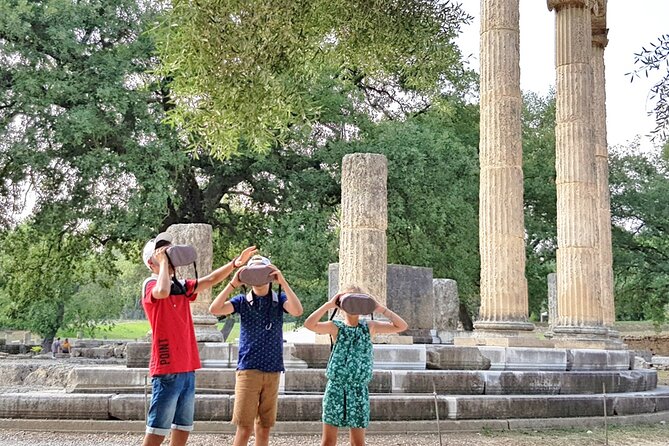
The clever part of this Olympia visit is simple: you look at broken stones through VR glasses, and the missing temples, statues, and athletes appear in their original setting. The Temple of Zeus regains its giant statue, the stadium fills with a foot race, and the sanctuary feels like a working religious and sporting center instead of a field of ruins.
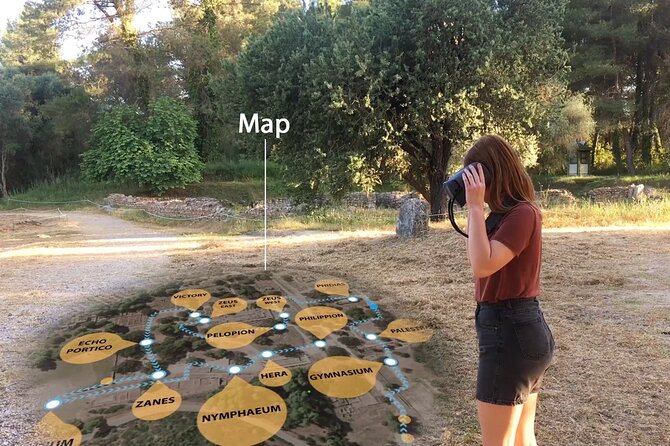
I especially like the self-guided pace and the GPS-enabled map. You can stop, listen, and look around without trailing behind a group. The audio guide also gives you the context that the site’s signs often lack, while the short demonstration at the local office makes the equipment easy to use.
The main catch is logistics. The €31.13 rental does not include the archaeological site entrance, listed at €20 per person, and you must collect and return the glasses at the Olympia Back in Time office. If you arrive from a cruise ship, allow plenty of time for transport, walking, the site visit, and the office’s 13:30 to 15:00 closure.
Key points to know before booking
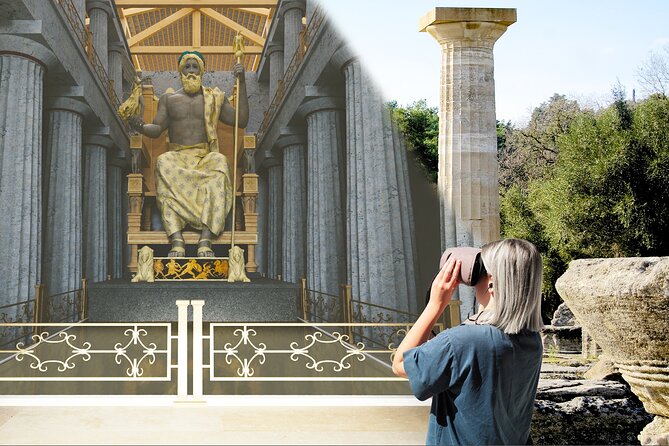
- Ancient Olympia rebuilt in your view: See restored temples, statues, rituals, and races through VR scenes placed over the ruins.
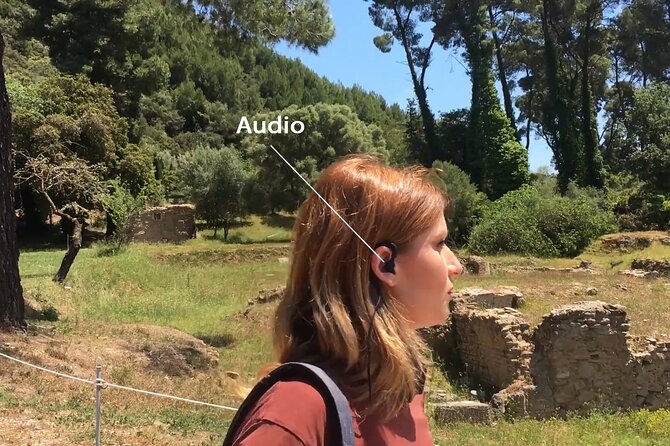
- GPS map and audio guide included: The glasses help direct you around the site while explaining what you are seeing.
- Budget for the entrance ticket: The VR rental is separate from the archaeological site admission, listed as €20 per person.
- Plan around the office closure: Equipment cannot be returned between 13:30 and 15:00.
- Best for families and independent explorers: Children and adults can share the experience, and you are free to set your own pace.
- Allow extra time for walking: The office is near the site, but the full route includes the walk to the entrance and plenty of walking inside the archaeological grounds.
Why VR changes Ancient Olympia
Ancient Olympia is one of those places where imagination has to do a lot of work. You see foundations, scattered columns, low walls, and fragments. The scale and purpose of the buildings are not always clear from the surviving stones alone.
The VR system fills in that missing picture. As you stand near a ruin, the glasses show how the structure may have looked in antiquity. Restored color, rebuilt architecture, moving figures, and narrated scenes give you a much stronger sense of place than a signboard can provide.
That matters most at the Temple of Zeus. Today, the building is largely gone, but the VR scene presents the enormous Statue of Zeus inside the temple. You get a sense of the statue’s height and the room built to contain it, rather than simply hearing that it was one of the ancient world’s great wonders.
The same idea works well at the stadium. Instead of seeing an empty stretch of earth, you watch an ancient foot race with competitors running toward the finish line and spectators gathered around them. It is a short scene, but it explains why the stadium mattered.
You may look a little unusual walking around with the glasses on. That is a small price for being able to see the site as more than a collection of ruins.
More audio tours around Greece:
- Athens: Acropolis Ticket with Optional Audio or Live Guide
★ 4.2 · 11,055 reviews - Athens: Cape Sounio & Poseidon Temple Trip with Audio Guide
★ 4.4 · 4,521 reviews - Athens: Acropolis Ticket with Audio Guide
★ 4.0 · 3,575 reviews
Picking up the glasses at Olympia Back in Time
The experience begins at the Olympia Back in Time office on Tsourekas Street in Ancient Olympia. You receive a mobile ticket confirmation, then meet the staff for a live demonstration and basic orientation.
This short introduction is useful, especially if you are not comfortable with electronic equipment. The glasses are paired with an audio guide and a programmed map, and the staff provide technical support and information before you leave.
The office is close to the archaeological site, but do not treat close as next door. The operator describes the walk to the site area as about eight minutes, while some visitors have allowed closer to 15 minutes to reach the park entrance. Your actual time will depend on exactly where you start and how quickly you walk.
That small gap in expectations can matter on a hot day or during a tight cruise-ship schedule. Add the walk to your planning before you decide how much time you can spend inside the ruins.
The equipment is rented for about three hours. The advertised experience itself usually takes two to three hours, including the orientation and return. You do not follow a live guide through the site. Instead, the glasses let you move independently, pause at monuments, and continue when you are ready.
The Temple of Zeus and its lost statue
The Temple of Zeus is one of the strongest sections of the experience. The physical remains can be hard to read, particularly if you are visiting without a trained guide. The VR reconstruction gives the ruins a clear shape.
The scene places you inside one of the most important temples at Olympia. You see the great Statue of Zeus restored to its full size, almost reaching the ceiling. The visual scale helps explain why ancient visitors would have considered the statue so remarkable.
The reconstruction also restores color to statues and architectural details. That is worth noting because many people picture ancient Greek buildings as plain white stone. The VR presentation gives you a more complete sense of how decorated and theatrical these religious spaces could appear.
This stop lasts about 10 minutes. That is long enough for the main scene without making the experience feel like a film you must sit through. You can look from the digital reconstruction back to the real remains and compare the two.
I would pay close attention here even if you already know the broad story of Ancient Greece. The VR presentation is most useful when it connects a famous name, such as Zeus, with the physical evidence under your feet.
Watching a race at the ancient stadium
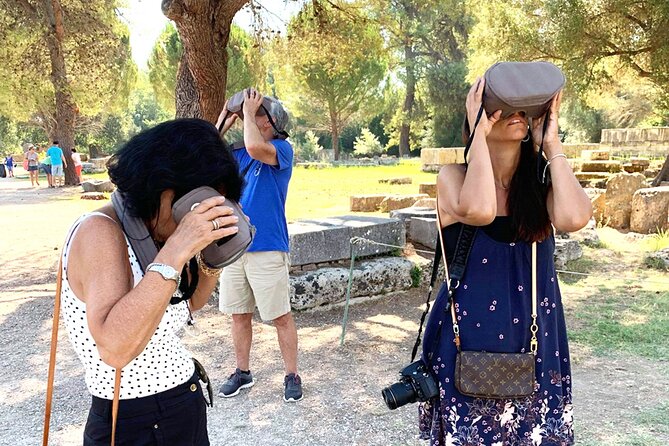
The stadium provides one of the clearest moments in the tour. The site itself is open and easy to recognize, but the VR scene supplies the missing human action.
You watch athletes run a foot race while spectators cheer from the sides. The animation helps you understand the event as a public competition, not just a long strip of ground where people once ran.
This is also a strong stop for children. The moving scene gives younger visitors something immediate to follow, and it connects the ancient stadium to the Olympic contests they already know. Families have found the glasses especially effective for keeping children interested during a visit that includes a lot of walking and ancient stonework.
The visual effect is not a replacement for standing in the real stadium. The useful part is the combination. You stand in the actual place, then see a short recreation that explains how the space worked.
Same sights, a different narrator:
- From Athens: Delphi Full Day V.R. Audio Guided Tour
★ 4.6 · 3,028 reviews - Athens: Acropolis Museum Ticket with optional Audio Guide
★ 4.4 · 2,652 reviews - Athens: Acropolis Ticket & Optional Self-Guided Audio Tours
★ 4.1 · 2,542 reviews - From Athens: Small-Group Delphi, Museum & Arachova Day Trip
★ 4.8 · 2,476 reviews
The Temple of Hera and the Olympic flame
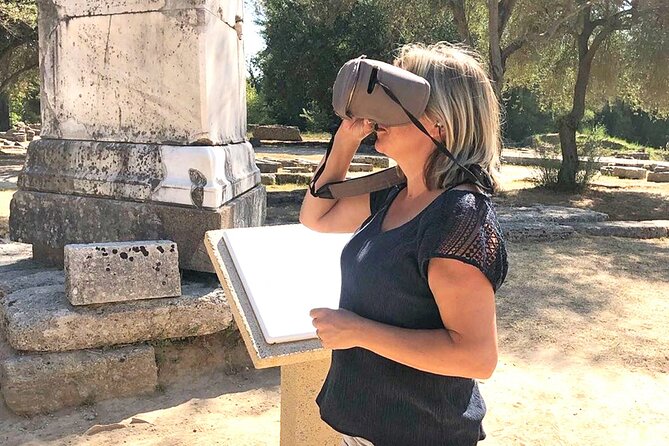
At the Temple of Hera, the glasses show the lighting of the Olympic Flame. The scene links the modern symbol with its ancient religious setting and gives the ritual a stronger sense of ceremony.
This stop also introduces the Games held for women in honor of Hera. That is an important detail because many visitors arrive knowing about the male athletic contests but little about this other side of Olympia’s traditions.
The segment is about five minutes, so it is brief. Still, it adds variety to the tour. You move from a giant statue and a foot race to religious ritual and women’s athletic events.
I like this part because it keeps the visit from becoming only a parade of famous monuments. Olympia was a sanctuary as well as a sporting center, and the VR scenes help show those connected roles.
Twelve more monuments across the archaeological site
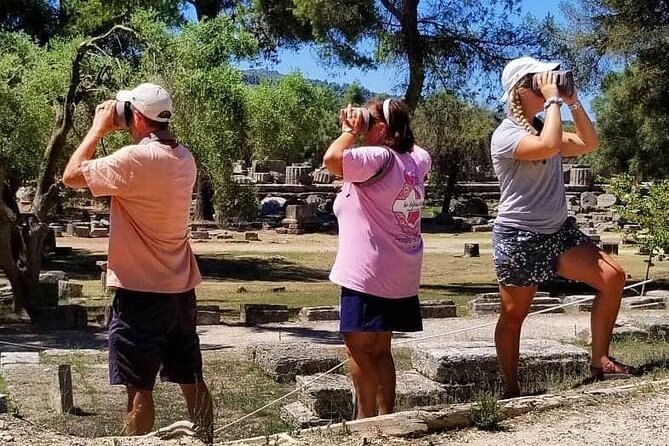
After the main scenes, you continue through the archaeological grounds and use the guide to explore 12 additional monuments. This is where the GPS map becomes especially useful.
Olympia’s ruins are spread across a broad area, and not every building is immediately obvious. A digital map can help you connect one section to the next and reduce the chance of missing a monument simply because you did not know where to look.
The route through this portion takes about an hour. Expect open-air walking, uneven ground, and repeated stops. The glasses do not remove the physical demands of the site. They make the walking more rewarding by giving you a reason to study each foundation and fragment.
The directional system is not perfect for everyone. One user found it difficult to know which path to take at certain points, especially where two routes appeared after a direction to turn left. If you are easily turned around, keep the map visible and allow extra time rather than rushing from one stop to the next.
The audio also varies in usefulness depending on what you want. It provides essential context, but some people would prefer longer explanations. If you love detailed archaeology, you may want to read more before or after your visit. If you mainly need help understanding what sits in front of you, the guide does that job well.
What the €31.13 price really buys you
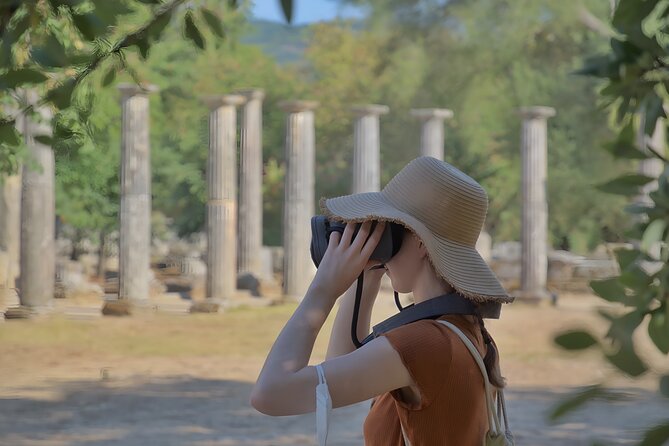
At $31.13 per person, this is not the cheapest way to enter Ancient Olympia, since the archaeological admission is extra. The listed entrance fee is €20 per person, with free admission stated for EU visitors under 25 and non-EU visitors under 18. Confirm your eligibility and the current price before you go, since admission rules can affect the total cost.
The fair comparison is not the VR rental against a free walk around the ruins. It is the VR rental against a private guide or a standard group tour. You receive the glasses, audio guide, GPS map, live demonstration, and technical support, while keeping control of your route.
For families, the value can be good because one shared scene may explain more than several dry signs. The equipment can also make the site more engaging for children around six to 12, although younger children may not want to wear their own set for the full visit. One practical choice is to let younger children share an adult’s glasses rather than carrying unused equipment.
The price makes less sense if you have only a short window in Olympia. A rushed visit leaves little time to enjoy the reconstructions, and the separate walk between the office and site takes time away from the ruins.
Cruise-ship timing and the office closure
This experience needs careful planning if you are visiting from a port. Olympia is not directly beside the cruise terminal, and one account describes about 30 minutes of transport from the port before reaching town. Public transportation options after noon may be limited, so an early arrival is the safer plan.
Try to collect the glasses by 11:00 if your schedule allows. That gives you time for the trip to the office, the walk to the entrance, the site visit, and the return journey.
The office does not accept returns from 13:30 to 15:00. This is the single most important timing detail. You must return the equipment outside that window, and the timing can be awkward if a bus leaves around 14:30.
Do not count only the one hour listed for the main monument route. Include transport from the port, the walk to the archaeological entrance, the admission line, the time inside the site, the walk back, and the return of the glasses.
For a relaxed visit, I would want at least three hours in town, and more if you are arriving by ship. If your transport gives you only a narrow window, a shorter visit without the VR equipment may be less stressful.
Is the route suitable for everyone?
Most people can take part, and service animals are allowed. The activity is outdoors and involves a substantial amount of walking, so you should consider your own comfort with uneven archaeological paths and warm weather.
The glasses add mental focus but not physical ease. You still walk across the grounds, stand at monuments, and follow the route through the site. Older family members can use the equipment successfully, but you should allow a slower pace if needed.
The group capacity is up to 60 people, though the experience itself is self-guided. You are not expected to move as one large group. That independence is a major benefit if your family wants to pause often or move at different speeds.
The booking is offered in English. The audio narration has been described as clear, with one user noting a British male voice. The supplied information does not promise a full range of languages, so confirm your preferred language before paying if English is not suitable.
Cancellation and basic booking advice
You receive confirmation at booking, and the ticket is mobile. Free cancellation is available up to 24 hours before the scheduled start time. Changes or cancellations inside that 24-hour period are not accepted for a refund.
Since the experience is often reserved well ahead of time, booking early can help if your schedule is fixed. The important thing is not just securing the VR equipment. It is matching the start time to your transport and the office return hours.
Should you book the Ancient Olympia VR tour?
I would book it if you want help understanding ruins, are traveling with children, or prefer exploring independently instead of following a guide. The rebuilt Temple of Zeus, racing stadium, Olympic flame ceremony, and audio explanations give shape to a site that can otherwise feel abstract.
I would skip it if your port schedule is tight, you dislike walking, or you expect the price to include archaeological admission. The extra €20 entry fee and the office closure need to be part of your plan.
For most visitors with enough time, the VR glasses are a useful way to read Ancient Olympia. Arrive early, allow at least 2 to 3 hours, budget for the separate entrance, and keep the return window firmly in mind. Do that, and the experience can turn a difficult-to-read ruin into a place with buildings, rituals, athletes, and a much clearer sense of purpose.
FAQ
How long does the Olympia VR experience take?
The experience lasts approximately two to three hours. The main archaeological site portion includes about one hour for 12 additional monuments, plus shorter scenes at the Temple of Zeus, stadium, and Temple of Hera.
Is the archaeological entrance ticket included?
No. The VR glasses rental does not include admission to the archaeological site. The listed entrance price is €20 per person, with stated free-entry rules for EU visitors under 25 and non-EU visitors under 18.
Where do I pick up and return the VR glasses?
You pick up and return the equipment at Olympia Back in Time, Tsourekas Street, Ancient Olympia. Both the starting and ending points are the same office.
Can I return the glasses between 13:30 and 15:00?
No. Returns are unavailable during the office closure from 13:30 to 15:00. Plan your site visit and walk back so you can return the glasses outside those hours.
Is the tour guided by a person?
The experience includes a live demonstration and technical support at the office, but the archaeological visit is self-guided. The glasses provide the audio guide and GPS-enabled map.
Is the experience suitable for children?
Most people can participate, and the VR scenes can help children understand the ruins. Younger children may prefer sharing an adult’s glasses rather than carrying a separate pair for the whole visit.
Can I cancel for a full refund?
Yes. You can cancel up to 24 hours before the scheduled start time for a full refund. Cancellations or changes made less than 24 hours before the start are not accepted.
New audio tours around Greece
- Kos Scavenger Hunt and Highlights Self Guided Audio Tour★ 4.5 · 17 reviews
- Half-Day Ancient Olympia VR Audio Tour from Katakolo Cruise Port★ 3.5 · 57 reviews
- E-Ticket to Heraklion Archaeological Museum with Audio Guide★ 4.5 · 26 reviews
- Knossos Palace & Archeological Museum: E-Tickets with Audio Tours★ 4.0 · 18 reviews
- Kasos Audio-Tour from Karpathos by Art and Walk★ 4.5 · 4 reviews
- Delphi: Self-guided Audiovisual Tour with 3D Representations★ 5.0 · 5 reviews
- Delphi Self-guided Audio Tour on Your Phone (no ticket)★ 3.5 · 10 reviews
- Delphi: Archaeological Site & Museum Ticket with Audio★ 3.5 · 24 reviews
Greece Audio Tours, compared.
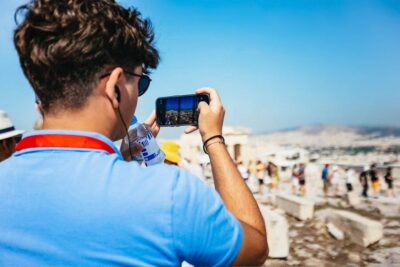
Athens: Acropolis Ticket with Optional Audio or Live Guide
Read our review →
Athens: Cape Sounio & Poseidon Temple Trip with Audio Guide
Read our review →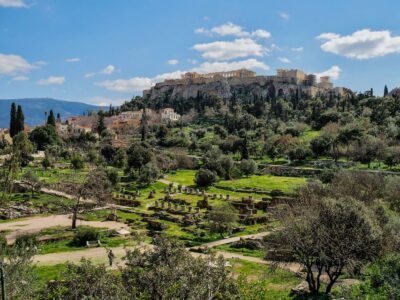
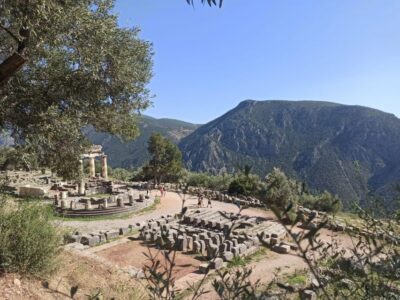
From Athens: Delphi Full Day V.R. Audio Guided Tour
Read our review →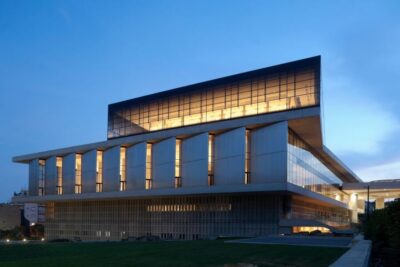
Athens: Acropolis Museum Ticket with optional Audio Guide
Read our review →
Athens: Acropolis Ticket & Optional Self-Guided Audio Tours
Read our review →
From Athens: Small-Group Delphi, Museum & Arachova Day Trip
Read our review →
Parthenon & Acropolis Museum with Audio or Live Tour Option
Read our review →Browse the lists this tour appears in