
Review · PORTUGAL
Explore the Highlights of Evora: Self-Guided GPS and Audio Tour
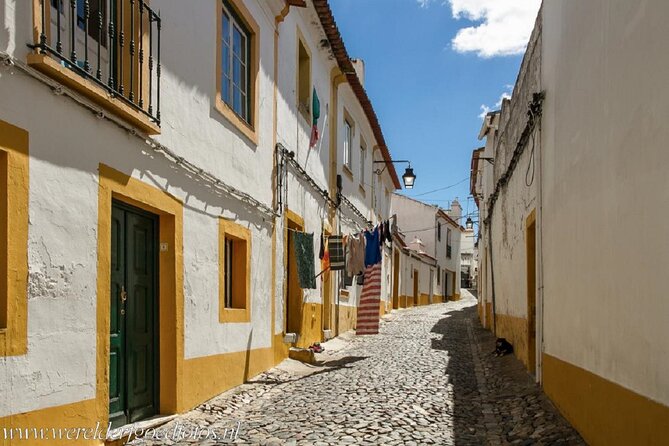
Évora is easy to admire, but its best sights are spread through a maze of old streets. This GPS-guided walking tour gives you a clear route from Giraldo Square to the Roman Temple, royal palace, Jewish Quarter, city walls, and aqueduct without tying you to a group or a fixed guide.
I like the freedom to set your own pace, and I like the low $8.05 price for a private experience shared only with your group. The app can speak in your language, show the route on a map, and provide written text on screen. The main concern is technical: you need to download and start the tour successfully, and the commentary may feel brief at some stops.
Key points at a glance
- Starts and finishes at Giraldo Square, Évora’s central meeting place and a handy spot for beginning a walk.
- Covers major sights in about two to three hours, including the Roman Temple, São Francisco Church, royal palace, aqueduct, and old walls.
- Uses GPS to trigger directions and audio, so you can walk without keeping a printed route in your hand.
- Costs $8.05 per person, a modest price for a self-guided private activity.
- Offers map and text backup, useful if you are in a noisy street or prefer reading instead of listening.
- Requires reliable setup before walking, since one booking attempt failed when the app would not download.
A self-guided way to meet Évora
This is not a traditional walking tour with a person leading you through the city. It is an app-based route from Niki Your TravelBuddy. GPS tracks your position and provides directions and spoken information at the relevant points, while the screen shows the route and written text.
That format suits Évora well. The historic center is compact enough to explore on foot, but the streets do not always make the order of sights obvious. A GPS route removes much of the guesswork. You can pause for photographs, step inside a church, stop for a coffee, or linger in a square without holding up anyone else.
The route takes roughly two to three hours. One user managed about three miles of walking, which gives you a useful sense of the physical commitment. This is a sightseeing walk, not a strenuous hike, but you should still expect steady time on your feet.
The price also changes how I judge the experience. At $8.05 per person, it does not need to replace a full private guide to be worthwhile. It needs to get you around Évora efficiently and give you enough context to understand what you are seeing. For that purpose, it can be good value, especially if you are traveling independently or have only half a day.
More Self-Guided Audio Tours in Portugal
- Coimbra’s Historical Highlights: A Self-Guided Audio Tour
★ 5.0 · 22 reviews - Downtown Funchal: A Self-Guided Audio Tour Through the Old City
★ 4.5 · 8 reviews - Castle of Monsanto: A Self-Guided Audio Tour of Portugal’s Most Famous Site
★ 5.0 · 4 reviews
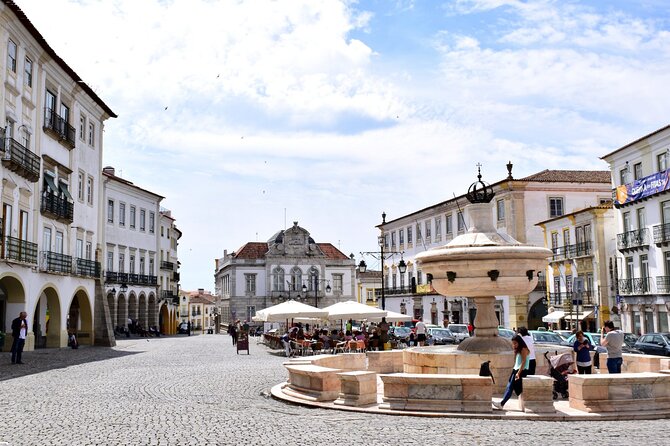
Giraldo Square, the city’s natural starting point
The route begins at the fountain in Praça do Giraldo, also called Giraldo Square. This 14th-century square is the heart of Évora and one of the easiest places to orient yourself.
The square carries the name of Giraldo Sem Pavor, a Portuguese explorer from the 16th century. It was once home to the old town hall, which later disappeared when Santo Antão Church was built. Today, the square is a pleasant place to watch daily life unfold, with the church and arcaded buildings framing the open space.
The audio stop points out the 16th-century Palácio de Dom Manuel. Its architecture belongs to the transition between Gothic and Renaissance design, making it a useful first lesson in the changing styles you will see across Évora.
I would give yourself a few extra minutes here before starting the route. Because the square is both the beginning and end point, it can also work as a convenient place to pause after the walk.
Banco de Portugal and the price of urban change
The route next brings you past the Banco de Portugal building, one of Évora’s most photographed structures. The stop also explains a less polished part of the city’s development.
During the 19th century, Évora underwent major urban changes. The site once held the prison and old town hall before becoming a branch of Banco de Portugal. That detail helps you read the city as more than a preserved medieval center. Historic towns are often reshaped, and not every change improves them.
This stop may be more useful for orientation than for a long visit. It gives you a quick look at how Évora’s civic buildings changed over time, then moves you onward toward São Francisco Church.
São Francisco Church and Portugal’s age of wealth
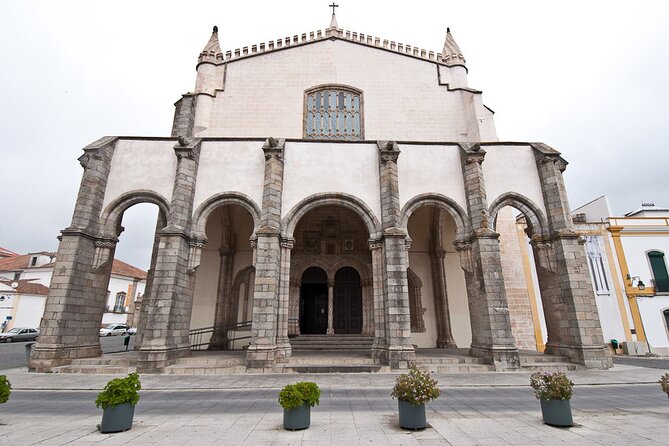
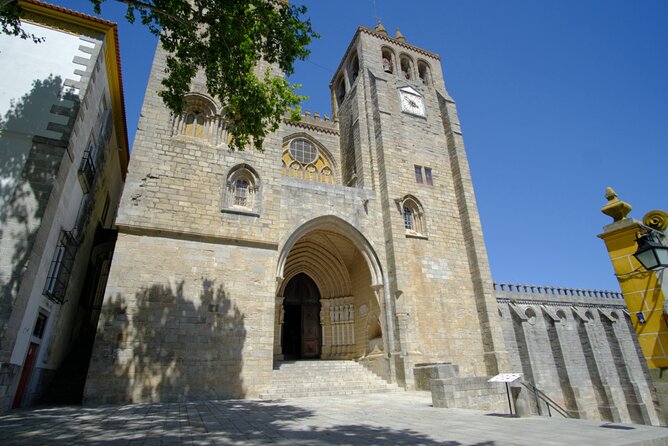
The Igreja de São Francisco offers one of the most striking contrasts on the route. The original church was built in 1224 by the Franciscan Order and was deliberately plain, with little decoration or costly material.
By the end of the 15th century, Portugal had become a major trading power. The church was then renovated with far greater show and expense. The interior still reflects that change, making the building a useful reminder that religious architecture can also reveal political and economic fortunes.
You can look inside for free, which adds real value to this part of the walk. Do not treat the church as a quick exterior photo stop. The whole point is the contrast between the simple Franciscan beginning and the later interior display.
The app’s explanation may not be as detailed as a live guide’s, so take time to look around for yourself. The building rewards a few quiet minutes, especially because the change in style is easier to understand when you see it rather than simply hear about it.
Same sights, a different narrator:
- Quinta da Regaleira Skip-the-Ticket-Line Entry & Audioguide
★ 4.2 · 3,316 reviews - Lisbon: São Jorge Castle E-Ticket and Audio Guide
★ 4.3 · 2,182 reviews - Quinta da Regaleira: Skip-The-Booth E-Ticket and Audio Guide
★ 4.2 · 2,067 reviews - Pinhão: 2-Hour Rabelo Boat Tour with Audio Guide
★ 4.3 · 1,224 reviews
The public park and the royal palace
The route continues into a park with a statue of Vasco da Gama and the royal palace. This is a welcome change of pace after the denser streets around the central square and church.
The royal palace is also called the Royal Palace of São Francisco and the Palace of King Manuel I. Its origins go back to a 13th-century monastery, and Portuguese royalty used it as a residence for many years.
In 1865, the palace became an archaeological museum. It is integrated into the garden, which helps explain why the stop feels connected to the park rather than isolated from it. The building is often considered one of Évora’s most beautiful, and the setting gives you a chance to appreciate its shape from outside.
The information supplied for this experience does not promise museum entry, so treat this as an exterior and garden stop unless the app or local signs tell you otherwise. That distinction matters if you are planning the walk around indoor visits.
The Jewish Quarter and a vanished community
The route passes through the center of Évora’s old Jewish Quarter. In earlier centuries, this was one of Portugal’s largest and wealthiest Jewish neighborhoods.
The stop is brief in its stated description, but the subject deserves your attention. You are walking through an area shaped by a community that was once central to the city’s commercial and cultural life. Much of the value here comes from imagining the streets as part of a functioning neighborhood, not simply admiring old walls.
This is also an area where the GPS guidance can be helpful. Narrow historic streets can feel similar, and the route keeps you moving in the intended direction. If the spoken commentary seems short, read the text on screen and take a slower look at the buildings around you.
Walking beside Évora’s 6-kilometer wall
The city wall provides one of the clearest ways to understand Évora’s scale. The route follows part of the wall, described as stretching for 6 kilometers, with the oldest section dating from the third century.
You will not need to walk the full length for this experience. The point is to gain a sense of how the historic city was enclosed and protected. A wall can make a city feel like a collection of monuments, but this section shows you the larger shape of Évora.
This is also where the walking distance begins to matter. The full tour is estimated at two to three hours, and the route covers about three miles according to one use of the experience. Comfortable shoes will make the day easier, even though the walk is not described as difficult.
The route’s ability to show your position on a map is especially useful here. You can tell how far you have progressed and avoid wondering if you have missed a turn.
The Agua de Prata Aqueduct
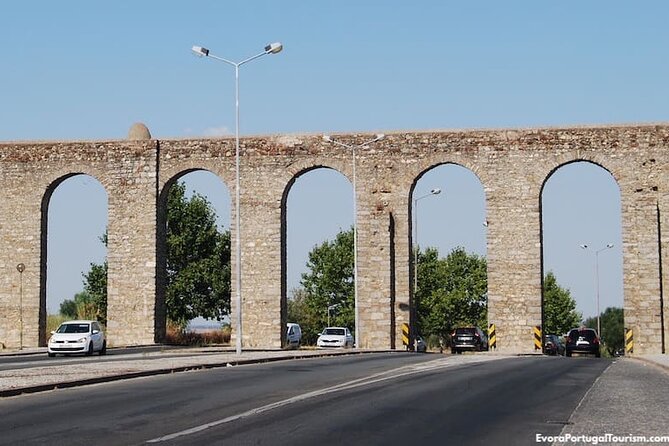
The Agua de Prata Aqueduct is one of the route’s more impressive engineering sights. It runs for 18 kilometers, and its highest arch reaches 26 meters.
The aqueduct once connected to the fountain at Praça do Giraldo, which ties this outer-looking structure back to the square where you began. That link gives the walk a satisfying sense of purpose: water was brought into the city and delivered to its central public space.
The aqueduct is best appreciated as infrastructure rather than decoration. Its scale helps you understand the practical work needed to support Évora. Depending on your pace and the exact route taken by the app, this portion may feel less concentrated than the central monuments, so do not expect a new major attraction at every few minutes.
Still, it is an important stop for anyone who likes to see how historic cities functioned. The Roman temple may be Évora’s calling card, but an aqueduct explains how people lived.
Cadaval Palace beside the Roman Temple
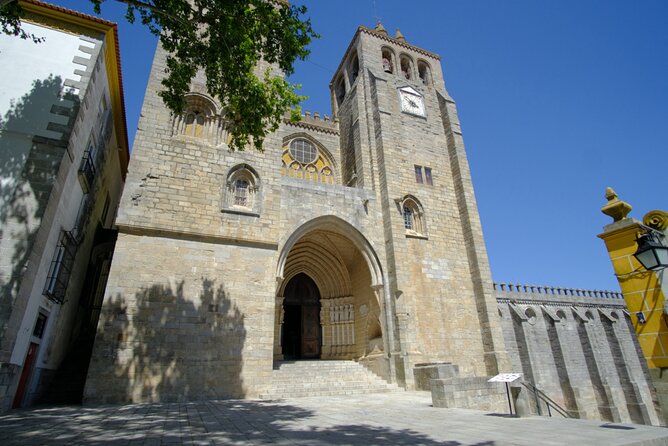
Cadaval Palace sits opposite the Roman temple and brings several architectural traditions together. Its design combines Mudéjar, Gothic, and Manueline elements, making it one of the more unusual buildings on the route.
The palace was built in the 14th century on the ruins of a Moorish castle in the center of Évora. That layered setting is typical of the city: one period did not simply erase another. Older foundations and later styles remain visible in the same place.
The palace and temple work well as a paired stop. One shows the endurance of Roman construction, while the other reflects medieval and Portuguese royal influences. If the app gives only a short explanation, this is a place where you should pause and compare the two buildings directly.
The route description does not establish palace entry, so plan on seeing Cadaval Palace from outside unless admission information is provided separately. The exterior setting still makes this one of the more worthwhile stops.
The Roman Temple, Évora’s signature sight
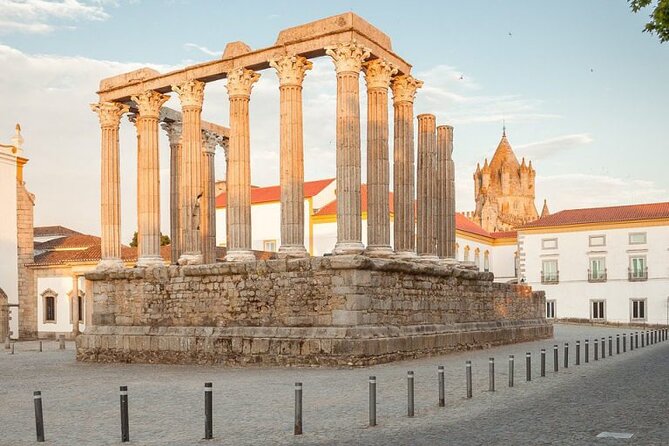
The Roman Temple is the final major highlight and the city’s calling card for the last 2,000 years. It is also one of the most important Roman ruins in Portugal.
Its position near Cadaval Palace creates a strong finish to the walk. After seeing Évora’s medieval squares, Christian churches, Jewish Quarter, walls, and royal buildings, you arrive at a monument from an even earlier period. The temple gives the city a long historical reach without requiring you to leave the center.
This is the sort of stop where I would pause the audio and take time with the site. Look at how the surviving columns relate to the surrounding buildings. The contrast is part of Évora’s appeal: the Roman remains are not separated from city life but sit within the historic center.
Because the tour ends back at Giraldo Square, you can continue exploring after the Roman Temple or follow the route back to the fountain. The exact ending position is the original meeting point, not a separate drop-off.
How the audio and GPS system work
The main feature is the app’s location awareness. It knows where you are and provides directions and information at the appropriate time. A map displays the route, and text appears on screen as a backup to the spoken commentary.
That setup is useful if you prefer independence. You can walk alone or with your own group, stop whenever you wish, and keep the commentary in your selected language. The activity is private, so you do not share the walking pace with strangers.
There are two practical cautions. First, download and set up the tour before you are short on time. One person spent much of a limited visit trying to make the download work and never reached the actual tour. Second, if two people use separate devices, the audio may not stay synchronized. One person can hear the information before the other, so using one device for the group may be easier.
The content may also feel uneven. The directions are a strong part of the experience, while some stops provide only a small amount of information. If you want lengthy historical storytelling, a live guide or a more detailed audio product may suit you better.
Who gets the best value at $8.05
At $8.05 per person, this works best as a low-cost orientation walk. You receive a structured route through many of Évora’s key sights without paying for a private human guide.
I see the best value for:
- Independent visitors who like to stop and start freely
- Couples or small groups who want a private activity
- People with two or three hours in Évora
- Visitors who prefer audio in their own language
- Anyone who wants directions as well as historical notes
- Budget-conscious visitors who do not need lengthy commentary
The value is weaker if you expect every building to receive a detailed explanation. The route is designed to help you see the city, not to provide a long lecture at each stop.
The activity runs daily from 7:00 AM to 7:00 PM during the stated operating period, from March 1, 2024, through June 17, 2026. Confirmation is provided when you book. Service animals are allowed, public transportation is nearby, and most people can participate. You can cancel for a full refund up to 24 hours before the start time. Inside that window, the payment is not refunded.
Should you book this Évora walk?
Book it if you want a cheap, flexible route through Évora’s major sights and are comfortable using an app. The GPS guidance is the strongest feature, and the freedom to walk at your own rhythm is genuinely useful in a city where you may want to linger at a church, palace, or square.
Skip it if your priority is deep historical storytelling, personal conversation, or guaranteed technical simplicity. Set up the tour before you arrive, and do not make it your only plan if your visit is very short.
For $8.05, I would view this as a practical introduction to Évora rather than a full guided education. It can help you get your bearings, cover the essential monuments, and leave room for your own discoveries afterward.
FAQ
Where does the Évora audio tour start?
It starts at the fountain in Giraldo Square, Praça do Giraldo 7, 7000-508 Évora, Portugal.
Where does the activity finish?
The activity finishes back at the meeting point in Giraldo Square.
How long does the walking tour take?
The estimated duration is two to three hours.
What sights are included?
The route includes Giraldo Square, Banco de Portugal, São Francisco Church, the park and royal palace, the Jewish Quarter, Évora’s city wall, the Agua de Prata Aqueduct, Cadaval Palace, and the Roman Temple.
Is the tour guided by a person?
No. It is a self-guided GPS and audio tour provided by Niki Your TravelBuddy.
How does the GPS feature work?
The GPS follows your position and provides directions and information at the appropriate points along the route. The route is also shown on a map.
Can I read the information instead of listening?
Yes. Text is available on the screen as support for the spoken commentary.
Can only my group participate?
Yes. This is a private activity, and only your group participates.
What are the operating hours?
The stated hours are Monday through Sunday, 7:00 AM to 7:00 PM, from March 1, 2024, through June 17, 2026.
Can I cancel for a refund?
Yes. You can cancel at least 24 hours before the start time for a full refund. Cancellations or changes made less than 24 hours before the start time are not refunded.
New audio tours around Portugal
- Prazeres Cemetery: A Self-Guided Audio Tour in Lisbon★ 3.0 · 2 reviews
- Lisbon Walking Tour with Audioguide on Your Smartphone★ 4.5 · 4 reviews
- Riverside Ride Audio Adventure Lisbon to Belem★ 5.0 · 8 reviews
- Self-Guided Audio Tour – Lisbon on Wheels: the capital of the sea★ 5.0 · 3 reviews
- Lisbon: E-ticket to St. George Castle & Audio Tour on Your Phone★ 3.0 · 18 reviews
- National Palace and Gardens of Queluz: E-ticket with Audio Guide★ 3.5 · 6 reviews
- Eco Car Twizy Tour – Lisbon Downtown and Belém with GPS Audio Guide★ 5.0 · 15 reviews
- National Coach Museum: E-ticket with Audio Tour on Your Phone★ 4.0 · 11 reviews
Portugal Audio Tours, compared.
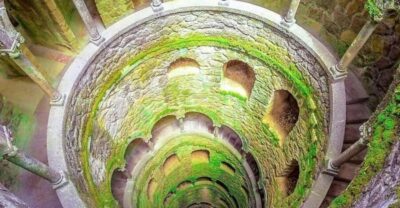
Quinta da Regaleira Skip-the-Ticket-Line Entry & Audioguide
Read our review →
Lisbon: São Jorge Castle E-Ticket and Audio Guide
Read our review →
Quinta da Regaleira: Skip-The-Booth E-Ticket and Audio Guide
Read our review →
Pinhão: 2-Hour Rabelo Boat Tour with Audio Guide
Read our review →
Lisbon: Tram 28 Entry Ticket & Audio Guide with 24-Hour Pass
Read our review →
Lisbon: Jerónimos Monastery E-Ticket and Audio Guide
Read our review →
Sintra: Castle of the Moors & Quinta Entry with Audio Guides
Read our review →
Sintra: Castle of the Moors Skip-the-Line Ticket+Audio Guide
Read our review →Browse the lists this tour appears in