
Review · ROME
Pompeii: Entry Ticket w/ Guide and Transfers or Audio Guide
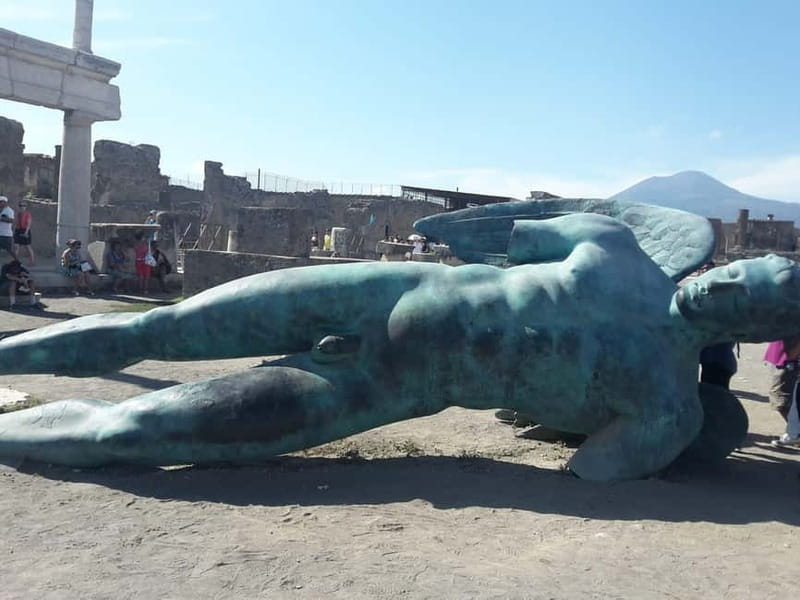
Pompeii is not a museum of objects behind glass. It is a whole Roman town, with streets, bakeries, baths, homes, and public buildings left exposed after Mount Vesuvius erupted in 79 AD. I like the freedom to choose a live guide or audio guide, and I like that the visit includes the major sights, from the forum to the amphitheater and the plaster casts.
I also like the practical choice of starting in Rome with round-trip transport or meeting at Pompeii yourself. The main drawback is the long possible duration for the Rome option, and the site is not suitable for wheelchair users or people with mobility impairments.
Key points to know before you book
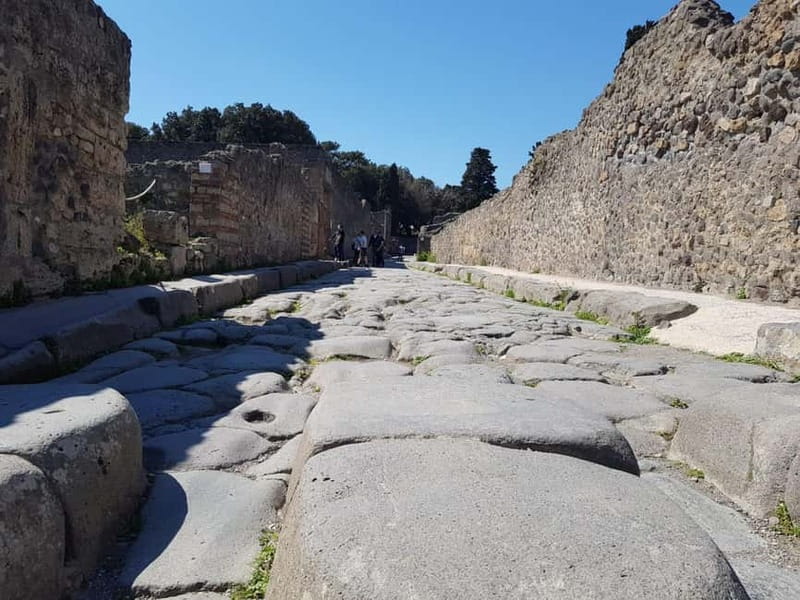
- See a Roman city instead of a single monument: Pompeii gives you streets, homes, shops, baths, public spaces, and entertainment buildings in one visit.
- Choose your style of sightseeing: A live guide offers stories and context, while the English audio guide lets you set your own pace.
- The Rome option removes much of the transport work: You can travel by bus or train through the Italian countryside and return to the original meeting point.
- Allow for uneven, tiring walking: Large bags are not allowed, and the site is not suitable for wheelchair users or people with mobility impairments.
- The plaster casts are the most moving stop: They make the eruption personal, showing the human cost behind the ancient walls.
- Guide quality matters: Giuseppe is singled out for making the visit especially enjoyable, while other guides are praised for humor, clarity, and friendly help.
Why Pompeii feels different from an ordinary archaeological site
Pompeii gives you an unusual sense of scale. You are not simply looking at ruins from a walkway. You are walking along the same kind of streets people used nearly 2,000 years ago, passing houses, shops, public baths, political spaces, and places of entertainment.
The eruption preserved details that usually vanish from ancient history. Frescoes remain on walls. Mosaics mark the floors of wealthy homes. Bakeries, stores, and baths show how ordinary routines fitted together. The result is a place that connects grand Roman architecture with small, practical details of daily life.
That is the real value of this experience. You can admire the forum, but you can also look into a kitchen, enter a home, or picture a shopkeeper working beside the street. Pompeii makes the ancient world feel physical and close.
Mount Vesuvius provides the setting for the story, but the visit is not simply about a volcano. It is about a city interrupted. In 79 AD, daily life stopped suddenly, leaving an archaeological record that is unusually direct and often unsettling.
More audio tours around Rome:
- Rome: Colosseum & Forum with Audio Guide App -Optional Arena
★ 4.2 · 24,770 reviews - Rome: City Sightseeing Hop-on Hop-off Bus with Audioguide
★ 4.0 · 16,045 reviews - Rome: St. Peter’s Basilica & Dome Entry Ticket & Audio Tour
★ 4.2 · 7,537 reviews
Choosing between a guide and an audio guide
The guided option is the better pick if you want a clear route through a very large site. A guide can explain why a building mattered, point out details you might walk past, and connect the eruption to the people who lived here.
The available host languages include English, French, Spanish, and German. Giuseppe is one guide praised for his friendly manner and strong handling of the visit. Other guide feedback highlights humor, clear explanations, and the ability to keep both adults and children interested.
A live guide also helps you get your bearings early. Pompeii can feel confusing because the ruins spread across a broad area, and several buildings may look similar at first glance. A structured walk gives the day a useful shape while still leaving time for personal exploration.
The English audio guide suits you better if you prefer to stop often, move slowly, or focus on selected buildings. You can explore at your own pace instead of staying with the guide’s route. The trade-off is that an audio guide cannot answer a question or adjust the explanation when you want more detail.
The listing describes the audio guide as optional and available in English. If you want a language other than English, the live guide is the clearer choice.
From Rome to Pompeii: what the transfer adds
If you select the Rome option, round-trip transportation is included. The journey may be by bus or train, taking you through the Italian countryside before you reach the archaeological park.
This is useful if Pompeii is a full-day outing from Rome and you do not want to arrange the transport yourself. You arrive with the main travel plan already organized, then return to the original meeting point at the end.
The Rome option can last as long as 12 hours, so you should think of it as a major day trip, not a quick side visit. The travel time is part of the cost in energy and schedule. If your Rome stay is short, check the starting time and expected duration carefully before booking.
You do not receive hotel pickup or hotel drop-off. You must reach the assigned meeting point, which can vary by booking option. Do not arrive late, since the tour does not wait for latecomers.
If you are already staying near Pompeii, the direct option may make more sense. You avoid the long Rome transfer and can spend your time at the site itself. Since the meeting point changes according to the option selected, read the final booking details closely.
Entering the archaeological park
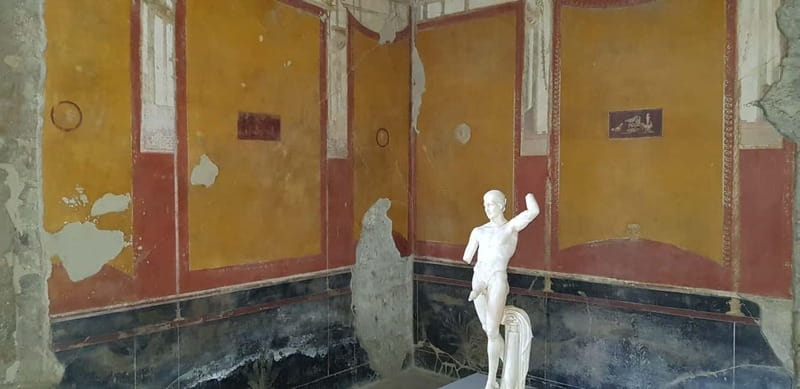
Entry to Pompeii Archaeological Park is included. Once inside, the best approach is to treat the visit as a walk through a city rather than a checklist of isolated ruins.
Expect ancient streets underfoot and a large amount of open-air walking. The weather matters. Tours operate in rain unless officials close the monument for safety, so bring sensible clothing and shoes suited to changing conditions.
Oversize luggage and large bags are not allowed. Food and drinks are not permitted in the vehicle on the transfer option, and alcohol and drugs are prohibited. These rules are simple, but they matter when you are packing for a long day away from your accommodation.
The site is not suitable for wheelchair users or people with mobility impairments. The combination of distance, uneven surfaces, and ancient streets makes this a physically demanding visit. If walking is difficult for you, this is an important reason to choose another activity.
Same sights, a different narrator:
- Colosseum, Roman Forum & Palatine Hill with Audioguide App
★ 4.4 · 6,291 reviews - Vatican & Sistine Chapel Ticket with Optional Audio Guide
★ 4.1 · 5,405 reviews - Rome: Castel Sant’Angelo Entry Ticket & Digital Audioguide
★ 4.7 · 5,347 reviews - Rome: Castel Sant’Angelo Entry Ticket & Audio App
★ 4.3 · 4,952 reviews
The forum, Pompeii’s public center
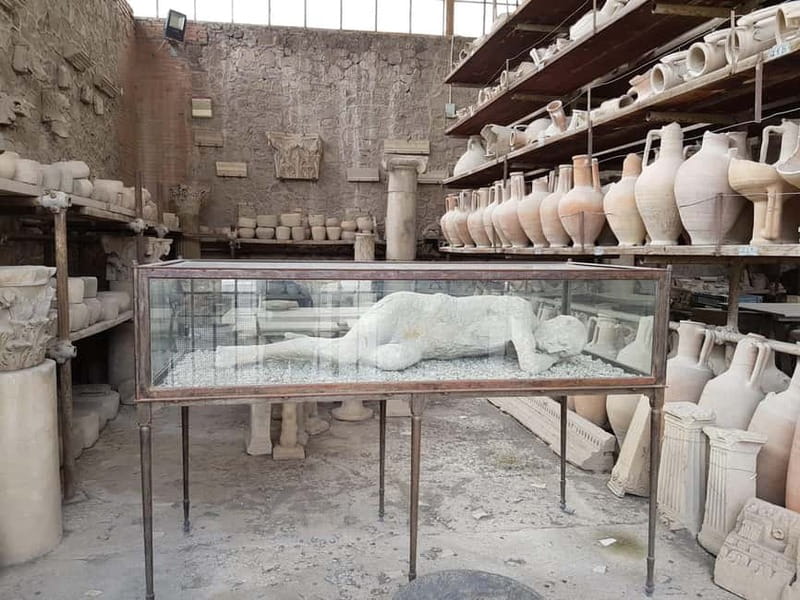
The forum is one of the first places where the scale of Pompeii becomes clear. This was the center of political, commercial, and social life, not just an attractive open square.
Your guide can help you read the space as a working part of Roman society. Public buildings surrounded the forum, and people came here for civic business, trade, and social contact. Without context, a large paved area can seem empty. With context, it becomes the heart of a city.
I recommend taking a moment to look beyond the most obvious columns and walls. The forum helps you understand how the private homes and small businesses you see elsewhere fitted into a much larger community.
It is also a useful early stop because it gives you a sense of Pompeii’s public life before you turn toward homes, shops, and more personal evidence of the eruption.
The amphitheater and Roman entertainment
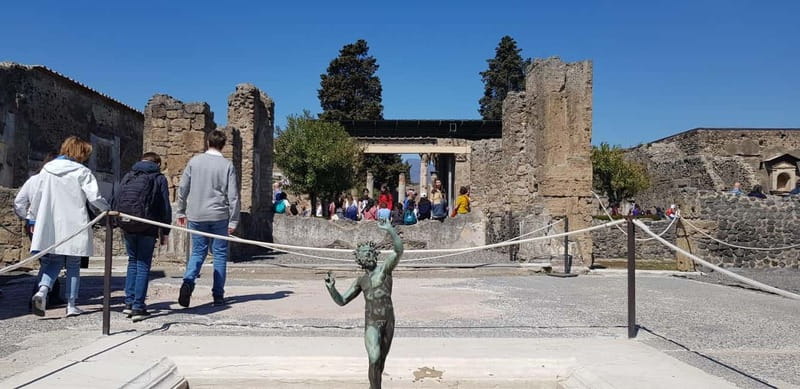
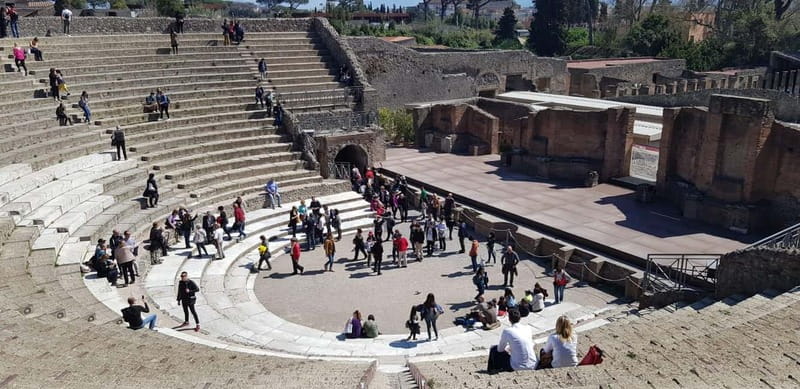
The amphitheater offers a different view of Pompeii. Here, the focus shifts from government and commerce to public entertainment and gladiatorial contests.
The structure helps you picture how large crowds gathered and how spectacle formed part of Roman life. It is one of the site’s most recognizable landmarks, but its importance goes beyond its shape. The amphitheater shows how entertainment, status, and public identity worked together in the ancient city.
You will likely find this stop especially effective after seeing the forum. One area shows civic life, the other shows mass entertainment. Together, they give you a broader view of what Pompeii residents did with their time and how the city brought people together.
Villas, frescoes, and the world of wealthy Pompeii
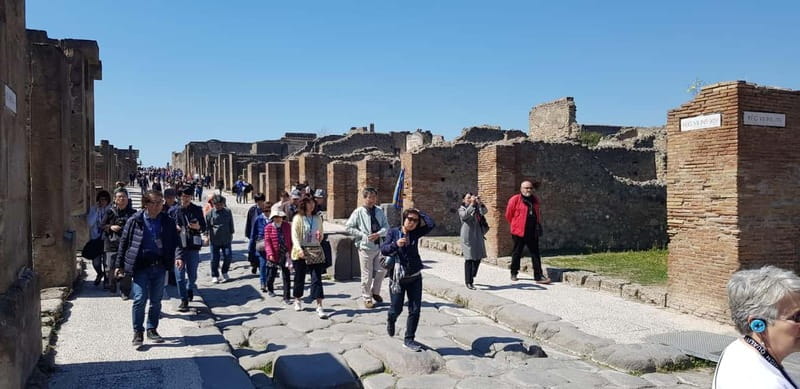
The wealthiest residents left behind homes with detailed frescoes and mosaics. These houses let you see the private side of Pompeii, where decoration carried social meaning and domestic spaces could be richly designed.
The House of the Vettii is one of the named highlights. Its importance lies in the way it reveals the ambitions and lifestyle of affluent homeowners. The wall paintings and floor designs are not mere decoration. They show the taste, money, and social position of the people who commissioned them.
The Villa of the Mysteries is another key stop. It gives the visit a more personal and artistic quality, with rooms and painted surfaces that reward slower attention. Your guide can explain the significance of the villa and help you notice details that may be easy to miss when you are moving through a large complex.
Do not assume every impressive part of Pompeii is monumental. Some of the most useful clues come from house layouts, painted walls, thresholds, and small rooms. They help you picture how people moved through a home and how public display extended into private life.
Baths, bakeries, and shops that show daily routines
Pompeii’s baths, bakeries, and shops are among the best places to understand ordinary life. Grand buildings tell you how the city presented itself. Small commercial and practical spaces tell you how people actually lived.
The baths reveal the social side of Roman hygiene and leisure. They were not simply places to wash. They formed part of the city’s public routine and show how shared facilities shaped daily life.
Bakeries and shops add another layer. These spaces connect archaeology with familiar needs: food, work, trade, and neighborhood activity. Their presence makes Pompeii feel less like a frozen stage set and more like a functioning town.
I find these stops especially useful for families and younger visitors. A child may not care about a column for long, but a bakery or shop can prompt a direct question: What happened here? Who worked here? How did people use this space?
The guide option is helpful here because these buildings can require explanation. The audio guide gives you independence, but you may need to spend more time listening if you want the same background.
The plaster casts and the human cost of the eruption
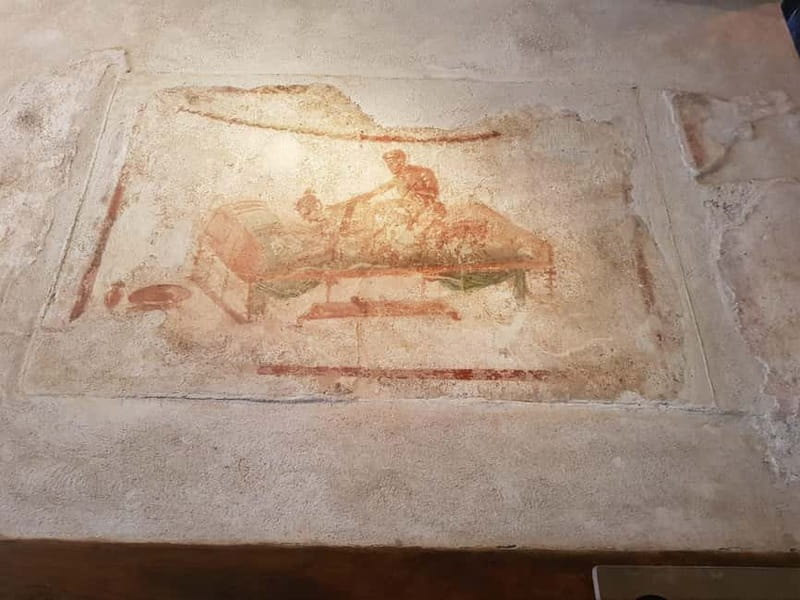
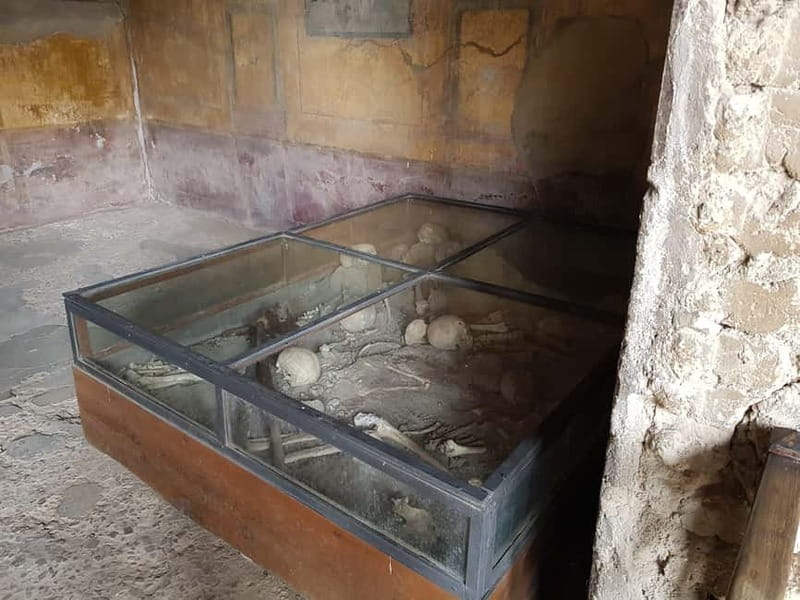
The plaster casts are the most emotional part of the visit. They show the people caught in the eruption, turning a large historical event into something personal.
The casts can be difficult to see, especially for children. They are not simply archaeological curiosities. They are evidence of sudden loss, and they change the mood of the day.
This stop also gives the rest of Pompeii more meaning. After walking through houses and public spaces, you are reminded that these were not empty buildings waiting to become ruins. Real people lived there, worked there, and expected ordinary life to continue.
A good guide will provide context without turning the moment into spectacle. If you use the audio guide, take your time and decide how much detail you want. You can keep moving if the display feels too intense.
How much time should you allow?
The stated duration ranges from 2 to 12 hours, depending on the option. That wide range reflects the difference between a direct Pompeii visit and a Rome-based trip with transport.
A shorter option may suit you if you are already nearby and want the main archaeological experience. The longer Rome option includes the travel needed to reach and leave Pompeii, so it takes up much of the day.
Pompeii itself is large enough that you should not expect to see every corner during a brief visit. The guided format helps you focus on major landmarks. The audio guide gives you more control, but you must manage your own time and energy.
I would check the exact starting time before committing to other plans. The tour runs in rain unless the site closes for safety, and the schedule does not bend for late arrivals.
Is the price good value?
The advertised price begins at $5.55 per person, but you should check the exact price for your chosen option. The cost can vary according to the inclusion of transport, a live guide, or an audio guide.
At the lowest advertised price, entry to a major UNESCO World Heritage site is appealing. The value becomes stronger if you want the convenience of a guide or if the Pompeii Archaeological Park ticket would otherwise be another booking to arrange.
The Rome transport option should be judged separately. You are paying not only for access but also for the return journey and the convenience of having the main route organized. That can save time and stress, especially if you do not want to work out the transport yourself.
The biggest value comes from the combination of entry and interpretation. Pompeii is easy to admire but harder to understand fully without context. A guide can turn scattered walls into a readable city. The audio guide offers a lower-contact alternative for visitors who prefer independence.
Because the meeting point varies, compare the final option details rather than assuming every booking includes the same arrangement.
Who will enjoy this Pompeii visit?
This experience suits first-time visitors who want to see the major landmarks without planning every detail themselves. It also works well for couples, solo visitors, and families who want a clear introduction to Pompeii.
Families should consider the walking time and the plaster casts. The guide format can help keep children interested by connecting the ruins to everyday life, but younger children may tire during a long Rome day trip.
Solo visitors may appreciate the organized transport and the choice between company and independence. The guided option provides structure, while the audio guide lets you set your own rhythm.
History lovers will get the most from the villas, frescoes, mosaics, and public buildings. If you are mainly interested in photography, you will still find plenty to see, but the Roman context is what makes the site valuable.
You should think twice if you have limited mobility, need wheelchair access, dislike long walking days, or cannot reach the meeting point on time.
Small practical choices that improve the day
Wear comfortable shoes and prepare for an outdoor visit. The site operates in rain unless officials close it, so your clothing should suit the forecast.
Keep your luggage small. Oversize luggage, large bags, and food or drinks in the vehicle are not allowed. These restrictions are particularly important on the Rome transfer option.
If you choose the live guide, select your preferred language from English, French, Spanish, or German when booking. If you choose the audio guide, the stated language is English.
Set aside enough time for the guide’s route and your own wandering. The best balance is to listen closely at the forum, amphitheater, villas, and plaster casts, then use any free time to revisit the spaces that interest you most.
Should you book this Pompeii experience?
Book it if you want Pompeii’s major sights in one organized visit, especially if you are coming from Rome and value return transport. The guide option is the strongest choice for a first visit because it gives meaning to the forum, homes, baths, shops, and casts.
Choose the audio guide if independence matters more than conversation. Choose the direct Pompeii option if you are already in the area and do not need a Rome transfer.
Skip it if you need wheelchair access, have difficulty with extended walking, or cannot comfortably reach a fixed meeting point. Also check the exact duration and price, since the 2 to 12 hour range covers very different versions of the day.
For most first-time visitors who can manage the walking, this is a practical way to encounter Pompeii as a real Roman town, not just a collection of ruins.
FAQ
Is entry to Pompeii Archaeological Park included?
Yes. Entry to Pompeii Archaeological Park is included with the activity.
Can I visit Pompeii with a live guide?
Yes. A guided tour is available when you select that option. Hosts or guides may speak English, French, Spanish, or German.
Is an audio guide available?
Yes. An optional audio guide is available in English. This option lets you explore Pompeii at your own pace.
Does the tour include transportation from Rome?
Round-trip transportation from Rome is included if you choose the Rome transfer option. Transport may be by bus or train.
Is hotel pickup and drop-off included?
No. Hotel pickup and drop-off are not included. You must reach the meeting point listed for your selected option.
What happens if I arrive late?
The tour does not wait for latecomers. Plan extra time to reach the assigned meeting point.
Is the activity suitable for wheelchair users?
No. The activity is not suitable for wheelchair users or people with mobility impairments.
New audio tours around Rome
- St. Peter’s Basilica: Hosted Entrance & Digital Audioguide★ 4.1 · 35 reviews
- Rome: St. Peter’s Basilica and Dome Entry + Audio Guide★ 4.5 · 13 reviews
- Sorrento & Pompeii Day Trip from Rome Audio Guide Tour★ 4.2 · 50 reviews
- Rome:St. Peter’s Basilica Hosted Entry + Official Audioguide★ 3.4 · 10 reviews
- Colosseum, Roman Forum, Palatine Hill access and AudioGuide★ 4.7 · 12 reviews
- Rome+Jubilee Audioguide – TravelMate app for your smartphone★ 4.2 · 38 reviews
- Rome:Ostia Antica Skip-the-line Ticket & Audioguide★ 4.3 · 11 reviews
- Rome: Vatican Museums & Sistine Chapel Entry with Audio App★ 4.3 · 240 reviews
Rome Audio Tours, compared.
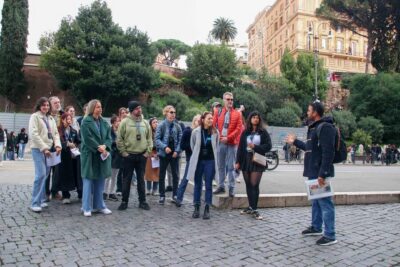
Rome: Colosseum & Forum with Audio Guide App -Optional Arena
Read our review →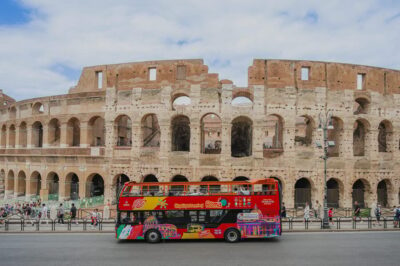
Rome: City Sightseeing Hop-on Hop-off Bus with Audioguide
Read our review →
Rome: St. Peter’s Basilica & Dome Entry Ticket & Audio Tour
Read our review →
Colosseum, Roman Forum & Palatine Hill with Audioguide App
Read our review →
Vatican & Sistine Chapel Ticket with Optional Audio Guide
Read our review →
Rome: Castel Sant’Angelo Entry Ticket & Digital Audioguide
Read our review →
Rome: Castel Sant’Angelo Entry Ticket & Audio App
Read our review →
Rome: Hop-on Hop-off Sightseeing Bus Tour with Audioguide
Read our review →Browse the lists this tour appears in