
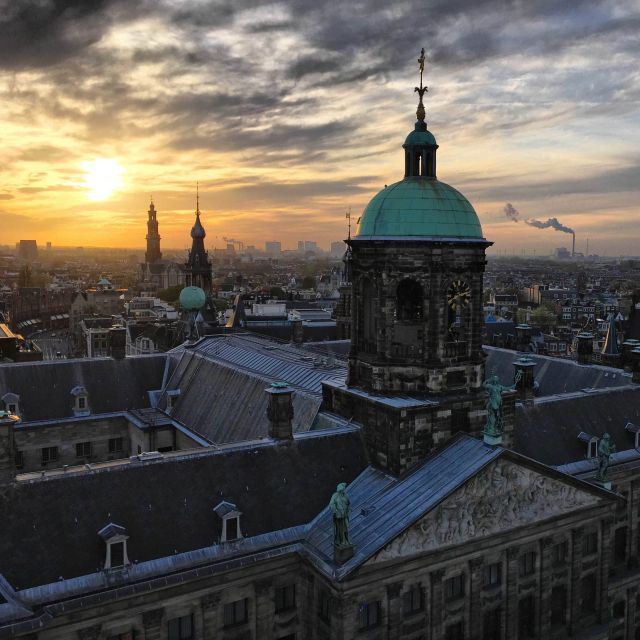
Review · AMSTERDAM
Amsterdam: Royal Palace Entry Ticket + Audio guide
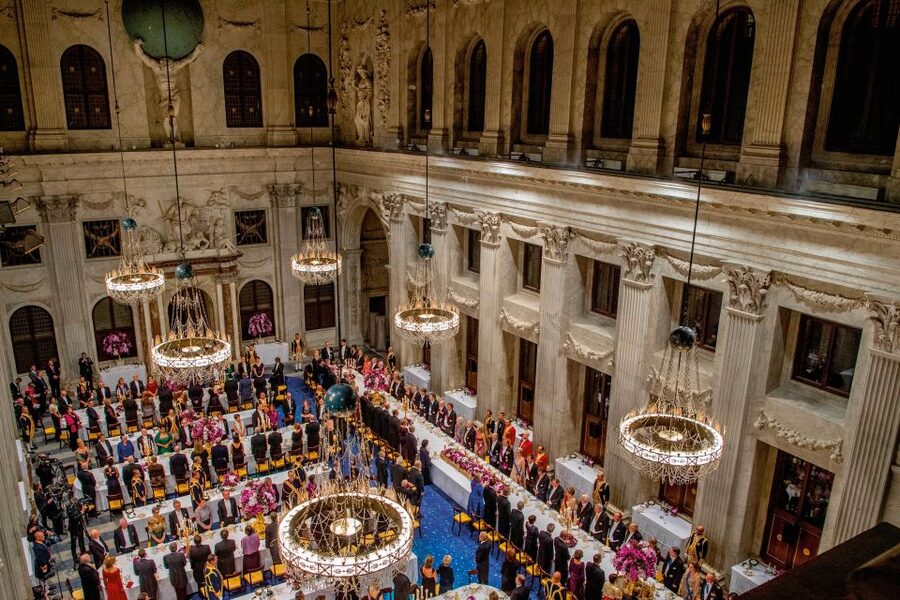
Amsterdam’s Royal Palace is less about royal gossip than grand civic theater. This 17th-century building began as Amsterdam’s city hall, and its vast marble Citizens’ Hall still feels designed to impress merchants, diplomats, and visiting heads of state. Today, you can walk through rooms used for state banquets, royal receptions, and official ceremonies.
I like the excellent audio guide, which lets you choose a shorter or longer route and pause whenever you wish. I also like the practical setup: prepaid visitors can use the priority lane, and the cloakroom makes it easier to explore without carrying a heavy coat or bag. The main consideration is time. You can rush through in about an hour, but 90 minutes to 2 hours gives the rooms and commentary room to breathe.
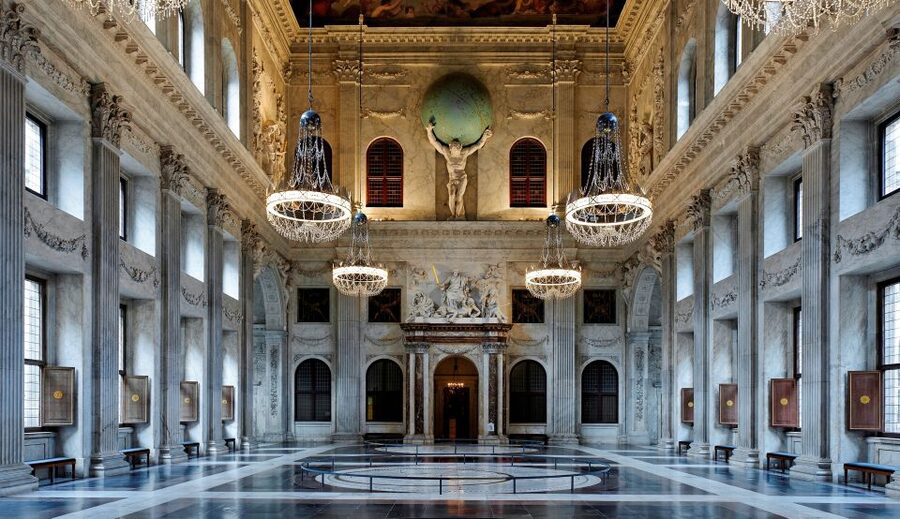
- The Citizens’ Hall: See the palace’s vast marble centerpiece and its striking Atlas statue.
- Golden Age art: Find paintings and sculptures connected with artists including Ferdinand Bol and Govert Flinck.
- Royal rooms in use today: Walk through spaces still used for state visits, banquets, and royal events.
- A flexible audio tour: Choose Dutch, English, German, French, Italian, Spanish, Chinese, or Russian, with a shorter route available.
- Easy central access: The palace sits on Dam Square, near tram connections and Metro 52’s Rokin station.
- Good family value: Children under 18 enter free, though they still need to collect a ticket at the counter.
Why Amsterdam’s former city hall feels like a palace
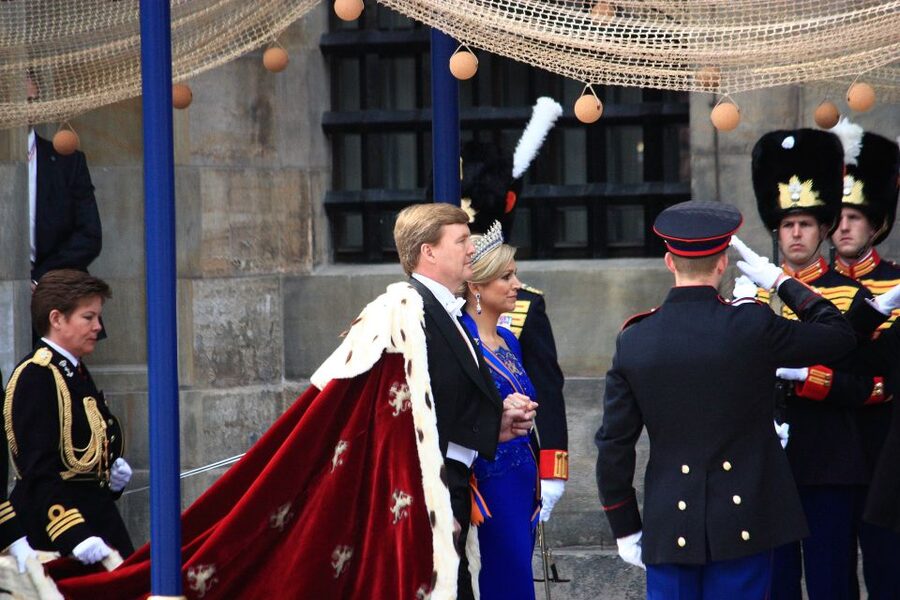
The first surprise is the building’s original purpose. This was not built as a private royal residence. It began as Amsterdam’s grand city hall during the Dutch Golden Age, when the city was wealthy, ambitious, and eager to show its importance.
That history gives the palace a different character from a house designed only for royal comfort. The scale is public and ceremonial. Marble, sculpture, painted ceilings, chandeliers, and carefully placed symbols turn civic government into a grand statement.
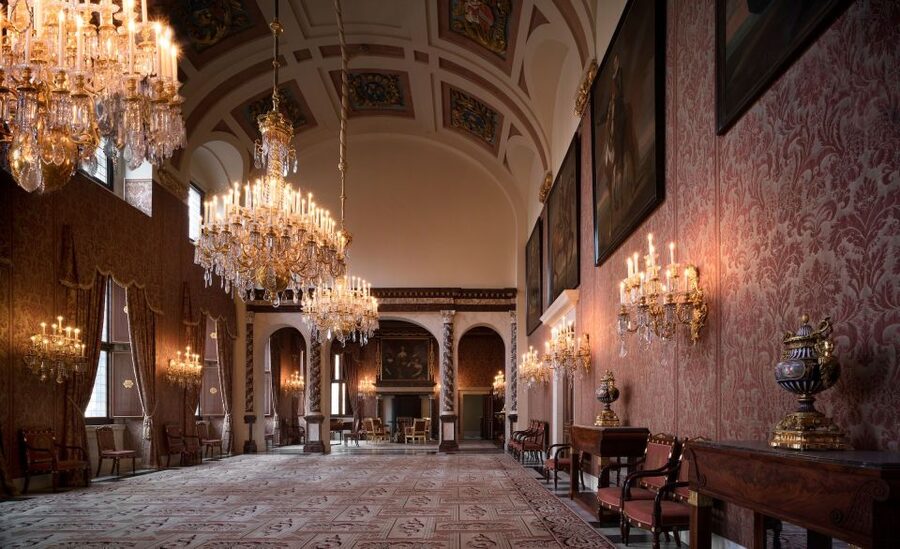
The building later became a royal palace, and Louis Napoleon used it during the French period. That helps explain the blend of Dutch civic pride and French-style royal decoration. As you move through the rooms, you see finely preserved furniture, clocks, chandeliers, and furnishings from that era.
I find this mix more interesting than a palace that presents only one chapter of history. You are looking at a working royal building, but also at a former city hall that tells you how Amsterdam wanted power and prosperity to look.
Entering on Dam Square
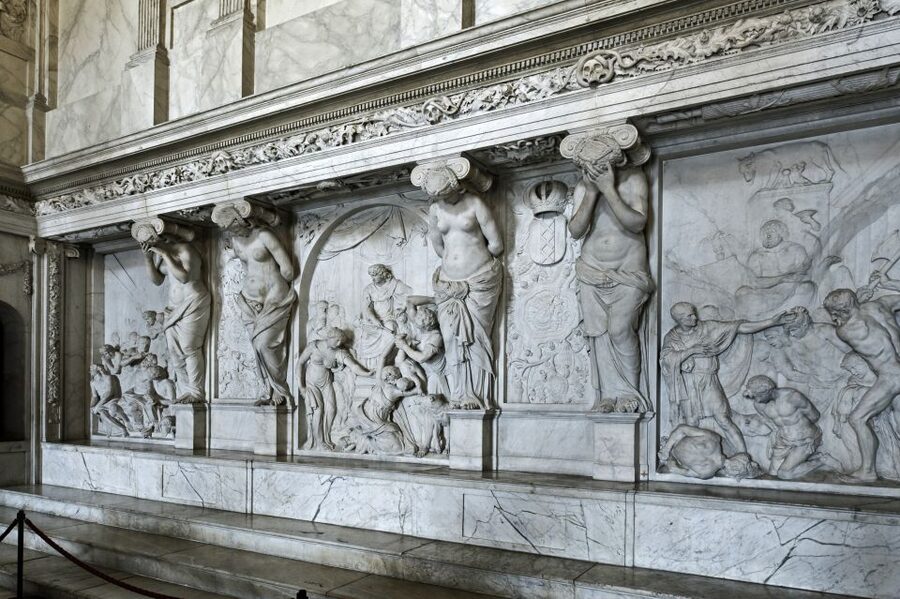
The Royal Palace is on Dam Square, right in the middle of Amsterdam. That makes it easy to add to a day of sightseeing, but it also means the square can be a busy place to navigate, especially when you are trying to meet a fixed schedule.
Trams 2, 4, 12, 13, 14, 17, and 24 serve the area. The nearest GVB tram stop is Dam Square, while Metro 52 is an option if you get off at Rokin. Once you reach the square, the palace is hard to miss.
If you book ahead, you can show your smartphone ticket at the scan desk and use the priority lane. That is useful when the ticket counter has a line. Still, take a moment to check the day’s opening details before you go, because the palace is used for official functions and access can depend on its schedule.
Children under 18 enter free, but they need to pick up a ticket at the counter. For families, that can make this a good-value stop, particularly if the adults want the audio commentary and the children are old enough to enjoy a grand building without needing a long guided talk.
More Castle and Palace Audio Tours in Amsterdam:
- Prague: Skip-the-line Castle Ticket and Optional AudioGuide
★ 4.3 · 11,121 reviews - Topkapi Palace and Harem Skip-the-Line-Tickets & Audio Guide
★ 4.3 · 4,745 reviews - Milan: Sforza Castle Entry Ticket with Digital Audio Guide
★ 4.0 · 2,675 reviews
The audio guide sets the pace
The audio guide is central to this experience. Without it, you would see a series of handsome rooms. With it, you get the meaning behind the artwork, the building’s changing use, and the details that are easy to miss while walking from one numbered section to the next.
You can choose from Dutch, English, German, French, Italian, Spanish, Chinese, and Russian. A children’s multimedia tour is also available in Dutch and English.
The format suits independent visitors. You are not tied to a guide or a fixed group pace. You can pause the commentary, skip a room that interests you less, or spend longer in front of a painting or sculpture that catches your eye.
That flexibility matters because the palace can work as a quick one-hour visit or a slower 90-minute to 2-hour outing. If your schedule is tight, choose the short route. If you enjoy museum audio tours, allow closer to two hours and listen to the sections in full.
I would not skip the audio guide. One visitor arrived expecting to look around without much explanation and found the commentary far more useful than expected. Another entered without taking the offered headphones and later regretted missing the background. The lesson is simple: the building is attractive on its own, but the audio makes it much easier to understand what you are seeing.
The Citizens’ Hall is the main event
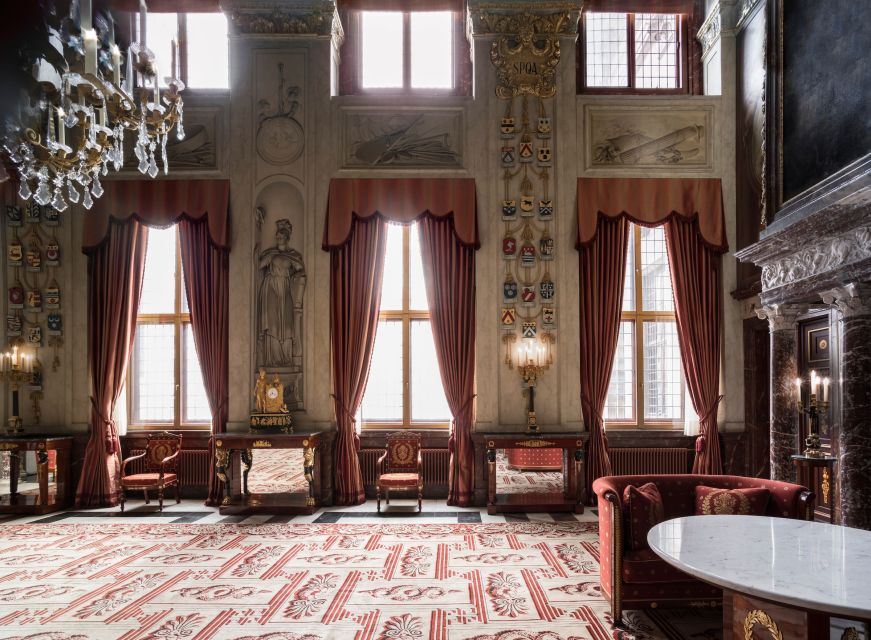
The Citizens’ Hall is the palace’s visual high point. It is a vast marble chamber that expresses Amsterdam’s old confidence in stone, sculpture, and scale.
Look up and around rather than walking straight through. The room’s decoration is not random ornament. It uses figures, symbols, and monumental design to present the city as orderly, prosperous, and connected to a much larger world.
The statue of Atlas carrying the sky is one of the details you should make time for. It is the sort of feature that can disappear into the room’s size if you are rushing. The audio guide helps explain why such sculpture was placed here and how it fitted the building’s civic message.
This is also where the palace feels least like a private home and most like a stage for public power. If you have limited time, do not let the smaller rooms distract you from spending a few quiet minutes in this hall.
Paintings, sculpture, and the Dutch Golden Age
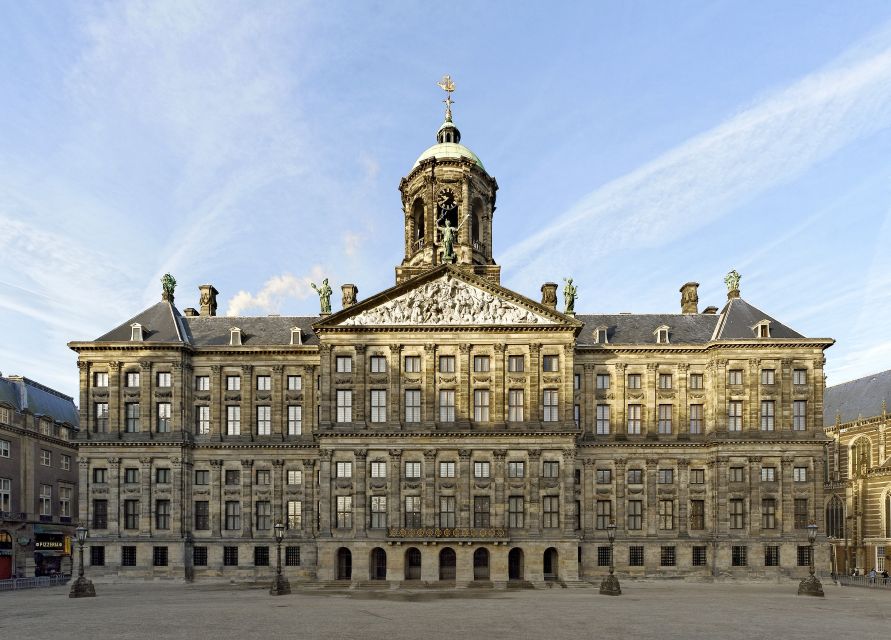
The palace contains paintings from some of the best-known artists of the Dutch Golden Age, along with sculpture by artists such as Ferdinand Bol and Govert Flinck.
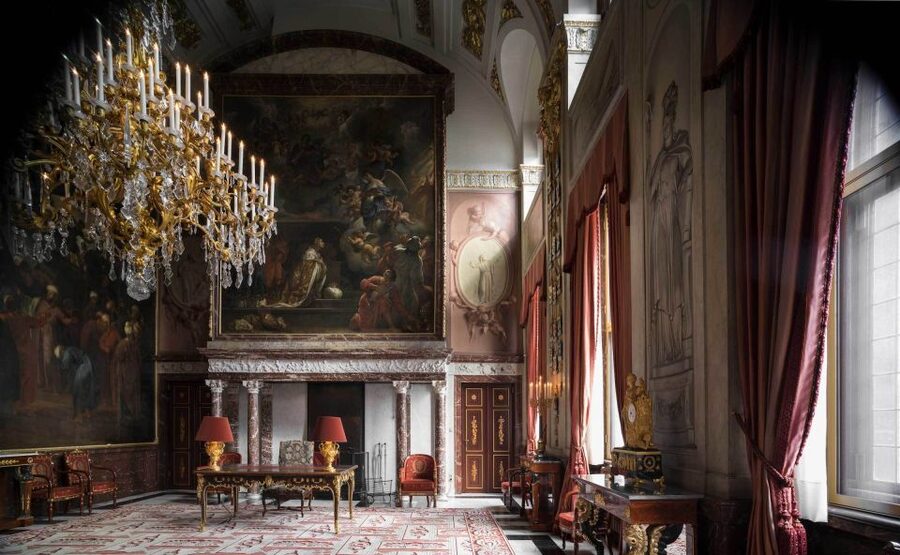
You do not need to arrive as an art specialist. The audio guide gives enough context to connect the works with the building and its original public role. That is important here because the art is not displayed in a neutral gallery setting. It was selected to suit rooms where Amsterdam’s leaders conducted business and received important people.
I like the way the palace links art with ambition. The paintings are not simply attractive objects on walls. They helped create a picture of civic strength, justice, abundance, and order.
There is a possible drawback for anyone who prefers variety. Room after room can begin to feel similar, with repeated impressions of polished floors, ornate furnishings, chandeliers, and formal decoration. The audio guide helps break up that sameness, but you may still want to use the shorter route if grand interiors are not your main interest.
More audio tours around Amsterdam:
- Amsterdam: 75 Minute City Canal Cruise with Audio Guide
★ 4.4 · 19,938 reviews - Amsterdam: City Centre Canal Cruise including Audioguide
★ 4.3 · 16,901 reviews - Amsterdam: Heated Canal Cruise Including Audioguide
★ 4.2 · 2,773 reviews - Amsterdam: Canal Cruise with Live Commentary & Audio Guide
★ 4.4 · 1,034 reviews
Royal rooms and Louis Napoleon’s mark
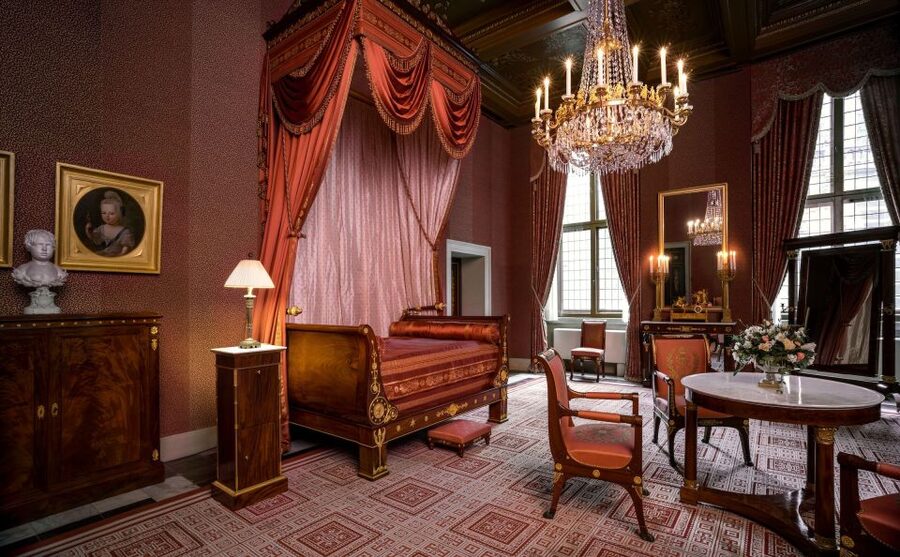
The palace’s royal identity becomes clearer as you move through the rooms used for receptions and official occasions. You can see where state banquets are held and where heads of state may sleep during official visits.
That does not mean every room feels like a lived-in family home. Much of the appeal is ceremonial. These are rooms arranged to receive people, represent the Netherlands, and support formal events.
The furniture, clocks, chandeliers, and other furnishings from the period of Louis Napoleon are especially helpful in imagining how the building changed from a city hall into a royal residence. The French influence is visible in the decoration, and one visitor found the interiors reminiscent of France.
At the same time, the palace presents Dutch identity throughout its rooms. The result is not a simple royal story. It is a place where Amsterdam’s civic power, French influence, and modern Dutch monarchy overlap.
The palace remains in use for state visits, award ceremonies, and royal receptions. That current function adds weight to the visit. You are not walking through a building preserved only as a historical shell. You are seeing official rooms that still serve a public purpose.
How long to allow, and when to go
Plan on about 1.5 hours if you want to follow the audio guide comfortably. You can complete the main route in roughly an hour, particularly if you listen selectively, but that leaves little time to linger in the Citizens’ Hall or study the artwork.
An entire afternoon may be more than most people need, though art lovers and visitors who read or listen to every section could spend longer. The route involves stairs, and there are not many places to sit, so pace yourself if you have mobility concerns or tire easily.
An early visit is a sensible choice if you want fewer people around. Late afternoon can also work well at times. One visitor entered after 4 p.m. on a Saturday and found it easy to see the rooms with minimal crowding. Conditions vary, but the general advice is sound: avoid the busiest part of the day when you can.
Give yourself extra time if you are visiting with children. The children’s audio tour may help, but the palace is a quiet, formal place. Running and loud play are not a good fit, and the stairs can become crowded. Families with older children who like stories, symbols, and impressive interiors should get more from it than families with very young children.
Price, queues, and what you receive
The listed price is about $15 per person. That is fair if you use the audio guide and spend at least an hour inside, especially because the ticket covers both the palace entry and the multimedia tour.
The value is less clear if you only want a quick look at ornate rooms. A walk-up ticket has been available for less in euros, with one price noted at €12.50, so it is worth checking the current official rate before booking. The prepaid option can still be worthwhile because it may save time at the ticket counter and gives you a clearer plan for your day.
The included cloakroom is another small benefit. Amsterdam weather can make coats and bags awkward, and being able to leave them behind makes the narrow passages and stair sections easier.
You cannot bring pets, food, or drinks inside. Smoking is not allowed, and flash photography and video recording are prohibited. Keep your smartphone ticket ready, and remember that last entry is 45 minutes before closing.
Accessibility and practical comfort
The building is wheelchair accessible, with a lift, an accessible toilet, and wheelchairs available for visitor use. That is useful information for planning, though the palace’s formal layout still means you should allow enough time and ask staff for help if you need a particular route.
Staff assistance is one of the practical strengths of the visit. The ticket and audio-guide areas are organized, and help is available when you need to find the next section or manage the equipment.
The numbered audio stops can occasionally be difficult to locate. If you lose your place, do not keep wandering at random. Pause the device, look for the next number, and ask staff if necessary. The palace is not large enough to make getting lost a serious problem, but it is easy to miss a commentary point if you move too quickly.
Who will enjoy the Royal Palace most
I would recommend this visit to you if you like architecture, art, royal ceremony, or the story of how a city presents itself. It is also a strong choice if you prefer self-guided sightseeing rather than joining a group.
It works especially well for:
- First-time visitors who want a central Amsterdam attraction with a clear historical focus.
- Art lovers interested in Dutch Golden Age painting and sculpture.
- Families with children who can manage a quiet museum setting.
- Visitors with a spare hour or two near Dam Square.
- Anyone who likes to choose between a short and longer audio route.
You may want to lower your expectations if you are looking for intimate royal rooms, lively performances, or a large museum collection. The palace is formal, carefully maintained, and ceremonial. Its appeal comes from scale, decoration, symbolism, and continued official use.
Should you book the Amsterdam Royal Palace ticket?
I would book it if you want a well-organized look inside one of Amsterdam’s most important buildings and you are willing to use the audio guide. The Citizens’ Hall, Golden Age art, and royal reception rooms provide enough variety for a worthwhile visit, while the self-guided format lets you control the pace.
Book ahead when saving time matters, when you are visiting during a crowded period, or when you want the flexibility of reserve now and pay later with cancellation up to 24 hours in advance. Check the current walk-up price if saving every euro matters more than skipping a queue.
My practical plan would be simple: arrive with 90 minutes available, take the audio guide, head steadily toward the Citizens’ Hall, and then slow down for the rooms and artworks that interest you most. If you have only an hour, choose the shorter route rather than trying to hear everything at speed.
FAQ
How long does the Royal Palace visit take?
You can see the palace in about an hour, but 1.5 to 2 hours is better if you want to follow the audio guide carefully and spend time with the rooms, artwork, and Citizens’ Hall.
What languages are available for the audio guide?
The multimedia tour is available in Chinese, Dutch, English, French, German, Italian, Russian, and Spanish.
Is there a children’s audio tour?
Yes. A special children’s multimedia tour is available in Dutch and English.
Are children under 18 charged admission?
No. Entrance is free for children under 18, but they need to pick up a ticket at the counter.
How do I reach the Royal Palace?
You can take trams 2, 4, 12, 13, 14, 17, or 24 to the Dam Square area. You can also take Metro 52 and exit at Rokin. The nearest GVB tram stop is Dam Square.
Is the Royal Palace wheelchair accessible?
Yes. The building has a lift, a wheelchair-accessible toilet, and wheelchairs available for visitor use.
New audio tours around Amsterdam
- Van Gogh Museum Ticket with Audio Guide and Unlimited Access Time★ 5.0 · 25 reviews
- Van Gogh Museum Amsterdam Entry with Optional Audio Guide★ 4.0 · 111 reviews
- Van Gogh Museum with Audio Guide★ 3.5 · 80 reviews
- Self-Guided Audio Tour of The Red Light District★ 5.0 · 5 reviews
- Combo Ticket: Rijksmuseum Amsterdam & 1h Cruise with Audio Guide★ 3.0 · 83 reviews
- Rijksmuseum Amsterdam Audio guide Tour with Unlimited access time★ 5.0 · 32 reviews
- Self Guided Tours Amsterdam With 100 Captivating Audio Stories★ 4.5 · 3 reviews
- Amsterdam Walking Tour with Audioguide on Your Smartphone★ 3.5 · 3 reviews
Amsterdam Audio Tours, compared.
Amsterdam: 75 Minute City Canal Cruise with Audio Guide
Read our review →
Amsterdam: City Centre Canal Cruise including Audioguide
Read our review →
Amsterdam: Heated Canal Cruise Including Audioguide
Read our review →
Amsterdam: Canal Cruise with Live Commentary & Audio Guide
Read our review →
Amsterdam Sightseeing Canal Cruise with Audio Guide
Read our review →
Amsterdam City Centre Cruise on heated boat with Audioguide
Read our review →
Amsterdam Van Gogh Museum with Audio or Guided Tour
Read our review →
Van Gogh Museum Skip the Queue with Audio Guide
Read our review →Browse the lists this tour appears in