
Review · ISTANBUL
Istanbul: Chora Church (Kariye Camii) & Digital Audio Guide
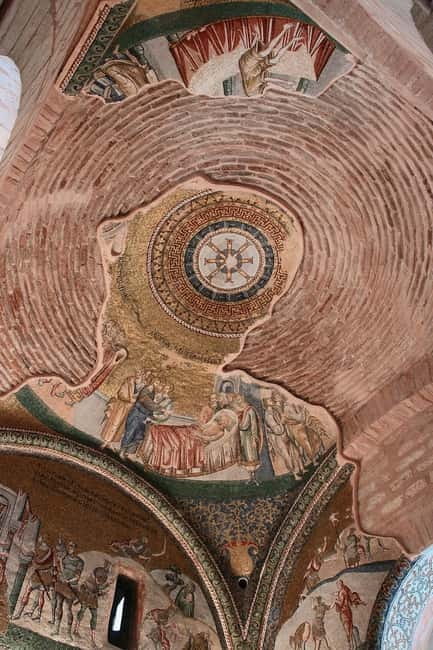
The real reason to visit Chora Church is inside: walls and ceilings covered with finely worked Byzantine mosaics and frescoes showing scenes from the lives of Christ and the Virgin Mary. The color, small details, and sheer amount of artwork make this one of Istanbul’s most rewarding stops for anyone who cares about art and history.
I like the freedom to visit without joining a group, and I like the building’s unusual mix of a Greek-cross plan and domes. The main caution is the digital audio guide, which some visitors found far too short, reportedly around five minutes. You may get more from the free QR-code information available inside than from the paid app.
Key points to know
- Byzantine art is the main event: Look closely at the mosaics and frescoes rather than rushing through the rooms.
- The visit is self-guided: There is no live guide or group meeting point, so you enter independently.
- The audio commentary is limited: Download the app in advance, but do not depend on it for a full explanation.
- Opening hours need care: The site is open from 9 a.m. to 6 p.m. except Fridays, with closures around prayer times.
- Dress rules apply: Women must cover their heads and shoulders, and everyone must cover their knees.
- The $35 price buys convenience: It can make sense if you value prearranged entry, but less so if you only want a short audio track.
Why Chora Church deserves a place in your Istanbul plans
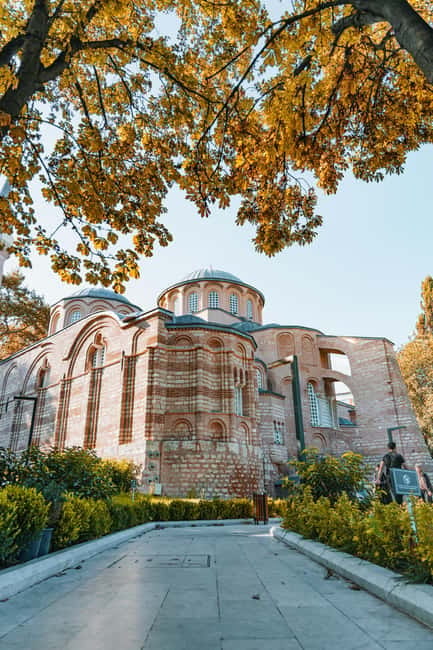
Istanbul gives you many famous monuments, but Chora Church offers a quieter, more focused encounter with Byzantine art. The site began as part of the monastery of St. Saviour in Chora, a religious center linked to worship and theological study. Its name refers to its position outside the older city walls.
The building was first established as a Byzantine church in the fourth century. Over time, it was rebuilt and changed, then converted into a mosque during the Ottoman period. Today, it is known as Kariye Camii, and its religious use still affects how you visit, including prayer closures and clothing rules.
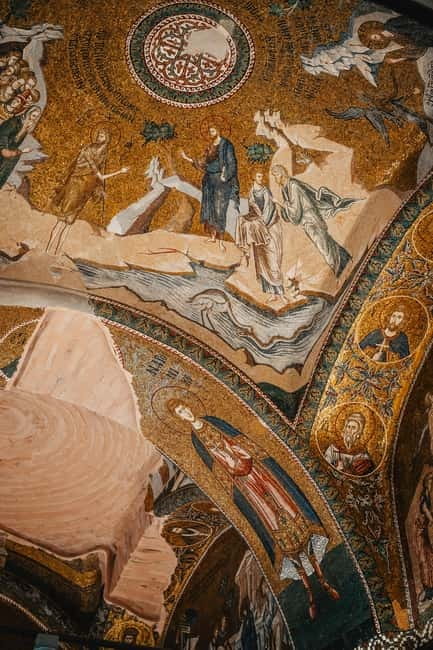
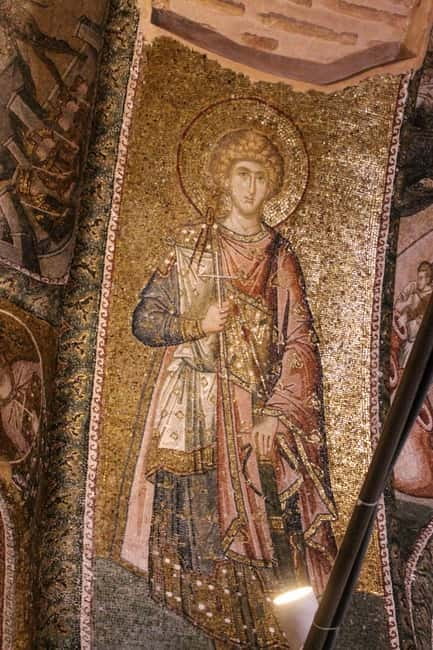
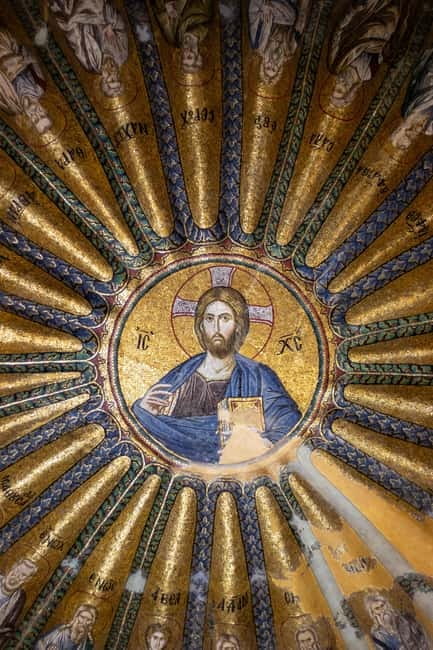
The artwork is the reason to make the trip. Biblical scenes cover the interior, with episodes from the life of Christ and the Virgin Mary presented in a carefully arranged visual program. You are not simply looking at a few decorative panels. You are moving through a space where architecture, worship, and storytelling were designed to work together.
For me, the pleasure is in the details. Figures, gestures, facial expressions, and small objects reward close attention. The mosaics use tiny pieces of colored material to create faces, robes, buildings, and backgrounds. The frescoes add another layer, particularly in the domed and vaulted areas.
More Church and Cathedral Audio Tours in Istanbul
- Istanbul: Basilica Cistern Fast-Track Entry and Audio Guide
★ 4.6 · 7,521 reviews - Istanbul: Basilica Cistern Skip-the-Line Entry & Audio Guide
★ 4.6 · 1,477 reviews - Basilica Cistern Guided Tour & Blue Mosque Audio Guide
★ 4.3 · 1,337 reviews
The mosaics and frescoes: what to look for
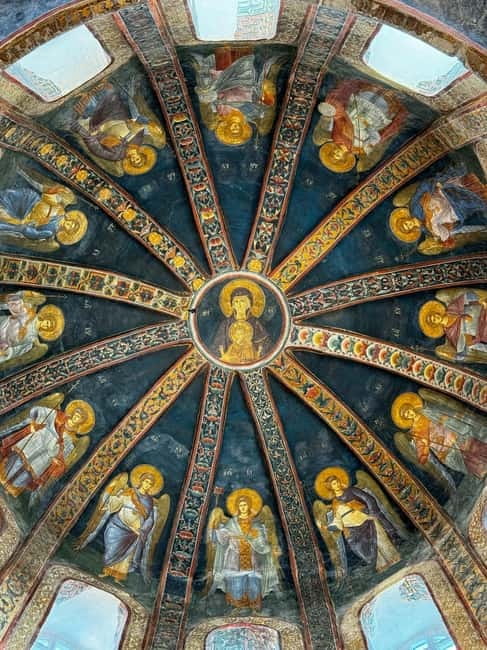
You should give the interior time. A quick look may leave you with the general impression of gold, color, and religious imagery, but a slower visit reveals how much information is packed into the walls.
The scenes include stories from the life of Christ and the Virgin Mary. The artists were not only decorating the church. They were presenting Christian teaching through images, at a time when visual storytelling mattered greatly for worshippers.
Look for the contrast between the small mosaic pieces and the larger painted frescoes. Mosaics catch and reflect light in a different way, while frescoes offer broader painted surfaces and a softer visual effect. Together, they create a varied interior rather than a single field of decoration.
The preservation of these works is a major reason the site matters. They give you a direct look at Byzantine religious art and the artistic standards of the empire. You can also see how much care went into linking the pictures to the building’s shape.
Do not expect a modern museum display with long walls of labels. This is still a sacred place, now functioning as a mosque, and the experience depends on your own attention. The free informational QR code available inside may provide more useful detail than the included audio app, so check for it when you arrive.
The building’s unusual Greek-cross and domed design
Chora Church is not famous only for its decoration. Its architecture helps explain why the artwork feels so closely tied to the visitor’s movement through the building.
The church combines a Greek-cross layout with domed forms. This arrangement gives the interior a compact but layered character. Domes and curved surfaces create natural spaces for religious scenes, while the cross-shaped plan gives the building a clear Christian structure.
The result is more intimate than the vast imperial scale of some Istanbul monuments. You can study the artwork at a closer range, and the relationship between the walls, ceilings, and images is easier to understand.
The design also adds to the spiritual quality of the visit. Even if you arrive mainly for the art, the setting makes clear that these images were made for prayer and religious reflection, not for a gallery. Respectful behavior matters, especially during periods when the building is being used for worship.
What your self-guided visit actually feels like
There is no meeting point and no live guide. You go to Derviş Ali, Kariye Cami Sk. No:18, in Istanbul’s Fatih district, present your ticket, and enter on your own.
That arrangement gives you useful freedom. You can move at your own pace, pause in front of a scene, and spend more time on the mosaics that interest you. You also avoid waiting for a group to gather or keeping up with a fixed walking route.
The tradeoff is that you must prepare yourself. Your ticket includes a multilingual digital audio-guide app, and the download link appears on your voucher. You need a charged smartphone, and you should download or set up the app before entering if possible.
The audio guide is not a live explanation from a person on site. It is also not a long substitute for a full art-history tour. At least one booking experience described the audio as only five minutes long, while another specifically advised relying on a separate guide instead. Plan on using the app as a small aid, not as the main reason to buy the ticket.
The best approach is to combine the audio with the art itself. Listen to the commentary, then stop and inspect the scene. If the app finishes quickly, use the information available through the mosque’s own QR code, if it is operating during your visit.
More Smartphone Audio Tours in Istanbul:
- Miniaturk Entry Ticket & Digital Audio Guide App
★ 5.0 · 9 reviews - Istanbul: Hagia Sophia Entry Ticket with Digital Audio Guide
★ 4.5 · 7 reviews - Istanbul Walking Tour with Audioguide on Your Smartphone
★ 5.0 · 6 reviews - Rome: Colosseum & Forum with Audio Guide App -Optional Arena
★ 4.2 · 24,770 reviews
Timing your arrival around prayer and Friday closure
The stated opening hours are 9 a.m. to 6 p.m. every day except Friday. The mosque closes 15 minutes before and during prayer times between 9 a.m. and 6 p.m.
That makes timing important. Even if you arrive during the general opening period, you may need to wait if prayer is about to begin. Build some flexibility into your day rather than scheduling the visit immediately before another fixed appointment.
Friday is the clearest day to avoid because the church is listed as closed then. On other days, earlier or later hours may help you avoid the busiest prayer-related interruptions, though the exact prayer schedule can vary.
Your ticket is valid for the purchase date, so take the date seriously when arranging your plans. The booking terms also state that cancellation is available up to 24 hours in advance for a full refund, while the ticket itself is not refundable or exchangeable once valid for the visit date. Check the conditions shown at the time of booking so you understand which rule applies to your purchase.
Dress, bags, phones, and other practical rules
This is a functioning religious site, so clothing and behavior are part of the visit.
Women must cover their heads and shoulders. Both men and women must cover their knees. Bring suitable clothing rather than assuming you can enter in ordinary sightseeing clothes. A scarf is a practical item for women, and everyone should avoid shorts or clothing that leaves the knees uncovered.
Food and drinks are not allowed. Large bags and luggage are also prohibited, as are weapons, sharp objects, umbrellas, and pets. Assistance dogs are permitted.
Flash photography is not allowed. You should silence your phone and use it only in designated informational areas. This matters not only for preserving the atmosphere but also because the building remains a place of worship.
A charged smartphone is essential for the digital guide. If your phone battery is low, the audio portion of the experience may be unavailable even though you can still see the interior. Keep your voucher accessible as well, since the audio download link appears there.
Children under eight enter free, but they must be accompanied by an adult and have a valid passport or identity card. That is useful for families, though the clothing and quiet-phone rules apply to children too.
Is the $35 ticket good value?
At $35 per person, this is not the cheapest way to see a historic building in Istanbul. The value depends on what you want from the visit.
The price includes entry and a multilingual audio-guide app, with no transportation. You arrange your own way to the address and enter independently. If you are comfortable finding the site and reading about it yourself, the short audio commentary may not add much value.
The ticket makes more sense if you want the convenience of arranging admission ahead of time, especially when you have a tight sightseeing schedule. It also gives you the freedom to avoid a group and spend as long as you wish inside during the valid visit period, subject to prayer closures.
The weak point is the audio component. A five-minute explanation is not enough to explain the church’s construction, the scenes in detail, the difference between mosaics and frescoes, and the building’s changing religious role. If you are paying mainly for interpretation, $35 feels high.
If you are paying for easy entry and the chance to see one of Istanbul’s finest collections of Byzantine decoration, the price is easier to defend. Art lovers may consider it worthwhile, especially if they plan to spend time studying the interior rather than rushing through.
Who will enjoy this experience most
This visit suits you if you like sacred art, Byzantine culture, architecture, or Istanbul’s layered religious past. It is also a good choice if you prefer independent sightseeing and do not want to join a scheduled group.
You will get the most from it if you enjoy looking closely and doing a little reading on your own. The digital guide provides only limited support, so curiosity matters more than the app.
Families can visit, with free entry for children under eight when they present valid identification. Still, the quiet setting, no-food rule, and prayer-related closures mean that very young children may need extra supervision.
This may be less suitable if you want a long, story-filled guided tour, hotel pickup, or an organized route through several Istanbul monuments. None of those services is included. You also need to be comfortable following religious-site rules and adjusting your timing around prayer.
How to make the most of your visit
Check the opening day before you book, and avoid Friday. Confirm the prayer-related closure times on the day of your visit, since a short interruption can affect a tightly planned schedule.
Download the audio app as soon as you receive the link, then charge your phone fully. Do not assume the audio guide will provide a complete explanation. Read the information available through the on-site QR code and allow yourself time to examine the artwork without headphones.
Wear clothing that covers the knees, and women should bring a head covering and clothing that covers the shoulders. Leave luggage, large bags, umbrellas, food, and drinks elsewhere.
Once inside, look up as well as straight ahead. The domes and vaulted surfaces are part of the design, and the art is meant to be read across the architecture. Notice how the Greek-cross plan and domed layout shape the way the scenes appear around you.
Most of all, slow down. The church is not a box to tick in five minutes, even if the audio guide takes only that long. The artwork is the experience.
Should you book Kariye Camii?
Book this experience if you want independent entry to an important Byzantine site and you are prepared to treat the audio app as a brief supplement. The mosaics, frescoes, and compact domed architecture are the real reward, and the freedom to look at them at your own pace is valuable.
Think twice if you are buying it mainly for a detailed guided explanation. The short audio track may leave you wanting more, and the free QR-code information inside could prove more useful.
For art lovers and visitors interested in Istanbul’s Byzantine and Ottoman layers, I would consider the visit worthwhile, provided you plan around Fridays and prayer times. For everyone else, compare the $35 price with your interest in Byzantine art before booking.
FAQ
Where is Chora Church located?
The address is Derviş Ali, Kariye Cami Sk. No:18, 34087 Fatih, Istanbul, Turkey.
Is there a meeting point for the activity?
No. You visit the attraction independently and enter at the provided address.
Is a live guide included?
No. The experience includes entry and a multilingual digital audio-guide app, but there is no live guided tour.
What are the opening hours?
The church is open from 9 a.m. to 6 p.m. every day except Friday. It also closes 15 minutes before and during prayer times between 9 a.m. and 6 p.m.
What does the digital audio guide require?
You need a charged smartphone. The guide is provided through a separate downloadable app, and the download link is shown on your voucher.
What should I wear?
Women must cover their heads and shoulders. Men and women must both cover their knees before entering.
Are children admitted free?
Children under eight can enter free when accompanied by an adult and carrying a valid passport or identity card.
Can I bring food, luggage, or a camera flash?
Food and drinks, luggage or large bags, weapons, sharp objects, umbrellas, and pets are not allowed. Assistance dogs are permitted, and flash photography is prohibited.
New audio tours around Istanbul
- Topkapi Palace and Harem Museum Ticket with Audio Guide★ 3.0 · 2 reviews
- Topkapi Palace Museum Skip The Ticket Line Tickets + Audio Guide★ 3.0 · 2 reviews
- Istanbul: Bosphorus and Golden Horn Cruise with Audio Guide★ 4.5 · 83 reviews
- Istanbul Walking Tour with Audioguide on Your Smartphone★ 5.0 · 6 reviews
- Istanbul Self-Guided Audio Tour★ 3.0 · 2 reviews
- Istanbul: Hagia Sophia Entry Ticket with Digital Audio Guide★ 4.5 · 7 reviews
- Dolmabahce Palace Skip the Ticket Line Entry with Audio Guide★ 4.0 · 6 reviews
- Istanbul Bosphorus Sightseeing Cruise with Audio Guide★ 5.0 · 67 reviews
Istanbul Audio Tours, compared.
Istanbul: Daytime or Sunset Sightseeing Cruise & Audio Guide
Read our review →
Istanbul: Basilica Cistern Fast-Track Entry and Audio Guide
Read our review →
Topkapi Palace and Harem Skip-the-Line-Tickets & Audio Guide
Read our review →
Istanbul: Bosphorus Sightseeing Cruise Tour with Audio Guide
Read our review →
Istanbul: Hagia Sophia Entry Ticket with Audio Guide
Read our review →
Istanbul: Topkapi Palace and Harem Ticket with Audio Guide
Read our review →
Hagia Sophia Skip-the-Line Ticket & Blue Mosque Audio Guide
Read our review →
Istanbul: Dolmabahce Palace and Harem Fast-Track & Audio
Read our review →Browse the lists this tour appears in