
Review · MILAN
Milan: City Sightseeing Hop-On Hop-Off Bus with Audio Guide
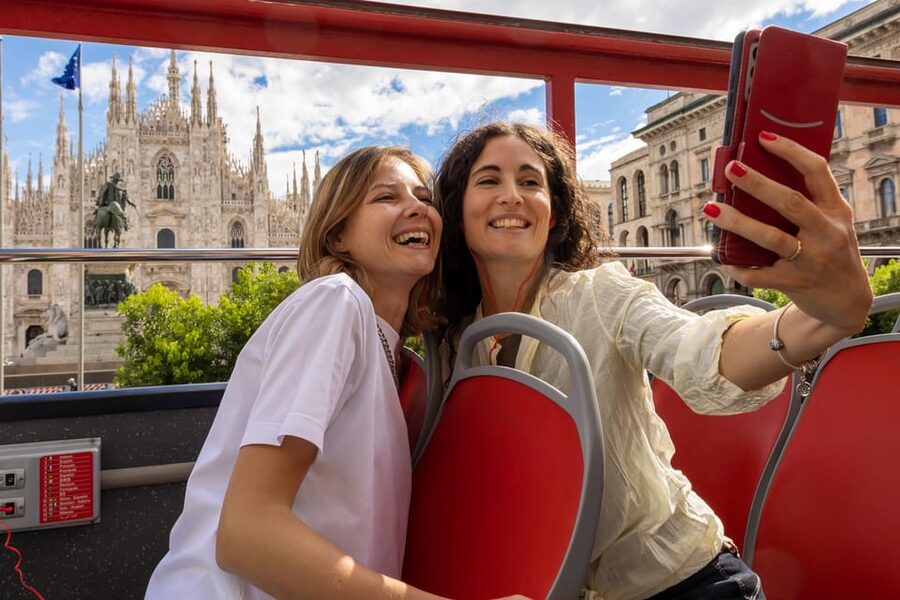
Milan’s four route bus network gives you more than a quick loop around the Duomo. You can reach the Castello Sforzesco, Brera, Navigli, City Life, and San Siro without arranging several separate trips, then switch routes as your plans change. I especially like the panoramic open top view and the chance to hear about local food, including cotoletta alla Milanese and panettone, rather than getting only a list of buildings.
I also like the freedom to use one ticket across all four lines, which makes this a smart first-day outing or a useful backup when your feet need a break. The main drawback is Milan traffic and the wait between buses. Some stops may have a gap of close to 50 minutes, and a broken audio socket or crowded bus can affect an otherwise smooth ride.
Key points to know before you board
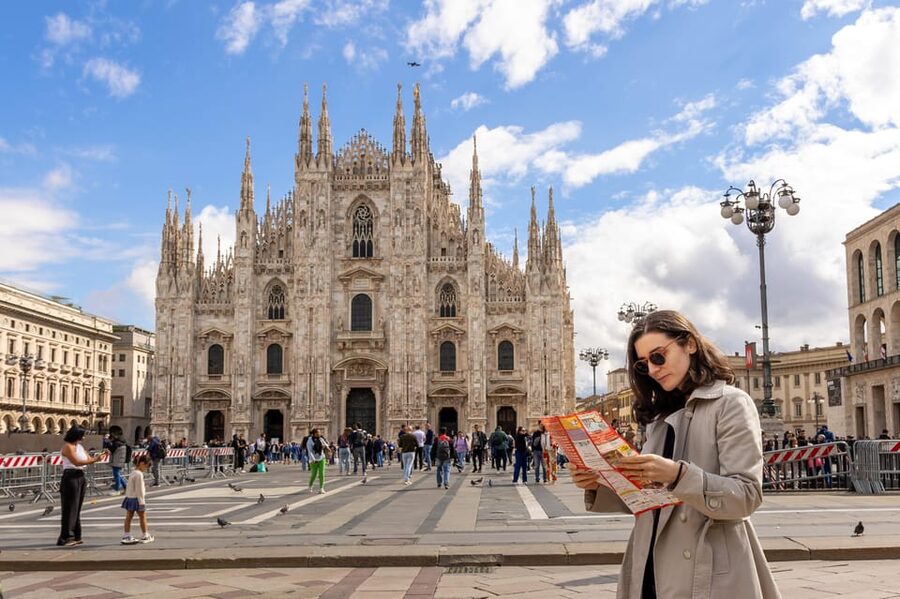
- Four connected routes: Cover central Milan, Navigli, Brera, City Life, the main railway station, and San Siro with one pass.
- Best first ride: Use a complete circuit to get your bearings before choosing where to hop off.
- Strong audio content: Hear facts about the Duomo area, La Scala, Castello Sforzesco, Milanese food, and panettone.
- Flexible ticket length: One day works for a quick overview, while two or three days suit slower sightseeing.
- Practical extras: Wi-Fi, a city map, a children’s audio option, and a free walking tour in the mobile app are included.
- Allow for traffic: Milan’s busy streets can slow the buses, so leave spare time before timed attraction visits.
Why this bus works well in Milan
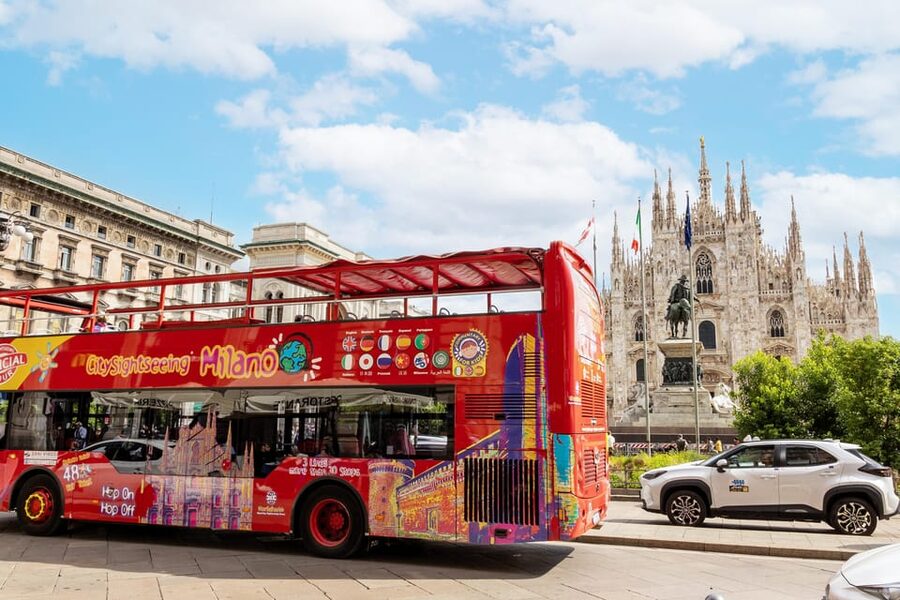
Milan is easy to explore on foot in the historic center, but the city’s sights are spread farther than the Duomo and La Scala. This bus fills that gap. You can begin near the castle, cross the center, reach the canals, and continue toward San Siro without spending the day piecing together transport.
The open top deck gives you a broad view of streets, façades, monuments, and modern districts. That matters in Milan, where the pleasure is often in seeing how old and new parts of the city sit beside one another. The audio guide adds useful context as you move, with commentary available in Italian, English, Spanish, Chinese, French, German, Russian, Portuguese, Japanese, and Arabic.
You also get special audio commentary for children. That makes the bus more useful for families than a standard recorded city loop, especially when young passengers are losing interest in long walks through the center.
The pass is sold for one, two, or three days. At $26 per person, the value depends on how often you use it. A one-day ticket is reasonable if you complete several sections and hop off at a few sights. A two or three-day pass makes more sense if you want to use the bus as both a sightseeing ride and a way to move between districts.
More Hop-On Hop-Off Audio Tours in Italy:
- Rome: City Sightseeing Hop-on Hop-off Bus with Audioguide
★ 4.0 · 16,045 reviews - Rome: Hop-on Hop-off Sightseeing Bus Tour with Audioguide
★ 4.1 · 4,801 reviews - Civitavecchia: Hop-On Hop-Off Bus Ticket with Audio Guide
★ 3.8 · 153 reviews
Starting at Foro Bonaparte or Piazza Duomo
For Lines A, C, and D, the first stop is in Foro Bonaparte. For Line B, begin at Piazza Duomo. This sounds simple, but Foro Bonaparte is a large area, and finding the exact boarding point can take patience.
I recommend checking the city map and looking for the marked bus stop rather than relying only on the broad Foro Bonaparte address. The area around the main tourist sights can be crowded, and clear signs matter. If you have trouble, ask staff near the travel information point for the exact corner.
At Piazza Duomo, the bus is easier to connect with to the city’s central sights, but the square can be hectic. Staff are generally present at the main stops and can help with route changes. Keep your voucher and ticket details handy so boarding is quicker.
Line A: castle, the Last Supper area, and Milan’s center
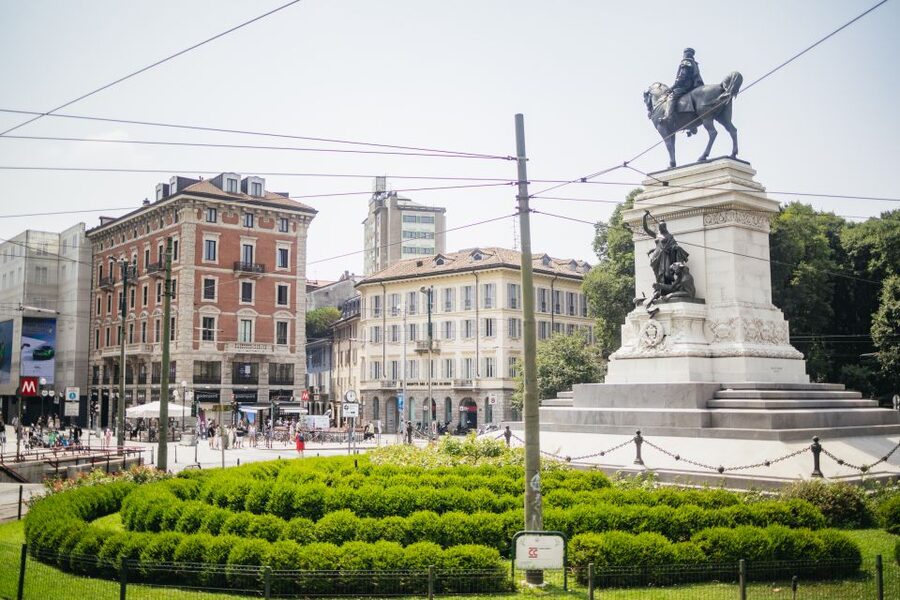
Line A is a useful first route because it links the castle, central Milan, and the fashion district. Its stops are:
- Castello
- Cadorna
- Cenacolo
- Corso Magenta
- Duomo
- Monte Napoleone
- Manin
- Moscova
Castello is the natural starting point for Castello Sforzesco. The audio commentary covers this major landmark, and the stop also gives you access to the surrounding central area. From here, you can choose between staying on for a broad city ride or getting off to explore the castle area on foot.
Cadorna is useful for changing your sense of Milan from tourist center to working transport hub. Cenacolo brings you near Leonardo da Vinci’s Last Supper, though the attraction ticket is not included. If seeing the painting is a priority, arrange that separately and treat the bus only as your transport to the area.
Corso Magenta gives you a look at one of the central streets between the castle and the Duomo. The stop is handy for combining several historic sights, but Milan is a walking city here, so you may find that getting off and exploring on foot is more rewarding than waiting for the next bus.
The Duomo stop is the essential central pause. You can admire Milan’s cathedral and use this point to change to other routes. The bus does not include attraction tickets, so the pass gets you to the sights but does not replace advance planning for the Duomo or other paid visits.
Monte Napoleone brings the route into Milan’s well known fashion district. Manin and Moscova are useful for seeing parts of the city beyond the cathedral. Moscova is also a good point for connecting your sightseeing with the Brera and nearby central neighborhoods, depending on your walking plans.
Line B: from the Duomo to Porta Venezia
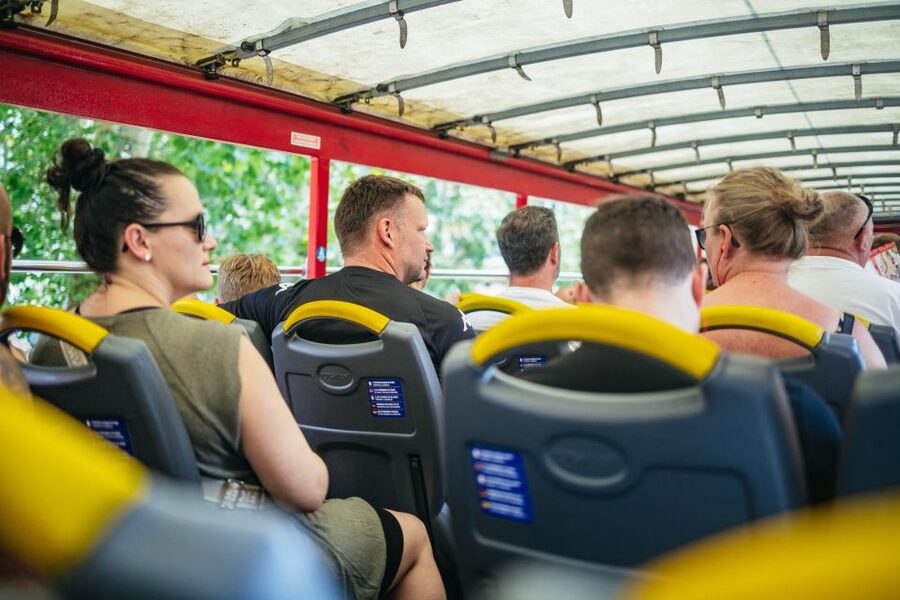
Line B covers another slice of central Milan and extends north toward the main station and Porta Venezia. Its stops are:
- Duomo
- Monte Napoleone
- Manin
- Repubblica
- Palazzo Lombardia
- Stazione Centrale
- Buenos Aires
- Porta Venezia
- San Babila
This line is a practical choice if you are staying near the center but want to see more than the cathedral district. Repubblica and Palazzo Lombardia shift the view toward Milan’s newer office and residential areas. The route helps you understand the city as more than a collection of historic monuments.
Stazione Centrale is a useful transport connection and a good place to board if you are arriving or leaving by train. The bus can also save you a long walk with luggage, though traffic can affect the timing.
Buenos Aires and Porta Venezia take you toward a different urban setting, with longer commercial streets and a more local feel than the immediate Duomo area. San Babila brings you back toward the center and makes it easier to combine this route with the cathedral, Monte Napoleone, or Line D.
Line B repeats some stops from Line A, including Duomo, Monte Napoleone, and Manin. That is not necessarily a problem. The repeated sections make transfers simple, but they also mean you should not expect four completely separate tours. Plan to hop off where a route adds something new, rather than staying aboard for every repeated stretch.
More Bus Audio Tours in Italy:
- Trieste Bus Tour with Audio Guide
★ 4.4 · 2,170 reviews - Etna by Panoramic Bus, Audioguide 9 languages, from Catania
★ 4.2 · 364 reviews - Naples:Pompeii SkiptheLine Ticket audioguide Round-Trip Bus
★ 4.1 · 18 reviews - From Pompeii: Mount Vesuvius with bus, ticket and audioguide
★ 4.1 · 13 reviews
Line C: City Life and San Siro
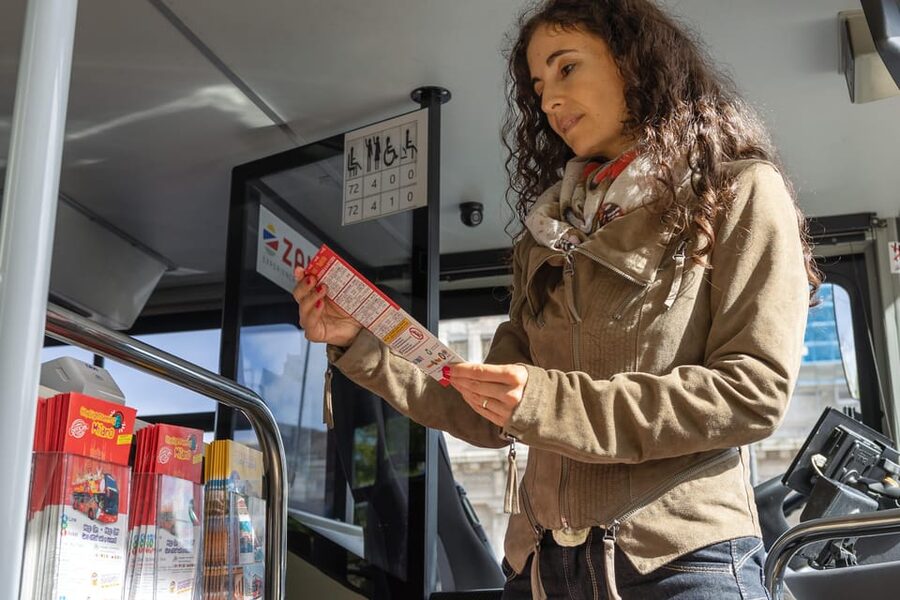
Line C is the longest route and the best choice if you want to reach Milan’s western districts. Its stops are:
- Castello
- Triennale
- Arco della Pace
- City Life
- Casa Milan
- Mico, Congress Centre
- Lotto, Montebianco
- Lido
- Ippodromo
- Stadio San Siro
- Lotto, Monterosa
- Buonarroti
- Pagano
- Conciliazione
- Parco Sempione
Triennale and Arco della Pace show a different side of Milan, with design, public spaces, and broad avenues replacing the tight historic streets around the Duomo. City Life brings you to one of the city’s newer districts, while Casa Milan is a clear draw for football fans.
The route continues toward Mico, the Congress Centre, Lido, Ippodromo, and Stadio San Siro. San Siro is one of the most useful reasons to choose the bus over walking. The distance from the historic center is significant, and the bus lets you see the area without planning a separate journey.
Watch the timing at San Siro. If you get off for a short photo stop, the next bus may not arrive quickly. One practical choice is to remain on board for the full view if your schedule is tight. If the stadium is a main goal, give yourself plenty of time and confirm the attraction’s own opening arrangements separately, since admission is not part of this pass.
The return section through Buonarroti, Pagano, Conciliazione, and Parco Sempione brings you back toward central Milan. Parco Sempione connects naturally with the castle area, so Line C can work well as a large loop from Castello.
During the Winter Olympic period, Green Line stop number 2 may be closed for the full event period. The Castello stop is also scheduled to be suspended on Saturday, February 21. Check current stop information if your visit overlaps with those dates.
Line D: Navigli, Brera, and the historic core
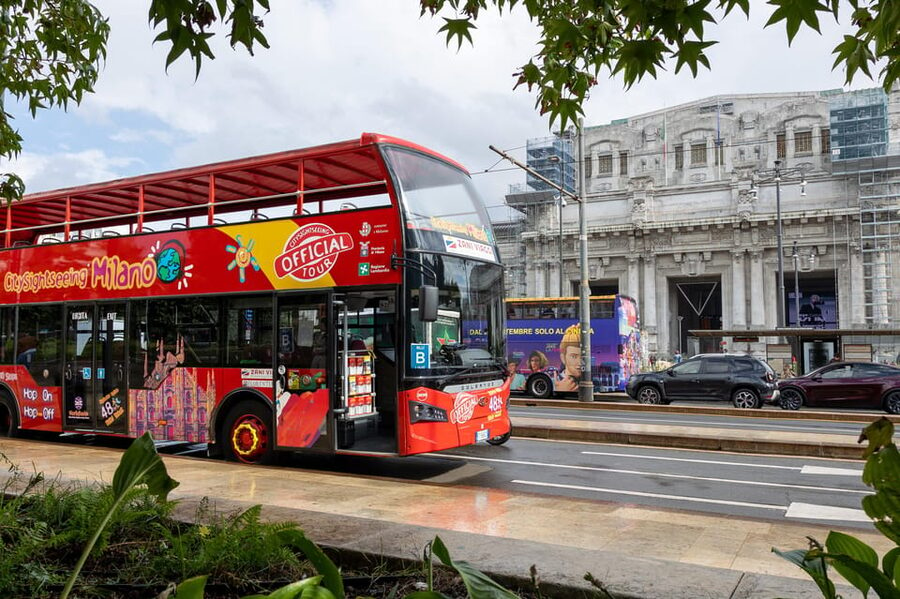
Line D is the route to choose for canals and neighborhood character. Its stops are:
- Castello
- Cadorna
- Cenacolo
- Navigli
- Piazza XXIV Maggio
- Duomo
- Monte Napoleone
- Brera
Navigli is the key reason to ride this line. The canal district gives you a very different view of Milan, and one of the routes follows the area along the water. Piazza XXIV Maggio adds another useful stop near the southern side of the central area.
Cenacolo appears again, making it easy to combine the Last Supper area with the canals if your timing works. Cadorna and Castello give you practical transfer points, while Duomo and Monte Napoleone bring the route back through Milan’s central sights.
Brera is perhaps the most appealing final stop for a slower wander. The route lets you reach the neighborhood without committing to a long walk from the Duomo. Get off here if you want to browse streets and cafés at your own pace, then use another line later if your ticket is still active.
Line D is also a good reminder that this experience is not only about famous monuments. The value comes from moving between districts that feel different, then deciding which ones deserve more time.
What the audio guide adds
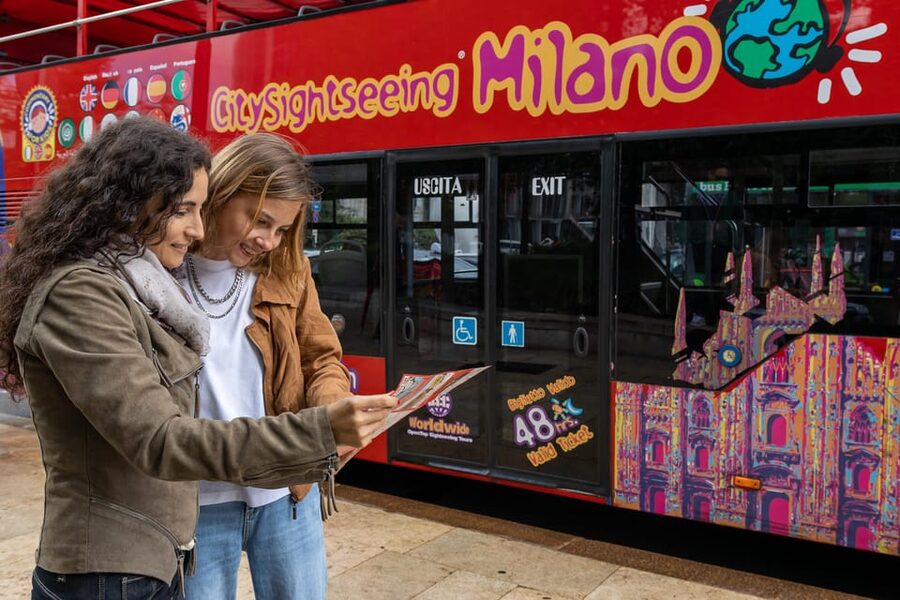
The commentary is recorded, not a live walking tour, so it cannot answer personal questions or adjust to your interests. It does give you a steady stream of background while you watch the city pass by.
You hear about notable buildings such as La Scala and Castello Sforzesco, along with local food traditions. The explanation of cotoletta alla Milanese and the story of panettone add a welcome taste of daily Milanese culture. Those details help connect the city’s sights with the food you may see in shops and restaurants.
The audio equipment is usually simple to use, but check your socket soon after sitting down. Some seats may have a faulty connection. If you cannot hear anything, change seats or ask staff for another set of headphones. This is a small inconvenience, but it is much better to discover it at the first stop than halfway through a long circuit.
The onboard Wi-Fi is another useful extra, especially when you need to check a route or coordinate your next stop. You also receive a city map and access to a free walking tour through the mobile app in five languages.
Timing, traffic, and choosing one, two, or three days
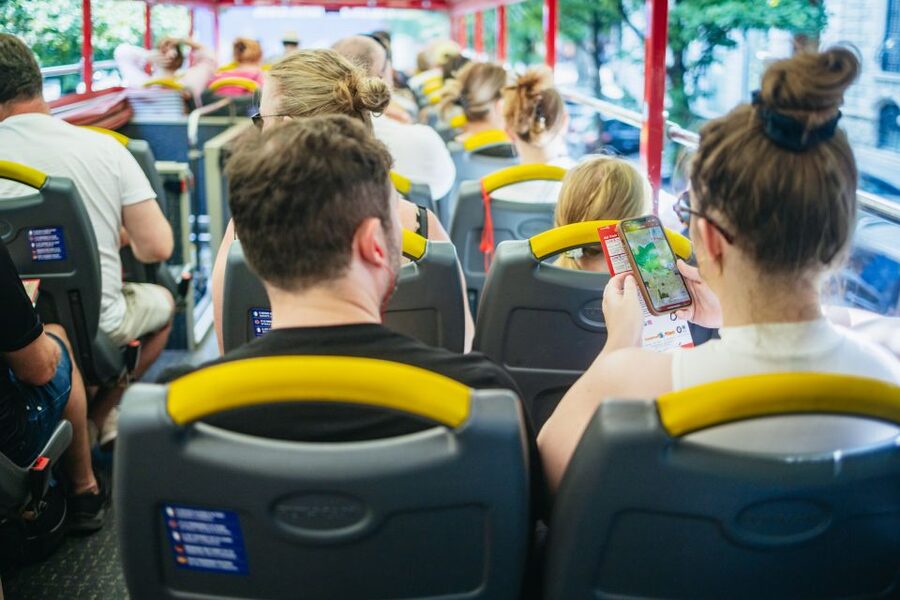
If you have only one full day, start early and take a complete ride on one route before making several stops. Lines A and D are efficient for central Milan, while Line C takes you farther west and toward San Siro. Trying to complete all four routes in one day is possible, but it leaves little time for museums, meals, or the Duomo.
A two-day ticket gives you a better balance. Use the first day for orientation and the central sights, then use the second for Navigli, Brera, City Life, and San Siro. A three-day ticket works best if you prefer short rides between longer visits rather than treating the bus as a single sightseeing marathon.
Traffic is the main variable. Milan’s roads can slow the buses at lights and busy junctions, and a bus may arrive full when it reaches a transfer point. Do not schedule a timed museum entry immediately after a long ride. Leave a cushion, especially on Line C.
The buses are generally clean, and staff at the main stops can help with route changes. Some buses provide water, but this is not listed as a guaranteed inclusion, so carry your own bottle.
Who will get the most from this pass
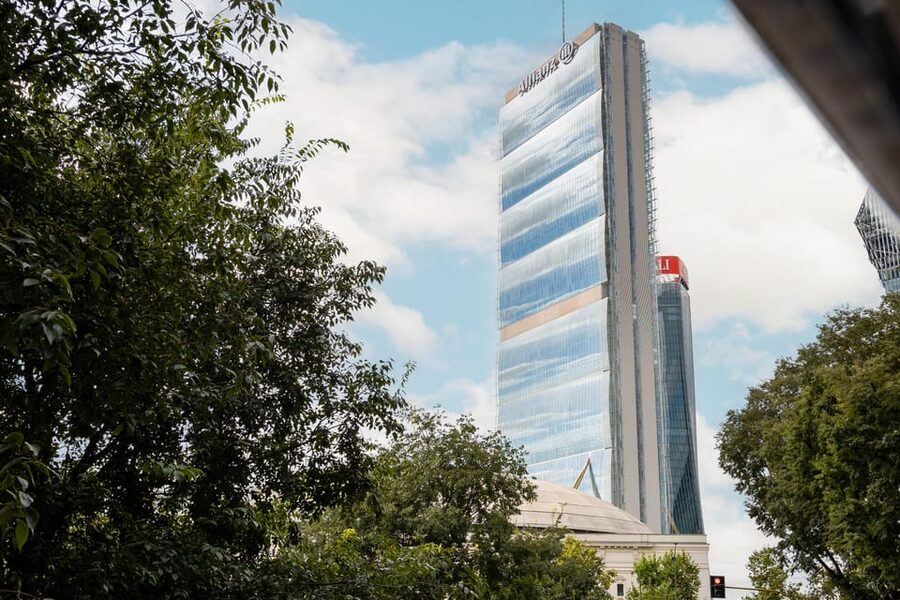
I would choose this experience if you are visiting Milan for the first time, have limited time, or want a quick sense of the city before deciding where to return. It is also helpful for families, older visitors, and anyone who does not want to walk between every district.
It suits you particularly well if San Siro, Navigli, or City Life is on your list. Those areas are less convenient to combine on foot with the Duomo and castle.
I would be less eager to buy it for a relaxed two-day stay focused only on the historic center. Many central sights are walkable, and repeated sections between routes can reduce the value if you rarely hop off. The pass works best when you use the outer routes, not when you ride only between the Duomo and nearby stops.
Should you book the Milan hop-on hop-off bus?
Book it if you want fast orientation, four routes, and flexible access to distant districts. At $26, it can be good value on a busy sightseeing day, especially if you use Line C for San Siro and Line D for Navigli in addition to the central routes.
Choose one day for a compact overview, two days for a sensible first visit, and three days only if you plan to use the bus repeatedly. Check the exact boarding point at Foro Bonaparte, test the audio as soon as you sit down, and allow for Milan traffic. With those small precautions, this is a practical way to see more of Milan without turning every sight into a long walk.
FAQ
How many bus lines are included?
The ticket includes four connected routes: Lines A, B, C, and D. They cover central Milan, Navigli, Brera, City Life, Palazzo Lombardia, Stazione Centrale, and San Siro.
How long can I use the ticket?
You can choose a ticket valid for one, two, or three days. Check the available starting times and dates when booking.
Where do I board the bus?
For Lines A, C, and D, the first stop is in Foro Bonaparte. For Line B, the first stop is in Piazza Duomo.
Is admission to the attractions included?
No. The ticket covers the hop-on hop-off bus, but attraction tickets are not included.
Which languages are available for the audio guide?
The audio guide is available in Spanish, Chinese, English, French, German, Italian, Russian, Portuguese, Japanese, and Arabic. A special audio commentary for children is also available.
Is the Milan Night Tour included?
A 72-hour weekend ticket includes the Milan Night Tour when purchased for Saturdays and Sundays from June through September.
More City Audio Tours in Italy
- Florence: Eco-Friendly Golf Cart City Tour with Audio Guide
★ 4.6 · 1,094 reviews - Riga: Canal Boat Sightseeing Tour With Audio guide
★ 4.5 · 1,827 reviews - City Sightseeing Hop-On Hop-Off Bus Tour with Audio Guide
★ 3.0 · 1,083 reviews - Toulouse: City Sightseeing Tour by Bus with Audio Guide
★ 4.2 · 956 reviews
New audio tours around Italy
- Lecce Walking Tour with Audio and Written Guide by a Local★ 4.0 · 38 reviews
- Private Audio Guided Walking Tour in Lecce★ 4.0 · 7 reviews
- Private Audio Guided Walking Tour in Como★ 3.0 · 3 reviews
- Como Walking Tour with Audio and Written Guide by a Local★ 4.5 · 30 reviews
- Finance and Nobility: Explore medieval Genoa on a self-guided audio tour★ 4.5 · 7 reviews
- Genova Walking Tour with Audio and Written Guide by a Local★ 4.5 · 33 reviews
- Udine Walking Tour with Audio and Written Guide by a Local★ 4.0 · 2 reviews
- Florence: Uffizi Gallery Timed Entry Ticket with Audio★ 3.0 · 3 reviews
Milan Audio Tours, compared.
Milan: Sforza Castle Entry Ticket with Digital Audio Guide
Read our review →
Milan: Museum of the 900 Entry Ticket with Audio Guide
Read our review →
Milan: Natural History Museum Entry Ticket & Audio Guide
Read our review →
Milan: Palazzo Citterio Entry Ticket & Audio Guide App
Read our review →
Milan: Duomo Ticket incl. Terrace by Lift & Audio Tour
Read our review →
Milan Audioguide – TravelMate app for your smartphone
Read our review →Browse the lists this tour appears in