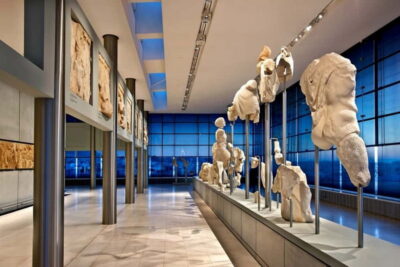
Review · GREECE
Olympia: Archaeological Site & Museum E-Ticket & Audio Guide
Olympia is more than a field of fallen columns. It is the place where the ancient Olympic Games took shape, and this ticket lets you connect the ruins, museum objects, and old sporting grounds in one unhurried day. The phone audio tour begins at the Gymnasium and guides you through the site in a sensible order, ending near the workshop of Pheidias.
I like the three-part admission: the archaeological site, the Archaeological Museum, and the Olympic Games Museum are all covered. I also like the offline audio content, which means you can listen without relying on a signal once the app is loaded.
The main tradeoff is simple: this is not a live tour. You must bring a charged Android or iOS phone, headphones, and enough storage for the download. In summer, there is also limited shade, so a hat and sunscreen are not optional extras.
Key points to know before you book
- The audio route starts at the Gymnasium and leads you past the Palaestra, Prytaneion, Philippeion, Heraeon, and Pheidias workshop.
- One ticket covers three places: the archaeological site, the Archaeological Museum, and the Olympic Games Museum.
- The Archaeological Museum has a selected entry time, while the two outdoor or additional museum visits can be made anytime on your chosen date.
- The audio guide lasts about an hour when followed at a normal pace, though your full visit can easily take much longer with both museums.
- You explore independently, with no meeting point, transport, live guide, food, or headphones included.
- Free and reduced admission is not supplied through this booking, even though some age and EU residency categories may qualify at the venue.
Why Olympia is worth your time
Olympia was not simply an ancient sports ground. It was a major religious sanctuary dedicated to Zeus, visited by people from across the Greek world. Athletes competed here, but they also came to a sacred place filled with temples, monuments, offerings, workshops, and public buildings.
That mixture is what makes the site rewarding. You are not walking through a single preserved building. You are moving through the remains of a whole community built around worship, competition, politics, and public ceremony.
The audio guide helps give shape to the scattered stones. Without some explanation, the Gymnasium may look like a broad patch of foundations, and the Palaestra can be hard to read. With the commentary, you can better understand how athletes trained, where officials worked, and why particular buildings mattered.
I would allow most of a day here, even though the guided route itself takes about an hour. The outdoor site deserves time in the morning or late afternoon, while the museums offer welcome relief from the sun and provide the statues and objects that make the ruins easier to understand.
More History Audio Tours in Greece
- Athens: National Archaeological Museum Ticket & Audio Guide
★ 4.3 · 1,330 reviews - Delphi: Archaeological Site & Museum Ticket with Audio Tours
★ 4.3 · 721 reviews - Athens: National Archaeological Museum Ticket w/ Opt. Audio
★ 4.4 · 713 reviews
Arriving at the archaeological site
There is no meeting point and no group departure. You receive instructions by email, download the ticket and audio material, and make your own way to Olympia. The easiest approach is by car, according to the supplied directions.
Before you enter, download the app and audio tour while you have a reliable connection. The offline package includes text, narration, and maps, and it requires roughly 100 to 150 MB of storage. Do not wait until you are standing at the entrance with a weak signal and a nearly empty phone battery.
The main entrance is near the museum. The site also has another entrance that may be more suitable for people with limited mobility. Some parts of Olympia are not wheelchair accessible, and the main entrance includes steps, so check the practical arrangements before you arrive.
You will need the ticket for the selected date. The Archaeological Museum uses a selected time slot, while the archaeological site and Olympic Games Museum can be entered anytime on that date. This arrangement gives you useful freedom, especially if you want to visit the museum before walking through the ruins.
Following the audio route from the Gymnasium
The suggested audio route starts at the Gymnasium, one of the places where athletes trained. It is a sensible starting point because it introduces Olympia as a working sports center rather than only a collection of temples.
The guide uses short stories, historical explanations, and less familiar details from ancient life. That format works well here. You are moving among open foundations, so a long academic lecture would be hard to follow. Brief sections let you look around, pause, and continue when ready.
The app also tells you where to go next. That matters because Olympia is spread out, and several areas can look similar at first glance. You are not tied to a guide’s walking speed, but you still have a clear path to follow.
The audio is available in English, German, Italian, French, and Spanish. The phone speaker can work in a quiet moment, but headphones are the better choice. They make the directions easier to hear and avoid disturbing people nearby.
The Palaestra, Prytaneion, and Philippeion
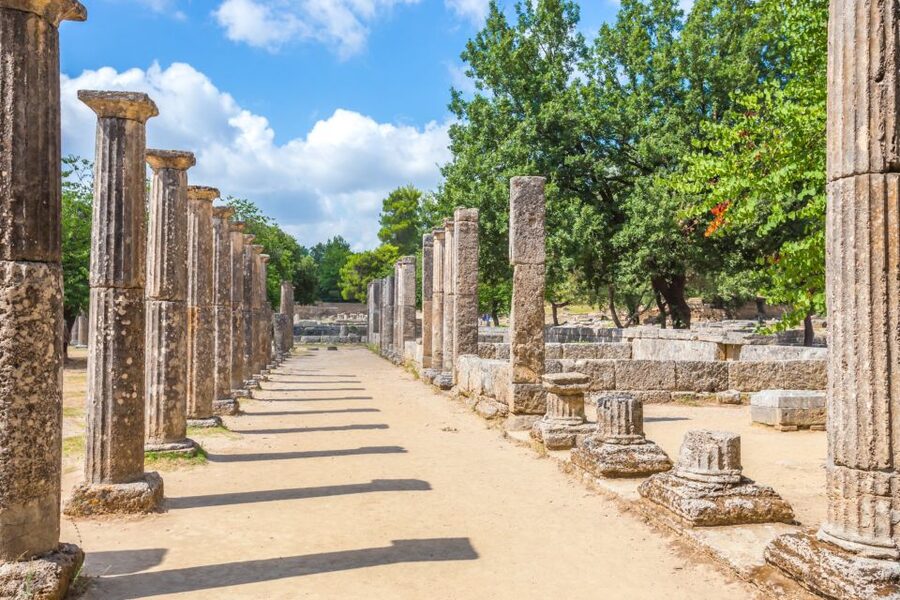
From the Gymnasium, the route continues to the Palaestra. This was another training area, associated with exercises such as wrestling and other forms of athletic practice. Its surviving stone outlines are easier to appreciate once you know to look for the structure of the courtyard and surrounding rooms.
The audio guide is especially useful at stops like this because the original walls and roof are mostly gone. You need an explanation to picture how the place functioned. You can pause the narration while examining the foundations, then replay sections later because the audio remains available for repeated use.
The Prytaneion introduces a different side of Olympia. This was connected with officials and civic duties, reminding you that the sanctuary needed administration as well as worship. Ancient athletic events did not happen in isolation. They required people to organize ceremonies, maintain buildings, host important visitors, and manage the site.
The Philippeion is one of the more distinctive monuments on the route. Its circular form sets it apart from the rectangular temples around it. The audio commentary helps place it within the political world of ancient Greece, where monuments could honor ruling families as well as gods.
More Museum Audio Tours in Greece
- Athens: Acropolis Museum Ticket with optional Audio Guide
★ 4.4 · 2,652 reviews - From Athens: Small-Group Delphi, Museum & Arachova Day Trip
★ 4.8 · 2,476 reviews - Parthenon & Acropolis Museum with Audio or Live Tour Option
★ 4.1 · 2,446 reviews - Athens: Acropolis Museum Ticket with Audio Guide
★ 4.1 · 835 reviews
The Temple of Hera and the sacred center
The Temple of Hera, or Heraeon, is one of Olympia’s essential stops. It is older in style than the great Temple of Zeus and gives you a sense of how the sanctuary developed over time.
Today, the remains are partial, so it helps to study the layout rather than expect a complete building. Look at the column bases, platform, and spacing. The audio guide supplies the missing context and explains why this temple mattered within the sanctuary.
The site can feel exposed, particularly under a strong Greek sun. Carry water, use sunscreen, and wear a hat. Comfortable shoes are important too, since the route crosses uneven ancient ground and includes areas where you will be walking between widely spaced ruins.
The outdoor setting is part of Olympia’s appeal, but it also means you should plan your timing. A cooler morning can make the open-air visit far more pleasant. If you arrive in the heat of the day, the museums provide a useful break, though you should still avoid bringing large bags, which are not allowed.
The Ancient Stadium and the Olympic setting
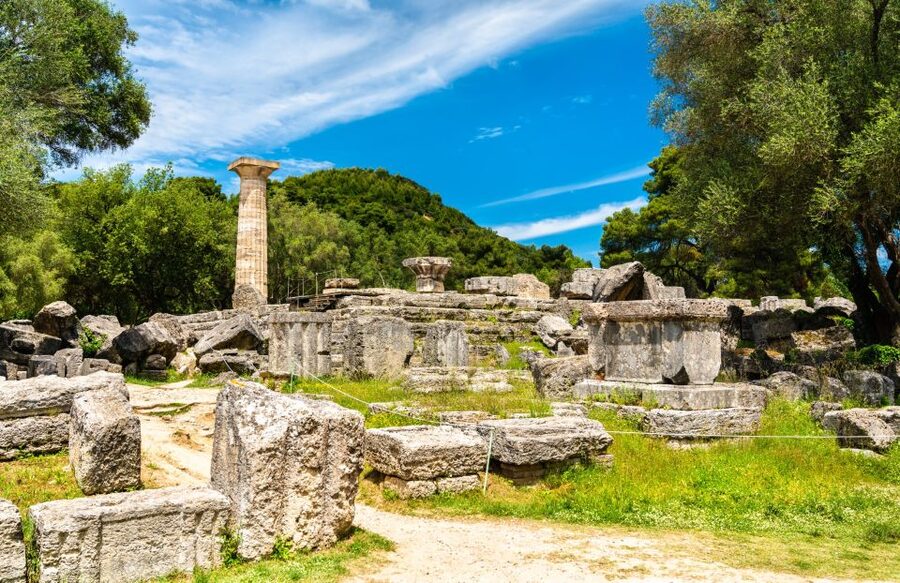
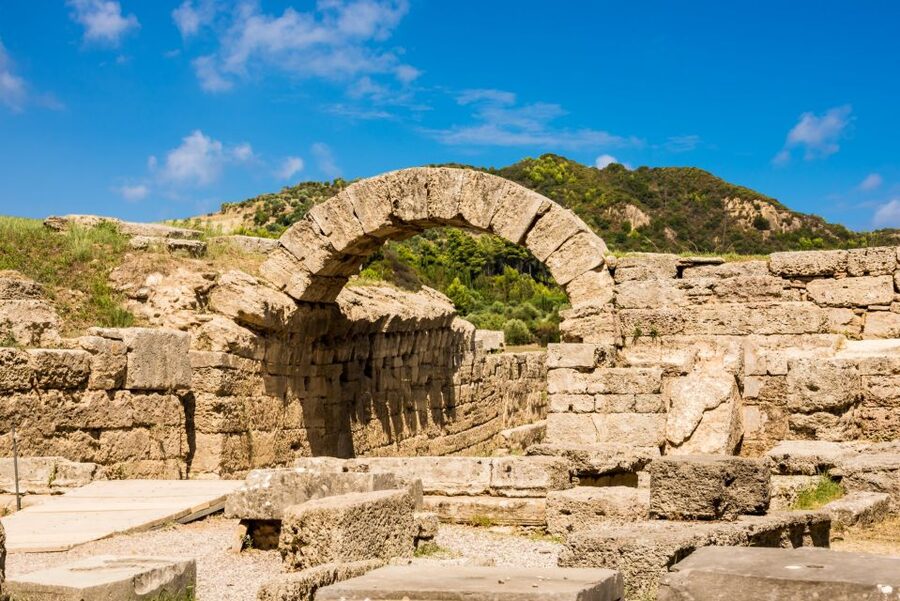
The Ancient Stadium is the stop most people picture when they think of Olympia. It gives you a strong sense of scale and helps explain the physical side of the Games. The long open running area is far more affecting than a small museum model because you can see the distance athletes had to cover and the space available for spectators.
The stadium is also where the Olympic story becomes concrete. The Games were connected to religious festivals, and athletic success brought honor to competitors and their communities. The audio commentary places the sporting events within that larger setting instead of treating the stadium as an isolated track.
You can move at your own pace, which is helpful here. Pause to look down the length of the stadium, listen again to a section, or continue ahead if you are visiting with children who have a shorter attention span. The format has worked well for families because the directions are clear and the content is broken into manageable pieces.
Do not expect the outdoor route to provide shade at every stop. A hat or small umbrella can make a real difference, although large luggage and large bags are not permitted. The site is best approached as a walking visit, not a quick photo stop.
Pheidias workshop and the route’s final stop
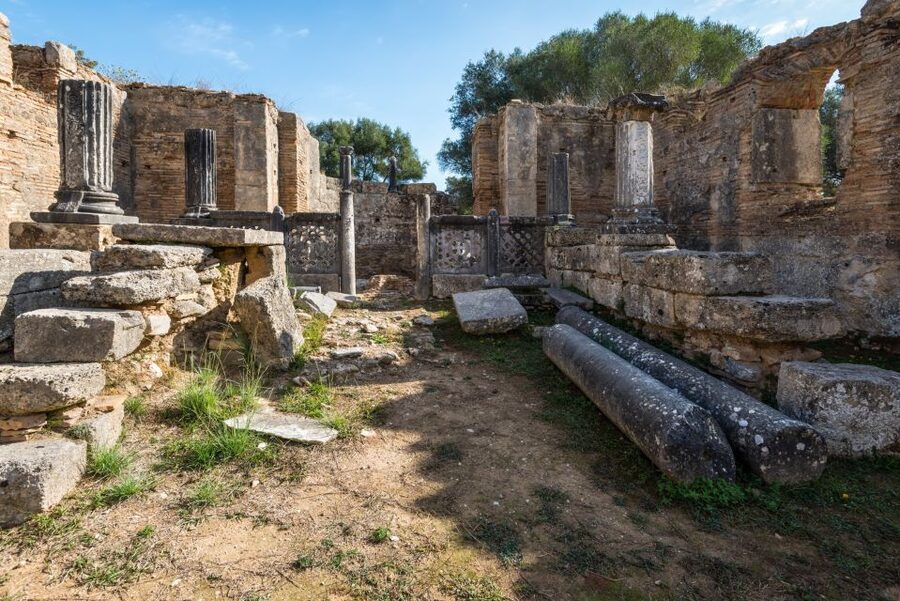
The audio tour ends at the entrance to the workshop of Pheidias. This is a particularly important ending because Pheidias was associated with the great statue of Zeus, one of the ancient world’s celebrated wonders.
The workshop helps connect art, religion, and construction. Olympia was not only a place where people gathered for games. It was also a place where skilled craftspeople produced objects and monumental works for the sanctuary.
The route’s endpoint gives the visit a satisfying final chapter. You have moved from training grounds and civic buildings to religious monuments and the work of an important sculptor. If you want to spend more time at the workshop, you can do so after the narration finishes. The tour is not a live group, so you are free to stop without holding anyone up.
What you get in the Archaeological Museum
The Archaeological Museum is included with the selected-time ticket, but the self-guided audio tour described here is for the outdoor archaeological site, not the museum. That distinction is important. You should not expect the same narration to guide you from case to case inside the museum.
The museum is still an essential part of the visit. It gives you a closer look at sculptures and objects found at Olympia, including works connected with the sanctuary’s religious and artistic life. After seeing broken columns and foundations outside, you can better understand the scale and quality of what once filled the site.
Plan your museum visit around the timed entry. You may prefer to go first, while the details are fresh in your mind, or afterward, when the objects can help complete the picture of the ruins. Either approach works because the outdoor site is available anytime on your selected date.
The museum also offers a practical pause from the sun. That makes the combined ticket more useful than an outdoor admission alone, especially during the warmer months.
The Olympic Games Museum
The Olympic Games Museum is the third included attraction and can be visited anytime on your chosen date. It adds another layer by focusing on the history and development of the Games.
The archaeological site shows you the original setting. The Archaeological Museum shows you objects from the sanctuary. The Olympic Games Museum helps connect Olympia with the wider sporting tradition. Together, the three stops make a more complete visit than any one of them would provide by itself.
You should check your energy and timing before leaving Olympia. The audio route may take about an hour, but the ruins, Archaeological Museum, and Olympic Games Museum can occupy most of the day if you read the displays and take your time.
Is $41 a good value?
At $41 per person, this is not the cheapest way to enter Olympia, particularly for children, younger EU citizens, or anyone who qualifies for free admission. The booking does not provide reduced or free tickets through the supplier, so eligible visitors should compare the price with the admission arrangements available at the site.
For a standard adult who wants all three attractions plus a prepared audio route, the price can make sense. You are paying for the convenience of prearranged access, the three-site combination, and an audio guide that can be used before or after your visit and replayed later.
The value is strongest if you would otherwise need to arrange each ticket separately or prefer not to read a guidebook while walking. It is weaker if you only want a short look at the ruins, already have another guide, or qualify for a discounted admission that this booking does not supply.
There is also no transport. You must arrange your own way to Olympia, and no food or drinks are included. If you are staying nearby, this is straightforward. If you are coming from farther away, include the cost and time of getting there when judging the total value.
Using the app without frustration
A little preparation makes this experience much easier. Download the app, ticket, map, and audio content before leaving your hotel or accommodation. Check that the files open correctly and that your phone has enough free space.
Bring:
- A fully charged smartphone
- Headphones
- Comfortable shoes
- A hat
- Sunscreen
- Water for the outdoor portion
The audio can be replayed, and you can use it again after the visit to revisit the site’s stories. That is a useful feature if you are moving slowly, visiting with children, or want to stop often for photographs.
The main weakness of a phone tour is that it depends on your device. If your battery is low, your operating system is not supported, or you forget headphones, the experience becomes less convenient. Supported devices include Android 5.0 and later and iOS phones, but older devices such as the iPhone 5 and 5C, older iPod Touch models, and older iPads are not compatible.
Who should book this Olympia experience?
I would recommend it to independent visitors who want structure without a fixed group. You get clear directions and historical context, but you decide how fast to walk, where to pause, and how long to spend in each museum.
It suits families too. Children aged 12 and 13 have been able to follow the directions on their own phones, and the short audio sections are easier to manage than a long formal lecture. You will need to provide a phone and headphones for each person who wants to listen separately.
It is also a good fit if you prefer several languages, since the audio is offered in English, German, Italian, French, and Spanish. The route is less suitable if you want personal questions answered on the spot, detailed museum commentary, or help with transportation.
Should you book the Olympia audio guide?
Book it if you want a simple one-day plan covering the ruins and both museums, and if you are comfortable using your own phone. The route is clear, the historical stories add needed context, and the ability to explore independently is a real advantage at a large open-air site.
Think twice if you need a live guide, require reduced admission, or dislike downloading apps before a visit. Also check your mobility needs, since parts of Olympia are not wheelchair accessible and the main entrance includes steps.
For most independent adults paying the standard admission, the combination of three entrances and an offline audio route offers useful value. Arrive prepared, protect yourself from the sun, and give Olympia more than the audio hour alone. The ruins deserve time to speak for themselves.
FAQ
What is included in the Olympia ticket?
The ticket includes entry to the Archaeological Museum of Ancient Olympia at the selected time, entry to the archaeological site anytime on the selected date, and entry to the Olympic Games Museum anytime on the selected date. It also includes a self-guided audio tour for the archaeological site.
Is there a live guide?
No. This is a self-guided audio tour on your smartphone. There is no live guide or meeting point.
Which languages are available for the audio guide?
The audio guide is available in English, German, Italian, French, and Spanish.
Does the audio guide cover the Archaeological Museum?
No. The included audio tour is for the archaeological site. A self-guided audio tour for the Archaeological Museum is not included.
What do I need to use the audio guide?
You need an Android 5.0 or later or an iOS smartphone, around 100 to 150 MB of storage, headphones, and a charged phone. Download the app and audio content before arriving so you can use the offline material.
Can visitors with limited mobility access the site?
Parts of the archaeological site are not wheelchair accessible. The main entrance near the museum has steps, while visitors with limited mobility are advised to use the other entrance.
More Smartphone Audio Tours in Greece
- Crete: Palace of Knossos E-Ticket and Audio Guide
★ 3.8 · 1,540 reviews - Athens: Ancient Agora E-Ticket and Audio Tour
★ 3.9 · 413 reviews - Rhodes: Palace of the Grand Master E-Ticket & Audio Tour
★ 4.2 · 216 reviews - Archaeological Site of Mycenae: E-Ticket with Audio Guide
★ 4.2 · 144 reviews
New audio tours around Greece
- Kos Scavenger Hunt and Highlights Self Guided Audio Tour★ 4.5 · 17 reviews
- Half-Day Ancient Olympia VR Audio Tour from Katakolo Cruise Port★ 3.5 · 57 reviews
- E-Ticket to Heraklion Archaeological Museum with Audio Guide★ 4.5 · 26 reviews
- Knossos Palace & Archeological Museum: E-Tickets with Audio Tours★ 4.0 · 18 reviews
- Kasos Audio-Tour from Karpathos by Art and Walk★ 4.5 · 4 reviews
- Delphi: Self-guided Audiovisual Tour with 3D Representations★ 5.0 · 5 reviews
- Delphi Self-guided Audio Tour on Your Phone (no ticket)★ 3.5 · 10 reviews
- Delphi: Archaeological Site & Museum Ticket with Audio★ 3.5 · 24 reviews
Greece Audio Tours, compared.
Athens: Acropolis Ticket with Optional Audio or Live Guide
Read our review →
Athens: Cape Sounio & Poseidon Temple Trip with Audio Guide
Read our review →
From Athens: Delphi Full Day V.R. Audio Guided Tour
Read our review →
Athens: Acropolis Museum Ticket with optional Audio Guide
Read our review →
Athens: Acropolis Ticket & Optional Self-Guided Audio Tours
Read our review →
From Athens: Small-Group Delphi, Museum & Arachova Day Trip
Read our review →