Review · ATHENS
Athens: Ancient Agora E-Ticket and Audio Tour
The most rewarding part of this Ancient Agora visit is the way the ruins become a story about democracy rather than a pile of old stones. You’ll follow the rise of Athenian civic life from Solon’s reforms to the daily work of the 500 citizens who helped shape new laws. The audio tour gives the site a clear purpose, while the views from Pnyx and the Rock of Ares connect politics, philosophy, and the city spread below.
I like the freedom to pause for photographs and move at your own speed, and I especially like that the route includes the Agora Museum, Socrates’ prison, and the Theatre of Dionysus, not just the main ruins. The drawback is that the directions can be vague at points, and the tour depends entirely on your phone, headphones, and a proper offline download.
Key points to know before you go
- Follow democracy from Solon to Pericles: The commentary turns the Agora into a readable story about how Athenian government developed.
- Enter with a separate Ancient Agora e-ticket: The GetYourGuide voucher alone is not accepted at the entrance.
- See more than the central ruins: The route includes the museum, Pnyx, Mars Hill, Socrates’ prison, and the Theatre of Dionysus.
- Download everything before arrival: There is no internet access inside the archaeological site.
- Plan for roughly 90 minutes to two hours: Add time if you want to study the museum and stop for views.
- Bring comfortable shoes and headphones: Some paths are uneven, and several points are not wheelchair accessible.
Why the Ancient Agora makes a strong Athens visit
The Acropolis gets the famous photographs, but the Ancient Agora helps you understand how Athenian life worked below the temples. This was a place for public business, legal decisions, political debate, trade, and ordinary social contact. With the audio guide in your ear, the stones gain a human scale.
The tour begins with the conditions that allowed democracy to develop. You’ll hear about Solon and his legal reforms, which helped move Athens toward an organized civic society. This opening matters because it explains that democracy did not appear in one dramatic moment. It grew through changes in law, citizenship, public duties, and arguments about who should have a voice.
That approach is useful if you are visiting Athens with children or with anyone who finds bare ruins hard to read. The site does not always explain itself. Columns, foundations, and broken walls need context, and the audio fills in much of that missing picture.
More History Audio Tours in Athens
- Athens: National Archaeological Museum Ticket w/ Opt. Audio
★ 4.4 · 713 reviews - Athens: Roman Agora & Ancient Agora E-ticket & 2 Audio Tours
★ 4.1 · 107 reviews - Half Day Ancient Corinth and Canal VR Audio Guided Tour
★ 5.0 · 104 reviews
Entering with the correct ticket
You receive an adult e-ticket for the Ancient Agora, along with access to the self-guided audio tour for Android or iOS. The important practical point is that these arrive separately. After booking, check your email and spam folder for the message from the local provider, then download the ticket and tour before you reach the site.
At the entrance, you need the actual Ancient Agora ticket, either printed or saved on your phone. The booking voucher itself is not accepted at the validating machines. This is a small detail, but it can make the difference between walking straight in and stopping to sort out an avoidable problem.
The ticket is priced at about $30 per person. That is not the cheapest way to see the Agora, especially if you only want a quick walk through the ruins. The value improves if you would otherwise buy a guidebook, want a clear route, and plan to spend close to two hours on the site.
The tour does not include a live guide, transport, food, or drinks. You also need to supply your own smartphone and headphones. Think of the price as admission plus a prepared audio program, not a guided group outing.
The Temple of Hephaestus and the opening story
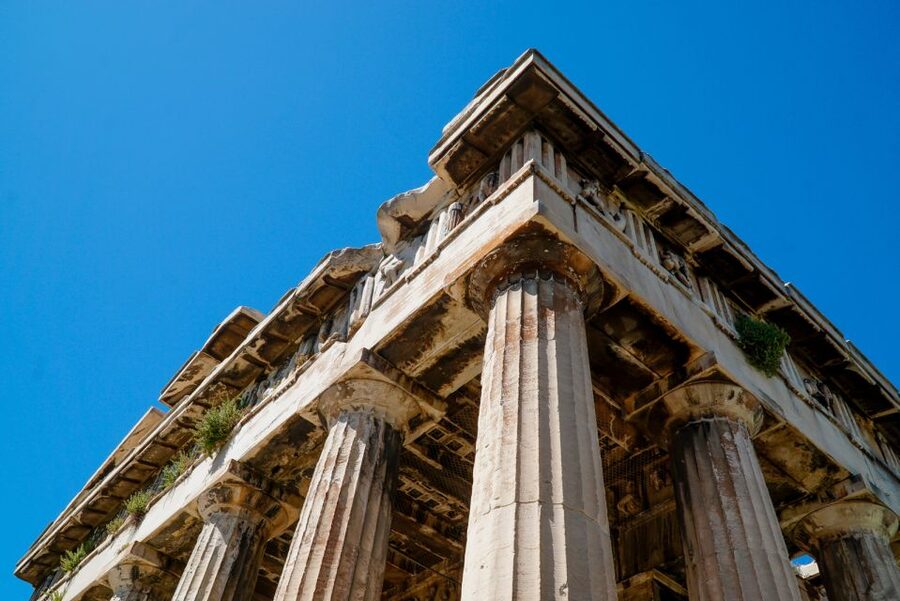
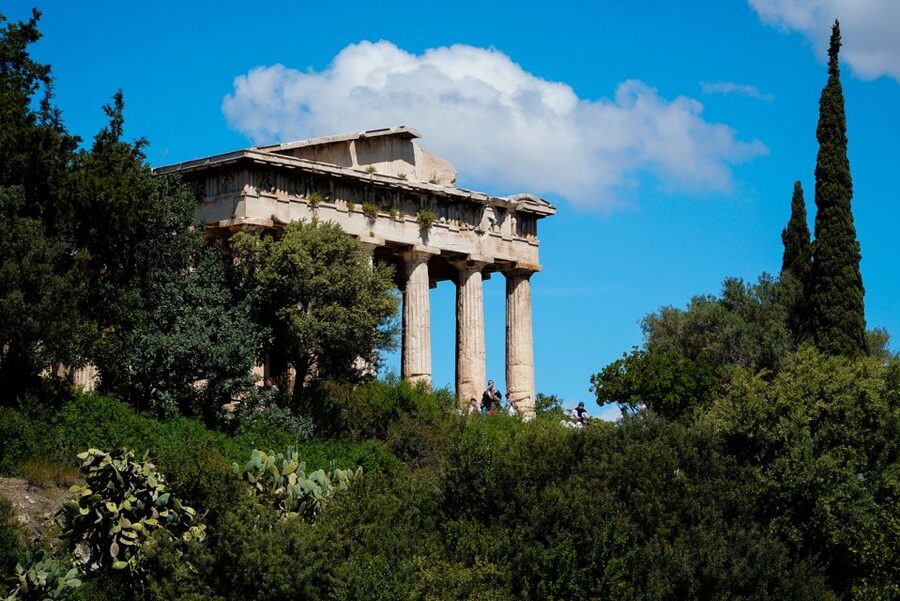
Near the start of the route, the Temple of Hephaestus provides one of the site’s strongest visual anchors. The temple remains remarkably complete compared with many other ancient buildings in Athens, and its position above the Agora makes it easy to understand how sacred buildings once watched over the civic center.
The audio commentary uses this area to introduce the political changes that shaped Athens. Solon is an important early figure here. His reforms did not create modern democracy, but they helped establish legal structures that allowed a wider civic system to develop.
I appreciate this opening because it avoids treating democracy as a simple ancient miracle. The story is more complicated. The system depended on a limited definition of citizenship, and the tour helps you see both the achievement and the limits of Athenian political life.
Wear shoes with decent support. The walk includes outdoor paths, slopes, and uneven surfaces. In hot weather, an early morning or late afternoon visit will be more comfortable than a slow walk in the middle of the day.
The Tholos and Bouleuterion: democracy at work
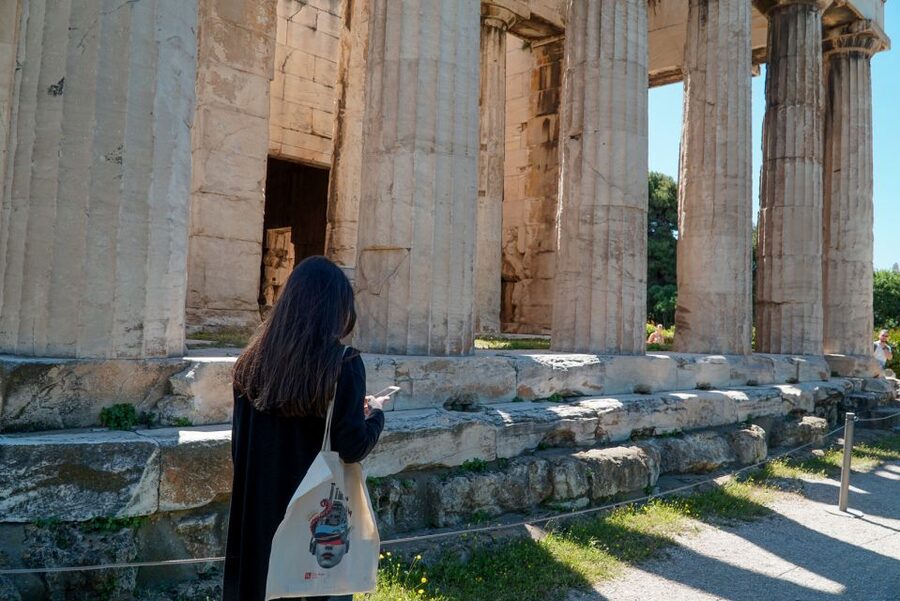
The route continues toward the Tholos and the remains of the Bouleuterion. The Bouleuterion was linked to the council of 500 Athenians, who prepared laws and proposals for presentation to the popular assembly.
This is where the audio tour gives the Agora its practical meaning. Democracy was not only speeches by famous men. It required people to meet, prepare proposals, debate details, and manage the machinery of government. The ruined foundations may be difficult to interpret without help, so listen closely before moving on.
The route also brings in figures such as Aristides the Just and Pericles. Their stories add personality to the political framework. You get anecdotes rather than a dry list of dates, which makes the walk easier to follow.
The navigation is not perfect. Parallel paths and lightly marked ruins can make it unclear which feature you are meant to find next. If you are good with maps, the offline plan should be manageable. If you prefer strong visual signs and exact turn-by-turn guidance, you may need to pause the narration and look around carefully.
More History Audio Tours in Greece
- Ancient Agora Self-Guided Tour with 3D & Audio (No Ticket)
★ 3.9 · 59 reviews - Athens National Archaeological Museum E-Ticket with Audio Guide
★ 3.0 · 57 reviews - Athens: Archaeological & Acropolis Museum Entry & Audio Tour
★ 4.3 · 21 reviews - Ancient Agora of Athens E-Ticket and Audio Tour
★ 3.5 · 5 reviews
The Agora Museum and its second-floor view

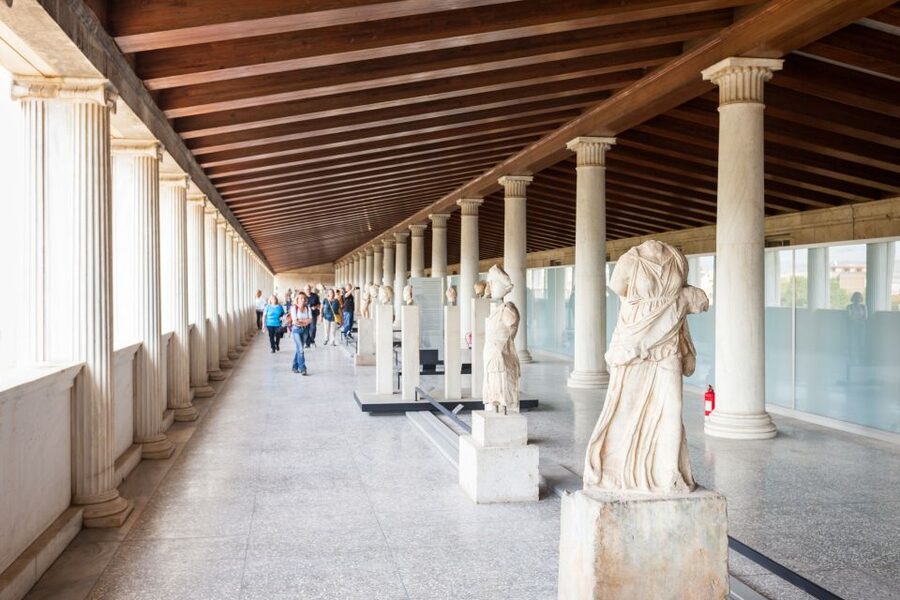
The Museum of the Ancient Agora is one of the best parts of the visit, especially if the outdoor remains have begun to blur together. Its exhibits explain how the Athenians organized public life and how they protected their political system from threats.
Some objects show the less noble side of democracy. The Athenians used voting and legal procedures to defend the city from people considered dangerous to the political order. The museum gives you a clearer sense of how ideas such as citizenship, exclusion, punishment, and public control operated in practice.
Do not rush through the building. One particularly useful stop is the second floor, where you can look down toward the Panathenaic Way from above. That view offers a different sense of the route through the Agora and helps you connect the museum displays with the ground outside.
The museum is also a useful break from the sun. One visitor specifically valued its air conditioning, and I would plan the visit around that comfort on a hot day. The audio commentary works well here, but you may want to pause it while reading labels and examining objects.
Pnyx, Mars Hill, and the best city views
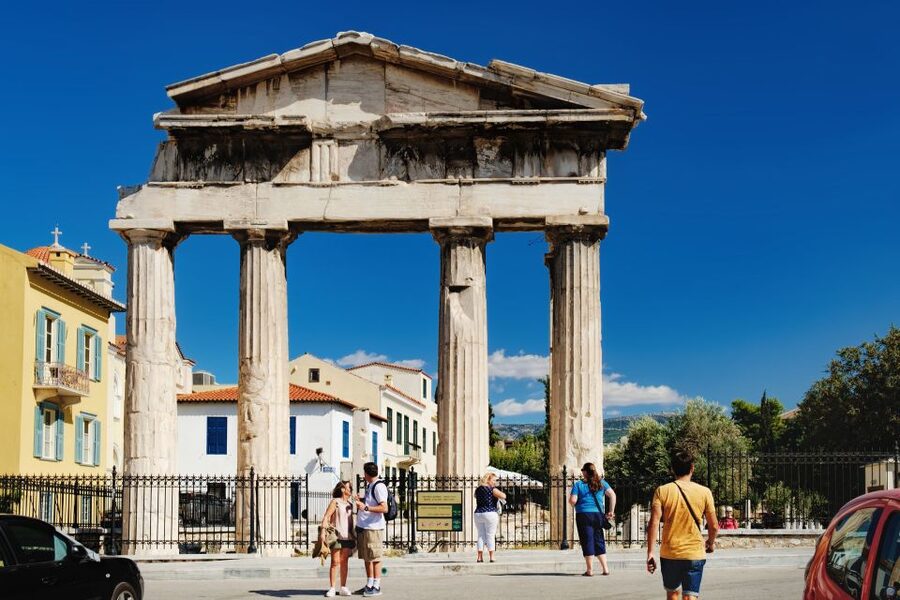
The route extends beyond the main Agora area to viewpoints around Pnyx and the Rock of Ares, also called Mars Hill. These places help explain where public speaking and civic debate took place, while giving you some of the best views toward the Acropolis.
Pnyx is especially valuable because it links the idea of democracy to the physical act of addressing citizens. From the hill, you can picture public speakers facing an assembly rather than imagining politics as something confined to a palace or temple.
The Rock of Ares gives you another strong vantage point. You’ll see the Acropolis from a lower and more open angle, with the city spread around it. Bring your camera, but keep the audio paused if you are taking several photographs. The app can stop playback when you zoom or switch functions, so check that the narration has resumed before walking on.
These sections require more attention to footing and route finding. They are not simply museum corridors with signs at every turn. Some points may be difficult for anyone with limited mobility, and the activity is not suitable for wheelchair users.
Socrates, Samuel the Cobbler, and the final stretch
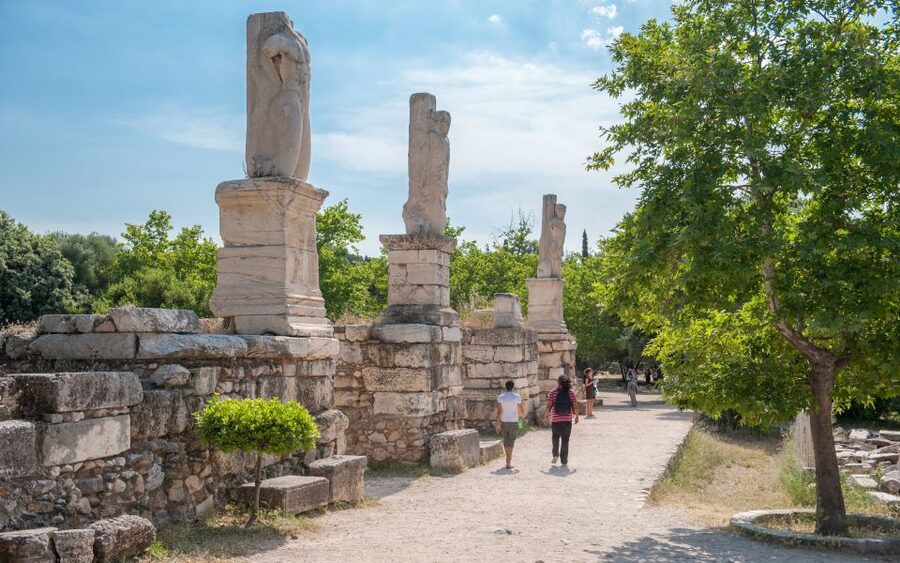
The route continues toward the hill of Philopappos and the place identified as the Prison of Socrates. The site offers a useful way to connect the physical remains with the philosopher’s final days, though the surrounding hill paths can add effort to the visit.
The most memorable story for me in this part is the account of Samuel the Cobbler and his relationship with Socrates. It gives the philosopher a more ordinary setting. Instead of presenting Socrates only as a marble bust or a famous name, the story places him among working people and daily life.
This is one reason the audio format works better here than a quick walk with a printed map. A guidebook can name a ruin, but a spoken story can show how a person might have moved through the neighborhood and talked with people who were not political leaders.
Keep your phone charged. The full route depends on it, and you do not want the narration or map to fail near the end. Download the content on Wi-Fi before leaving your accommodation because the archaeological site does not provide internet access.
Ending at the Theatre of Dionysus
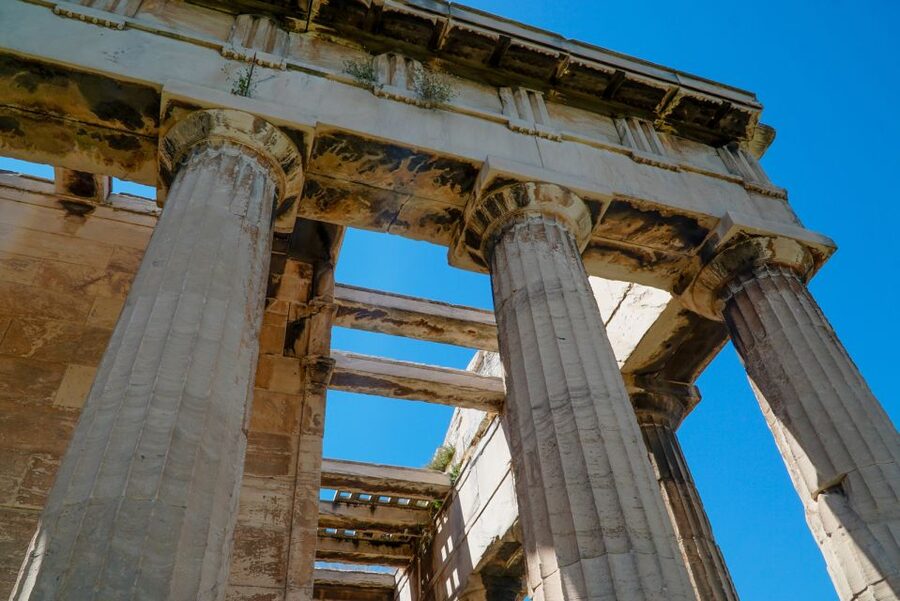
The route finishes within easy reach of the Acropolis archaeological area, in front of the Theatre of Dionysus. This is a fitting endpoint because the theatre connects the political world of Athens with its dramatic culture.
The theatre is associated with the first performances of works by Aeschylus, Sophocles, and Euripides. Looking across the ancient seating area, you can connect the plays to the same city that developed public debate, legal reform, and civic identity.
Ending here also gives you a practical advantage. If you are continuing to the Acropolis area, you can link two major visits in one outing. Keep in mind that the Ancient Agora ticket does not automatically mean admission to every other archaeological site unless you have a separate combination ticket.
Languages, timing, and who will enjoy it most
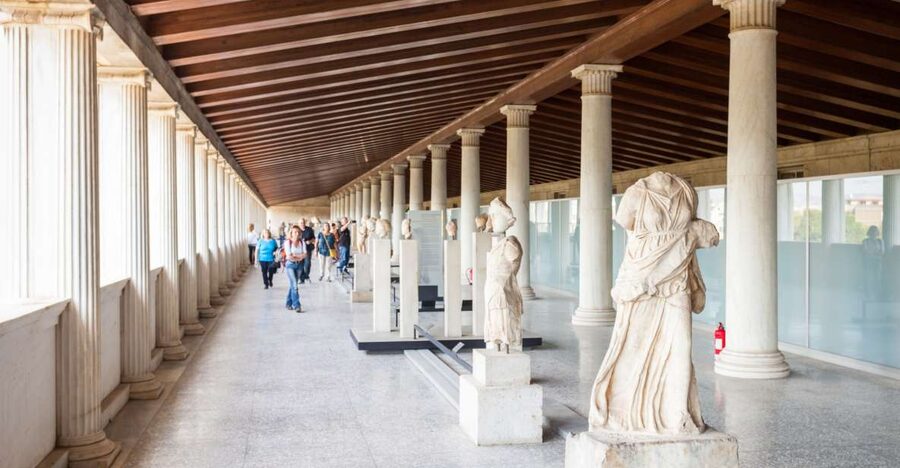
The audio tour is offered in English, Italian, Greek, German, Spanish, and French. It is designed for self-guided use, so you can stop, replay sections, and spend more time at the locations that interest you.
The listed duration is 90 minutes to two hours. I would allow the full two hours if you want to visit the museum, take photographs from Pnyx and Mars Hill, and follow the route without rushing. A shorter visit is possible, but you will have less time for the museum and hillside sections.
This suits you best if you:
- Prefer independent sightseeing to a fixed group schedule
- Want historical explanation without hiring a live guide
- Enjoy political history, philosophy, and classical drama
- Have a charged Android or iPhone and comfortable headphones
- Can manage uneven paths and some walking uphill
It is less suitable if you want a personal guide who can answer questions on the spot. It also may frustrate you if you need highly precise directions or if your phone is old. The audio tour is not compatible with Windows phones, iPhone 5 or 5C and older models, older iPod Touch and iPad versions, or the first iPad Mini.
How to make the visit go smoothly
Download both the e-ticket and audio content before you arrive. Open them once, check that the audio plays, and bring headphones. Do not rely on the booking voucher alone at the entrance.
Choose an early morning or late afternoon start during hot weather. Wear comfortable shoes, carry water for before or after the site, and leave large luggage behind because large bags are not allowed.
If you qualify for a free or reduced ticket, check the rules before booking. EU students and minors can enter free with identification but must queue for a zero-value pass. Non-EU students and people over 65 can receive reduced tickets, but they must queue at the ticket office. The pre-booked adult ticket may not be the best value for those categories.
Should you book the Ancient Agora audio tour?
Book it if you want the Agora to make sense rather than simply want to walk among ruins. The strongest parts are the democracy-focused storytelling, the museum, the views from Pnyx and Mars Hill, and the personal details about figures such as Socrates and Pericles.
Skip it if you already have a live guide, dislike phone-based tours, or need fully accessible paths. At $30, the value depends on using the audio and staying for the full route. Download the material carefully, allow two hours, and treat the visit as a connected walk through Athenian politics, philosophy, and theatre rather than a quick ticketed entry.
FAQ
How long does the Ancient Agora audio tour take?
The activity lasts approximately 90 minutes to two hours. Allow the longer time if you plan to visit the museum and stop at the viewpoints.
Is a live guide included?
No. The activity includes a self-guided audio tour for your smartphone, not a live guide.
Which languages are available?
The audio guide is available in English, Italian, Greek, German, Spanish, and French.
Do I need internet access inside the Ancient Agora?
No internet access is available inside the archaeological site. Download the e-ticket, audio tour, and offline map before your visit.
Is the GetYourGuide voucher accepted at the entrance?
No. You need the separate Ancient Agora e-ticket sent by the local provider. Save it on your phone or print it.
What should I bring?
Bring comfortable shoes, headphones, and a fully charged smartphone.
Can I bring large luggage?
No. Large bags and luggage are not allowed.
Is the tour wheelchair accessible?
No. The activity is not suitable for wheelchair users, and some points of interest are not wheelchair accessible.
Can EU students and minors enter for free?
Yes. EU students and minors can enter free with an ID card or passport, but they must queue to receive a zero-value pass.
Can people over 65 or non-EU students get a reduced ticket?
Yes. Non-EU students and people over 65 are entitled to reduced tickets, but they must queue at the ticket office.
More Smartphone Audio Tours in Greece
- Athens Audioguide – TravelMate app for your smartphone
★ 4.1 · 11 reviews - Athens: Kerameikos E-Ticket & Audio Tour
★ 4.1 · 10 reviews - Temple of Olympian Zeus: Self-Guided Audio Tour on your Phone (without ticket)
★ 4.0 · 8 reviews - E-ticket for Kerameikos with Audio Tour on Your Phone
★ 5.0 · 4 reviews
More Smartphone Audio Tours in Athens
- Acropolis Self-Guided Smartphone Tour w/Audio & 3D(No entry)
★ 3.9 · 62 reviews - Acropolis Museum E-Ticket and Multilingual Audio Guide
★ 4.0 · 42 reviews - Athens: Roman Agora E-Ticket and Audio Guide
★ 3.9 · 41 reviews - Acropolis E-Ticket with Audio Guide & Athens City Audio Tour
★ 3.5 · 28 reviews
New audio tours around Athens
- Temple of Olympian Zeus: Self-Guided Audio Tour on your Phone (without ticket)★ 4.0 · 8 reviews
- Ancient Agora of Athens: A Self-Guided Audio Tour★ 3.5 · 3 reviews
- Self Guided Tour In Athens With 100 Captivating Audio Stories★ 4.0 · 4 reviews
- Athens Ticket Pass: Acropolis & 6 Sites with 5 Audio Guides★ 3.5 · 84 reviews
- Audioguided tour of Athens’ alternative neighbourhood of Exarchia★ 5.0 · 2 reviews
- E-ticket for Kerameikos with Audio Tour on Your Phone★ 5.0 · 4 reviews
- Mycenae, Epidaurus & Nafplio Full-Day V.R audio guided Tour★ 4.5 · 248 reviews
- Athens Acropolis Museum Reserved Entry Ticket and Audio Tour★ 3.0 · 2 reviews
Athens Audio Tours, compared.

Athens: Cape Sounio & Poseidon Temple Trip with Audio Guide
Read our review →
From Athens: Delphi Full Day V.R. Audio Guided Tour
Read our review →
Athens: Acropolis Museum Ticket with optional Audio Guide
Read our review →
From Athens: Small-Group Delphi, Museum & Arachova Day Trip
Read our review →
Athens: Peloponnese Highlights Day Trip and V.R. Audio Guide
Read our review →
Athens: National Archaeological Museum Ticket w/ Opt. Audio
Read our review →