

Review · ROME
From Naples, Florence and Rome: Pantheon and smart audio
The Pantheon is one of Rome’s easiest monuments to appreciate without a live guide. Its vast dome, open oculus, and long link between ancient religion and Christianity reward a slow look, while the 20-minute audio tour gives you the essential story without tying you to a group.
I like two things here: the low price makes this an easy add-on, and the audio continues beyond the Pantheon to Piazza Navona, Trevi Fountain, Piazza del Popolo, and several churches. The main catch is simple: you are on your own, and you must download the content before entering because the Pantheon has no free Wi-Fi and mobile coverage may be weak.
Key points to know before booking

- The Pantheon audio lasts about 20 minutes, with more than 10 descriptions and an indoor map.
- The same app continues around Rome, with more than 20 additional audio descriptions.
- Florence and Naples options include round-trip train transportation, while the Rome option includes only admission and audio.
- Tickets arrive the day before your visit through WhatsApp, so watch for the provider’s message.
- Bring a charged smartphone, headphones, and your passport or ID card. Headphones are not included.
- You set your own pace, but there is no live guide to answer questions or manage the visit.
What this Pantheon experience really offers

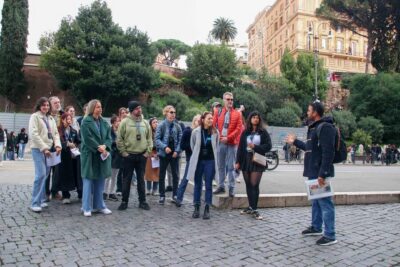
At its core, this is a self-guided Pantheon visit with a useful Rome audio walk attached. You choose a starting city, receive the entrance ticket and digital guide, and make your way to the Pantheon at the assigned time.
The Rome option is the most straightforward. You get the ticket and audio guide, then explore independently. The Florence and Naples choices add round-trip train travel, turning the activity into a longer day trip to Rome. That can be handy if your base is outside the capital, but the train journey becomes a major part of the day rather than a small extra.
I would think of this less as a traditional tour and more as a digital sightseeing package. You are paying for admission, recorded explanations, and, in two cases, rail transportation. The value depends on how much you enjoy planning your own route and how much use you make of the Rome content after leaving the Pantheon.
The experience has a listed price of $6 per person. For someone already in Rome, that is a modest cost for entrance and an audio guide. The Florence and Naples prices deserve closer attention when booking because the package includes train transportation, and the total value depends on the exact fare and availability shown for your date.
More audio tours around Rome:
- Rome: Colosseum & Forum with Audio Guide App -Optional Arena
★ 4.2 · 24,770 reviews - Rome: City Sightseeing Hop-on Hop-off Bus with Audioguide
★ 4.0 · 16,045 reviews - Rome: St. Peter’s Basilica & Dome Entry Ticket & Audio Tour
★ 4.2 · 7,537 reviews
Entering the Pantheon and looking up
The Pantheon’s appeal begins before the audio starts. You enter a building that feels both ancient and surprisingly complete, with a huge concrete dome, a circular interior, and the famous opening at its center. That oculus lets in daylight and weather, giving the room a changing quality that no recording can replace.
The audio guide helps put the structure into context. It explains the building’s place in ancient Rome and the later shift from pagan worship to Christian use. In 608, the sanctuary was given to Pope Boniface IV by the Byzantine Emperor Phocas, marking an important stage in the building’s long religious life.
You will hear references to the Pantheon’s famous legends as well. Some stories connect the building with evil forces and even Satan. These tales are part of the monument’s folklore, but the building itself is most impressive when you pay attention to its physical design: the balance of the interior, the dome, and the dramatic beam of light from above.
The Pantheon audio includes more than 10 descriptions and an indoor map. That combination matters because a map can help you match what you are hearing with what you are seeing. You are not just listening to a general talk about Rome. You can use the information while moving through the building.
The supplied material describes the main Pantheon explanation as about 20 minutes. That is long enough to give you a proper introduction without consuming half your day. You can then linger, take in the space, and continue to the next part of the audio route.
One limitation is the lack of a live guide. If you want to ask why a particular feature was built, compare competing theories, or adjust the visit around a child’s questions, the app cannot respond. You get a clear prepared route, not a personal conversation.
From the Pantheon to Rome’s great squares
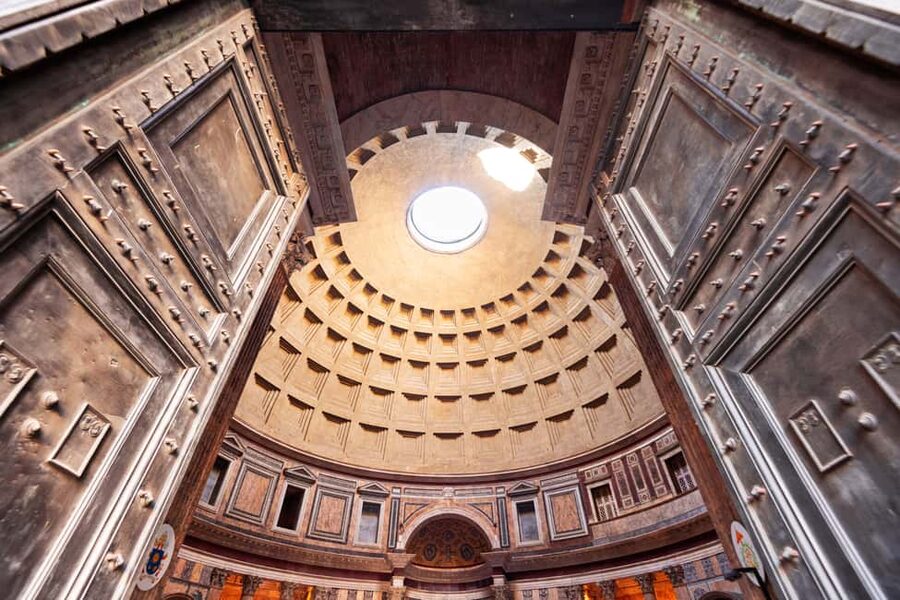
The useful surprise is that the audio does not end at the Pantheon door. It also covers several major places in central Rome, including Piazza Navona, the Trevi Fountain, and Piazza del Popolo.
Piazza Navona gives the route a strong artistic focus. The audio includes information about Bernini’s statues there, allowing you to look more closely instead of simply passing through the square for a photograph. Rome often rewards that second look. A fountain can seem decorative at first, then become far more interesting once you know who designed it and what details to notice.
The route also points you toward the Trevi Fountain. The information supplied does not promise a timed entry or a private viewing, so think of this as an audio stop in a public part of Rome rather than a reserved attraction. You listen, look around, and continue when you are ready.
Piazza del Popolo adds another large public space to the route. Together, these stops give the audio guide a wider purpose: it helps you connect the Pantheon with the streets, churches, fountains, and squares that make central Rome rewarding to explore on foot.
You should not expect the provider to escort you from one site to the next. The experience is self-guided, and the exact order you follow is up to you. That flexibility is useful if you want to stop for lunch, enter another church, or change the route around your own plans.
The trade-off is navigation. The app includes an indoor map for the Pantheon, but the supplied details do not promise a full turn-by-turn map for every outdoor stop. I would keep your phone charged and use the listed sights as landmarks rather than assuming you will be led from doorway to doorway.
Caravaggio, Michelangelo, and Bernini along the route
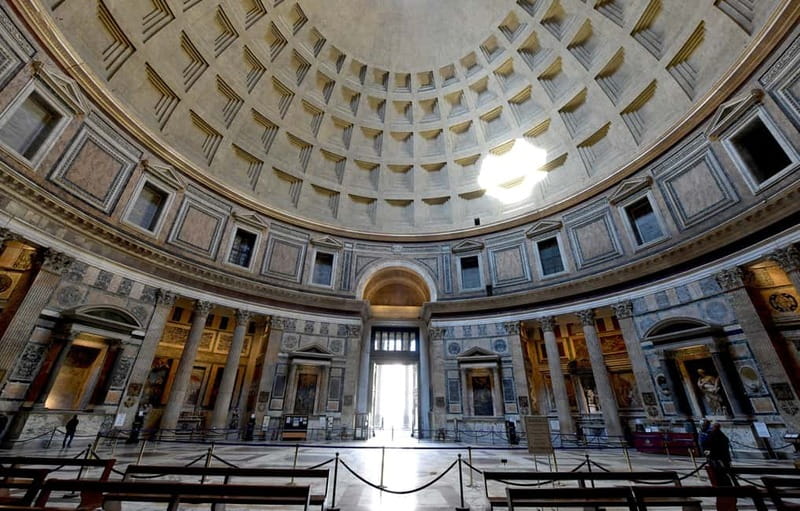
The art stops make this more than a single-building audio guide. The route directs you toward Caravaggio paintings in San Luigi dei Francesi and Santa Maria del Popolo, Michelangelo’s Redentore in Santa Maria sopra Minerva, and Bernini’s sculptures in Piazza Navona.
These are worthwhile additions because Rome’s art is often encountered in ordinary working churches rather than only in museums. You can move from an ancient Roman monument to a Christian church, then to a public square decorated by major artists. The audio gives you a reason to notice the connection.
San Luigi dei Francesi and Santa Maria del Popolo are included for their Caravaggio paintings. The guide tells you where to look and supplies background, but admission arrangements beyond the Pantheon are not listed as included. Treat these as route suggestions and art stops, not as separately ticketed visits covered by your purchase.
Santa Maria sopra Minerva is connected with Michelangelo’s Redentore. Again, the value is in having a focused reason to enter or examine the church. Without some context, a quick stop can blur into the many churches you see in Rome. A short explanation helps you decide what deserves your attention.
The audio promises more than 20 descriptions across Rome. That is a generous amount of material for a $6 Rome-based activity, but you do not need to listen to every track. You can select the places that match your interests and save the rest for later in the day.
I would keep the distinction clear: the Pantheon ticket is included, while the description does not say that entry to every church or sight on the wider route is covered. That point matters if you are building a tightly priced sightseeing day.
Same sights, a different narrator:
- Colosseum, Roman Forum & Palatine Hill with Audioguide App
★ 4.4 · 6,291 reviews - Vatican & Sistine Chapel Ticket with Optional Audio Guide
★ 4.1 · 5,405 reviews - Rome: Castel Sant’Angelo Entry Ticket & Digital Audioguide
★ 4.7 · 5,347 reviews - Rome: Castel Sant’Angelo Entry Ticket & Audio App
★ 4.3 · 4,952 reviews
Choosing Rome, Florence, or Naples
The three starting options serve different kinds of visitors.
From Rome, the arrangement is simple. You receive the Pantheon ticket and audio guide, then make your own way to the monument. This is the best fit if you already have accommodation in Rome and want a low-cost cultural stop that can fit around other plans.
From Florence, round-trip train transportation is included. From Naples, round-trip train transportation is also included. That makes the two out-of-town options more useful than a basic entrance ticket, but it also means you need to allow a full day for the outing. The activity is listed as lasting one day, with starting times shown according to availability.
The rail inclusion removes one major planning task, yet you should still check the exact departure details before booking. The meeting point may vary by the option you choose. Florence departures are listed at Firenze Santa Maria Novella, and Naples departures at Napoli Centrale. The Rome meeting point is the Pantheon.
The train choices are best for someone who wants a simple Rome day trip without arranging separate rail tickets and a monument reservation. They are less suitable if you want a relaxed, slow visit with plenty of time for several museums. A day trip from another city can be rewarding, but the schedule will naturally be more demanding.
At the end, the activity returns to the meeting point. For the Rome version, that means you finish your self-guided outing back at the starting area rather than being taken to a different part of the city.
Using the smart audio guide without technical trouble

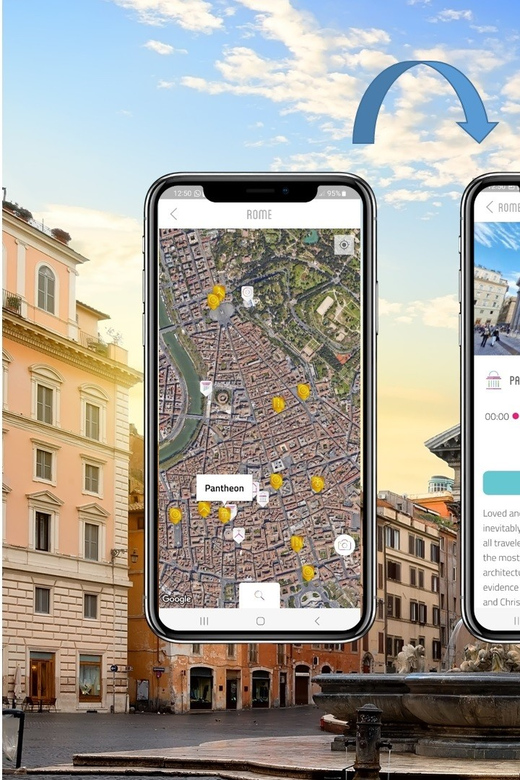
The most important practical step happens before you arrive. The provider contacts you through WhatsApp to help you download the smart audio guide, and the ticket is sent the day before the visit. Check your messages and do not leave the download until you are standing outside the Pantheon.
You need a charged smartphone. Download all audio content before beginning because the building does not have free Wi-Fi and mobile coverage may not work reliably inside. An audio guide is only useful if the files are already on your phone.
Headphones are not included. Bring your own pair, especially if you plan to listen in the Pantheon and then continue through churches and public squares. You can technically use the phone speaker, but that is less considerate in a religious building and harder to hear in a busy city.
The guide is available in Italian, English, Spanish, French, and German. That language range makes the experience practical for many visitors, though no live guide is supplied in any language.
You also need to carry a passport or ID card. The activity is wheelchair accessible, which is useful for visitors who need step-free access, though the supplied details do not describe the exact route or facilities at each additional church stop.
How the $6 price measures up
For the Rome option, the price is easy to understand: admission plus the audio guide. You are not paying for a group leader, private access, or a long guided lecture. If you want the freedom to arrive, listen, pause, and move on, the cost is attractive.
The audio content adds value because it reaches beyond the Pantheon. A basic entrance ticket would give you the building, but this package also gives you material for Rome’s fountains, churches, squares, and major artworks.
The price is less about luxury and more about coverage. You can use the Pantheon explanation, then return to the app later for another part of central Rome. That makes it a sensible choice for independent visitors who prefer to spread sightseeing through the day.
The Florence and Naples options should be judged as transport packages. Round-trip train service can simplify the day and may be useful if you do not want to book rail tickets separately. Still, check the available starting time and details before assuming the journey will fit neatly around other plans.
The experience has a 4.6 rating from 10 ratings, a positive overall signal, though the sample is small. I would place more weight on whether the format suits you: this works best if you are comfortable with a phone-based guide and independent navigation.
Who should book this Pantheon visit?

I would recommend it to you if you want:
- A low-cost way to see the Pantheon with some historical context
- The freedom to pause and explore without staying with a group
- A Rome audio route that includes art, churches, fountains, and public squares
- A simple train-based day trip from Florence or Naples
- Audio content in English, Italian, Spanish, French, or German
I would look elsewhere if you need a live guide, direct answers, or a tightly managed walking route. It may also frustrate you if you do not want to manage WhatsApp messages, downloads, headphones, and phone battery.
Book it if you value independence and want more than a ticket. The Rome option is especially good for a modest-cost visit, while the Florence and Naples versions make sense when the included train journey fits your day. Just download everything in advance, bring headphones and identification, and remember that the Pantheon is the one guaranteed entrance included in the package.
FAQ
What is included in the Pantheon experience?
The activity includes Pantheon admission and a downloadable smart audio guide. The guide is available in Italian, English, Spanish, French, and German. Round-trip train transportation is also included when you choose the Florence or Naples starting option.
Is there a live tour guide?
No. This is a self-guided visit using audio on your smartphone. A live tour guide is not included.
How long is the Pantheon audio guide?
The main Pantheon audio description lasts about 20 minutes. It includes more than 10 audio descriptions and an indoor map. The wider Rome guide has more than 20 additional descriptions.
Do I need to bring headphones?
Yes. Headphones are not included, so bring your own if you want to listen privately and clearly.
When will I receive my ticket and audio guide?
The provider contacts you through WhatsApp, and the ticket is sent the day before your visit. Download all audio content before you start because the Pantheon does not have free Wi-Fi and mobile coverage may be unreliable.
Can I cancel the activity?
You can cancel up to 24 hours in advance for a full refund. The entrance tickets themselves are non-refundable.
New audio tours around Rome
- Rome: St. Peter’s Basilica and Dome Entry + Audio Guide★ 4.5 · 13 reviews
- St. Peter’s Basilica: Hosted Entrance & Digital Audioguide★ 4.1 · 35 reviews
- Sorrento & Pompeii Day Trip from Rome Audio Guide Tour★ 4.2 · 50 reviews
- Rome:St. Peter’s Basilica Hosted Entry + Official Audioguide★ 3.4 · 10 reviews
- Colosseum, Roman Forum, Palatine Hill access and AudioGuide★ 4.7 · 12 reviews
- Rome+Jubilee Audioguide – TravelMate app for your smartphone★ 4.2 · 38 reviews
- Rome:Ostia Antica Skip-the-line Ticket & Audioguide★ 4.3 · 11 reviews
- Rome: Vatican Museums & Sistine Chapel Entry with Audio App★ 4.3 · 240 reviews
Rome Audio Tours, compared.
Rome: Colosseum & Forum with Audio Guide App -Optional Arena
Read our review →
Rome: City Sightseeing Hop-on Hop-off Bus with Audioguide
Read our review →
Rome: St. Peter’s Basilica & Dome Entry Ticket & Audio Tour
Read our review →
Colosseum, Roman Forum & Palatine Hill with Audioguide App
Read our review →
Vatican & Sistine Chapel Ticket with Optional Audio Guide
Read our review →
Rome: Castel Sant’Angelo Entry Ticket & Digital Audioguide
Read our review →
Rome: Castel Sant’Angelo Entry Ticket & Audio App
Read our review →
Rome: Hop-on Hop-off Sightseeing Bus Tour with Audioguide
Read our review →Browse the lists this tour appears in