

Review · ROME
Rome: Stadium of Domitian Entry and City of Rome Audioguide
The best part of this experience is the chance to see the Stadium of Domitian beneath Piazza Navona, a quieter archaeological site that explains why the famous square has its unusual shape. I also like the reserved entry and the two-part audio setup: one guide for the stadium, then a city guide for Rome’s historic center.
The catch is that the Heart of Rome guide is app-based, not led by a person. You must download the Vatican&Rome App, bring headphones, and keep your phone charged. One booking also reported confusion at the entrance, so have your ticket and meeting-point details ready before you arrive.
Key points to know
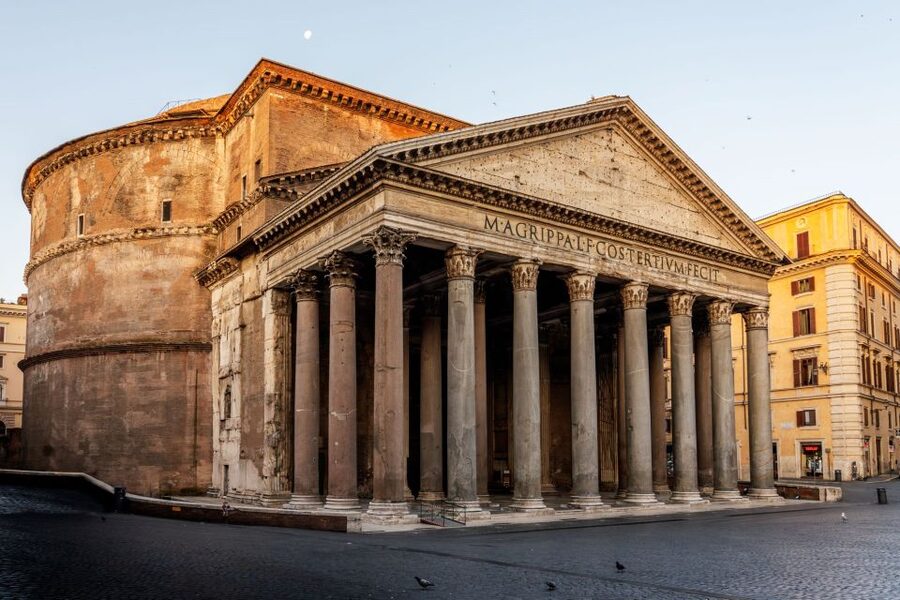
- See the ancient stadium below Piazza Navona: The ruins reveal the Roman structure beneath one of central Rome’s most famous squares.
- Use one ticket for two experiences: Your booking covers the Stadium of Domitian, its audio guide, and the Heart of Rome audio guide.
- Follow the city route in six languages: Choose Italian, English, French, Spanish, German, or Portuguese in the app.
- Expect a self-guided visit: A host or greeter may assist in Italian or English, but this is not a walking tour with a live guide.
- Plan for stairs and enclosed spaces: The site is not suitable for wheelchair users, people with mobility impairments, or people with claustrophobia.
- Bring the right equipment: Comfortable shoes, headphones, and a charged smartphone are essential.
What lies beneath Piazza Navona
The Stadium of Domitian is one of those Rome sights that changes the way you see the city above it. Piazza Navona looks like a grand Baroque square, but its long, narrow outline follows the shape of an ancient Roman stadium. Below street level, the archaeological remains let you connect the present-day piazza with the Roman Empire.
This was not the Colosseum. The Stadium of Domitian was built for athletic contests and public spectacles rather than gladiatorial combat. That distinction matters because it helps explain the site’s shape and purpose. You are looking at the remains of a public sports venue, not simply another fragment of Roman wall.
The setting also gives the visit a useful sense of scale. Modern Rome has built over, around, and across its ancient remains. Standing below Piazza Navona, you can picture how the ancient structure once occupied this part of the city while also seeing how later generations reused the same urban space.
The archaeological visit is presented with an audio guide, so you can move at your own pace. A careful listener can take time with the exhibits and the surviving masonry instead of being hurried from one stop to the next. The site has also received praise for its presentation and relatively calm atmosphere, especially compared with Rome’s biggest attractions.
That quiet can be a major advantage. After the crowds and noise around the Colosseum or the Vatican Museums, the Stadium of Domitian gives you a smaller-scale history stop. It is not a full-day monument. The appeal lies in seeing a specific layer of Rome clearly and then returning to the piazza above with a better understanding of what you are standing on.
More audio tours around Rome:
- Rome: Colosseum & Forum with Audio Guide App -Optional Arena
★ 4.2 · 24,770 reviews - Rome: City Sightseeing Hop-on Hop-off Bus with Audioguide
★ 4.0 · 16,045 reviews - Rome: St. Peter’s Basilica & Dome Entry Ticket & Audio Tour
★ 4.2 · 7,537 reviews
The visit begins at Via di Tor Sanguigna
Your meeting point is Stadio di Domiziano on Via di Tor Sanguigna. This is close to Piazza Navona, so the location fits easily into a day spent exploring central Rome. You should check your confirmation carefully before setting out, since one booking encountered confusion about where the ticket could be used and had to ask staff at more than one nearby location.
The attraction advertises guaranteed access by reservation and skip-the-ticket-line entry. That is useful in a city where a short visit can be spoiled by waiting, particularly during busy periods. Still, skip-the-line access does not mean you should arrive without checking your ticket instructions. Keep the ticket open on your smartphone and make sure you are at the named entrance on Via di Tor Sanguigna.
A host or greeter is listed in Italian and English. That can help with the initial entry, but you should not expect a live guide to accompany you through Rome. The main interpretation comes through the audio guide, so your phone and headphones matter more here than they would on a standard guided tour.
The group size is limited to 10 people. This is a small number, but the visit remains largely independent. The group limit should make the entry process less crowded, while the audio format lets you focus on the material without trying to hear a guide over a large crowd.
What the Stadium of Domitian audio guide adds
The stadium audio guide gives structure to a site that might otherwise be difficult to read. Ancient walls and foundations can look abstract at first. Audio interpretation helps explain what you are seeing and why the surviving remains matter.
The strongest feature is the connection between the visible ruins and Piazza Navona above. You can look at the archaeological remains, then later walk through the modern square and recognize that its long form is not accidental. The site becomes more than an underground museum visit. It becomes a key to reading Rome’s streets.
The museum display has been praised for making the remains easier to understand. That is important because the stadium is not preserved as a complete building. You will see fragments and structural evidence rather than a restored arena ready to use. The reward comes from assembling the picture in your mind.
A virtual reality option has been available for an additional fee, and one booking found it worthwhile. It is not included in the $17 price, so treat it as an optional extra rather than part of the promised experience. If you enjoy reconstructed views of ancient sites, you might consider it, but the standard ticket already includes the stadium entry and audio guide.
Do not expect the scale or spectacle of Rome’s headline monuments. The Stadium of Domitian is a more focused stop. I would choose it for context and atmosphere, not for grand standing ruins or a long list of rooms.
From ancient sports to the Heart of Rome
After the stadium visit, the second part of the booking takes you into Rome through the Heart of Rome audio guide. This is not a separate escorted walk. Instead, you use the Vatican&Rome App to follow a virtual guide through the city’s symbolic places.
The route is designed around the layers that define central Rome. It connects memories of the Roman Empire with Christian landmarks, the stories of martyrs and saints, centuries of religious art, and the grand architectural settings that shape the city. That combination gives you a useful way to organize a walk through the center.
Rome can feel like a collection of unrelated monuments if you see it only one stop at a time. One moment you are looking at an imperial ruin, and the next you are beside a church, a piazza, or a Baroque façade. The Heart of Rome guide aims to connect those pieces. It helps you see how Roman, Christian, artistic, and architectural traditions overlap in the same streets.
The six language choices are a real convenience. You can listen in Italian, English, French, Spanish, German, or Portuguese. That makes the product easier to use for an international group, although each person will need access to the app and suitable headphones if you want to listen privately.
You should download the app before arriving. The instructions specifically call for the Vatican&Rome App from the App Store or Google Play. Do this on reliable Wi-Fi rather than leaving it until you are standing outside the attraction. A charged phone is also essential, since both the ticket and the city guide depend on your device.
Same sights, a different narrator:
- Colosseum, Roman Forum & Palatine Hill with Audioguide App
★ 4.4 · 6,291 reviews - Vatican & Sistine Chapel Ticket with Optional Audio Guide
★ 4.1 · 5,405 reviews - Rome: Castel Sant’Angelo Entry Ticket & Digital Audioguide
★ 4.7 · 5,347 reviews - Rome: Castel Sant’Angelo Entry Ticket & Audio App
★ 4.3 · 4,952 reviews
The value of $17 depends on the second half
At $17 per person, this is a reasonable price if you want both the Stadium of Domitian and a self-guided introduction to central Rome. The entry ticket, stadium audio guide, and Heart of Rome audio guide are included. For a visitor who already plans to walk around Piazza Navona and nearby historic streets, the city audio adds useful structure at a modest extra cost.
The value is less clear if you only want admission to the stadium. One booking found that buying admission locally could have cost less when the Heart of Rome guide was not received. That is an important warning. The package works best when you actually use both audio components.
You should also remember what the price does not include. There is no live guide, no food or drink, no transport, and no included virtual reality experience. This is a compact cultural visit, not a full guided day in Rome.
For many visitors, the $17 price buys convenience rather than luxury. You get a reserved place, smartphone ticketing, a smaller group, and a ready-made route for exploring the city. If you are comfortable managing an app, that can be good value. If you prefer a person to explain every stop and answer questions as you go, spend more on a live walking tour instead.
Timing, comfort, and the shape of the visit
The booking is valid for one day, with starting times based on availability. The supplied information does not give a fixed length for the stadium visit or the Heart of Rome route. Plan your day with some flexibility rather than building a tight connection to another timed attraction.
Wear comfortable shoes. The stadium visit involves an archaeological site below the modern street level, and the city portion involves walking through central Rome. You should also bring headphones, since the audio guide is designed for smartphone use.
This experience is not suitable for wheelchair users or people with mobility impairments. It is also not recommended for people with claustrophobia. Those limitations are especially important here because the archaeological setting is below ground and may include enclosed areas.
Baby carriages are not allowed, and food and drinks are not permitted inside. Make those arrangements before you enter. These rules are easy to overlook when you are combining the visit with a long day of sightseeing.
The booking allows free cancellation up to 24 hours before the scheduled visit, and you can reserve now and pay later. That flexibility helps if your Rome plans are still shifting. Still, do not wait until the last minute to download the app or check the meeting point.
How it fits into a day in central Rome
The location makes this a natural addition to a Piazza Navona itinerary. You can visit the stadium, continue through the square above it, and then use the city guide as you explore the historic center. The order also makes sense: first understand the ancient footprint, then see how Rome’s later monuments developed around it.
I would not treat the Heart of Rome guide as a complete replacement for exploring on your own. Use it as a framework. Pause when a square or church catches your attention, take in the setting, and continue when you are ready. The audio format gives you more control than a fixed group walk, but it also requires more self-direction.
The lack of a live guide is both a strength and a weakness. You avoid being tied to someone else’s pace, and you can spend more time at the stadium if the displays interest you. On the other hand, you cannot ask follow-up questions or get an immediate explanation when something is unclear.
This is also a good choice for people who want a less crowded archaeological stop. The Stadium of Domitian has received particularly strong praise for its interesting displays and low visitor numbers. Do not confuse quiet with unimportant. In Rome, a smaller site can sometimes help you understand the city more clearly than a famous monument packed with people.
Who should book the Stadium of Domitian combination
I would recommend this experience to you if you want three things: a short archaeological visit, a central location, and an inexpensive audio guide for independent sightseeing. It suits first-time Rome visitors who want help making sense of the city’s layers, as well as repeat visitors looking for something beyond the Colosseum and Vatican Museums.
It is also a sensible pick if you dislike large tours. The group limit is 10, and the main experience is self-paced. You can listen, look, and move on without a guide gathering a large crowd around every explanation.
I would hesitate if you need step-free access, dislike using apps, or want a personal guide. You should also reconsider if your main goal is a dramatic ancient arena. The stadium is valuable for its setting and context, but it is not Rome’s biggest or most visually complete ruin.
Should you book it?
Book it if you will use both parts: the Stadium of Domitian admission and the Heart of Rome audio route. The $17 price is fair for that combination, especially with reserved entry and six language options. Download the app first, bring headphones and a charged phone, and verify the Via di Tor Sanguigna meeting point.
Skip it if you only want the cheapest possible entry to the stadium, or if you need a live guide. For everyone else, this is a practical way to connect the ancient stadium below Piazza Navona with the Roman, Christian, artistic, and architectural layers visible across the city.
FAQ
Where do I meet for the Stadium of Domitian visit?
Go to Stadio di Domiziano on Via di Tor Sanguigna.
What does the $17 ticket include?
It includes entry to the Stadium of Domitian, the stadium audio guide, and the Heart of Rome audio guide.
Is a live guide included?
No. The experience includes audio guides. A host or greeter may assist in Italian or English, but the listing does not include a live guided tour.
Which languages are available for the audio guides?
The audio guides are available in Italian, English, French, Spanish, German, and Portuguese.
What do I need to use the Heart of Rome audio guide?
You need to download the Vatican&Rome App from the App Store or Google Play. Bring headphones and a charged smartphone.
Is the experience suitable for wheelchair users?
No. It is not suitable for wheelchair users, people with mobility impairments, or people with claustrophobia. Baby carriages are also not allowed.
New audio tours around Rome
- Rome: St. Peter’s Basilica and Dome Entry + Audio Guide★ 4.5 · 13 reviews
- St. Peter’s Basilica: Hosted Entrance & Digital Audioguide★ 4.1 · 35 reviews
- Sorrento & Pompeii Day Trip from Rome Audio Guide Tour★ 4.2 · 50 reviews
- Rome:St. Peter’s Basilica Hosted Entry + Official Audioguide★ 3.4 · 10 reviews
- Colosseum, Roman Forum, Palatine Hill access and AudioGuide★ 4.7 · 12 reviews
- Rome+Jubilee Audioguide – TravelMate app for your smartphone★ 4.2 · 38 reviews
- Rome:Ostia Antica Skip-the-line Ticket & Audioguide★ 4.3 · 11 reviews
- Rome: Vatican Museums & Sistine Chapel Entry with Audio App★ 4.3 · 240 reviews
Rome Audio Tours, compared.
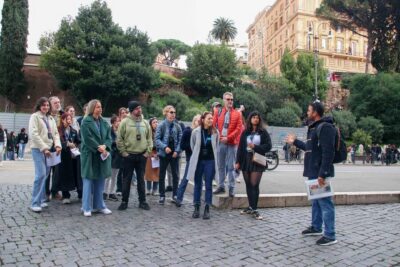
Rome: Colosseum & Forum with Audio Guide App -Optional Arena
Read our review →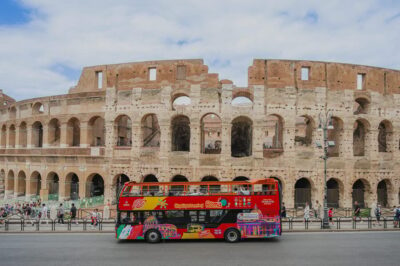
Rome: City Sightseeing Hop-on Hop-off Bus with Audioguide
Read our review →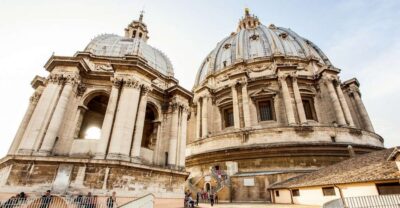
Rome: St. Peter’s Basilica & Dome Entry Ticket & Audio Tour
Read our review →
Colosseum, Roman Forum & Palatine Hill with Audioguide App
Read our review →
Vatican & Sistine Chapel Ticket with Optional Audio Guide
Read our review →
Rome: Castel Sant’Angelo Entry Ticket & Digital Audioguide
Read our review →
Rome: Castel Sant’Angelo Entry Ticket & Audio App
Read our review →
Rome: Hop-on Hop-off Sightseeing Bus Tour with Audioguide
Read our review →Browse the lists this tour appears in