
Review · ATHENS
Athens: Hadrian’s Library Entry Ticket and Audio Guide
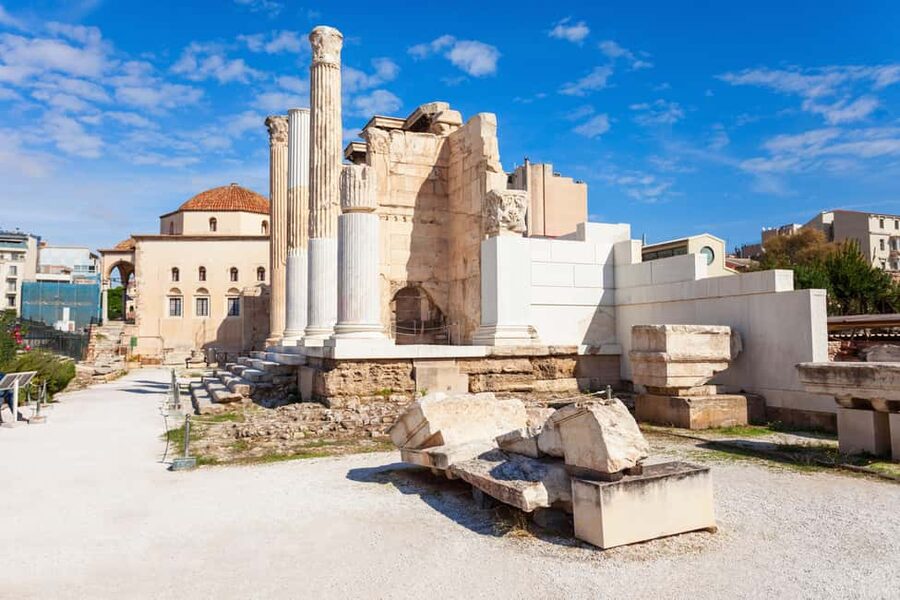
Hadrian’s Library is more than a heap of old stones beside Monastiraki. Built by Emperor Hadrian in 132 AD, it was once a place to read, teach, stroll, debate, and worship. The audio guide helps you picture those lost activities, especially when you reach the grand entrance and the open courtyard.
I like the story-led audio guide, which turns dates and ruins into scenes you can picture. I also like the easy location, just two minutes from Monastiraki metro station. The main drawback is that this is a self-guided digital visit, not a personal tour, and the web app needs an internet connection at the site.
Key points to know before you go
- Roman library with several later lives: Hadrian’s building later became a Christian worship site and an Ottoman administrative center.
- Seven audio-guide languages: Choose English, French, German, Italian, Spanish, Dutch, or Chinese.
- A grand Corinthian entrance: The Propylon once used purple marble columns and white Pentelic marble to signal wealth and importance.
- A one-hour visit: The site is compact, making it a useful stop between the Acropolis area, the Roman Agora, and Monastiraki.
- Bring your own headphones: They are not supplied, and the digital guide works through your charged smartphone or tablet.
- Tickets arrive by email: Athenian Tours sends the entry ticket and download instructions separately, so check your spam folder.
Hadrian’s Library beside Monastiraki
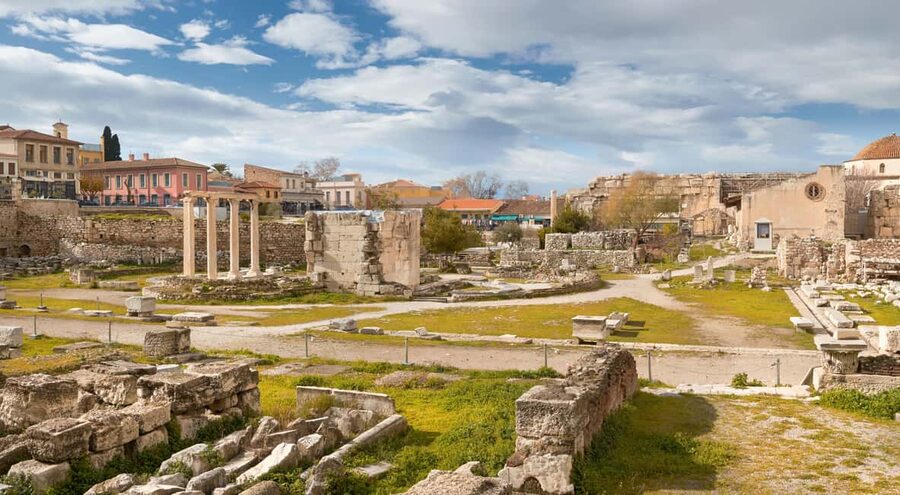
You reach Hadrian’s Library most easily by taking Athens Metro’s Blue Line to Monastiraki station. From the square, the entrance is about a two-minute walk. That makes this one of the simplest ancient sites to add to a day in central Athens.
The location also helps you understand the building’s original role. The entrance faced the Roman Agora, so the library was tied to the city’s public life rather than hidden away in a quiet corner. In ancient Athens, you could move from the noise of trade and civic business into a more ordered place for reading, teaching, and conversation.
Your visit has no meeting point and no live guide. You receive the ticket and audio-guide instructions by email from Athenian Tours after booking. Keep that message handy, and check your spam folder if it does not appear.
At $28 per person, the price is not simply an admission fee. You are paying for entry plus a self-guided audio experience in your chosen language. The value is strongest if you want context but prefer to set your own pace. If you only want a quick look at the ruins, the price may feel high for a site that takes about an hour.
More audio tours around Athens:
- Athens: Cape Sounio & Poseidon Temple Trip with Audio Guide
★ 4.4 · 4,521 reviews - Athens: Acropolis Ticket with Audio Guide
★ 4.0 · 3,575 reviews - From Athens: Delphi Full Day V.R. Audio Guided Tour
★ 4.6 · 3,028 reviews
The Propylon, where the visit begins
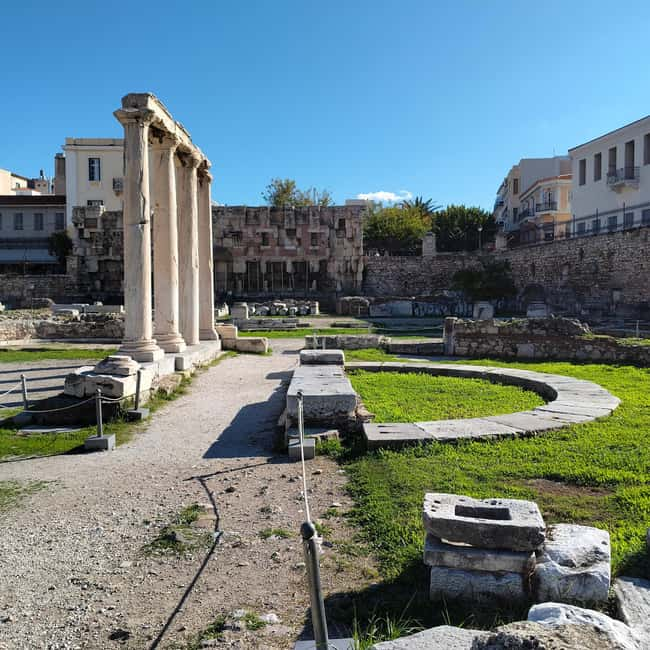
Your first major stop is the Monumental Entrance, known as the Propylon. This was the building’s formal front door, and it was designed to make an impression before anyone reached the library itself.
The original entrance used four tall columns made from purple marble, paired with bright white Pentelic marble. That color contrast mattered. It announced that Hadrian’s Library was not a modest reading room, but a grand public institution tied to imperial power and culture.
The remaining structure cannot recreate the full ancient building, but the audio guide gives you a useful mental picture. As you look at the columns and the broad entrance, you can imagine people leaving the Roman Agora behind and entering a calmer place set apart for study and discussion.
This is one of the better moments to use the guide rather than simply walk past. Ruins often show you shape and scale, but not purpose. Here, the explanation connects the stonework to the social world around it.
Take a moment to look back toward the Monastiraki area. The modern city is close, and that contrast is part of the appeal. Athens has built layer upon layer around these ancient remains, so you are not visiting an isolated ruin. You are seeing an old public building in the middle of a living neighborhood.
The marble courtyard and the missing garden
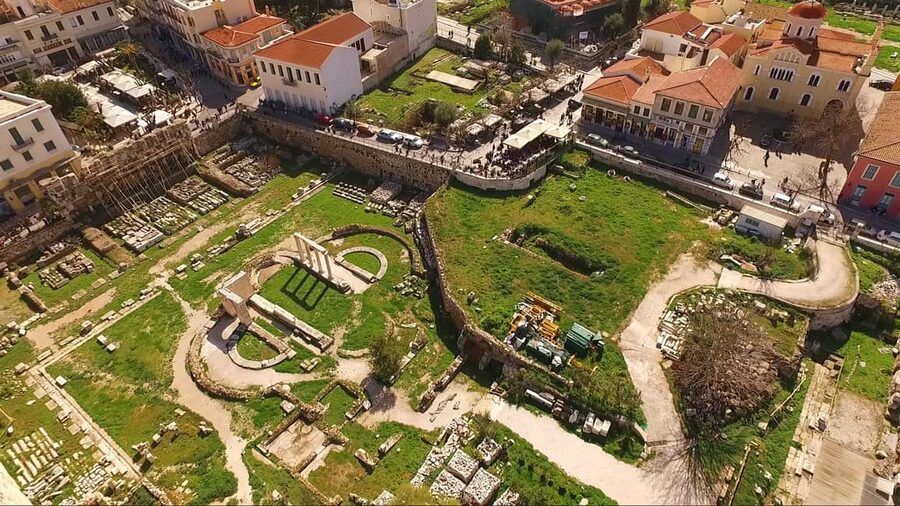
After the entrance, you reach the Central Courtyard. In its prime, this was a large open area covered in marble and framed by rows of columns. A long pool and planted gardens occupied the middle, bringing water and shade into the heart of the complex.
The courtyard was likely the place where the library felt most alive. Students could read beneath the colonnades, teachers could walk with pupils, and philosophers could argue over ideas. The audio guide presents the courtyard as a working public space, not a silent room where everyone whispered.
That distinction is useful. The modern idea of a library often means quiet shelves and private study. Hadrian’s Library was closer to a cultural center. It combined books, teaching, social contact, formal discussion, and pleasant outdoor space.
Today, much of the original grandeur is gone, so you need to use your imagination. The site gives you the outline, surviving columns, and fragments. The guide supplies the human activity that the stones cannot show.
I would spend more time here than you might expect. Look at the scale of the courtyard, then consider that statues of gods, heroes, and philosophers once lined the edges. The building was designed to make learning feel important and public.
The open setting also means you should plan for the weather. Athens can be hot and bright, particularly in the warmer months. Bring water, sunscreen, a sun hat, and comfortable shoes. An umbrella is also listed as a useful item, though the site offers limited shelter from rain.
The library halls in the eastern wing
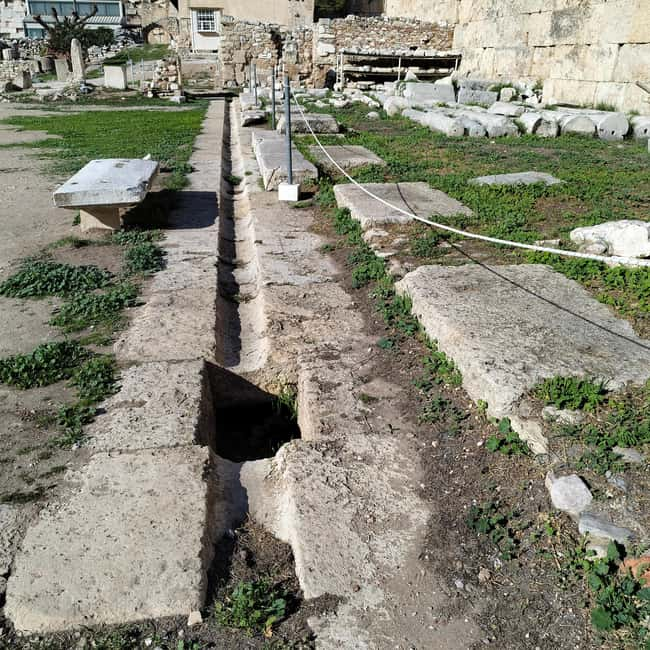
On the eastern side of the courtyard are the Library Halls. These rooms once held papyrus scrolls and parchment books in wooden cupboards set into wall niches. The complex may have stored between 17,000 and 20,000 works.
That number gives you a better sense of Hadrian’s aim. This was not a private collection for an emperor’s household. It was part of a larger effort to make Athens a major center for education and Greek culture.
The rooms also had several functions. You can think of them as reading areas, lecture rooms, and teaching spaces. Students, philosophers, and officials used the building for study and debate, so the atmosphere would have been full of voices rather than the hushed silence of a modern public library.
The surviving spaces are not packed with original books or furnishings. That is an important expectation to set. You are seeing the architectural shell and learning how it worked, not entering a preserved ancient library with shelves of scrolls.
Still, the eastern wing helps complete the picture. The Propylon shows public grandeur. The courtyard shows social life. The eastern rooms show where the actual business of reading, teaching, and storing texts took place.
Same sights, a different narrator:
- Athens: Acropolis Museum Ticket with optional Audio Guide
★ 4.4 · 2,652 reviews - From Athens: Small-Group Delphi, Museum & Arachova Day Trip
★ 4.8 · 2,476 reviews - Athens: Peloponnese Highlights Day Trip and V.R. Audio Guide
★ 4.5 · 1,425 reviews - Athens: Acropolis Museum Ticket with Audio Guide
★ 4.1 · 835 reviews
Three churches in the heart of the library
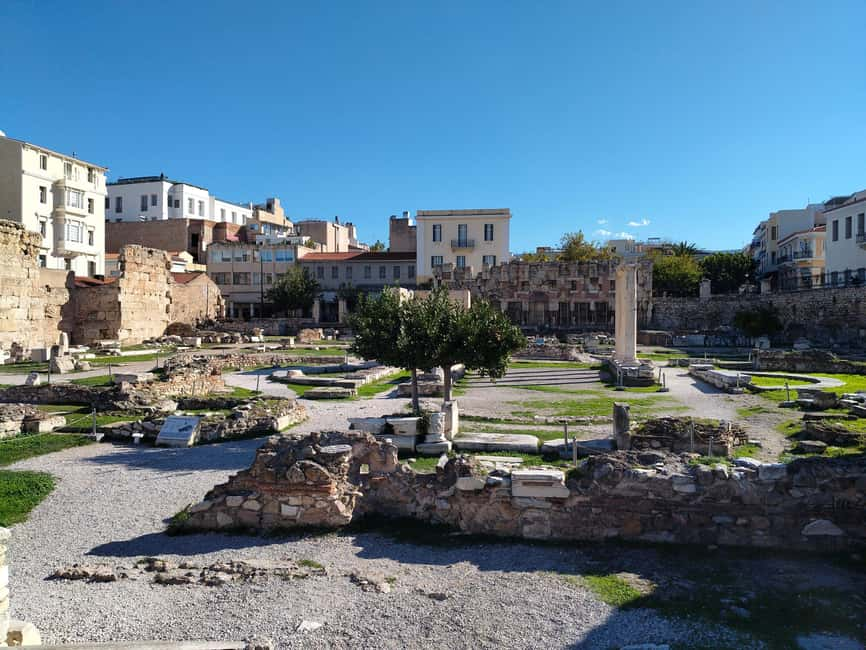
The most striking change in the site’s story came in the 5th century AD, when the central area was transformed into a Christian place of worship. The library no longer served mainly as a book center. Instead, churches occupied the heart of the former complex.
Three churches were built here over time: the Tetraconch Church, a large basilica, and later the Church of the Megali Panagia. Their remains show that the site kept its importance even after its Roman purpose changed.
This is where the audio guide adds real value. Without explanation, the church remains can look like another confusing set of foundations. With context, you can see how one public center was reshaped for a new religious and social life.
The transformation also prevents an overly tidy view of ancient history. Buildings rarely have only one chapter. Hadrian’s Library did not simply rise, serve one purpose, and disappear. It changed with the city around it.
The churches were not decorative afterthoughts. They occupied the central part of the complex and show that the site became a place for worship and community life. When you look across the courtyard, picture not only readers and teachers but also priests and worshippers using the same ground centuries later.
Walking the 100-column peristyle
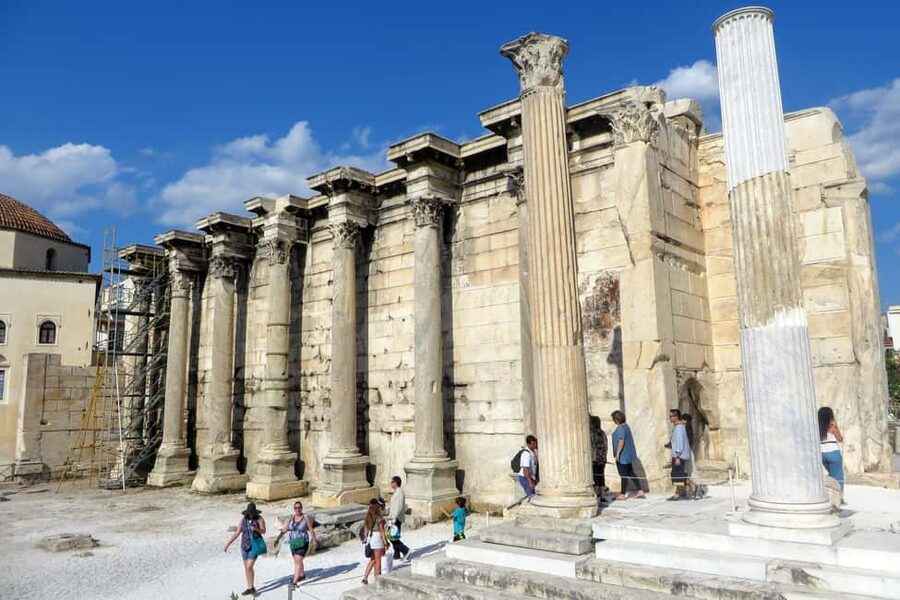
Around the courtyard ran the Peristyle, a covered walkway lined with 100 marble columns. It was both practical and social. The roof protected people from strong sun and rain, while the long route created room for walking, conversation, and informal teaching.
Behind the columns were side chambers used for lectures, small meetings, reading, and official work. These rooms help explain why the building was more than a storage place for books. It was a complete institution with spaces for public movement and smaller, focused activities.
The peristyle is also a good place to slow down and let the layout make sense. Walk the line of the courtyard, notice the relationship between the open center and the side rooms, and consider how many different activities could take place at once.
Because the tour is self-guided, you can pause when a section interests you and move on when it does not. The one-hour duration gives you enough time for a considered visit without taking over your day.
Do not expect a long, formal route led by a guide. You listen through your own phone, using your own headphones, and make your way through the site independently. That freedom suits some people very well. Others will miss being able to ask questions or hear a guide respond to the group.
What the audio guide does well
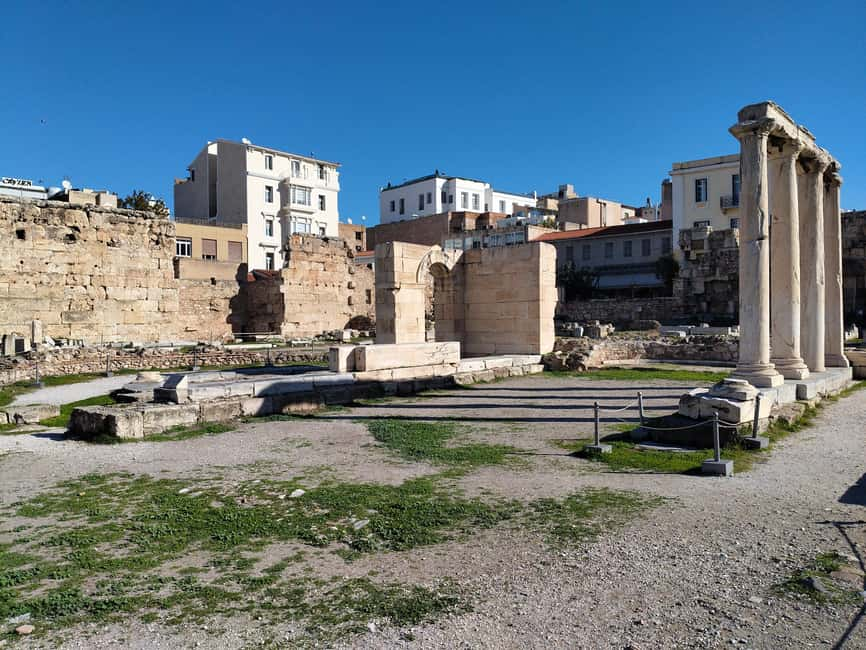
The strongest feature of the audio experience is its use of storytelling. Instead of handing you a string of cold dates, it helps you picture how the building felt when students, teachers, philosophers, priests, and citizens moved through it.
That approach matters at an archaeological site with many missing walls. You need help connecting a column, foundation, or church outline to a real activity. The guide gives those remains a human scale.
The content is available in English, French, German, Italian, Spanish, Dutch, and Chinese. This makes the visit more useful if you are not comfortable with a live tour in English or if you prefer to hear history in your strongest language.
You should download or access the material as instructed before arriving. The web app does not work offline, so you need internet access at the site. A fully charged smartphone or tablet is essential, and you should bring your own earphones or headphones.
The guide cannot replace a live specialist. It will not answer a question about a feature you notice, adjust its pace to your interests, or point out something unexpected in the moment. But for a compact site and a one-hour visit, it gives you a clear route and enough context to make the ruins meaningful.
Timing, comfort, and practical value
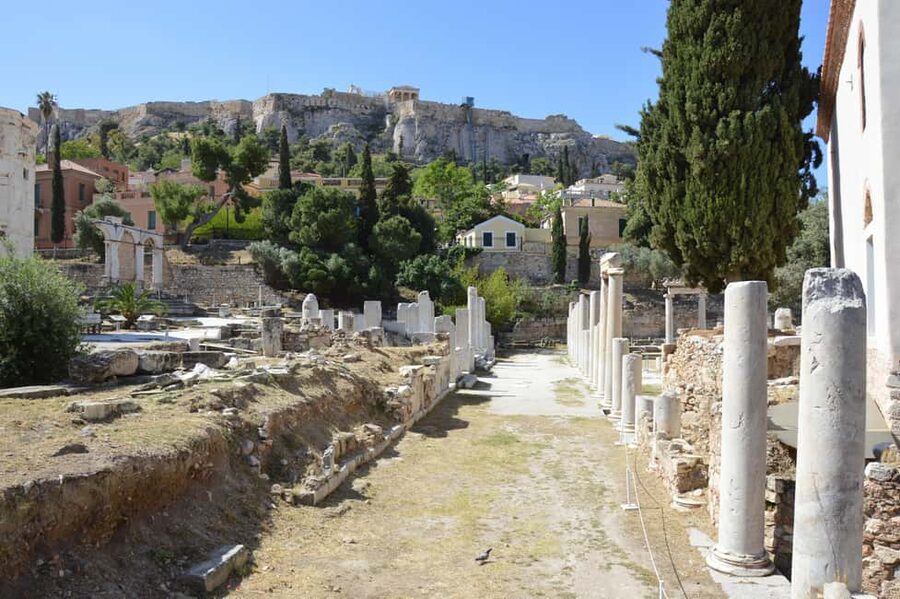
The stated duration is one hour, and that is a sensible amount of time for the main route. You can move through the Propylon, courtyard, church remains, eastern halls, peristyle, and side chambers without rushing too badly.
Your exact starting time depends on availability. Since you are not joining a group at a fixed meeting point, the experience can fit neatly into a day of sightseeing around Monastiraki and the Roman Agora.
The site is best for independent sightseeing. You can stop for photos, replay information, or linger in the courtyard without holding up a tour group. You also avoid the pressure of matching another person’s walking speed.
The tradeoff is preparation. A live guide would arrive with the required information. You must manage your ticket email, phone battery, internet connection, and headphones yourself.
The activity is non-refundable, so make sure your schedule and phone setup are ready before you book. Since the ticket arrives separately by email, save the message or keep access to your inbox when you head to the entrance.
Who should book this experience?
I would choose this visit if you want Roman Athens explained in a compact format and you like exploring at your own pace. It suits first-time visitors who want more than a quick photo, as well as repeat visitors looking for a smaller site between major attractions.
It is especially useful for people who enjoy visual storytelling. The building is partly ruined, and the best parts of the visit come from linking the remains to the library’s former gardens, reading rooms, churches, and covered walkways.
Families with older children may also find the one-hour length manageable, though the value will depend on how much interest they have in ruins and ancient buildings. Comfortable shoes matter for everyone.
I would hesitate if you want a personal guide, a long archaeological lecture, or a fully offline audio tour. You should also think twice if $28 feels steep for a relatively short stop and you mainly want to see the entrance from outside.
Should you book Hadrian’s Library?
Book it if you want a short, well-planned history stop with a multilingual audio guide and easy access from Monastiraki. The story of the site is unusually layered: Roman library, teaching center, Christian worship space, Ottoman administrative area, and modern archaeological site.
The audio guide’s storytelling is the main reason to choose this over a bare entry ticket. It helps you see past the stones and picture the people who used the building. Just bring headphones, water, a charged phone, and a reliable internet connection.
Skip it if you need a live guide or want a larger attraction that fills half a day. For the right visitor, though, this is a practical one-hour addition to central Athens, with enough history to reward a careful look.
FAQ
Where is Hadrian’s Library located?
Hadrian’s Library is in central Athens, next to Monastiraki Square. The entrance is about a two-minute walk from Monastiraki Metro station.
How do I reach the site by metro?
Take the Blue Line to Monastiraki station. From there, walk for about two minutes to Hadrian’s Library.
How long does the visit take?
The stated duration is one hour. The time includes the self-guided route through the main areas of the library complex.
Is a live tour guide included?
No. This is a digital self-guided visit with an audio guide. A live tour guide is not included.
Which languages are available for the audio guide?
The audio guide is available in English, French, German, Italian, Spanish, Dutch, and Chinese.
Do I need to bring headphones?
Yes. Headphones are not included, so bring your own earphones or headphones.
Does the audio guide work offline?
No. The web app needs internet access on site. You should also arrive with a fully charged smartphone or tablet.
How do I receive my entry ticket?
Athenian Tours sends the entry ticket and instructions by email after booking. Check your spam folder if you do not see the message in your main inbox.
New audio tours around Athens
- Temple of Olympian Zeus: Self-Guided Audio Tour on your Phone (without ticket)★ 4.0 · 8 reviews
- Ancient Agora of Athens: A Self-Guided Audio Tour★ 3.5 · 3 reviews
- Self Guided Tour In Athens With 100 Captivating Audio Stories★ 4.0 · 4 reviews
- Athens Ticket Pass: Acropolis & 6 Sites with 5 Audio Guides★ 3.5 · 84 reviews
- Audioguided tour of Athens’ alternative neighbourhood of Exarchia★ 5.0 · 2 reviews
- E-ticket for Kerameikos with Audio Tour on Your Phone★ 5.0 · 4 reviews
- Mycenae, Epidaurus & Nafplio Full-Day V.R audio guided Tour★ 4.5 · 248 reviews
- Athens Acropolis Museum Reserved Entry Ticket and Audio Tour★ 3.0 · 2 reviews
Athens Audio Tours, compared.

Athens: Cape Sounio & Poseidon Temple Trip with Audio Guide
Read our review →
From Athens: Delphi Full Day V.R. Audio Guided Tour
Read our review →
Athens: Acropolis Museum Ticket with optional Audio Guide
Read our review →
From Athens: Small-Group Delphi, Museum & Arachova Day Trip
Read our review →
Athens: Peloponnese Highlights Day Trip and V.R. Audio Guide
Read our review →
Athens: National Archaeological Museum Ticket w/ Opt. Audio
Read our review →
Acropolis & Parthenon Entrance Ticket w/optional SG Audio Tours
Read our review →Browse the lists this tour appears in