
Review · FLORENCE
Florence: Timed Entry to Michelangelo’s David + Audio App
Michelangelo’s David is the star here, and seeing the 5.17-meter marble figure in person is a very different experience from seeing it in a book. The reserved time slot helps you get through Florence’s famously difficult ticket scene, while the digital audio guide adds context without tying you to a group.
I like the freedom to move at my own pace, and I like that the visit includes more than David: Michelangelo’s unfinished Prisoners, St. Matthew, Renaissance paintings, and an unexpected collection of historic instruments. The main drawback is that the ticket process can be confusing, especially if you are unsure where the red-point line begins or forget to download the audio before entering.
Key points at a glance
- David is the clear centerpiece: See Michelangelo’s famous biblical hero in the Tribune, where the statue’s scale and detail are easier to appreciate than reproductions suggest.
- Timed entry saves valuable Florence time: Join the red-point line for prepaid reservations instead of the much slower ticket-buying line.
- The audio app works best when prepared in advance: Download the itinerary and tracks before entering, since Wi-Fi may not work inside.
- The gallery offers more than one masterpiece: Look for the Prisoners, St. Matthew, works by Bartolini, and rooms of paintings and sculptures.
- The museum is compact but rewarding: You can see the main collection without giving up half a day, though busy periods can make the entrance feel crowded.
- This is self-guided, not a tour group: You receive an audio app rather than a live guide, so you control the pace and order of your visit.
Why timed entry matters at the Accademia Gallery
Florence’s Accademia Gallery is not a large museum, but it holds one of Italy’s most famous works of art. That combination creates a familiar problem: many people want to see David, and everyone tends to arrive at once.
For $33 per person, this experience is mainly a time-saving purchase. You are paying for a reserved entrance and a digital audio guide, not for a private tour or a live expert. If you tried to buy a ticket at the museum during a busy period, the savings in waiting time could easily matter more than the audio app itself.
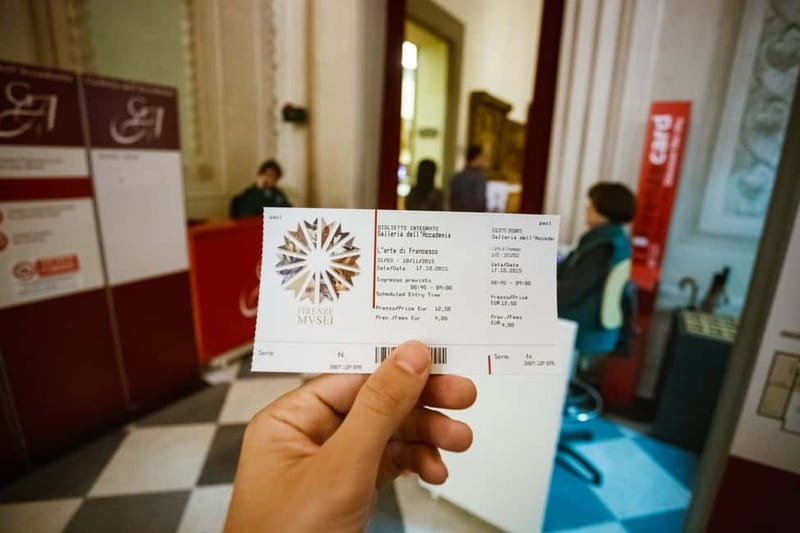
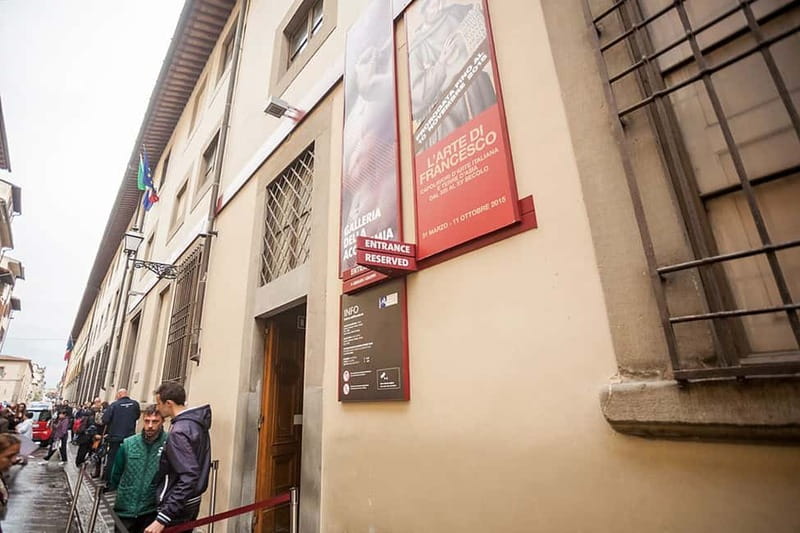
Your chosen date and time are binding. Plan to arrive about 15 minutes early, then find the area marked for prepaid reservations. For groups of up to six, use the red point. Groups of seven or more should use the green point. The signs and staff make the system clearer once you are there, but the written directions can feel vague before arrival.
Allow time to exchange your voucher for the physical museum ticket. The collection point is across from the entrance, and you still need to pass security. The handoff can take only a few minutes, but you do not want to arrive at the last second.
The red line is not a magic door through every delay. It can still build up outside, especially in warm weather or during busy months. Some people arrive 30 minutes early, and the waiting area may have little shade. Even so, the prepaid line generally moves much faster than the line for people buying tickets at the museum.
More Smartphone Audio Tours in Florence
- Florence: Uffizi Priority Ticket & Masterpieces Audio App
★ 4.2 · 6,402 reviews - Florence: Michelangelo’s David Entrance Ticket and Audio App
★ 4.3 · 1,901 reviews - Florence: Uffizi & Accademia Priority Tickets with Audio App
★ 4.4 · 1,253 reviews
Meeting Michelangelo’s David in the Tribune
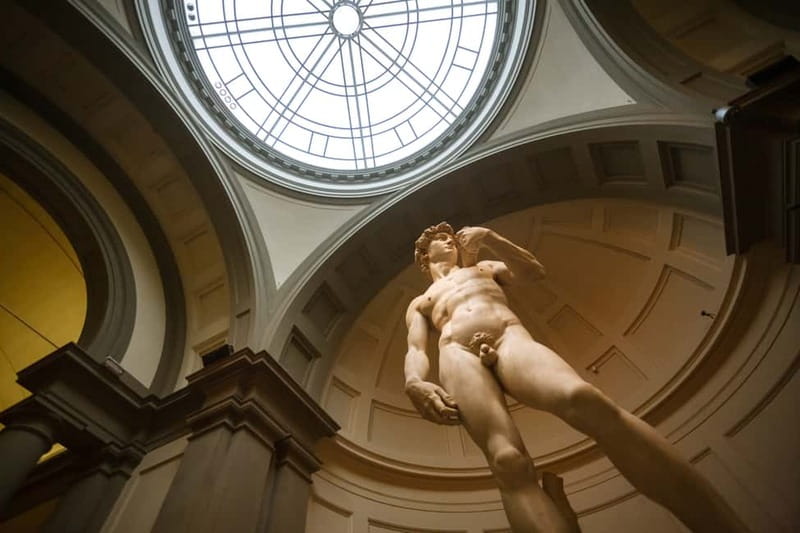
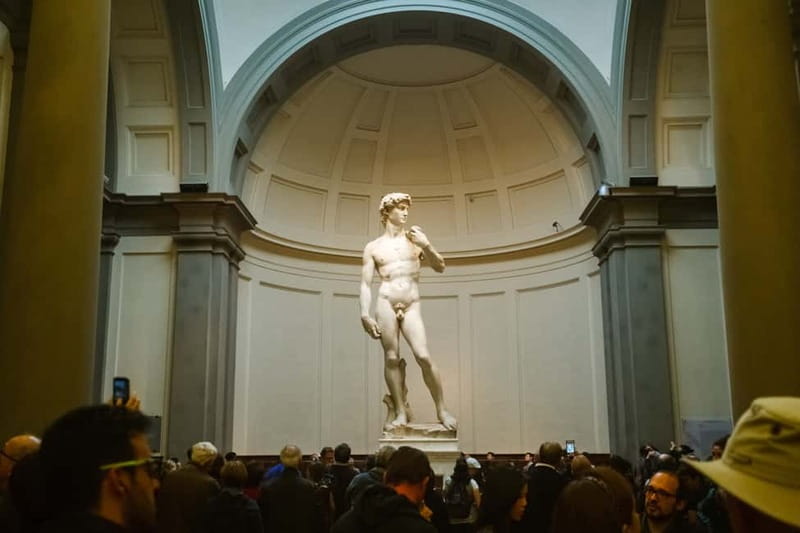
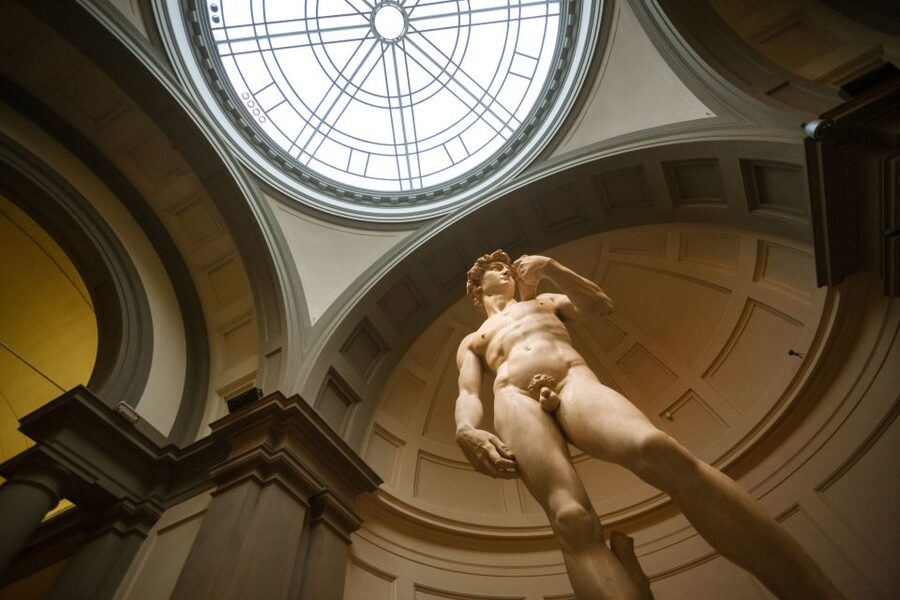
You first notice David’s size. At 5.17 meters, he is far larger than most people expect, and his proportions make sense only when you see him in the room. The marble figure is calm but tense, caught just before his confrontation with Goliath.
Michelangelo carved David between 1501 and 1504. Florence had long used the biblical hero as a favored subject, but this statue took on a wider civic meaning. David came to represent the Republic of Florence, a small independent city-state defending its freedom against stronger rivals and the power of the Medici family.
That political meaning gives the statue more weight than its fame alone. You are not simply looking at an idealized nude figure. You are seeing an artwork that became a symbol of Florence’s civic identity.
Take time to look beyond the face. Notice the turn of the torso, the alert posture, the hands, and the way the figure seems ready to act. The details reward a slow circuit around the statue, though the room can become crowded and staff may control where people stop.
The audio guide’s short explanations are useful here. The tracks are generally around two or three minutes, enough to add background without turning the visit into a lecture. You can listen to the central explanation, pause, and then spend as long as you like looking.
David is the reason most people book this visit, and he deserves that attention. Still, try not to rush away once you have taken the obvious photographs. The statue changes as you move around it, and the room gives you a chance to see why Michelangelo’s work has held public attention for centuries.
Michelangelo’s unfinished Prisoners and St. Matthew
The unfinished sculptures known as the Prisoners offer a striking contrast to David. Instead of a fully released figure, you see forms that appear to be struggling out of the marble.
Their unfinished surfaces let you think about Michelangelo’s process. Parts of the figures remain rough, while other areas suggest bodies emerging from the stone. The effect is not polished in the usual museum sense, but that is exactly what makes these works important.
St. Matthew is another unfinished Michelangelo sculpture in the collection. Together, these pieces give you a better sense of the artist’s working method than David alone can provide. David shows the finished ideal. The Prisoners and St. Matthew let you see the stone, the labor, and the choices left visible.
I would listen to the audio explanation here, then put your phone away for a moment. The rough surface is easy to miss if you are concentrating only on the outline of the figures. Walk slowly and look at how much of the body is complete and how much remains tied to the block.
Paintings, sculptures, and the rooms beyond David
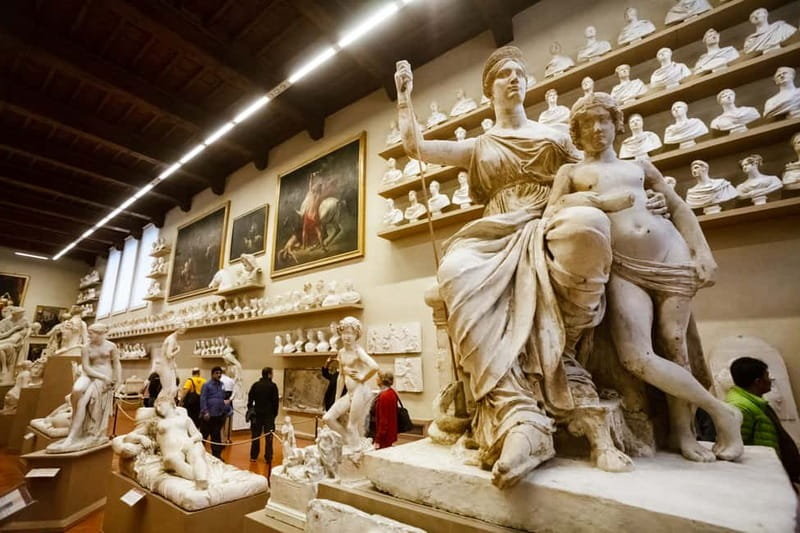
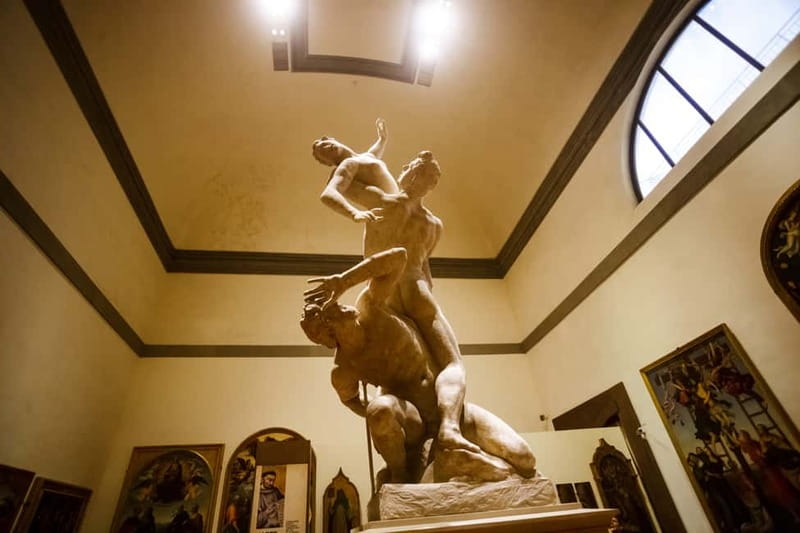
After the Michelangelo rooms, the gallery continues with paintings and sculptures collected from the Academy of Design, the Academy of Fine Arts, and former convents. The museum is manageable in size, so you can explore these rooms without needing a full day.
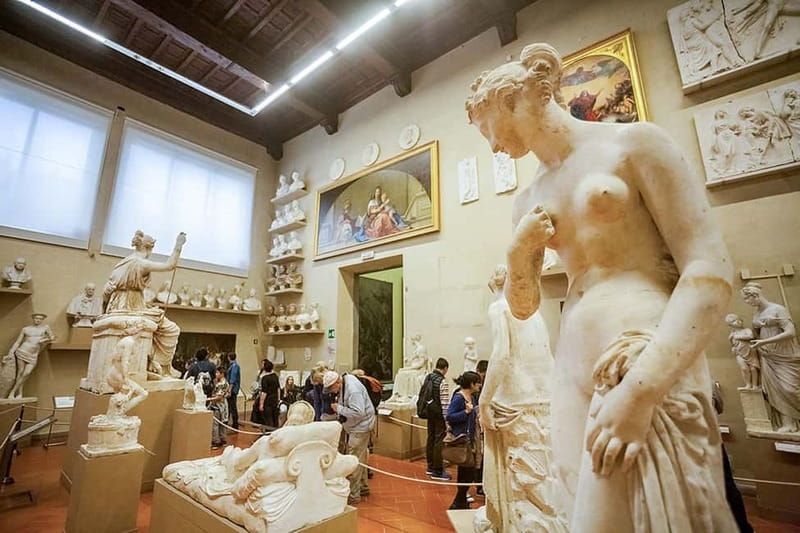
The collection includes works by Bartolini and other Renaissance artists. These are not merely filler between the entrance and David. They help place Michelangelo within Florence’s wider artistic culture, where sculpture, painting, religious commissions, and civic identity were closely linked.
One room filled with busts can be especially rewarding. It is easy to focus only on the famous statue, but the portrait sculptures show a different side of Italian art. Look for the way artists handled hair, clothing, expressions, and the structure of the face.
The gallery also contains paintings, sculptures, and decorative works from religious and academic collections. You might find the religious subjects less immediately familiar if you do not know the stories behind them. That is where the audio app earns its keep, though you should not feel obliged to listen to every track.
A practical approach is to visit David first, then return to the other rooms. The statue is likely to draw your attention at once, and seeing it before the gallery becomes more crowded can make the rest of the visit calmer. If you have time, use the audio guide for the works that catch your eye rather than trying to complete every stop.
More Smartphone Audio Tours in Italy
- Florence: Duomo Cathedral Timed Entry Ticket & Audio App
★ 3.7 · 472 reviews - Florence: Accademia Gallery David Entry & Audio Guide App
★ 4.2 · 406 reviews - Florence: Cathedral & Brunelleschi’s Dome Ticket & Audio App
★ 4.4 · 148 reviews - Uffizi Gallery Reserved Ticket & Digital Audio Guide App
★ 4.3 · 69 reviews
The Cherubini Conservatory’s musical instruments
The collection of old musical instruments is an unexpected part of the Accademia. These instruments come from the Cherubini Conservatory’s Department of Musical Instruments and add a different kind of interest to the museum.
If you have come only for sculpture, the instrument rooms provide a useful change of pace. You move from marble bodies and painted religious scenes to objects shaped for sound, performance, and courtly or academic use.
This section may not hold your attention as long as David, but it gives the museum more range. It also reminds you that Florence’s artistic life was not limited to painting and sculpture. Music belonged to the same world of patronage, craft, study, and public display.
The audio guide can help explain what you are seeing, but the written instructions are not always perfectly matched to the museum’s exhibit numbers. One practical tip is to check the app number against the artwork or display before pressing play. If the numbering seems off, skip ahead rather than wasting time trying to force the itinerary to match every label.
Using the digital audio guide
The audio app is a good middle ground between a silent museum visit and a formal guided tour. You can choose your language, listen to short explanations, and move on whenever you are ready.
There is no live guide included. That matters if you want to ask questions or have someone lead you through the museum in a set order. On the other hand, the self-guided format suits solo visitors and families who do not want to stay with a group.
Download the full itinerary and audio tracks before you enter. Several practical details matter here:
- Museum Wi-Fi may not be available.
- The app can be used offline after the content is downloaded.
- The audio descriptions are short, often about two or three minutes.
- Navigation can be awkward in places.
- Some exhibit numbers may not match the app perfectly.
Use headphones or earbuds if you have them. The audio is easier to follow in a crowded room, and you can keep your hands free while looking at the sculpture.
I would not treat the app as the main reason to buy this ticket. The timed entry is the core value. The audio is a helpful extra, especially if you have not studied the Accademia beforehand, but the experience still works if you decide to explore quietly.
What the arrival process feels like
The meeting point is not a conventional tour office. You go to the appropriate colored point, wait for your time slot, exchange the voucher, and proceed through security.
For some visitors, the process takes less than five minutes once the correct line is found. For others, the outdoor queue feels disorganized, particularly when several 15-minute time slots overlap. If an earlier group is still being processed, staff may ask you to wait until your own time is called.
Bring your passport or ID card. The instructions say an accompanying person must also have an admission ticket, so do not assume that someone can simply walk in with the ticket holder.
The attraction is wheelchair accessible. Still, the outside waiting area may be uncomfortable in direct sun or rain, and you should leave enough time for the ticket exchange rather than treating the timed entry as the exact moment you reach the door.
Once inside, the museum is clean and generally well managed. The gallery itself is compact, which makes it possible to see the main works without exhausting yourself. Crowds vary. Even off-season visits can be busy, while a quiet winter time slot may give you more room around David.
Is $33 good value?
The $33 price is reasonable if you care about seeing David at a predictable time and avoiding the standard ticket line. Florence is easy to enjoy on foot, but your time is still limited. Losing an hour or more outside a museum can cost more than the difference between a basic ticket and a reserved package.
The value is strongest during busy periods, rainy days, and short city breaks. It is also useful if you are booking close to your visit and do not feel confident navigating the museum’s own ticket system.
The value is less clear if you are visiting during a quiet period and can obtain a direct ticket at a lower price. In that case, you are paying for convenience, reservation handling, and the audio app. The digital guide is not a replacement for a live art historian.
Your ticket is valid for one day, but the selected time slot controls entry. Free cancellation is available up to 24 hours before the visit, and the reserve-now, pay-later option can help if your Florence plans are still shifting.
Who should book this Accademia visit?
I would choose this experience for a first visit to Florence, a short stay, or any trip where David is high on your list. It is also a good match for solo visitors who want to explore without following a guide, and for couples or families who prefer to move at different speeds.
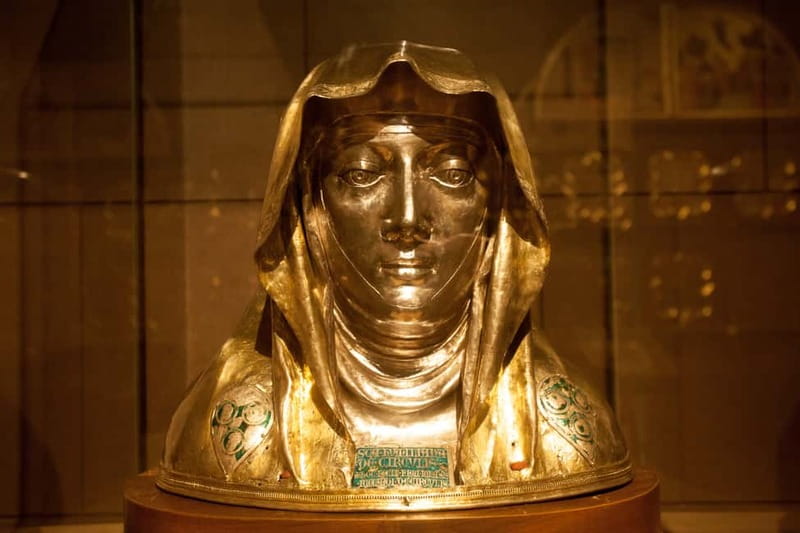
It works well for art lovers who want to see Michelangelo’s finished and unfinished work in the same visit. The Bartolini sculptures, paintings, busts, and musical instruments give you enough variety to make the museum worthwhile beyond one famous statue.
I would think twice if you want a deep, question-and-answer discussion with an expert. This is not a private tour, and the app’s navigation has a few rough edges. I would also be cautious about arriving late. The time slot is binding, and missing it can mean losing the point of the reservation.
Should you book it?
Book this timed Accademia ticket if your priority is a smooth, scheduled visit to David and you value your time in Florence. Arrive 15 to 30 minutes early, find the red point, carry identification, and download the audio before you enter.
The museum is not huge, but David, the Prisoners, St. Matthew, the busts, paintings, and old instruments make it more than a one-statue stop. For $33, you get practical access and enough context to make the visit meaningful. If a lower-priced direct ticket is available and you are comfortable handling the reservation yourself, compare it first. Otherwise, this is a sensible way to remove one of Florence’s most annoying ticket problems.
FAQ
What does this Accademia Gallery experience include?
It includes a reserved priority-entry ticket to the Accademia Gallery and a digital audio guide app.
Is a live guide included?
No. This is a self-guided visit using a digital audio guide. No live guide is included.
Can I see Michelangelo’s David with this ticket?
Yes. The ticket gives you entry to the Accademia Gallery, where Michelangelo’s 5.17-meter marble statue of David is displayed.
What other Michelangelo works can I see?
You can see the unfinished sculptures known as the Prisoners and Michelangelo’s St. Matthew, along with David.
Where do I queue with a prepaid ticket?
For bookings of up to six people, queue at the red point. Groups of seven or more should use the green point.
How early should I arrive?
You can collect your entrance ticket 15 minutes before your allotted entry time. Arriving early is sensible because you need to find the correct queue and exchange your voucher.
Do I need identification?
Yes. Bring your passport or ID card.
Will the audio guide work without Wi-Fi?
You should download the itinerary and audio content before entering because Wi-Fi may not be available inside the museum. The downloaded material can then be used offline.
Can I cancel the booking?
Yes. You can cancel up to 24 hours in advance for a full refund. You can also reserve now and pay later, subject to the booking terms.
New audio tours around Florence
- Florence: Uffizi Gallery Timed Entry Ticket with Audio★ 3.0 · 3 reviews
- Florence: Uffizi Gallery Audio Guided Tour led by Tour Leader★ 3.5 · 6 reviews
- Uffizi Combined Ticket:UFFIZI, PITTI, BOBOLI & digital audioguide★ 4.0 · 26 reviews
- Uffizi Gallery Audio-Guided Visit with optional Accademia Gallery★ 3.5 · 42 reviews
- Florence: Uffizi Gallery Reserved Ticket & Digital Audio Guide★ 4.5 · 3 reviews
- Accademia Gallery Skip the line Tickets with Audio Guide★ 4.0 · 10 reviews
- Florence Walking Tour with Audioguide on Your Smartphone★ 4.5 · 9 reviews
- Florence: Accademia entry tickets + optional audio guide★ 4.0 · 228 reviews
Florence Audio Tours, compared.

Florence: Uffizi Priority Ticket & Masterpieces Audio App
Read our review →
Florence: Palazzo Vecchio Entrance Ticket & Audioguide
Read our review →
Florence: Uffizi Gallery Timed Entry Ticket & Audio Guide
Read our review →
Florence: Michelangelo’s David Entrance Ticket and Audio App
Read our review →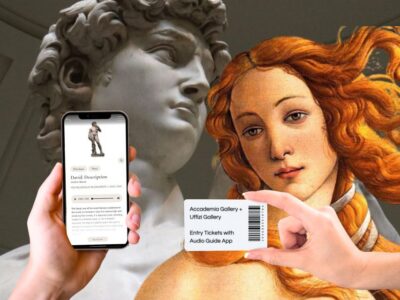
Florence: Uffizi & Accademia Priority Tickets with Audio App
Read our review →
Florence: Eco-Friendly Golf Cart City Tour with Audio Guide
Read our review →
Florence: Uffizi Gallery Reserved Entry Ticket & Audioguide
Read our review →
Florence: Palazzo Vecchio Entry Ticket with Audio Guide
Read our review →Browse the lists this tour appears in