
Review · CRETE
Heraklion Self-Guided Audio Tour
Heraklion’s past comes in layers: Minoan palaces, Venetian trade, Ottoman rule, Orthodox faith, and Cretan resistance. This self-guided tour ties those layers together across nine central sights, with stories about the port, Koules Fortress, the Lion’s Fountain, churches, and museums. I like the complete freedom to choose your route and the very low $6 price. I also like that the links remain valid for up to six days, so you are not forced to rush.
The tradeoff is the audio quality and depth may not suit everyone. One available rating praised the interesting stories and the pleasure of walking Heraklion’s winding streets, while another found the narration repetitive and too general. You should treat this as an inexpensive orientation tool, not a substitute for a live historian or a detailed museum guide.
Key points before you book
- Nine sights in one central Heraklion route: You cover the Venetian Port, Koules Fortress, four major museums and churches, the Loggia, and Morosini Fountain.
- $6 gives you flexibility: The price is modest, but entry tickets are not included at the Port, Koules Fortress, Archaeological Museum, or Natural History Museum.
- Your phone is the guide: You receive a SoundCloud playlist and a Google My Maps itinerary, with no extra transport or guide meeting required.
- Three to nine hours is realistic: You can complete the walk in one long day or spread it across several days during the six-day link period.
- English is the only listed language: The activity is offered in English, and no named guide leads you in person.
- Bring the basics: You need a charged smartphone, internet access, and headphones or earphones.
Heraklion in nine stops, not one rushed walk
This experience is best understood as a collection of short audio chapters rather than a tightly timed walking tour. Each stop has an estimated 20-minute narration, but the full outing takes about three to nine hours depending on museum visits, ticket lines, meals, photographs, and how long you linger.
You can begin and end anywhere in Heraklion. The suggested order begins at the Venetian Port, but you can start at the Archaeological Museum if you arrive by bus, begin near the central churches, or split the route around a hotel break.
The audio is not GPS-guided. That distinction matters. The map shows the nine locations, but it will not automatically tell you when to turn or start the next recording. You choose the order, open the relevant stop, and manage the walk yourself.
More Self-Guided Audio Tours in Greece
- Athens: Acropolis Ticket & Optional Self-Guided Audio Tours
★ 4.1 · 2,542 reviews - Santorini: Akrotiri Ticket with Optional Self-Guided Audios
★ 4.1 · 298 reviews - Acropolis & Parthenon Admission Ticket w/ self guided audio tours
★ 3.5 · 172 reviews
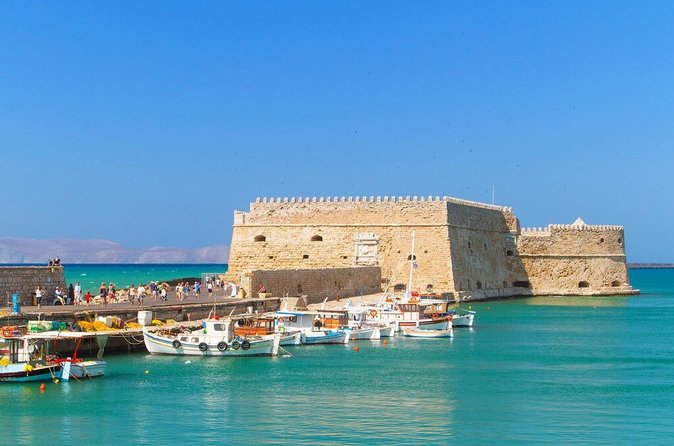
Venetian Port and Koules Fortress: Heraklion’s seaward defenses
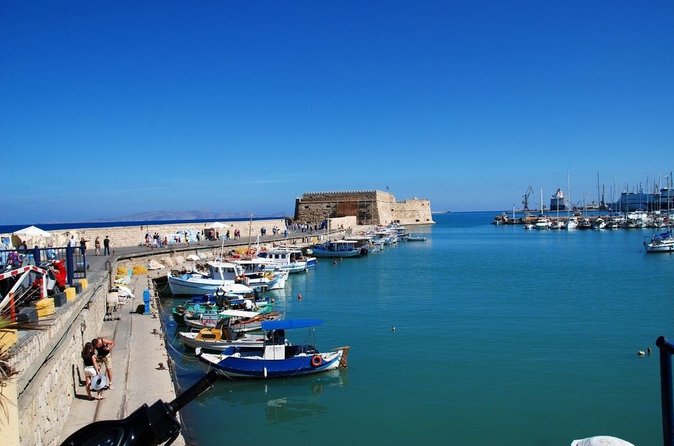
The Venetian Port is a strong opening because it gives you the city’s basic story in one view. The narration places you where ships arrived with goods from across the eastern Mediterranean and explains how the harbor grew from an earlier settlement into a major Venetian outpost.
You will hear about maritime trade, dock workers, pirate attacks, and the port’s role in political struggles. The audio also refers to tunnels beneath the harbor, smuggling, and revolutionary activity. Treat such details as part of the storytelling rather than proof that every underground feature is open or visible. Admission is not included at this stop.
Koules Fortress, also called Castello del Molo, sits at the harbor entrance and gives the first stop a physical anchor. The audio explains the fortress’s defensive design, its use as a prison, and the long Ottoman siege that ended Venetian rule in 1669.
This is one of the more useful places to have context before looking around, since a massive stone fortress can otherwise feel like a simple photo stop. You will hear about Venetian soldiers, prison inscriptions, defensive systems, and a local ghost story. Entry is not included, so check the fortress opening arrangements before building your day around an interior visit.
If you have limited time, the port and fortress still work as an outdoor pair. If you have several hours, pay for the fortress only if you want to inspect the interior rather than simply view it from the waterfront.
Archaeological Museum: the Minoan centerpiece
The Heraklion Archaeological Museum is likely to be the most important paid stop on the route. Its collection covers roughly 5,000 years of Minoan civilization, and the audio aims to turn objects into stories about religion, technology, social order, and palace life.
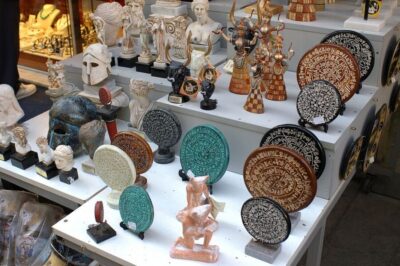
Expect attention to the snake goddess figures, Minoan art, the Phaistos Disc, and theories about the collapse of the palace culture. The Phaistos Disc remains undeciphered, so the recording can introduce the mystery without pretending to offer a final answer.
The museum deserves more than the listed 20-minute audio segment if you want to look carefully at the objects. I would allow extra time here, especially if Bronze Age Crete is your main reason for coming to Heraklion. The short recording can help you decide what deserves attention, but it cannot replace the labels, galleries, and your own pace inside the museum.
Admission is separate. That is an important part of the value calculation: the tour costs only $6, but the total expense rises once you add the museums and fortress you choose to enter.
Agios Titos Church and the Loggia: two compact Venetian-era stops
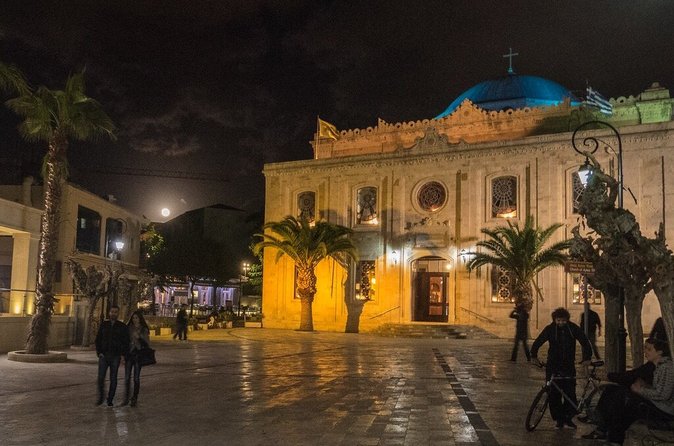
Agios Titos Church adds a religious angle to the city’s changing rulers. The audio follows the church’s connection to Saint Titus, Saint Paul’s companion, and explains how the building served as a mosque during Ottoman rule before returning to Christian use.
The story of Saint Titus’s skull relic traveling from Venice back to Crete gives this stop a human and political dimension. The recording also points to restoration work and a mix of architectural styles. Admission is free, making this an easy stop to include even on a short walk through central Heraklion.
The main practical point is that churches require respectful behavior. Keep the audio low or pause it inside if services or prayer are taking place. Since there is no admission charge, you can return later if the first visit feels hurried.
The Loggia was once a center of Venetian commercial authority. Here, the audio shifts from religion to business, explaining how merchants and officials handled trade, finance, and political decisions.
You will hear about carved symbols, construction methods, private meetings, and the social drama of Renaissance commerce. Some of the material is presented in a colorful, story-driven way, including bankruptcy disputes and romances among Heraklion’s elite. The Loggia is free to visit, and its compact size makes it a sensible stop between larger museums.
Same sights, a different narrator:
- Athens: Acropolis Ticket with Optional Audio or Live Guide
★ 4.2 · 11,055 reviews - Athens: Cape Sounio & Poseidon Temple Trip with Audio Guide
★ 4.4 · 4,521 reviews - Athens: Acropolis Ticket with Audio Guide
★ 4.0 · 3,575 reviews - From Athens: Delphi Full Day V.R. Audio Guided Tour
★ 4.6 · 3,028 reviews
Morosini Fountain: engineering and city life
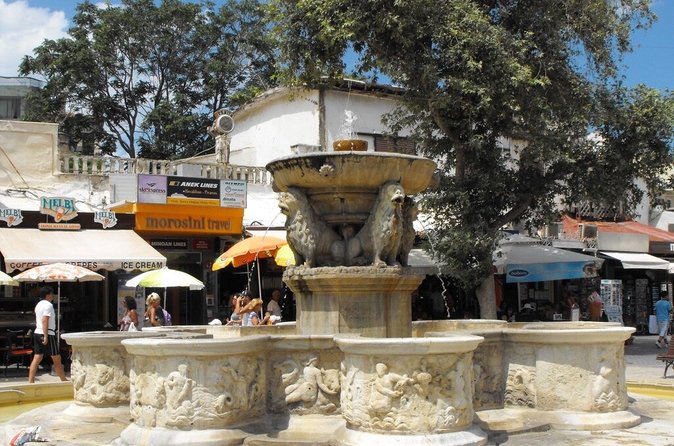
Morosini Fountain, usually called the Lion’s Fountain, is one of the easiest places to find in central Heraklion. Four lions surround the basin, and the audio explains their political symbolism and the Venetian effort to present power in the heart of the city.
The more useful story here is the water system. Fresh water was brought from Mount Juktas through an aqueduct, a major improvement for a growing town. That detail helps you see the fountain as public infrastructure, not just a decorative landmark.
The audio also refers to supposed chambers beneath the fountain and a tragic romance involving a Venetian nobleman and a local Greek woman. I would listen with a little caution when the narration turns to secret rooms or dramatic legends. Such material can make a short stop memorable, but it should not be confused with firmly established history unless the site itself confirms it.
The fountain is free, central, and quick to visit. It is a good place to pause, get a drink, and decide whether you want to continue to St. Minas or take a meal break.
St. Minas Cathedral: Orthodox faith and modern Cretan identity
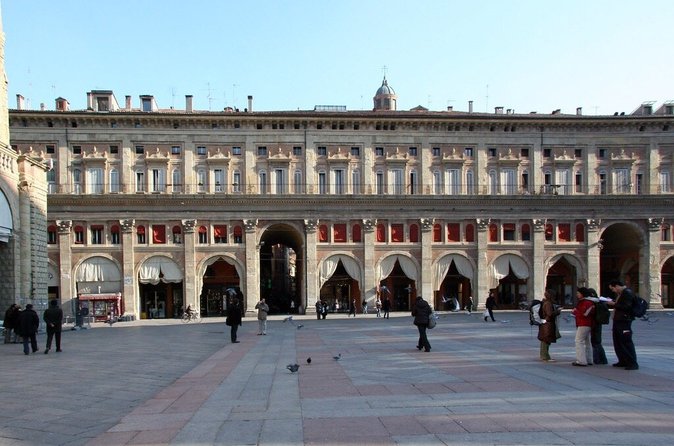
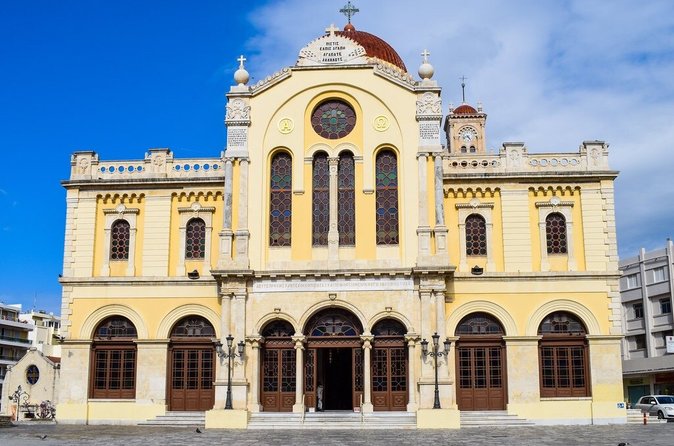
The Cathedral of St. Minas is the largest Orthodox cathedral in Crete, and it gives the route a strong contrast with the Venetian buildings. The audio connects the cathedral with early Christian worship, Ottoman-era religious pressure, the return of Cretan emigrants, and the funding of the building after Ottoman rule.
The focus on icons and Orthodox traditions is valuable if you are unfamiliar with the visual language of the church. You will also hear about resistance fighters, underground spaces, and the cathedral’s role during the Second World War.
Some of those subjects are difficult to verify during a quick visit, since you may not be able to see every crypt or historic feature mentioned in the recording. I would use the audio to frame the visit, then look closely at the iconography and architecture rather than trying to chase every dramatic detail.
There is no admission charge listed for St. Minas. Dress and behavior should match an active place of worship, and the audio should be kept discreet.
Historical Museum of Crete: from Venetian rule to resistance
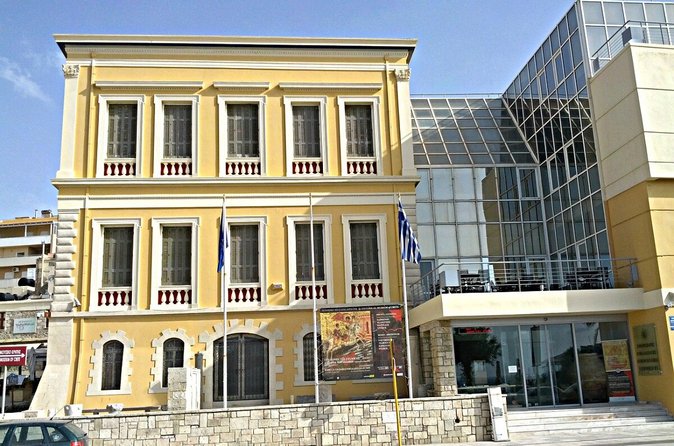
The Historical Museum of Crete helps bridge the gap between ancient artifacts and modern Cretan life. Its material covers resistance, revolution, migration, local traditions, weaving, musical instruments, and the political struggles that shaped the island.
The audio highlights the 1821 Greek Revolution, cave hideouts, coded messages, and support networks created by Cretans living in America. Those themes are useful because they show that the island’s history was shaped not only by foreign rulers, but also by local resistance and people living abroad.
The museum is listed as free for this experience, but the tour does not include entry fees where required. Check the museum’s current admission arrangements rather than assuming the listing’s free label guarantees free entry at your chosen time.
This stop rewards a slower pace. The 20-minute recording gives you a route through the subject matter, but a museum about resistance and daily life can easily take longer. If you are interested in Cretan identity, this is one of the stops I would not cut.
Natural History Museum: Crete as an island laboratory
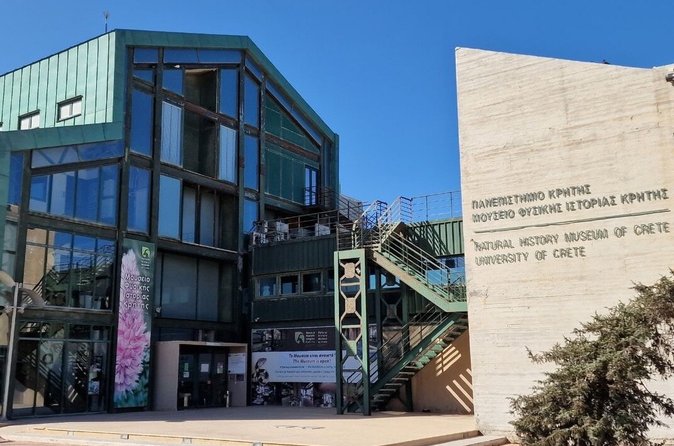
The Natural History Museum of Crete changes the subject again, moving from human conflict to geology and wildlife. The audio explains how isolation shaped species on Crete and links earthquakes, tsunamis, volcanic events, and agriculture to the island’s development.
You will hear about endemic animals, including the Cretan wild goat, along with paleontological discoveries and modern conservation. This makes the museum a useful choice for families or anyone who wants a break from churches, fortresses, and archaeological objects.
Admission is not included. The stop may feel less essential if your time is short and your main interest is Minoan archaeology, but it adds breadth to the route. It reminds you that Crete’s story did not begin with the first palace or end with the last occupying power.
How the phone setup works in real use
Before your selected date, you receive two private links through the booking platform’s messaging system. One opens a SoundCloud playlist with the nine audio tracks. The other opens a Google My Maps itinerary with headphone icons and individual links for each stop.
Use a regular web browser such as Safari or Chrome for the materials. The instructions specifically direct you to open the map in a browser rather than the Google Maps app. You do not need to download another tour application, though you do need internet access to open the links and play the audio.
The links remain valid for up to six days. That is the feature I value most after the low price, since you can listen to a museum chapter one day, visit a church the next, and return to the port later.
Download or test the links before leaving your accommodation if possible. Check that your phone is charged, bring headphones, and review the playlist so you know which locations interest you most. Since the tour is not GPS-guided, do not assume the audio will direct you automatically from one landmark to the next.
What $6 really buys you
At $6 per person, this is inexpensive even if you use only a few of the recordings. The price buys access to the audio content and map, not entry to paid attractions, transport, or a person walking beside you.
The value is strongest if you enjoy setting your own pace and want background stories without committing to a fixed departure time. It is also useful for a private group, since only your party participates and nobody else controls the route.
The value is weaker if you expect a polished, deeply researched narration at every stop. One rating described the stories as interesting and found the winding city enjoyable. Another felt that the narration repeated broad points and lacked specific historical detail. With only two ratings and an overall score of 3, you should keep expectations measured.
I would buy it for the flexibility, the map, and the low cost. I would not buy it expecting a live guide’s ability to answer questions, adjust the route, or explain a confusing object in front of you.
Timing, route choices, and who will like it
A three-hour visit is possible if you focus on outdoor sights and a few central interiors. The full nine-stop experience can take nine hours once you add museum time, breaks, and entry arrangements.
You can divide the route into sections:
- Harbor section: Venetian Port and Koules Fortress.
- Central historic section: Agios Titos, Loggia, and Morosini Fountain.
- Museum and cathedral section: Archaeological Museum, St. Minas, Historical Museum, and Natural History Museum.
The experience suits independent visitors, repeat visitors who want more context, and anyone who dislikes rigid group schedules. It also suits a private group that wants to pause for coffee or lunch without holding up a guide.
You may prefer a live tour if you want detailed answers, firm navigation, or a specialist focused on archaeology, architecture, or religious history. The English-only format will not work if you need another language.
The activity is described as suitable for most people and near public transportation, but no pickup or drop-off is provided. Plan your own way to Heraklion and between stops.
Should you book the Heraklion audio tour?
Book it if you want a cheap, flexible introduction to central Heraklion and are comfortable operating your own phone. The strongest reasons are the $6 price, nine-location coverage, free route planning, and six-day access window.
Skip it if you want guaranteed scholarly depth or a guide who can respond to questions. The conflicting feedback about repetition means you should see the audio as a useful companion, not the main reason to visit the city’s museums.
One final caution: the booking is non-refundable and cannot be changed after purchase. Confirm that English works for you, check your travel date, and make sure your phone and headphones are ready before committing.
FAQ
How much does the Heraklion Self-Guided Audio Tour cost?
The stated price is $6 per person. Entry fees, where required, are separate.
How long does the tour take?
The approximate duration is three to nine hours. You can also split the stops across several days because the private links remain valid for up to six days.
Is the tour guided by a person?
No. It is a private self-guided audio tour. You choose the start point, end point, order of attractions, and length of each visit.
What do I receive after booking?
You receive a private SoundCloud playlist containing the nine audio guides and a private Google My Maps itinerary showing the attractions and individual audio links.
What should I bring?
Bring a fully charged smartphone, headphones or earphones, and internet access. The instructions recommend opening the links in a web browser.
Are attraction tickets included?
No. Entry is not included for the Venetian Port, Koules Fortress, Heraklion Archaeological Museum, or Natural History Museum. Agios Titos Church, the Loggia, Morosini Fountain, St. Minas Cathedral, and the Historical Museum of Crete are listed as free stops, though current access arrangements can change.
New audio tours around Greece
- Kos Scavenger Hunt and Highlights Self Guided Audio Tour★ 4.5 · 17 reviews
- Half-Day Ancient Olympia VR Audio Tour from Katakolo Cruise Port★ 3.5 · 57 reviews
- E-Ticket to Heraklion Archaeological Museum with Audio Guide★ 4.5 · 26 reviews
- Knossos Palace & Archeological Museum: E-Tickets with Audio Tours★ 4.0 · 18 reviews
- Kasos Audio-Tour from Karpathos by Art and Walk★ 4.5 · 4 reviews
- Delphi: Self-guided Audiovisual Tour with 3D Representations★ 5.0 · 5 reviews
- Delphi Self-guided Audio Tour on Your Phone (no ticket)★ 3.5 · 10 reviews
- Delphi: Archaeological Site & Museum Ticket with Audio★ 3.5 · 24 reviews
Crete Audio Tours, compared.
Crete: Knossos Palace Entry Ticket with Optional Audio Guide
Read our review →
Crete: Knossos Palace and Museum E-Tickets with Audio Guides
Read our review →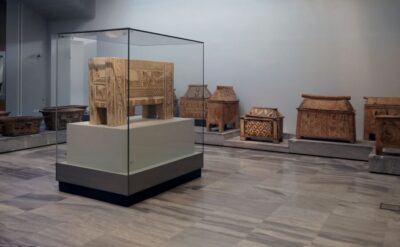
Heraklion Archaeological Museum Ticket & Audio Guide
Read our review →
Heraklion: Palace of Knossos 3D Virtual Audio Tour by Tablet
Read our review →
E-Ticket & Audio Tour for Knossos Palace: Unlock Minoan Majesty
Read our review →
Chania’s Clash of Empires: A Self-Guided Audio Tour
Read our review →
Knossos Palace: Self-Guided Audio Tour on your Phone (without ticket)
Read our review →
An audio tour of Rethymno: From Ancient Greece to modern times
Read our review →Browse the lists this tour appears in