
Review · ISTANBUL
Istanbul: Cistern of Theodosius Entry Ticket and Audio Guide
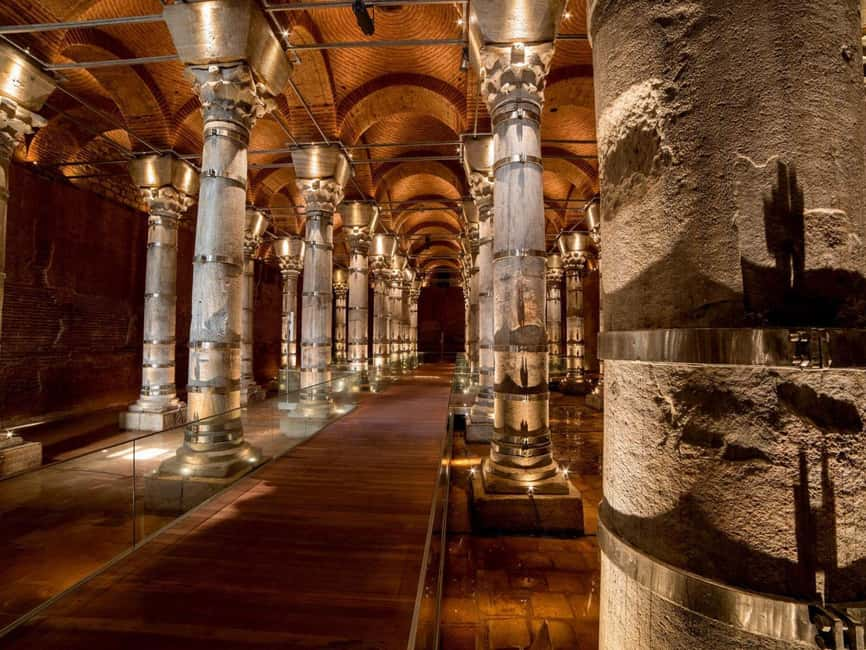
Beneath Istanbul’s busy streets, the Cistern of Theodosius offers a cool, quiet look at Byzantine engineering. Its 32 Marmara marble columns support 45 sail vaults, while the audio guide explains how this underground reservoir served the city during shortages and sieges. I like the quick QR-code entry and the freedom to stay as long as you wish. My main caution: the ticket does not include a guided tour or the separate 3D show.
I also like that this cistern is less famous than the Basilica Cistern, so it can feel calmer. The trade-off is that the experience depends on the audio guide, and ticket reception has not always been smooth even when purchased well ahead of time.
Key points to know before you book
- A 1,600-year-old water reservoir: Built during the reign of Emperor Theodosius II, from 408 to 450 AD.
- 32 marble columns: The columns came from Marmara Island and support a ceiling 11 meters above the floor.
- QR-code entry: Your ticket is designed to help you bypass the ticket line and enter with a code at the entrance.
- Audio guide, not a live tour: You explore alone, with recorded narration and historical facts.
- A quieter alternative: The cistern is less famous than the Basilica Cistern and may offer a calmer visit.
- Extra show not included: The 3D show is separate, so check what is covered before you arrive.
Why the Cistern of Theodosius is worth your time
Istanbul has no shortage of famous sights, but the Cistern of Theodosius gives you a different view of the city. You are not looking at a palace, mosque, or grand street. You are standing inside an underground system built to keep the city supplied with water.
That practical purpose helps explain the room. The columns are not there simply for decoration. They hold up a broad ceiling, while the heavy walls and curved corners help the structure withstand the pressure of the water and earth around it.
The cistern dates to the reign of Emperor Theodosius II, between 408 and 450 AD. That places it in the Byzantine period, long before Istanbul became the Ottoman capital. Later, the Ottomans expanded the structure, adding another layer to its long working life.
I like this kind of sight because it gives you a clear sense of how a city functioned. Palaces tell you about rulers. A water reservoir tells you what ordinary urban survival required.
More audio tours around Istanbul:
- Istanbul: Daytime or Sunset Sightseeing Cruise & Audio Guide
★ 4.8 · 14,430 reviews - Istanbul: Basilica Cistern Fast-Track Entry and Audio Guide
★ 4.6 · 7,521 reviews - Topkapi Palace and Harem Skip-the-Line-Tickets & Audio Guide
★ 4.3 · 4,745 reviews
Entering with the QR code
The ticket includes entry to the cistern and an audio guide. The main practical advantage is the QR code, which is intended to let you skip the ticket line at the entrance.
That matters most when you are trying to fit several sights into one day. You do not have to spend part of your morning waiting at a ticket window, although you should still allow time for the QR code to be checked or received.
One warning is worth taking seriously: ticket delivery or reception can occasionally be troublesome, even when you have bought the ticket well in advance. Keep the booking information easy to access on your phone, and do not wait until the last second to sort it out.
The ticket is valid for one day, with starting times subject to availability. The visit itself is flexible, so you can set your pace rather than follow a fixed group schedule.
The first look inside the 24-by-40-meter chamber
The cistern covers about 24 by 40 meters, with an 11-meter-high ceiling. Those measurements make the room feel far larger than you might expect from the street above.
Your first impression is likely to come from the repeated columns and the low, controlled light. The room has a calm quality, but it is not empty or plain. The stonework, ceiling forms, and reflections create a setting that rewards slow looking.
The 32 columns are made from Marmara Island marble. Their regular spacing shows how carefully the room was planned. You can look at them as individual pieces, but the stronger effect comes from seeing the whole grid at once.
I would not rush through this first section. Take a moment to understand the scale before you start listening to the audio guide. The recorded explanation will make more sense when you have the physical layout in front of you.
Understanding the Byzantine water system
The cistern was built to store water for Istanbul, particularly during shortages or a siege. In an ancient city, a reliable water supply was a matter of security. Reservoirs such as this one allowed the population to keep going when normal sources were limited.
The audio guide is useful here because the room itself cannot explain its original purpose. Without some context, you may notice the columns and ceiling but miss the reason the structure was built so heavily.
The narration also connects the cistern with the wider story of Istanbul. It is not only a lesson in construction. It shows how the city changed from Byzantine rule to Ottoman control, while older infrastructure continued to matter.
This is a good reason to choose the audio option over a silent walk-through. You can pause, look around, and absorb the information without being tied to a guide’s schedule.
Same sights, a different narrator:
- Istanbul: Bosphorus Sightseeing Cruise Tour with Audio Guide
★ 4.6 · 4,704 reviews - Istanbul: Hagia Sophia Entry Ticket with Audio Guide
★ 4.3 · 2,854 reviews - Istanbul: Topkapi Palace and Harem Ticket with Audio Guide
★ 4.4 · 2,401 reviews - Hagia Sophia Skip-the-Line Ticket & Blue Mosque Audio Guide
★ 4.1 · 1,879 reviews
Looking up at the 45 sail vaults
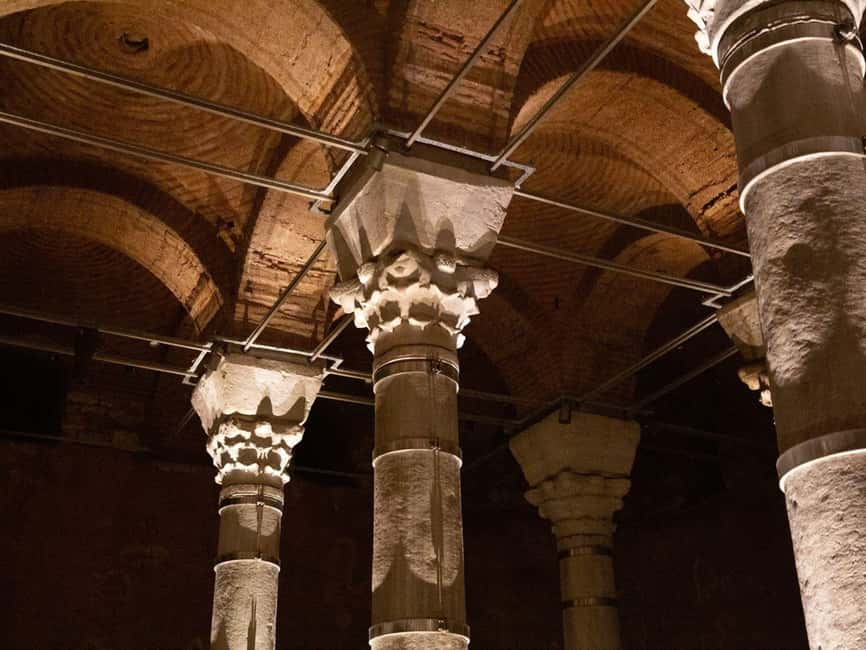
The most distinctive architectural detail is above you. The ceiling contains 45 sail vaults, curved forms that meet across the chamber and distribute weight across the supporting structure.
You do not need an engineering background to appreciate them. Look up from several points in the room, since the pattern changes as your position changes. The vaults give the ceiling a rhythm that softens the hard stone and makes the chamber feel designed rather than merely functional.
The thick walls were coated with watertight plaster to stop leaks. That detail is easy to overlook, but it shows how much effort went into preserving the water inside. The curved corners also helped the structure handle pressure.
The audio guide’s value is strongest in sections like this. It can point out features that your eye might otherwise pass over, turning a short look at the ceiling into a better understanding of how the cistern worked.
From the Byzantine era to Ottoman Istanbul
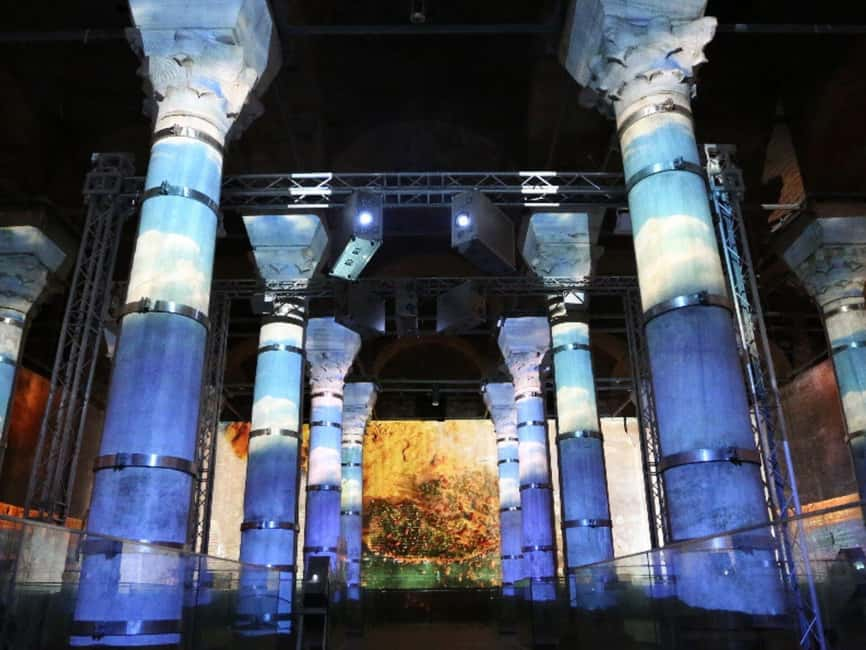
The Cistern of Theodosius did not become irrelevant when the empire changed. It was later expanded by the Ottomans, which shows that the city’s older water infrastructure still had practical value.
The name refers to Emperor Theodosius II, but the surrounding area continued to change over many centuries. A later building known as the Arif Pasa Estate, constructed in the late 18th or early 19th century, once housed municipal offices.
This layered setting is part of what makes the visit worthwhile. The cistern is not an isolated ancient object. It sits within a part of Istanbul that has been rebuilt, reused, and reshaped many times.
Nearby demolition work in 2010 uncovered the cistern. Restoration followed, along with the creation of an archaeological park around it. That recent rediscovery gives the site an unusual story. For a long period, the structure was out of sight, then modern construction brought it back into public view.
The projection and the modern presentation
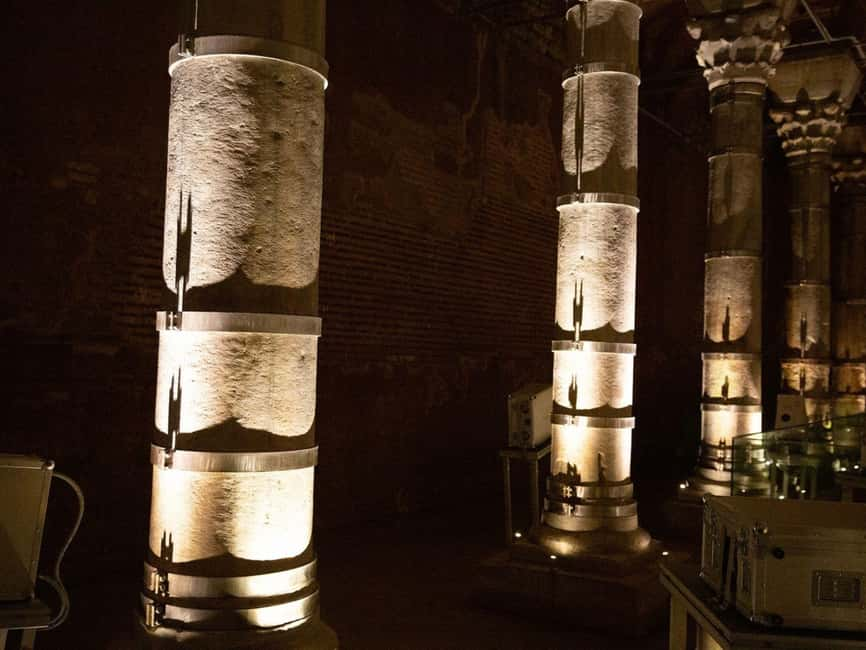
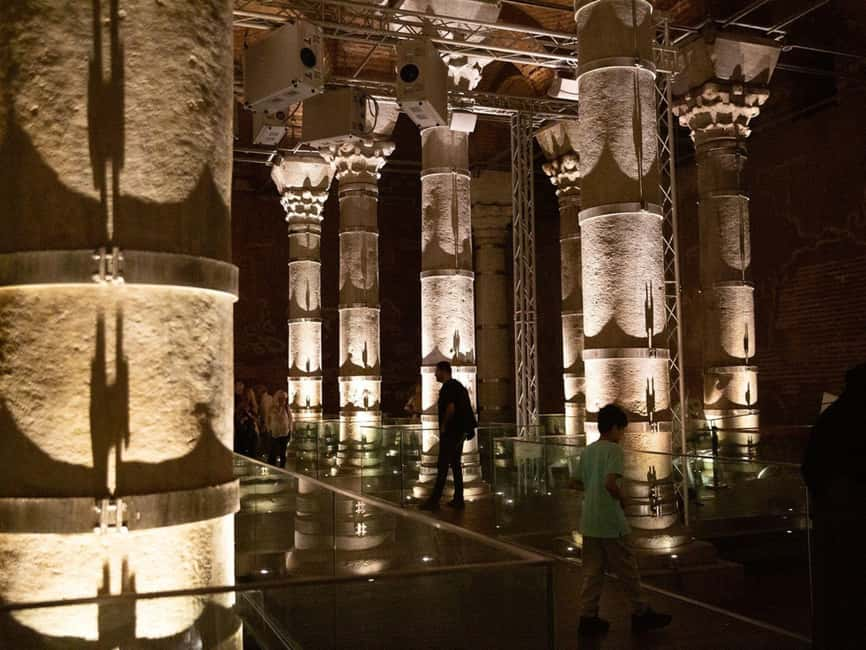
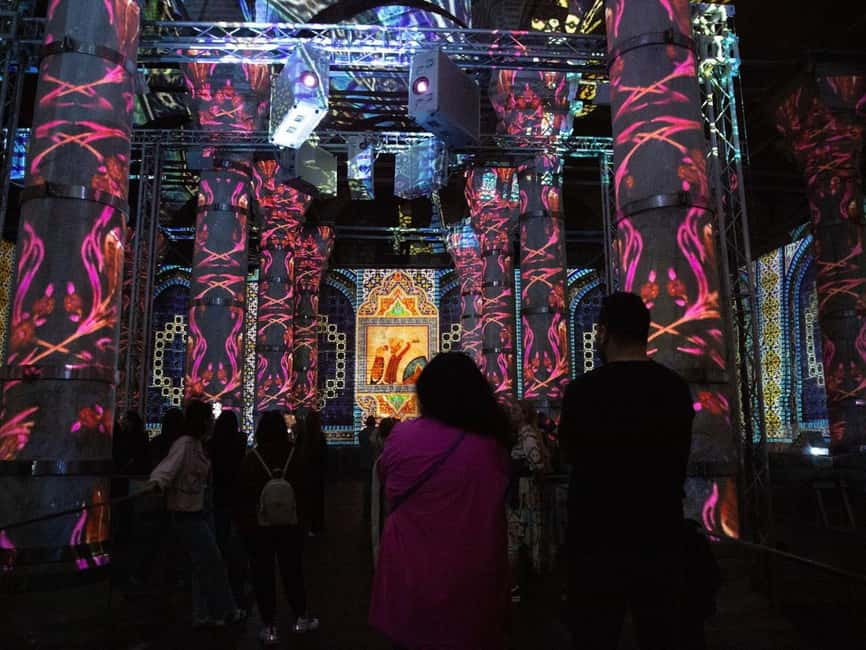
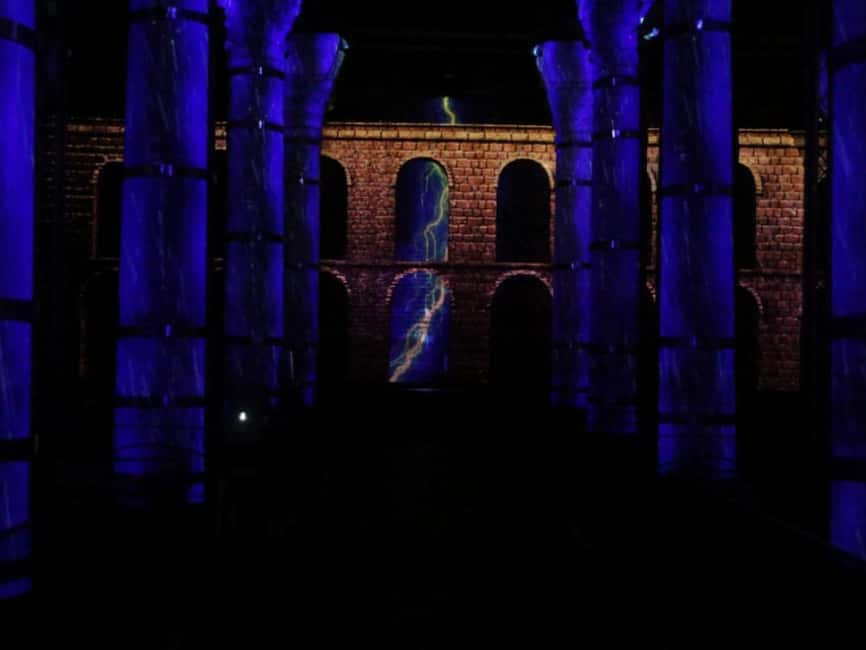
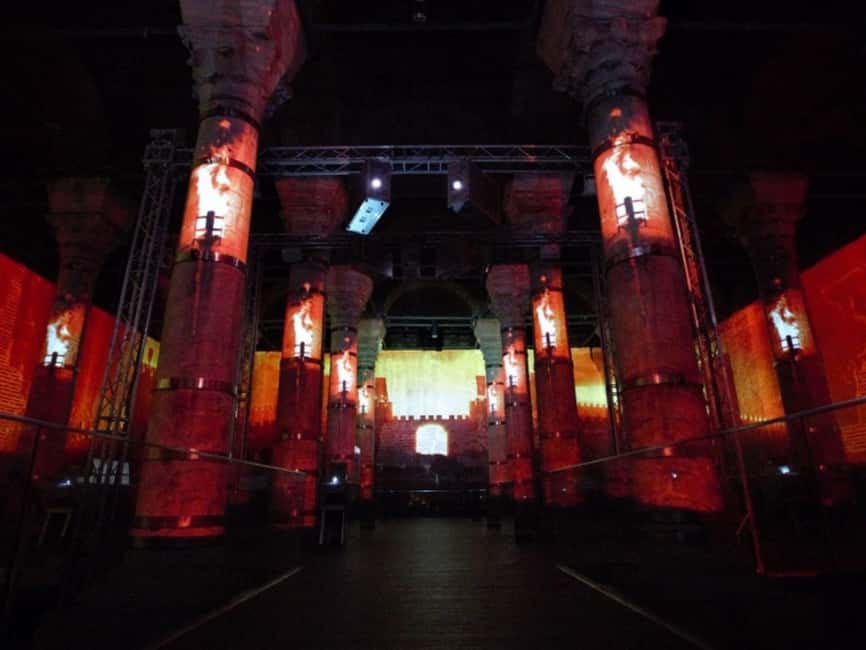
The visit links the cistern’s older story with modern Istanbul. The final part of the projection tells the story of the founding of the Turkish Republic, connecting the underground chamber to the city’s more recent political history.
This gives the visit a broader time span than you might expect from an ancient water reservoir. You begin with Byzantine construction, move through Ottoman use, and finish with the creation of the modern Turkish state.
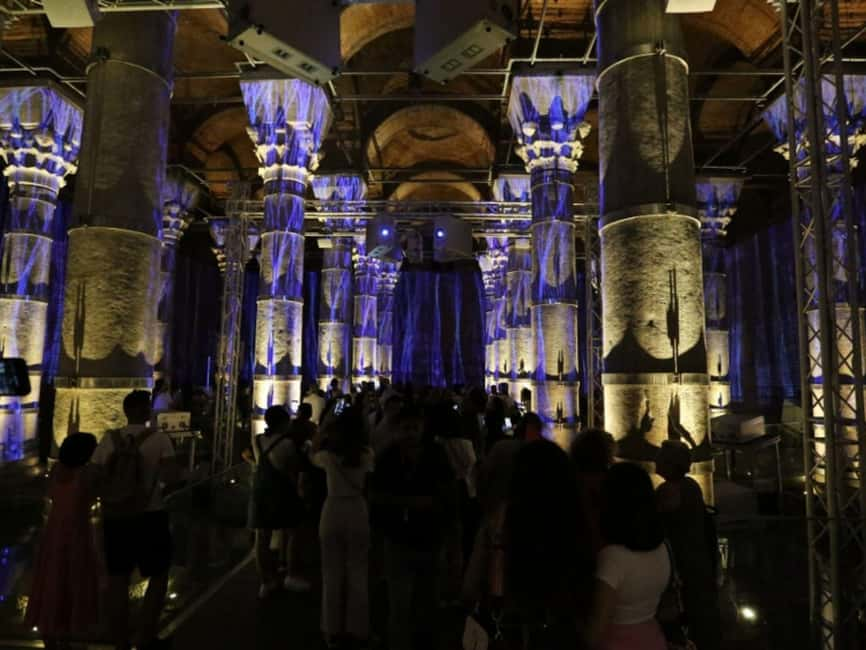
You should note the difference between this presentation and the separate 3D show. The 3D show is not included in the ticket described here. The booking information also lists the audio guide as included, so do not assume that every visual presentation is part of your admission.
One visitor particularly praised the light show, which suggests that the visual element can be a highlight. Still, check the exact inclusions when booking so you are not disappointed if the full 3D presentation requires another ticket.
How the audio guide changes the visit
This is a self-guided activity. No live guide leads you from column to column, and there is no group timetable to follow.
I see that as a strength if you like to travel independently. You can stop beneath a vault, replay information, or move ahead when a section does not interest you. You also avoid the common problem of being hurried through a small site because a group is ready to leave.
The weakness is just as clear. If you prefer to ask questions or hear a personal interpretation, an audio guide will feel limited. It gives you prepared information, but it cannot respond to what you notice.
The narration is described as clear and filled with interesting facts about the cistern’s past. Since the structure itself is compact, the audio guide should help you spend your time well rather than simply wander around looking at stone.
You may also have flexibility to explore all four sites associated with the booking information. The supplied details do not identify those four sites by name, so confirm exactly what your ticket covers before planning the rest of your day.
How long to allow and how to plan your day
The activity is listed as valid for one day, with available starting times shown during booking. It is not described as a fixed multi-hour tour, so you have control over the length of your visit.
That makes the cistern easy to pair with other sights in Istanbul. The skip-the-line format can save useful time, and the self-guided setup means you are not waiting for a group to finish.
Do not treat the one-day validity as a reason to rush. The room is not enormous, but the architecture rewards a measured visit. Give yourself enough time to listen, look up at the vaults, and follow the historical story from Byzantine construction to the Turkish Republic.
If your phone or connection is unreliable, handle the QR code before reaching the entrance. The ticket-reception problem reported by one customer is not a reason to avoid the visit, but it is a good reminder to have your booking details ready.
Is $30 a fair price?
At $30 per person, this is not the cheapest underground attraction in Istanbul. The value depends on what you want from the visit.
You are paying for entry, the audio guide, and the convenience of QR-code access. If skipping a ticket line matters to you, that convenience can be useful, especially on a busy sightseeing day. The flexible format also has value because you do not have to pay for a longer guided program or follow a fixed route.
The price is harder to justify if you expect a live guide or a large multimedia production. Neither is included. The separate 3D show is specifically excluded, so the basic ticket should be judged as a self-guided cistern visit.
I think the price is reasonable for visitors who care about old engineering, prefer independent sightseeing, and want a less famous alternative to the Basilica Cistern. It is less attractive for someone who wants the grandest underground spectacle or a personal guide.
Who will enjoy this visit most?
I would recommend it to travelers who like places with a clear function and a long timeline. The cistern is especially good for anyone interested in Byzantine and Ottoman Istanbul, architecture, water systems, or the way modern cities grow over older foundations.
It also suits independent visitors. You can enter with the QR code, listen at your own pace, and avoid the structure of a group tour.
Families with older children may find the columns, vaults, and underground setting easy to appreciate, though the audio guide’s usefulness will depend on the child’s interest in history. The 11-meter ceiling and repeated arches provide plenty to look at even before the narration begins.
I would be more cautious if you dislike audio guides or want a personal conversation with a local expert. In that case, a live walking tour may give you more context.
Cistern of Theodosius or Basilica Cistern?
The Cistern of Theodosius is less well known than the Basilica Cistern. That can make it a calmer choice, especially if you would rather study the room without a heavy crowd around you.
The two should not be treated as identical sights. This cistern has its own measurements, 32 Marmara marble columns, 45 sail vaults, and a story tied to Theodosius II. Its later Ottoman expansion and modern rediscovery also give it a distinct timeline.
If you have time for only one underground cistern, your choice depends on your priorities. Pick this one if you value a quieter visit, audio-guided independence, and the story of a structure uncovered during modern demolition work.
If you mainly want the most famous name, this may not be your first choice. But fame is not the only measure of a good stop, and the lower profile here can be part of its appeal.
Cancellation and booking details worth knowing
You can cancel up to 24 hours in advance for a full refund. That is useful when your Istanbul plans depend on weather, transport, or changing sightseeing times.
The activity is valid for one day, and you need to check availability for starting times. The ticket includes the cistern entrance and audio guide, but not a guided tour or 3D show.
The supplied information does not give a named guide, because no live guide is provided. It also does not specify audio-guide languages, so check the language options during booking rather than assuming your preferred language is available.
Should you book the Cistern of Theodosius?
Book it if you want an atmospheric historical stop with strong architectural details, a clear audio explanation, and the freedom to explore without a group. The 32 marble columns, 45 vaults, and 1,600-year timeline give you plenty to notice in a relatively compact visit.
Skip it if you are looking for a live guide, a full 3D presentation, or a major attraction with many separate rooms. At $30, the value rests on the convenience of skip-the-line entry and the quality of your self-guided visit.
For most independent visitors, I would consider it a worthwhile addition to an Istanbul day, especially if you have already seen the city’s famous landmarks and want a quieter look below street level.
FAQ
What is included in the ticket?
The ticket includes entry to the Cistern of Theodosius and an audio guide.
Is this a guided tour?
No. This is a self-guided visit. You explore the cistern at your own pace using the audio guide.
Can I skip the ticket line?
The activity includes skip-the-line access, with a QR code intended for quick entry at the entrance.
How old is the Cistern of Theodosius?
The cistern is about 1,600 years old. It was built during the reign of Emperor Theodosius II, from 408 to 450 AD.
How large is the cistern?
The cistern measures about 24 by 40 meters and has a ceiling height of 11 meters.
How many columns are inside?
The structure is supported by 32 columns made from Marmara Island marble.
Is the 3D show included?
No. The 3D show is not included in this ticket.
How long is the ticket valid?
The ticket is valid for one day. Starting times depend on availability.
Can I cancel for a refund?
Yes. You can cancel up to 24 hours in advance for a full refund.
New audio tours around Istanbul
- Istanbul: Bosphorus and Golden Horn Cruise with Audio Guide★ 4.5 · 83 reviews
- Topkapi Palace and Harem Museum Ticket with Audio Guide★ 3.0 · 2 reviews
- Topkapi Palace Museum Skip The Ticket Line Tickets + Audio Guide★ 3.0 · 2 reviews
- Istanbul Walking Tour with Audioguide on Your Smartphone★ 5.0 · 6 reviews
- Istanbul Self-Guided Audio Tour★ 3.0 · 2 reviews
- Istanbul: Hagia Sophia Entry Ticket with Digital Audio Guide★ 4.5 · 7 reviews
- Dolmabahce Palace Skip the Ticket Line Entry with Audio Guide★ 4.0 · 6 reviews
- Istanbul Bosphorus Sightseeing Cruise with Audio Guide★ 5.0 · 67 reviews
Istanbul Audio Tours, compared.

Istanbul: Daytime or Sunset Sightseeing Cruise & Audio Guide
Read our review →
Istanbul: Basilica Cistern Fast-Track Entry and Audio Guide
Read our review →
Topkapi Palace and Harem Skip-the-Line-Tickets & Audio Guide
Read our review →
Istanbul: Bosphorus Sightseeing Cruise Tour with Audio Guide
Read our review →
Istanbul: Hagia Sophia Entry Ticket with Audio Guide
Read our review →
Istanbul: Topkapi Palace and Harem Ticket with Audio Guide
Read our review →
Hagia Sophia Skip-the-Line Ticket & Blue Mosque Audio Guide
Read our review →
Istanbul: Dolmabahce Palace and Harem Fast-Track & Audio
Read our review →Browse the lists this tour appears in