
Review · LONDON
London’s Alternative History: A Self-Guided Audio Tour
London’s past gets much stranger once you leave the usual royal-and-royal-family storyline behind. This GPS-guided audio walk leads from Covent Garden to the Savoy, mixing famous sights with odd details about theatre quarrels, ghosts, sewer gas, legal scandals, and the women who helped build Waterloo Bridge.
I like the freedom to pause whenever you want, and I like that the commentary tells you where to look and when to turn. The narrator’s calm, measured delivery makes the walk easy on the ears, even if you stop to chat, take photos, or explore a little on your own.
The main drawback is that this is an app-based experience, not a live guided tour. You’ll need your own smartphone, and entrance fees, drinks, transport, and any time spent inside attractions cost extra.
Key points to know before you go
- Start in medieval Covent Garden: The walk begins at The Piazza, where the market’s name recalls a former convent garden.
- Theatre stories lead the route: You’ll pass places tied to famous productions, actors, ghost stories, and London’s first recorded punch-up.
- GPS guidance keeps you moving: VoiceMap tells you when to turn and links each story to the place where it belongs.
- The route ends by the Thames: Somerset House, the riverside promenade, Waterloo Bridge, and the Savoy fill out the second half.
- Offline access is included: Download the audio, map, and geodata before setting out, then use the tour without relying on a live connection.
- The pace is yours: The stated walking time is about one hour to one and a half hours, but pauses can make the outing longer.
Covent Garden gives the walk a useful beginning
Meet at The Piazza, 1-7 Covent Garden, WC2E 8HD. This is a sensible starting point because you begin in one of central London’s most recognizable areas, yet the first story quickly moves beyond the market’s present-day shops and performers.
The name Covent Garden comes from Convent Garden, a reference to the convent’s garden that once occupied this area in medieval times. That small fact sets the tone for the whole walk. You are not simply being directed from one famous building to another. You are being shown how ordinary names, streets, and public spaces carry traces of older London.
I would give yourself a few minutes at the start to find The Piazza and get your phone ready. The tour runs every day, with the listed operating hours covering the full day, so you are not tied to a scheduled departure. That flexibility is useful if you are fitting the walk around a museum visit, lunch, or a theatre booking.
Because the tour is self-guided, you can start when it suits you. You also avoid the problem of trying to keep up with a large group in a crowded central district. On the other hand, there is no guide standing at the meeting point, so download the VoiceMap application and the tour material before you begin.
More History Audio Tours in the UK
- London: Natural History Museum Express Guided Tour & Audio Guide
★ 4.0 · 100 reviews - London: Natural History Museum Express Tour & Audio App
★ 3.6 · 60 reviews - Paisley History Walking Tour with Personal Audio
★ 5.0 · 30 reviews
An Actors’ Church and London’s first recorded punch-up
One early stop is known as the Actors’ Church. It is a place where famous actors have been memorialized, giving the stop a strong connection to London’s theatrical world.
The detail that gives this stop extra character is its link to London’s first recorded punch-up. That is the sort of small, slightly comic fact that makes a walking tour stick in your mind. Instead of hearing only about grand architecture or famous names, you get a glimpse of the bad behavior and tension that could accompany London’s entertainment scene.
The audio format works well here because you can look around while listening. You are not trying to read a long panel or keep your place in a printed guide. The story is tied to the location, so the building in front of you gives the narration a clear focus.
This section should suit you if you like theatre history but do not want a formal lecture. It is also a good fit for families with older children, provided they are happy to walk and listen. The pace is gentle, and you can pause the audio if someone wants to examine the church or take photographs.
The oldest theatre site and the Man in Grey
The route then turns toward the oldest theatre site in London. Its story includes years of performances and ghostly appearances, including the infamous Man in Grey.
That supernatural detail adds a bit of fun without changing the walk into a ghost tour. You get a sense of how theatre buildings gather stories over time, both from the performances that took place there and from the people who believe something unusual still lingers in the building.
The stop is best approached with a little patience. If you hurry through the commentary, the ghost story may feel like a quick aside. If you pause and take in the setting, it becomes part of a larger picture of London’s theatre district, where old buildings, famous performers, and persistent legends sit close together.
The tour does not include tickets or entrance fees to attractions along the route. That matters here. You can enjoy the exterior and the audio without paying anything beyond the tour price, but you should not assume that the walk includes entry to any theatre, museum, or other site.
Legal oddities and the quirky side of court history
Another stop focuses on intriguing cases and famous trials. The emphasis is on the unusual side of London’s legal past rather than a broad lesson in British law.
I like this change of subject. The route does not remain locked in theatre history from beginning to end. Moving from actors and ghosts to court cases keeps the hour varied and shows how many different kinds of stories are packed into this small part of London.
The audio can give you context while you stand outside, which is useful if you are not planning to go inside a legal building. You do not need a ticket to follow the route, and you can take your time with the surrounding streets before moving on.
This stop may appeal most to anyone who enjoys strange true stories and famous trials. It is less suited to someone looking only for major views or architectural highlights. The point here is the story, not a long stop for sightseeing.
More Self-Guided Audio Tours in London
- Kew Gardens, Richmond – Self-Guided Audio Tour
★ 4.5 · 30 reviews - London Walks – 12 Self-Guided Audio Walking Tours
★ 4.0 · 17 reviews - Britpop Camden: A Self-Guided Audio Tour in London
★ 5.0 · 8 reviews - Self-Guided Audio Tour – Shakespearean London
★ 3.0 · 7 reviews
Theatre lighting and the road to The Lion King
The next theatre stop connects London’s stage tradition with the early days of electric lighting. It is also known for productions including The Lion King.
That combination gives the stop a useful modern link. You are not hearing about theatre as something frozen in the past. You are hearing how stage technology changed what audiences could see, then connecting that story with a production familiar to many modern visitors.
The audio commentary helps you notice the theatre’s role rather than simply walk past another grand entrance. You may want to pause at the building and let the story finish before continuing. Since the tour is not tied to a group timetable, there is no pressure to move on at a particular second.
If you are planning to see a West End show later, this portion adds a little context to the theatre district. It does not include a performance ticket, so treat the stop as an exterior history lesson rather than part of a theatre package.
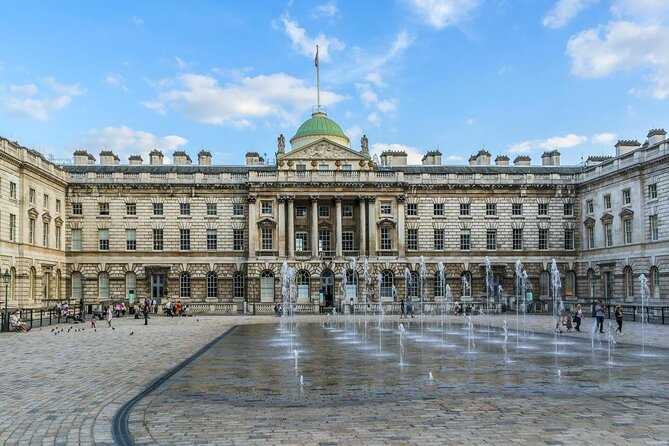
Somerset House, Tudor royalty, and the postal system
The route then reaches a grand building with several different lives. It began as a Tudor palace, later became a Navy office, and played a role in the development of the British postal system.
This is one of the more rewarding stops because it shows how a single building can serve very different purposes as London changes. Royal use, government administration, and communications history all meet in one place.
I would allow extra time here if the building catches your interest. The official walking time is about 60 to 90 minutes, but that estimate describes the basic route, not the time you might spend looking around, taking pictures, or stopping for a drink. One useful feature of VoiceMap is the pause button. You can stop the narration, explore at your own speed, and resume when ready.
The tour does not include food or drinks, so this is a sensible part of the route to make your own short break if you need one. Keep in mind that the experience itself remains outdoors and self-guided unless you separately arrange entry to an attraction.
The Thames promenade and the river moved out of the way
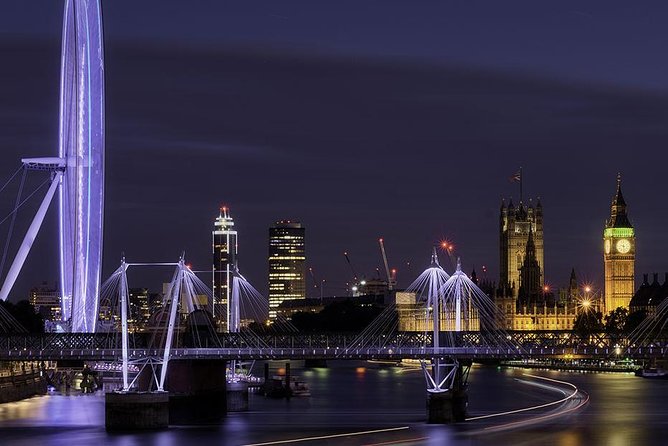
From Somerset House, the walk reaches the riverside promenade. The commentary explains how its construction involved diverting the River Thames and exposed secrets that had been hidden along the river.
This is where the walk gains a change of scenery. The earlier stops focus on churches, theatres, court stories, and public buildings. Along the river, you get open space and a clearer sense of how London has reshaped the Thames for transport, public access, and city building.
The riverfront can also be a natural place to slow down. You might pause the audio to take in the view, then restart it when you are ready. That freedom is a real benefit for anyone who dislikes the fixed pace of a conventional walking group.
The main practical point is that riverside conditions can make sound harder to hear than it is in a quiet interior setting. Use headphones that let you hear your surroundings, and keep the volume at a comfortable level. You are walking through an active city, not a closed museum.
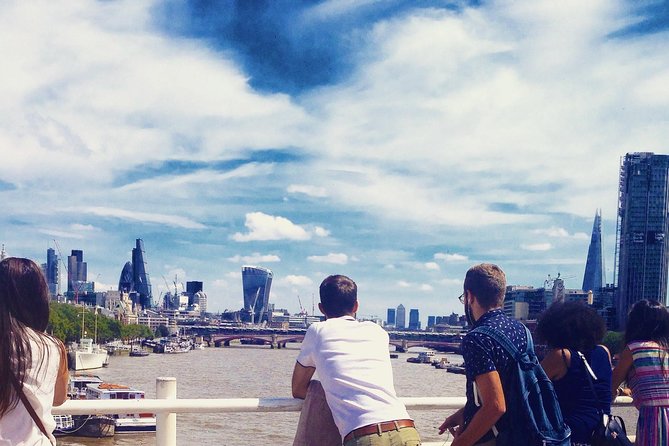
Waterloo Bridge, built largely by women
The next stop is Waterloo Bridge, known as The Ladies’ Bridge because it was largely built by women during World War II. It also offers broad views across London.
This is one of the clearest examples of the tour’s approach. You get a major city sight, but the focus is not only on what the bridge looks like. The story draws attention to the people who built it during wartime, giving the structure a human side that you might miss if you simply crossed it for the view.
I would plan to pause here. The bridge is not just a point to tick off on the route. Its views make it a good place for photographs, and the story gives you a reason to look more closely at the bridge itself.
You should also expect normal city noise and movement. This is not a quiet lookout reached by a private vehicle. The advantage is that you are right in the middle of London, with the river and major sights around you. The tradeoff is that you may need to replay a sentence if traffic or nearby activity drowns out part of the commentary.
The Victorian lamp that burns sewer gas
One of the strangest stops features the last remaining Victorian gas lamp in London. It was powered by sewer gas and earned the nickname The Lamp that Lights Itself.
This is exactly the kind of detail that gives the walk its title. It is small, unusual, and easy to miss if you are following only a standard sightseeing route. The story also shows how practical old London could be, using whatever source of fuel was available.
Do not expect a grand monument at every stop. Some of the best moments on this walk come from modest objects with an unexpected past. You will get more from the audio if you are willing to stop, look closely, and let the explanation turn an ordinary street detail into a memorable one.
This is another place where GPS-linked narration earns its keep. Instead of searching through a guidebook for the lamp, the app directs you to the location and starts the relevant commentary as you arrive.
The Savoy and the first building lit entirely by electricity
The walk ends at The Savoy, at The Strand, WC2R 0EZ. This famous building was the first public building in the world to be lit entirely by electricity, according to the tour’s historical account.
The Savoy also brings stories of luxurious guests and infamous parties. After the quieter oddity of the sewer-gas lamp, the final stop returns to glamour, technology, and high society. It makes a fitting finish because the walk has moved through several versions of London, from medieval convent land to modern theatre and luxury hospitality.
The end point is practical as well as scenic. You finish in a central part of London, close to public transport and within reach of other attractions. Transport is not included, so you will need to arrange your own onward journey, but the central location makes that straightforward.
The tour is not a guided visit inside The Savoy. You are listening to the story at the end of the route, with any interior visit, meal, or drink handled separately.
Is $9.99 good value for this London walk?
At $9.99 per person, this is a low-cost way to fill an hour or two in central London. The value comes from the amount of context packed into a short route, not from included admissions or personal guiding.
You receive lifetime access to the tour, the VoiceMap application, and offline access to the audio, map, and geodata. That lifetime access matters if you want to repeat the walk later, show it to someone else in your group, or pause it now and finish another day.
The price is less attractive if you want a live guide who can answer questions, adjust the route, or add personal recommendations. It is also not an all-inclusive sightseeing package. You pay separately for transport, food, drinks, and any attraction tickets.
For a group, the private format can be useful. Only your group participates, so you are not sharing the pace with strangers. But the app does not turn the experience into a private human-led tour. Think of it as your own small walking group with a recorded narrator.
Who will enjoy the self-guided format most?
I would recommend this walk if you like unusual facts, theatre history, city stories, and the freedom to stop whenever you want. It also suits visitors with a spare hour or two who want to see several central sights without committing to a half-day tour.
The route works well for people who find map directions stressful because VoiceMap gives turn instructions and tells you where to look. That guidance is especially helpful in a busy area where a paper map can become awkward.
It is also a good choice if you walk at a slower pace. You can pause the audio when needed, and the total outing can take longer than the stated hour to an hour and a half. One practical tip is to allow more time than the minimum if you expect to stop for photos or conversation.
I would choose something else if you want detailed architectural commentary, indoor visits, or a live guide who can respond to questions. The experience is strongest when you enjoy listening while walking and are happy to manage your own timing.
Booking, cancellation, and practical details
Confirmation is provided at booking. You need your own smartphone, since the device is not included, and you should download the app and offline material before setting out.
Service animals are allowed, and most people can take part. The route is near public transport, though no transport is included. Food, drinks, museum tickets, and other entrance fees are also outside the tour price.
Free cancellation is available if you cancel at least 24 hours before the experience start time. Cancellations made less than 24 hours before the start time do not receive a refund, and changes within that period are not accepted.
Should you book London’s Alternative History?
Book it if you want a flexible, inexpensive city walk built around unusual facts rather than a standard list of landmarks. The best parts are the odd connections: a convent garden behind Covent Garden’s name, a theatre ghost, a recorded punch-up, a sewer-gas lamp, women building Waterloo Bridge, and electricity transforming The Savoy.
Skip it if you want a personal guide, included entry to attractions, or a tightly scheduled experience with someone handling every detail. For everyone else, $9.99 buys a well-paced route with lifetime access and enough variety to make central London feel newly curious.
FAQ
Where does the tour start?
It starts at The Piazza, 1-7 Covent Garden, London WC2E 8HD.
Where does the tour end?
The tour ends at The Savoy on The Strand, London WC2R 0EZ.
How long does the walk take?
The estimated duration is about one hour to one and a half hours. You can take longer if you pause the audio or spend time at the stops.
What language is the audio tour offered in?
The tour is offered in English.
Is this a live guided tour?
No. It is a self-guided audio tour using the VoiceMap application and GPS-based commentary.
What do I need to bring?
You need your own smartphone. The smartphone is not included with the experience.
Can I use the tour offline?
Yes. Offline access to the audio, maps, and geodata is included.
Are entrance fees included?
No. Tickets for museums and other attractions along the route are not included. Transport, food, and drinks are also not included.
What is the cancellation policy?
You can receive a full refund if you cancel at least 24 hours before the experience start time. Cancellations or changes made less than 24 hours before the start time are not accepted for a refund.
More History Audio Tours in London
- Colosseum, Roman Forum & Palatine Hill with Audioguide App
★ 4.4 · 6,291 reviews - Venice: St. Mark Basilica Ticket, Audioguide+History Gallery
★ 3.9 · 4,780 reviews - Rome: Colosseum, Ancient Rome Tour or AudioGuided Tour
★ 4.4 · 2,879 reviews - Colosseum, Roman Forum & Palatine Hill Entry and Audioguide
★ 4.1 · 2,475 reviews
More Self-Guided Audio Tours in the UK
- Londinium’s Footprint: Explore London’s Roman wall on a self-guided audio tour
★ 5.0 · 3 reviews - Hyde Park and Kensington Gardens: A Self-Guided Audio Tour
★ 4.5 · 3 reviews - Camden Town’s Quirky Characters: A Self-Guided Audio Tour
★ 3.0 · 2 reviews - Bristol: Self-Guided Sightseeing Audio Tour
★ 4.4 · 151 reviews
New audio tours around London
- London Panoramic Open Top Bus Tour with Audio Guide★ 4.0 · 209 reviews
- London: British Museum Audio Guide & Small Group Entry★ 3.5 · 81 reviews
- London: National Gallery Audio Tour (No Entry Ticket)★ 3.5 · 11 reviews
- London: British Museum’s English Audio Tour with Free Reservation★ 3.0 · 15 reviews
- London: Churchill War Rooms Ticket & Political London Audio Tour★ 4.0 · 83 reviews
- London: British Museum Audio Tour with Free Guaranteed Entry★ 3.0 · 30 reviews
- Houses of Parliament Ticket & Political London Audio Guide★ 4.0 · 13 reviews
- Londinium’s Footprint: Explore London’s Roman wall on a self-guided audio tour★ 5.0 · 3 reviews
London Audio Tours, compared.

London: Emirates Stadium Entry Ticket and Audio Guide
Read our review →
Westminster Abbey Entrance Ticket Including Audio Guide
Read our review →
London: British Museum Audio Tour & Priority Entrance Ticket
Read our review →
London: Churchill War Rooms Ticket & Political London Audio
Read our review →
London Panoramic Open Top Bus Tour with Audio Guide
Read our review →
London: Royal Walking Tour and Buckingham Palace Audio Tour
Read our review →
Emirates Stadium and Arsenal Museum Entrance Ticket Including Audio Guide
Read our review →
London: Natural History Museum Express Guided Tour & Audio Guide
Read our review →Browse the lists this tour appears in