
Review · MALLORCA
Palma’s Alternative History: A Self-Guided Audio Walk
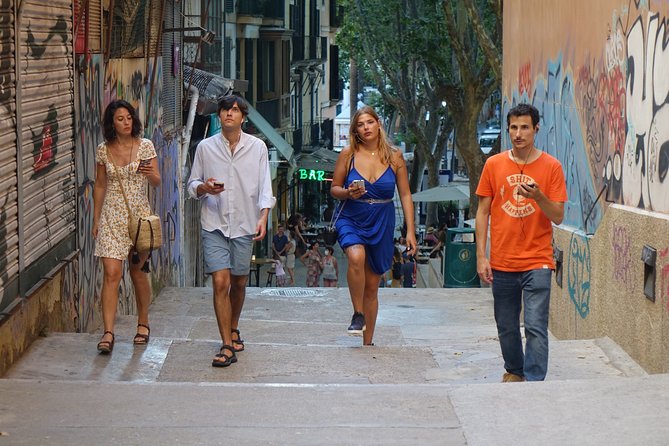
Palma’s story comes alive on foot, beginning beside the salty lake at Parc de la Mar and ending near the town hall at Plaça de Cort. Along the way, Sandra points out royal buildings, churches, old streets, courtyards, and the grand Cathedral of Palma. The walk connects ancient Mallorca with the city you see today.
I like the freedom to start and pause the tour whenever you wish, and I like the low price: $9.99 buys lifetime access rather than a single use. The main thing to consider is the VoiceMap app. It has caused trouble for some users, including freezing, manual restarting, and heavy battery use.
Key points to know
- Starts at Parc de la Mar: Begin with views of the Cathedral and Almudaina Palace across the water.
- Ends at Plaça de Cort: The finish is close to Palma’s town hall and the historic center.
- Sandra provides the narration: Her local perspective links major sights with smaller streets, courtyards, churches, and bars.
- Covers major landmarks: The route includes the Cathedral, Almudaina Palace, Santa Eulalia Church, and La Lonja.
- Work offline: Audio, maps, and geographic data can be downloaded for use without mobile service.
- Bring a charged phone and headphones: Battery drain is a real concern, and the phone is not included.
From Parc de la Mar to Palma’s old center
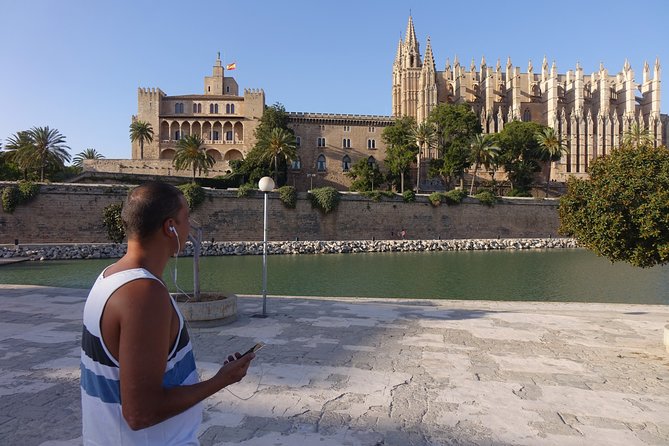
This walk opens at Parc de la Mar, a broad square built over the sea during Mallorca’s tourism boom in the 1960s. Its small saltwater lake faces two of Palma’s most important buildings, the Cathedral and Almudaina Palace.
It is a smart starting point because you get your bearings before entering the older streets. The view also shows the contrast that shapes Palma: medieval stone buildings in front, modern city planning behind you, and a public square created during a much later period of tourism.
The audio tour begins here and then leads you toward the historic center. You control the pace. If you want to stop for a photograph, sit beside the lake, or spend extra time at a church, you can pause the recording and restart when ready.
That flexibility is the main reason to choose this format instead of a fixed walking group. You are not trying to keep up with a guide or wait for anyone else. The tradeoff is that you must keep an eye on the route yourself, especially if the app loses your position.
More History Audio Tours in Spain
- Madrid: Archaeological Museum E-Ticket and Audio Guide
★ 4.3 · 115 reviews - Historic Ciutadella: A Self-Guided Audio Tour
★ 4.5 · 29 reviews - Ronda Old Town Walking Tour with Audioguide on Your Smartphone
★ 4.0 · 20 reviews
A first look at Palma’s Art Nouveau style
One stop brings you to an impressive Art Nouveau monument built in the early 1900s. The supplied route details do not identify the building by name, but its role is clear: it gives the tour a break from Palma’s medieval and royal story.
Art Nouveau brought curved lines, decorative detail, and a lighter decorative touch to European cities at the start of the twentieth century. In Palma, this style sits beside older stone churches and aristocratic houses, so you get a quick lesson in how the city changed over time.
This is one of the useful features of an audio walk. A passing building can be easy to ignore when you explore alone. A short explanation gives you a reason to look up and notice the details.
Can Marcel and the pleasure of a well-timed stop
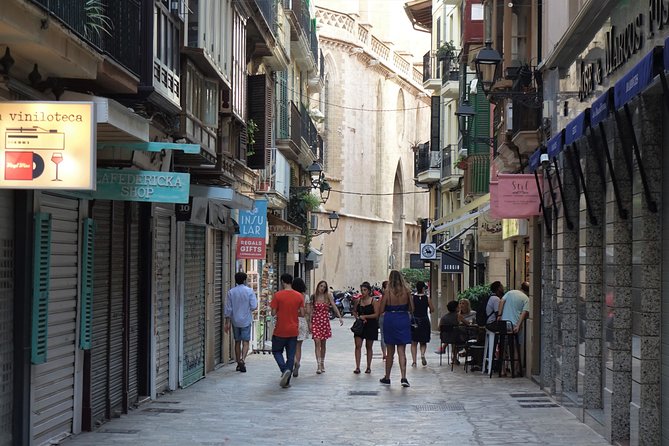
The route passes a noble Majorcan house once called Can Marcel. Built in the seventeenth century, the building now contains a lounge bar with a rustic, traditional design.
This is not simply a point on a map. It is a practical pause. You can stop for a drink or a rest if the bar is open, then continue when you are ready. Food and drink are not included in the $9.99 price, so any purchase here is your own expense.
I like the way this stop broadens the experience beyond famous monuments. Palma’s character is also found in old houses that have been given new uses. You see how the city’s historic buildings remain part of everyday life instead of existing only as museum pieces.
Keep in mind that the audio walk takes about one hour to one and a half hours, but your actual outing can be longer if you stop here or spend time inside other buildings. The published duration describes the walking and listening time, not a rushed visit to every possible interior.
Santa Eulalia Church and the first kings of Mallorca
Santa Eulalia Church is one of Mallorca’s oldest churches, dating from the thirteenth century. Before the Cathedral was finished in 1601, the first kings of Mallorca were crowned here.
That detail gives the church real weight. It was not merely an early place of worship. It played a part in the public life of the medieval kingdom while Palma’s great cathedral was still under construction.
The interior is decorated in the Baroque style, and admission is free. If the church is open during your walk, this is one of the stops worth entering rather than viewing only from the street. The free admission also makes it an easy addition to a low-cost day in Palma.
The audio recording can explain the church while you stand outside, but you should pause it if you go in. Otherwise, the narration may continue while you are looking at the interior, which defeats the point of taking your time.
More Self-Guided Audio Tours in Spain
- Madrid: El Retiro Park Self-Guided Audio Tour
★ 3.8 · 134 reviews - Gaudi and La Sagrada Familia Exterior Self-Guided Audio Tour
★ 3.5 · 25 reviews - Valencia: Self-guided Audio Tour on Your Smartphone
★ 4.0 · 21 reviews - Between Two Gates: A Self-Guided Audio Tour in Valencia
★ 5.0 · 16 reviews
Sa Riera, tournaments, and a street with an older purpose
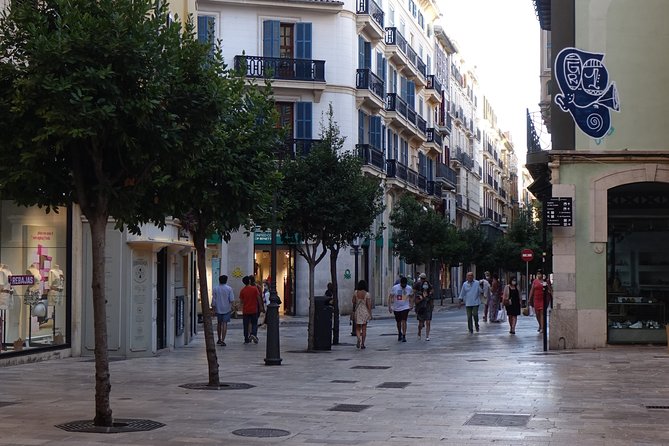
Another section follows a street where the torrent of Sa Riera once flowed. The waterway divided Palma into two parts, and knights’ tournaments were held along it.
This kind of detail helps you read the city as more than a collection of attractive buildings. Streets can preserve the shape of older problems, older boundaries, and older public events even after the original stream is gone.
The story also gives the route a useful change of pace. You move from royal and religious architecture to the physical layout of the city. The walk is at its best when it explains not only what a building is, but why a street developed as it did.
Because this is a self-guided route, you can stop briefly whenever a story catches your interest. You can also keep moving if a particular section is not your priority. That control is especially useful for repeat visits or for anyone with only a short afternoon in Palma.
The Cathedral of Light
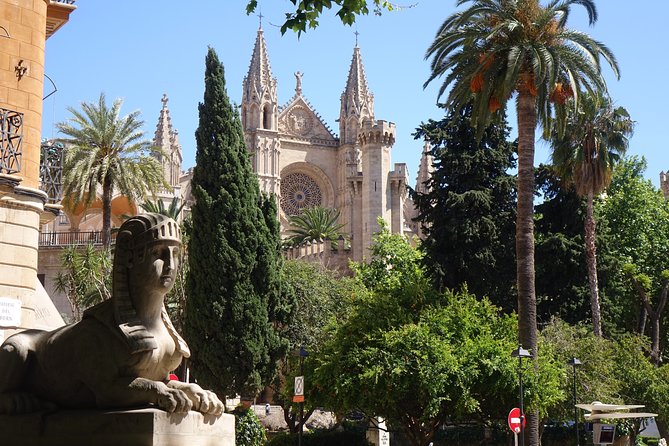
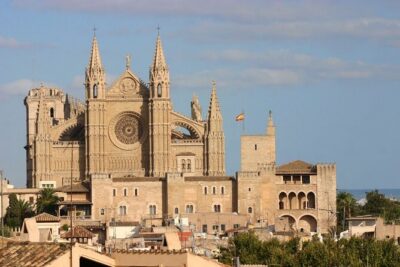
The Cathedral of Palma, known locally as La Seu and also called the Cathedral of Light, is the major sight on the route. Construction began in 1230 and ended 371 years later, in 1601.
The long building period is part of the story. This is not a monument created in one burst. It reflects centuries of work, changing tastes, and the growth of Palma after the medieval Christian conquest.
Even without entering, the Cathedral dominates the area around Parc de la Mar and helps explain why the city’s skyline is so memorable. The audio commentary gives you a historical framework before you decide how much time to spend at the building itself.
Entrance tickets are not included. That matters if you want to go inside, since the $9.99 covers the audio experience only. Treat the walk as an introduction to the Cathedral, not as an admission ticket or guided interior visit.
The name Cathedral of Light is also a useful reminder to look beyond the heavy Gothic stone. Light is part of the building’s effect, and the audio stop encourages you to pay attention to the relationship between the structure and the open space in front of it.
Almudaina Palace and the layers of power
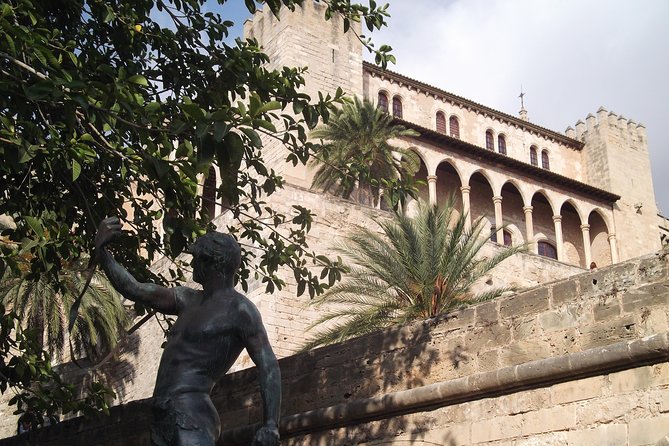
Across from the park is Almudaina Palace, described as an Arabic king’s palace built in the tenth century. It is the oldest monument in Palma and now serves several roles: official royal residence, museum, and military building.
That mixture makes the palace especially interesting. You are looking at a site that has moved through different political eras without losing its importance. The building’s use by the Spanish royal family gives it a connection to the present, while its origins reach back to Muslim rule in Mallorca.
The palace is where King Felipe VI receives official visitors, including presidents from other countries. The audio stop helps connect that formal modern role with the palace’s earlier history.
Again, admission is separate. You can learn about the building from the street and decide later if you want to buy an entrance ticket. Since the walk ends elsewhere, you can also return to the palace on another day without disrupting the route.
La Lonja, a Gothic building shaped by trade
The walk also reaches La Lonja, a beautiful Gothic building built in 1428. It once served as Palma’s maritime stock exchange and is open to the public with free admission.
This is one of the route’s best value stops because you get both a major historic building and a no-cost interior visit, assuming opening conditions allow entry. The building shows how important sea trade was to Palma and how commercial life shaped the city alongside royal and religious power.
The free admission is worth noting. While the Cathedral and other attractions may require tickets, La Lonja gives you a chance to step inside a major Gothic building without adding to the day’s cost.
The audio format also works well here because you can listen outside, pause, enter, and restart after you have looked around. Do not expect a guide to accompany you through the building. You are responsible for your own visit, and the recording provides the background.
From Talayotic culture to the Spanish Inquisition
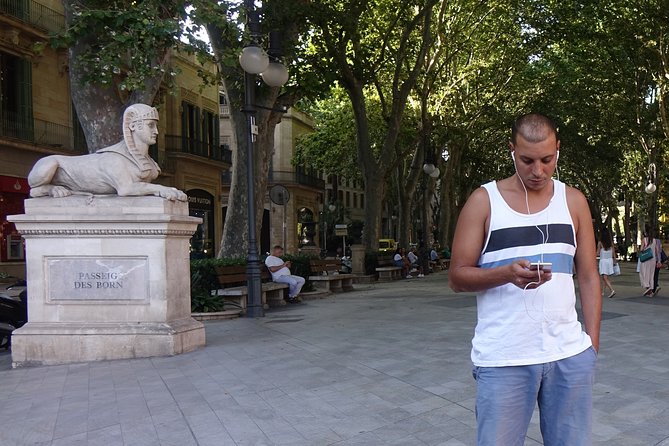
Sandra’s narration places Palma’s streets within a long timeline, from the ancient Talayotic culture through the Spanish Inquisition and into the elegant old city.
The route does not remain limited to one period. That is important because Palma can otherwise seem like a city made only of medieval churches and royal buildings. The earlier Talayotic past and the later religious and political conflicts give you a wider view of Mallorca.
The Spanish Inquisition section adds a darker note. A good city walk should not present only pretty façades and pleasant squares. Palma’s past included power struggles and painful chapters, and the audio gives those subjects a place in the walk.
The recording also points to courtyards and bars. These smaller details keep the experience from becoming a checklist of famous sights. You hear about the spaces between the monuments, where old homes and social places help define the city’s daily character.
The route’s final squares and the Mile Zero of Palma
The walk finishes at Plaça de Cort, near Palma’s town hall. This central square is described as Palma’s Mile Zero and is steeped in history.
Ending here makes practical sense. You finish in a central location rather than beside a distant attraction, so you can continue exploring, find food, or make your way back toward other parts of the city. The square also provides a clear endpoint, which is useful when you are following audio directions rather than a person.
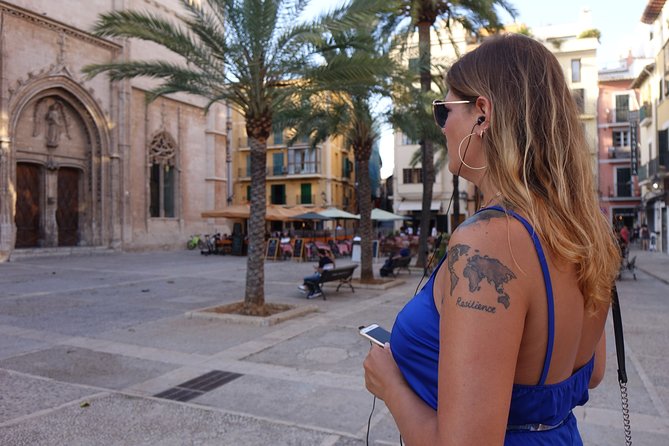
Another stop brings you to a beautiful square built in the middle of the nineteenth century. Each year, it hosts the feast of Saint Sebastian on January 19, celebrating Palma’s patron saint. This is one of Mallorca’s important annual celebrations.
The route therefore closes with public spaces that still matter to local life. You are not just moving from one old building to another. You are seeing squares used for celebration, civic identity, and orientation.
What the VoiceMap format does well
You receive lifetime access to the tour, along with the VoiceMap app for Android and iOS. Audio, maps, and geographic data can be used offline, which is helpful if you do not want to rely on mobile data while walking.
The app is meant to trigger commentary as you move through the route. That can make the walk feel more natural than stopping to read a long guidebook entry at every corner. You can keep your eyes on the buildings instead of constantly checking a screen.
The best part is control. Start when you like, pause for coffee, stop inside Santa Eulalia Church, and resume later. You can also repeat the walk during a future visit because access is not limited to one day.
The main weakness is technical reliability. One user had repeated app crashes and had to close and reopen it, then mark the location manually. Another found the app very demanding on the phone battery. These are not minor concerns on a walking tour, so download the audio and map before setting out, begin with a full battery, and carry headphones.
The route is near public transportation, but transportation is not included. It is also described as a private activity for your group, though there is no live guide walking with you. Sandra supplies the voice and local perspective, while you handle the route and timing.
Is $9.99 good value?
At $9.99 per person, this is an inexpensive way to organize a first look at Palma. You receive roughly 60 to 90 minutes of narration, offline route material, and lifetime access. That is good value if you want historical context but do not need a scheduled guide.
The price is less attractive if you expect entrance tickets, food, transportation, or a person to answer questions along the way. None of those are included. The cost covers the digital audio walk, not a full sightseeing package.
I see the strongest value for a short visit. If you have only a few hours in Palma, the route links several major sights without requiring you to plan every turn in advance. It also gives you a sensible starting point and a clear finish.
The non-refundable policy deserves attention before booking. You cannot receive a refund or change the experience after cancellation, so choose it only when you are confident about your plans.
Who should choose this Palma walk?
I would choose this for independent visitors who like history, want to set their own pace, and are comfortable using a smartphone. It suits solo explorers, couples, and small private groups who prefer not to join a scheduled walking tour.
It is also useful for a first visit because it covers the Cathedral, Almudaina Palace, Santa Eulalia Church, La Lonja, major squares, and older streets in one compact route. The stories give you enough background to decide which buildings deserve a longer return visit.
You may want a different option if you dislike phone-based tours, need a live person for directions, or have limited battery life. The app issue is the one serious concern here. The idea works well, but the technology needs to work with you, not against you.
Should you book Palma’s Alternative History?
Book it if you want a low-cost, flexible introduction to Palma with a clear route and a local narrator. Sandra’s stories connect the city’s old buildings with its wider political and cultural past, while the freedom to pause makes the walk easy to fit into your day.
Skip it if you are looking for included admission, a live guide, or guaranteed technical ease. If you do book, download the offline material first, bring headphones, and start with a fully charged phone. With those precautions, this is a useful way to get oriented before exploring Palma on your own.
FAQ
How long does the audio walk take?
The walk takes about one hour to one hour and thirty minutes, depending on your pace and how often you stop.
Where does the tour begin?
It begins at Parc de la Mar in Palma, beside the small saltwater lake facing the Cathedral and Almudaina Palace.
Where does the tour end?
It ends at Plaça de Cort, near Palma’s town hall in the historic center.
Is the tour guided in person?
No. It is a self-guided audio walk narrated by Sandra, a longtime resident of Palma.
What languages are available?
The tour information lists English and French access. The experience summary specifically identifies English, so check the language option when booking.
Is an internet connection required during the walk?
No. The VoiceMap app provides offline access to the audio, maps, and geographic data.
Are entrance fees included?
No. Tickets and entrance fees for museums or attractions along the route are not included. La Lonja is noted as free to enter, while other sites may charge admission.
What do I need to bring?
You need a smartphone and headphones. Transportation, food, and drinks are not included. A charged phone is especially important because the app can use a significant amount of battery.
New audio tours around Spain
- Entrance to the Alhambra and Generalife with Audio Guide★ 3.5 · 38 reviews
- Alhambra Ticket with Audio Guide in Granada★ 3.5 · 151 reviews
- Montsacopa: An audio tour in the Volcano in the Centre of the City★ 4.5 · 3 reviews
- Mosque-Cathedral of Córdoba E-Ticket with Audio Guide★ 3.5 · 15 reviews
- Cádiz TukTuk Tour with Audio Guide★ 5.0 · 4 reviews
- Vejer de la Frontera: The White Pearl of Andalusia Audio Guide★ 5.0 · 2 reviews
- Bilbao Scavenger Hunt and Highlights Self Guided Audio Tour★ 4.5 · 4 reviews
- Self-Guided Audio Tour-The Surrealist Barcelona of Dalí and Gaudí★ 3.5 · 8 reviews
Mallorca Audio Tours, compared.
Palma: Caves of Genova Ticket & Digital Audio Guide
Read our review →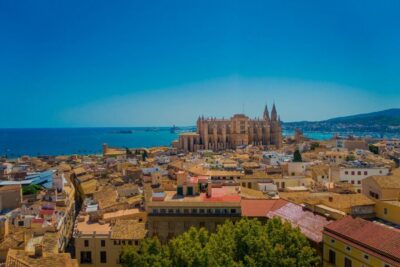
Browse the lists this tour appears in