Review · PARIS
Paris: Rodin Museum Ticket & Optional Digital AudioGuide App
The Musée Rodin gives you something rare in Paris: great sculpture in a former mansion and garden, rather than in a vast, tiring museum hall. You can see The Thinker and The Gates of Hell at close range, then move through Rodin’s old rooms and outdoor works at your own speed. I especially like the elegant Hôtel Biron and the chance to photograph the art freely.
The $23 ticket is a fair deal if Rodin is high on your Paris list, particularly because it covers both the house and gardens for one day. I also like the optional audio guide, available in 12 languages. The catch is that it is an independent app, not the museum’s official guide, and its coverage does not include the gardens. Bring headphones and a charged phone.
Key points to know before you go

- Rodin’s former home is part of the experience: Hôtel Biron, an 18th-century mansion, contains the main indoor collection.
- The Thinker is best seen up close: The museum lets you study Rodin’s surfaces, posture, and details rather than just recognize the famous image.
- The gardens add breathing room: Outdoor sculpture and open space make this a gentler museum visit than a long indoor circuit.
- Camille Claudel is included: Her work appears alongside Rodin’s, adding useful context to the collection.
- The audio guide is optional and self-guided: It comes by link, not as an in-person tour, and requires your own headphones.
- Plan around the one-entry rule: Once inside, you can stay as long as you like, but you cannot leave and return with the same ticket.
Why the Musée Rodin feels different from a standard museum visit
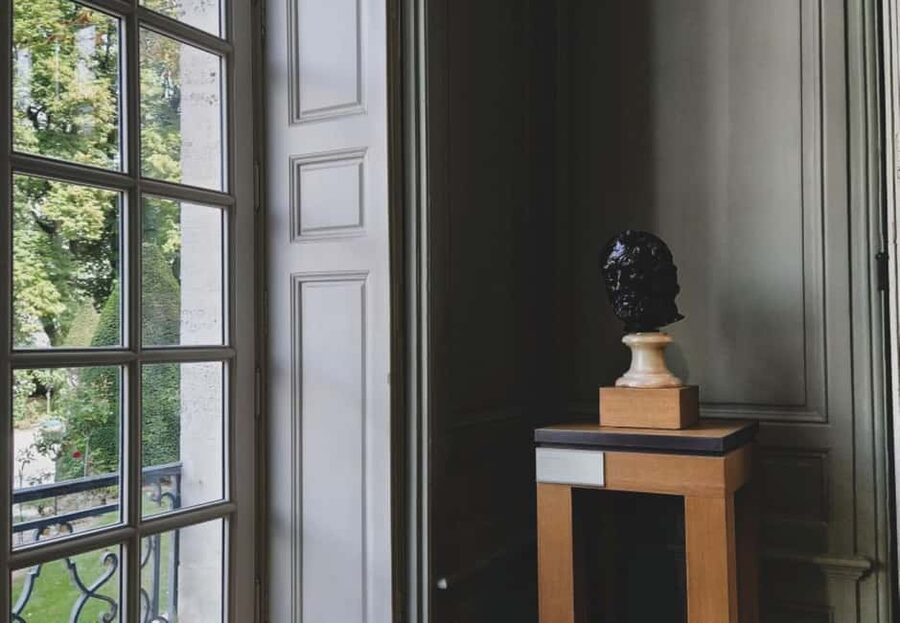
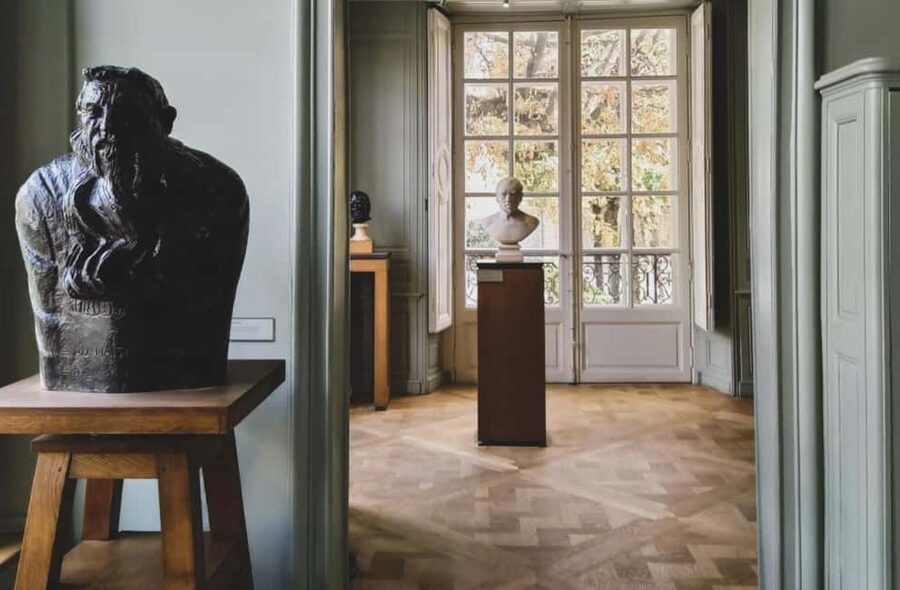
Rodin’s museum is not simply a room full of famous statues. The setting helps explain the artist’s work. You enter the Hôtel Biron, an elegant 18th-century mansion that served as Rodin’s home and studio, then move among sculptures displayed in rooms with a more personal feel.
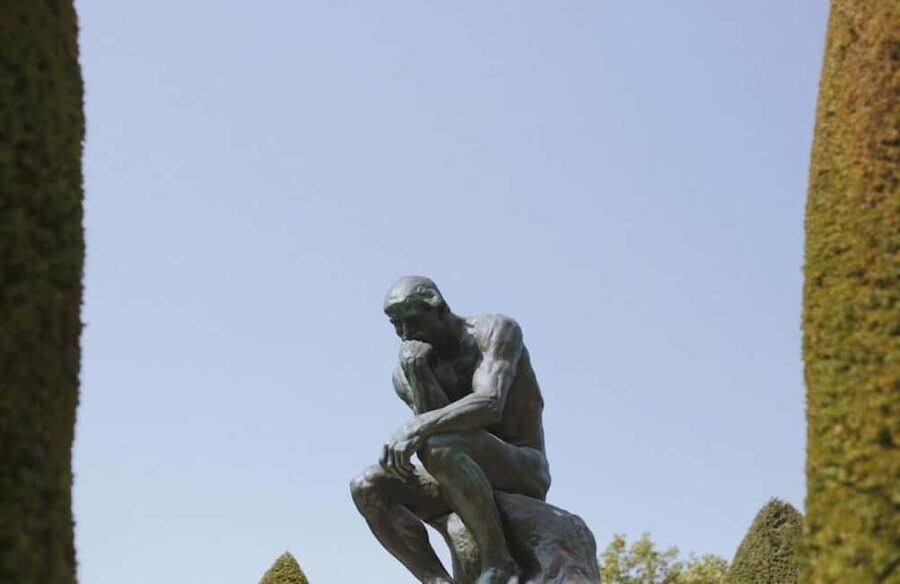
That matters because Rodin’s art rewards close looking. From a distance, The Thinker can seem like a familiar symbol of serious thought. In person, you can study the tension in the body, the oversized hands and feet, and the rough, active surface that keeps the figure from looking too polished. The museum gives you time to look at those choices without rushing from one major painting to another.
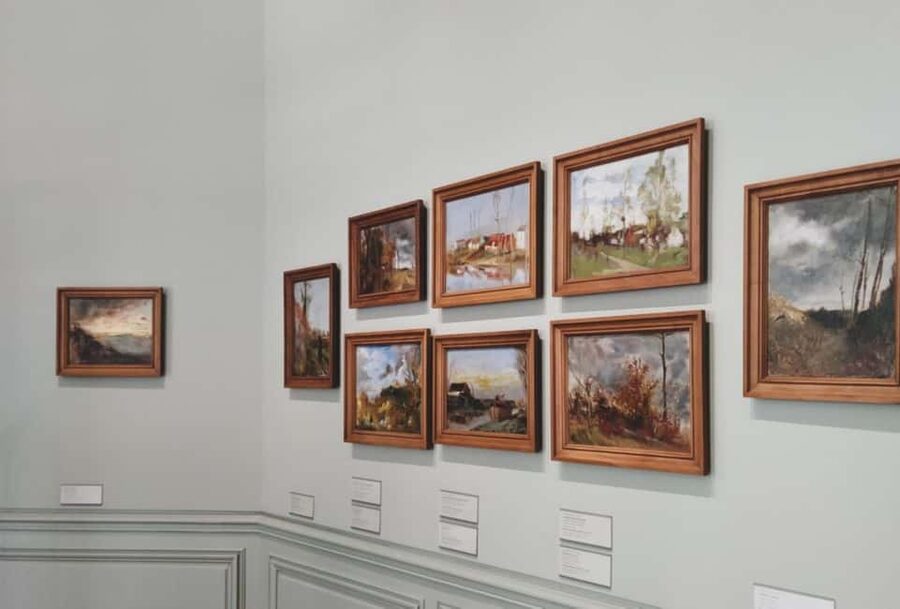
The collection includes more than 6,000 sculptures, along with early plasters and later works. You may find the early pieces especially useful because they show Rodin testing forms and techniques before arriving at the finished sculpture people know best.
I would allow at least several hours if you want to see the house, garden, and audio-guide material without hurrying. The ticket remains valid for one day, and there is no requirement to join a group or follow a fixed route.
More Museum Audio Tours in France
- Paris: Louvre Museum Hosted Entry and Mona Lisa Audioguide
★ 4.6 · 5,235 reviews - Paris: Orsay Museum Entry Ticket and Digital Audio Guide App
★ 4.4 · 3,170 reviews - Louvre Museum Timed Entrance Ticket with Audio Guide
★ 3.0 · 453 reviews
Walking through Hôtel Biron and Rodin’s working world
Begin indoors at Hôtel Biron. The mansion gives the visit a strong sense of place, since it was not selected as a random exhibition hall. Rodin lived and worked here, so the rooms connect the art with the setting in which he developed his ideas.
Inside, you can expect sculptures spread through elegant rooms rather than arranged as one long chronological lesson. That format is pleasant for a flexible visit, but it also means you should take charge of your route. If you want a clear explanation of Rodin’s life and artistic development, the digital guide can help organize what you are seeing.
Look for the early plasters as you move through the collection. Plaster studies can seem less glamorous than bronze, yet they are valuable because they reveal how an idea began. They show the working stage, the changing proportions, and the hand of the sculptor before a final version took shape.
The later works offer a useful contrast. Seeing early and mature pieces in the same museum allows you to notice how Rodin’s treatment of the human body developed. You are not just checking famous names off a list. You are watching an artist work through problems of movement, scale, texture, and expression.
Meeting The Thinker and The Gates of Hell
The museum’s most famous works are The Thinker and The Gates of Hell. Their fame can make them feel overfamiliar before you arrive, but the real value is seeing them directly and from different angles.
With The Thinker, take a few minutes to walk around the sculpture and study it closely. A photograph gives you the pose, but not the full sense of the figure’s physical strain. The museum setting lets you notice how Rodin made thought look like a bodily act, with muscles, weight, and pressure all working together.
The Gates of Hell is important not only as a major Rodin work, but also because it brings together many figures and ideas that appear elsewhere in his sculpture. Seeing it alongside other pieces helps you recognize repeated forms and themes. The work rewards patience, so do not treat it as a quick photo stop.
You can take your own photos in the museum and garden areas. That freedom is useful if you want to compare details later or remember the pieces that made the strongest impression. Keep your camera from becoming a barrier, though. Sculpture is about volume and surface, and a phone screen can flatten both.
Camille Claudel adds another point of view
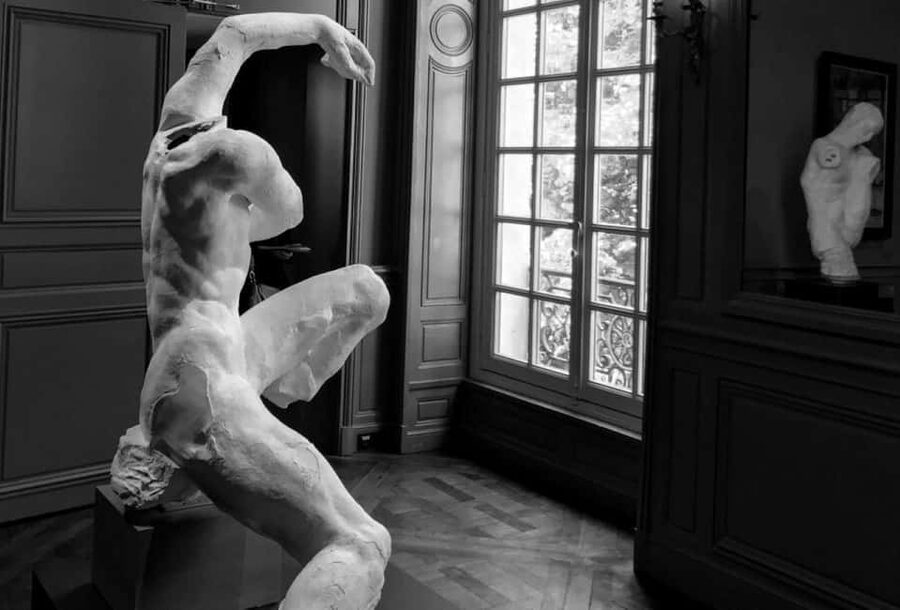
The museum also presents work by Camille Claudel, Rodin’s muse and protégé. Her presence gives the visit more range than a single-artist display and helps you consider the artistic exchange around Rodin.
Claudel’s work appears within the wider collection, so you can compare her approach with Rodin’s as you go. This is one reason the museum suits people who want more than a quick stop for The Thinker. You receive a broader look at sculpture and at the people connected with Rodin’s creative life.
The available information does not promise a separate Claudel tour or a dedicated guide section, so treat her work as part of the museum visit rather than a separate program. Still, her inclusion adds real value, especially if you already know something about her or want to see how two artists handled similar subjects.
More Museum Audio Tours in Paris
- Paris: Louvre Museum Ticket & Exclusive Immersive AudioGuide
★ 3.5 · 369 reviews - Paris: Louvre Museum Hosted Entry & Masterpieces Audio Guide
★ 4.2 · 281 reviews - Paris: Museum of Decorative Arts Ticket and City Audio Tour
★ 3.3 · 146 reviews - Paris: Rodin Museum Skip-the-line Entry Ticket with Audio
★ 4.0 · 102 reviews
The gardens change the pace of the visit
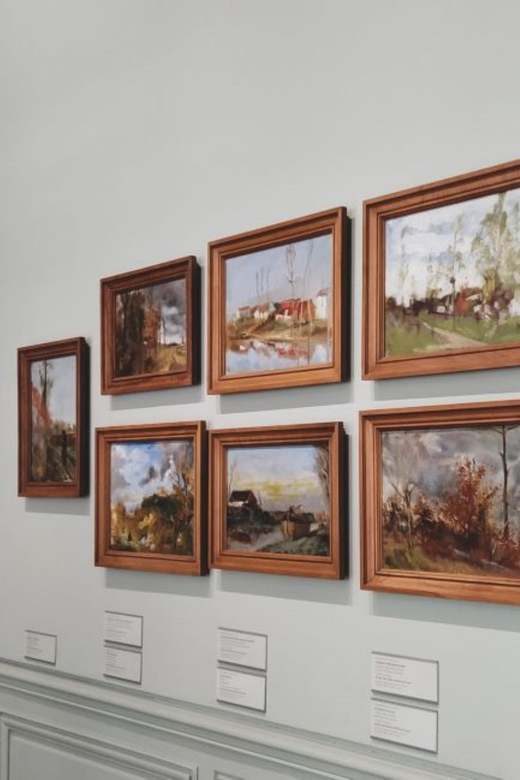
After the mansion, take time in the gardens. They give you room to slow down and look at sculpture in open air. A sunny day can turn this into one of the more pleasant art stops in Paris, with space to walk between works rather than remain indoors for the entire visit.
The garden is also where the audio guide has a clear limitation. The downloadable commentary does not cover the garden areas, so you will need to look independently outside. That is not necessarily a problem. The outdoor setting encourages you to respond to scale, placement, and distance without stopping for a long explanation at every work.
Because you may stay as long as you like after entering, you can return to a favorite sculpture or simply sit with the overall setting. You cannot exit and re-enter on the same ticket, so plan your indoor and garden time before passing through the exit.
How the independent audio guide works
The optional digital guide is accessed through a link. You receive it by email, and it also appears on the booking voucher. The link is sent the day before your visit, so use a valid email address when booking and check that you can access it before heading to the museum.
The guide is available in English, German, French, Italian, Japanese, Spanish, Chinese, Korean, Dutch, Portuguese, Hindi, and Arabic. That language range is helpful, particularly if you want more explanation than the museum labels provide.
Bring a charged smartphone and your own headphones. Headphones are not included, and museum staff cannot assist with this independent service. If you have trouble with the guide, you need to contact the activity provider directly.
The commentary covers Rodin’s life, his works, personal details, artistic techniques, and historical context. It can help you understand why a piece matters instead of merely identifying it. Still, keep your expectations sensible. This is not an in-person guide, and it is separate from the museum’s paid official audio guide.
I would use it selectively. Listen to the sections on the major sculptures and the artist’s development, then put the phone away for a while in the garden. The guide should support your visit, not turn the entire museum into a screen-based lesson.
Is $23 good value for one day?
At $23 per person, the ticket makes the most sense when you want a focused Rodin visit rather than a broad Paris museum pass. You receive admission to the Musée Rodin and access to an optional digital guide, with no need to pay for a group tour.
The value is strongest for three kinds of visitors. First, Rodin fans can spend time with the major works and study the collection in detail. Second, first-time visitors who want a manageable museum can enjoy a smaller, more relaxed stop than the city’s largest institutions. Third, people who like gardens and architecture receive more than indoor galleries alone.
The value is weaker if you only want a short photo of The Thinker. You still pay for a full attraction, and the non-refundable policy means you should choose your date carefully. Visitors under 18 and European Union residents under 26 can enter free with valid identification, so eligible visitors should check that option before paying.
Timing, entry, and practical planning
The museum is open Tuesday through Sunday from 10:00 AM to 6:30 PM. Last entry is at 5:45 PM, and the rooms close at 6:15 PM. It is closed on Mondays, May 1, January 1, and December 25.
The address is 77 Rue de Varenne in Paris. There is no meeting point and no tour leader waiting for you. You go to the museum independently and enter with your ticket.
Bring your passport or ID card, especially if you qualify for free admission based on age or European Union residency. Children must be accompanied by an adult, and unaccompanied minors are not allowed.
I would avoid arriving near closing time. A late entry may technically be possible before 5:45 PM, but you would lose the chance to enjoy both the house and the garden. Morning or early afternoon gives you more room to adjust your pace.
The ticket is valid for one day, but it is not a hop-in, hop-out pass. Once you leave, you cannot return using the same ticket. Plan meals, rest stops, and nearby sightseeing around the museum rather than assuming you can step out and come back.
Who should book the Musée Rodin ticket?
I recommend this experience if you want a self-guided museum visit with a strong sense of place. It suits people who prefer to set their own pace, take their own photos, and spend extra time with a few major sculptures instead of racing through a huge collection.
It is also a good choice for anyone interested in the making of sculpture. The early plasters, later works, and nearby pieces by Camille Claudel give you more to consider than the headline statues alone.
Think twice if you need a live guide, detailed commentary in the garden, or help with a museum audio device. The digital guide is independent, requires your own equipment, and does not cover every area.
For most art-minded visitors, I would book it. Go with a charged phone, headphones, identification, and enough time for both Hôtel Biron and the gardens. If you can spare only a few minutes, choose another stop. If you want a calm, focused look at Rodin’s work in the place connected with his life, this $23 ticket earns its place in your Paris plans.
FAQ
Where is the Musée Rodin?
The museum is at 77 Rue de Varenne, 75007 Paris, France. You visit and enter the attraction independently, with no meeting point.
What does the ticket include?
The ticket includes admission to the Musée Rodin. It also includes access to an optional digital audio guide app.
Is the audio guide an official museum guide?
No. It is an independent service and is separate from the museum’s paid audio guide. Museum staff cannot assist with it.
What do I need for the digital audio guide?
Bring a charged smartphone and your own headphones. The guide link is sent by email the day before your visit and also appears on your voucher.
What languages are available for the audio guide?
The guide is available in English, German, French, Italian, Japanese, Spanish, Chinese, Korean, Dutch, Portuguese, Hindi, and Arabic.
When is the museum open?
The museum is open Tuesday through Sunday from 10:00 AM to 6:30 PM. Last entry is at 5:45 PM, and the rooms close at 6:15 PM. It is closed Mondays, May 1, January 1, and December 25.
More Smartphone Audio Tours in Paris
- Paris Jewish Quarter Marais Smartphone GPSAPP Audio Walking Tour
★ 4.0 · 11 reviews - Seine River Cruise with Free Notre Dame Digital AudioGuide
★ 4.2 · 7 reviews - Paris: Grévin Wax Museum Entry Ticket with Audio Guide App
★ 4.3 · 7 reviews
More Smartphone Audio Tours in France
- Paris: Musee De L’Armee Ticket With Digital Audio Guide
★ 4.2 · 39 reviews - Paris Audioguide – TravelMate app for your smartphone
★ 4.1 · 27 reviews - Montmartre Paris Walking Tour with Audioguide on Your Smartphone
★ 4.5 · 17 reviews - Mysteries & Legends, smartphone audioguided walking tour
★ 4.5 · 13 reviews
New audio tours around Paris
- The Tout Paris Private Rickshaw bike Tour with Audio Guide★ 4.6 · 8 reviews
- Seine River Cruise with Free Notre Dame Digital AudioGuide★ 4.2 · 7 reviews
- Paris: Rodin Museum Skip-the-line Entry Ticket with Audio★ 4.0 · 102 reviews
- Paris: Museum of Decorative Arts Ticket and City Audio Tour★ 3.3 · 146 reviews
- Paris: Rodin Museum & Optional Audioguide or Seine Cruise★ 5.0 · 2 reviews
- Paris: Musee De L’Armee Ticket With Digital Audio Guide★ 4.2 · 39 reviews
- Paris: Panoramic Night Tour with Audio Guide and Host★ 3.2 · 220 reviews
- Paris: Audio-Guided Bus Tour & Seine River Cruise★ 3.6 · 266 reviews
Paris Audio Tours, compared.
Paris: Illuminations River Cruise with Audio Commentary
Read our review →
Paris: Louvre Museum Hosted Entry and Mona Lisa Audioguide
Read our review →
Paris: Orsay Museum Entry Ticket and Digital Audio Guide App
Read our review →
From Paris: Giverny Day Trip with Audio Guide or Live Guide
Read our review →
Paris: Eiffel Tower Access w/ Audioguide and Optional Cruise
Read our review →
Giverny and Monet’s House Half Day Trip from Paris Guide or Audio
Read our review →
Paris: Catacombs Entry & Seine River Cruise with Audio Guide
Read our review →