
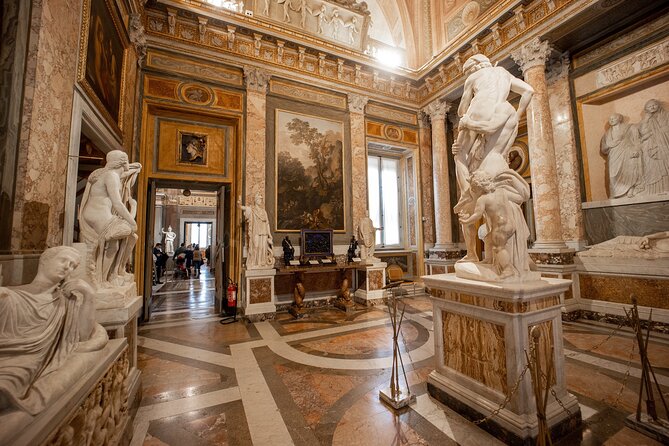
Review · ROME
Rome: Borghese Gallery Ticket and Optional Audio Guide
The Borghese Gallery packs an extraordinary amount of art into a small villa. In two hours, you can stand inches from Bernini’s Apollo and Daphne, study Caravaggio’s troubled faces, and see Canova’s polished marble without fighting through a huge museum crowd. The collection is compact and powerful, which makes it one of Rome’s best choices when your sightseeing time is tight.
I like the limited entry system, which keeps the rooms from becoming a shoulder-to-shoulder crush. I also like the freedom to set your own pace, with an optional phone audio guide in English or Italian. The main catch is price: at $70 per person, this is far more than the gallery’s basic ticket price, so you are paying for availability and booking help rather than a private tour.
Key points to know
- Bernini takes center stage: See Apollo and Daphne, The Rape of Proserpine, David, and early work such as Goat Amalthea with Infant Jupiter and Faun.
- Two hours is the fixed window: Plan your visit carefully, since the gallery is small but filled with major works.
- The voucher is not your entrance ticket: Use the code sent the afternoon before your visit to collect the physical ticket at the gallery desk.
- The audio guide needs preparation: Download the app and its content before entering, and bring your own headphones or AirPods.
- Large bags are not allowed: You will need to leave luggage and large bags outside the gallery’s visitor areas.
- Book for certainty, not savings: This option can help when official tickets are sold out, but the markup is substantial.
Why the Borghese Gallery feels different from Rome’s larger museums
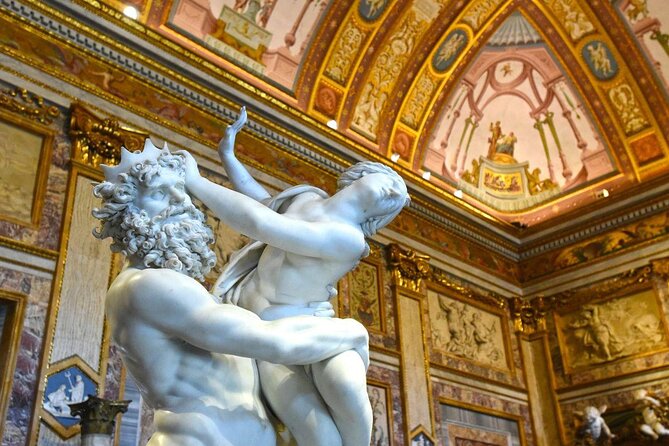
The Borghese Gallery is not a giant museum that asks you to march through room after room in search of the highlights. It is a former villa with about 20 rooms, and the collection is concentrated enough that nearly every stop has something worth your attention.
That scale changes the mood. You can look closely at a sculpture, move on, then return to it without losing half an hour crossing the building. The controlled admissions also matter. The number of people allowed inside is limited, so you get a better chance to see the art without a wall of phones and tour groups in front of you.
The visit lasts two hours. That is enough time for a thoughtful circuit, but it is not an invitation to linger all afternoon. If you stop at every work, read every label, and spend time with the audio guide, you will need to choose your priorities.
The villa itself is part of the pleasure. Its decorated rooms frame the art rather than serving as plain containers for it. Afterward, the surrounding Borghese gardens give you room to walk, rest, or continue your day. The grounds are large, and you might find bicycles for rent or a small train operating around the park, though these are separate from the gallery ticket.
More Museum Audio Tours in Italy
- Rome: Borghese Gallery Skip-the-Line Ticket & Audioguide
★ 4.3 · 4,318 reviews - Rome: Borghese Gallery Ticket + Audioguide or Guided Tour
★ 4.6 · 3,219 reviews - Rome: Borghese Gallery Skip-the-Line Tickets with Audioguide
★ 4.6 · 2,562 reviews
Collecting the ticket without getting lost

This experience does not begin with a guide leading you from a meeting point. You go to the gallery on your own. The afternoon before your reservation, you should receive a code by email and possibly by WhatsApp. At the gallery, show that code at the designated desk and collect the physical ticket.
This detail is important: the GetYourGuide voucher is not the entrance ticket. Do not simply assume that the original booking voucher will take you through the door. Look for the final ticket message, and check your spam folder or WhatsApp if it has not appeared.
The process is designed to avoid the regular ticket line, but you still need to arrive with enough time to find the desk and collect your ticket. Arriving late is a poor gamble. The gallery uses timed entry, and late tickets may be given away. One booking contact, Claudio, has helped a late arrival in the past, but you should not count on personal assistance rescuing a delayed schedule.
The separate entry arrangement is most useful when official tickets have sold out. It does not mean you can stroll in at any hour. Your reservation time still matters.
The ground-floor rooms and Bernini’s marble drama
The ground floor is where the sculpture makes its strongest impression. Bernini’s works are not quiet blocks of stone. They twist, reach, turn, and appear to catch a moment in motion.
Start with Goat Amalthea with Infant Jupiter and Faun, an early work that shows Bernini’s interest in lively figures and expressive surfaces. It is a useful introduction before you reach the more famous pieces.
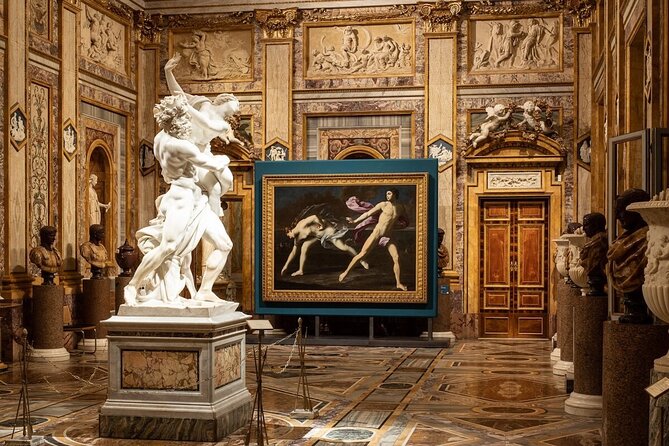
Then come the sculptures that give the gallery much of its emotional force. The Rape of Proserpine shows Pluto seizing Proserpine as she struggles against him. Look closely at the marble where his fingers press into her flesh. That illusion is one reason the sculpture feels almost theatrical rather than static.
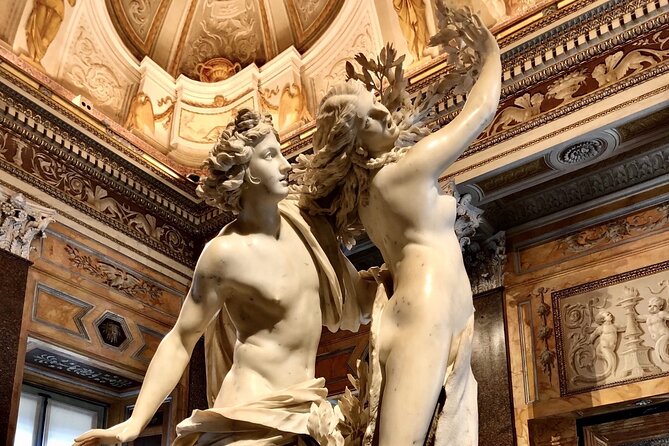
Apollo and Daphne tells the story of Apollo chasing Daphne, who is transformed into a laurel tree as she escapes. Bernini captures the change itself: Apollo’s hand reaches toward her, while leaves and branches spread from her body. The work rewards slow viewing, especially from different angles.
You will also encounter Bernini’s David, another sculpture built around movement. David is not posed after the battle. He is shown at the instant of action, twisting into the effort of throwing the stone. The figure asks you to move around it, which is one reason the gallery’s limited crowd makes such a difference.
Bernini produced a notable share of his secular sculpture in this collection. That concentration lets you follow the development of his style in one building rather than piecing it together across several Roman churches and museums.
Caravaggio’s paintings reward close attention

The gallery’s paintings provide a strong counterpoint to the sculpture. Caravaggio’s work is especially effective here because the rooms let you stand close enough to study his faces, hands, fabrics, and sharp contrasts of light.
Look for Young Sick Bacchus, a self-portrait-like image with a pale, tired figure and a still life of fruit. It does not present an idealized god in perfect health. Instead, it gives Bacchus an uneasy human presence, which makes the painting feel more personal than ceremonial.
Boy with a Basket of Fruit offers another chance to see Caravaggio turn ordinary detail into the main event. The fruit is carefully observed, but the boy’s expression keeps the picture from becoming a simple still life. Notice how the realism works alongside the controlled lighting.
You will also see other major paintings, including works associated with Raphael and the wider Italian tradition. The gallery’s strength is not limited to a single artist. Still, if Baroque painting is your main interest, Caravaggio deserves the most time.
The audio guide can add useful context about the artists and the stories behind the works. Its main weakness is organization. It is a phone-based guide, and some sections may not follow the gallery’s room numbers clearly. You might find yourself checking the room, then checking the app, then trying to match the image or title.
That does not make the guide useless. It means you should download it before entering and allow time for the setup. The download may take around ten minutes, and you need about 100 to 150 MB of free phone storage. A strong internet connection is also helpful. Bring headphones, since they are not included.
More Museum Audio Tours in Rome
- Rome: Borghese Gallery Skip the line ticket and Audioguide
★ 4.3 · 1,535 reviews - Borghese Gallery, Home to Canova’s Art – Entry with Audioguide
★ 4.0 · 884 reviews - Rome: Borghese Gallery Skip-the-Line Ticket & Audioguide
★ 4.0 · 768 reviews - Borghese Gallery entry ticket and audioguide App
★ 4.7 · 570 reviews
Canova and the villa’s polished grandeur

Antonio Canova’s sculpture brings a different kind of beauty to the visit. Where Bernini often emphasizes action and emotional shock, Canova is known for smooth surfaces, graceful poses, and an almost weightless finish.
The collection gives you a chance to compare the two artists in the same setting. Bernini’s marble can look like skin, hair, and fabric caught in motion. Canova’s surfaces invite you to notice balance, refinement, and the way light slides across the stone.
You do not need to be an art specialist to enjoy this contrast. I suggest choosing one Bernini sculpture and one Canova work, then asking yourself what each artist wants the marble to do. One may seem to pull you into a story, while the other asks you to admire form and control.
Because the villa is not enormous, you can return to a favorite room if time allows. Still, do not spend the first hour only on the sculptures. The upper rooms and paintings deserve a fair share of your visit, especially if Caravaggio or Raphael is high on your list.
How to use the two-hour visit well
A practical plan helps. Give yourself time at the start to collect your ticket and pass through the entry process. Once inside, use the first part of your visit for the most important sculpture rooms, when your attention is fresh.
A good rhythm is:
- Spend about 45 minutes with the major sculptures on the lower level.
- Use the next 45 minutes for the painting rooms and Caravaggio.
- Keep the final 30 minutes for works you want to revisit, smaller rooms, and the villa’s decoration.
This is only a guide, not a required route. If you care most about Bernini, stay longer with Apollo and Daphne and The Rape of Proserpine. If paintings are your priority, move efficiently through the sculpture rooms and save time upstairs.
An early time slot is a smart choice. The gallery can become busier later in the day, even with controlled attendance. An early visit also gives you more freedom to explore the Borghese gardens afterward.
Wear comfortable shoes. You will be walking through the gallery and may want to continue through the park. Leave luggage and large bags behind, since they are not allowed. Keep only what you need, such as your phone, ticket message, and headphones.
Is the phone audio guide worth adding?
The audio guide is a useful extra if you want basic explanations without joining a live group. It covers the art and artists in English or Italian, and you can listen at your own pace.
The setup is the part that needs care. You must download the required application before the activity begins, then download the guide content. The app works with Android version 5.0 or newer and compatible iPhones, but not older devices such as the iPhone 5, iPhone 5C, older iPod Touch models, older iPads, or the first iPad Mini.
Bring your own headphones or AirPods. They are not supplied. The guide may also use numbering that does not match the gallery’s room numbers, so keep your eyes open and match titles and images rather than relying only on a number.
If you are comfortable reading labels and preparing in advance, you may not need the audio option. If you want more background on Apollo and Daphne, Caravaggio’s life, and the stories behind the sculptures, it can be worth adding. Just download it before you arrive, not while a timed entry is already ticking away.
The real cost of a $70 ticket

At $70 per person, this is an expensive way to enter the Borghese Gallery. The official admission price is much lower, and the difference can be several times the basic ticket cost. You should be clear about what you are buying.
You are paying for a reserved place, a booking service, and access when official availability may be difficult to find. You are not paying for a private art historian, a hotel pickup, or a guided walking tour. The small group label refers to the limited booking arrangement, not a live group being led through the rooms.
For a first-time visitor with a short Rome schedule, that certainty may be worth the extra money. Missing the gallery because tickets sold out can be a real disappointment, especially since the collection is one of Rome’s most concentrated art experiences.
For a flexible visitor who can check official availability early, the markup is harder to justify. If you are visiting in a quieter period and official tickets are still available, compare prices before booking this option.
The free cancellation policy gives you some protection: you can cancel up to 24 hours before the activity for a full refund. That is useful if your Rome plans change, but it does not reduce the basic price concern.
Who should book this experience?

I would recommend it most strongly to visitors who have already tried and failed to find official tickets, or who need a confirmed time for a tightly planned Rome itinerary. It also suits you if you prefer exploring alone rather than following a live guide.
Art lovers will find the collection worth the effort even without the audio guide. People who normally feel tired by huge museums may also appreciate the compact format. You can see major works by Bernini, Caravaggio, and Canova in one focused visit instead of spending an entire day in a sprawling institution.
The experience is not suitable for wheelchair users or people with mobility impairments, according to the activity information. Restoration work can also close some rooms, and access routes may change during the Jubilee period. Check your messages before setting out so you know about any current changes.
Should you book the Borghese Gallery ticket?

Book it if getting inside matters more than getting the lowest price. The limited admissions, short visit, and remarkable concentration of Bernini, Caravaggio, and Canova make the gallery an excellent use of two hours in Rome.
Skip this booking and seek the official ticket if you have time to plan ahead and can find availability. At $70, the price is the central drawback. If you do book, arrive early, confirm the final ticket code, download the audio guide before leaving your accommodation, and bring headphones.
Those simple steps turn a potentially confusing ticket pickup into a straightforward visit. The art itself does the rest.
FAQ
How long does the Borghese Gallery visit last?
The scheduled duration is two hours. You should use that time carefully because the gallery contains about 20 rooms and the entry period is limited.
Is the audio guide included?
The audio guide is included only if you select the audio guide option when booking. It is delivered through an application on your smartphone.
What languages are available for the audio guide?
The audio guide is available in English and Italian.
Do I need to bring headphones?
Yes. Headphones or AirPods are not included, so bring your own if you choose the audio guide.
Is the GetYourGuide voucher the entrance ticket?
No. The voucher is not the entrance ticket. You receive a code by email and possibly WhatsApp, then show it at the gallery desk to collect the physical ticket.
When will I receive the final ticket code?
The final ticket is sent in the late afternoon on the day before the reservation by email and possibly WhatsApp. Check your spam folder if it does not appear.
Can I bring luggage or a large bag?
No. Luggage and large bags are not allowed. Bring only the essentials you need for the visit.
Can wheelchair users book this activity?
The activity is listed as unsuitable for wheelchair users and people with mobility impairments. Some rooms may also close temporarily for restoration work.
New audio tours around Rome
- Rome: St. Peter’s Basilica and Dome Entry + Audio Guide★ 4.5 · 13 reviews
- St. Peter’s Basilica: Hosted Entrance & Digital Audioguide★ 4.1 · 35 reviews
- Sorrento & Pompeii Day Trip from Rome Audio Guide Tour★ 4.2 · 50 reviews
- Rome:St. Peter’s Basilica Hosted Entry + Official Audioguide★ 3.4 · 10 reviews
- Colosseum, Roman Forum, Palatine Hill access and AudioGuide★ 4.7 · 12 reviews
- Rome+Jubilee Audioguide – TravelMate app for your smartphone★ 4.2 · 38 reviews
- Rome:Ostia Antica Skip-the-line Ticket & Audioguide★ 4.3 · 11 reviews
- Rome: Vatican Museums & Sistine Chapel Entry with Audio App★ 4.3 · 240 reviews
Rome Audio Tours, compared.
Rome: Colosseum & Forum with Audio Guide App -Optional Arena
Read our review →
Rome: City Sightseeing Hop-on Hop-off Bus with Audioguide
Read our review →
Rome: St. Peter’s Basilica & Dome Entry Ticket & Audio Tour
Read our review →
Colosseum, Roman Forum & Palatine Hill with Audioguide App
Read our review →
Vatican & Sistine Chapel Ticket with Optional Audio Guide
Read our review →
Rome: Castel Sant’Angelo Entry Ticket & Digital Audioguide
Read our review →
Rome: Castel Sant’Angelo Entry Ticket & Audio App
Read our review →
Rome: Hop-on Hop-off Sightseeing Bus Tour with Audioguide
Read our review →Browse the lists this tour appears in