
Review · ROME
Rome: Monuments Audio Guide with Pantheon, no entry ticket
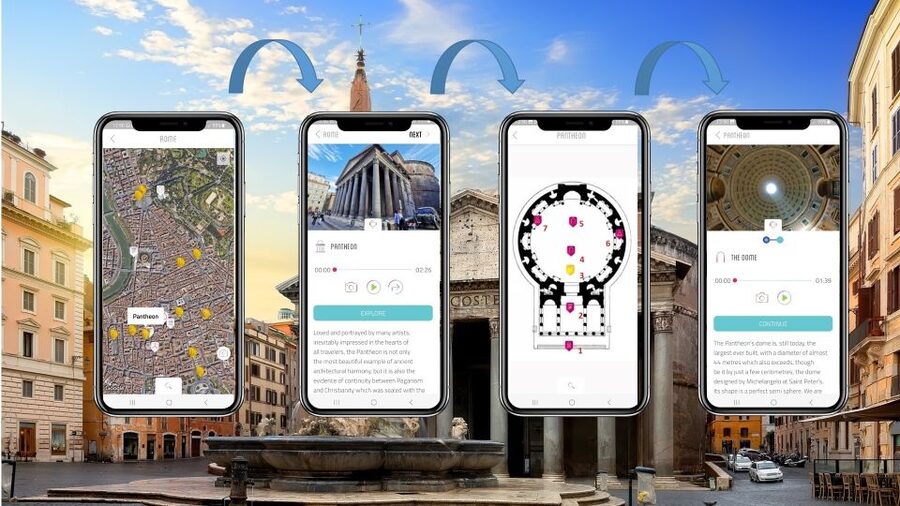
The clever idea here is simple: pay $2.83 for a smartphone audio guide that begins at the Pantheon, then use it to build your own half-day walk through central Rome. You get 10 audio sections inside the Pantheon, an indoor map, and more than 20 nearby stops covering Caravaggio, Michelangelo, Bernini, Trevi Fountain, and other churches.
I like the freedom to start whenever you want, and I like the unusually low price. The app can also point you toward places you might otherwise pass, such as San Ivo alla Sapienza. The main drawback is that this is not a guided visit with a person, and the Pantheon entry ticket, listed as €5, is extra.
Key points at a glance
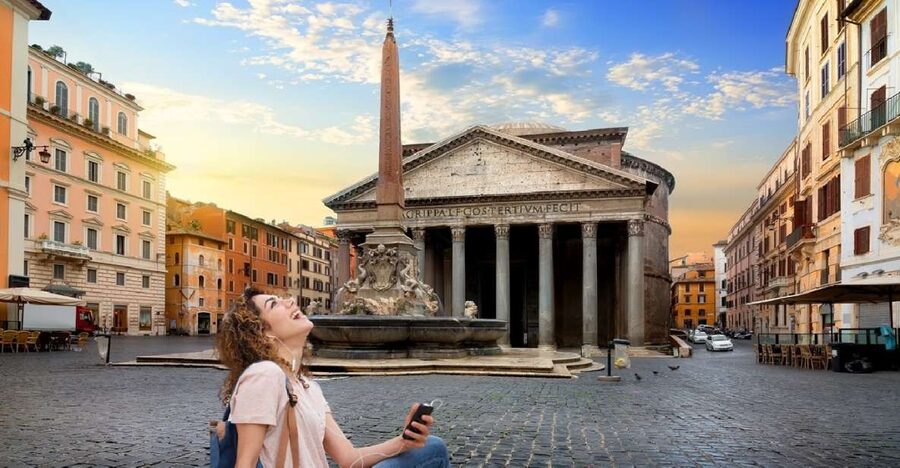
- Pantheon in 10 audio sections: Hear about its architecture, dome, tombs, legends, and conversion from pagan temple to Christian church.
- A self-guided Rome route: Use the geo-located map to find nearby churches, piazzas, fountains, and paintings.
- Three Caravaggio paintings: Visit San Luigi dei Francesi and Santa Maria del Popolo.
- Michelangelo and Bernini: See Michelangelo’s Redeemer at Santa Maria sopra Minerva and Bernini’s work in Piazza Navona.
- Very low-cost format: The audio guide costs $2.83, but Pantheon admission is not included.
- Best preparation tip: Download the ITGUIDES app and all content over reliable Wi-Fi or mobile data before you arrive.
What this Pantheon audio tour actually gives you
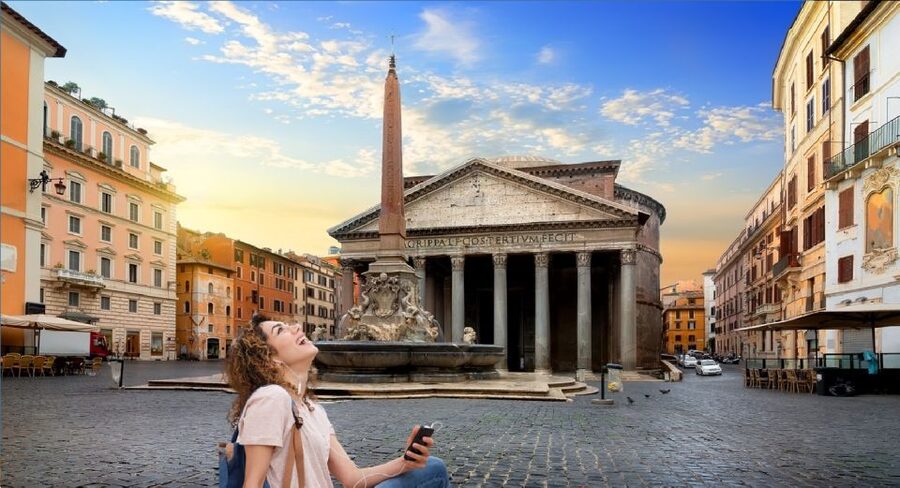
This experience is best understood as a digital walking tour rather than a standard excursion. You do not meet a guide, join a group, or follow a fixed departure time. You download the free ITGUIDES app, access the purchased content, and begin at the Pantheon or another point covered by the guide.
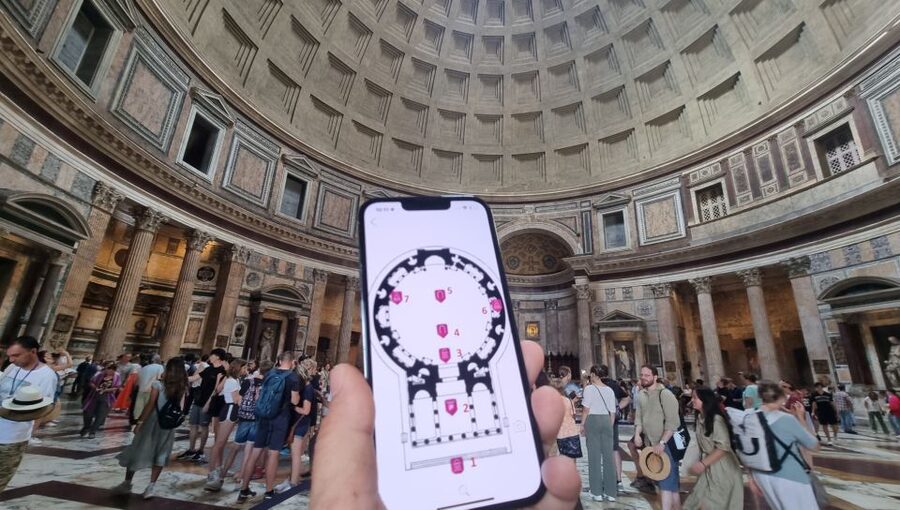
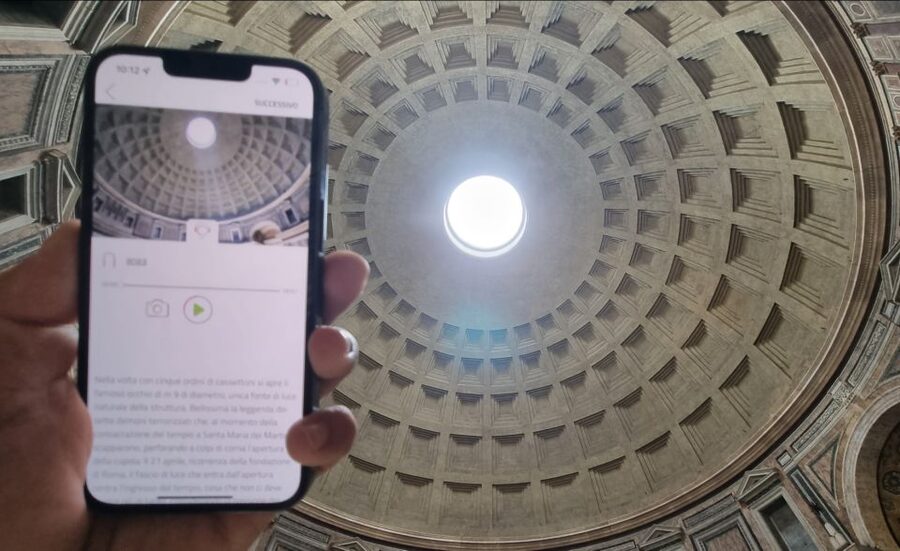
The Pantheon section includes more than 10 audio descriptions and an indoor map. The topics cover the building’s history, architecture, dome, tombs, legends, and the way rainwater is handled through the opening in the roof. A 20-minute audio presentation is specifically described for the Pantheon, so this part should give you a useful visit without asking you to listen for hours inside one building.
The wider guide adds more than 20 points of interest around central Rome. The exact route is flexible, but the main sights include San Luigi dei Francesi, Santa Maria del Popolo, Santa Maria sopra Minerva, Piazza Navona, the Trevi Fountain, Piazza del Popolo, and other churches and monuments.
That flexibility matters. You can spend more time inside the Pantheon, pause for lunch, or skip a stop that does not interest you. You can also listen while walking, although I would pause the audio before crossing Rome’s busy streets.
More audio tours around Rome:
- Rome: Colosseum & Forum with Audio Guide App -Optional Arena
★ 4.2 · 24,770 reviews - Rome: City Sightseeing Hop-on Hop-off Bus with Audioguide
★ 4.0 · 16,045 reviews - Rome: St. Peter’s Basilica & Dome Entry Ticket & Audio Tour
★ 4.2 · 7,537 reviews
Entering the Pantheon and looking up
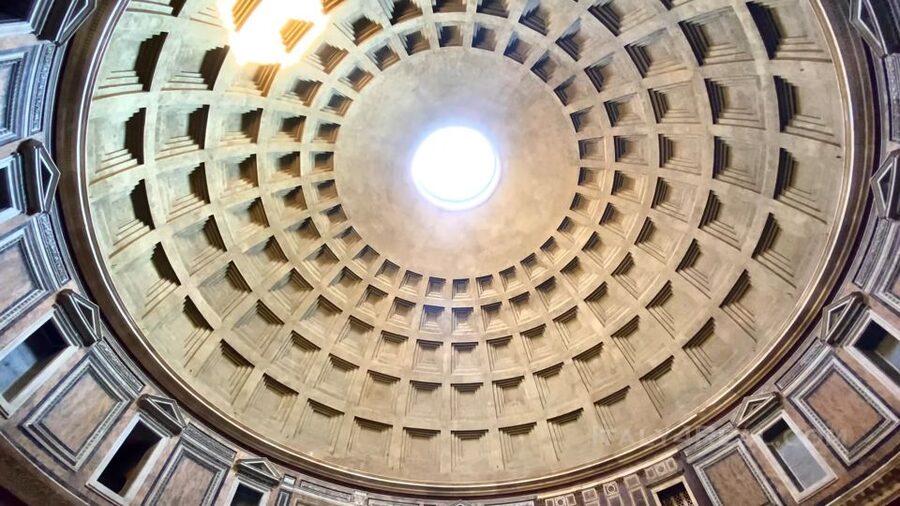
The Pantheon is the clear centerpiece. Its great concrete dome and central oculus give the building its drama, but an audio guide helps you notice the less obvious details too. The indoor map should help you connect the descriptions with the tombs, chapels, architecture, and major features around you.
The guide also deals with the building’s change from pagan sanctuary to Christian church. In 608, the Byzantine Emperor Phocas gave the sanctuary to Pope Boniface IV. That handover explains why this ancient Roman building survived in active religious use rather than becoming only an archaeological shell.
The stories are not limited to formal dates and measurements. The audio includes legends connected with the Pantheon, including tales involving evil and Satan. This is useful if you enjoy the strange folklore attached to old buildings, though listeners looking only for architectural facts may find the legends less important.
The roof deserves your full attention. The oculus is open to the sky, and the guide explains how rain is managed inside. You will get more from the visit if you stop looking at your phone and look up while the audio describes the dome.
Remember that the audio guide does not include admission. The supplied information lists the ticket at €5. Since the audio is digital, you are responsible for arranging entry separately. Check the current access rules before your visit, as the price and entry procedures can change.
Caravaggio at San Luigi dei Francesi
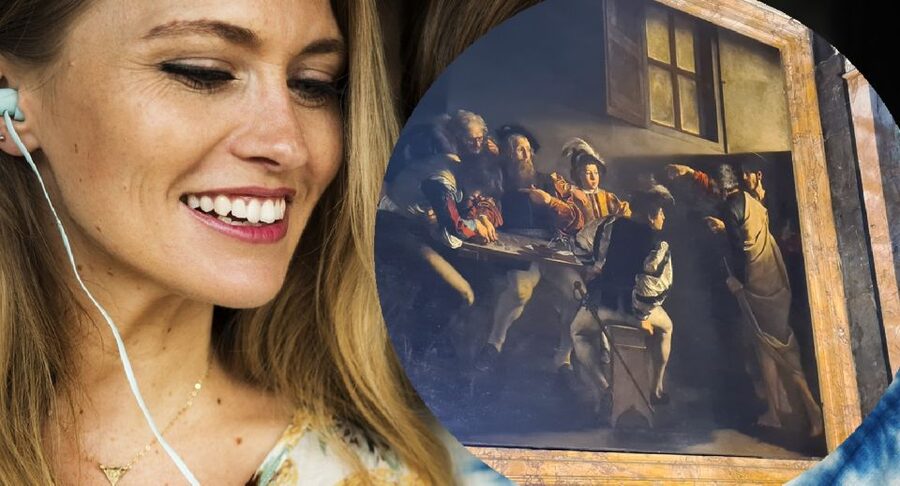
One of the best reasons to use the wider Rome content is the chance to connect the Pantheon with nearby works of art. San Luigi dei Francesi contains three Caravaggio paintings, and the guide directs you there after the Pantheon.
Caravaggio’s paintings are easier to appreciate when you know what to look for. His strong light, direct human figures, and dramatic scenes reward a short explanation, especially in a church where you may otherwise walk in, glance around, and leave.
This stop also shows the value of the self-guided format. You are not being rushed from one sight to the next. You can listen to the description outside or inside, look at the paintings, and replay the section if needed. The church is one of several places where the app adds artistic context to a walk that could otherwise become a simple checklist of famous addresses.
Keep your expectations practical. This is not a private art lesson, and the audio cannot answer questions on the spot. It gives you a focused introduction, then leaves you free to look carefully.
Santa Maria sopra Minerva and Michelangelo’s Redeemer
Santa Maria sopra Minerva is another important nearby stop. The guide points out Michelangelo’s Redeemer, also known as the Risen Christ, located about 100 meters from the Pantheon according to the supplied information.
That short distance makes this an easy addition. You do not need a separate cross-town trip or a complicated transport plan. After finishing the Pantheon, you can continue on foot and use the audio to understand why the sculpture matters.
The church also reinforces one of Rome’s great pleasures: major art is often found in active churches rather than only in ticketed museums. The experience works best if you allow time to enter, listen, and look rather than treating each stop as a quick photograph.
The guide’s geo-located map should help with navigation, but you still need to pay attention to opening conditions and local church rules. The information provided does not promise that every stop will be open at every hour.
Same sights, a different narrator:
- Colosseum, Roman Forum & Palatine Hill with Audioguide App
★ 4.4 · 6,291 reviews - Vatican & Sistine Chapel Ticket with Optional Audio Guide
★ 4.1 · 5,405 reviews - Rome: Castel Sant’Angelo Entry Ticket & Digital Audioguide
★ 4.7 · 5,347 reviews - Rome: Castel Sant’Angelo Entry Ticket & Audio App
★ 4.3 · 4,952 reviews
Piazza Navona and Bernini’s fountains
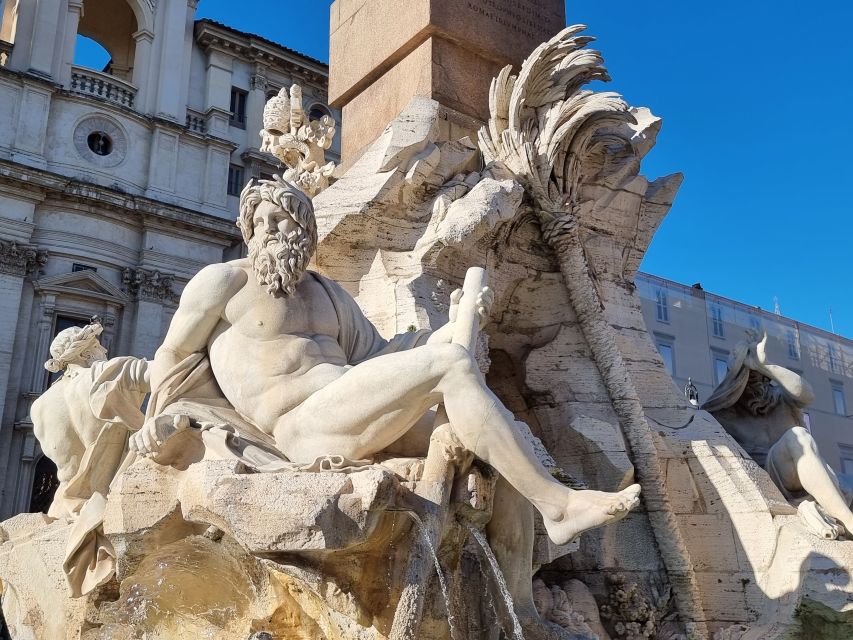
Piazza Navona brings the route outdoors. Its long, open shape and fountains make it one of central Rome’s easiest places to pause. The audio focuses on Bernini’s fountain and adds stories about the square.
This is a good change of pace after the Pantheon and churches. You can put the phone away, sit or walk around the piazza, and return to the description when you are ready. The guide is not only about buildings, so the explanations can help you understand how public spaces became part of Rome’s identity.
The practical downside is noise. Outdoor audio can be harder to hear around crowds, traffic, and street activity. Headphones will help, but keep the volume low enough to remain aware of your surroundings.
Trevi Fountain and the coin tradition
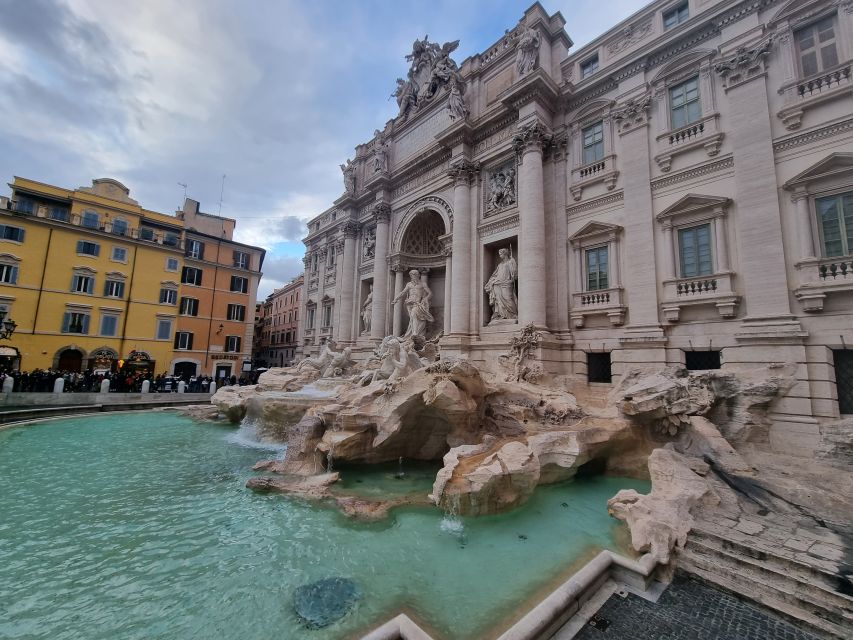
The Trevi Fountain is included as another major stop. The audio supplies historical information and stories, then nods to the familiar tradition of throwing in a coin if you want to return to Rome.
This is a natural place to finish or pause the walk. The fountain is easy to combine with the Pantheon and Piazza Navona, but it is also one of the most crowded sights in central Rome. If you want to listen closely, move to a quieter edge rather than trying to hear everything while standing at the front.
The guide helps give the fountain a place in the larger route. You are not just collecting famous sights. You are following a connected walk through churches, art, public squares, and monuments.
San Ivo alla Sapienza and the less obvious stops
The most rewarding part of the wider guide may be the places you did not plan to see. San Ivo alla Sapienza is specifically included among the less expected stops. It is the kind of church many people pass without entering, especially when they are focused on the Pantheon, Navona, and Trevi.
This is where the geo-located format earns its small price. You can check the map and see what is nearby instead of relying only on the sights printed in a guidebook. The app includes other monuments and churches as well, though the supplied information does not list every one.
I would treat the map as a suggestion rather than a strict route. Rome rewards wandering, but opening hours and access can vary. If a church is closed, continue to the next audio point rather than letting one missed stop spoil your afternoon.
How the ITGUIDES app works
The audio guide is available through the free ITGUIDES app. Languages include English, Italian, French, German, and Spanish. You can try a free demo before buying, which is useful if you want to check the controls and audio style first.
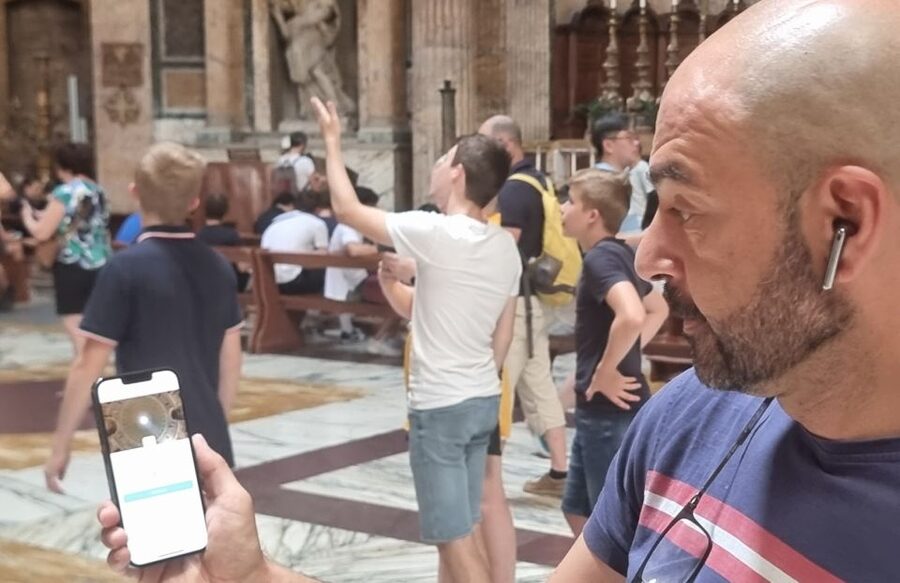
The most important preparation step is downloading the content with a strong mobile signal or Wi-Fi. Do this before you begin the walk. The guide is described as geo-located, so it helps you find points of interest, but depending on a live connection while moving through Rome is not a good plan.
The audio can be used hands-free with headphones, or you can listen directly from the phone. Headphones give you better focus, especially in churches and crowded piazzas. A portable battery is also sensible for any phone-based tour, though the supplied information does not promise how much battery the app will use.
Access is handled digitally. After purchase, customer service may contact you through WhatsApp to unlock the guide, and the process has been described as quick. Still, I would buy and activate it before the start of your visit, not while standing outside the Pantheon with a queue behind you.
Timing, pace, and comfort
The listed duration is five hours, but this is an estimated period for the full experience rather than a fixed tour length. You can listen to the Pantheon section in about 20 minutes, then decide how many of the nearby stops to include.
Five hours is reasonable if you want the Pantheon, several churches, Piazza Navona, and Trevi Fountain at a relaxed pace. It may feel long if you listen to every description without breaks, and it may feel short if you stop for meals, photographs, or extended time with the paintings.
Wear comfortable shoes and weather-appropriate clothes. The route involves walking between outdoor squares and indoor religious sites. Comfortable clothing also matters because you may spend much of the afternoon standing or moving through busy public areas.
The activity is listed as wheelchair accessible. Since the guide covers multiple churches and outdoor sites, you should still check the physical access at individual stops if that is important for your plans. The provided information confirms accessibility for the activity but does not give a detailed access report for every monument.
Price and what you get for €2.83 plus admission
At $2.83 per person, this is one of the least expensive ways to add context to a Rome sightseeing walk. The value is not in a live guide or exclusive access. It comes from having one app that covers the Pantheon and a long list of nearby sights.
The Pantheon ticket, listed as €5, is separate. Add that cost before comparing this with other tours. You are also paying for your own phone, data or Wi-Fi preparation, and navigation time.
The strong point is breadth. For a very small fee, you get the Pantheon’s indoor content plus Caravaggio, Michelangelo, Bernini, the Trevi Fountain, Piazza Navona, and more. If you plan to see even three or four of these places, the guide can be good value.
The weak point is support. A live guide would manage the route, answer questions, and adjust the pace. Here, you must handle the map, the app, entry, opening conditions, and timing yourself.
Who should choose this audio guide?
I would choose this for independent visitors who want structure without joining a group. It also suits couples and families who prefer to stop when they like, and it can work well with children because the shorter audio sections are easier to manage than a long formal lecture.
It is particularly useful if you already plan to visit the Pantheon and want more from the surrounding area. The extra art stops give the experience more substance than a single-building audio tour.
I would be less likely to recommend it to someone who wants a personal historian, a carefully timed route, or help with every practical detail. The guide is a tool, not a person. You need to be comfortable using an app and making your own decisions.
Should you book it?
Book this if you want a low-cost, flexible introduction to central Rome and are happy to explore with your phone. The Pantheon content is the core attraction, while the Caravaggio paintings, Michelangelo’s Redeemer, Bernini’s fountain, and Trevi Fountain make the small extra cost worthwhile.
Buy and download the guide before arriving, use Wi-Fi to load the content, and plan to pay the Pantheon entry fee separately. Skip it if you strongly prefer a live guide or do not want to manage an app during your sightseeing. For an independent half-day route, though, it offers a lot of useful material for very little money.
FAQ
Is the Pantheon entrance ticket included?
No. The audio guide is included, but the Pantheon ticket is listed separately at €5.
How long does the experience last?
The listed duration is five hours. You can choose your own pace because this is a self-guided activity with no fixed starting time.
Do I need to meet a guide?
No. There is no meeting point. You can start where you prefer and use the app to follow the audio content and map.
Which languages are available?
The ITGUIDES audio guide is available in Italian, English, French, German, and Spanish.
What sights are covered besides the Pantheon?
The guide includes San Luigi dei Francesi with three Caravaggio paintings, Santa Maria del Popolo, Santa Maria sopra Minerva with Michelangelo’s Redeemer, Piazza Navona, the Trevi Fountain, Piazza del Popolo, and other nearby monuments and churches.
How should I prepare the audio guide?
Download the free ITGUIDES app and load the content using a good mobile signal or Wi-Fi before beginning. You can also try the free demo to become familiar with the app.
New audio tours around Rome
- Rome: St. Peter’s Basilica and Dome Entry + Audio Guide★ 4.5 · 13 reviews
- St. Peter’s Basilica: Hosted Entrance & Digital Audioguide★ 4.1 · 35 reviews
- Sorrento & Pompeii Day Trip from Rome Audio Guide Tour★ 4.2 · 50 reviews
- Rome:St. Peter’s Basilica Hosted Entry + Official Audioguide★ 3.4 · 10 reviews
- Rome:Ostia Antica Skip-the-line Ticket & Audioguide★ 4.3 · 11 reviews
- Colosseum, Roman Forum, Palatine Hill access and AudioGuide★ 4.7 · 12 reviews
- Rome+Jubilee Audioguide – TravelMate app for your smartphone★ 4.2 · 38 reviews
- Rome: Vatican Museums & Sistine Chapel Entry with Audio App★ 4.3 · 240 reviews
Rome Audio Tours, compared.
Rome: Colosseum & Forum with Audio Guide App -Optional Arena
Read our review →
Rome: City Sightseeing Hop-on Hop-off Bus with Audioguide
Read our review →
Rome: St. Peter’s Basilica & Dome Entry Ticket & Audio Tour
Read our review →
Colosseum, Roman Forum & Palatine Hill with Audioguide App
Read our review →
Vatican & Sistine Chapel Ticket with Optional Audio Guide
Read our review →
Rome: Castel Sant’Angelo Entry Ticket & Digital Audioguide
Read our review →
Rome: Castel Sant’Angelo Entry Ticket & Audio App
Read our review →
Rome: Hop-on Hop-off Sightseeing Bus Tour with Audioguide
Read our review →Browse the lists this tour appears in