
Review · ROME
Rome: Navona Square Underground Ticket with Audio Guide
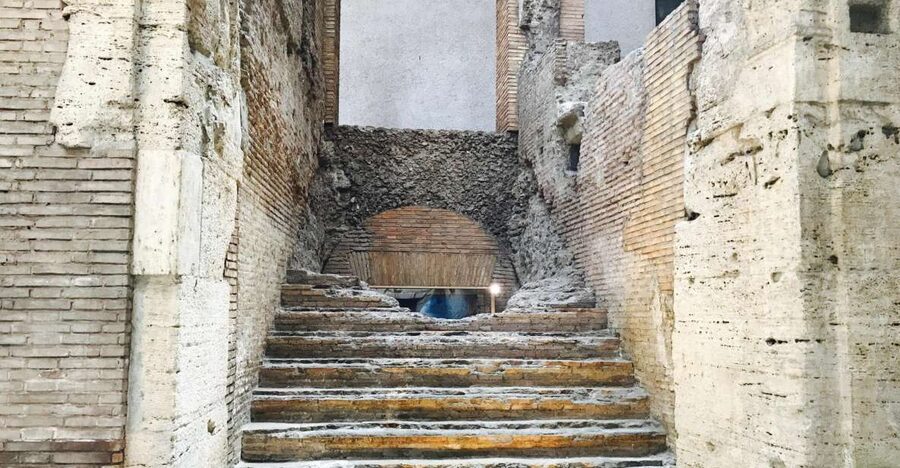
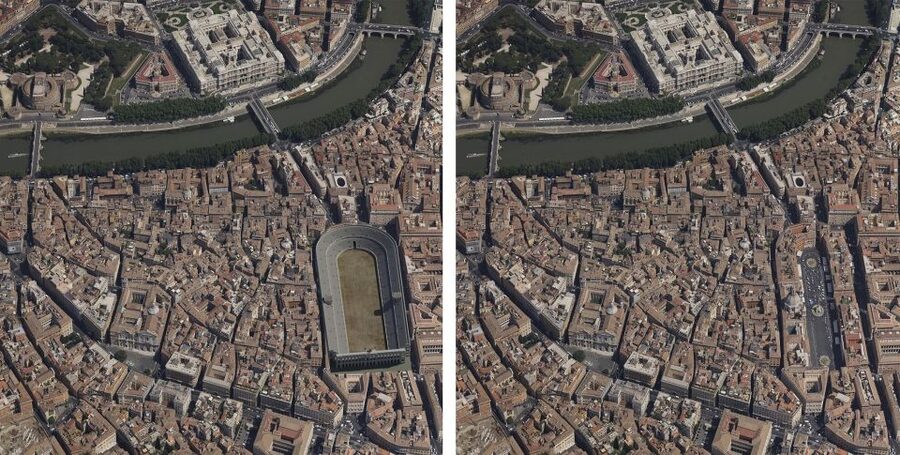
Beneath Rome’s grand Piazza Navona sits the Stadium of Domitian, a compact archaeological site that explains why the piazza has its long, oval shape. Five meters below street level, you can see ancient travertine blocks, brickwork, and marble from the entrances of a stadium built for Roman sport.
I like the clear audio guide, which gives shape to stones that can otherwise look like a jumble of old walls. I also like the visual material: photographs, a video presentation, and 3D reconstructions help you picture the arena and its crowds. The main drawback is size. Most people finish in 45 to 60 minutes, and some of the numbered audio stops can be confusing.
Key points to know before you book

- Five meters beneath Piazza Navona: See the remains below one of Rome’s best-known squares.
- A stadium for up to 30,000 spectators: Learn how ancient crowds were arranged and how Roman sports worked.
- Audio guide in seven languages: Choose Spanish, English, French, German, Italian, Russian, or Portuguese.
- More visual than a bare ruin: Panels, unpublished photographs, video, and 3D images show how the stadium once looked.
- Small but worthwhile visit: It suits a free hour between major sights, though it may feel brief if you expect a huge underground complex.
- Optional food and drink: Add an aperitif with one cocktail and snacks, or a two-wine tasting with a traditional appetizer board.
What lies beneath Piazza Navona

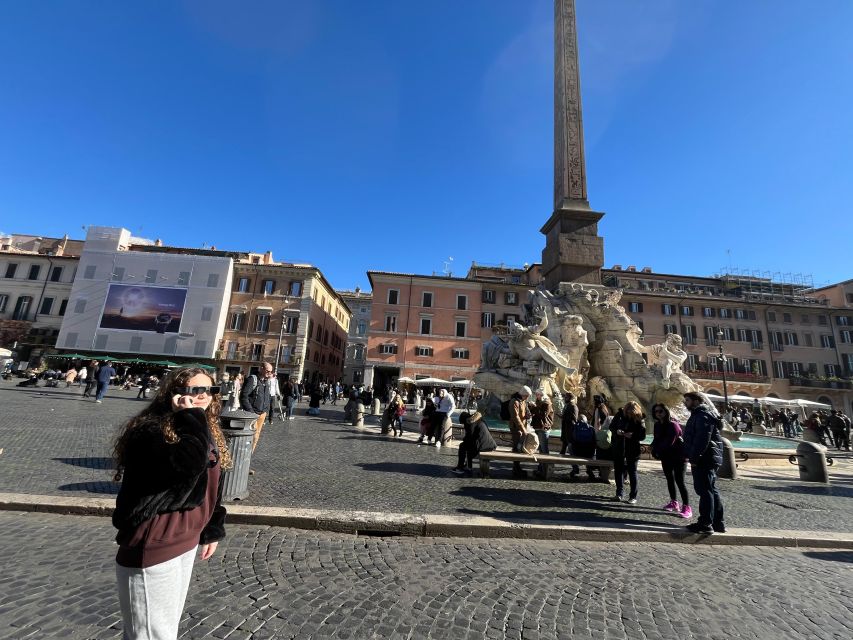
Piazza Navona is one of Rome’s most theatrical public spaces. Above ground, you have fountains, churches, cafés, artists, and the long sweep of the piazza. Below it, the Stadium of Domitian gives the square its older shape and purpose.
The stadium was the first and only one in Ancient Rome built from masonry. It was designed for athletic contests and public spectacles rather than the gladiatorial battles associated with the Colosseum. The audio guide explains how Roman sports developed and how rulers used public arenas to entertain large crowds.
The site is about 5 meters below the current street level. That sounds more dramatic than it feels in practice. You are underground, but this is not a dark tunnel system stretching beneath half of Rome. Parts of the site connect visually with the street above, and ordinary traffic noise can sometimes filter down.
That is both a weakness and a useful reminder. The modern city has grown directly over the ancient one. You are not seeing an isolated ruin in an empty field. You are looking at Rome layered on top of itself.
More audio tours around Rome:
- Rome: Colosseum & Forum with Audio Guide App -Optional Arena
★ 4.2 · 24,770 reviews - Rome: City Sightseeing Hop-on Hop-off Bus with Audioguide
★ 4.0 · 16,045 reviews - Rome: St. Peter’s Basilica & Dome Entry Ticket & Audio Tour
★ 4.2 · 7,537 reviews
Finding the entrance at Piazza Navona
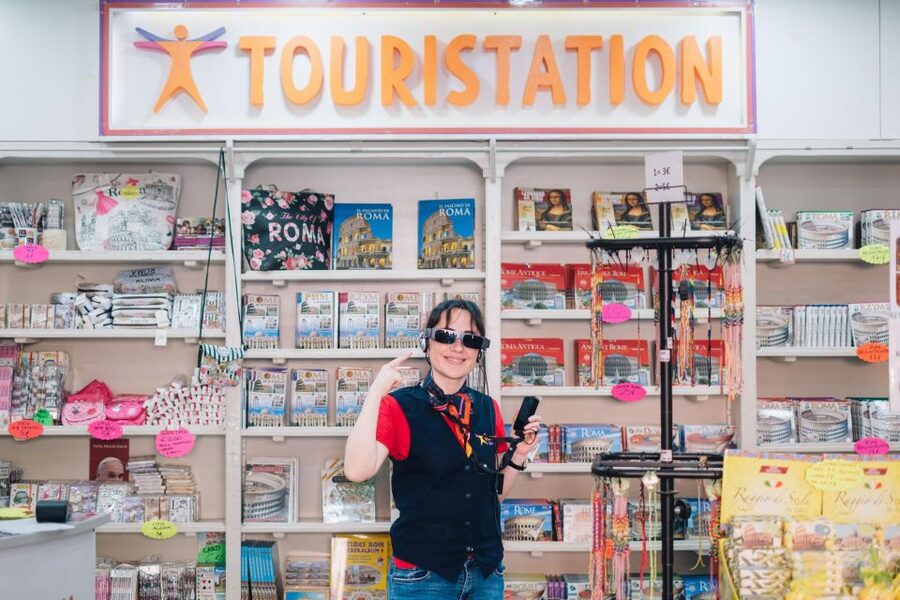
The meeting point is the tourist point at Piazza Navona, 25, in front of the main fountain. The site is easy to locate once you are in the piazza, but allow a little extra time for the ticket exchange.
If you have a phone voucher, you may be asked to redeem it at a ticket office a short distance away before returning to the entrance. This extra step has caused confusion, particularly for people who arrive expecting to walk straight in with the voucher. Staff are described as helpful, but the process can take another 5 to 10 minutes.
My practical advice is simple: do not arrive at the last moment. Find the tourist point first, confirm where the voucher must be exchanged, and keep the printed or issued ticket ready for the entrance. This is especially useful if you have an aperitif reservation afterward.
There is no transportation included, so you make your own way to Piazza Navona. That is rarely a problem because the site is in central Rome and works well as part of a walking route between the Pantheon, Campo de’ Fiori, the Trevi Fountain, and the city center.
Descending into the Stadium of Domitian
The first part of the visit introduces the site with information panels and historical images. These displays matter because the surviving walls do not immediately reveal the full plan of the stadium. You need help seeing the arena as a working sports venue rather than simply a section of ancient masonry.
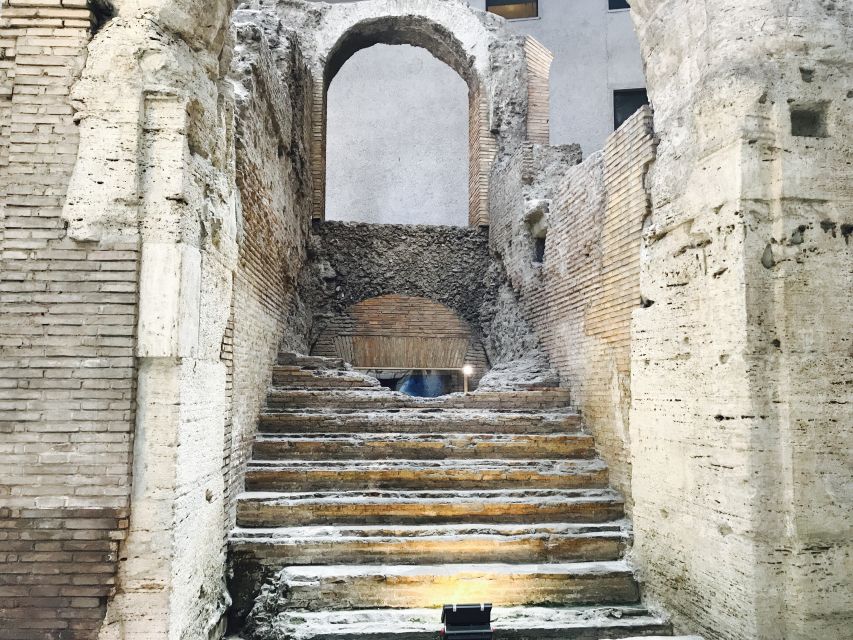
The audio guide takes you through the main points in sequence. It explains the construction materials, including travertine blocks, brickwork, and marble columns connected with the stadium’s entrances. These details are easy to overlook on a quick walk, but they show the care and scale of the original building.
The stadium could hold up to 30,000 spectators. The guide explains how the audience was divided around the arena, giving you a better sense of social order in Roman public life. Seating was not simply a matter of finding an open step. Position reflected status, and large public buildings helped make that order visible.
Look closely at the surviving masonry. The site is not a full stadium with intact seating rising around you. Instead, you see sections of the structure and enough of its plan to understand how the building occupied the space beneath today’s piazza.
This is the point where expectations matter most. If you picture a vast underground amphitheater, you may find the visit smaller than expected. If you treat it as a focused archaeological stop, the remains are far easier to appreciate.
Using the audio guide and visual displays
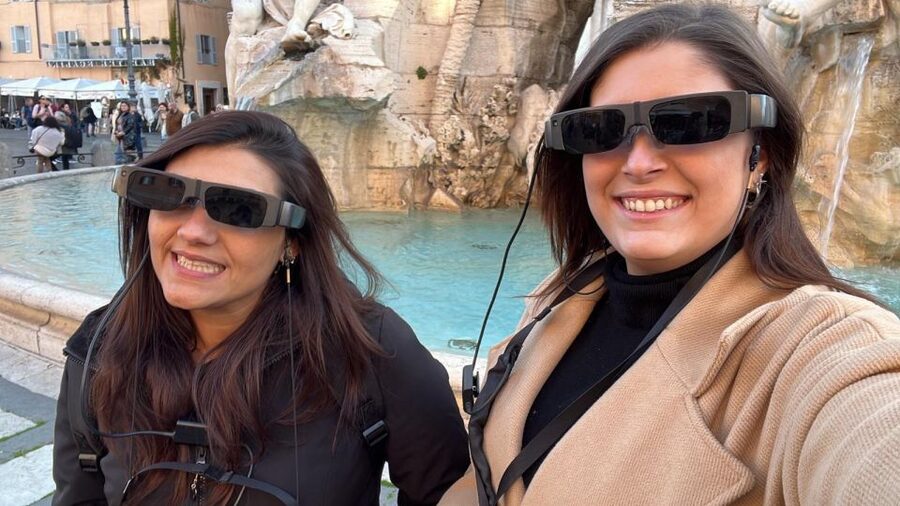
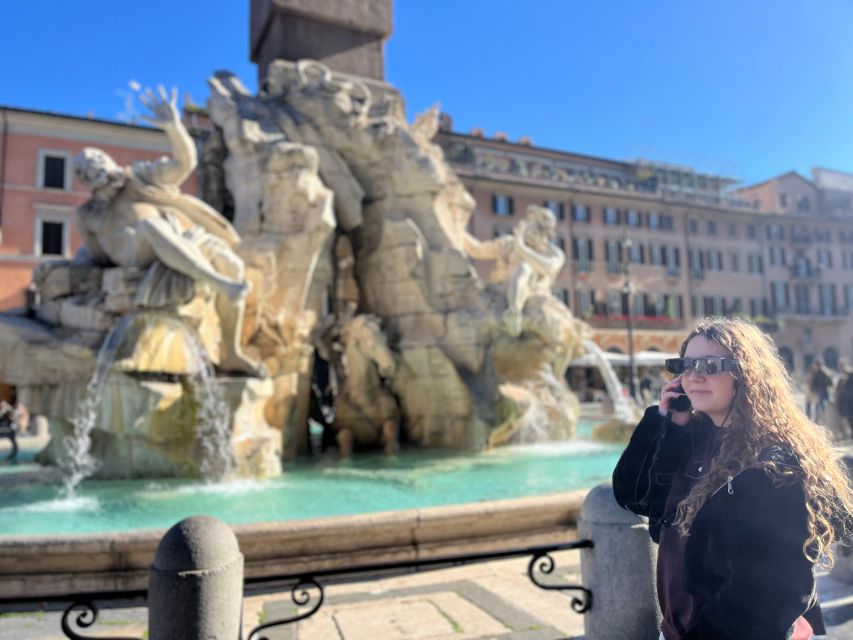
The audio guide is the heart of the experience. It is available in English, Spanish, French, German, Italian, Russian, and Portuguese. The narration covers the stadium, ancient Roman sports, the organization of the spectators, and the later development of Piazza Navona.
I would use the audio from the start rather than walk around first. The site is compact, and the explanation helps you understand what each wall or entrance represents. Several people have found the narration informative and easy to follow.
The numbering system is not perfect. At some stations, the audio order and the physical layout can feel slightly out of step. Images and sound do not always line up precisely, and a few points may require you to pause and work out which part of the display the narration describes.
That issue does not ruin the visit, but it does make a little patience useful. Listen for the main idea rather than trying to match every sentence to an exact stone. The audio is much more valuable than wandering without context.
The visual material helps fill the gaps. You will see old photographs, informative panels, a video presentation, and 3D renderings of the original stadium. These are especially helpful for children and anyone who finds bare ruins hard to read.
A children’s audio option has also been available, with a map and audio-guide pen. The compact layout can make the visit manageable for families, although a stroller may not be practical. The site is listed as wheelchair accessible, but the family experience with prams is not the same thing as wheelchair access, so parents should plan carefully.
Same sights, a different narrator:
- Colosseum, Roman Forum & Palatine Hill with Audioguide App
★ 4.4 · 6,291 reviews - Vatican & Sistine Chapel Ticket with Optional Audio Guide
★ 4.1 · 5,405 reviews - Rome: Castel Sant’Angelo Entry Ticket & Digital Audioguide
★ 4.7 · 5,347 reviews - Rome: Castel Sant’Angelo Entry Ticket & Audio App
★ 4.3 · 4,952 reviews
Understanding Roman sports and the later piazza

The most valuable part of the visit is the connection between ancient sport and modern Rome. The stadium was not merely a large building. It was a public stage where rulers displayed power, spectators gathered in great numbers, and athletic competition became part of city life.
The guide explains how up to 30,000 people were arranged around the arena. That number gives the site scale, but the displays do the real work of helping you picture the crowd. The 3D reconstructions show the stadium as a complete structure, rather than leaving you to imagine its missing upper sections.
You also learn how the ancient stadium area changed into the Piazza Navona you see today. The current piazza follows the long, narrow outline of the old arena, even though its function has changed completely.
This makes the underground visit useful before or after a walk across the square. Above ground, notice the shape of the piazza. Then think about the sports arena beneath your feet. The contrast between ancient public games and today’s fountains, restaurants, and street life is the real subject of the visit.
The site also gives you a different way to read Rome. Instead of treating ruins as isolated monuments, you see how later buildings and streets reused the old urban plan. That idea is one of the strongest reasons to include this stop in a city itinerary.
How long the visit takes
Plan on roughly 45 minutes to an hour if you listen to the audio and view the displays. Some people move through faster, while visitors who stop for every panel and reconstruction may need a little longer.
The short duration can work in your favor. Rome is full of major sights that demand half a day or more. The Stadium of Domitian fits neatly into a gap between lunch and another appointment, or into a walking day around central Rome.
It also means you should not book it as your only major archaeological experience. The site is not comparable in scale to the Colosseum or the Roman Forum. It offers a narrow, focused story about one building and the sports culture around it.
The quieter atmosphere can be another advantage. At less busy times, you may have room to study the walls and listen without much interruption. The site is clean and has toilets and a gift shop, which makes it an easy stop during a long day in the center.
Is the $18 ticket good value?
At $18 per person, this is reasonably priced for a compact archaeological visit with an audio guide and visual presentations. The price makes the most sense if you enjoy Roman history or have already seen the city’s major monuments.
I would not make it a top priority for a first visit to Rome if your budget and time are tight. The Colosseum, Roman Forum, Pantheon, and Vatican Museums usually come first. The Stadium of Domitian is best as a second layer, especially if you have walked through Piazza Navona before and want to know what lies below it.
For a history-minded visitor, the ticket offers good value because it adds context that you cannot get from the surface of the piazza. You see original masonry, hear how the stadium worked, and use reconstructions to picture the missing structure.
The value drops if you expect a long guided tour or a large ruin complex. There is no live guide, no transportation, and no full-scale stadium rising around you. You are paying for a self-guided interpretation of a compact site.
The optional food packages change the calculation. One option adds an aperitif with a cocktail and snacks at a viewpoint in central Rome. Another includes two wines paired with a traditional appetizer board. These choices turn the booking into more of a short cultural stop followed by a food-and-drink break, but they should be chosen because you want the refreshment, not because the archaeological visit requires it.
Who will enjoy this most
I would recommend the Stadium of Domitian to:
- Repeat visitors to Rome who have already seen the headline monuments.
- History and archaeology fans who enjoy understanding how a city developed over time.
- Families with older children who can use the visual material and child-friendly audio format.
- Independent visitors who prefer moving at their own speed.
- People planning a central Rome walking day and looking for a one-hour cultural stop.
I would be more cautious if you are visiting Rome for the first time with only a day or two. The site is interesting, but it is not essential when you have not yet seen the city’s larger monuments.
It may also disappoint you if you want a dramatic, open-air ruin with broad views. The underground area is relatively small, and parts of it remain connected to the sounds and activity of the piazza above.
Practical details that affect your visit
The activity is valid for one day, with times based on availability. You can cancel up to 24 hours in advance for a full refund, and the reserve-now, pay-later option keeps your plans flexible.
The audio guide is included, but a live guided tour is not. You should expect to follow the numbered points independently rather than ask a guide to explain each section in person.
The site is listed as wheelchair accessible. A separate family experience indicates that it is not pram friendly, so anyone traveling with a stroller should check the route and access arrangements before booking.
Bring your phone voucher, but be prepared to exchange it for an entrance ticket if instructed. The simplest plan is to arrive early enough to handle that step without rushing.
Should you book the Stadium of Domitian?
Book it if you want a compact, well-explained look at the ancient building beneath Piazza Navona. The audio guide and 3D reconstructions make the remains far easier to understand, and the connection between the old stadium and the modern piazza is genuinely interesting.
Skip it if you have very limited time, a strict budget, or a strong preference for large ruins and live guides. At $18, it is not an impulse bargain, but it is fair value for an hour of Roman history in the heart of the city.
My best use of this ticket is as an add-on to a central Rome walking route. Visit the piazza above, descend to the stadium, then choose the aperitif or wine option if you want to finish with a drink and small bites. That gives the underground remains a clear place in your day rather than treating them as a stand-alone blockbuster.
FAQ
Where is the Stadium of Domitian entrance?
Redeem your voucher at the tourist point in front of the main fountain at Piazza Navona, 25.
How far below Piazza Navona is the archaeological site?
The remains are located about 5 meters below street level.
How long does the visit take?
Most visitors should allow about 45 to 60 minutes to walk through the displays and listen to the audio guide.
Is a live guide included?
No. The ticket includes entry to the underground archaeological site and an audio guide, but not a live guided tour.
Which languages are available for the audio guide?
The audio guide is available in Spanish, English, French, German, Italian, Russian, and Portuguese.
What does the audio guide explain?
It covers the Stadium of Domitian, Roman sports, the arrangement of up to 30,000 spectators, the stadium’s materials and entrances, and the development of Piazza Navona.
Is the site wheelchair accessible?
Yes, the activity information lists the site as wheelchair accessible.
Can I add food or drink to the booking?
Yes. Selected options include an aperitif with one cocktail and snacks, or a wine tasting with two wines and a traditional appetizer board.
Can I cancel the booking?
Yes. You can cancel up to 24 hours in advance for a full refund.
New audio tours around Rome
- St. Peter’s Basilica: Hosted Entrance & Digital Audioguide★ 4.1 · 35 reviews
- Rome: St. Peter’s Basilica and Dome Entry + Audio Guide★ 4.5 · 13 reviews
- Sorrento & Pompeii Day Trip from Rome Audio Guide Tour★ 4.2 · 50 reviews
- Rome:St. Peter’s Basilica Hosted Entry + Official Audioguide★ 3.4 · 10 reviews
- Colosseum, Roman Forum, Palatine Hill access and AudioGuide★ 4.7 · 12 reviews
- Rome+Jubilee Audioguide – TravelMate app for your smartphone★ 4.2 · 38 reviews
- Rome:Ostia Antica Skip-the-line Ticket & Audioguide★ 4.3 · 11 reviews
- Rome: Vatican Museums & Sistine Chapel Entry with Audio App★ 4.3 · 240 reviews
Rome Audio Tours, compared.
Rome: Colosseum & Forum with Audio Guide App -Optional Arena
Read our review →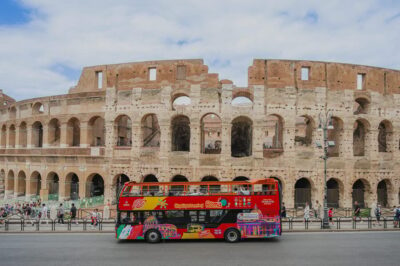
Rome: City Sightseeing Hop-on Hop-off Bus with Audioguide
Read our review →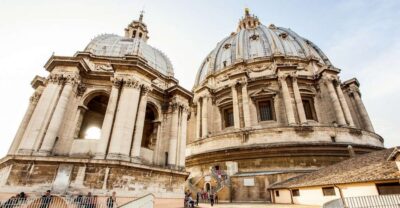
Rome: St. Peter’s Basilica & Dome Entry Ticket & Audio Tour
Read our review →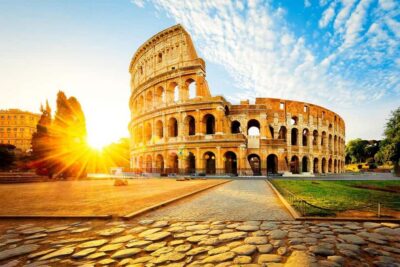
Colosseum, Roman Forum & Palatine Hill with Audioguide App
Read our review →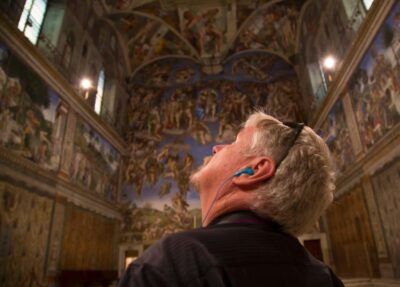
Vatican & Sistine Chapel Ticket with Optional Audio Guide
Read our review →
Rome: Castel Sant’Angelo Entry Ticket & Digital Audioguide
Read our review →
Rome: Castel Sant’Angelo Entry Ticket & Audio App
Read our review →
Rome: Hop-on Hop-off Sightseeing Bus Tour with Audioguide
Read our review →Browse the lists this tour appears in