
Review · ROME
Rome: Roman House of the Celio Hill Ticket & App Audioguide
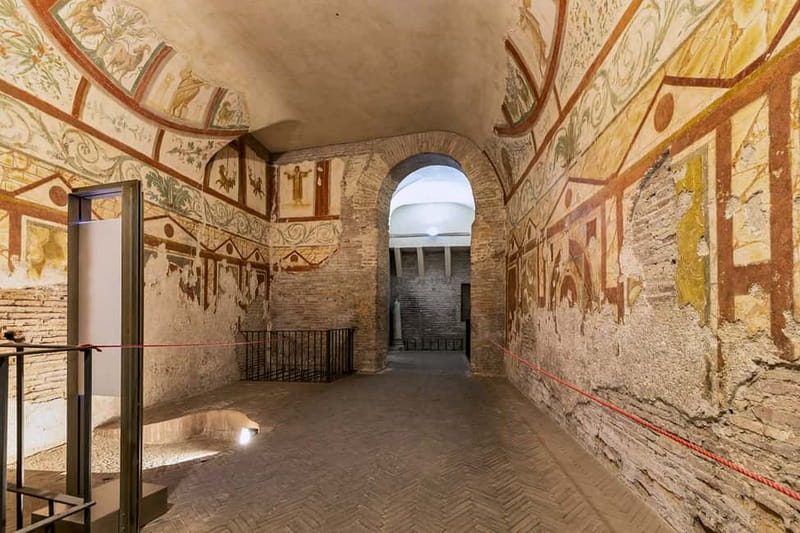
Below the Basilica of Saints John and Paul, the Roman Houses of the Celio reveal a side of Rome that most people miss. You walk through old workshops, warehouses, and rooms later turned into an elegant home, all below street level. The preserved frescoes are the main reason to come.
I like two things here: the site gives you a close look at how pagan and Christian life overlapped, and the $11 ticket is a modest price for a genuine archaeological stop. The digital postcard is a fun extra, too, especially if you want to send something more personal than a photo from the Colosseum.
The main caution is timing. One booking note indicates that the site may close at 3 p.m. rather than 4 p.m., so check the current hours carefully before setting out. Also confirm the audioguide arrangement, since the activity title mentions an app audioguide but the included-items list says it is not included.
Key points to know before you go
- Four centuries under one basilica: See rooms that changed from commercial spaces to a private domus and later became linked with Christian worship.
- Late antique frescoes: Original wall decorations remain the focus of the visit, with details worth taking time to examine.
- A pagan-Christian transition: The site helps you see religious change as a gradual process, not a simple overnight replacement.
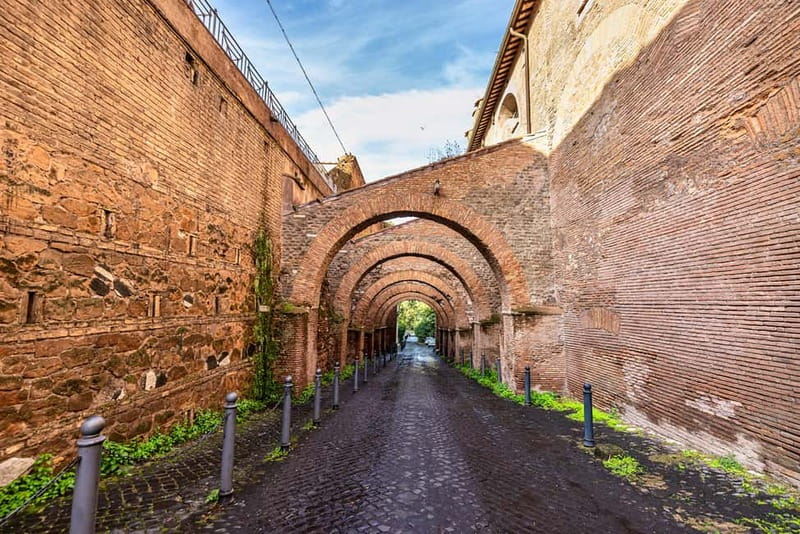
- A quiet stop between major sights: The houses lie on Clivo di Scauro, between the Colosseum and Circus Maximus.
- Low price, simple format: At $11 per person, this is a self-guided archaeological visit rather than a full guided tour.
- A practical timing warning: Check the closing hour before you go, since the site may close earlier than some booking information suggests.
What the Roman Houses of the Celio actually are
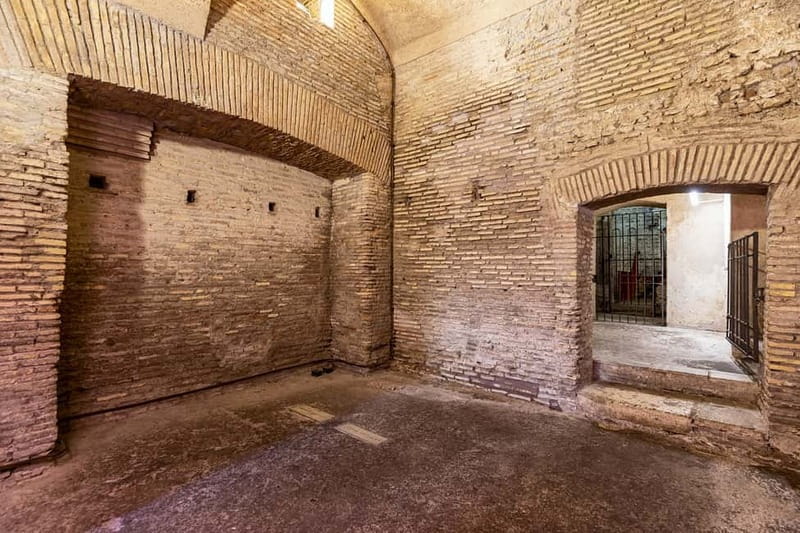
The Roman Houses of the Celio are an underground archaeological site beneath the Basilica of Saints John and Paul. The entrance is on Clivo di Scauro, a road on the Celio Hill, between the Colosseum and Circus Maximus.
The name can sound as if you are visiting one preserved Roman villa. In fact, the site records several stages of use. The earliest spaces were part of a popular multi-storey building, or insula. These buildings held workshops, storage rooms, and living areas, often packed into a busy urban setting.
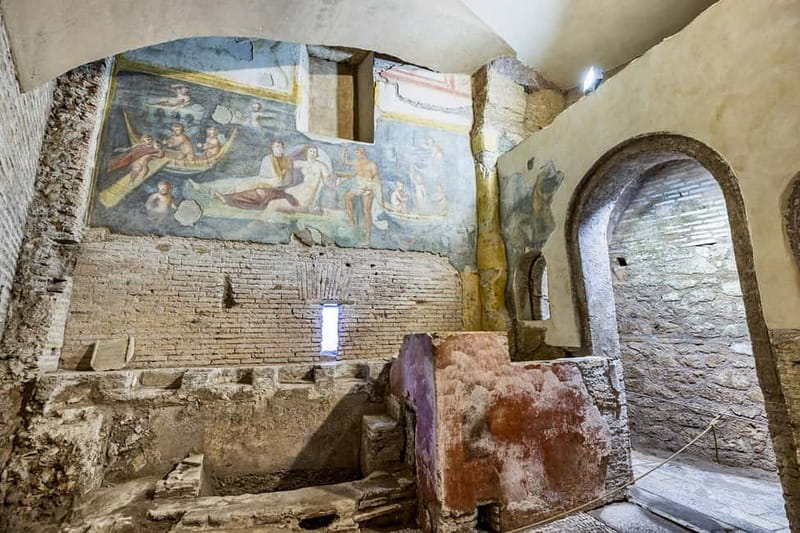
During the third century A.D., the interiors were changed into an elegant domus, or private residence. That change tells you something useful about Roman society. A place that began with practical commercial functions gained more refined rooms and decoration over time.
The site is also known as the house of the martyrs John and Paul. Its later Christian connection sits directly on top of the earlier Roman rooms, which is why the setting matters. You are not simply looking at old walls. You are seeing how one part of Rome was reused as religious, social, and political life changed around it.
More audio tours around Rome:
- Rome: Colosseum & Forum with Audio Guide App -Optional Arena
★ 4.2 · 24,770 reviews - Rome: City Sightseeing Hop-on Hop-off Bus with Audioguide
★ 4.0 · 16,045 reviews - Rome: St. Peter’s Basilica & Dome Entry Ticket & Audio Tour
★ 4.2 · 7,537 reviews
Entering beneath the Basilica of Saints John and Paul
Your visit begins at the Case Romane del Celio entrance on Clivo di Scauro. The activity ends at the same meeting point, so the format is easy to understand: make your way there, enter the archaeological site, and explore before returning outside.
The setting is valuable because it links the underground rooms with the basilica above. The basilica is not just a nearby landmark. It helps explain why the Roman houses survived as part of a later Christian place of worship.
As you move below ground, expect the experience to feel more focused than a major Roman monument. You are not crossing a huge open complex with many separate routes. The appeal comes from examining the preserved interior spaces and the details in the walls.
That smaller scale can be a relief after the Colosseum or Roman Forum. You can give your attention to the rooms instead of trying to take in an enormous site all at once. If you prefer monuments that explain themselves through size and spectacle, this visit may feel modest. If you like architecture and layers of history, it offers more substance than its short price suggests.
From workshops and warehouses to an elegant domus
The first major idea to keep in mind is change of use. The interiors began as workshops and warehouses in a multi-storey building. Later, they became part of a more refined private home during the third century A.D.
That shift gives the rooms a useful social context. Ancient Rome was not made only of temples, palaces, and grand public buildings. Much of city life took place in ordinary commercial and residential spaces. The Roman Houses let you see how those practical rooms could be altered and decorated as fortunes, tastes, and ownership changed.
Look closely at the relationship between plain structural areas and more decorated rooms. The contrast helps you understand that the site was not built as one unified showpiece. It grew and changed.
The available information does not specify every room or provide a fixed route with named stops, so you should not expect a scripted itinerary led by a guide. Instead, plan to walk through the archaeological remains at your own pace. The experience rewards patience. Pause at the wall surfaces, study the painted details, and consider how many different uses the same space had over the centuries.
The frescoes are the main reason to slow down
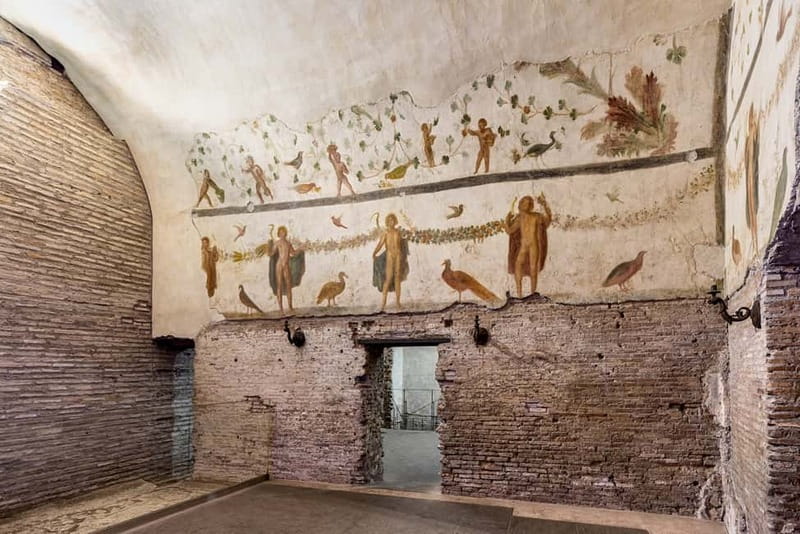
The original decorations are described as being in an extraordinary state of preservation. That is the strongest reason to choose this site over another general Roman attraction.
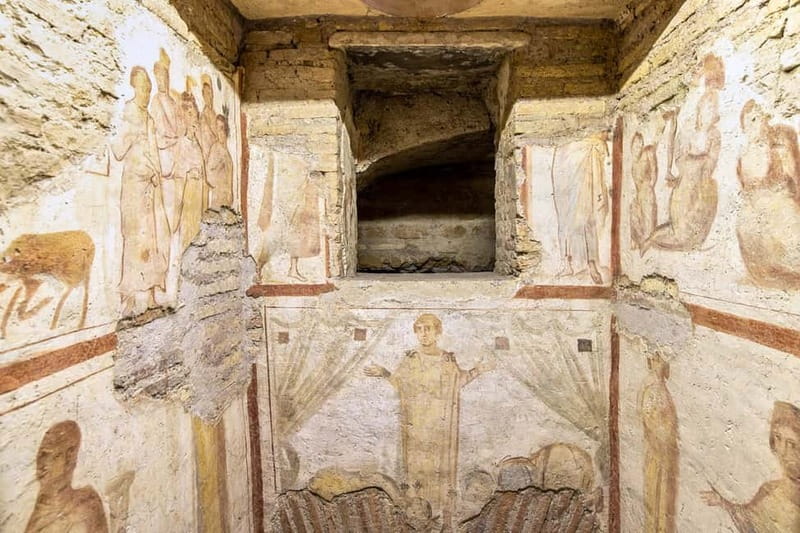
The late antique frescoes deserve more than a quick glance. Painted walls can be easy to overlook in Rome, where marble, columns, and large monuments often get the attention. Here, the decorative surfaces are central. Their survival gives you a more intimate sense of the rooms and the people who once used them.
The frescoes also help distinguish this place from a bare archaeological foundation. At many ancient sites, you spend your time imagining what the finished interiors looked like. Here, you can see some of that visual character directly.
Do not expect the decoration to turn the visit into an art museum. The site is still an archaeological complex, and the rooms belong to a long sequence of changes. The value comes from seeing decoration in its original architectural setting, not from viewing isolated paintings in a gallery.
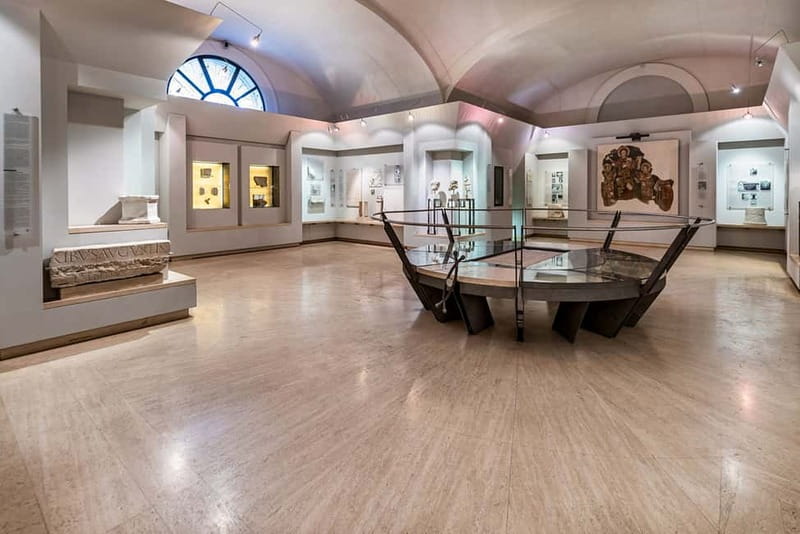
If you enjoy details, bring your patience rather than rushing through for a photograph. The supplied information does not promise a large collection of objects or a theatrical presentation. What you receive is a chance to examine surviving Roman interiors below a working basilica.
Same sights, a different narrator:
- Colosseum, Roman Forum & Palatine Hill with Audioguide App
★ 4.4 · 6,291 reviews - Vatican & Sistine Chapel Ticket with Optional Audio Guide
★ 4.1 · 5,405 reviews - Rome: Castel Sant’Angelo Entry Ticket & Digital Audioguide
★ 4.7 · 5,347 reviews - Rome: Castel Sant’Angelo Entry Ticket & Audio App
★ 4.3 · 4,952 reviews
Seeing paganism and Christianity side by side
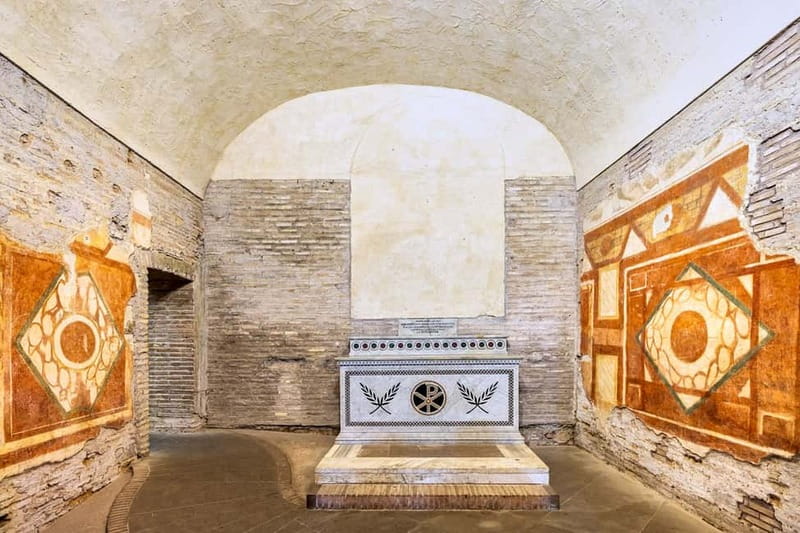
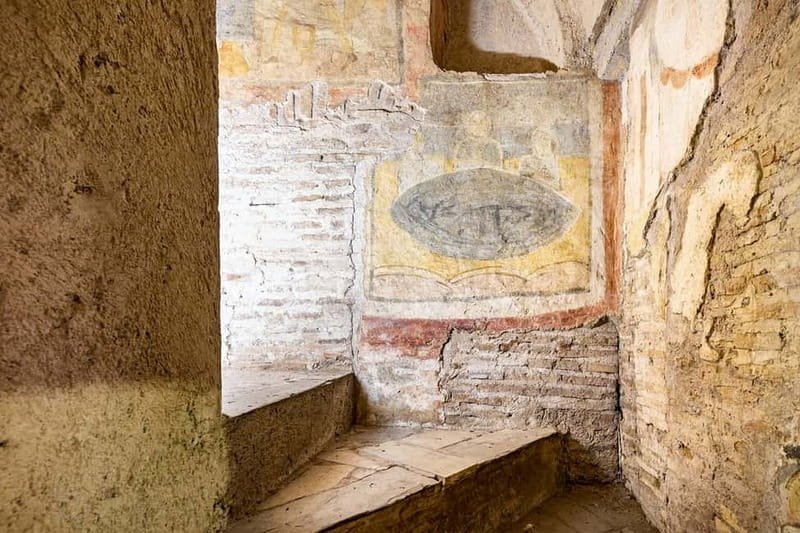
One of the most interesting parts of the visit is the passage from paganism to Christianity. The Roman Houses preserve evidence of the earlier pagan world, while the basilica above represents the later Christian use of the site.
This is more helpful than a simple timeline. Rome’s religious change was not just a matter of one building being abandoned and another appearing elsewhere. Existing spaces were reused, adapted, and given new meaning.
The Roman Houses give you a physical way to think about that transition. The rooms below belong to one period of domestic and urban life. The Christian basilica above belongs to another. Together, they show how Rome carried its past forward, sometimes by building over it and sometimes by preserving parts of it.
You may find this especially worthwhile if you are already visiting the Colosseum, Roman Forum, and nearby churches. Those major stops can make ancient Rome seem divided into neat categories. This site is smaller, but it brings several periods into the same place.
The information provided does not identify particular scenes, inscriptions, or objects tied to specific religious practices, so avoid expecting a detailed story about individual martyrs or a complete account of early Christian Rome. The strength here is the setting and the visible overlap of uses.
How the self-guided format affects the visit
The ticket is for a one-day validity period, with starting times based on availability. This gives you some planning flexibility, but the experience is not described as a live guided tour with a named guide.
That matters because you will need to set your own pace and decide how much attention to give each room. Some people prefer this. You can stop when a fresco catches your eye and avoid being hurried along. Others may want a guide to explain the building phases and point out details that are easy to miss.
The activity information refers to an app audioguide in the title, but the included section lists only the entrance ticket and postcard and specifically says the audioguide is not included. Treat that as an important booking detail. Check whether an audio option is available for an added fee or through a separate arrangement before you arrive.
At $11, the basic ticket remains fairly priced even without an included guide. You are paying for access to an archaeological site with unusually preserved decoration, not for a long, escorted tour. If you want a full lesson in Roman architecture, you may need to add your own reading or audio support.
The digital postcard is a small but pleasant extra

The ticket includes a postcard, described as a digital Pemcard. You can send it to family or friends anywhere in the world.
This does not change the archaeological value of the visit, but it gives the experience a personal finish. Rome is full of postcard moments, yet most people simply take another phone photo and move on. A digital card gives you a simple way to share the particular place you visited, especially if the people at home are tired of seeing the same Colosseum image.
Think of it as an extra rather than a reason to book. The frescoes, underground rooms, and connection between pagan and Christian Rome are what justify the ticket. The postcard is a useful bonus for families and anyone who likes to send a small travel message during a trip.
Price, timing, and practical value
At $11 per person, the Roman Houses of the Celio are inexpensive by Rome sightseeing standards. The price works best for you if you want to add a focused archaeological stop without committing to a long tour or a major admission bundle.
The value is also tied to location. Since the entrance is between the Colosseum and Circus Maximus, you can consider it as part of a day in ancient Rome. The information does not provide travel times between these places, so plan your route using a current map and allow enough time to find Clivo di Scauro.
The biggest practical concern is the closing time. One experience note says the venue closes at 3 p.m., not 4 p.m., and this caused disappointment for someone who arrived expecting a later visit. Do not rely on a general afternoon plan. Check the current opening information on the day you book and again before you go.
The ticket is valid for one day, with available starting times shown during booking. That does not mean you can arrive at any hour without checking your selected time. Use the stated availability as your guide and leave a buffer, especially if you are coming from another major sight.
The site is listed as wheelchair accessible. That is useful information, though the description does not provide further detail about lifts, surfaces, or the exact route through the archaeological rooms. If you need particular access arrangements, confirm them before arrival.
Free cancellation is available up to 24 hours in advance for a full refund, and you can reserve now and pay later. Those terms help if your Rome schedule is still moving around, but they do not remove the need to check the actual time and closing hour.
Who should add this to a Rome itinerary
I would recommend this stop to you if you enjoy ancient buildings in their original setting, especially when the story involves several periods. It is a good match for anyone who wants more than Rome’s biggest monuments and likes studying wall paintings, room layouts, and changes in use.
It also suits a short sightseeing window. The listed validity is one day, but no total visit length is provided. You can treat it as a compact addition near the Colosseum and Circus Maximus rather than planning your whole day around it.
Families may like the underground setting and the digital postcard. The postcard gives younger visitors a simple activity to complete after the rooms, though the archaeological content will appeal most to children who already enjoy history.
You may want to skip it if you are looking for a live guide, a large collection of sculptures, or a highly produced presentation. The self-guided format means you must bring your own curiosity, and the audioguide situation needs checking.
Should you book the Roman Houses of the Celio?
Book it if you want a quiet, reasonably priced look at Roman interiors, with well-preserved frescoes and a clear connection between pagan and Christian Rome. At $11, it is a sensible addition to a day near the Colosseum, especially if you have already seen the major outdoor ruins and want something more intimate.
I would not book without checking the current closing time and confirming the audioguide details. The early closing warning is the one practical flaw that could spoil an otherwise easy visit.
For the right visitor, this is a strong small-scale stop: original decoration, an unusual underground setting, and several centuries of change in one place. It will not replace the Colosseum or Roman Forum, but it can give those famous monuments more human detail.
FAQ
Where is the Roman Houses of the Celio entrance?
The entrance is on Clivo di Scauro, beneath the Basilica of Saints John and Paul, between the Colosseum and Circus Maximus.
How much does admission cost?
The listed price is $11 per person.
How long is the ticket valid?
The ticket is valid for one day. Available starting times are shown when you check availability.
Is an audioguide included?
The activity title refers to an app audioguide, but the included-items information says the audioguide is not included. Check the booking details before you pay.
What does the ticket include?
The ticket includes entrance to the Roman Houses of the Celio and a digital postcard.
Is the digital postcard included?
Yes. A digital Pemcard postcard is included, and you can send it to family or friends anywhere in the world.
Is the site wheelchair accessible?
Yes, the activity is listed as wheelchair accessible.
Can I cancel for a refund?
Yes. You can cancel up to 24 hours in advance for a full refund. Reserve now and pay later is also available.
New audio tours around Rome
- Rome: St. Peter’s Basilica and Dome Entry + Audio Guide★ 4.5 · 13 reviews
- St. Peter’s Basilica: Hosted Entrance & Digital Audioguide★ 4.1 · 35 reviews
- Sorrento & Pompeii Day Trip from Rome Audio Guide Tour★ 4.2 · 50 reviews
- Rome:St. Peter’s Basilica Hosted Entry + Official Audioguide★ 3.4 · 10 reviews
- Colosseum, Roman Forum, Palatine Hill access and AudioGuide★ 4.7 · 12 reviews
- Rome+Jubilee Audioguide – TravelMate app for your smartphone★ 4.2 · 38 reviews
- Rome:Ostia Antica Skip-the-line Ticket & Audioguide★ 4.3 · 11 reviews
- Rome: St. Peter’s Basilica Entry Ticket and AudioGuide★ 4.4 · 57 reviews
Rome Audio Tours, compared.
Rome: Colosseum & Forum with Audio Guide App -Optional Arena
Read our review →
Rome: City Sightseeing Hop-on Hop-off Bus with Audioguide
Read our review →
Rome: St. Peter’s Basilica & Dome Entry Ticket & Audio Tour
Read our review →
Colosseum, Roman Forum & Palatine Hill with Audioguide App
Read our review →
Vatican & Sistine Chapel Ticket with Optional Audio Guide
Read our review →
Rome: Castel Sant’Angelo Entry Ticket & Digital Audioguide
Read our review →
Rome: Castel Sant’Angelo Entry Ticket & Audio App
Read our review →
Rome: Hop-on Hop-off Sightseeing Bus Tour with Audioguide
Read our review →Browse the lists this tour appears in