

Review · SWITZERLAND
Self-Guided Audio Tour to the Many Faces of Geneva
Geneva’s famous sights take on a different color on this walk. Instead of hearing only dates and names, you’ll consider why the Jet d’Eau suggests a better world, how the Reformation shaped local values, and what Geneva’s monuments reveal about justice, courage, and human weakness. I like the precise directions with photos, and I like the freedom to pause whenever you want. The main drawback is that the tour depends on a strong internet connection, with no offline download option.
I also like the low price, $13.29, for a private walk that covers 13 central sights. It is a useful way to get your bearings in Geneva without joining a group or keeping pace with a guide. Just know that the focus leans toward morality, religion, and philosophy, so you may want a traditional history tour instead if you prefer dates, battles, and architecture.
Key points to know before you go
- Thirteen central stops: The route runs from the Monument to Empress Sissi beside Lake Geneva to the Escalade Fountain on Rue de la Confédération.
- A moral lens on Geneva: You’ll connect landmarks with pride, mercy, temperance, justice, courage, anger, envy, and other virtues or vices.
- About one to two hours: The listed stop times add up to roughly two hours, but your pace and pauses will shape the actual length.
- Strong route instructions: Photos and detailed directions help you move from one point to the next without a live guide.
- Bring working technology: You need your own phone, internet access, and headset. Poor data coverage can cause slow loading or interruptions.
- Best for independent walkers: The activity is private to your group, offered in English, and lets you stop, rest, or continue as you choose.
Geneva through virtues, vices, and surprising connections
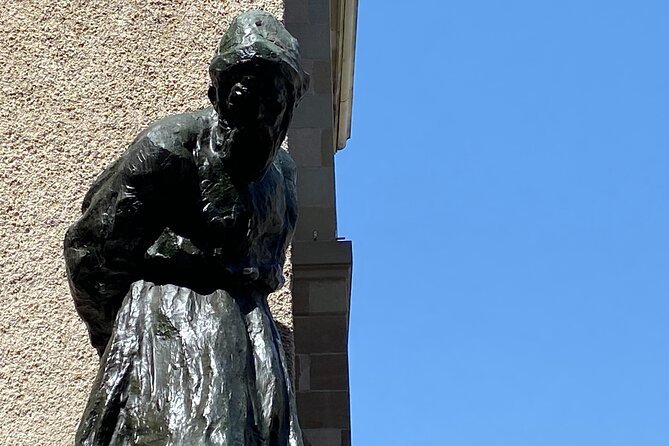
This is not a standard march from landmark to landmark. The audio walk uses Geneva’s monuments as prompts for larger questions. Why is a statue linked to a personal failing? How can a courthouse connect to mercy? What does a cathedral say about restraint?
I find that approach useful when you already know you’ll see the Jet d’Eau, the Flower Clock, St. Pierre Cathedral, and the Reformation Wall. These sights can pass quickly when you explore alone. A well-timed story gives each one a reason to hold your attention.
The tradeoff is clear. You will not get a full survey of Geneva’s past, and some commentary spends more time on religion, ethics, and personal behavior than on political events or building details. If that angle sounds appealing, the tour offers a thoughtful way to see familiar places. If you want a conventional city orientation, check the emphasis before booking.
More Self-Guided Audio Tours in Switzerland:
- The Many Faces of Geneva: Self-Guided Audio City Tour
★ 3.9 · 44 reviews - The Best of Basel’s Hidden Treasures: A Self-Guided Audio Tour
★ 4.5 · 32 reviews - Basel’s Portrait: Self-Guided Audio City Tour
★ 4.5 · 19 reviews
Starting beside the lake with Empress Sissi
The walk begins at the Monument to Empress Sissi on Quai du Mont-Blanc 10. The opening story concerns Elisabeth of Austria, known as Sissi, who was killed by an anarchist. The audio explains how the attack happened, but it gives special attention to why it happened.
That focus sets the tone for the rest of the route. The story is not simply a biographical note attached to a statue. It asks you to consider political anger, violence, and the motives behind a shocking act. You spend about 10 minutes here, which gives the introduction enough time to establish the tour’s style.
Because the starting point is by the lake, you can take a moment to orient yourself before heading onward. The route begins with a serious story rather than a light introduction, so it suits you best if you enjoy a little reflection along with sightseeing.
The Jet d’Eau and the question of public good
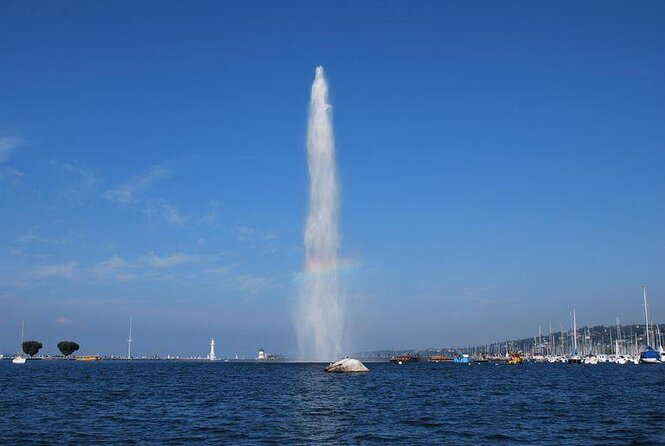
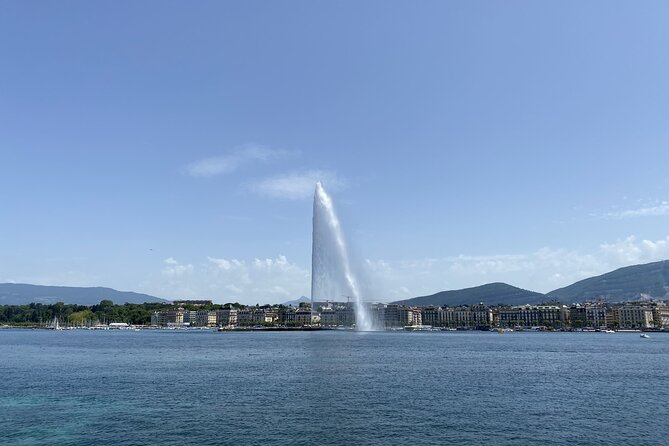
The next stop is the Jet d’Eau, Geneva’s giant water fountain. The visit is listed at about five minutes, so expect a focused explanation rather than a long pause.
The interesting twist is the question of how the fountain might contribute to making the world a better place. That may sound unusual for a landmark usually treated as a photo stop, but it fits the tour’s larger method. You look at a familiar object and ask what it represents beyond appearance.
This short stop also helps keep the walk moving. You get the landmark, its symbolic angle, and a clear direction to the next monument without spending too long in one place.
Brunswick Monument and the cost of generosity
At the Brunswick Monument, the audio introduces the benefactor who funded it and explains the meaning of his donation. You’ll also hear about the virtues shown in images around the structure.
This stop works well for anyone who likes monuments with a personal story. The building is not presented as decoration alone. Its design, money, and moral message are tied together, giving you a reason to look closely at the carved figures and symbols.
The planned time is five minutes. That is enough for the main explanation, though you may want to pause longer if you enjoy examining monuments. The route is designed to keep you moving, not to provide an extended architectural lecture.
More audio tours around Switzerland:
- Zurich: City Bus Tour with Audio Guide and Lake Cruise
★ 4.3 · 1,195 reviews - Basel: Sightseeing Bus Tour with Audio Guide
★ 4.1 · 377 reviews - Zurich City Tour with Audio Commentary
★ 4.0 · 372 reviews - Zurich: City Top Attractions Tour by Bus with Audio Guide
★ 4.3 · 282 reviews
Rousseau, confession, and the personal side of philosophy

The statue of Jean-Jacques Rousseau receives about 10 minutes. Here the audio turns to the sins Rousseau admitted in his own writing.
This is one of the more personal parts of the route. Instead of treating Rousseau only as a famous Genevan thinker, the commentary asks you to think about his conduct and the difference between public ideas and private behavior. That moral tension makes the statue more than a name on a pedestal.
I would give this stop your full attention. It is also a good example of why you should not expect a purely factual account. The tour wants you to judge, question, and compare. That can be engaging, but it may feel too philosophical if you want only a quick introduction to Rousseau.
The National Monument and a public competition
The National Monument brings you back to civic identity. The story explains how its design won a competition to be erected in Geneva.
At around five minutes, this is a compact stop. You learn why this monument was selected and what its public role means, rather than spending time on every design detail. The competition angle gives the site a practical human story: people had to choose one vision to represent the city.
The stop works nicely between the more personal Rousseau story and the symbolic Flower Clock. It keeps the route varied, moving from an individual’s moral record to the way a community chooses its symbols.
The Flower Clock and the problem of pride
The Flower Clock is one of Geneva’s easiest sights to rush past. The audio gives you about 10 minutes here and connects the clock to pride.
That theme lets you look at the object with fresh eyes. It is both a timepiece and a carefully presented city symbol. The commentary encourages you to consider how civic display can reflect confidence, vanity, or pride.
This is another place where the tour’s angle matters more than a long list of dates. You will get a focused interpretation of a well-known sight. If you are taking photographs, allow extra time beyond the planned 10 minutes, since the route timing does not include long stops for pictures.
Religion, salvation, and mercy near the courthouse
The Evangelical Lutheran Church of Geneva is a short stop of about five minutes, but the subject is broad. The audio compares religious views on how sins and good deeds affect salvation.
Next to the church, the Palace of Justice adds another layer. The commentary explains the connection between law and mercy, linking religious ideas with the work of courts.
This pairing is one of the route’s most distinctive choices. Rather than treating the church and courthouse as unrelated buildings, you consider how people have thought about wrongdoing, judgment, forgiveness, and fairness. The subject may be serious, but the walk remains accessible because the explanation is tied to places you can see.
You should expect ideas more than interior visits here. The information supplied for the tour describes outside stops and an audio route, not entry into the church or courthouse.
Place Bourg du Four and Geneva’s changing reputation
At Place Bourg du Four, the audio introduces a monument connected with a Genevan champion for justice. It also tells the story of former red-light districts in the city.
This stop adds a less polished side of Geneva. Public squares and historic neighborhoods often carry layers that are easy to miss when you see only today’s cafés, shops, and tidy streets. Here, the route asks you to connect public ideals with the city’s more complicated past.
The planned time is 10 minutes. That makes sense because there are two threads to follow: the figure associated with justice and the history of earlier red-light areas. You may find this stop especially useful if you prefer urban stories that include social life, not just famous leaders.
St. Pierre Cathedral, Jeremiah, and the old bench of judgment
The longest stop is the St. Pierre Cathedral area, with about 20 minutes allotted. The cathedral is linked with the virtue of temperance, the idea of restraint and balance.
You’ll also encounter the statue of the Prophet Jeremiah, often called the weeping prophet. That name gives the statue an emotional quality, and the audio uses it to broaden the religious themes already introduced at the Lutheran church.
The route then continues to the Town Hall, where a stone bench was used when Geneva’s judges pronounced death sentences. This detail gives the area a sharp contrast. You move from temperance and prophetic sorrow to the hard public business of punishment.
This is the point where the tour’s moral structure feels most complete. Faith, emotional suffering, self-control, law, and death sentences all appear within one compact stretch of the city. Give yourself time here. The 20-minute estimate is longer than at the other stops because the area carries several stories.
The Reformation Wall and difficult reformers
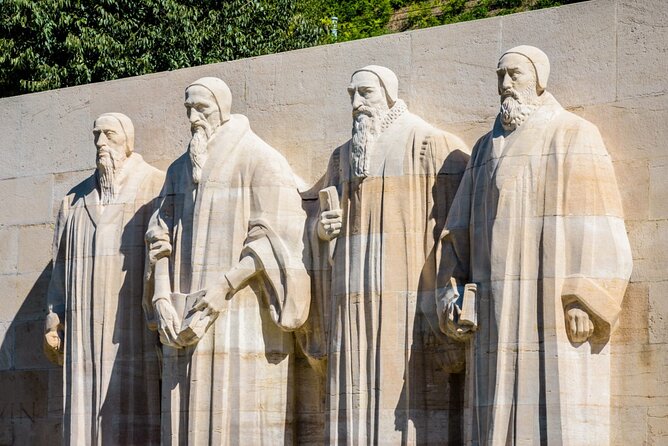
The Reformation Wall presents Geneva’s Protestant identity through major theologians and reformers. The audio asks which of them faced criticism for being inflexible, merciless, or heartless.
That framing keeps the monument from becoming a simple lineup of heroic names. You are encouraged to consider the cost of strict belief and the difference between conviction and cruelty. This is a valuable approach in Geneva, where religious reform shaped the city’s culture for generations.
The stop takes about 10 minutes. I would not treat it as a substitute for a full Reformation tour, but it does give you a clear way to read the monument. The route also helps explain why religious values still appear in Geneva’s public identity, a connection that one Spanish-language comment found particularly helpful.
Dufour, Dunant, and two kinds of courage
The statue of General Guillaume-Henri Dufour receives about five minutes. The story presents his struggle against evil, giving the military figure a moral dimension rather than focusing only on rank or campaigns.
Next comes the bust of Henri Dunant, one of the founders of the Red Cross. You’ll hear about his life and some surprising parallels with Leo Tolstoy. This is one of the more unusual pairings in the walk, since it connects humanitarian action with a writer known for moral questioning.
The Dunant stop lasts about 10 minutes. It gives you more time to consider the person behind the organization’s name and the ethical ideas tied to his work. Together, Dufour and Dunant present two versions of courage: confronting danger directly and responding to human suffering through organized aid.
Finishing at the Escalade Fountain
The final stop is the Fontaine de l’Escalade or Bel-Air Fountain on Rue de la Confédération 4. The fountain is connected with the courage of the Genevans, bringing the route to a civic and local finish.
Ending here is practical. You finish in the city center rather than returning to the starting point by the lake. The route therefore works as a one-way introduction to Geneva. Afterward, you can continue on your own from the final location, though no additional activity is included.
The last stop takes about five minutes. Its theme brings the walk back to collective bravery after the earlier stories about individual guilt, justice, faith, and public responsibility.
How the self-guided format works in real life
After booking, you receive a link for the experience. You use your own phone and headset, following the audio, photos, and route directions without a live guide. Only your group participates, so you are not tied to another party’s speed.
That freedom is the strongest practical feature. On a hot day, you can stop for a break and restart when ready. If one monument interests you more than another, you can spend extra time there. The route is also useful when you first arrive in Geneva and want a structured orientation without committing to a group departure.
The weak point is the technology. The tour requires internet access, and there is no offline download option. If your data coverage is poor, audio can drop out or load slowly, and restarting the tour may be necessary. Before setting out, charge your phone, confirm that your mobile data works in Switzerland, and bring headphones. Those simple steps matter more here than they would on a paper walking route.
The directions are supported by photos, which helps when moving between stops. Still, this is not a live guide who can answer questions or correct your route in person. You need to manage the link and your own navigation.
What $13.29 buys you
At $13.29 per person, the price is modest for an English audio walk covering 13 sights. You are paying for professional narration, route instructions, photos, and a clear theme that ties the city together. You are not paying for admission, since all listed stops are viewed from public areas and have no ticket cost.
The value is strongest if you would otherwise wander past the monuments with little context. The route gives you about one to two hours of structure and a story at each stop. It can also help you decide which places deserve a later, longer visit.
The value is weaker if you want detailed architecture, museum entry, or a broad account of Geneva’s political and cultural past. The philosophical angle is central, not an occasional extra. You should buy it because you like that approach, not because you expect a conventional guidebook in audio form.
The tour is offered in English. Most people can participate, and service animals are allowed. It is near public transportation, but the supplied details do not identify a particular bus or tram connection, so use the exact starting and ending addresses when planning your route.
Should you book this Geneva audio walk?
Book it if you want an inexpensive, private introduction to central Geneva and enjoy questions about ethics, religion, justice, and human behavior. It is especially suitable for independent visitors who value control over their pace and like having photos and directions on hand.
Skip it if you want a live guide, offline audio, extensive architectural detail, or a strictly chronological account of Geneva. The internet requirement is a real concern, and the moral commentary will not suit everyone.
For the right listener, this is a thoughtful way to turn a familiar sightseeing route into a series of questions. Bring a charged phone, a headset, reliable data, and an open mind. You’ll get the best value by treating it as a guided introduction, then returning on your own to the places that deserve a closer look.
FAQ
How long does the self-guided Geneva tour take?
The tour takes approximately one to two hours. The listed stop times add up to about two hours, but your total time depends on your walking pace and how long you pause.
What language is the audio tour offered in?
The audio tour is offered in English.
Where does the tour begin?
The route begins at the Monument to Empress Sissi at Quai du Mont-Blanc 10, 1201 Genève, Switzerland.
Where does the tour end?
The route ends at the Fontaine de l’Escalade on Rue de la Confédération 4, 1204 Genève, Switzerland.
Do I need to bring my own equipment?
Yes. You need your own mobile phone with internet access and a headset.
Is there a live guide?
No. This is a self-guided activity. You follow the link provided after booking and explore without a live guide.
Can I take breaks during the walk?
Yes. The self-guided format lets you control your pace and stop when needed before continuing.
Can I cancel for a full refund?
You can cancel for a full refund if you cancel at least 24 hours before the experience start time. Cancellations or changes made less than 24 hours in advance are not accepted for a refund.
New audio tours around Switzerland
- Medieval Lausanne: A Self-Guided Audio Tour★ 3.5 · 3 reviews
- Unusual Audio Tour of Geneva★ 5.0 · 8 reviews
- Geneva Scavenger Hunt and Highlights Self Guided Audio Tour★ 5.0 · 5 reviews
- A Self-Guided Audio Tour of Geneva’s Old Town★ 4.5 · 7 reviews
- Audioguided sightseeing cruise of Geneva★ 3.5 · 144 reviews
- Self-Guided Audio City Tour in Bern★ 4.0 · 17 reviews
- Beautiful Bern’s Legends: A Self-Guided Audio Tour★ 4.5 · 7 reviews
- Bern Scavenger Hunt and Highlights Self Guided Audio Tour★ 4.0 · 14 reviews
Switzerland Audio Tours, compared.
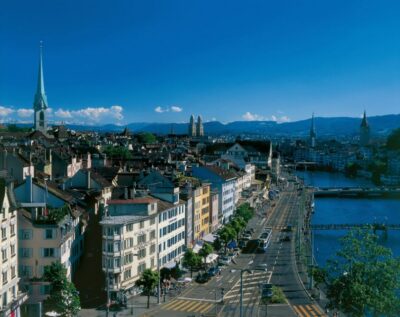
Zurich: City Bus Tour with Audio Guide and Lake Cruise
Read our review →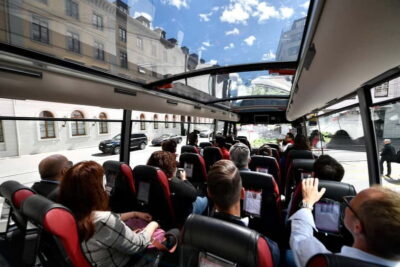
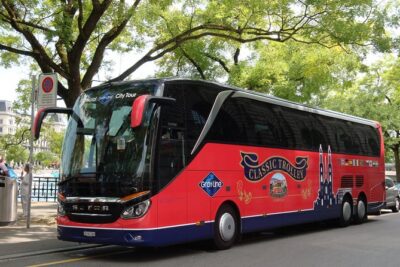
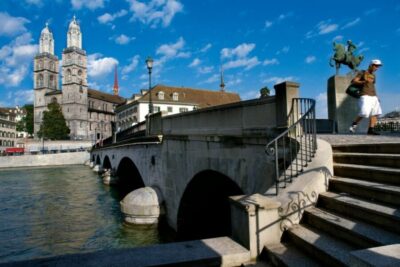
Zurich: City Top Attractions Tour by Bus with Audio Guide
Read our review →
Zurich: Audio Guided City Tour and Train to “Top of Zurich”
Read our review →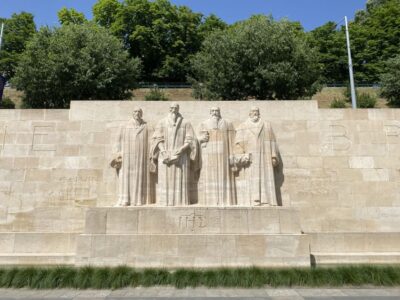
The Many Faces of Geneva: Self-Guided Audio City Tour
Read our review →
The Best of Basel’s Hidden Treasures: A Self-Guided Audio Tour
Read our review →Browse the lists this tour appears in