

Review · CANADA
Smartphone Audio Driving Tour between Kamloops and Vancouver
The best part of this drive is that the highway becomes more than a way to get from Kamloops to Vancouver. Your phone adds stories to the scenery, from Coast Salish roots in Coquitlam to gold-mining tales near Britton Creek and the musical identity of Merritt. You can travel east or west, so the route fits your plans instead of forcing you into a fixed schedule.
I like the freedom to stop anywhere, restart later, and use the tour offline once it is set up. I also like the value: one $8.22 booking covers a vehicle with up to 15 people, making this a cheap way to give a long drive some shape and local context.
The main caution is sound design. A sudden horn or other loud effect can be startling on a curving mountain road beside trucks. Keep the volume modest, and let the driver focus on the highway first.
Key things to know before you set out
- The route works in both directions: Start near Vancouver and finish toward Kamloops, or reverse the journey.
- One purchase covers the vehicle: Up to 15 people can share the tour, with no need for separate tickets.
- Offline playback matters: You do not need mobile data or a signal while driving.
- Dozens of stops add local color: Expect stories about rivers, railway routes, wildlife, towns, parks, and notable British Columbians.
- Your timing stays flexible: Stop for a meal, a walk, or a side trip, then continue when ready.
- The stated tour duration is about one to two hours: The highway journey itself is much longer, so treat the audio as an optional layer for the drive, not the total driving time.
A long highway drive with a local voice
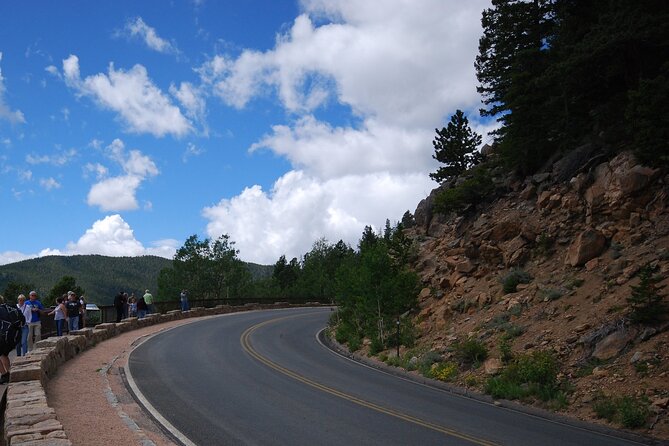
This experience is built for people who dislike rigid sightseeing schedules. There is no bus to catch and no guide waiting at a meeting point. You use your own car, follow the Vancouver to Kamloops corridor, and listen as the route triggers stories and trivia.
That format works especially well here. The drive shifts from the urban edge of Metro Vancouver to farmland, river country, steep mountain roads, high passes, lakes, and the drier surroundings near Kamloops. Much of the scenery passes quickly from a moving vehicle. An audio story gives you a reason to notice a place that might otherwise register as another exit or bridge.
The tour is offered in English and uses special guest characters for added entertainment. The material includes history, geography, wildlife, local names, and guessing games about people connected with British Columbia. It is not a substitute for a full museum visit or a personal guide, but it can make the road feel more connected to the region.
One point needs careful reading: the experience is described as lasting about one to two hours, while the full Vancouver to Kamloops drive covers a far longer stretch. The practical interpretation is that the narrated content takes roughly that amount of listening time. You should still plan the driving day separately, with breaks and road conditions in mind.
More Driving Audio Tours in Canada
- Cabot Trail: a Smartphone Audio Driving Tour
★ 4.5 · 118 reviews - Icefields Parkway: a Smartphone Audio Driving Tour
★ 4.0 · 118 reviews - Smartphone Audio Driving Tour between Banff and Calgary
★ 4.0 · 25 reviews
From Coquitlam to Fort Langley
The first section begins in the built-up part of the Fraser Valley corridor. Near Coquitlam, the narration points to the Coast Salish people who originally lived in the area. That opening is useful because it places the modern city in a much older story.
Soon you cross Port Mann Bridge. The audio explains the bridge and points toward Surrey, turning a piece of transport infrastructure into part of the trip. Bridges are easy to treat as interruptions. Here, you get a little context while the road carries you across the Fraser system.
The Serpentine River follows, with short facts as you travel beside it. Then come Langley and Fort Langley. The distinction between the community of Fort Langley and the Fort Langley National Historic Site is worth knowing, especially if you plan to stop later. The audio passes close to the historic site and may prompt you to add it to your day.
The information here is best used as a preview. Attraction admission is not included, and the tour does not turn a passing view into a visit. If you want time at Fort Langley National Historic Site, save room in your schedule rather than treating the narration as enough.
Abbotsford, Sumas Lake, and the Fraser River
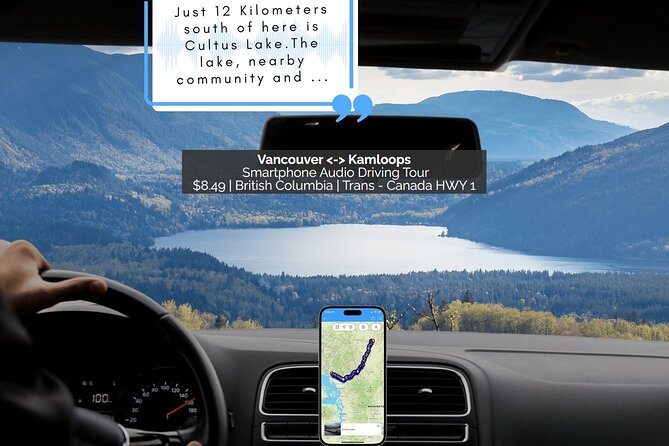
The route then moves through Abbotsford, a useful point for understanding the importance of the Fraser Valley within British Columbia. The tour also points toward Mount Baker in Washington. You do not need to cross the border to appreciate its presence. The mountain can dominate the view from the Canadian side, and the audio explains why it matters to the scene.
Burnaby Village Museum is another passing reference. The museum recreates an early town setting from roughly 1890 to 1920 and has operated for more than 50 years. You may not be stopping there on this drive, but the mention helps you spot a possible extra visit if your route and timing allow.
The story of Sumas Lake adds a different kind of local context. The audio explains what happened to the former lake, giving you a reminder that the valley you see today has been reshaped by human decisions as well as natural forces.
Near Chilliwack, you hear the background to the city’s unusual name. There are also guessing games about well-known people from British Columbia. These lighter sections break up the geography and give passengers something to answer together. They are a good fit for families or groups sharing a car, though the entertainment will not appeal equally to everyone.
Harrison Hot Springs, Bridal Falls, and salmon country
Harrison Hot Springs is one of the strongest early prompts for a side trip. The audio points out the road and explains why the hot springs are popular. It does not include access or admission, so consider it a suggestion rather than part of the purchased activity.
Bridal Falls receives similar treatment. You pass through the community of Bridal Falls, while the actual falls are nearby. The distinction matters. If you want the waterfall, watch for the detour instead of assuming the roadside community is the full stop.
The Fraser River then becomes a major subject. You drive beside it for a time, and the narration turns to its scale and role in the region. Near Mountain View Summer Camp, the focus shifts to sockeye salmon and the historic salmon runs. This is the kind of detail that adds meaning to the river. You are not just looking at water beside the highway; you are hearing about the fish and seasonal movement tied to it.
Sasquatch Provincial Park brings a playful change of mood. The audio points out the park and jokes about keeping an eye out for its famous furry creature. The humor is light, but the park itself gives you another possible pause if you want a walk or a longer break.
More Smartphone Audio Tours in Canada
- Halifax Churches, Gardens & Graveyards: a Smartphone Audio Walking Tour
★ 4.5 · 25 reviews - Halifax Boardwalk & Seaport: a Smartphone Audio Walking Tour
★ 4.0 · 19 reviews - Explore Halifax with 3 Unique Smartphone Audio Walking Tours
★ 4.0 · 16 reviews - Smartphone Audio Driving Tour between Lake Louise and Calgary
★ 4.0 · 15 reviews
Hope and the road into the Coquihalla
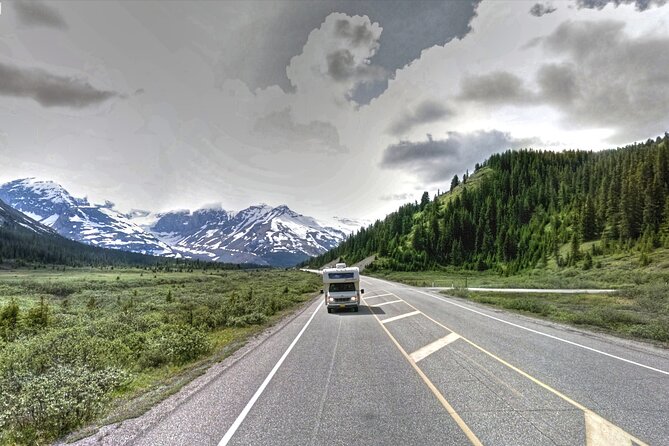
Hope marks an important turn in the journey. The town’s name gets an explanation, and the Hope Slide brings a more serious subject. Despite its cheerful-sounding name, the slide was one of the area’s worst natural disasters. This is a good example of the tour’s range: it moves from jokes and guessing games to geology and tragedy without requiring a formal stop.
Cultus Lake is also pointed out as a recreation area worth visiting. Again, the value lies in knowing it is there. The audio cannot give you the full lake experience during a passing drive, but it can help you decide where to spend a future afternoon.
The Coquihalla River Provincial Park and Ladner Creek Bridge follow. The old trestle bridge is presented as a quick detour, which will appeal to anyone interested in railway structures and photographs. Check conditions and access before leaving the main road, since recommended sites can be closed or unavailable for seasonal or other reasons.
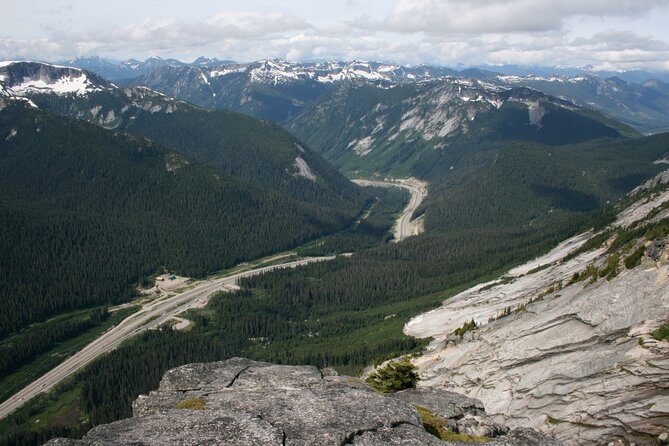
The Coquihalla Highway itself gets attention. You spend hours on it, so learning how it was created gives the route some background. The Coquihalla Summit Recreation Area then places you in one of the most striking sections of the drive. The narration explains why the area matters and points toward activities connected with it.
Use care here. Mountain roads, changing weather, curving lanes, and large trucks demand your attention. The driver should not handle the phone while moving, and nobody should feel pressure to look for a stop while traffic is flowing.
Gold, railways, and the old route near Merritt
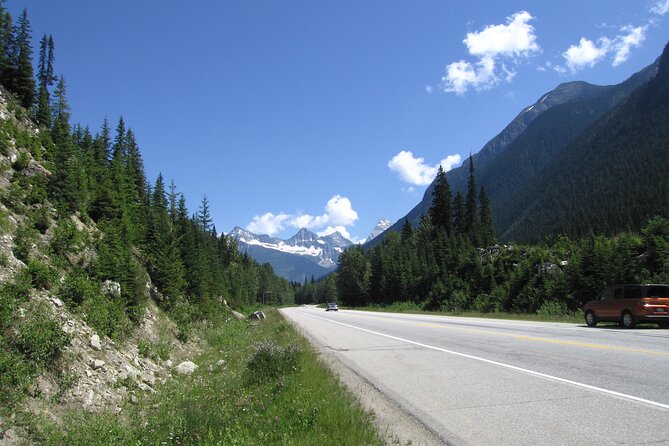
Britton Creek is a small place with a story tied to gold. This is one of the tour’s strengths: it does not limit itself to famous destinations. A creek that might pass unnoticed receives a local connection.
Coldwater River Provincial Park brings facts about steelhead fish. Murray Lake is presented as a popular fishing spot, and Brookmere gets a short history even though the road passes several kilometres away. These references reward you for looking beyond the immediate roadside view.
The Kettle Valley Railway Trail and Kettle Valley Steam Railway add a strong railway thread. The trail is now popular with hikers, while the steam railway recalls the route’s earlier use. Together, they show how transport has changed in the region. A road trip becomes a chance to notice what came before the highway.
Coquihalla Canyon Provincial Park is another important stop to mark for later. The park is associated with railway tunnels and outdoor activities, making it one of the more substantial optional detours on the route. You can listen, decide if it suits your schedule, and return another day if the driving day is already full.
Near Merritt, a special audio moment covers cougars and includes the animal’s call. The sound may please families and wildlife fans, but it also reinforces the need to keep the volume sensible. Godey Creek Trail is associated with mountain biking, and Merritt itself is introduced through its musical reputation.
Nicola Lake, Monck Provincial Park, and the Thompson Plateau follow. Nicola Lake is described as especially scenic, even though the highway passes a few kilometres west of it. This is another place where the audio works as a planning tool. You learn about a spot that is close enough to consider but not directly beside your lane.
The final run toward Kamloops
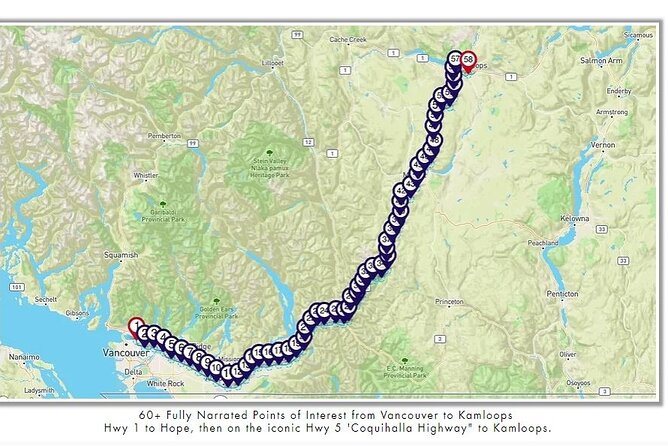
The route continues through the Cascade Range and the Thompson Plateau. These are broad geographic features, so the narration helps give names to what you are seeing. Timber Lake provides another local-person guessing game, while Inks Lake Road introduces yellow-bellied marmots.
Near the western side of Kamloops, the tour discusses the Thompson River. You pass a few kilometres south of it, so do not expect every location to be directly alongside the vehicle. The point is to connect nearby places with the larger region.
Walloper Lake Provincial Park comes near the end, along with references to three other parks in the area. This is a useful final nudge for anyone building a longer British Columbia trip. The tour may leave you with more possible stops than you can fit into one drive, which is both its charm and its limitation.
The scenery changes steadily across the full corridor. You begin with cities and bridges, move through agricultural and river areas, then climb toward mountain country and high recreation zones before reaching the Kamloops region. The audio gives you a series of small explanations rather than one long lecture, so you can keep listening without losing the basic rhythm of the drive.
What the $8.22 price really buys you

At $8.22 per group, the value is strongest when several people share one car. A group of two pays very little per person, and a larger family or group of up to 15 gets especially good value from a single booking.
You are not paying for transportation, attraction admission, or a live guide. You bring the vehicle and the phone or tablet. In exchange, you get narration, trivia, offline use, and lifetime access. That last feature matters if you split the trip over separate days or want to revisit the route later.
The audio is also cheaper than booking a scheduled sightseeing tour, but it offers less personal contact. There is no one to answer a question about the exact view in front of you. You also need to manage navigation, breaks, weather, fuel, and attraction hours yourself.
The average booking lead time is listed as 22 days, but the experience is designed for flexible use. Confirmation arrives at booking, and you can cancel for a full refund up to 24 hours before the start time. Changes or cancellations inside that window are not refunded.
Sound effects, volume, and smart use on the road
The most useful practical warning concerns sudden sound effects. One recorded segment uses a loud semi horn effect when a new site opens. On a winding mountain road with real trucks nearby, that can be genuinely startling.
I would set the volume before leaving and keep it low enough that real traffic remains easy to hear. Let a passenger manage the app when possible. If you are driving alone, start the tour while parked and avoid touching the phone once the car is moving.
The audio needs to support the drive, not compete with it. You can pause at any time, stop for as long as you like, and continue later. The offline function is a major help in mountain areas where a signal may be weak or absent.
A small musical gap between points might have made the listening experience smoother, but the focus here is information and playful narration rather than a soundtrack. If you want music, you can add your own only when it is safe and does not cover the narration or traffic sounds.
Who will like this audio tour most?
I would recommend it to drivers who want context without a strict timetable. It suits families, couples, and small groups who prefer to choose their own stops. It is also a practical add-on for people already planning to visit places such as Harrison Hot Springs, Fort Langley, Coquihalla Canyon, or Merritt.
It is less suitable if you want a live guide, a fully arranged sightseeing day, or guaranteed access to every suggested attraction. It also requires a driver who can handle a phone-based experience responsibly.
Service animals are allowed, and most people can participate. The activity is private to your own group, which means you do not share the vehicle or listening schedule with strangers.
Should you book it?
Book this tour if you are already driving between Vancouver and Kamloops and want a low-cost way to give the route more meaning. The offline access, lifetime use, two-way format, and one-booking-per-vehicle setup are practical advantages. The stories about rivers, railways, wildlife, parks, and local communities give you many reasons to look up from the highway.
Skip it if you expect a live person, detailed stop-by-stop touring, or a polished music program. Keep the sound effects quiet, treat the suggested attractions as optional, and remember that the one to two hour duration refers to the audio content rather than the full road journey. For the price, it is a useful road companion, provided you use it as an extra layer and not as a replacement for careful driving.
FAQ
Can I take the tour from Vancouver to Kamloops or from Kamloops to Vancouver?
Yes. The audio works in either direction, so you can begin at either end of the route.
How much does the tour cost?
The listed price is $8.22 per group, with up to 15 people included in one booking.
Do I need mobile data while driving?
No. The tour includes offline functionality, so you do not need a signal or mobile data after it has been prepared for offline use.
Do I need to provide my own vehicle and device?
Yes. Transportation and the smartphone or tablet are not included. You use your own vehicle and compatible device.
Are attraction admission fees included?
No. The tour only provides the audio experience. Admission to places such as Fort Langley National Historic Site or other attractions is separate, and recommended sites may be closed or inaccessible.
Can I cancel for a refund?
Yes. You can receive a full refund if you cancel at least 24 hours before the experience start time. Cancellations or changes made less than 24 hours before the start time are not refunded.
New audio tours around Canada
- Kelowna E-Bike Bee Tour, Tastings, Organic Lunch & Audio Guide★ 5.0 · 9 reviews
- Smartphone Audio Driving Tour between Kamloops & Revelstoke★ 3.5 · 8 reviews
- Jasper National Park Self-Guided Driving Audio Tour★ 4.0 · 4 reviews
- Smartphone Audio Driving Tour between Huntsville & Toronto★ 4.5 · 4 reviews
- Halifax Explosion Smartphone Audio Walking Tour★ 4.0 · 3 reviews
- Edmonton Self Guided Audio Experience★ 3.0 · 2 reviews
- Smartphone Audio Driving Tour between Collingwood and Toronto★ 4.5 · 3 reviews
- A 7th-Gen Local’s View of Downtown Charlottetown: An Audio Tour★ 4.5 · 27 reviews
Canada Audio Tours, compared.
A 7th-Gen Local’s View of Downtown Charlottetown: An Audio Tour
Read our review →

Halifax Churches, Gardens & Graveyards: a Smartphone Audio Walking Tour
Read our review →
Western Canada Self-Driving Audio Guide English and German
Read our review →Browse the lists this tour appears in