
Review · SWITZERLAND
Revealing Lucerne: Self-Guided Audio City Tour
Lucerne’s prettiest sights are only half the story. This self-guided audio walk takes you from the Jesuit Church through famous bridges, squares, churches, and towers, then adds the city’s painted façades and less comfortable tales about prisons, orphanages, and executions.
I like the freedom to stop for photos, coffee, or a closer look at a fresco, and I like the strong mix of architecture and human stories. The $13 price is fair for a two-hour introduction, but you should allow time to sort out the directions and check that the audio works before setting off.
Key points to know before you go
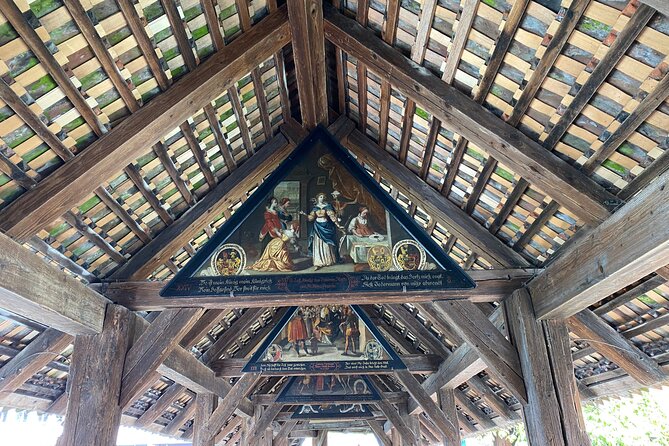
- More than 20 frescoed houses add local color beyond Lucerne’s standard postcard sights.
- The route lasts about 1.5 to 2 hours, though the detailed narration can make it feel longer.
- Start at the Jesuit Church, using the booking link on your own phone rather than meeting a guide.
- The stories include former prisons, an orphanage, and an executioner’s house, not just grand buildings.
- The audio is in English, with photos and written directions to help you follow the route.
- Bring headphones, a charged smartphone, and mobile internet. The tour is not suitable for children under 16 or wheelchair users.
Starting at the Jesuit Church in Lucerne

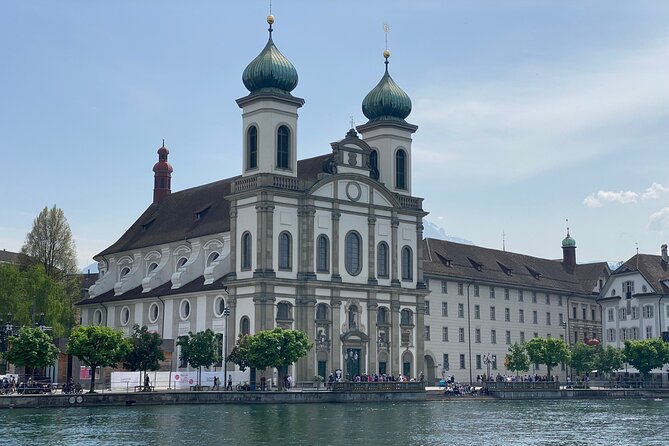
The tour begins at the Jesuit Church, one of Lucerne’s most recognizable landmarks. This is a practical starting point because you are already in the old town, close to the river, bridges, squares, and historic lanes that make up most of the walk.
You will not find a guide holding a sign here. After booking, you receive an internet link and follow the route yourself. That makes the experience easy to fit around a day in Lucerne, but it also means you are responsible for opening the link, managing your phone, and keeping the route on track.
The audio guide is recorded by a professional speaker. You can listen at your own pace, pause when you need a photograph, and replay a section if a name or date goes by too quickly. I would test the audio before leaving the starting point. One booking reported that the sound did not work, and a quick check gives you a chance to deal with a technical problem before you are several stops away.
The written route includes photographs and detailed directions. That is useful in Lucerne’s compact old town, where one narrow street can look much like another. Still, the directions are not foolproof. Some people have found parts of the route confusing, so keep the map or directions open rather than relying on the audio alone.
More Self-Guided Audio Tours in Switzerland:
- The Many Faces of Geneva: Self-Guided Audio City Tour
★ 3.9 · 44 reviews - The Best of Basel’s Hidden Treasures: A Self-Guided Audio Tour
★ 4.5 · 32 reviews - Basel’s Portrait: Self-Guided Audio City Tour
★ 4.5 · 19 reviews
Jesuit Church, St. Peter’s Chapel, and the riverfront
From the Jesuit Church, the route introduces the central old town and several buildings that explain Lucerne’s religious and civic character. The Jesuit Church is an important early stop, not only as a meeting point but also as one of the city’s major architectural sights.
You then encounter St. Peter’s Chapel, another key landmark in the old center. These churches give the tour a useful rhythm. Instead of rushing from one famous photo stop to the next, you move between religious buildings, public squares, bridges, and private houses.
The walk also includes the Fritschi Fountain and Fritschi House. These are tied to Lucerne’s carnival traditions, and the guide uses them to show how local celebrations shaped the appearance and stories of the city. Look closely at the decoration. One of the more memorable buildings on the route captures the festive mood of carnival and feast days in a way that a quick walk through town could easily miss.
This is where the audio format earns its small fee. A façade can look like decoration until you know who commissioned it, what event it celebrates, or which local figure is connected with it. The commentary gives you a reason to stop and examine details rather than simply photograph the building and move on.
Chapel Bridge and the Water Tower
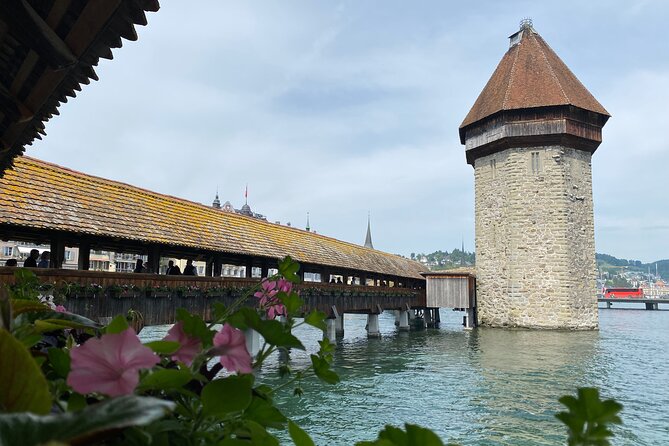
Lucerne’s Chapel Bridge and Water Tower are the route’s best-known sights. They are also the places where you are most likely to pause, look around, and take photographs, so the self-paced format works well here.
The wooden Chapel Bridge crosses the Reuss and is closely tied to Lucerne’s identity. The Water Tower beside it adds a strong vertical landmark to the river view. The audio guide places these famous structures within the wider story of the old city instead of treating them as isolated photo opportunities.
You should expect other people around the bridge area, especially during busy periods. This is not a quiet listening stop. Pause the narration if you need to move aside, take a picture, or simply enjoy the river without one ear occupied by the guide.
The tour also visits the Spreuer Bridge, another covered wooden bridge with its own character. Including both bridges gives you a better sense of Lucerne’s historic river crossings and keeps the route from becoming a simple greatest-hits walk.
The two bridges are close enough to fit naturally into an old-town route, but the experience remains more than a checklist. The guide points you toward details and stories that can be hard to spot from the middle of a crowd.
Weinmarkt, Hirschenplatz, and Lucerne’s painted façades
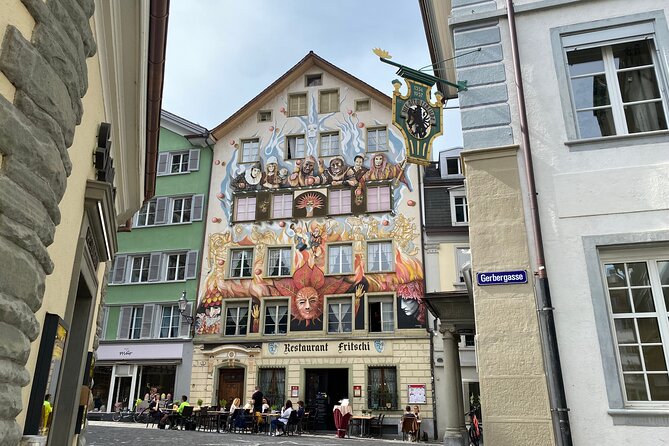
Weinmarkt and Hirschenplatz show Lucerne at its most decorative. Their houses carry painted façades, signs, symbols, and scenes that reward a slow look upward. The route includes more than 20 distinctive frescoed houses, which is one of its strongest features.
I like this part because it shifts your attention from the famous landmarks to the streets between them. You see how the city presented wealth, trade, religion, public celebration, and civic pride through building decoration. A short stop at a square becomes much more interesting when the audio explains what you are seeing.
The painted houses are not all cheerful. One unusual monochrome scene shows a dwarf performing the strange act of clysterizing the devil. It is odd, memorable, and a good reminder that historic decoration was not limited to saints and noble families.
Another building reflects the festive spirit of carnival. Together, these façades give you a more varied picture of Lucerne than polished lake views and grand churches alone. You might find some of the details easy to miss if you hurry, so plan to stop the audio when you want to inspect a wall or read a sign.
This section also illustrates the main tradeoff of the tour. The narration is detailed, which gives you more context than a simple route app, but it can stretch the walk. One person found the tour long and thought some details could have been cut. If you prefer a brisk walk, skip or pause sections that do not hold your attention.
More City Audio Tours in Switzerland:
- Zurich City Tour with Audio Commentary
★ 4.0 · 372 reviews - Zurich: Audio Guided City Tour and Train to “Top of Zurich”
★ 4.2 · 65 reviews - Self-Guided Audio City Tour in Bern
★ 4.3 · 18 reviews - Self-Guided Audio City Tour in Bern
★ 4.0 · 17 reviews
City Hall and the civic side of the old town
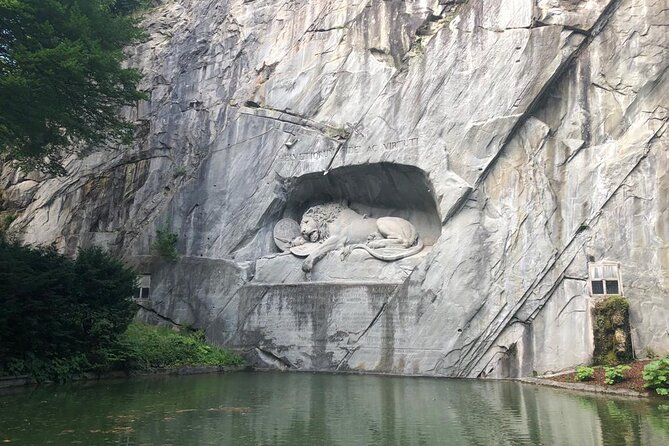
The route continues to City Hall, where the focus shifts from religious and private buildings to public life. This is a useful change of pace. Lucerne’s story is not only about churches, bridges, and painted façades. It is also about money, competition, politics, and the decisions made by people who controlled the city.
The audio tells stories about former residents who built wealth, competed for influence, became involved in political disputes, sought entertainment, or helped others. These personal details give the route a human scale. You are not only hearing that a building is old. You are hearing about the ambitions and problems connected with it.
This is also where the self-guided format can be better than a large group. You can stand in a square and listen without trying to keep up with a guide or a crowd. At the same time, there is no person beside you to answer a question or clarify a confusing turn. If a political or historical detail feels dense, replay it before moving on.
Ritterscher Palace and the major churches

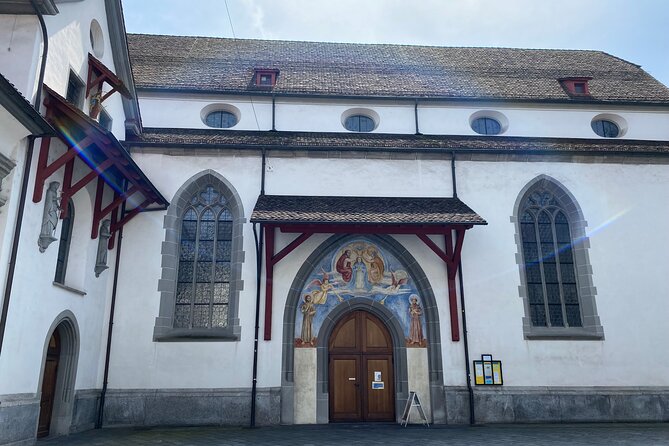
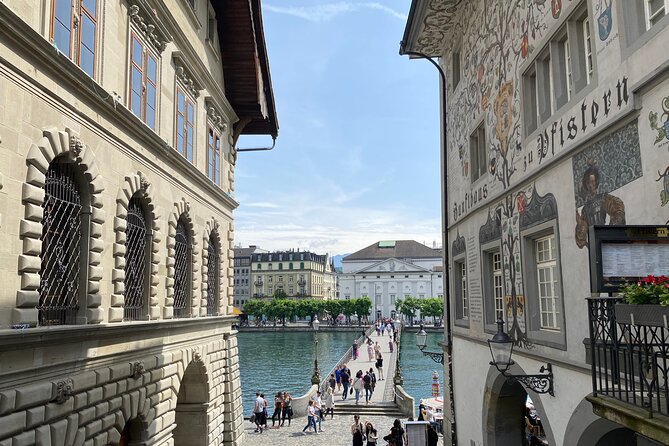
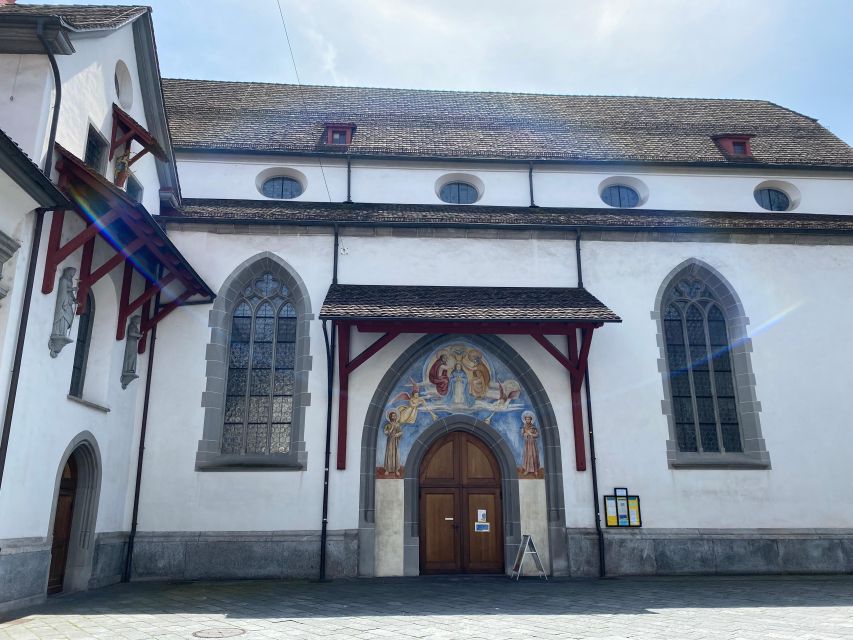
Ritterscher Palace and the Jesuit, St. Leodegar, and Franciscan Churches give the walk a strong architectural range. Each stop helps you compare different parts of Lucerne’s religious and civic past rather than viewing the old town as one uniform block.
The Jesuit Church is part of the beginning of the route, while the other churches broaden the picture. St. Leodegar is among the city’s most important religious landmarks, and the Franciscan Church adds another historic stop in the old center. The audio explains why these buildings matter and how they fit into Lucerne’s story.
Ritterscher Palace brings a different mood. Its name and setting point to the city’s former elite, while the churches show the public and spiritual side of local life. The route works best when you let these contrasts register. Lucerne’s character comes from the mix of grand institutions, commercial squares, modest lanes, and decorated homes.
Because the walk covers several buildings, comfortable shoes are sensible, even though the supplied information does not specify difficult terrain. Wheelchair users should not book this activity, and the route is intended for people aged 16 and older.
Nölli Tower and the less polished stories
The Nölli Tower adds a defensive and practical note to the itinerary. It is a reminder that Lucerne was not built only for ceremony and beauty. Walls, towers, and controlled entrances served everyday needs that are easy to overlook when you focus on the old town’s painted fronts.
The tour then moves into subjects most visitors will not meet on a standard sightseeing stroll. You hear about former locations connected with an orphanage, a prison, and the executioner’s house. These stops give the city a harder edge.
I appreciate this part because it avoids presenting Lucerne as a spotless picture book. A historic city also had poverty, punishment, social control, and difficult work. The guide deals with sensitive subjects as part of the city’s story, so you should expect more than light sightseeing commentary.
These details may not suit someone looking only for cheerful views and quick facts. For me, they make the walk more honest. They show how people lived under rules, how authorities dealt with crime, and how civic life affected people who had little power.
How the audio route works in practice
The tour is designed to take about 1.5 to 2 hours. That estimate makes sense if you listen steadily and move along, but you will probably need more time if you stop at every fresco, take photographs, or replay sections.
The tour remains valid for 365 days, so you do not need to use it on a particular date immediately after purchase. This is useful if Lucerne is one stop on a longer Swiss trip and the weather or your schedule changes.
You need three things:
- A charged smartphone
- Internet access
- Headphones
There is no live guide, transport, group departure, or fixed meeting time beyond starting at the Jesuit Church. You can pause the route for lunch or sightseeing and continue when ready. That flexibility is the main reason to choose this over a scheduled walking tour.
The downside is that the experience depends on your phone and the route instructions. One person found the directions confusing, and another reported that the audio failed. Save the link, keep your phone charged, and use the written photographs and directions as well as the spoken commentary.
Is $13 good value for Lucerne?
At $13 per person, the price is reasonable if you want more context than a free map provides. You are paying for an English audio guide, route directions, photographs, and a broad set of stops that includes both famous landmarks and lesser-known sites.
The value is strongest for independent visitors who would otherwise walk past the frescoed houses without knowing what they represent. The stories about the orphanage, prison, and executioner’s house also add material that is not obvious from the street.
The value is weaker if you want a short, polished highlights tour with no technical fuss. The route is detailed, and some sections may feel overexplained. A live guide would also be better for immediate questions and route corrections, but it would usually give you less freedom to stop and wander.
Because the tour can be used within a 365-day period, you can also treat it as a flexible backup for a Lucerne visit. It is not a full-day activity. You are buying a focused old-town walk, not a lake cruise, museum ticket, or mountain excursion.
Who should choose this Lucerne walk?
I would choose this for an independent adult who likes history, architecture, and unusual local details. It suits you especially well if you want to stop for photos, set your own speed, and avoid joining a group.
It is also a good fit for someone visiting Lucerne for the first time who wants the major sights organized into one route. The Lion Monument, Water Tower, Chapel Bridge, Spreuer Bridge, City Hall, churches, squares, and towers give you a solid introduction.
You may want another option if you dislike using your phone while sightseeing, need a wheelchair-accessible route, are under 16, or prefer a guide who can explain directions in person. You should also allow extra time if you plan to listen to every detail.
Should you book Revealing Lucerne?
Book it if you want a flexible, story-led walk that goes beyond the Chapel Bridge and Lion Monument. The frescoed houses are the biggest reason to choose it, while the stories of former institutions give the route a more serious and unusual side.
Skip it if you want a short route with simple directions and no chance of technical trouble. Before you begin, charge your phone, bring headphones, open the link, and test the sound. With those basics handled, $13 buys a useful two-hour introduction to Lucerne’s architecture, public squares, local characters, and less polished past.
FAQ
Where does the self-guided tour begin?
The tour begins at the Jesuit Church in Lucerne. There is no live guide at the meeting point.
How long does the tour take?
The walk takes about 1.5 to 2 hours. Stopping for photographs, examining frescoes, or replaying sections can make it longer.
How long is the tour valid?
The experience is valid for 365 days. You can check availability for starting times when you book.
What language is the audio guide in?
The audio guide is in English and is recorded by a professional speaker.
What do I need to bring?
Bring headphones, a charged smartphone, and internet access. You use your own phone and the link provided after booking.
Does the tour include a live guide?
No. This is a self-guided experience, so you follow the route and listen to the audio on your own.
Is the tour suitable for children or wheelchair users?
The tour is not suitable for children under 16 or wheelchair users.
New audio tours around Switzerland
- Medieval Lausanne: A Self-Guided Audio Tour★ 3.5 · 3 reviews
- Unusual Audio Tour of Geneva★ 5.0 · 8 reviews
- Self-Guided Audio Tour to the Many Faces of Geneva★ 4.5 · 10 reviews
- Geneva Scavenger Hunt and Highlights Self Guided Audio Tour★ 5.0 · 5 reviews
- A Self-Guided Audio Tour of Geneva’s Old Town★ 4.5 · 7 reviews
- Audioguided sightseeing cruise of Geneva★ 3.5 · 144 reviews
- Self-Guided Audio City Tour in Bern★ 4.0 · 17 reviews
- Beautiful Bern’s Legends: A Self-Guided Audio Tour★ 4.5 · 7 reviews
Switzerland Audio Tours, compared.
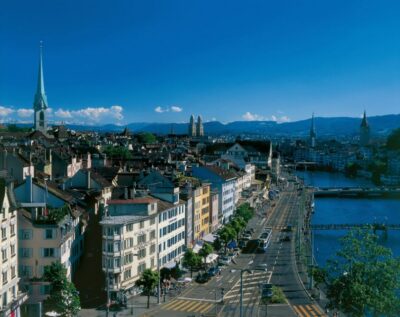
Zurich: City Bus Tour with Audio Guide and Lake Cruise
Read our review →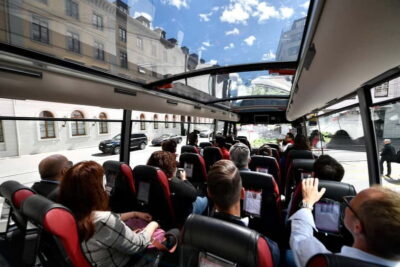
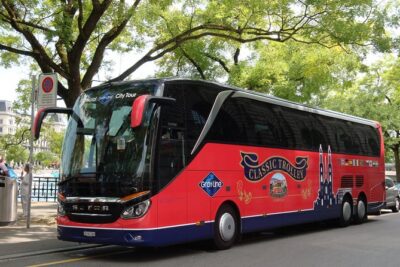
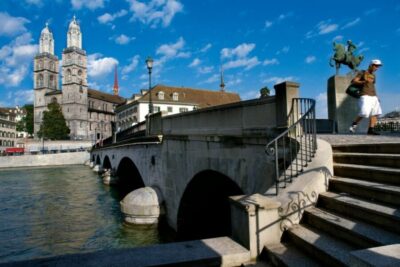
Zurich: City Top Attractions Tour by Bus with Audio Guide
Read our review →
Zurich: Audio Guided City Tour and Train to “Top of Zurich”
Read our review →
The Many Faces of Geneva: Self-Guided Audio City Tour
Read our review →
The Best of Basel’s Hidden Treasures: A Self-Guided Audio Tour
Read our review →Browse the lists this tour appears in