
Review · SPAIN
Salamanca: Convent of Las Claras with Free Audioguide
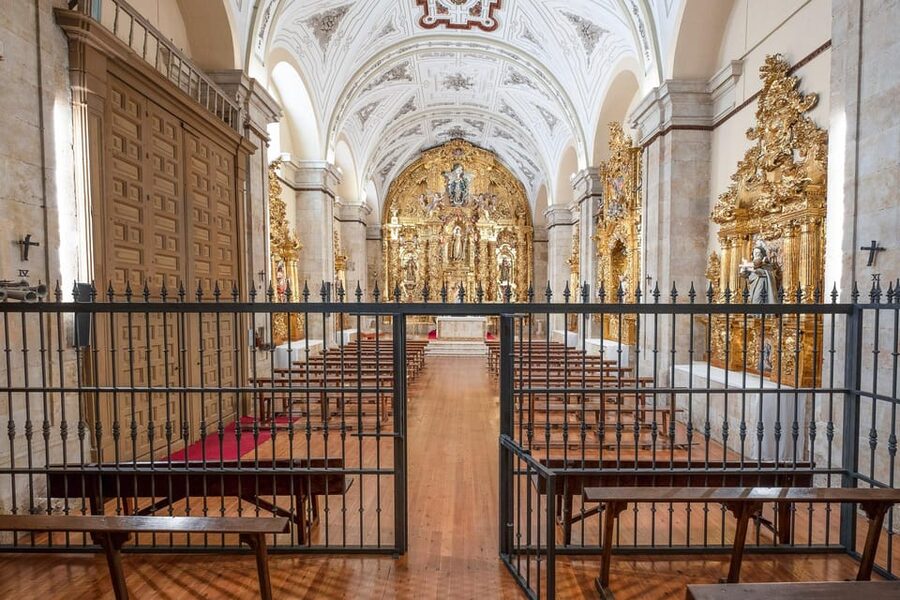
The best reason to visit the Convent of Las Claras is overhead: a 14th-century polychrome roof and medieval wooden coffered ceiling survive inside a former convent that now serves as a Museum of Medieval Painting. I like that the visit combines close-up art with a tower view, giving you both quiet interiors and a look across Salamanca’s famous historic buildings.
I also like the access to both the high and low choirs, plus the chance to see works and devotional objects once used by the nuns. The main drawback is that the audio guide may feel slow or dull if you prefer to explore at your own pace, and the tower’s height, narrow areas, and obstructed upper viewing point may not suit everyone.
Key points to know before visiting
- The medieval ceiling is the star attraction: Walk through the high choir for a close view of the old wooden coffered ceiling.
- The convent is now a museum: The Ages of Man Foundation carried out major work to preserve and present the paintings and objects.
- The murals were found relatively recently: A series of wall paintings came to light at the end of the 20th century.
- The tower adds a second kind of sightseeing: You get views toward Salamanca’s main historic buildings from above.
- The audio guide comes in three languages: Choose English, Spanish, or French.
- Allow for a few limitations: Food and drinks are not permitted, and the upper viewing area has fencing that can affect the view.
Why Las Claras deserves a place in your Salamanca plans
Salamanca is famous for its university, Plaza Mayor, and twin cathedral complex. Those sights draw the crowds, quite rightly, but the Convent of Las Claras gives you a different look at the city. Here, the focus is not on grand civic buildings or university traditions. It is on the private religious world of the nuns who lived and worshipped inside these walls.
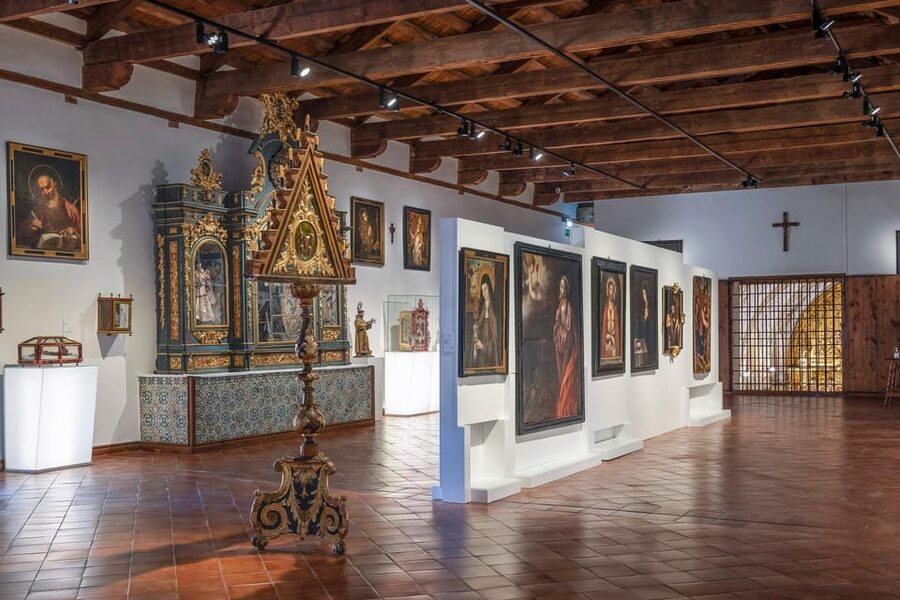
The convent has been transformed into a Museum of Medieval Painting, following important work by the Ages of Man Foundation. That change matters. You are not simply walking through an old religious building with a few labels added later. The rooms, murals, ceiling, and devotional objects are presented as parts of a larger collection.
At $7 per person, the admission is modest for Salamanca. I see it as a good-value stop for anyone who enjoys art, religious architecture, or unusual viewpoints. It is not a full-day attraction in the usual sense, though the ticket is valid for one day. You should think of it as a compact museum visit that fits well between the city’s larger sights.
More audio tours around Spain:
- Barcelona: Sagrada Familia Entry Ticket with Audio Guide
★ 4.6 · 105,312 reviews - Barcelona: Casa Batlló Entry with Self-Audioguide Tour
★ 4.7 · 25,359 reviews - Granada: Alhambra Entry Ticket with Audio Guide
★ 4.1 · 5,950 reviews
Entering the former convent and museum
The visit begins with the former convent itself. The building’s current role as a museum lets you see spaces that once served the nuns while also viewing the artwork in a more organized way. The tour takes you through the most notable rooms rather than keeping you to one chapel or gallery.
That combination gives Las Claras its appeal. You get the atmosphere of a religious house, but you also have a clear purpose as you move from room to room. The collection includes works of art and devotional objects that belonged to the nuns, so the objects are tied directly to the life of the convent.
I would begin by paying attention to the building before reaching for the audio guide. Look at the proportions of the rooms, the surviving decoration, and the relationship between the worship spaces and the areas used by the community. Then use the guide to add context.
The audio guide is included and available in English, Spanish, and French. It gives you a structured way to understand the rooms, especially if you do not already know much about convent life or medieval religious art. Still, one Portuguese-speaking visitor found the audio commentary rather tedious, so I would not expect a lively, entertaining performance. It is best treated as a source of background information, not as a personal guided tour.
The high choir and its medieval wooden ceiling
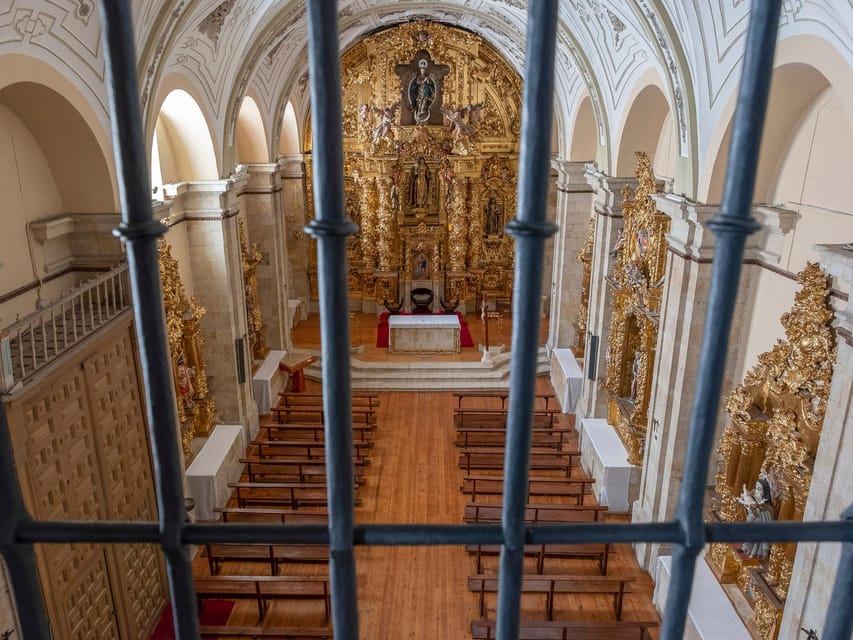
The high choir is one of the most rewarding parts of the visit. You can walk through this upper space and see the wooden coffered ceiling from medieval times at close range. That access changes the way you read the ceiling. From the floor of a church, a decorated roof can seem distant and flat. Here, you have a better chance to examine the woodwork and painted details.
The ceiling is particularly important because it is not just an architectural feature added for effect. It belonged to the medieval church and forms part of the building’s original visual program. The surviving roof helps you picture how the interior looked centuries ago, when the church was still an active place of worship.
I would give this area time. Do not rush through because the ceiling may seem less dramatic in a quick glance than a large altarpiece or colorful wall. Its appeal comes from looking upward, noticing the pattern, and understanding how much work went into an overhead surface that most people would have seen from far below.
The high choir also gives you a sense of how the nuns’ religious life was arranged. The convent has two choirs, one high and one low. That arrangement is part of the building’s character and makes the visit more than a standard art display.
The low choir, murals, and painted interior
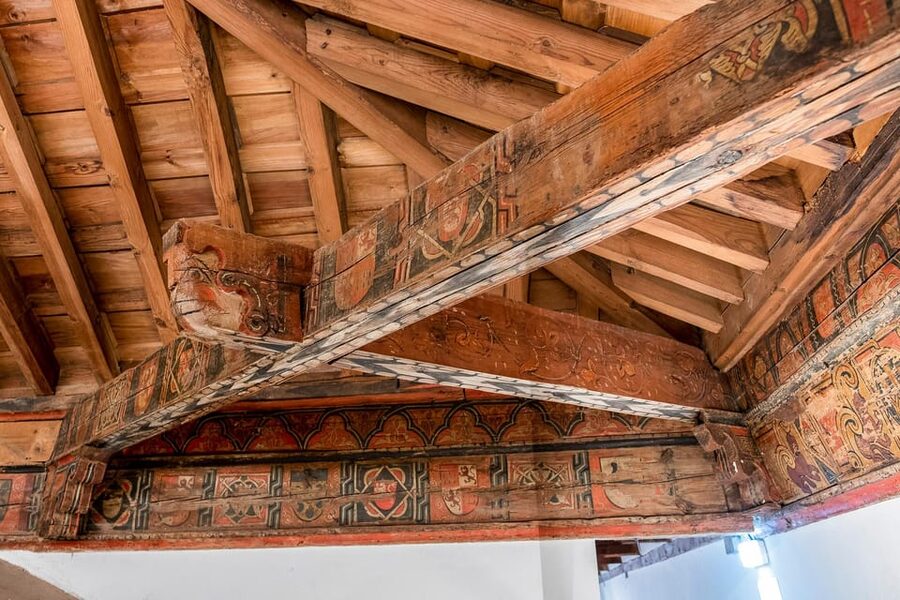
After the high choir, the low choir gives you another view of the convent’s religious spaces. Seeing both choirs helps you understand the layout instead of experiencing the church as one undifferentiated room.
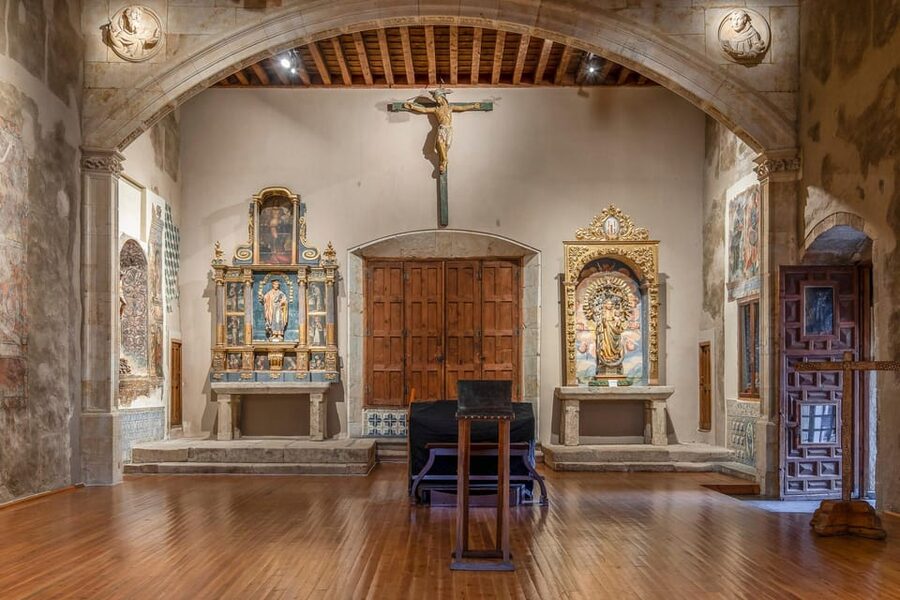
The murals are another major reason to come. They were discovered at the end of the last century, and they date from the late 14th century. Their discovery adds a layer of surprise to the visit. For years, parts of the original decoration were hidden or overlooked. Now they form one of the museum’s central visual features.
The paintings and the polychrome roof once worked together. Medieval churches were not intended to look plain. Color, images, carved details, and painted surfaces shaped the worshipper’s experience. At Las Claras, the wall paintings and roof let you see something of that older approach.
You may find the murals more compelling if you look for their condition and placement rather than expecting the sharp, polished appearance of a modern exhibition. Their age is part of the story. The Foundation’s conservation work has made them easier to see, but they remain historic surfaces, not freshly painted decorations.
One practical point: the experience asks you to look carefully at details in dim or enclosed rooms. If you prefer bright, open galleries, this may feel more subdued. That same quality is what makes the convent feel distinct from Salamanca’s larger monuments.
Same sights, a different narrator:
- Casa Batllo Admission Ticket with Intelligent Audio Guide
★ 4.5 · 3,168 reviews - Madrid: Las Ventas Bullring Tour with Audio Guide
★ 4.6 · 3,154 reviews - Cordoba: Mosque-Cathedral E-Ticket with Audio Guide
★ 4.1 · 2,895 reviews - Nerja: Caves of Nerja Entry Ticket with Audio Guide
★ 4.6 · 1,616 reviews
Art and devotional objects once used by the nuns
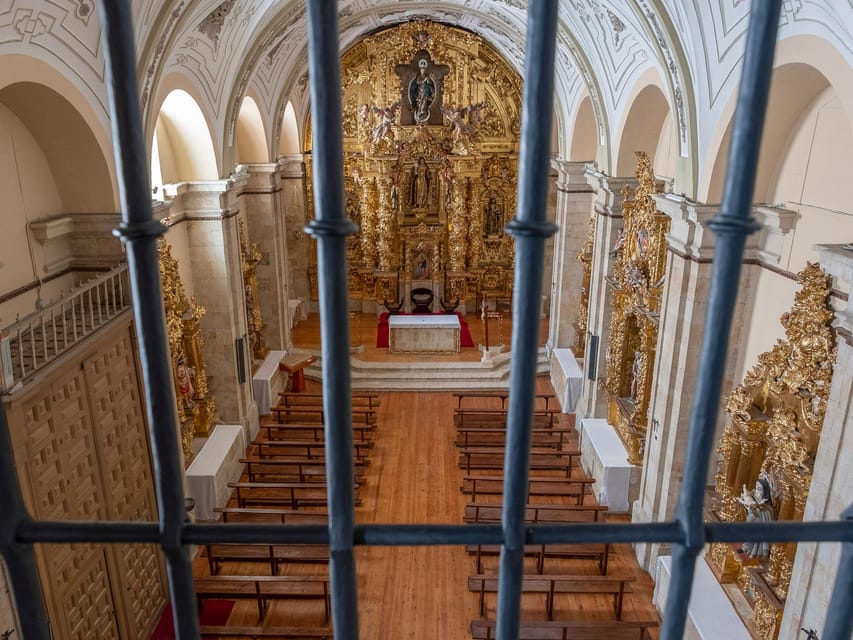
The museum also displays works of art and devotional objects that belonged to the nuns. These objects are valuable because they connect the large painted spaces with daily religious practice.
A monumental mural can tell you about style and belief, but a smaller devotional object can suggest how faith was practiced in ordinary moments. Together, the objects and the building make the convent easier to understand as a lived religious community rather than simply a historic shell.
I would not approach this section expecting a huge collection. The attraction is the link between the objects and the convent. Their setting gives them meaning, and the audio guide can help you understand why they were kept and used.
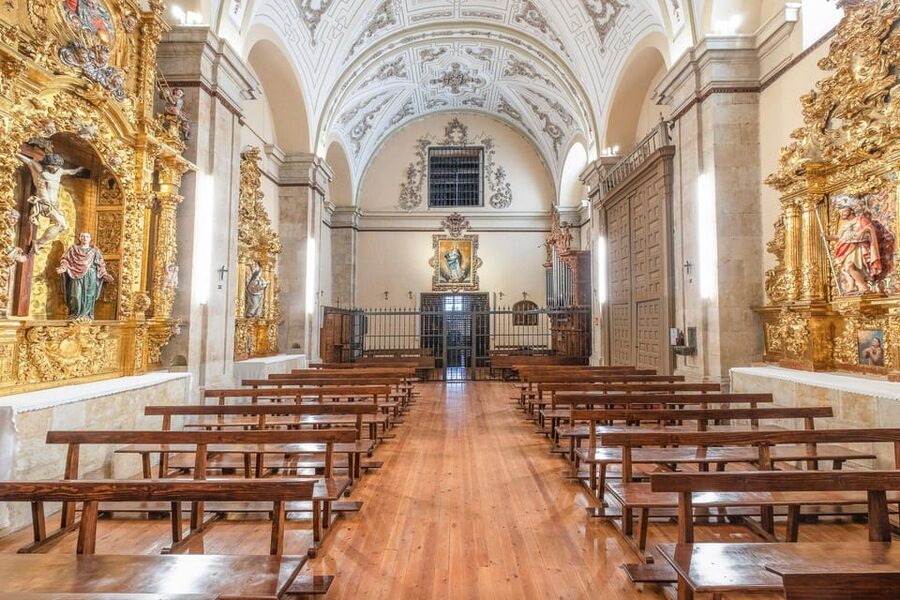
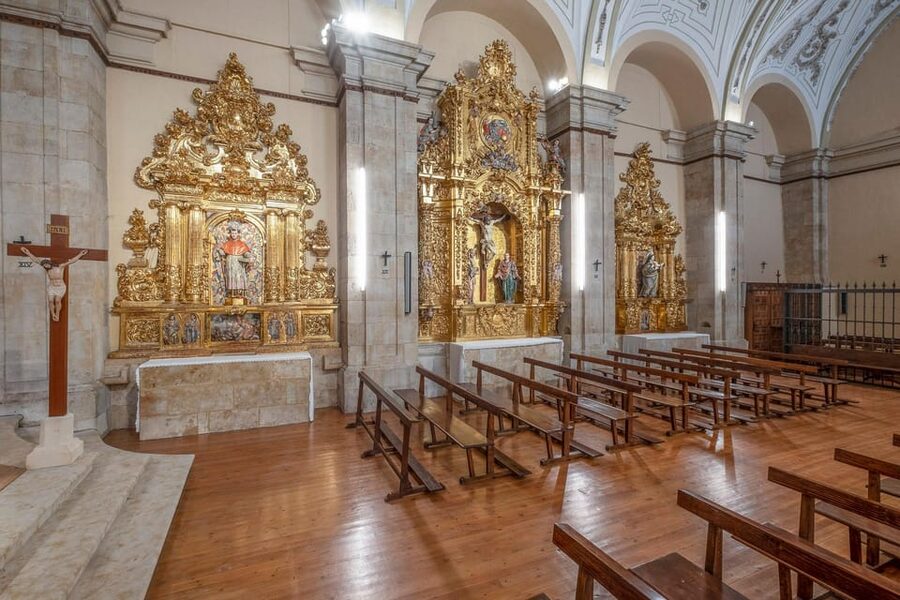
The altar in the chapel deserves special attention. One visitor described it as the most impressive part of the visit, and it is easy to see why a richly decorated altar can make a strong impact here. If you have limited time, do not skip the chapel while focusing only on the tower.
The tower view over Salamanca
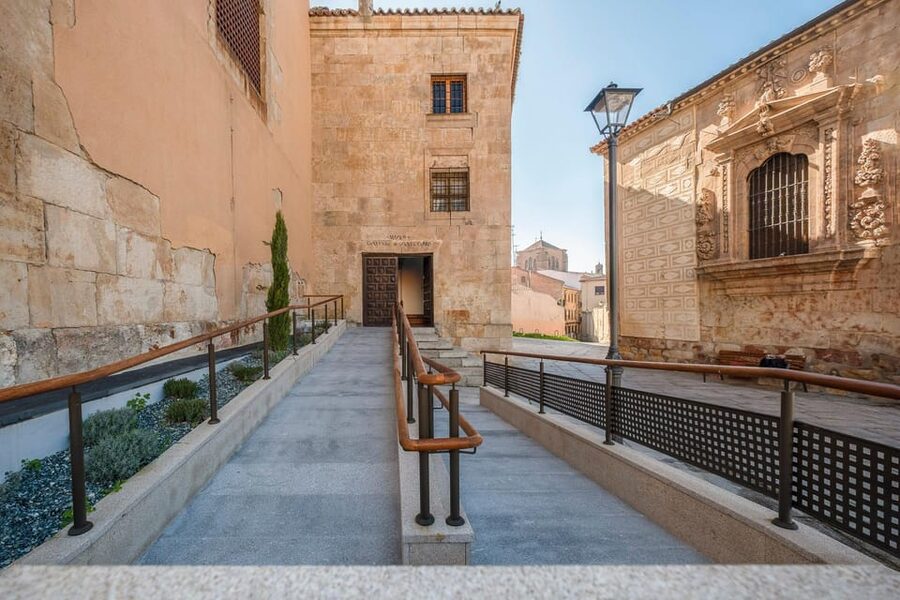
The visit ends, or reaches its high point, with access to the tower. From above, you can look toward Salamanca and its main historic buildings. This gives you a useful visual link between the quiet convent and the city outside.
I like tower visits when they help you understand a city’s structure, and this one can do that. Salamanca’s historic center is best appreciated from more than street level. From the tower, you can place the city’s major buildings in relation to one another and get a broader sense of the old center.
There is one important qualification. The upper viewing area has metal fencing, and that fencing can block or reduce parts of the view. You will still get a different perspective on Salamanca, but do not book this solely for a fully open panoramic platform.
The tower may also be uncomfortable if you are afraid of heights or prone to vertigo. The activity information specifically excludes people with claustrophobia, heart problems, epilepsy, altitude sickness, and fear of heights, among other conditions. Some of those restrictions may sound cautious for a city museum, but the enclosed spaces and elevated areas explain why you should take them seriously.
How the audio guide affects the visit
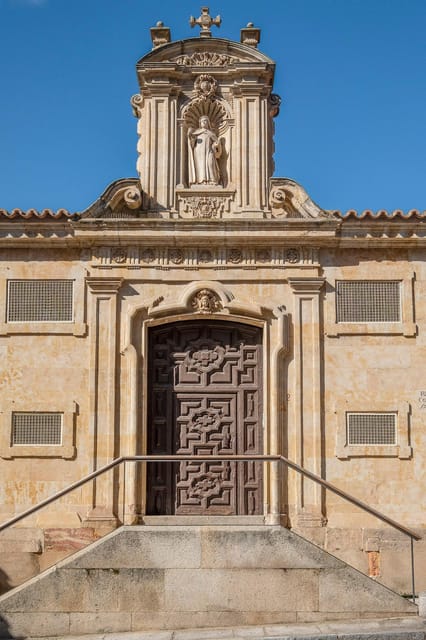
An audio guide gives you independence. You can move through the rooms without joining a scheduled group, and you can pause while looking at the ceiling, murals, or objects. It also helps if you want basic explanations in English, Spanish, or French.
The tradeoff is tone. This is not a live guide who can answer questions or adjust the pace to your interests. One detailed comment found the audio guide boring, so I would choose it for structure and information rather than entertainment.
You can make it work better by listening in short sections. Pause the commentary when you reach a detail you want to examine. If a room interests you more than expected, take your time there rather than feeling obliged to follow the recording minute by minute.
The staff also adds a human touch at the entrance. The reception employee has been described as especially friendly, and that matters in a small museum. A clear welcome and a quick explanation can make the visit easier, particularly if you are unsure where the tour begins.
Who will enjoy Las Claras most
I would recommend this experience to you if you like medieval painting, religious art, conservation, or historic buildings with a quieter mood. It is also a smart choice if you have already seen Salamanca’s main monuments and want a less obvious stop with a clear artistic focus.
The visit suits independent sightseers who like to set their own rhythm. The included guide gives you information without requiring a group tour, and the $7 price makes it easy to add to a day of sightseeing without making a major budget decision.
Art lovers should pay special attention to the murals, the painted roof, and the altar. Architecture fans will get more from the two choirs and the relationship between the church and convent rooms. Anyone interested in the lives of religious communities will appreciate the devotional objects and the building’s former function.
I would be more cautious if you have limited mobility, even though the activity is listed as wheelchair accessible. The same information says it is not suitable for people with mobility impairments, so you should confirm the route and access arrangements before booking. The tower, enclosed areas, and upper choir may be the reason for that warning.
Practical value, timing, and booking conditions
The listed price is $7 per person. For that cost, you receive admission, the audio guide, access to both choirs, the museum rooms, and the tower viewpoint. Food, drinks, hotel pickup, and personal expenses are not included.
The ticket is valid for one day, with starting times shown according to availability. Since no fixed visit length is given, I would leave enough flexibility in your Salamanca schedule rather than placing it between two tightly timed activities. The attraction is small enough to combine with other sightseeing, but the ceiling and murals reward a slower look.
Skip-the-line access is offered through an express security check. That does not mean every visit will have a long queue, but it is useful when the city is busy. Food and drinks are not allowed inside, so finish snacks before entering.
You can cancel up to 24 hours in advance for a full refund, and the reserve-now, pay-later option lets you hold a place without paying immediately. These terms are useful when your wider Spain itinerary is still changing.
My call: book it for the art, not only the view
I would book the Convent of Las Claras if you want to see medieval decoration at close range and prefer a smaller museum to another major cathedral visit. The 14th-century murals, painted roof, high choir, and convent objects give the admission real substance, while the tower adds a pleasant bonus.
I would not book it only for a wide-open panorama, since the fencing can interfere with the view. I would also reconsider if you dislike audio guides, feel uneasy in enclosed or elevated spaces, or need fully confirmed mobility access.
For most art and history fans in Salamanca, $7 is a sensible purchase. Visit with patience, look up often, and give the chapel altar and high choir more time than their modest setting might suggest.
FAQ
What is included in the Convent of Las Claras visit?
Admission includes the audio-guided tour, access to the high and low choirs, the medieval wooden coffered ceiling, the murals, the tower viewpoint, notable rooms, and the convent’s works of art and devotional objects.
Which languages are available for the audio guide?
The audio guide is available in English, Spanish, and French.
How much does the experience cost?
The listed price is $7 per person.
Is the ticket valid for one day?
Yes. The activity is valid for one day, and you should check availability for the available starting times.
Can I cancel the booking?
Yes. You can cancel up to 24 hours in advance for a full refund.
Can I reserve now and pay later?
Yes. The reserve-now, pay-later option allows you to book without paying immediately.
Is the convent wheelchair accessible?
The activity is listed as wheelchair accessible, but it is also marked as unsuitable for people with mobility impairments. Confirm the specific route and access conditions before booking.
New audio tours around Spain
- Entrance to the Alhambra and Generalife with Audio Guide★ 3.5 · 38 reviews
- Alhambra Ticket with Audio Guide in Granada★ 3.5 · 151 reviews
- Montsacopa: An audio tour in the Volcano in the Centre of the City★ 4.5 · 3 reviews
- Mosque-Cathedral of Córdoba E-Ticket with Audio Guide★ 3.5 · 15 reviews
- Cádiz TukTuk Tour with Audio Guide★ 5.0 · 4 reviews
- Vejer de la Frontera: The White Pearl of Andalusia Audio Guide★ 5.0 · 2 reviews
- Bilbao Scavenger Hunt and Highlights Self Guided Audio Tour★ 4.5 · 4 reviews
- Self-Guided Audio Tour-The Surrealist Barcelona of Dalí and Gaudí★ 3.5 · 8 reviews
Spain Audio Tours, compared.
Barcelona: Sagrada Familia Entry Ticket with Audio Guide
Read our review →
Barcelona: Casa Batlló Entry with Self-Audioguide Tour
Read our review →
Granada: Alhambra Entry Ticket with Audio Guide
Read our review →
Casa Batllo Admission Ticket with Intelligent Audio Guide
Read our review →
Madrid: Las Ventas Bullring Tour with Audio Guide
Read our review →
Cordoba: Mosque-Cathedral E-Ticket with Audio Guide
Read our review →
Nerja: Caves of Nerja Entry Ticket with Audio Guide
Read our review →
Madrid: Prado Museum Ticket with In-App Audio Guide
Read our review →Browse the lists this tour appears in