

Review · LISBON
Audio Guide City Walk Lisbon for Cruise Guests
Lisbon’s old town rises sharply from the river, and this GPS audio walk takes you straight into that dramatic setting from the cruise terminal. Over two to three hours, you pass the National Pantheon, Alfama viewpoints, Castelo de São Jorge, the cathedral, Baixa, and Praça do Comércio.
I like the freedom to stop for coffee, food, shopping, or photos without holding up a group. I also like that the guide remains useful for a full year, so it can suit a cruise stop, a later return, or a flexible day in Lisbon.
The main catch is the terrain. Lisbon’s hills and uneven streets are real work, and one verified booking specifically noted some demanding climbs. The activity is marked wheelchair accessible, yet it is also listed as unsuitable for people with mobility impairments, so check the route carefully before booking if hills or cobbles are a concern.
Key points to know before you book
- Start and finish at the cruise terminal: You can walk directly into the old town without arranging transport.
- Follow Lisbon’s hilltop route: The itinerary reaches Portas do Sol and Castelo de São Jorge before descending to Baixa.
- Use GPS autoplay or choose stops yourself: The app lets you listen automatically or select audio from a map or file list.
- Plan on two to three hours of walking: Add extra time for cafés, shopping, photographs, and rests.
- Pay per smartphone, not strictly per person: One voucher code works on one phone, so keep that limit in mind.
- Choose English or German: The audio guide is supplied in both languages.
From the cruise terminal to Santa Engrácia
The route begins and ends near Lisbon’s cruise terminal, a useful feature when your day is tied to a ship’s schedule. You do not need to find a meeting point or spend part of your shore time arranging a taxi or public transport.
Your first major stop is the Igreja de Santa Engrácia, better known as the National Pantheon of Portugal. Its pale stone dome gives the building a strong presence above the surrounding streets. The audio explains the site’s place in Portuguese culture and history while you take in the architecture from outside or consider an optional visit inside.
Entrance fees are not included, so treat the route as an outdoor sightseeing walk unless you decide to pay separately at a stop. The audio guide can point out why a building matters, but it does not replace an entrance ticket or an in-person guide.
This opening section also gives you a taste of Lisbon’s vertical layout. The city is not a flat collection of sights placed along one easy street. You climb toward the old quarters, then later descend toward Baixa and the river.
More Boat and Cruise Audio Tours in Lisbon:
- Amsterdam: 75 Minute City Canal Cruise with Audio Guide
★ 4.4 · 19,938 reviews - Amsterdam: City Centre Canal Cruise including Audioguide
★ 4.3 · 16,901 reviews - Istanbul: Daytime or Sunset Sightseeing Cruise & Audio Guide
★ 4.8 · 14,430 reviews
São Vicente de Fora and the climb through Alfama
From Santa Engrácia, the walk continues toward the Igreja de São Vicente de Fora, a monastery with an important place in Lisbon’s religious and architectural story. The route links the monastery with the older streets of Alfama, where the city’s long layers of influence are especially easy to sense.
The audio format works well here because you can pause beside a façade, look up at details, or stop to get your bearings without losing a guide’s place. If you prefer a more structured visit, use the app’s map or list of files to select each recording yourself.
The alternative is autoplay, which uses GPS to trigger the relevant audio as you move. That is handy when you want to keep your phone in your pocket and pay attention to the streets. GPS can be less satisfying if you wander, stop for a long time, or take a wrong turn, so keep the map available.
The route’s climb is not a small detail. Lisbon’s old quarters are known for steep streets, and the walk toward Portas do Sol and the castle requires effort. Wear shoes that can handle extended walking, and allow time for breaks instead of trying to force the entire route into a tight shore excursion window.
Portas do Sol, one of the walk’s best pauses
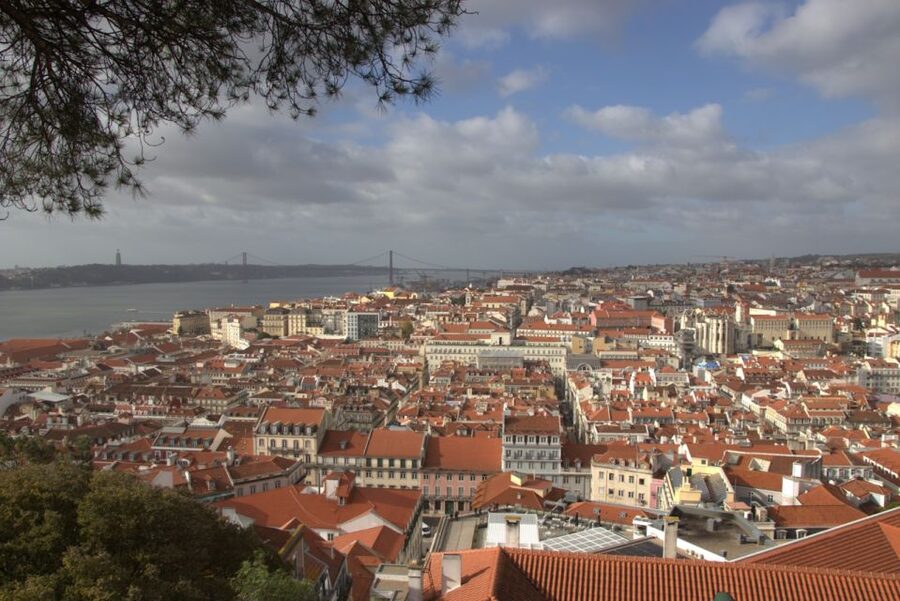
Portas do Sol is one of the key rewards of the uphill section. From this viewpoint, you look across Lisbon’s old town toward the Tejo River, with rooftops and historic quarters spread below.
This is an ideal place to pause the audio. Take photographs, sit for a while, or simply let the view give shape to what you have been hearing about. The ability to stop without a group waiting is one of the strongest reasons to choose a self-guided route.
The walk does not try to rush you from one landmark to the next. One booking described taking time for a café and a meal without missing the rest of the route. That kind of freedom matters on a cruise day, when you may want sightseeing but not a rigid schedule.
Still, you need to manage your own time. A two to three hour estimate covers the walk itself, not a long meal, extended shopping, or every possible interior visit. If your ship has a firm departure time, leave a generous margin for the return to the terminal.
Castelo de São Jorge and Lisbon’s upper town
The route continues to Castelo de São Jorge, one of Lisbon’s most recognizable sights. Its hilltop position explains much about the city’s shape, and the walk up to it gives you a practical sense of how Lisbon’s defensive and royal quarters relate to the river below.
The audio provides context on the fortress and the surrounding old town, but admission is not included. You can decide whether the exterior route and viewpoints are enough for your day or pay separately to enter.
That choice affects the schedule. A quick look at the castle area keeps the walk near its advertised two to three hours. An interior visit, extra photographs, or a relaxed stop adds time, which may be worthwhile if you have a full day in port.
This is also the point where the route may feel most demanding. The climb is part of the experience, not an accidental inconvenience, but it will not suit everyone. The supplied information gives conflicting signals by calling the activity wheelchair accessible while also listing it as unsuitable for people with mobility impairments. I would not assume the full historic route is easy for a wheelchair user or anyone who has trouble with steep streets. Ask the provider for current route details before relying on that label.
More Audio Walking Tours in Lisbon:
- Lisbon Walking Tour with Audioguide on Your Smartphone
★ 4.5 · 4 reviews - Sofia: City Monuments Guided Walking Tour with Audio Guide
★ 4.5 · 825 reviews - Florence: 2.5 hour Audio Guided Walking Tour led by Host
★ 4.6 · 293 reviews - Self Guided Classic Freedom Trail Location Aware (GPS) Walking Audio Tour
★ 4.5 · 258 reviews
The Roman theatre and Sé Cathedral
As you make your way toward the cathedral, the route points out the ruins of an ancient Roman theatre. This stop helps show how far back Lisbon’s urban story reaches, and it adds a small archaeological pause to a walk otherwise focused on churches, viewpoints, fortifications, and city streets.
The next major sight is Sé Patriarcal, Lisbon’s cathedral. Its position in the old town makes it a natural link between the high quarters and the descent toward Baixa. The audio gives you background on the building and its role in the city, while you decide how much time to spend nearby.
I like this part of the route because the sights are not all grand monuments. A cathedral, a theatre ruin, a monastery, and ordinary old-town streets create a fuller picture of Lisbon than a checklist of famous photo stops.
The walking order also makes sense. You first gain height for the views and castle, then begin to move down toward the more open streets of the lower city. That saves you from tackling the steepest section after several hours of sightseeing.
Descending to Baixa and the azulejo façades
The route then heads down into Baixa, Lisbon’s central lower district. Here, look for façades decorated with azulejos, the painted ceramic tiles closely associated with Portuguese architecture.
The tiles reward slow looking. You may notice color, repeated patterns, and details that are easy to miss when walking quickly. The audio can explain the cultural and architectural setting, but your own pace gives you time to inspect the buildings rather than simply hearing their names and moving on.
Baixa feels different from the hilltop quarters. The route shifts from winding upper streets and viewpoints toward broader urban spaces and prominent façades. That change gives the walk a useful rhythm and keeps the itinerary from becoming a string of similar uphill lanes.
You may also find this section easier after the climb, though the route remains a walking tour. There is no transportation included, so plan on covering the full distance under your own power unless you arrange something separately.
Elevador de Santa Justa and Rua Augusta
One of Baixa’s signature sights is the historic Elevador de Santa Justa. The iron lift is among Lisbon’s best-known landmarks, and the audio explains its place in the city’s architecture and transport history.
The guide does not include admission, so an interior visit or ride would cost extra. You can still appreciate the structure from the street and continue along the route without adding that expense or waiting time.
From there, you walk along Rua Augusta, a major pedestrian boulevard leading toward the river. This is a good stretch for browsing shops, taking photographs, or pausing at a café. Since the audio guide is not tied to a group, you can stop when something catches your eye.
That flexibility is where the $11 price makes sense. A traditional guided tour may give you a live person and more direct questions, but this app gives you control for a modest fee. The value is strongest if you plan to use it for a full walk and appreciate time away from a fixed group.
Remember that the advertised price is per smartphone, not necessarily per individual listener. One voucher code works on one phone. If two people want separate devices, confirm the booking terms before purchase rather than assuming one code covers both.
Rua Augusta Arch and Praça do Comércio
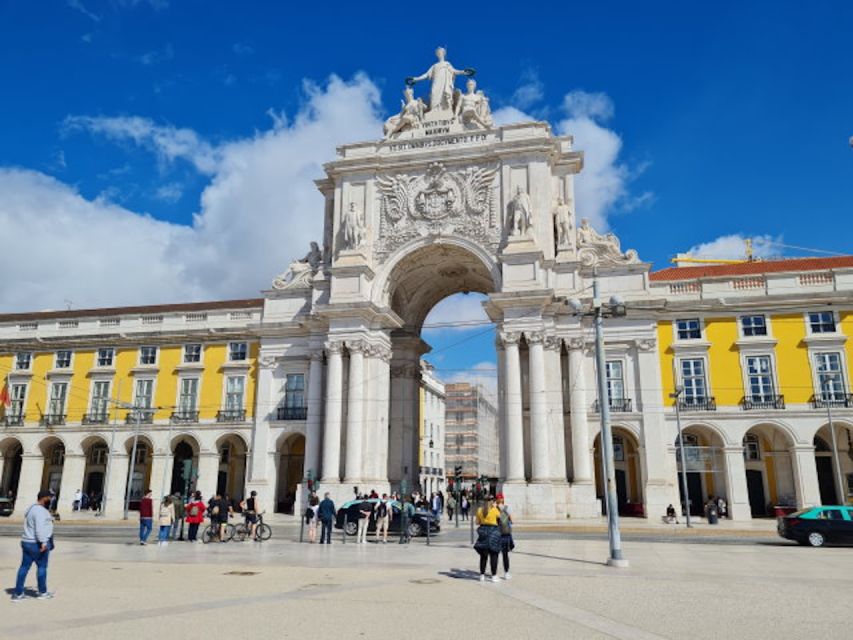
Rua Augusta leads through the triumphal arch to Praça do Comércio, one of Lisbon’s most important open spaces beside the Tejo. The square occupies the site where the Portuguese royal palace once stood before the earthquake of 1755 destroyed much of the city.
This stop gives the walk a strong historical payoff. You have moved from elevated old quarters and medieval religious sites into the rebuilt lower city, where the wide square and riverfront create a very different sense of space.
The audio helps connect the earthquake and rebuilding story to what you see around you. You are not just collecting a photograph of the arch. You are seeing how disaster changed Lisbon’s plan and appearance.
Praça do Comércio is also a sensible place to rest before the return leg. You can take a seat, find a café, or spend a little time by the river. If you have already used much of your shore day, keep an eye on the clock. The tour still requires a walk back to the cruise terminal.
The return route and Fado Museum
On the way back, the walk passes more historic buildings and the Fado Museum. Fado is closely linked with Lisbon’s cultural identity, so this final section adds music and local tradition to the route’s focus on architecture and urban history.
The museum is not included as an entrance visit. Think of it as a landmark along the route unless you choose to pay for admission and adjust your timing.
Finishing near the cruise terminal is practical. You do not need to end in a distant neighborhood and arrange your own way back to the ship. Still, the route is not a transfer service. You remain responsible for getting back on time, and the audio guide does not provide transportation.
The full walk is designed for a relaxed two to three hours, but your actual day can be shorter or longer. Choosing individual audio files may help you skip stops, while autoplay is better if you want the route to guide your progress with less phone handling.
App setup, languages, and the one-phone limit
After booking, you receive an email with instructions for downloading the Aoyo Audioguides app and activating the guide. The voucher code may take up to five minutes to arrive, so do not wait until you are already standing at the terminal to begin setup.
Bring a fully charged smartphone. The guide depends on the app and GPS, and a low battery can turn a simple walk into a nuisance. Downloading and activating the guide before leaving the ship is the sensible approach.
You can listen in English or German. Audio files are available from the map or a list, and GPS autoplay can select them as you move through the route.
The guide is valid indefinitely after purchase, with the activity listed as valid for 365 days. That is useful if your plans change, if you return to Lisbon, or if you buy it well before your cruise. Once the voucher has been redeemed, it cannot be refunded.
Cancellation is available up to 24 hours before the booked time for a full refund, but the voucher becomes nonrefundable after redemption. Reserve now and pay later is also offered, which gives you some flexibility before committing.
Is the $11 cost good value?
At $11, this is a low-cost way to cover many of Lisbon’s major old-town sights. You get the app, GPS-linked information, and the freedom to stop for food, shopping, photographs, and rest without paying for a private guide.
The value depends on how you like to sightsee. If you want conversation, personal recommendations, and help with every turn, a live guide may serve you better. If you want quiet independence and the option to pause for half an hour without holding anyone up, this format is a strong fit.
The price deserves one careful qualification: it is charged per smartphone. A couple sharing one phone can keep the cost down, but each person cannot automatically use a separate device under the same code.
Who should choose this Lisbon walk?
I would choose it for a cruise stop when I wanted a clear route but did not want to join a group. It suits independent visitors who enjoy setting their own pace and are comfortable managing an app, GPS, and return time.
It is also useful if you have already taken a standard Lisbon excursion and want a different look at the city. One booking described having visited Lisbon before on a ship excursion, yet finding new corners with this relaxed format. That is a fair strength of the route: you can wander slightly, stop often, and spend time in places a tightly timed bus tour may pass quickly.
I would be cautious if you have limited mobility, dislike steep streets, or need fully step-free access. The route includes several climbs, and the published accessibility information is not fully consistent. Ask for clarification before booking.
FAQ
Where does the Lisbon audio walk start and finish?
The walk starts and ends at the cruise terminal in Lisbon.
How long does the walking route take?
The route takes about two to three hours, not including extra time for shopping, meals, cafés, photographs, rests, or paid admissions.
Which languages are available?
The audio guide is available in English and German.
How does the audio guide work?
You can select audio files from a map or list, or use GPS autoplay so the relevant recordings play as you move through the route.
Is transportation included?
No. Transportation is not included, so you walk the route and return to the cruise terminal on your own.
Are entrance fees included?
No. Entrance fees for sights and museums are not included.
Can two people use one voucher code on separate phones?
No. The voucher code is valid for one smartphone. The price is based on one smartphone rather than automatically covering multiple devices.
Should you book it?
Book this audio walk if you want Lisbon’s key old-town sights with no group timetable and enough freedom for a café stop or a slow look at the azulejos. The route covers a satisfying mix of viewpoints, religious buildings, castle walls, Roman remains, Baixa architecture, and riverfront history for a modest price.
Skip it, or confirm the route first, if steep climbs and uneven streets would make the day uncomfortable. For an independent cruise guest with a charged phone, flexible timing, and reasonable walking fitness, this is a practical way to see a lot of historic Lisbon without rushing from one stop to the next.
New audio tours around Lisbon
- Prazeres Cemetery: A Self-Guided Audio Tour in Lisbon★ 3.0 · 2 reviews
- Lisbon Walking Tour with Audioguide on Your Smartphone★ 4.5 · 4 reviews
- Riverside Ride Audio Adventure Lisbon to Belem★ 5.0 · 8 reviews
- Self-Guided Audio Tour – Lisbon on Wheels: the capital of the sea★ 5.0 · 3 reviews
- Lisbon: E-ticket to St. George Castle & Audio Tour on Your Phone★ 3.0 · 18 reviews
- National Palace and Gardens of Queluz: E-ticket with Audio Guide★ 3.5 · 6 reviews
- Eco Car Twizy Tour – Lisbon Downtown and Belém with GPS Audio Guide★ 5.0 · 15 reviews
- National Coach Museum: E-ticket with Audio Tour on Your Phone★ 4.0 · 11 reviews
Lisbon Audio Tours, compared.

Lisbon: São Jorge Castle E-Ticket and Audio Guide
Read our review →
Lisbon: Tram 28 Entry Ticket & Audio Guide with 24-Hour Pass
Read our review →
Lisbon: Jerónimos Monastery E-Ticket and Audio Guide
Read our review →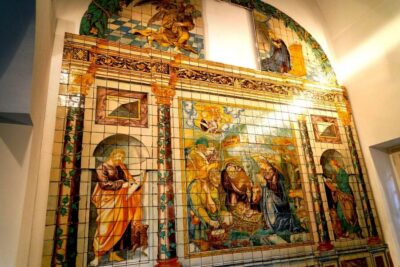
Lisbon: National Tile Museum E-Ticket & Audio Guide
Read our review →
From/To Lisbon: Sintra Hop-on Hop-off Tickets + Audio Guide
Read our review →
Lisbon: National Palace of Ajuda E-Ticket & City Audio Guide
Read our review →
Lisbon: National Pantheon E-Ticket & Audio City Tour
Read our review →
Lisbon: National Coach Museum Entry Ticket and Audio Guide
Read our review →Browse the lists this tour appears in