
Review · FLORENCE
Florence: Accademia Gallery Entry Ticket with Audio Guide
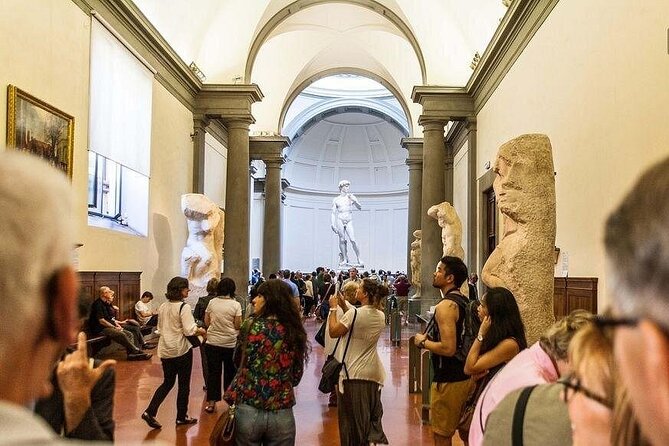
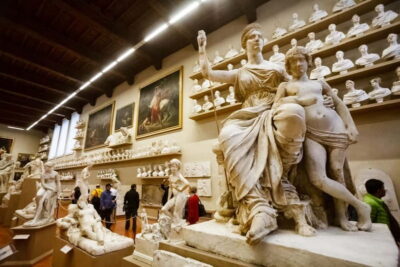
Florence’s Accademia Gallery is built around one unforgettable sight: Michelangelo’s David, a towering marble figure whose small details, from the veins in his hands to his fixed gaze, are easy to miss in photographs. Before reaching him, you pass through the Hall of the Prisoners, where unfinished sculptures seem to push their way out of the stone.
I like the prebooked entry, which can save precious time in Florence, and I like that the ticket lets you see more than David, including old Florentine religious paintings, plaster models, and Medici musical instruments. The weak spot is the arrival process: you first check in at an office on Via dei Pucci, and the audio guide requires an app and access code, so allow extra time and bring your own earbuds.
Key points to know before booking
- David is the star, but not the whole visit: Allow time for the Slaves, religious art, plaster casts, and musical instruments.
- Fast-track entry saves planning time: A prebooked ticket helps you avoid the standard ticket line, though you still need to meet the host first.
- The meeting point is off-site: Check in at Italy Pass, Via dei Pucci 37/39 red, before walking to the gallery.
- The audio guide is optional: Commentary is available in English, Spanish, French, German, and Italian through an app.
- Bring your own earbuds: Disposable earphones are available, but they may not fit every device.
- Expect a four-hour to one-day booking window: Check the available start times when choosing your date.
Why the Accademia deserves more than a quick David stop
Many people enter the Accademia with one goal: see David, take in the scale of the statue, and leave. That is understandable. David is one of the most famous sculptures in the world, and the first sight of him beneath the gallery’s skylight can stop you in your tracks.
Still, I would not treat the museum as a single-room photo stop. The Accademia shows how Florence’s artists worked with marble, plaster, paint, and music. It also gives you a useful look at the difference between a finished masterpiece and a work left in progress.
The gallery visit itself is not a guided tour. You receive your reserved admission and, if selected, access to an in-app audio guide. A host helps you enter, but you move through the museum on your own. That setup suits you if you prefer to pause where you like rather than keep pace with a group.
The advertised price is $42 per person. That is not a cheap museum ticket, so its value depends on your priorities. If your schedule is tight and avoiding the regular ticket line matters, the convenience may be worth the premium. If you already have a Florence museum pass or can arrange a less expensive official entry, compare the total cost before booking.
More Museum Audio Tours in Florence
- Florence: Uffizi Priority Ticket & Masterpieces Audio App
★ 4.2 · 6,402 reviews - Florence: Uffizi Gallery Timed Entry Ticket & Audio Guide
★ 4.2 · 2,794 reviews - Florence: Uffizi & Accademia Priority Tickets with Audio App
★ 4.4 · 1,253 reviews
Meeting at Italy Pass on Via dei Pucci
Your first task is not at the Accademia itself. The meeting point is the Italy Pass store at Via dei Pucci 37/39 red. You need to check in there before continuing to the gallery.
This extra step is the most important practical drawback. The office is part of the ticket process, so do not walk straight to the Accademia expecting to collect your admission at the museum entrance. Build in spare time for finding the store, checking in, and receiving instructions.
The check-in area may not offer much seating, which matters if you arrive early with children, older family members, or luggage. Large bags are not allowed inside the gallery anyway, so keep your belongings light. Oversize luggage, smoking, pets except assistance dogs, selfie sticks, flash photography, alcohol, and drugs are prohibited.
You should also have the passport or identity card required for children. Keep booking details accessible on your phone, and bring charged devices if you choose the audio option.
Entering the Accademia with a reserved ticket
Once the check-in process is complete, a host helps you with entry. The main benefit is simple: you do not have to rely on buying a last-minute ticket at the museum.
That does not mean the entire arrival will feel instant. You still need to locate the office, receive the ticket or instructions, and follow the host’s directions. One practical account describes a long wait for a representative at the gallery after the initial check-in, so I would avoid scheduling another timed activity immediately afterward.
The experience is wheelchair accessible, which makes the reserved-entry format useful for visitors who want a clearer plan. Transportation and hotel pickup are not included, so you handle your own route to the meeting point and between the office and museum.
The ticket is valid within a selected period of four hours to one day, depending on availability and the option you book. Check the start times carefully rather than assuming you can arrive at any point without restrictions.
The Hall of the Prisoners and Michelangelo’s unfinished figures
The Hall of the Prisoners is the first major artistic lesson inside the museum. Michelangelo’s unfinished figures, also called the Slaves or Prisoners, remain partly trapped in their marble blocks.
Their unfinished state is not a flaw to overlook. You can see the artist’s process, with bodies emerging from rough stone rather than arriving as polished, complete figures. The effect feels more direct than a perfectly finished statue because the material and the labor remain visible.
This room also helps you understand Michelangelo’s command of the human body. Limbs, torsos, and strained poses appear through the marble with varying degrees of completion. The works ask you to look slowly, not just search for a famous name.
If you select the audio guide, this is a good place to use it. Context about Michelangelo’s methods can turn a quick look at unfinished statues into a better reading of what you see. You can also skip commentary and study the pieces at your own speed if the technology becomes distracting.
More Museum Audio Tours in Italy
- Florence: Uffizi Gallery Reserved Entry Ticket & Audioguide
★ 4.5 · 970 reviews - Florence Duomo, Baptistery & Opera Museum Audioguided Tour
★ 4.2 · 607 reviews - Florence: Accademia Gallery Reserved Entry & Audio Guide
★ 4.3 · 600 reviews - Florence: Uffizi Gallery Tickets with Optional Audio Guide
★ 4.1 · 503 reviews
David beneath the skylight
At the end of the main hall, David appears beneath a natural skylight. The statue is more than 17 feet tall, so its scale is hard to grasp until you are standing in the same room.
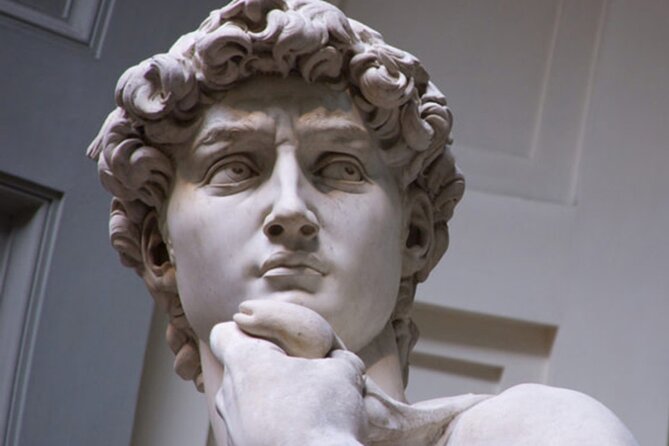
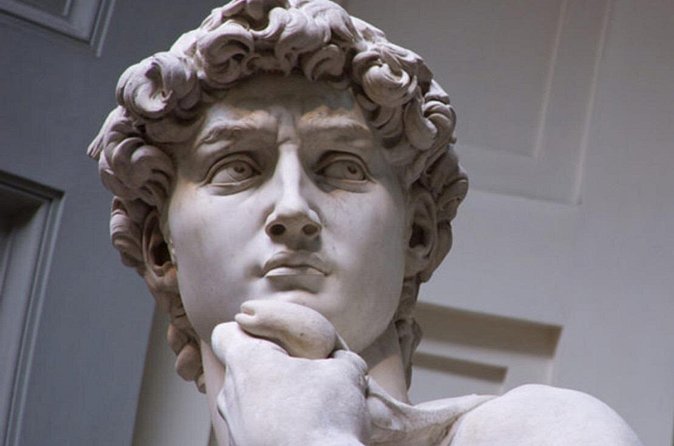
Look beyond the famous pose. The details include the veins on David’s hands, the tension in his body, and the intense direction of his gaze. These features give the sculpture a sense of alertness rather than calm decoration.
I like the way the gallery presents David as the culmination of the earlier room. After seeing the Slaves struggle out of rough marble, you encounter a fully finished figure with every surface controlled. The contrast makes both parts of the visit stronger.
You may have seen David reproduced on postcards, posters, and screens. None of those versions gives you the same sense of height and physical presence. At the same time, this is a museum visit, not a private viewing. Other people may be in the room, and your time and position can depend on the flow of the gallery.
Flash photography is not allowed. Put the phone away for a moment and use your eyes first. A normal camera or phone may be permitted under the museum’s rules, but do not use a selfie stick.
The plaster models in the Hall of Models
After David, continue to the Gipsoteca Bartolini, known here as the Hall of Models. It contains 19th-century plaster casts that resemble the working materials of a sculptor’s studio.
This section changes the mood. Instead of a single marble icon, you see a broad collection of models and studies. Plaster is less glamorous than polished marble, but it helps explain how sculptors developed forms before producing final works.
If your main interest is Renaissance Florence, this room may feel less urgent than the Michelangelo galleries. I still recommend it, especially if you enjoy seeing artistic preparation rather than only the final product. It gives the museum more range and helps prevent the visit from becoming a one-statue checklist.
Medici instruments and Florentine religious art
The Museum of Musical Instruments holds objects linked to the Medici and Lorraine families. Among the collection is a Stradivarius violin, a reminder that Florence’s court culture supported music as well as painting and sculpture.
The display is a useful change of pace after several rooms of figures and marble. You can look at the instruments as objects of craftsmanship, but also as signs of the wealth and taste that shaped Florentine cultural life.
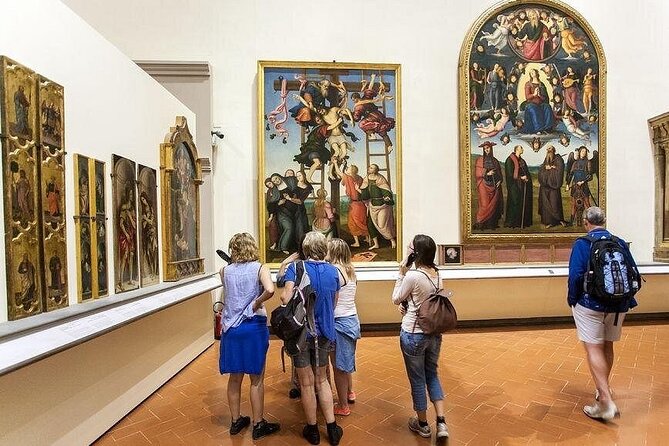
The religious art collection covers Florentine works from the 13th through the 16th centuries. Expect gold-ground paintings, a style in which shimmering backgrounds create an otherworldly setting for sacred scenes.
These paintings can look stiff or unfamiliar if you expect the naturalism of later Renaissance art. Give them a little time. Their flat surfaces, formal poses, and glowing backgrounds show an earlier artistic language. They also place Michelangelo’s work within a longer Florentine story rather than treating him as an isolated genius.
Choosing the audio guide
The optional audio guide is available in English, Spanish, French, German, and Italian. It is delivered through an app, so you need to download it and enter an access code.
That sounds easy, but it can slow you down. An incorrect first code has caused problems, and audio equipment can be unreliable. Reports of static, missing sound, or hard-to-hear commentary make your own earbuds the safest choice.
Bring earbuds that work with your phone, and download the app or prepare for the setup before you are standing in a busy check-in area. Disposable earphones are available, but they may not suit every device or fit comfortably.
The audio option is best for you if you want background on the Slaves, David, the plaster models, and the historic collections without hiring a private guide. It is less useful if you dislike managing an app or prefer to read wall labels at your own pace.
There is no named personal guide attached to this experience. The host’s job is to assist with entry, while the audio commentary provides the interpretation. If the sound fails, you can still visit the museum with your entry ticket, but you may not receive the full value of the audio supplement.
How long to allow and who will enjoy it
The booking information gives you a duration range of four hours to one day, but the gallery visit itself does not need a full day. Your ideal pace depends on how closely you study the collections and whether you use the audio guide.
I would allow enough time for the meeting point, entry, the Hall of the Prisoners, David, and the remaining galleries. Add more time if you want to listen to every audio stop or examine the religious paintings in detail.
This experience suits:
- First-time Florence visitors who want a reliable way to see David
- Independent visitors who do not want a full group tour
- Art lovers interested in Michelangelo’s process
- Families who need a flexible visit, provided children can manage the museum setting
- Visitors who value reserved admission more than the lowest possible ticket price
It may not suit you if you want a live art historian, door-to-door transportation, or a completely effortless check-in. The product includes no transportation, hotel pickup, or drop-off, and there is no personal tour guide leading you through each room.
Is the $42 ticket good value?
At $42, you are paying for more than admission. You are paying for prebooking, assistance at entry, and the choice to add audio commentary. For a short Florence visit, saving time can be worth real money, especially when museum schedules are tight.
The value drops if you have plenty of time, are comfortable arranging museum admission yourself, or do not want to use an app. The check-in at Via dei Pucci adds a layer of organization that you must manage, and the audio equipment may not work perfectly.
I would choose the basic reserved ticket if David is your priority and you prefer to read the museum’s information independently. I would choose the audio option if you want more context and have reliable earbuds with you.
Free cancellation is available up to 24 hours before the activity for a full refund, and reserve-now, pay-later booking keeps your plans flexible. Those terms help if your Florence schedule is still changing, but they do not remove the need to check the exact entry time.
Should you book the Accademia ticket?
Book this if you want to see David without arranging standard admission yourself, and if you are comfortable with an off-site check-in. The gallery offers much more than its most famous sculpture, particularly the unfinished Slaves and the collection of Florentine religious art.
For the smoothest visit, arrive at Italy Pass with time to spare, bring your own earbuds, keep your luggage small, and do not schedule an immediate appointment afterward. I would book the ticket for a first Florence visit when time is limited, but I would skip the audio add-on if you prefer a simple museum visit or dislike troubleshooting an app.
FAQ
Where is the meeting point?
The meeting point is the Italy Pass store at Via dei Pucci 37/39 red in Florence.
Is the Accademia ticket included?
Yes. The experience includes a prebooked entry ticket, with the choice of standard entry or entry with an audio guide.
Is there a live tour guide?
No. A host assists you with entry, but a personal tour guide is not included. The optional audio guide is provided through an app.
Which languages are available for the audio guide?
The audio guide is available in English, Spanish, French, German, and Italian.
Should I bring my own earbuds?
Yes. Your own earbuds are recommended for better sound quality and device compatibility. Disposable earphones may be available, but they may not fit every device.
Is the gallery wheelchair accessible?
Yes, the experience is listed as wheelchair accessible.
Can I cancel the booking?
You can cancel up to 24 hours in advance for a full refund. Reserve-now, pay-later booking is also available.
New audio tours around Florence
- Florence: Uffizi Gallery Timed Entry Ticket with Audio★ 3.0 · 3 reviews
- Florence: Uffizi Gallery Audio Guided Tour led by Tour Leader★ 3.5 · 6 reviews
- Uffizi Combined Ticket:UFFIZI, PITTI, BOBOLI & digital audioguide★ 4.0 · 26 reviews
- Uffizi Gallery Audio-Guided Visit with optional Accademia Gallery★ 3.5 · 42 reviews
- Florence: Uffizi Gallery Reserved Ticket & Digital Audio Guide★ 4.5 · 3 reviews
- Florence Walking Tour with Audioguide on Your Smartphone★ 4.5 · 9 reviews
- Florence: Accademia entry tickets + optional audio guide★ 4.0 · 228 reviews
- Accademia Gallery Skip the line Tickets with Audio Guide★ 4.0 · 10 reviews
Florence Audio Tours, compared.
Florence: Timed Entry to Michelangelo’s David + Audio App
Read our review →
Florence: Uffizi Priority Ticket & Masterpieces Audio App
Read our review →
Florence: Palazzo Vecchio Entrance Ticket & Audioguide
Read our review →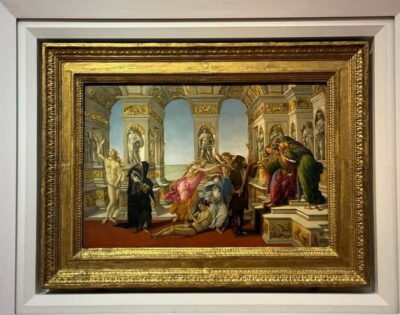
Florence: Uffizi Gallery Timed Entry Ticket & Audio Guide
Read our review →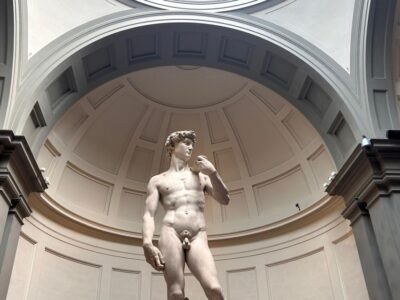
Florence: Michelangelo’s David Entrance Ticket and Audio App
Read our review →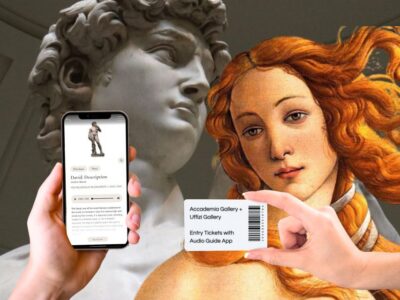
Florence: Uffizi & Accademia Priority Tickets with Audio App
Read our review →
Florence: Eco-Friendly Golf Cart City Tour with Audio Guide
Read our review →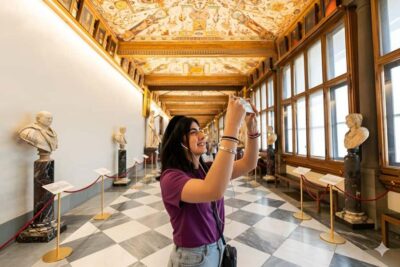
Florence: Uffizi Gallery Reserved Entry Ticket & Audioguide
Read our review →Browse the lists this tour appears in