
Review · ITALY
Assisi Walking Tour with Audio and Written Guide by a Local
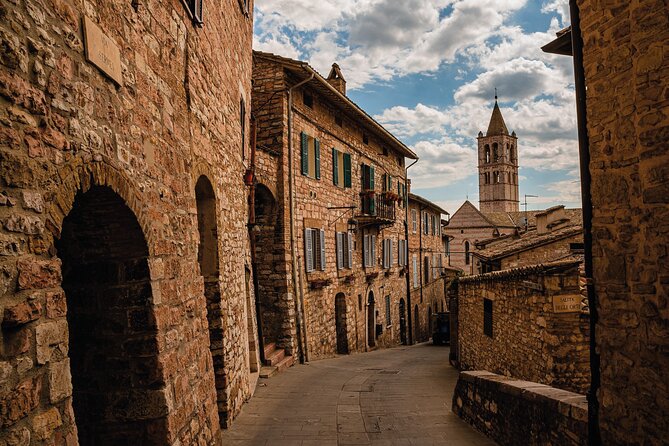
Assisi’s best sights are spread along steep, historic streets, and this low-cost digital tour gives you a clear route from the Basilica of Santa Chiara to Saint Francis’s basilica. At $7.81, it is less a formal tour than a pocket guide that talks you through the town as you go.
I like the freedom to set your own pace and the useful mix of audio, written notes, maps, history, and local restaurant advice. I also like that the route connects famous churches with less obvious stops, such as the Roman Forum and Oratorio dei Pellegrini.
The main catch is simple: there is no person waiting to meet you. You need a smartphone with internet access, and the written guide is digital, not a paper booklet. A few audio segments have also had technical problems, so check that the guide loads before you set off.
Key points to know before you go

- Start at Santa Chiara and finish near Saint Francis’s basilica: The route crosses much of Assisi’s historic center.
- Plan on four to five hours: The listed stops take about three hours, with walking, pauses, and photo time filling out the rest.
- Use your own phone and headphones: Headphones are not supplied, and the audio can play through your phone’s speaker.
- Two major sights cost extra: Entry to Rocca Maggiore and the Roman Forum and Archaeological Museum is not included.
- The guide comes in five languages: You can use it in English, Spanish, Italian, German, or French.
- The price is excellent for independent sightseers: At $7.81, you get structure and context without paying for a live guide.
A self-guided route through Assisi’s two great basilicas
This experience works best if you think of it as a walking framework rather than a traditional tour. You meet no guide, join no scheduled group, and do not need to keep up with anyone else.
The digital guide leads you through Assisi using audio and written information on your phone. You can follow the suggested order, skip a stop, replay a section, or pause for lunch. That flexibility is useful in a town where a church may be open one moment and a crowded piazza may tempt you to linger the next.
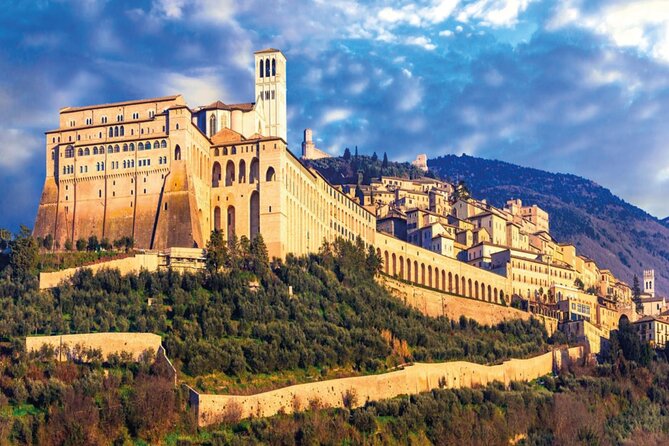
The route begins at the Basilica of Santa Chiara and ends at the Papal Basilica of Saint Francis. Along the way, it covers churches, a fortress, medieval government buildings, Roman remains, and pilgrimage art.
You should allow four to five hours. The formal stop times add up to roughly three hours, but that does not include the uphill and downhill walking between sites, time to find entrances, or time to enjoy Assisi’s views and squares.
More Audio Walking Tours in Italy
- Florence: 2.5 hour Audio Guided Walking Tour led by Host
★ 4.6 · 293 reviews - Verona Walking Tour with Audio and Written Guide by a Local
★ 4.5 · 157 reviews - Bologna Walking Tour with Audio and Written Guide
★ 4.5 · 132 reviews
Santa Chiara begins the walk on a quieter note
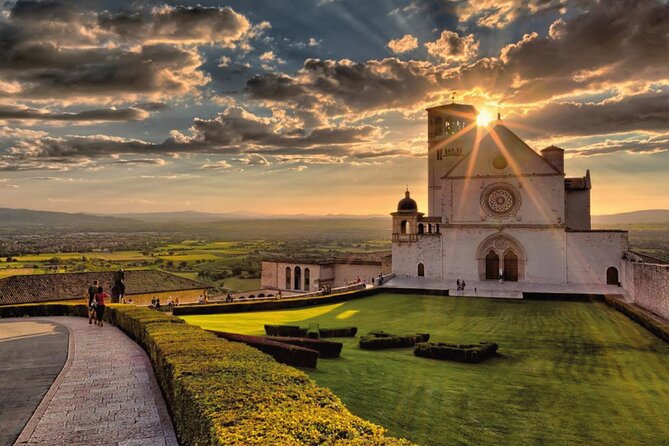
The Basilica of Santa Chiara is the opening stop, with about 25 minutes suggested. It sits on the opposite hill from the Basilica of Saint Francis, and its pale facade follows a Romanesque design with a triangular upper section and central rose window.
The audio guide uses this first church to set up the spiritual geography of Assisi. The two basilicas face one another across the town, creating a visual conversation that is easy to miss if you rush straight to Saint Francis.
Admission is listed as free. You still need to respect the atmosphere of the church, and the digital format helps here because you can read or listen quietly rather than gather around a guide speaking to a group.
This is a good starting point for you if you want a gentle introduction before tackling the town’s steeper streets. It also gives the route a clear purpose: you are crossing Assisi from one important Franciscan site to another.
San Rufino adds sacred art and medieval rooms
The Diocesan Museum and Crypt of San Rufino is included in the route beside Assisi Cathedral. The museum occupies medieval rooms, decorated spaces, and old cloisters, with religious works from the cathedral and nearby churches.
The supplied timing does not give a separate duration for this stop, so you should treat it as a flexible addition. If you have a strong interest in religious art, allow extra time here. If your schedule is tight, the written material lets you make a quicker decision than you could with a fixed live group.
This stop also broadens the experience beyond the most famous Franciscan sites. You get a look at the wider religious culture of Assisi, not just the story of Saint Francis and Saint Clare.
Chiesa Nuova marks Saint Francis’s birthplace

The Chiesa Nuova di San Francesco Convertito takes about 20 minutes. It occupies the place traditionally identified as Saint Francis’s birthplace, and the Friars Minor turned the site into a church in 1615 with financial support from Philip III of Spain.
That date gives you a useful reminder: Assisi’s present appearance was shaped over many centuries. The church is not simply a surviving medieval building. It is also part of the later effort to preserve and honor the saint’s memory.
Because admission is listed as free, this is an easy stop to keep in the route. The audio commentary should help you connect the physical site with the story behind it, which is especially helpful if you know Saint Francis mainly through general legends.
Same sights, a different narrator:
- Rome: Pantheon Fast-Track Ticket and Official Audioguide
★ 4.5 · 27,353 reviews - Rome: Colosseum & Forum with Audio Guide App -Optional Arena
★ 4.2 · 24,770 reviews - Florence: Timed Entry to Michelangelo’s David + Audio App
★ 4.6 · 19,496 reviews - Rome: City Sightseeing Hop-on Hop-off Bus with Audioguide
★ 4.0 · 16,045 reviews
Rocca Maggiore rewards the uphill effort
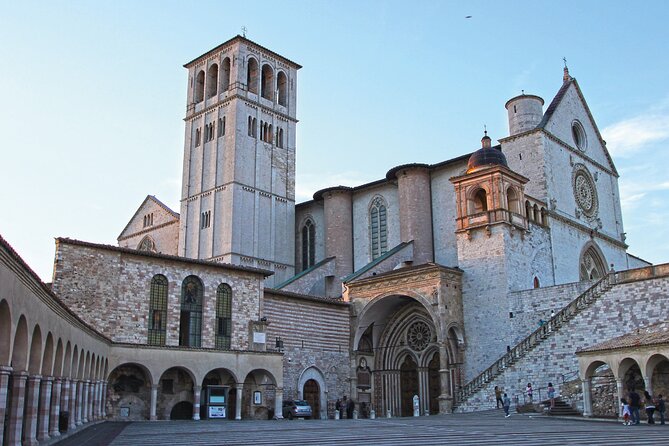
Rocca Maggiore is the route’s most substantial fortification stop, with about 45 minutes suggested. The complex includes the larger Rocca Maggiore and the smaller Rocca Minore, also called the Cassero di Sant’Antonio. Both use Assisi’s characteristic pink stone.
This is the point where you need to pay attention to the admission note. Entry is not included in the $7.81 price, so you should budget separately if you want to go inside.
The fortress also changes the rhythm of the walk. After churches and civic buildings, you get a defensive structure that explains Assisi’s strategic position and medieval power struggles. The elevated setting gives you a different view of the town, though the route’s practical challenge is that Assisi is hilly and the walk is not a flat stroll.
The audio guide is useful here because you can pause while looking at the masonry, towers, and surrounding town. A live guide might move you along on a schedule. With this format, you can spend longer at the parts that interest you.
Piazza del Comune reveals Assisi’s Roman and medieval layers
Piazza del Comune is scheduled for about 15 minutes, but you may want to stay longer. Roads from the city gates meet here, making the square the natural civic center of Assisi.
The piazza occupies the site of an ancient Roman Forum. Later, medieval public buildings grew around it, including the Temple of Minerva, the Palazzo del Capitano del Popolo, and the Torre del Popolo.
This is one of the route’s strongest history lessons because the layers sit close together. You can look at a Roman temple, medieval civic power, and modern town life within the same public space.
I like the way the route uses the square as a transition. You move from religious sites into the political heart of Assisi, then go below street level to examine the Roman remains themselves.
Palazzo del Capitano del Popolo explains medieval civic power
The Palazzo del Capitano del Popolo receives about 15 minutes. Built at the end of the 13th century, it served as the seat of the Capitano del Popolo, the official charged with maintaining order and administering justice.
This stop may be brief, but it adds an important correction to the idea that Assisi is only a religious destination. The city also had civic institutions, political tensions, and officials responsible for public life.
The digital format suits this kind of stop. You can listen to the explanation while examining the facade, then continue without waiting for a group to assemble. If medieval government is not your main interest, you can keep the pause short and save energy for the basilicas.
The Roman Forum takes you below Piazza del Comune

The Roman Forum and Archaeological Museum is scheduled for 45 minutes. The remains lie beneath Piazza del Comune and are reached through the crypt of the former Church of San Niccolò on Via Portica.
Admission is not included, so check the extra cost before you begin the walk. This is another stop where the guide gives useful context: you understand the square above more clearly after seeing the ancient public area below it.
The site was uncovered during excavations in the first half of the 19th century. That detail matters because the Roman remains were not always visible to people walking through the piazza. The archaeological area gives you a physical link to ancient Asisium, the Roman city beneath modern Assisi.
Set aside the full suggested time if archaeology interests you. If you prefer churches and medieval streets, the route lets you treat this as optional rather than forcing you through a museum on someone else’s timetable.
Oratorio dei Pellegrini shows Assisi’s pilgrimage tradition
The Oratorio dei Pellegrini is a small but worthwhile stop, with about 15 minutes suggested. Built in 1457 for the brotherhoods of Sant’Antonio Abate and San Giacomo, it allowed pilgrims staying at a nearby hospital to take part in religious services.
Inside, you can expect a square plan, a cross vault, and frescoed walls. The building links art with practical care for people on pilgrimage. It was not simply a decorative chapel. It served people who had traveled to Assisi and needed a place for worship near their lodging.
Admission is listed as free. This stop is particularly useful if you want to understand Assisi as a working pilgrimage town rather than a collection of famous monuments.
Saint Francis’s Upper Basilica brings the route to its main climax
The Basilica Superiore di San Francesco d’Assisi is the final listed stop, with about 30 minutes suggested. After Saint Francis died in 1226, construction was quickly planned for a basilica to hold his relics. Pope Gregory IX canonized him on July 15, 1228, and laid the first stone that same day.
The Upper Basilica is the route’s major destination, and the written and audio material is meant to help you read the building rather than simply admire its scale. You finish near the larger Papal Basilica and Sacred Convent complex in Piazza Inferiore di San Francesco.
The provided route lists admission as free, but you should still follow any current church rules about visiting hours, silence, and photography. The end point is practical: you finish near one of Assisi’s most important squares instead of having to retrace your steps across town.
One technical issue is worth knowing. An Italian audio update once repeated the previous structure at this final basilica, although the text remained available. That error was later corrected, but it is a good reason to test the audio and keep the written content open as a backup.
The digital guide is the real product
The strongest feature here is control. You can listen through your phone’s speaker or use your own headphones, pause the narration, skip a section, and choose how long to stay at each sight.
You should read the activation details in your voucher carefully. The guide requires a smartphone and an internet connection, so do not assume that arriving at Santa Chiara is enough to begin. Downloading or opening the guide before you reach the meeting point is sensible, even though the supplied information does not promise offline access.
The written material matters because audio can be imperfect. One audio problem involved tracks ending abruptly or overlapping. Keeping the text available means you can still get the essential facts if a recording cuts off.
Do not expect a paper guide to be handed to you. A past booking problem came from misunderstanding the phrase written guide. Here, written means digital content accessed on your phone.
The provider is Walking Cap, and a support contact named Matteo responded to one activation question. That may help if you have trouble starting the guide, but you should still plan as if you are responsible for beginning the visit yourself.
What $7.81 buys you in practical terms
At $7.81 per person, the value is strong if you want structure without a live guide. You receive a route covering major churches, a fortress, civic buildings, Roman archaeology, and pilgrimage art, plus restaurant suggestions and tips on monuments, history, and local curiosities.
The price does not cover entry to Rocca Maggiore or the Roman Forum and Archaeological Museum. Those extra tickets can change the total cost, so decide in advance which paid stops matter most to you.
The low price also explains what you do not receive. There is no guide in person, no supplied headphones, no group commentary, and no assistance walking you from one point to the next. You pay for the content and route, not personal service.
Group discounts are available, and the activity can accept up to 115 participants. That maximum matters less than it might on a normal group tour because you are not all expected to walk together. Still, the experience is best for independent visitors who are comfortable navigating with a phone.
Timing, access, and who should choose it
The start point is Basilica di Santa Chiara, Piazza Santa Chiara 1. The end is near the Papal Basilica and Sacred Convent of Saint Francis at Piazza Inferiore di San Francesco 2.
The route uses city streets and includes the climb toward Rocca Maggiore. The supplied information says most people can participate and that service animals are allowed. It also notes that the tour is near public transportation.
I would choose this experience if you like deciding your own pace, want background information at a low price, or prefer not to join a scheduled group. It is also a good fit if you want to combine the route with your own lunch or additional church visits.
I would choose a live tour instead if you need help with navigation, want to ask questions as you go, or are uncomfortable troubleshooting phone-based access. A digital guide cannot notice that you missed a turn or explain a detail beyond its prepared material.
The route may also feel long if you try to complete every stop in one push. The four to five-hour estimate is realistic once you include walking and the fortress, but you can shorten the experience by skipping the paid sites or less important commentary.
Cancellation is flexible if your plans change. You can receive a full refund when canceling at least 24 hours before the start time. Cancellations or changes within 24 hours are not refunded.
Should you book the Assisi walking tour?
Book it if you want an affordable, well-planned introduction to Assisi and are happy to guide yourself. The best reasons are the low price, the route’s range of sights, the five language choices, and the ability to pause or skip sections.
Before booking, make sure you understand three things: you need your own smartphone with internet access, the written guide is digital, and admission to Rocca Maggiore and the Roman Forum is extra. Bring headphones if you prefer private listening, and open the guide before you start.
If those conditions suit you, this is a practical way to see Assisi on your own terms. It will not replace a thoughtful local guide, but it gives you enough direction and context to turn a self-guided walk into a meaningful half-day visit.
FAQ
How long does the Assisi walking tour take?
The experience takes approximately four to five hours, including the listed stops and the time needed to walk between them.
Where does the tour start and finish?
It starts at the Basilica of Santa Chiara at Piazza Santa Chiara 1 and finishes near the Papal Basilica and Sacred Convent of Saint Francis at Piazza Inferiore di San Francesco 2.
Is there a guide in person?
No. This is a self-guided visit using digital audio and written information on your smartphone.
Do I need a smartphone and internet connection?
Yes. You need a smartphone with internet access to activate and use the digital guide. Activation details are provided in your voucher.
Are entrance tickets included?
Admission is listed as free for several stops, including Santa Chiara, Chiesa Nuova, Piazza del Comune, Palazzo del Capitano del Popolo, Oratorio dei Pellegrini, and the Upper Basilica of Saint Francis. Entry to Rocca Maggiore and the Roman Forum and Archaeological Museum is not included.
What languages are available?
The audio guide and written content are available in English, Spanish, Italian, German, and French.
New audio tours around Italy
- Lecce Walking Tour with Audio and Written Guide by a Local★ 4.0 · 38 reviews
- Private Audio Guided Walking Tour in Lecce★ 4.0 · 7 reviews
- Private Audio Guided Walking Tour in Como★ 3.0 · 3 reviews
- Como Walking Tour with Audio and Written Guide by a Local★ 4.5 · 30 reviews
- Finance and Nobility: Explore medieval Genoa on a self-guided audio tour★ 4.5 · 7 reviews
- Genova Walking Tour with Audio and Written Guide by a Local★ 4.5 · 33 reviews
- Udine Walking Tour with Audio and Written Guide by a Local★ 4.0 · 2 reviews
- Florence: Uffizi Gallery Timed Entry Ticket with Audio★ 3.0 · 3 reviews
Italy Audio Tours, compared.
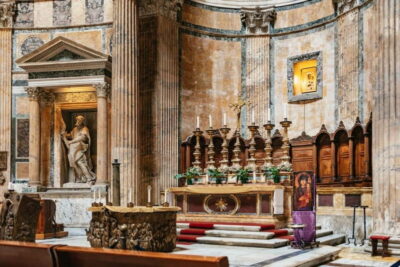
Rome: Pantheon Fast-Track Ticket and Official Audioguide
Read our review →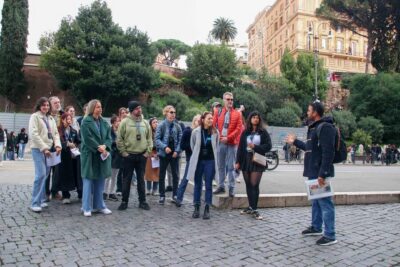
Rome: Colosseum & Forum with Audio Guide App -Optional Arena
Read our review →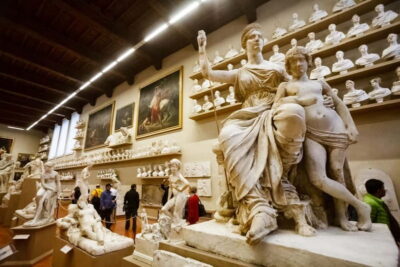
Florence: Timed Entry to Michelangelo’s David + Audio App
Read our review →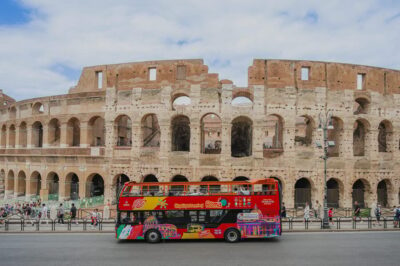
Rome: City Sightseeing Hop-on Hop-off Bus with Audioguide
Read our review →
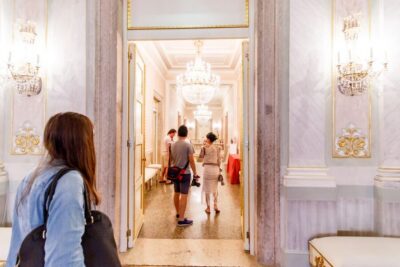
Venice: La Fenice Opera House Entry Ticket with Audio Guide
Read our review →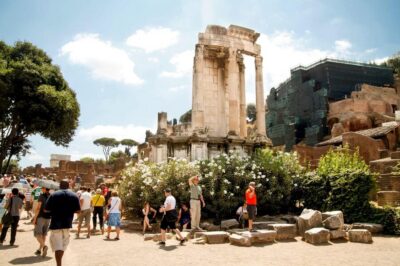
Rome: Colosseum, Forum, Palatine Hill Entry & Audioguide App
Read our review →
Rome: St. Peter’s Basilica & Dome Entry Ticket & Audio Tour
Read our review →Browse the lists this tour appears in