
Review · BARCELONA
Barcelona’s El Raval and the Gothic Quarter: A Self-Guided Audio Tour
Barcelona’s oldest quarters reveal their best stories on foot, and this route brings plenty of them together. You’ll move from La Rambla into El Raval, once Europe’s most densely populated urban district, then continue through the Gothic Quarter’s Roman walls, narrow lanes, grand churches, and quiet squares. Along the way, you’ll hear about unwanted babies left at the House of Mercy, Picasso’s Carrer d’Avinyó, and the transformation of Roman Barcino into modern Barcelona.
I like the freedom to stop and wander, and I like the practical offline map and audio, which let you keep your phone data in reserve. The $11.99 price is also fair for a private experience that you can replay for life. The main catch is navigation: GPS can become confused among the Gothic Quarter’s tall buildings and tight lanes, so you should download the tour and study the route before you set off.
Key points to know
- Start at Font de Canaletes: The route begins at La Rambla, 133, near one of Barcelona’s best-known gathering points.
- Two historic districts in one walk: You’ll pass through El Raval and the Gothic Quarter in about 75 to 90 minutes.
- Strong story range: Expect Roman Barcelona, medieval religion, prostitution, poverty, Picasso, Gaudí, Botero, and everyday café life.
- Useful offline access: The VoiceMap app stores audio, maps, and route data on your phone.
- Flexible pacing: Pause at Boqueria Market, enter a café, or repeat the walk later with lifetime access.
- Navigation needs attention: The app normally keeps pace with your walk, but GPS may misread your position in narrow streets.
From Canaletes to El Raval’s harder stories
The walk starts at Font de Canaletes on La Rambla. This is a practical meeting point because La Rambla is easy to find, but it is also a busy city thoroughfare. Before pressing play, I would get the app open, confirm that the audio and map are downloaded, and check that your headphones work.
The route quickly moves away from La Rambla and into El Raval. This district has long carried a rougher reputation than Barcelona’s grander central avenues. The audio places that reputation in context by explaining that El Raval was once the most densely populated urban area in Europe and Barcelona’s Red Light District.
That background matters. You are not simply walking past old façades. You are seeing a neighborhood shaped by poverty, overcrowding, commerce, and social change. The self-guided format gives you time to look around without a group waiting for you at every corner.
One of the more striking stories concerns the House of Mercy. The tour explains how destitute mothers could leave unwanted babies through a hole in the wall. It is a grim detail, but it gives the neighborhood’s charitable institutions a human face and shows how difficult life could be for poor families.
This is one reason the audio format works well here. A guide standing with a group might have trouble discussing such a painful subject without rushing. With your own phone and headphones, you can pause, think, or move on at your own pace.
More Self-Guided Audio Tours in Spain
- Gaudi and La Sagrada Familia Exterior Self-Guided Audio Tour
★ 3.5 · 25 reviews - Self-Guided Audio Tour-The Surrealist Barcelona of Dalí and Gaudí
★ 3.5 · 8 reviews - Barcelona Self-Guided Audio Tour
★ 3.0 · 6 reviews
Boqueria Market and the pleasures of stopping
The route gives you the chance to step into Mercat de la Boqueria, the famous food market operating since the 1100s. The market is one of the walk’s liveliest stops, and you should allow extra time if you want to browse.
The tour itself is designed as a 75-minute walk, but Boqueria can easily turn that into a longer outing. You may stop for food or simply look at the stalls before continuing. Food and drink are not included, so any purchases are your responsibility.
That separation is useful. You are not locked into a meal at a particular time, and you can decide if the market deserves five minutes or half an hour. If you are visiting during a crowded period, the ability to pause the audio is especially helpful.
The route also points out Can Culleretes Restaurant and explains its two competing origin stories. You get to decide which version you believe. This small detail adds a lighter touch after the more serious history of El Raval.
You’ll also have the chance to visit Meson del Cafe, described as a place with the city’s best coffee and a possible encounter with the mayor. The wording is playful, so treat it as local color rather than a promise of a meeting. The useful part is that the tour connects grand history with ordinary places where Barcelona’s daily life continues.
El Gato de Botero and Palau Güell
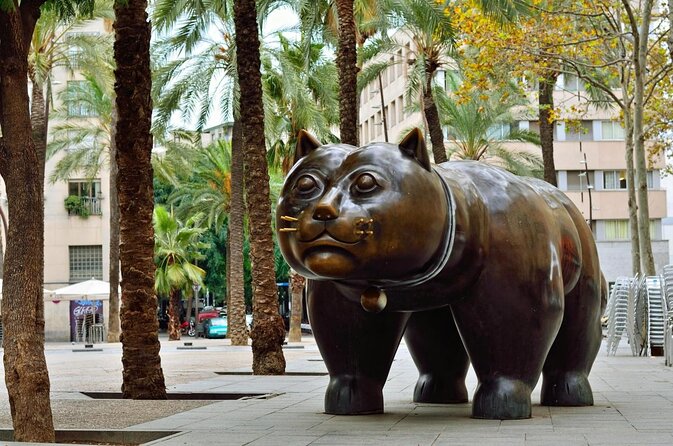
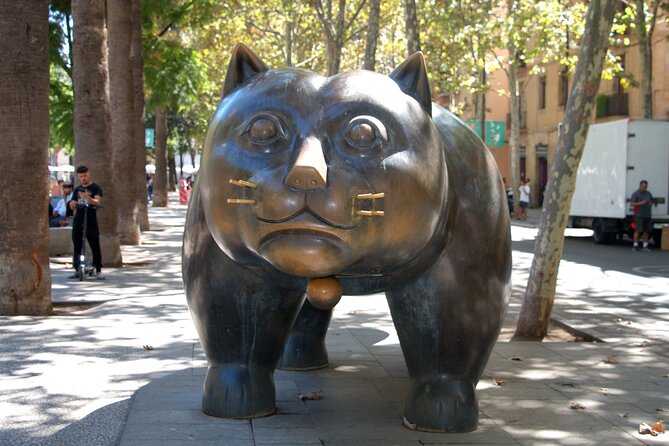
A very different stop is El Gato de Botero, Fernando Botero’s large, rounded feline statue. You can see the statue and, if you like, rub its crown jewels.
That bit of physical interaction breaks up the historical material. It also gives families and younger walkers something immediate to do. If you are taking photographs, the cat provides one of the route’s more memorable subjects.
The audio then brings you to Palau Güell, one of Antoni Gaudí’s more restrained buildings. Many visitors know Gaudí for elaborate surfaces and playful forms, so this stop helps show a quieter side of his work.
The tour does not include admission to Palau Güell or any other attraction. You can admire the exterior as part of the walk, but entering requires your own ticket and additional time. That makes the route work best as a neighborhood introduction rather than a substitute for a full Gaudí visit.
Carrer d’Avinyó and Picasso’s shortcut
The route takes a shortcut along Carrer d’Avinyó, a street linked to Picasso’s Les Demoiselles d’Avignon. This is a good example of how the walk connects a real Barcelona street to a major work of modern art.
You do not need a detailed knowledge of Picasso to enjoy this stop. The point is to understand how the city’s streets, people, and settings can feed an artist’s imagination. It also gives you a reason to pay attention to the shape and character of the lane instead of hurrying toward the next major monument.
Because this is a self-guided tour, you can stop the recording if you want to take photographs or consult a map. The app is meant to follow your walking pace, and one of its better features is that you do not have to keep moving just because a live group would.
More Self-Guided Audio Tours in Barcelona:
- Self-Guided Audio Tour – Legends of the Gothic Quarter
★ 4.5 · 6 reviews - Self-Guided Tours Barcelona: 150+ Captivating Audio Stories
★ 5.0 · 4 reviews - Barcelona self-guided city walking tour with audio & quizzes
★ 5.0 · 3 reviews - Self-Guided Audio Tour of Barcelona City
★ 3.0 · 2 reviews
Roman Barcino beneath the Gothic Quarter
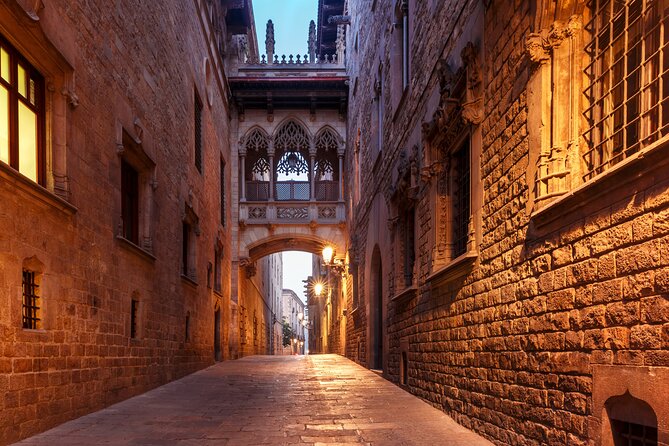
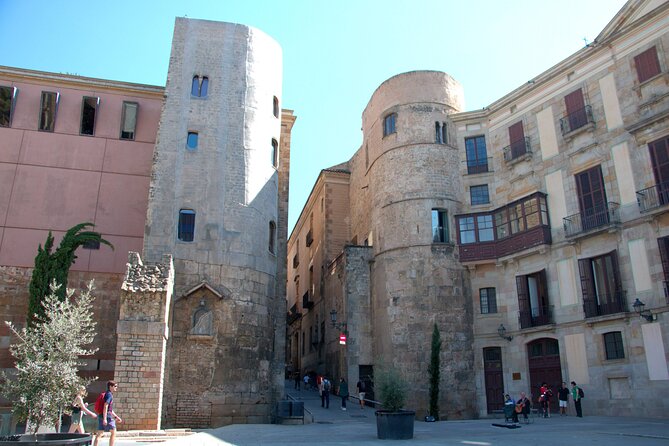
The Gothic Quarter section shifts the story back many centuries. The route explains how the small fortified Roman settlement of Barcino grew into the city now known as Barcelona.
You’ll see where tombs once lined the ancient village wall. Details like this make the district easier to read. What appears to be a maze of medieval streets also contains traces of an earlier Roman settlement and the boundaries of a much older city.
The route continues through narrow lanes, hidden alleys, and three important squares: Plaça de Sant Jaume, Plaça Nova, and Plaça Sant Felip Neri. Each offers a different feel.
Plaça de Sant Jaume is a major civic square, while Plaça Nova connects the modern city with the old cathedral area. Plaça Sant Felip Neri is quieter and more enclosed. The changing scale of these places is part of the pleasure of the walk. You move from public space to tucked-away corners without needing public transportation.
The audio also points out the Gothic Quarter’s neo-Gothic attractions, including the Cathedral of Barcelona and Pont de Bisbe, the Bishops Bridge. These are among the route’s most recognizable sights, but the commentary helps place them within the larger story of Barcelona’s old center.
One useful point of context is that the Gothic Quarter’s appearance is not simply a frozen medieval scene. The tour identifies neo-Gothic features, which helps you avoid treating every old-looking structure as untouched medieval fabric. That kind of distinction makes a self-guided route more valuable than a walk that only supplies dates and names.
El Petó, the kissing mural
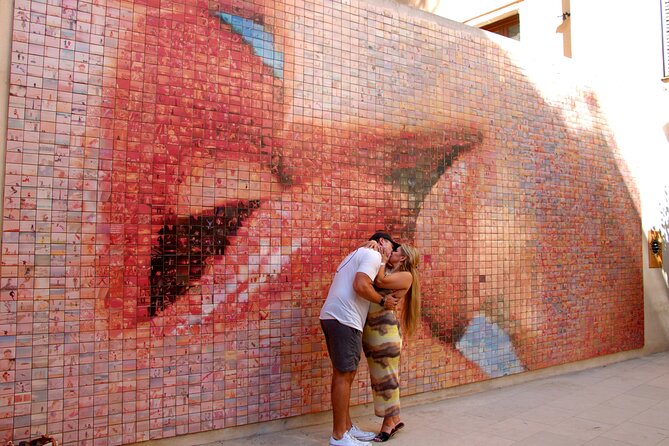
The route also stops at El Petó, the kissing mural made from 4,000 photographic images representing freedom. The photographs were donated by members of the public, giving the work a communal quality.
This is a good visual pause near the end of the walk. After hearing about Roman walls, poverty, religion, and art, you encounter a modern piece created from many individual contributions.
You may find the mural more meaningful if you take a moment to look closely rather than simply photographing the full image. The audio provides the reason behind the work, while the mural itself gives you something immediate to inspect.
How the VoiceMap format works in practice
This is not a live walking tour. You use the VoiceMap app on an Android or iOS phone, with your own headphones. The package includes lifetime access in English, plus offline audio, maps, and geodata.
Offline access is a real advantage in central Barcelona. You can download everything before leaving your accommodation and avoid relying on a strong mobile signal. It also helps preserve your data, which matters if you are using a limited phone plan.
The map is meant to prevent you from getting lost, and the audio is designed to keep pace with your walking. In practice, you should not rely on GPS alone. Narrow streets and tall buildings can interfere with location accuracy, and the app may place you in the wrong spot or confuse your direction.
A sensible plan is to use the VoiceMap route for commentary, while keeping a regular map app available as a backup. You do not need to stare at your phone every few seconds, but checking your position at major turns can save time.
Some people find the start slightly unclear, particularly if they have not prepared the app in advance. Downloading the tour before reaching Font de Canaletes, opening the map, and checking the first instruction should solve most of that problem.
The route ends back at the meeting point. Since the activity is private, only your own group participates. That means you can pause for food, stop for photographs, or replay a section without holding up strangers.
Timing, price, and what you actually receive
The walk takes about 1 hour 15 minutes to 1 hour 30 minutes. The shorter estimate assumes a fairly steady pace and limited stops. Add time for Boqueria Market, coffee, photographs, or entering a paid attraction.
At $11.99 per person, the value depends on how you use it. For a single fast walk with no pauses, it is a modestly priced introduction to two central districts. The value improves if you return to Barcelona, repeat a section, or share the experience with a small private group.
Lifetime access is the key benefit here. You can use the walk again instead of treating it as a one-time recording. You might complete the whole route on your first afternoon, then return to El Raval or the Gothic Quarter later and listen again at a slower pace.
The price does not cover museum or attraction tickets, transportation, food, drinks, a smartphone, or headphones. Those exclusions are easy to understand for a phone-based walk, but you should budget for them if you plan to enter Palau Güell or stop at the market.
The tour is offered in English only. Most people can participate, but you should be comfortable walking for roughly 75 minutes through streets that include narrow lanes and busy public areas.
Who will enjoy this walk most
I would choose this for independent visitors who dislike being tied to a group schedule. It also suits families, couples, and small groups who want the structure of a planned route without a live guide setting the pace.
It is particularly useful early in a Barcelona visit because it introduces two central districts and gives you plenty of ideas for later stops. The Roman remains, Cathedral, Pont de Bisbe, Boqueria Market, Palau Güell, and El Petó can all help you decide where to return.
History fans will appreciate the range of subjects. The route moves from Roman settlement to medieval religion, urban poverty, prostitution, social care, modern art, architecture, and local cafés. It is not a single-theme walk.
You may want something else if you prefer detailed access to interiors or expert conversation. The route shows you attractions from the outside unless you pay for entry, and there is no live guide to answer questions. You also need to manage your own navigation and phone battery.
Should you book this Barcelona audio walk?
Book it if you want a low-cost, flexible introduction to El Raval and the Gothic Quarter, especially if you like to stop often and explore without a crowd. The strongest parts are the varied stories, the chance to visit Boqueria Market, and the way the walk links Roman Barcino with modern Barcelona.
Skip it if GPS trouble would frustrate you or if you want a guide beside you. For the best experience, download the route in advance, bring headphones, keep a backup map handy, and leave more than 75 minutes if you plan to eat, shop, or enter an attraction.
FAQ
Where does the tour start?
It starts at Font de Canaletes, La Rambla, 133, in Barcelona’s Ciutat Vella district.
Where does the tour end?
The activity ends back at the meeting point.
How long does the walk take?
The walk takes approximately 1 hour 15 minutes to 1 hour 30 minutes. The route is also described as a 75-minute walk, but stops and sightseeing can make it longer.
What language is available?
The tour is offered in English.
What does the price include?
The $11.99 price includes lifetime access to the English tour, the VoiceMap app for Android and iOS, and offline access to the audio, maps, and geodata.
Do I need my own phone and headphones?
Yes. A smartphone and headphones are not included. Food, drinks, transportation, and admission tickets are also not included.
Can I cancel or change the booking?
No. The experience is non-refundable and cannot be changed for any reason.
New audio tours around Barcelona
- Self-Guided Audio Tour-The Surrealist Barcelona of Dalí and Gaudí★ 3.5 · 8 reviews
- Barcelona Self-Guided Audio Tour★ 3.0 · 6 reviews
- Palau de la Musica Catalana Admission Ticket with Audioguide★ 4.5 · 246 reviews
- Self-Guided Audio Tour – Legends of the Gothic Quarter★ 4.5 · 6 reviews
- Montjuïc Cable Car Entry Voucher with Audio Tour on Your Phone★ 3.5 · 37 reviews
- Montjuic Park Walking Tour with Audioguide on Your Smartphone★ 3.0 · 4 reviews
- Self-Guided Audio Tour of Barcelona City★ 3.0 · 2 reviews
- Self-Guided Tours Barcelona: 150+ Captivating Audio Stories★ 5.0 · 4 reviews
Barcelona Audio Tours, compared.
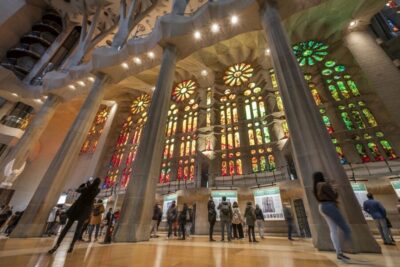
Barcelona: Sagrada Familia Entry Ticket with Audio Guide
Read our review →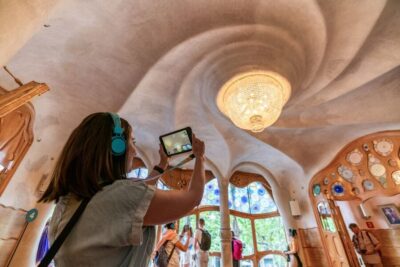
Barcelona: Casa Batlló Entry with Self-Audioguide Tour
Read our review →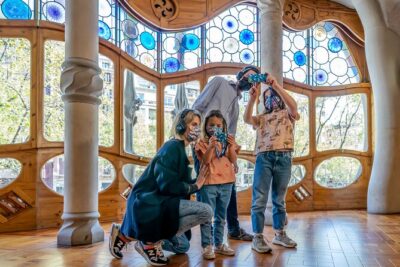
Casa Batllo Admission Ticket with Intelligent Audio Guide
Read our review →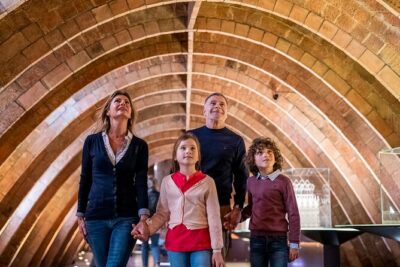
La Pedrera-Casa Mila Admission Ticket with Audioguide
Read our review →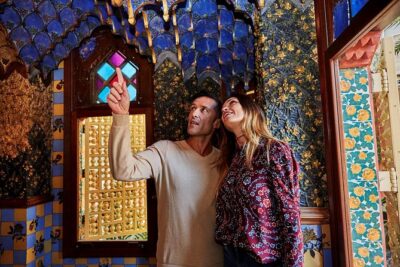
Gaudi´s Casa Vicens Skip the Line Ticket with Audioguide
Read our review →
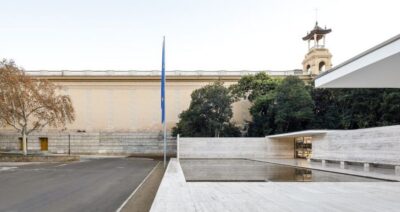
Barcelona: Mies van der Rohe Pavilion Ticket and Audio Guide
Read our review →
Barcelona: Montjuïc Cable Car Ticket with Audio Guide
Read our review →Browse the lists this tour appears in