

Review · BARCELONA
Barcelona Self-Guided Audio Tour
Barcelona’s best feature is its freedom to roam. You get audio commentary for 25 major sights, but no guide, fixed meeting point, or forced schedule. Start at Sants, the Sagrada Familia, the Gothic Quarter, or anywhere else that suits your day.
I like the low $9 price and the ability to skip attractions you have already seen. I also like the six-day link validity, which lets you split a long city walk into smaller outings. The catch is important: this is an audio guide only. It does not include admission, transport, reservations, or help getting you inside a landmark.
Key points at a glance
- Twenty-five stops in one map: Cover Gaudí buildings, Gothic churches, Montjuïc, museums, markets, parks, and Camp Nou.
- Start anywhere: The route has no required meeting point or ending point, so you can fit it around your hotel and daily plans.
- About 20 minutes of audio per stop: The full route could take 3 to 9 hours, depending on walking, meals, visits, and breaks.
- Two links do the work: A SoundCloud playlist provides the commentary, while Google My Maps connects each location with its audio track.
- Tickets cost extra: Several landmarks require separate entry fees, and the tour does not guarantee access or opening hours.
- Bring your own equipment: You need a charged smartphone, headphones or earphones, and internet access.
What you are really buying for $9
At $9 per person, this is one of the cheaper ways to add context to a day of independent sightseeing. You are not paying for a local guide, transport, priority entry, or a prepared group route. You are paying for access to 25 audio tracks and a map that ties them to Barcelona’s main sights.
That makes the price attractive if you plan to see several of the listed places. A single paid walking tour can cost much more, while this option lets you listen only at the attractions you choose. The value drops if you visit just one or two sites, or if you expect someone to lead you through the city.
The audio tracks are listed at about 20 minutes per stop. That does not mean the whole experience takes 500 minutes without interruption. You might spend three hours on a focused route, or use the material over several days and make a full holiday project of it. The stated overall duration is about 3 to 9 hours.
There is no live guide to answer questions or adjust the route in real time. For some people, that is the point. You can pause the commentary when a church service begins, stop for lunch, or leave a crowded square without holding up a group.
More Self-Guided Audio Tours in Spain
- Gaudi and La Sagrada Familia Exterior Self-Guided Audio Tour
★ 3.5 · 25 reviews - Barcelona’s El Raval and the Gothic Quarter: A Self-Guided Audio Tour
★ 4.5 · 10 reviews - Self-Guided Audio Tour-The Surrealist Barcelona of Dalí and Gaudí
★ 3.5 · 8 reviews
How the SoundCloud and map system works
On your selected date, before your chosen starting time, you receive two private links by email. The first opens the audio content through SoundCloud. You can play individual attractions or listen through the full collection while planning.
The second opens a Google My Maps route with 25 marked locations. Each point connects to its matching audio guide. You use the map to pick a practical order rather than blindly following the numbered sequence.
This setup is simple, but it depends on your phone and internet connection. Downloading or streaming the audio requires a working connection, and the instructions specifically tell you to bring internet access. Charge your phone before leaving, since navigation and audio can use power quickly.
I would open both links before setting out. Check that the audio plays, find your first stop on the map, and decide which places need advance tickets. That small bit of preparation matters here because customer complaints have included confusion about access to Sagrada Familia and other landmarks.
The links remain valid for up to six days. That is a useful allowance for a longer visit. You might use one day for Montjuïc, one for the Gothic Quarter and waterfront, and another for Gaudí’s major buildings along Passeig de Gracia and the Sagrada Familia.
The southern route: Sants, Plaça d’Espanya, and Montjuïc
The suggested route begins at Sants, Barcelona’s main transport district. The stop focuses on the area’s working-class and industrial past, along with its role as a modern transport hub. It is a sensible starting point if you arrive by train, though you can begin elsewhere.
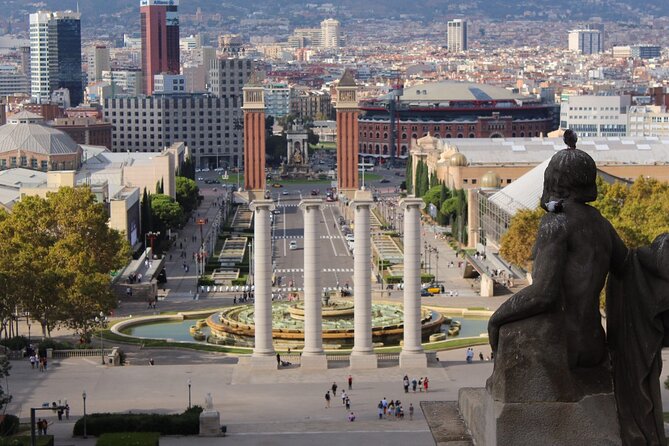
From there, Plaça d’Espanya gives you a grand urban opening. The square was built for the 1929 International Exhibition, and the audio explains how its roads, monuments, and surrounding buildings fit together. This is a free exterior stop and a good place to understand Barcelona’s grand public design.
The Magic Fountain is next. Its water displays were created by Carles Buïgas for the 1929 exhibition, and the audio covers its engineering and place in the city’s public life. Treat this as an exterior sight. The experience does not promise a scheduled fountain show, and it does not include any event admission.
Museu Nacional d’Art de Catalunya occupies the former main pavilion of the 1929 Exposition. The building itself is a major reason to visit, while the museum’s collection is especially known for Romanesque art. Entry is not included, so you can listen outside and decide later if the galleries fit your budget and schedule.
Parc de Montjuïc spreads across the hill above the city. The audio connects its gardens, former military role, Olympic associations, and cultural sites. This is one of the places where the self-guided format works well: you can take your time, stop for views, and continue only when you feel ready.
Montjuïc Castle crowns the hill. The fortress carries a difficult military and political past, and the audio introduces its role in conflict, resistance, and changing government. Entry is extra. Since Montjuïc includes several separate sights, plan this section by area rather than racing from marker to marker.
The old city: Palau Güell to Santa Maria del Mar

Plaça de Catalunya is Barcelona’s central meeting point, with major streets spreading out from it. The commentary gives you a useful introduction to the city’s civic identity and urban growth. It is free to visit and easy to combine with the Gothic Quarter, Passeig de Gracia, or La Rambla.
Palau Güell is one of Antoni Gaudí’s early major works, built for his patron Eusebi Güell. The stop helps you see Gaudí before the later, more famous buildings took over his work. Admission is extra, and the interior is the main reason to buy a ticket.
Plaça Reial sits just off La Rambla beneath elegant arcades. It is a compact, atmospheric square designed by Francesc Daniel Molina. You can visit without an entry fee, but it is surrounded by restaurants and nightlife, so your experience may depend on the time of day.
Mercat de la Boqueria is the most sensory stop in this section. Its food stalls reflect Barcelona’s market tradition and Mediterranean cooking. The audio adds context, but it cannot replace walking slowly through the market and deciding what to eat. Keep an eye on your belongings in crowded areas and do not expect the $9 fee to cover food.
The Gothic Quarter follows with narrow lanes, Roman foundations, medieval buildings, and small public squares. This is a place where the map can be especially helpful because it is easy to turn down the wrong street and lose your intended order. The audio gives you a reason to look beyond the most photographed facades.
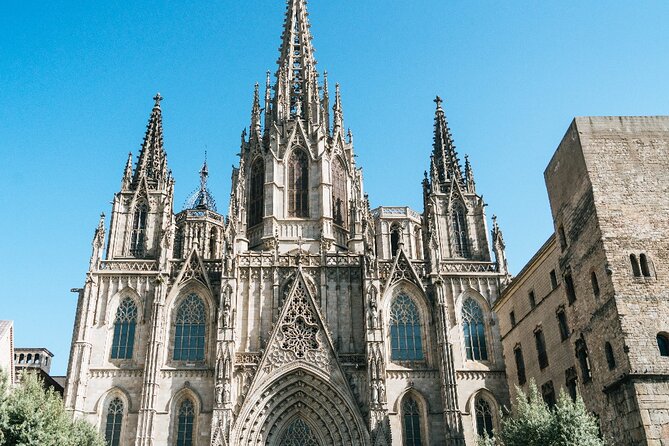
Barcelona Cathedral requires separate admission for the areas where a ticket is needed. The stop covers the cathedral’s Gothic design and dedication to Saint Eulalia, Barcelona’s patron saint. Check the cathedral’s opening arrangements before you go, since the audio guide cannot control access.
MUHBA, the Museu d’Història de Barcelona, adds a different layer. Its archaeological displays sit below the modern city and show urban development over roughly 2,000 years. Entry is extra, but this is one of the strongest choices for anyone who wants more than surface-level sightseeing.
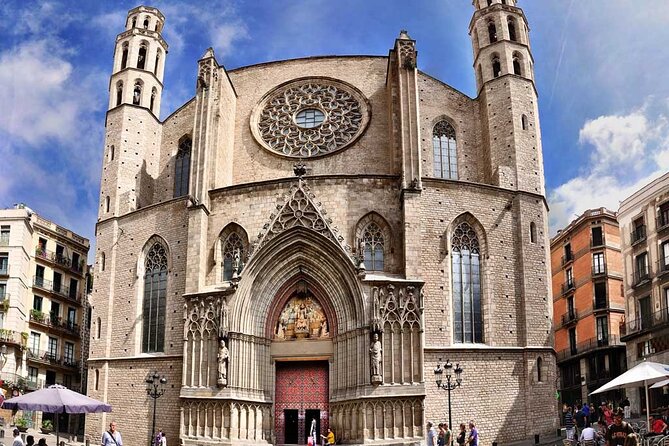
Santa Maria del Mar, often called the Cathedral of the Sea, offers a striking Gothic church built with strong support from Barcelona’s merchant community. The audio explains its design and construction. The exterior is free to see, while special interior access may require a fee, so confirm what is open on your chosen day.
More Self-Guided Audio Tours in Barcelona:
- Self-Guided Audio Tour – Legends of the Gothic Quarter
★ 4.5 · 6 reviews - Self-Guided Tours Barcelona: 150+ Captivating Audio Stories
★ 5.0 · 4 reviews - Barcelona self-guided city walking tour with audio & quizzes
★ 5.0 · 3 reviews - Self-Guided Audio Tour of Barcelona City
★ 3.0 · 2 reviews
Parks, music, and the Modernisme corridor
Parc de la Ciutadella gives you a break from stone streets and traffic. It occupies the site of former military fortifications and now serves as one of Barcelona’s major public parks. The stop pairs well with Santa Maria del Mar and Arc de Triomf.
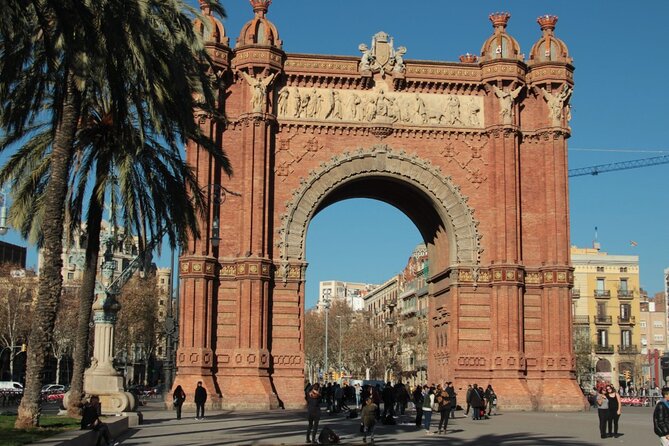
Arc de Triomf was built for the 1888 Universal Exhibition. Unlike many triumphal arches, it celebrates a civic and cultural event rather than a battlefield victory. It is a free exterior sight and a quick stop, making it easy to add between the old city and Passeig de Gracia.
The Palau de la Música Catalana is one of Barcelona’s finest Modernisme buildings. Lluís Domènech i Montaner created a concert hall filled with decorative tile, sculpture, mosaic, and stained glass. The audio explains why the building matters, but admission is extra if you want to go inside.
Passeig de Gracia forms the grand shopping and architecture corridor of the tour. The boulevard connects central Barcelona with the Eixample district and brings you close to several famous houses. It is free to walk, though the shops and cafés can make this a costly place to linger.
Casa Batlló is Gaudí at his most playful, with unusual surfaces, ceramic decoration, and a design shaped for textile industrialist Josep Batlló. The exterior is worth seeing from the pavement, but the interior requires a separate ticket.
Casa Milà, also called La Pedrera, has a wavy stone facade and an unconventional design created for Pere Milà. It is another paid attraction, and the audio gives you a useful preview before you decide if the interior visit merits the cost.
Casa Vicens shows Gaudí at the beginning of his public career. Built when he was 31, it uses colorful ceramic decoration and a more playful, early style. The house is a separate paid visit, so grouping it with Sagrada Familia can make for a long day unless you split the route.
Sagrada Familia and Sant Pau
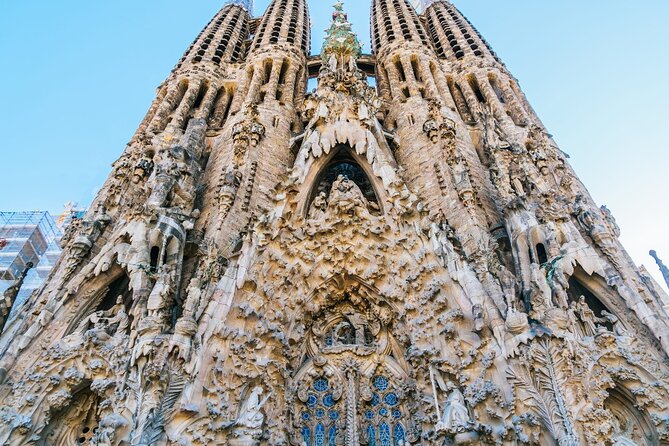
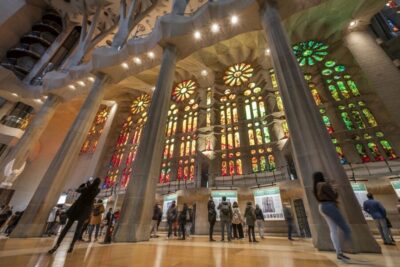
The Basilica of the Sagrada Familia is the centerpiece for many visitors to Barcelona. The audio introduces Gaudí’s religious vision and the basilica’s long construction story, including its status as a UNESCO World Heritage site.
The tour does not include entry. This point needs special attention because the audio guide is not an admission ticket. You must arrange any required reservation or entrance separately, and having the audio link does not guarantee access if the basilica is sold out, closed, or operating under different entry rules.
A previous customer went to Sagrada Familia expecting access and was turned away. Another reported reaching a landmark that was closed and losing money on taxis. The practical lesson is simple: check opening hours, buy official admission when needed, and do not travel across the city assuming this product includes a ticket.
Recinte Modernista de Sant Pau sits near Sagrada Familia and offers another look at Domènech i Montaner’s work. This former hospital complex used decoration, gardens, and carefully planned spaces as part of its approach to care. Entry is not included, but the audio makes it easier to decide if the complex deserves a place on your paid-sightseeing list.
Beyond the center: CosmoCaixa and Camp Nou
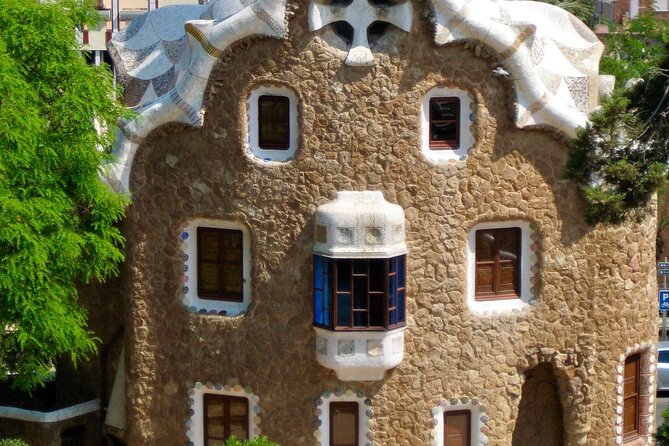
CosmoCaixa Museum of Science is the most family-oriented stop in the collection. Its interactive exhibits explain scientific ideas through hands-on displays and immersive demonstrations. Admission is extra, and its location away from the central walking route means you should treat it as a separate outing.
Spotify Camp Nou is included for football fans and anyone interested in the cultural role of FC Barcelona. The audio covers the stadium, the club’s motto, Catalan identity, and its sporting history. Entry is not included, and the stadium experience can change depending on construction, matches, or operating arrangements, so check access before making a special trip.
These final stops show both the strength and weakness of the 25-stop format. You get much wider coverage than a standard central walking tour, but the sights are spread across Barcelona. Trying to see all 25 in one day would leave little time for actual visits.
Getting the most from the flexible route
I would divide the tour into three or four outings:
- Montjuïc, Plaça d’Espanya, the Magic Fountain, the national art museum, and the castle
- Plaça de Catalunya, the Gothic Quarter, Boqueria, Barcelona Cathedral, MUHBA, and Santa Maria del Mar
- Passeig de Gracia, Casa Batlló, Casa Milà, Casa Vicens, Sagrada Familia, and Sant Pau
- Ciutadella, Arc de Triomf, the Palace of Catalan Music, CosmoCaixa, and Camp Nou
That order is only a suggestion. The main benefit is the ability to remove stops that do not fit your interests. You can listen to the track outside a paid attraction, enter only the places that appeal to you, and save the rest for another day.
Select your audio language carefully during booking. The language cannot be changed after confirmation. If your preferred language is not listed, the instructions say to contact the provider at least 48 hours in advance so it can be prepared specially.
The experience is private in the sense that only your group uses the tour. It is not a private guide service. Most people can take part, and the route is near public transport, but transport fares and pickup are not included.
Who should book this Barcelona audio tour?
I would recommend it to independent visitors who like setting their own pace, already know how to use a phone map, and want basic historical context without paying for a guide. It is also useful for repeat visitors who want to target just a few buildings or neighborhoods.
Families and mixed-interest groups may appreciate the skip-and-stop format. One person can listen outside a museum while another decides if the entry fee is worthwhile. The six-day access period helps if you are in Barcelona long enough to spread the stops out.
I would not choose it if your top priority is guaranteed entry, a human guide, hotel pickup, or help with last-minute changes. The 3 out of 5 score from six ratings reflects a product that needs clear expectations. The strongest protection is to treat it as digital commentary, not a sightseeing package.
Should you book it?
Book this for flexibility and low cost, especially if you want audio for several Barcelona landmarks and are comfortable arranging tickets yourself. At $9, it can be a sensible companion to independent exploring.
Skip it if you want a fully organized day or if you are likely to assume the audio link includes admission. Before leaving, confirm every paid attraction, test both links, charge your phone, pack headphones, and build your own route. Those steps turn a bare-bones product into a useful city guide.
FAQ
Where does the Barcelona audio tour start and end?
You choose both the starting point and ending point. There is no required meeting point because this is a self-guided experience.
How long does the tour take?
The estimated duration is about 3 to 9 hours. You can also split the stops across several days because the access links remain valid for up to six days.
How many attractions are included?
The audio guide and map cover 25 Barcelona attractions.
Is a live guide included?
No. This is a self-guided audio tour. No live guide is provided.
Are entrance tickets included?
No. Entry fees are not included wherever a ticket is required.
Does the tour include transport?
No. Pickup, drop-off, and transportation costs are not included.
What do I need to bring?
Bring a fully charged smartphone, headphones or earphones, and internet access.
How do I receive the audio guide?
On your selected travel date, before your start time, you receive an email with a SoundCloud audio link and a Google My Maps link.
Can I choose the audio language?
Yes. You select the preferred language during booking. The language cannot be changed after confirmation. If your language is unavailable, contact the provider at least 48 hours ahead for assistance.
Can I visit Sagrada Familia with this tour?
The audio guide includes commentary about Sagrada Familia, but it does not include admission or guarantee access. You must arrange any required entry separately.
New audio tours around Barcelona
- Self-Guided Audio Tour-The Surrealist Barcelona of Dalí and Gaudí★ 3.5 · 8 reviews
- Palau de la Musica Catalana Admission Ticket with Audioguide★ 4.5 · 246 reviews
- Self-Guided Audio Tour – Legends of the Gothic Quarter★ 4.5 · 6 reviews
- Montjuïc Cable Car Entry Voucher with Audio Tour on Your Phone★ 3.5 · 37 reviews
- Montjuic Park Walking Tour with Audioguide on Your Smartphone★ 3.0 · 4 reviews
- Self-Guided Audio Tour of Barcelona City★ 3.0 · 2 reviews
- Sagrada Familia Skip The Queue With Audio Guide Tour★ 4.5 · 20 reviews
- Self-Guided Tours Barcelona: 150+ Captivating Audio Stories★ 5.0 · 4 reviews
Barcelona Audio Tours, compared.
Barcelona: Sagrada Familia Entry Ticket with Audio Guide
Read our review →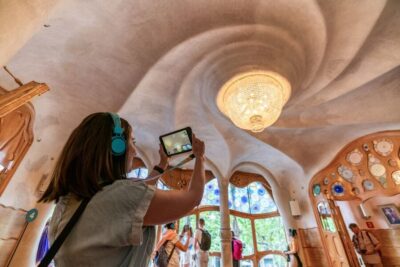
Barcelona: Casa Batlló Entry with Self-Audioguide Tour
Read our review →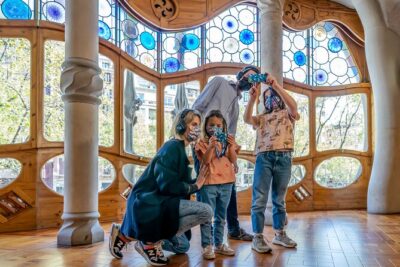
Casa Batllo Admission Ticket with Intelligent Audio Guide
Read our review →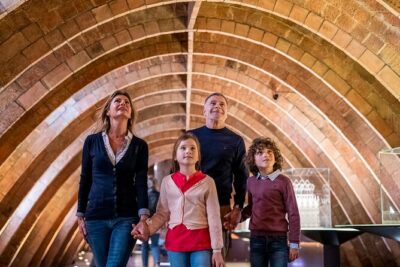
La Pedrera-Casa Mila Admission Ticket with Audioguide
Read our review →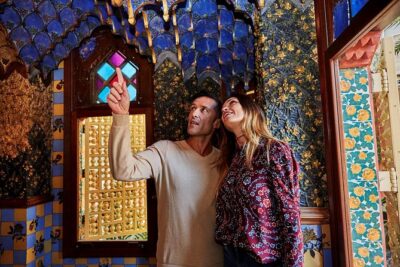
Gaudi´s Casa Vicens Skip the Line Ticket with Audioguide
Read our review →
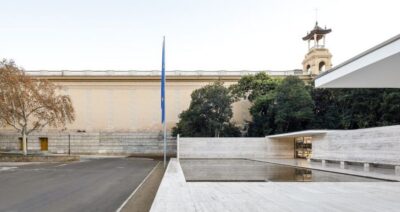
Barcelona: Mies van der Rohe Pavilion Ticket and Audio Guide
Read our review →
Barcelona: Montjuïc Cable Car Ticket with Audio Guide
Read our review →Browse the lists this tour appears in