
Review · ITALY
Catania Walking Tour with Audio and Written Guide by a Local
Catania’s best sights are spread through a compact but busy historic center, and this self-guided audio walk gives you a clear route without tying you to a group or a guide’s timetable. For about $7.83, you move from Ursino Castle and the fish market to Baroque churches, Roman remains, and the Benedictine Monastery.
I like the freedom to start, stop, and change direction, and I like that the commentary comes as both audio and written text in five languages. You also get restaurant advice and Google Maps connections, useful extras at this price.
The main catch is simple: this is not a walking tour with a person beside you. You need a charged smartphone, an internet connection, and enough patience to activate the digital guide before setting out.
- Ursino Castle begins the route with lava-stone walls and a dramatic medieval setting.
- The fish market and Amenano Fountain bring you into everyday Catania near Piazza del Duomo.
- The Roman Amphitheatre is visible but not included, with a separate €4 admission.
- Via dei Crociferi and the Benedictine Monastery show off Catania’s grand Baroque character.
- Audio and written commentary in English, Spanish, Italian, German, and French lets you choose how you learn.
- The route takes about three to four hours, but you control the pace and can finish somewhere other than the listed endpoint.
A low-cost way to connect Catania’s main sights

This experience works best as a walking route with commentary rather than a traditional tour. You meet at Ursino Castle, open the digital guide on your phone, and follow the suggested path toward the Benedictine Monastery of San Nicolò l’Arena.
The listed stops add up to roughly three hours and five minutes, before you count the walking between them. In practice, allow three to four hours if you listen carefully, take photos, pause for coffee, or spend time at the market.
At $7.83 per person, the value is strong if you want orientation and background without paying for a private guide. A person leading the walk could offer more conversation and answer questions on the spot, but this format lets you pause when you want, skip a section, or take a side trip.
The digital guide also avoids a common problem with group walks: being hurried past something that interests you. You can stop the audio, read the text instead, or use Google Maps to adjust the route. One useful tip is to listen to sections in advance if you want to plan your stops more carefully.
Ursino Castle and Frederick II’s defensive Catania
Start at Ursino Castle in Piazza Federico di Svevia. The castle was built close to the sea, surrounded by a moat and protected by defensive works. It now sits inland from the shoreline, a reminder of how Catania’s setting changed over time.
The exact meaning of the name Ursino remains uncertain. The building itself is easier to read. Its outer wall uses carefully squared lava-stone blocks, while the inner defensive wall is more irregular. That contrast gives you a practical detail to look for as you walk around the site.
The stop is allotted an hour, which makes it the longest individual pause on the route. The admission is free according to the tour details, though the experience is centered on outdoor orientation and commentary rather than a separately included museum visit.
I like starting here because it gives you a strong sense of Catania’s medieval identity before the route shifts toward markets, churches, and Baroque streets. It is also a clear meeting point, with a named square and a specific address.
More Audio Walking Tours in Italy
- Florence: 2.5 hour Audio Guided Walking Tour led by Host
★ 4.6 · 293 reviews - Verona Walking Tour with Audio and Written Guide by a Local
★ 4.5 · 157 reviews - Bologna Walking Tour with Audio and Written Guide
★ 4.5 · 132 reviews
A’ Piscaria, where Catania gets noisy and local
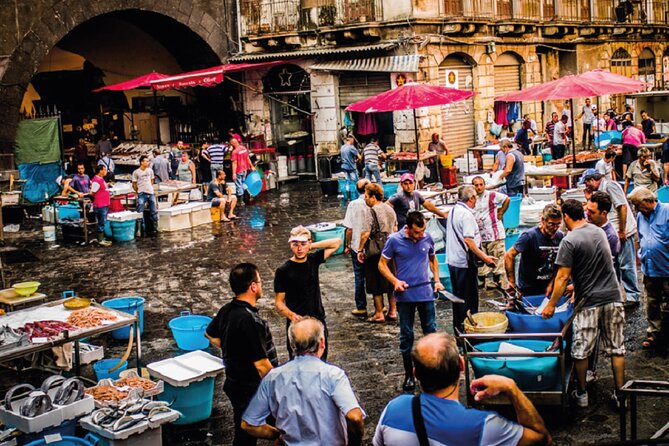
From the castle, the route heads toward A’ Piscaria, Catania’s famous fish market. Locals often call it Piscarìa, using the Sicilian dialect term.
You have about 20 minutes here. That is enough for a quick look and some context, but not a long market visit. The market lies near Piazza del Duomo and the Fontana dell’Amenano, so the route soon moves from daily commerce into the city’s grand civic center.
This is one of the best choices on the walk because it keeps the experience from becoming a parade of monuments. You see a working part of Catania, then immediately connect it to the monumental heart of town. The market stop also helps you understand the city as a place where ordinary life and major historic sights share the same few streets.
The guide includes advice on authentic local restaurants. Treat that as a useful starting point, not a replacement for your own judgment, and check the digital material before you leave if food is a major part of your plans.
The Amenano Fountain and Piazza del Duomo
The Fontana dell’Amenano takes only about 10 minutes, but it carries an unusual story. Created in 1867 by Neapolitan sculptor Tito Angelini in Carrara marble, it honors the Amenano, the underground river flowing beneath Catania.
Its location near the fish market and Piazza del Duomo makes it an easy link between the practical and ceremonial sides of the city. The brief commentary should be enough for a first look, though you may want to pause longer if you are interested in urban water systems or sculpture.
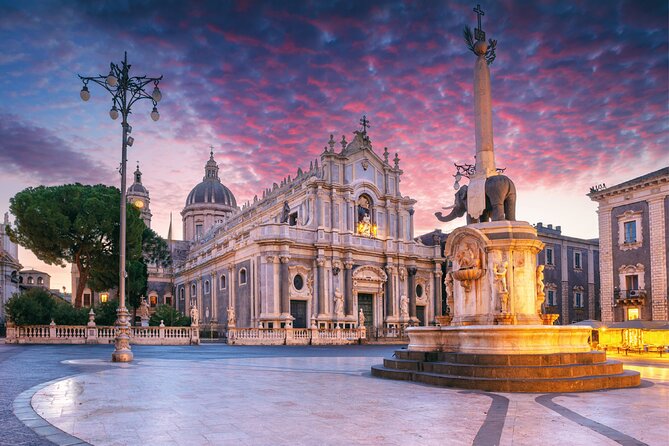
Piazza del Duomo receives about 20 minutes. This is Catania’s central square and home to the Cathedral of Sant’Agata, along with some of the city’s most recognizable monuments. The square is a natural place to stop the audio, look around, and get your bearings.
Because the walk is self-guided, you are not forced to leave after the allotted time. That flexibility matters here. If the square catches your attention, you can pause the route and resume it later.
Sant’Agata Cathedral and the city rebuilt in Baroque form

The Cathedral of Sant’Agata is one of the route’s key buildings. It was first built in 1090 on the remains of a Roman temple dedicated to Jupiter, then rebuilt after the earthquake of 1693 that destroyed much of Catania.
The cathedral gives the walk a useful thread: Catania is not presented as one untouched medieval city. Its layers include Roman foundations, medieval construction, natural disasters, and later Baroque rebuilding.
The stop is scheduled for about 20 minutes, and admission is listed as free. You should still use the digital guide to confirm the practical details before entering, since religious buildings can have their own visiting arrangements.
I like this part of the route because the audio can explain the building while you look at it, without requiring you to stand beside a group. The written option is helpful inside or near a busy square, where you may prefer to read rather than play sound aloud.
Same sights, a different narrator:
- Rome: Pantheon Fast-Track Ticket and Official Audioguide
★ 4.5 · 27,353 reviews - Rome: Colosseum & Forum with Audio Guide App -Optional Arena
★ 4.2 · 24,770 reviews - Florence: Timed Entry to Michelangelo’s David + Audio App
★ 4.6 · 19,496 reviews - Rome: City Sightseeing Hop-on Hop-off Bus with Audioguide
★ 4.0 · 16,045 reviews
Piazza Università and four bronze city legends

Next comes Piazza Università, named for Palazzo degli Studi, also known as Palazzo Università. The square is marked by four bronze lampposts, each linked to a Catania legend.
The figures represent Gammazita, the sailor Cola Pesce, the brothers Anfinomo and Anapia, and the paladin Uzeta. This is a small stop of about 10 minutes, but it gives the route a local flavor that a basic monument checklist often misses.
You can use the written guide to match each figure with its story. That is a good example of where a self-guided format works well: you can stand at your own angle, inspect the details, and return to a passage if you miss a name.
The Roman Amphitheatre under Piazza Stesicoro
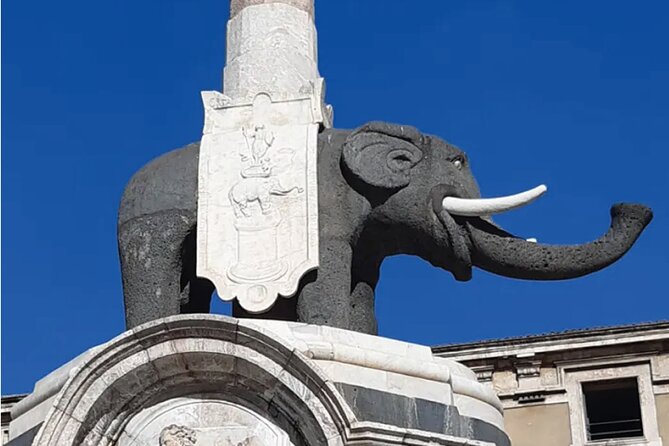
The route then reaches the Roman Amphitheatre beneath Piazza Stesicoro. The theatre dates to the first century BC and has been covered over the centuries by lava from Mount Etna and affected by earthquakes.
You get about 25 minutes of commentary and orientation here, but the entry ticket is not included. Admission costs €4 if you decide to visit it separately.
That distinction matters. If you expect every stop to include entry, this experience may feel less complete than a paid guided visit. If you are happy to see the site from the route and decide later, the arrangement gives you control over your budget.
I would check the guide’s instructions before reaching the amphitheatre so you know where the separate entrance is and whether you want to add the ticket. The route itself does not take you inside.
Via dei Crociferi, Catania’s cinematic Baroque street
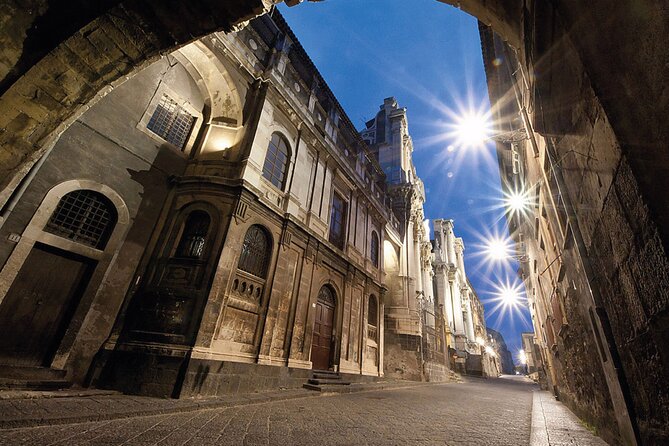
Via dei Crociferi is one of Catania’s oldest and most atmospheric streets. The tour allows about 10 minutes here, though this is another place where you may want to pause longer.
The street is known for its striking appearance and is often used as a film location. That makes sense once you understand the route’s shift: after the market and open squares, you move into a more carefully framed sequence of historic buildings and religious architecture.
The audio commentary can give you the basic story while you walk, but your own eyes do much of the work here. Look up, take your time, and use the route as a framework rather than a race. Since there is no guide waiting at the next corner, you can linger without holding anyone back.
San Nicolò l’Arena and the final stop
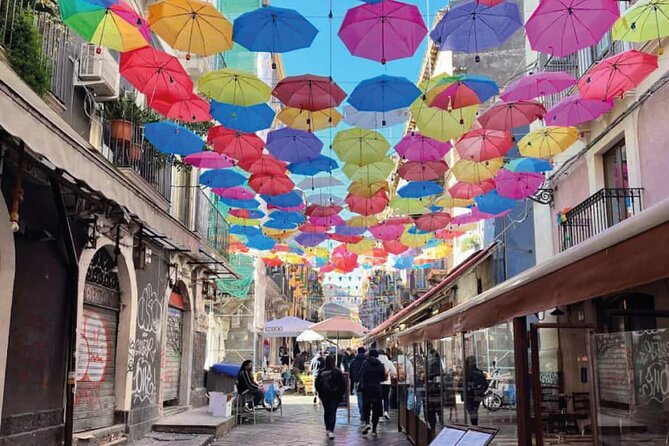
The walk ends at the Benedictine Monastery of San Nicolò l’Arena in Piazza Dante Alighieri. The stop is scheduled for about 30 minutes and provides a fitting finish after the city’s smaller squares and streets.
The monastery played an important role in Catania, especially during the eighteenth century. Its scale, rooms, and the noble backgrounds of its monks helped make it a major point of reference in the city.
The listed end point is useful if you want a clear finish, but the digital format gives you more freedom. You can choose your own ending point rather than treating the monastery as a required final checkpoint.
That flexibility also solves one weakness built into the route. One customer found the starting point too far from the center and had already walked past much of the route before beginning. If you have already visited the Duomo area, you can use the guide in reverse or start with the section nearest you, then avoid retracing your steps.
What you need before pressing play
You need a smartphone with an internet connection. Activation instructions are included with your booking voucher, so read them carefully before you arrive at Ursino Castle.
Audio plays through your phone’s speaker or your own headphones. Headphones are not supplied. I would bring them if you have them, especially around the market and busy squares, where phone audio may be hard to hear.
The guide includes audio and written text in English, Spanish, Italian, German, and French. This is useful if you prefer to switch between listening and reading, or if two people in your group want to follow in different ways.
The activity can accept up to 104 people, but it is not a single guided group moving together. Your experience is still self-paced. The service is near public transportation, and service animals are allowed.
The activity is available Monday through Sunday from midnight to 11:30 p.m. That broad schedule reflects the digital format, though individual monuments and markets will have their own operating hours.
How the price compares with a traditional walking tour
At $7.83, this is inexpensive by city-tour standards. You are paying for a route, commentary, written information, map links, local food suggestions, and the ability to use the material at your own pace.
You are not paying for personal attention, live questions, or someone to manage the route in person. That tradeoff is clear, and it is the main point to consider before booking.
The strongest value comes if you are comfortable exploring independently. The guide helps you cover the main historic center without spending much, while the pause and skip functions let you build in food stops, shopping, or extra time at the cathedral.
The Roman Amphitheatre adds €4 if you enter. That is still a modest total, but remember to budget for it separately.
Who should choose this Catania walk?
I would choose it if you want a cheap introduction to central Catania, prefer not to follow a fixed group, and enjoy learning through your phone. It also suits couples or small groups who want to move at different speeds.
It is a good fit for independent visitors who have already seen some of the city and want a structured route for the remaining sights. You can skip the parts you know and use Google Maps to reconnect with the next section.
I would think twice if you need a person to answer questions, help with navigation, or explain details beyond the prepared material. The guide is designed to be easy to follow, but technology can still create trouble if the activation message is missed or your phone lacks internet access.
Walking Cap’s support information identifies Matteo as a contact, and activation help is offered around the booking and activity date. Still, the safest plan is to open the instructions early and make sure the guide works before you leave your accommodation.
Should you book this Catania audio tour?
Book it if you want a flexible, low-cost way to cover Catania’s central sights, with enough history to make the walk meaningful. The combination of Ursino Castle, A’ Piscaria, Piazza del Duomo, Via dei Crociferi, and the Benedictine Monastery gives you a broad look at the city in one outing.
Skip it if the part you value most is live conversation with a local guide. Also skip it if you do not want to manage a phone, headphones, internet connection, and digital activation.
For most independent visitors, the price makes the experiment easy. Read the activation instructions, bring headphones, allow three to four hours, and decide in advance if the €4 Roman Amphitheatre entry belongs in your plan.
FAQ
How much does the Catania audio walking tour cost?
The listed price is $7.83 per person. Group discounts are available.
How long does the walking tour take?
The experience takes approximately three to four hours. The individual stop times total about three hours and five minutes, before time spent walking between locations.
Where does the tour start?
It starts at Ursino Castle, Piazza Federico di Svevia 21, 95121 Catania.
Where does the tour end?
The listed final stop is the Benedictine Monastery of San Nicolò l’Arena at Piazza Dante Alighieri 32, 95124 Catania. Since the guide is digital, you can choose your own ending point.
Is a live guide included?
No. The experience uses a digital audio and written guide that you follow independently.
Which languages are available?
The audio and written guide is available in English, Spanish, Italian, German, and French.
Do I need a smartphone and internet connection?
Yes. You need a smartphone with an internet connection to activate and use the digital guide.
Are headphones provided?
No. Headphones are not included. You can listen through your phone’s speaker or use your own headphones.
Is the Roman Amphitheatre ticket included?
No. The Roman Amphitheatre entry ticket costs €4 and is paid separately. The route does not enter the site.
Can I cancel for a refund?
You can cancel at least 24 hours before the experience start time for a full refund. Cancellations made less than 24 hours before the start time are not refunded.
New audio tours around Italy
- Lecce Walking Tour with Audio and Written Guide by a Local★ 4.0 · 38 reviews
- Private Audio Guided Walking Tour in Lecce★ 4.0 · 7 reviews
- Private Audio Guided Walking Tour in Como★ 3.0 · 3 reviews
- Como Walking Tour with Audio and Written Guide by a Local★ 4.5 · 30 reviews
- Finance and Nobility: Explore medieval Genoa on a self-guided audio tour★ 4.5 · 7 reviews
- Genova Walking Tour with Audio and Written Guide by a Local★ 4.5 · 33 reviews
- Udine Walking Tour with Audio and Written Guide by a Local★ 4.0 · 2 reviews
- Florence: Uffizi Gallery Timed Entry Ticket with Audio★ 3.0 · 3 reviews
Italy Audio Tours, compared.
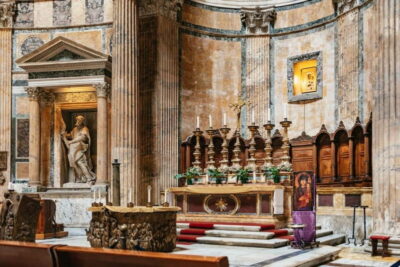
Rome: Pantheon Fast-Track Ticket and Official Audioguide
Read our review →
Rome: Colosseum & Forum with Audio Guide App -Optional Arena
Read our review →
Florence: Timed Entry to Michelangelo’s David + Audio App
Read our review →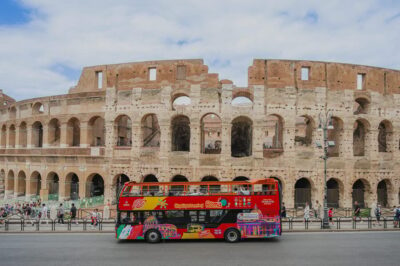
Rome: City Sightseeing Hop-on Hop-off Bus with Audioguide
Read our review →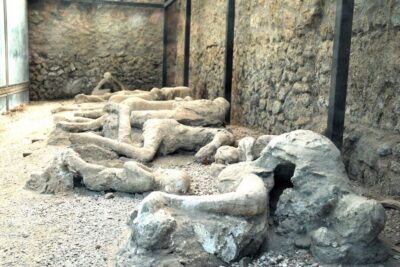
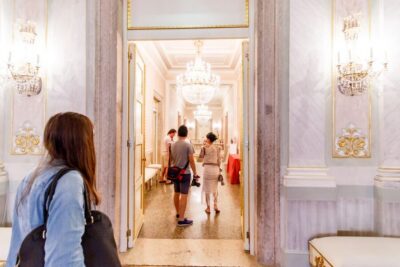
Venice: La Fenice Opera House Entry Ticket with Audio Guide
Read our review →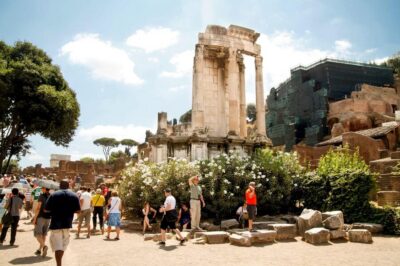
Rome: Colosseum, Forum, Palatine Hill Entry & Audioguide App
Read our review →
Rome: St. Peter’s Basilica & Dome Entry Ticket & Audio Tour
Read our review →Browse the lists this tour appears in