
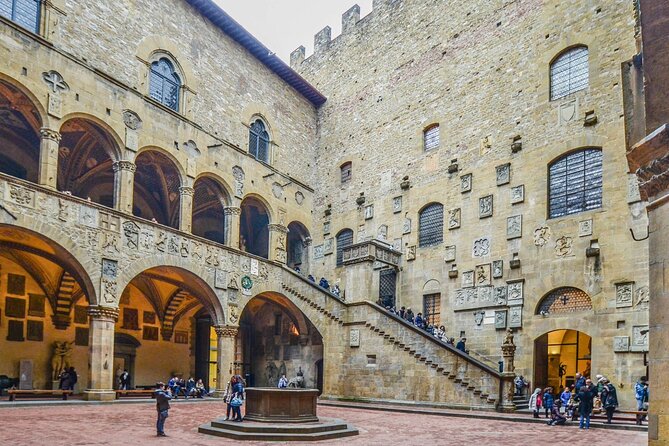
Review · FLORENCE
Florence Bargello Museum Reserved Entry Ticket with Audio Guide
Donatello’s David is the star here, and it deserves your attention before you make the usual rush to Michelangelo’s David. This earlier bronze helped shape the Renaissance ideal of the thoughtful, human figure, and the Bargello lets you see it in a quieter setting, alongside Michelangelo’s Bacchus, Cellini’s Perseus, and Giambologna’s Mercury.
I like the reserved admission, which removes one small bit of Florence-day uncertainty, and I like the digital audio guide because you can set your own pace rather than trail behind a live group. The tradeoff is that you get no live guide, and you must bring your own headphones for the phone-based audio guide.
Key points to know before you book
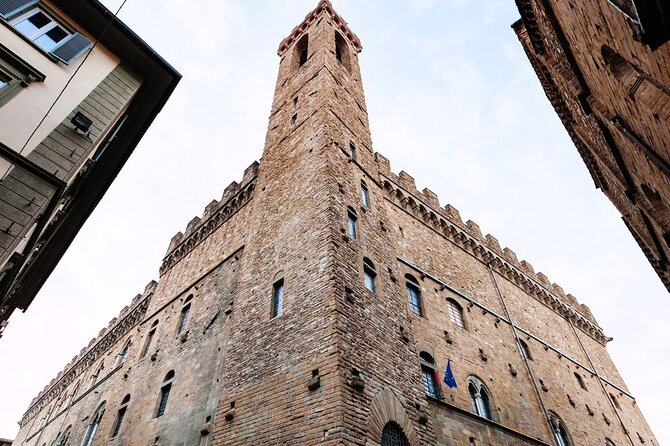
- Donatello’s bronze David: See the earlier Renaissance David that helped inspire Michelangelo’s famous version.
- A compact visit: Plan on roughly 1 hour 30 minutes to 2 hours for the museum.
- English audio guide: Use the digital guide on your own phone, with personal headphones.
- Major sculpture in one place: Look for works by Donatello, Michelangelo, Giambologna, Verrocchio, and Cellini.
- More than sculpture: The collection also includes manuscripts, textiles, ceramics, ivory, jewels, and oriental goods.
- Temporary exhibitions included: Your admission covers temporary displays as well as the main museum collection.
Why the Bargello deserves time beyond Florence’s headline sights
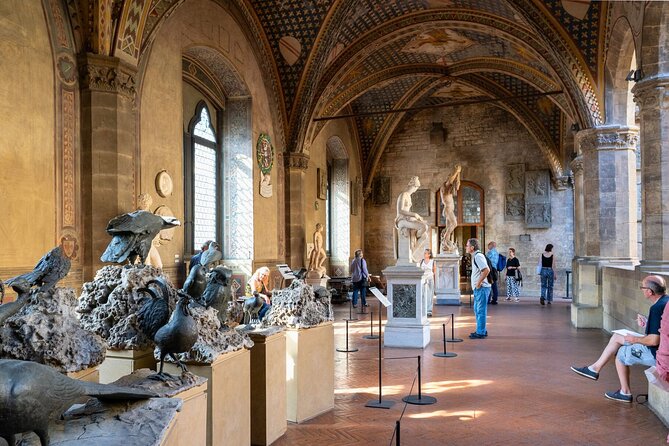
Florence can turn into a checklist of the Duomo, Michelangelo’s David, and the Uffizi. Those places matter, but the Bargello gives you a different view of the city’s artistic achievement. It is especially useful if you want to understand how Renaissance sculpture developed, rather than simply admire one famous statue and move on.
The museum’s strongest theme is the human figure. Donatello, Michelangelo, Giambologna, Verrocchio, and Cellini each approached the body, movement, expression, and myth in different ways. A visit here lets you compare those choices directly, within a relatively short stop.
I also appreciate the building’s broad range. You can begin with major marble and bronze sculpture, then move toward medieval manuscripts, textiles, ceramics, ivory carvings, precious jewels, and objects connected to cultural exchange beyond Italy. That variety keeps the visit from becoming a parade of similar statues.
The experience is offered in English and includes a digital phone audio guide. It is not a guided tour with a person leading you from room to room. That distinction matters. If you enjoy stopping for a long look, skipping an object, or returning to a favorite work, the independent format gives you freedom. If you want lively storytelling, questions answered on the spot, and help spotting details, you may find the format less satisfying.
More Museum Audio Tours in Florence
- Florence: Uffizi Priority Ticket & Masterpieces Audio App
★ 4.2 · 6,402 reviews - Florence: Uffizi Gallery Timed Entry Ticket & Audio Guide
★ 4.2 · 2,794 reviews - Florence: Uffizi & Accademia Priority Tickets with Audio App
★ 4.4 · 1,253 reviews
Entering the Bargello with a reserved ticket
The reserved entrance ticket is the practical foundation of this experience. You pay $29.02 per person for admission, access to temporary exhibitions, and the digital audio guide. That is not a bargain-basement museum ticket, but it can be fair value if you use the audio content and spend close to the full two hours inside.
The reservation is also useful in a city where a day can easily become a string of timed stops. You still need to follow the booking details you receive, but the main advantage is clear: your admission is arranged before you arrive rather than left to chance at the door.
The Bargello is near public transportation, which helps when you are moving between central Florence sights. No special transport arrangement is included, and you are responsible for reaching the museum. Since the museum visit lasts about 90 minutes to two hours, it fits well between other central Florence plans.
One important booking detail is easy to miss. The experience is non-refundable and cannot be changed after booking. If your schedule is uncertain, check your Florence plans carefully before paying.
Donatello’s David and the beginning of the visit
Start with Donatello’s David, the work most likely to shape your understanding of the museum. The statue predates Michelangelo’s David and helped inspire the later artist. Seeing both in Florence makes the comparison especially useful, even though they are displayed in different places.
Donatello’s version reflects a new interest in the individual human figure. It is not simply a religious subject treated in an old-fashioned way. The work has presence, personality, and a sense of the artist testing what bronze could do. You can use the audio guide to help place the statue in its artistic setting, then spend time looking without the phone in your hand.
The museum also contains Donatello’s St George and Marzocco. These works broaden the picture of his art. Instead of treating Donatello as the maker of one celebrated David, you see how he handled civic identity, religious subjects, strength, and human character across different works.
This is the point where the Bargello earns its place on your itinerary. The museum does not just show famous names. It lets you watch an artistic conversation develop from room to room.
Michelangelo’s Bacchus and Renaissance comparison
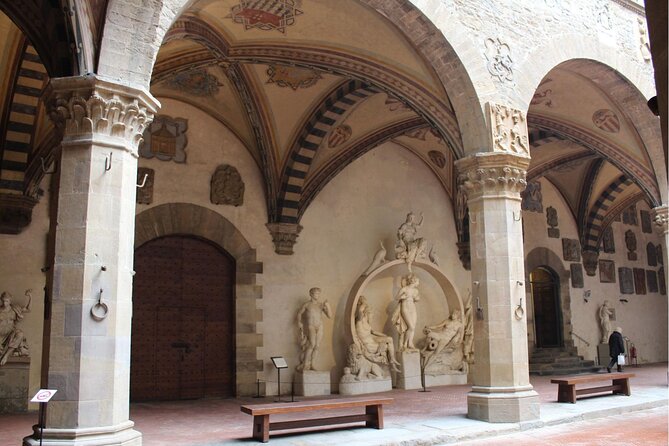
Michelangelo’s Bacchus gives you a different kind of encounter. It shows his skill and artistry through a mythological figure rather than the biblical David most visitors know from the Accademia. The subject allows Michelangelo to explore the body, balance, and expression in a more complicated way.
I suggest you resist the urge to compare works only by asking which one is best. Instead, notice how each artist treats weight, movement, surface, and emotion. The audio guide can provide useful orientation, but your own close looking is just as important.
For many people, the value of the Bargello is this side-by-side effect. One room may introduce a name you know from textbooks, while the next work shows a less familiar side of that artist. You begin to see Renaissance sculpture as a series of experiments, not one fixed style.
The museum’s scale helps here. You can pause without feeling that you are abandoning a huge list of rooms. With a visit of 1 hour 30 minutes to 2 hours, you have enough time for the leading works and a sample of the smaller collections.
More Museum Audio Tours in Italy
- Florence: Uffizi Gallery Reserved Entry Ticket & Audioguide
★ 4.5 · 970 reviews - Florence Duomo, Baptistery & Opera Museum Audioguided Tour
★ 4.2 · 607 reviews - Florence: Accademia Gallery Reserved Entry & Audio Guide
★ 4.3 · 600 reviews - Florence: Uffizi Gallery Tickets with Optional Audio Guide
★ 4.1 · 503 reviews
Giambologna, Verrocchio, and Cellini
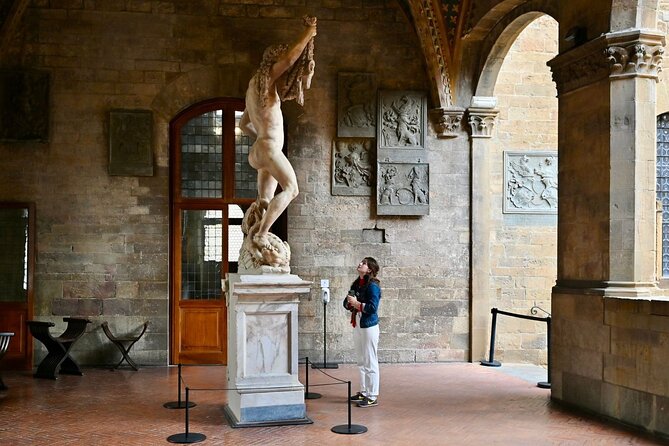
Continue looking for works by Giambologna, Verrocchio, and Cellini. Giambologna’s Mercury is specifically highlighted as a key work, and it gives you a chance to see the artist’s interest in movement and elegant form. Mercury’s subject naturally suggests speed and lift, creating a useful contrast with the more grounded presence of Donatello’s David.
Cellini’s Perseus adds another major name to the route. Cellini is closely associated with technical skill in metalwork, and this piece helps show why bronze sculpture demands more than a good design. The final object must hold its shape, detail, and force from every angle.
Verrocchio’s presence rounds out the comparison. Even if you arrive mainly for Donatello and Michelangelo, the museum encourages you to notice how artistic ideas pass from one workshop and generation to another.
I like this section for visitors who already know a little about Florence but want more than the standard postcard version. You can make the visit as simple or as analytical as you wish. Pick three artists and compare them, or let the audio guide supply the basic story while you follow your eye.
The Choir room and Giotto’s final frescoes
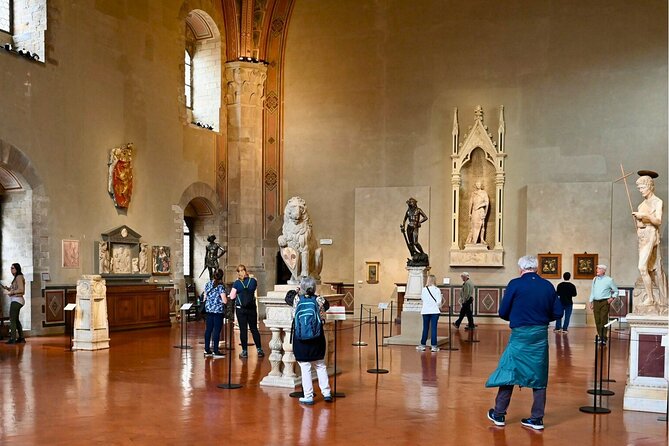
Do not leave without looking for the Choir room and its Giotto frescoes. The collection’s sculpture receives most of the attention, but these paintings give the building another layer of artistic interest.
Giotto’s final frescoes in the Choir room offer a quieter counterpoint to the bronze and marble works. Their presence also reminds you that Florence’s artistic story was never limited to sculpture. The city’s painters and sculptors were working within the same broad movement toward stronger human presence and more expressive figures.
The room may appeal most to visitors who want a break from sculpture. It also gives you a reason to slow down. Look at how the scale and atmosphere of the space change your response to the art around it.
The supplied information does not provide a detailed route through every room, so you should use the audio guide and museum directions to locate the Choir room. If it is a priority, allow enough time rather than saving every secondary collection for the final few minutes.
Manuscripts, textiles, ceramics, and ivory
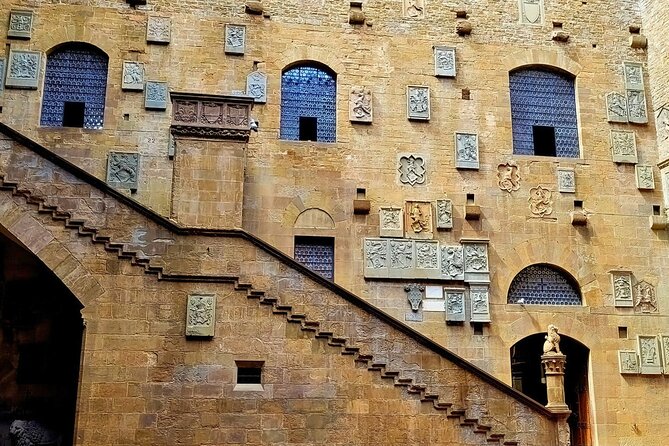
The Bargello is not only a sculpture museum. Its medieval manuscripts and textiles reward close attention to craft. These pieces can seem modest beside a large bronze, but they show the care that went into pattern, material, and surface long before modern mass production.
The ceramics and ivory carvings extend that story. Look for the small-scale details that are easy to miss when you are focused on famous names. Ivory, in particular, can turn a familiar subject into a study of carving technique and miniature form.
Precious jewels add yet another change of scale. They are not a reason to ignore the sculpture, but they make the museum feel like a collection of objects rather than a single-artist showcase.
The oriental goods collection is also worth time if you are interested in how objects and design ideas moved between Italy and other parts of the world. The available information does not specify every region or object, so I would treat this as an area for personal discovery rather than arrive expecting a fixed list of highlights.
How to use the digital audio guide
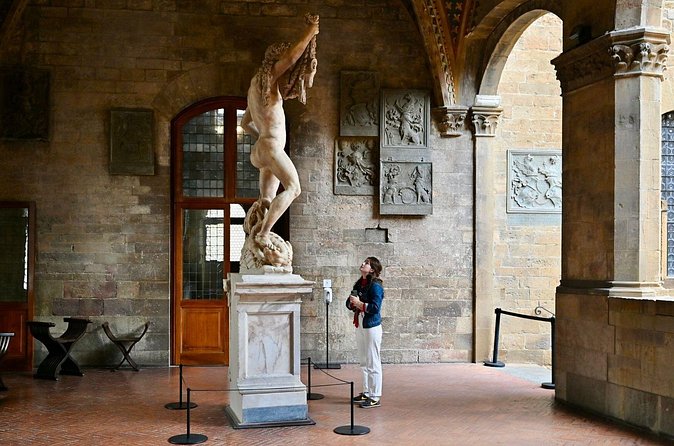
The audio guide is digital and phone-based, and the experience is offered in English. Bring your own headphones. This is not a minor suggestion. Without headphones, using a phone guide in galleries can be awkward, distracting, and less considerate to the people around you.
The guide should help you identify major works and place them in context. Use it as a tool, not as a command to listen to every word. For a two-hour visit, I would choose the main works first, then listen to the entries that genuinely add something.
A good pattern is simple:
- Begin with Donatello’s David and the nearby major works.
- Listen to the sections on Michelangelo’s Bacchus, Giambologna’s Mercury, and Cellini’s Perseus.
- Set aside time for St George, Marzocco, and the Choir room.
- Use the remaining minutes for manuscripts, textiles, ceramics, ivory, jewels, and oriental goods.
Because there is no live guide, you control the rhythm. You can stop the commentary, look closely, and continue when ready. The downside is that no person is there to explain a confusing point or adjust the route to your interests.
Timing, price, and who gets the best value
At $29.02 per person, this is best viewed as a focused museum experience rather than a cheap admission ticket. The value improves if you care about Renaissance sculpture, want temporary exhibitions included, and plan to use the audio guide for the full visit.
The 1 hour 30 minute to 2 hour duration is long enough for a serious introduction but short enough to fit into a busy Florence schedule. I would not book it if you only have a few minutes between major appointments. You need time to enter, orient yourself, listen to selected audio sections, and look at the smaller collections without rushing.
The experience is booked on average 11 days ahead, which suggests you should not leave it until the last moment if the Bargello is important to your plans. That is especially true during a crowded Florence visit.
I see the best value for:
- First-time Florence visitors who want more than the Duomo, Michelangelo’s David, and the Uffizi.
- Art lovers who want several major sculptors in one museum.
- Independent visitors who prefer their own pace.
- People who appreciate decorative arts as well as monumental sculpture.
- Visitors comfortable using a phone and personal headphones for interpretation.
It may be less suitable if you need a live guide, want a highly social group experience, or dislike audio tours. It is also a poor fit for anyone with an uncertain schedule because the booking cannot be refunded or amended.
Practical planning for a smooth visit
Check your confirmation as soon as you book. You receive confirmation at the time of booking, and you should have the relevant ticket information ready when you arrive.
Bring your own headphones and make sure your phone is ready for the digital guide. The supplied information does not state that headphones are provided, so do not count on receiving them at the museum.
The museum is near public transportation, but no transport is part of the ticket. Plan your route before the day begins, especially if you are fitting the Bargello between other timed admissions.
Most people can participate, and there is no special physical requirement stated in the available details. Still, give yourself enough time to move through the galleries at a comfortable pace. The experience works best when you treat it as a focused art stop, not a quick photo opportunity.
Should you book the Bargello ticket?
Book it if Renaissance sculpture is high on your Florence list, especially if Donatello interests you. The chance to see Donatello’s David, Michelangelo’s Bacchus, Giambologna’s Mercury, Cellini’s Perseus, and other important works in one visit is the main reason to come.
I would also book it if you have already planned the city’s headline sights and want a quieter, more thoughtful museum stop. The temporary exhibitions, Choir room, manuscripts, textiles, ceramics, ivory, jewels, and oriental goods give you plenty beyond the best-known sculptures.
Skip it if you want a live guide or if your schedule may change. For everyone else, the reserved entry and English digital audio guide make this a practical way to spend two hours with some of Florence’s finest sculpture. Just bring your headphones, slow down for Donatello, and give the less famous rooms a fair chance.
FAQ
Where is the experience located?
It takes place at the Museo Nazionale del Bargello in Florence, Italy.
How long does the museum visit take?
The estimated duration is about 1 hour 30 minutes to 2 hours.
What does the $29.02 price include?
The price includes a reserved entrance ticket to the Bargello Museum, access to temporary exhibitions, and a digital phone audio guide.
Is a live tour guide included?
No. A live tour guide is not included.
What language is offered?
The experience is offered in English.
Do I need to bring headphones?
Yes. You need to bring your own headsets for the digital phone audio guide.
Can I cancel or change the booking?
No. The experience is non-refundable and cannot be changed for any reason.
More Skip-the-Line Audio Tours in Florence
- Florence:Palazzo Vecchio Skip-the-line Ticket & Audio Guide
★ 4.3 · 95 reviews - Fast Track Entrance to Galleria dell’Accademia With Audio Guide
★ 4.5 · 49 reviews - Accademia and Uffizi Skip-the-Line Tickets with Audioguide
★ 3.6 · 35 reviews - Florence: Accademia Gallery Skip-the-Line with Audio Guide
★ 4.2 · 18 reviews
New audio tours around Florence
- Florence: Uffizi Gallery Timed Entry Ticket with Audio★ 3.0 · 3 reviews
- Florence: Uffizi Gallery Audio Guided Tour led by Tour Leader★ 3.5 · 6 reviews
- Uffizi Gallery Audio-Guided Visit with optional Accademia Gallery★ 3.5 · 42 reviews
- Florence: Uffizi Gallery Reserved Ticket & Digital Audio Guide★ 4.5 · 3 reviews
- Uffizi Combined Ticket:UFFIZI, PITTI, BOBOLI & digital audioguide★ 4.0 · 26 reviews
- Florence Walking Tour with Audioguide on Your Smartphone★ 4.5 · 9 reviews
- Florence: Accademia entry tickets + optional audio guide★ 4.0 · 228 reviews
- Accademia Gallery Skip the line Tickets with Audio Guide★ 4.0 · 10 reviews
Florence Audio Tours, compared.
Florence: Timed Entry to Michelangelo’s David + Audio App
Read our review →
Florence: Uffizi Priority Ticket & Masterpieces Audio App
Read our review →
Florence: Palazzo Vecchio Entrance Ticket & Audioguide
Read our review →
Florence: Uffizi Gallery Timed Entry Ticket & Audio Guide
Read our review →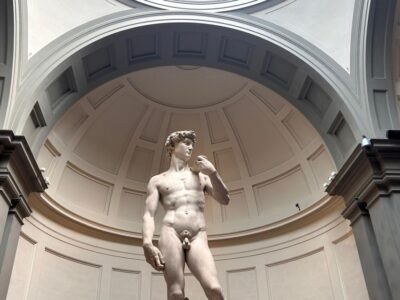
Florence: Michelangelo’s David Entrance Ticket and Audio App
Read our review →
Florence: Uffizi & Accademia Priority Tickets with Audio App
Read our review →
Florence: Eco-Friendly Golf Cart City Tour with Audio Guide
Read our review →
Florence: Uffizi Gallery Reserved Entry Ticket & Audioguide
Read our review →Browse the lists this tour appears in