
Review · CANADA
Halifax Explosion Smartphone Audio Walking Tour
The Halifax Explosion Smartphone Audio Walking Tour turns a painful chapter of Canadian history into a 5-kilometre walking story through northern Halifax. Starting at Hydrostone Park, you follow the route through memorials, old neighborhoods, shipbuilding sites, and the Hydrostone District while guide Jeff’s commentary plays as you reach each location.
I like two things right away: the tour costs only $8.96 per person, and you can pause, restart, or use it on another day after downloading it. The stories also focus on people, not just dates and plaques, with accounts of Vincent Coleman, Ashpan Annie, Billy Wells, and the firefighters of Halifax.
The main drawback is navigation. One user found the audio walk difficult to follow, and that is worth taking seriously. GPS tours are convenient, but you still need your phone charged, your attention on the route, and enough comfort with walking outdoors to manage a route that can take from 90 minutes to 2 hours and 20 minutes.
Key points to know before you go
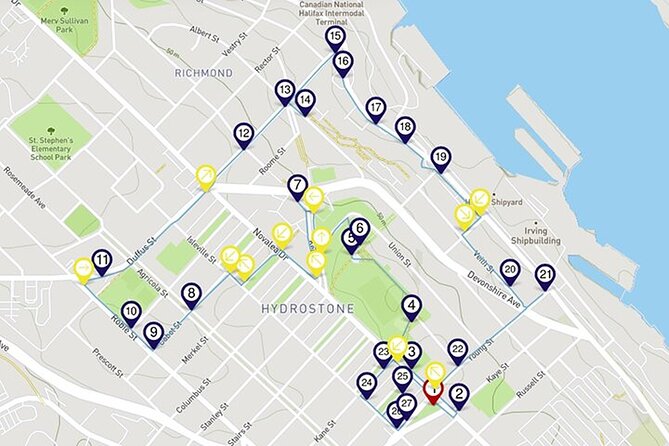
- A 27-stop route: Follow the explosion from the ships involved to the rebuilt Hydrostone neighborhood.
- Jeff’s automatic audio guide: Commentary begins when you approach each GPS-marked point.
- A people-first history lesson: Hear about heroes, survivors, rescuers, children, firefighters, and families.
- Flexible timing: Download the tour on Wi-Fi and use it anytime, stopping and starting as needed.
- Optional trivia at every stop: Answer location-based questions after each audio segment.
- A low-cost private experience: Your group walks alone instead of joining a scheduled tour group.
Halifax history told one street at a time
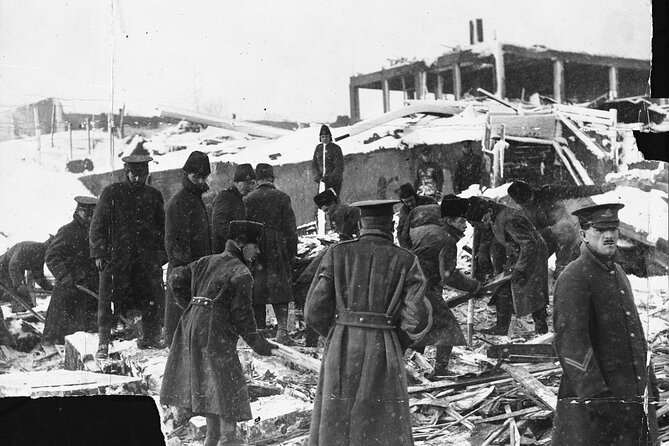
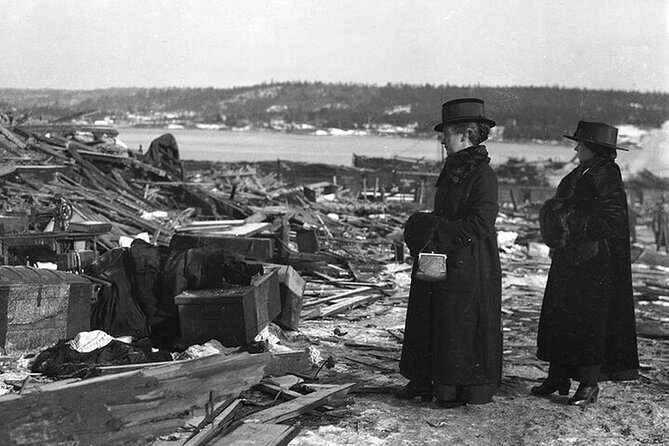
On December 6, 1917, the French cargo ship SS Mont-Blanc collided with the Norwegian SS Imo in Halifax Harbour. The resulting explosion devastated Richmond and surrounding parts of Halifax, killing and injuring thousands and reshaping the city.
This tour does not ask you to absorb that story from one museum room. Instead, it places the story across the streets where the event unfolded and where the city rebuilt itself. That gives the history a useful physical scale. You move past memorials, former schools, reservoirs, fire-related monuments, and houses connected to the aftermath.
I like that the route gives equal attention to disaster and recovery. You hear about the blast, fire, ice, black rain, and tsunami, but also about outside aid, emergency planning, new housing, and the people who helped others survive.
The experience is self-guided, so you will not have a live person beside you to answer questions or adjust the pace. In return, you avoid a crowded group and can stop whenever the story needs a moment.
More Audio Walking Tours in Canada
- Halifax Churches, Gardens & Graveyards: a Smartphone Audio Walking Tour
★ 4.5 · 25 reviews - Halifax Boardwalk & Seaport: a Smartphone Audio Walking Tour
★ 4.0 · 19 reviews - Explore Halifax with 3 Unique Smartphone Audio Walking Tours
★ 4.0 · 16 reviews
Starting at Hydrostone Park
The tour begins at Hydrostone Park on Young Street. The opening point helps you understand the area before the walk moves through its memorials and rebuilt streets.
The route eventually returns to the Hydrostone Market, making the experience a loop rather than a one-way outing. That is practical if you arrive by public transport or want to finish near food and shops, although the tour information does not promise that every business will be open when you arrive.
At the start, check your phone battery, put on headphones if you prefer private listening, and confirm that the GPS map is showing your location. Audio can play through the device speaker, but headphones will make the narration easier to hear near roads and other outdoor noise.
The first memorials and the ships behind the blast
Early stops at St. Joseph’s Square and Novalea Drive introduce the human and civic side of the story. St. Joseph’s Square presents three moments in time connected with the Catholic parish memorial, while Novalea Drive and Hennessey Place explain how military grounds later became a neighborhood park and memorial.
The route then turns to the central event: the SS Mont-Blanc, the SS Imo, and the events leading to the collision. You do not simply hear that two ships were involved. The commentary places the ships within the chain of events that led to the explosion.
That background matters because the rest of the walk depends on understanding the scale of what happened. Once you know the starting point, later stops about fire, debris, water, and rescue become easier to follow.
Bell Tower, Fort Needham, and the Richmond Staircase

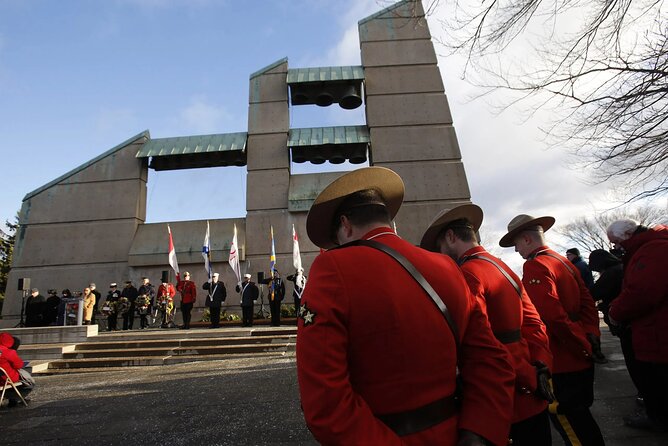
The Halifax Explosion Memorial Bell Tower is one of the key points on the route. The monument honors people in Halifax and Dartmouth who experienced the destruction firsthand.
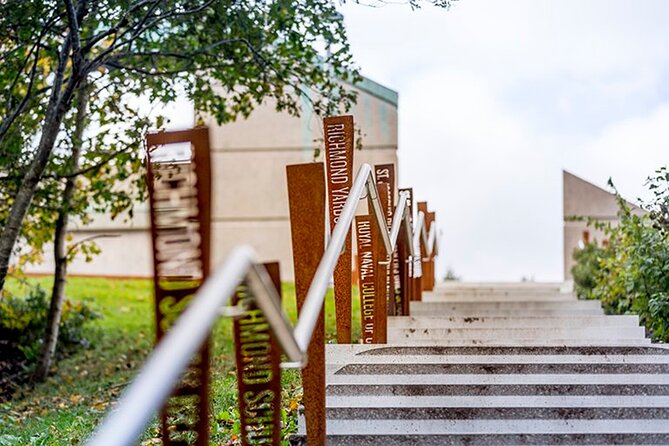
At Fort Needham Memorial Park, the Richmond Staircase adds another layer. The staircase and railings carry names of businesses destroyed in the blast. It is a useful reminder that the explosion damaged a working city, not just private homes.
You should allow time to look around rather than treating each stop as a quick audio trigger. The listed timing gives roughly five minutes per point, but the total tour length varies widely. If you listen carefully, answer the trivia questions, and pause at memorials, you may need closer to the longer estimate.
More Smartphone Audio Tours in Canada
- Cabot Trail: a Smartphone Audio Driving Tour
★ 4.5 · 118 reviews - Icefields Parkway: a Smartphone Audio Driving Tour
★ 4.0 · 118 reviews - Smartphone Audio Driving Tour between Banff and Calgary
★ 4.0 · 25 reviews - Smartphone Audio Driving Tour between Lake Louise and Calgary
★ 4.0 · 15 reviews
Schools, trees, and the people caught in the disaster
The former Richmond School stop explains how a school building was constructed immediately after the explosion and recalls the tragedy of the Roome School. This section shifts attention toward children and the urgent need to restore everyday services.
The Secret of the Trees stop is one of the more unusual moments. The story concerns trees that became infamous in lumber mills from Canada to the southern United States. It is a small detail, but it gives the walk variety and shows how the blast affected materials and working life as well as people and buildings.
At 3365 Robie Street, you hear about Francis Mackey, the pilot aboard the Mont-Blanc. His life changed profoundly after the explosion. This stop is valuable because it moves beyond a simple hero-and-villain version of the disaster and focuses on one individual caught in its consequences.
Reservoirs, firefighters, and the weather that made everything worse
The Robie Street water reservoir dates from 1913 and survived the explosion. Its special designation gives the stop added importance, since the reservoir is both an object from before the disaster and a survivor of it.
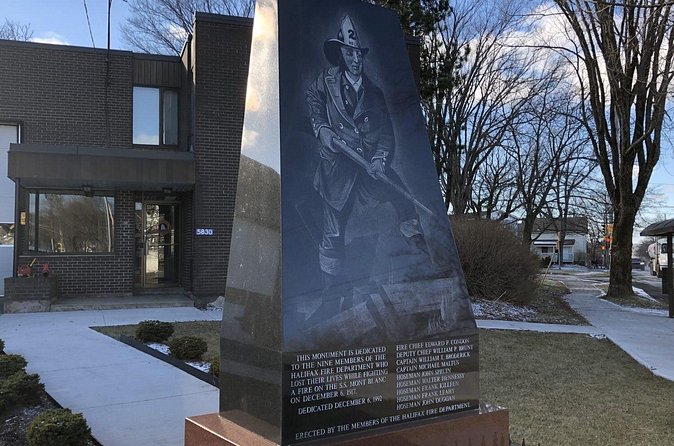
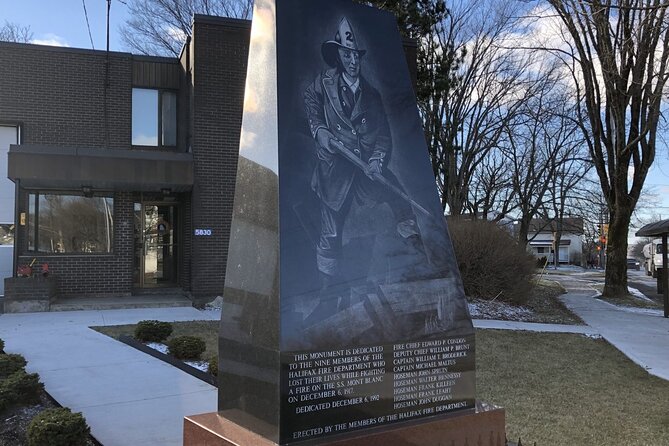
The Patricia and Her Crew memorial honors Halifax firefighters who died that day. The commentary also explains the Patricia, giving the memorial a specific connection to the people and equipment involved rather than leaving it as a name on a marker.
As you continue uphill, the audio describes fire, ice, and black rain. These details help explain why survival was so difficult. The explosion alone would have been terrible, but the weather added cold and exposure to the damage.
The tsunami stop is especially effective as a place-based lesson. You hear how the wave swept up the hillside and how high it might have reached. That is the kind of detail GPS audio can handle well: you are not only told what happened, you are placed near the ground where the event had a physical effect.
House holes, Vincent Coleman, and the danger of stopping
The section around House Holes and the razing of Richmond shows how the land changed after the explosion. The markers indicate where people once lived and died, creating a quiet record of a neighborhood that was not rebuilt in exactly the same form.
The Vincent Coleman stop tells the story of a man remembered as a hero who may have saved hundreds of lives. His actions are among the route’s strongest human stories, and they give the walk a moment of courage amid the destruction.
You also hear about Campbell Road, once a broad dirt road lined with shops and houses. The stop helps you picture the older neighborhood before the blast erased or altered much of it.
These are the moments when the tour works best. You are not rushing through a list of monuments. You are moving through the traces of a community and learning how ordinary streets became part of a national tragedy.
Ashpan Annie and Billy Wells
The Ashpan Annie stop includes a welcome change in tone: the miraculous survival of a baby. That story gives the tour a moment of hope without pretending that the wider event was anything but devastating.
Later, the Amazing Adventure of Billy Wells offers another personal account. The description promises an incredible story, and this is one of the points where listening closely matters. The tour’s strength comes from these named individuals, since personal stories are easier to remember than a long run of statistics.
You can answer a trivia question after each commentary segment. The game is optional, so you can skip it if you want a quiet walk. I would use it selectively, especially if children are with you or if you want a simple way to keep younger walkers engaged.
Orphanage, naval help, and the road to Hydrostone
At Veith House, a colorful memorial on the white picket fence recalls the Halifax Protestant Orphanage. The fence was painted by children of Veith House, linking the site’s past with a later community response.
The former Royal Navy College stop explains how the efficiency of a co-commander helped people survive. The route then turns toward the help Halifax received from around the world and a tradition that continues today.
These stops broaden the story beyond the explosion itself. You hear how communities respond after catastrophe, how organizations work under pressure, and how aid can continue long after the first emergency has passed.
The final section introduces the Hydrostone District. You learn about the town planner and the English garden city idea used in rebuilding Halifax. The back lanes explain why they were designed for business, while the Tudor Revival rowhouse cottages show how surviving families were housed.
This is one of the most useful parts for anyone interested in city design. The Hydrostone is not just a pleasant area to walk through. Its layout and architecture grew from the need to rebuild after the explosion.
Finishing at Hydrostone Market
The tour ends at Hydrostone Market, across from the starting park. The closing message returns to the people who lived through the disaster and those who rushed to help.
The ending gives you a natural chance to stop the audio, sit down, or continue exploring the area on your own. Since the experience is not tied to a strict departure time, you can also split the route into shorter sections, though the tour is designed as one continuous walk.
The route is about 5 kilometres, and the stated duration ranges from 1 hour 30 minutes to 2 hours 20 minutes. That wide range reflects real walking conditions: pauses, photos, the trivia game, reading memorials, and time spent finding each GPS point.
What the $8.96 price really buys you
At $8.96 per person, this is inexpensive for a 27-stop history walk. You are paying for prepared narration, the GPS route, automatic audio, optional trivia, and the freedom to use the tour beyond one booking date.
The value is strongest if you want structure without a live group. You can listen when you want, stop for coffee, repeat a section, or return to the route later. The tour is downloaded on Wi-Fi, so no mobile signal or data is needed during the walk.
The price is less attractive if you expect a polished live guide or hands-on help with navigation. One user found the audio difficult to follow, and an app-based walk cannot easily correct a wrong turn in the way a person can. Treat the GPS map as a guide, not as a replacement for basic attention.
The number of people selected at booking equals the number of devices allowed to download the tour. If two people want to listen separately, plan for two devices rather than assuming one purchase covers unlimited phones.
Practical details that affect your day
The tour is offered in English and is available daily from 6:00 AM to 10:00 PM during the stated operating period. You can use it at a time that suits your schedule, but weather matters because the experience is outdoors.
One person had miserable weather on the only available day and could not properly enjoy the walk. The audio and historical material can still be accessed without completing the physical route, so bad weather does not erase the purchase, but it does reduce the value of the street-level experience.
Wear shoes suitable for moderate walking and allow extra time if you want to stop at each memorial. Service animals are allowed, and the starting area is near public transportation.
The tour is private in the sense that only your group participates. It is not a private vehicle or private live guide service. You still provide your own smartphone or tablet, and headphones are optional because the audio can play from the device speaker.
Free cancellation is available if you cancel at least 24 hours before the scheduled start time. Changes or cancellations inside that window are not accepted for a refund.
Who should choose this walk?
I would choose this tour if you want a low-cost introduction to the Halifax Explosion and prefer to set your own pace. It suits independent visitors, families who like trivia, and anyone interested in how a city rebuilds after disaster.
It is also a good choice if you have already read about the explosion and want to connect individual stories with real streets and memorials. The stops involving Vincent Coleman, Ashpan Annie, Billy Wells, Francis Mackey, and the firefighters add human detail that a short historical overview may leave out.
I would be cautious if you dislike phone-based navigation, need a live guide, or want guaranteed indoor shelter. The route can take more than two hours, the weather can interfere, and one available rating specifically flagged difficulty following the audio.
Should you book the Halifax Explosion Smartphone Audio Walking Tour?
Book it if the low price, flexible schedule, and personal stories matter more to you than live guiding. Download the tour on Wi-Fi, start with a full phone battery, and give yourself extra time for memorials and route-finding.
Skip it if you want a tightly managed walk with someone physically leading you. For everyone else, this is a thoughtful, inexpensive way to connect Halifax’s streets with one of Canada’s most important disasters, provided you are comfortable letting your phone guide the way.
FAQ
Where does the Halifax Explosion Smartphone Audio Walking Tour start?
It starts at Hydrostone Park, at 5547 Young Street in Halifax, Nova Scotia.
Where does the tour finish?
The tour ends at Hydrostone Market and returns to the starting area across the road at Hydrostone Park.
How long is the walking tour?
The estimated duration is about 1 hour 30 minutes to 2 hours 20 minutes.
How far do you walk?
The route covers approximately 5 kilometres.
Is the tour guided by a live person?
No. Guide Jeff provides the recorded commentary through the smartphone audio tour.
Does the audio require mobile data during the walk?
No. You download the tour on Wi-Fi before starting, and no signal or data is required during the walk.
Does the tour include a map?
Yes. A live GPS map shows your location and the route to the next point.
Are trivia questions included?
Yes. Optional location-based trivia questions are available at each stop after the commentary plays.
Do I need to bring a smartphone or tablet?
Yes. A smartphone or tablet is not included. Audio can play through the device speaker, and headphones are optional.
Can I use the tour on a different date?
Yes. The tour is flexible and can be enjoyed anytime after booking and downloading it.
Is the tour available in languages other than English?
No. The listed language is English.
How does cancellation work?
You can receive a full refund if you cancel at least 24 hours before the experience start time. Cancellations or changes made within 24 hours are not refunded.
New audio tours around Canada
- Kelowna E-Bike Bee Tour, Tastings, Organic Lunch & Audio Guide★ 5.0 · 9 reviews
- Smartphone Audio Driving Tour between Kamloops & Revelstoke★ 3.5 · 8 reviews
- Jasper National Park Self-Guided Driving Audio Tour★ 4.0 · 4 reviews
- Smartphone Audio Driving Tour between Kamloops and Vancouver★ 3.5 · 5 reviews
- Smartphone Audio Driving Tour between Huntsville & Toronto★ 4.5 · 4 reviews
- Edmonton Self Guided Audio Experience★ 3.0 · 2 reviews
- Smartphone Audio Driving Tour between Collingwood and Toronto★ 4.5 · 3 reviews
- A 7th-Gen Local’s View of Downtown Charlottetown: An Audio Tour★ 4.5 · 27 reviews
Canada Audio Tours, compared.



A 7th-Gen Local’s View of Downtown Charlottetown: An Audio Tour
Read our review →

Halifax Churches, Gardens & Graveyards: a Smartphone Audio Walking Tour
Read our review →


Western Canada Self-Driving Audio Guide English and German
Read our review →Browse the lists this tour appears in