
Review · FRANCE
Caen: Memorial Museum Entry Ticket & Optional Audio App
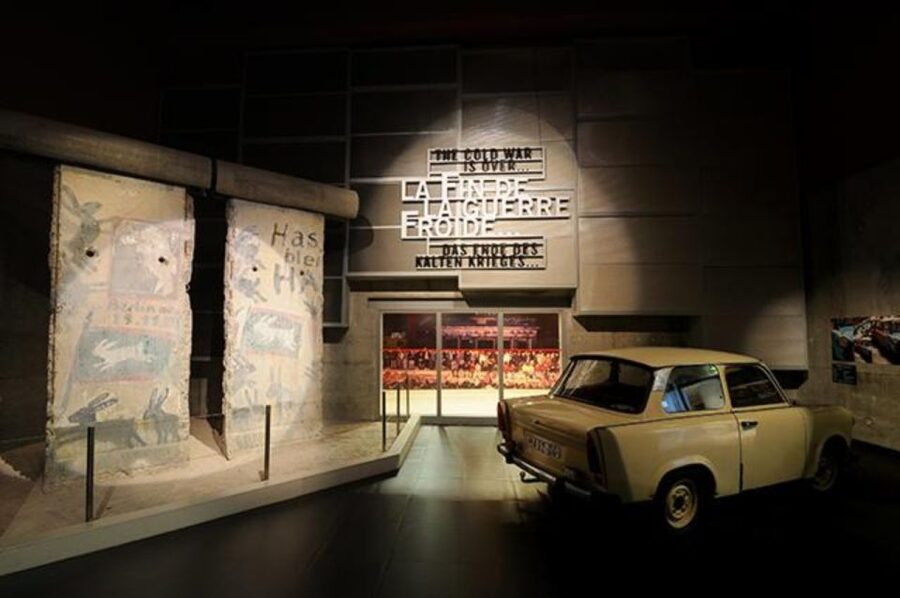
Caen Memorial Museum tackles the 20th century on a grand scale, beginning with the forces that led to World War II and ending with the fall of the Berlin Wall. I like the way it connects battlefield events to occupation, civilian suffering, liberation, and the difficult work of rebuilding peace. I also like the D-Day and Battle of Normandy displays, which give the invasion a clear setting instead of treating it as one isolated day.
The main drawback is size. You can spend four hours here and still miss material, so a quick stop will feel rushed. The optional audio guide also requires care when booking: the audio web app must be selected with the museum ticket, and it cannot be added by itself.
Key things to know before you go
- The museum covers 1918 to the fall of the Berlin Wall, not only the Normandy invasion.
- The D-Day section explains the 100 days after June 6, 1944, helping you see how liberation unfolded.
- A 19-minute film reviews the key dates of the 20th century, a useful way to set the scene.
- Three memorial gardens honor the Allied forces that helped liberate France.
- Plan several hours, or a full day, if you want time for the exhibitions, films, gardens, and a meal.
- The multilingual audio guide is a web app, available only when booked with admission.
Entering a museum built around memory
The Caen Memorial is not a small collection of tanks and uniforms. It is a broad historical center designed to explain how Europe moved from one world war to another, suffered through occupation and genocide, and then divided into rival political blocs.
That wider frame is the museum’s main strength. If you arrive only wanting D-Day photographs, the first rooms may feel like a slow start. I think that background is worth your time, because the Normandy invasion makes more sense when you understand the political tension, economic turmoil, and military choices that came before it.
Caen itself gives this subject extra weight. Much of the city was destroyed during World War II, and the museum addresses both the hardship of occupation and the relief of liberation. You are not simply looking at a distant military campaign. You are learning how a war reshaped a French city and its people.
Your ticket is valid for one day. Admission costs about $24 per person, which is fair if you use the museum as a major part of your day. It is less appealing if you have only an hour between other Normandy stops. The permanent exhibitions are extensive, and the price makes better sense when you allow enough time to watch films, read documents, and pause in the gardens.
More Museum Audio Tours in France
- Paris: Louvre Museum Hosted Entry and Mona Lisa Audioguide
★ 4.6 · 5,235 reviews - Paris: Orsay Museum Entry Ticket and Digital Audio Guide App
★ 4.4 · 3,170 reviews - Louvre Museum Timed Entrance Ticket with Audio Guide
★ 3.0 · 453 reviews
From the end of World War I to the road to 1939
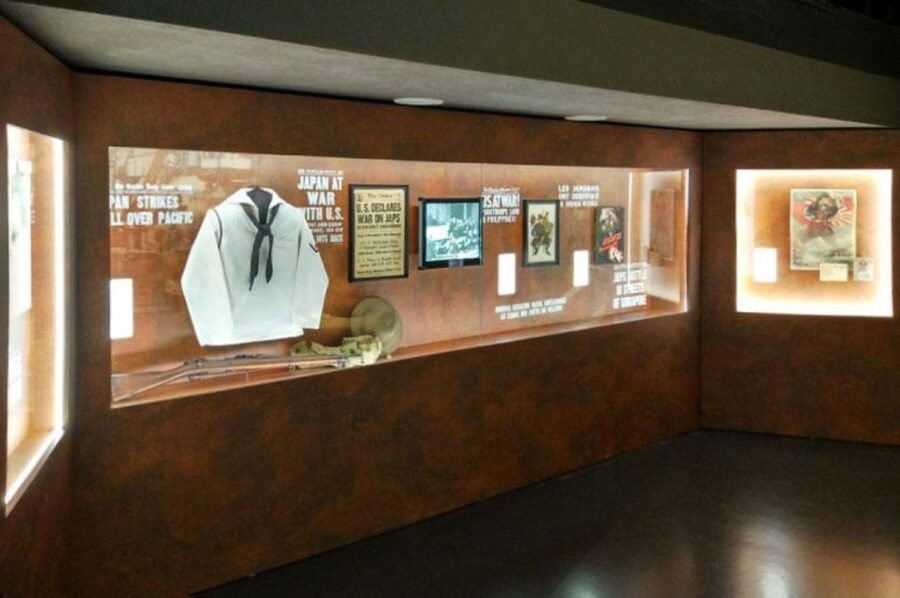
The opening sections trace the period after World War I and the developments that led to the next conflict. This material matters because the museum does not present World War II as an event that appeared without warning.
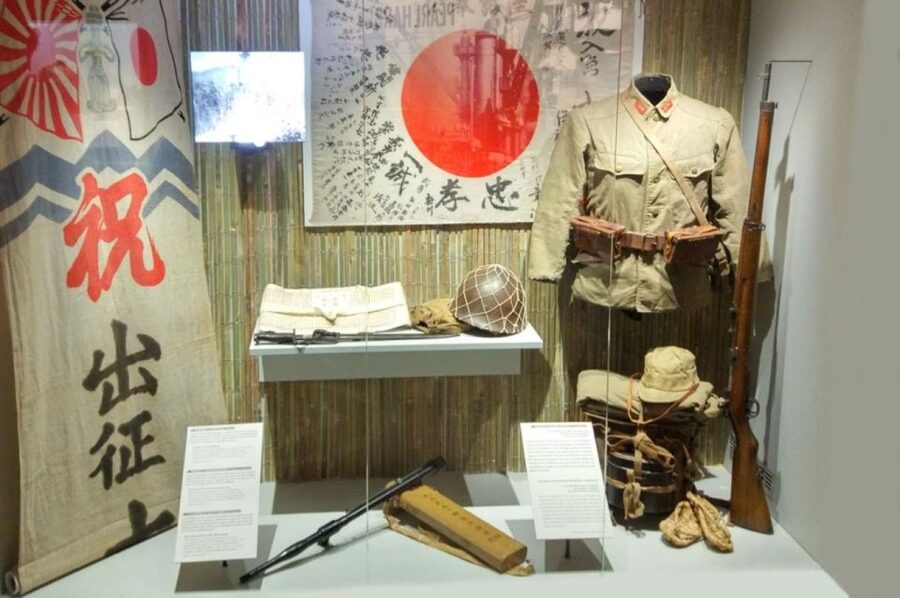
You will encounter historical documents, film, audio testimony, and original military objects. Together, they show how political decisions and social pressures built toward war. The displays also help explain why the conflict became so broad and so destructive.
I recommend moving slowly through this opening portion, even if your main interest is Normandy. The later galleries ask you to think about occupation, resistance, civilian life, and liberation. Those themes carry more force when you have first seen the conditions that made the war possible.
The museum’s approach is serious rather than theatrical. It asks you to follow a chain of events and consider the human cost. That makes it a good place for adults and older children who want more than a collection of dramatic battlefield objects.
Occupation, destruction, and liberation in Caen
The story becomes especially local when the museum turns toward the occupation of France and the destruction of Caen. Here, the broad military story meets the daily experience of people living under German control.
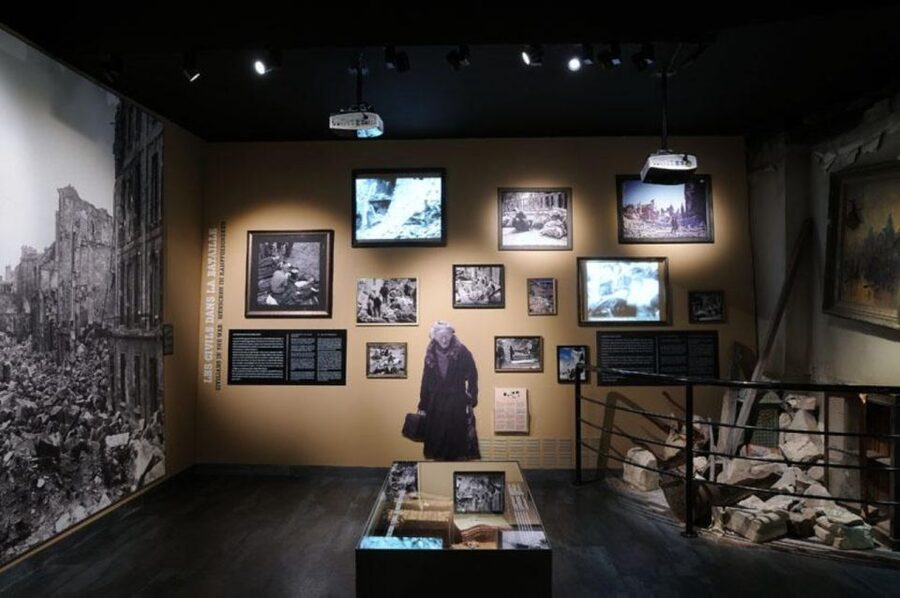
You can expect displays about the hardship of occupation, the violence of war, and the relief that came with liberation. The balance is useful. Liberation was a moment of joy, but the road to it brought severe damage, displacement, and loss.
This section gives you a better sense of why Normandy remembrance is not limited to beaches and landing craft. The invasion was a military operation, but it also began a long and painful process for towns and families across the region.
The museum uses testimony and archival material to keep the story grounded. I find these kinds of sources more useful than a long list of dates alone. They show what historical change felt like at street level, while the larger displays explain how commanders and governments shaped events.
The D-Day Landings and the 100 days after June 6
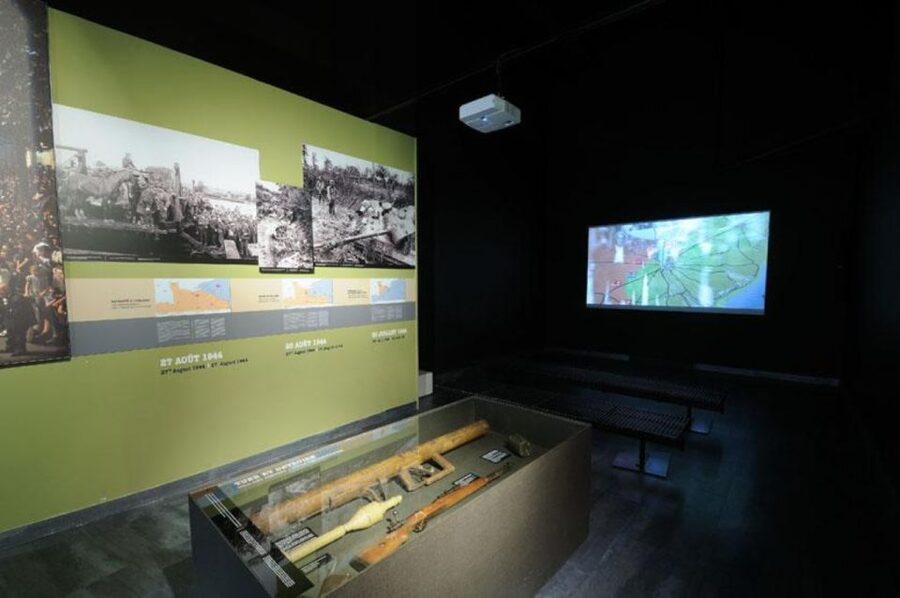
The D-Day material is the natural focus for many visitors, and the museum gives it substantial space. You will learn about the Normandy Landings and the campaign that followed, rather than stopping with the first day of the invasion.
That is important. June 6, 1944, opened the campaign, but it did not end it. The following 100 days involved difficult fighting, slow movement, heavy casualties, and the gradual liberation of Normandy and France. The museum helps place the landing within that longer military effort.
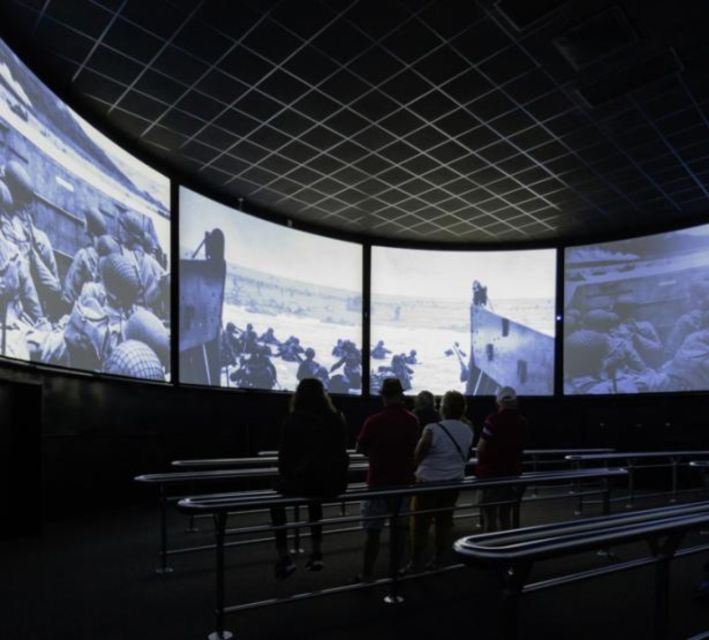
Films are part of the visit, including a film focused on D-Day. This adds movement and human voices to the objects and documents around you. It can also help if you are visiting several Normandy sites and need a clear overview before seeing the actual beaches, cemeteries, or battlefields.
The displays are valuable for first-time visitors because they explain the sequence of events. If you already know the military story well, you may spend less time reading every panel and more time with the visual material. Either way, do not assume this is a short D-Day exhibit. It is one section of a much larger museum.
More Smartphone Audio Tours in France
- Paris: Rodin Museum Ticket & Optional Digital AudioGuide App
★ 4.7 · 56 reviews - Strasbourg Walking Tour with Audioguide on Your Smartphone
★ 4.0 · 42 reviews - Paris: Musee De L’Armee Ticket With Digital Audio Guide
★ 4.2 · 39 reviews - Paris Audioguide – TravelMate app for your smartphone
★ 4.1 · 27 reviews
The Holocaust section and the duty of remembrance
The museum also includes a dedicated Holocaust area. This is likely to be one of the most emotionally difficult parts of your visit, and it deserves unhurried attention.
The subject is handled within the museum’s wider account of the 20th century, but the Holocaust section gives the persecution and murder of European Jews a clear place of its own. Historical documents, testimony, and related material help move the subject beyond general statements about wartime suffering.
I recommend planning your pace rather than trying to cover every room at the same speed. Some sections are analytical and military. Others ask you to stop and remember individual human lives. The contrast can be demanding, but it also reflects the scale of the period you are studying.
This part of the museum is not likely to suit very young children, and children under ten must be accompanied by an adult throughout the visit. Parents should decide how much of the material is appropriate for their children before entering.
The 19-minute film that sets the timeline
One of the most practical features is a 19-minute film covering the key dates of the 20th century. Think of it as a short orientation before, during, or near the end of your visit.
If your knowledge of European history is patchy, watch it early. It gives you a framework for the galleries, from the aftermath of World War I through World War II and into the Cold War. Dates that might otherwise blur together have a clearer place in the story.
If you already know the period well, the film still works as a compact reset. After several hours of displays, it can help you connect the separate sections into one timeline.
The film is not a replacement for the exhibitions. Its value is efficiency. In 19 minutes, it gives you the sequence you need before you return to the documents, testimony, military objects, and films that provide detail.
From postwar division to the fall of the Berlin Wall
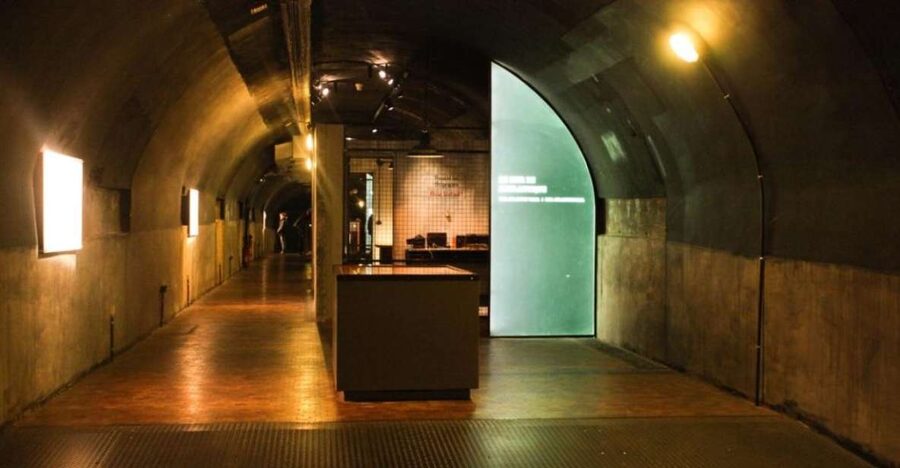
The museum does not end in 1945. Its story continues through the postwar period and the division of Europe, reaching the fall of the Berlin Wall.
This final span shows why peace is not simply the opposite of war. The end of World War II brought relief, but it also produced new political tensions and a divided continent. By extending the visit into the Cold War, the museum asks you to consider how the consequences of 1945 continued for decades.
I appreciate this ending because it prevents the museum from treating liberation as a neat finish. The 20th century remained unsettled, and the political order created after the war shaped Europe for much of the lives of people who experienced it.
You may find the later rooms less familiar than the D-Day galleries. Give them time. They provide the answer to one of the museum’s central questions: how did Europe move from total war toward a more stable, if still imperfect, peace?
Three memorial gardens for a quieter pause
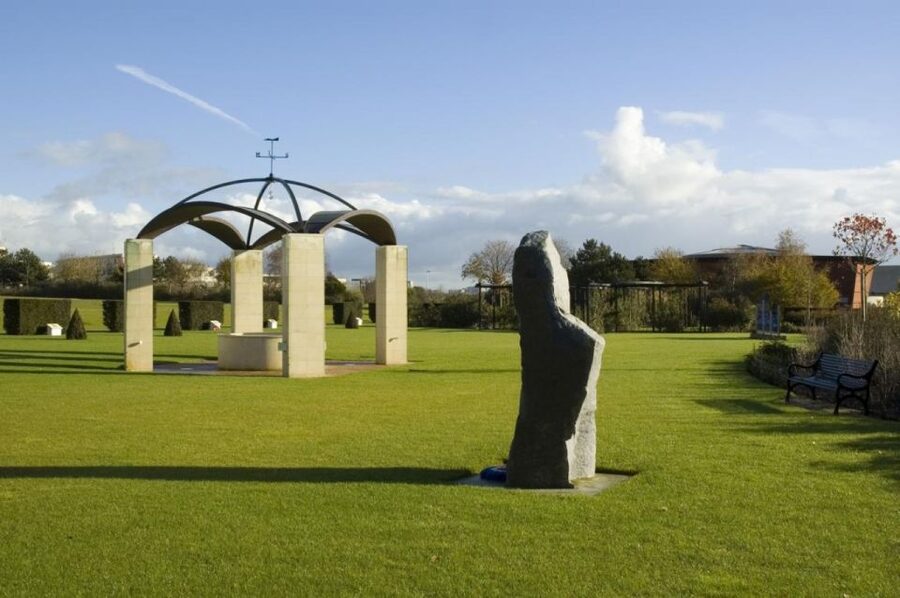
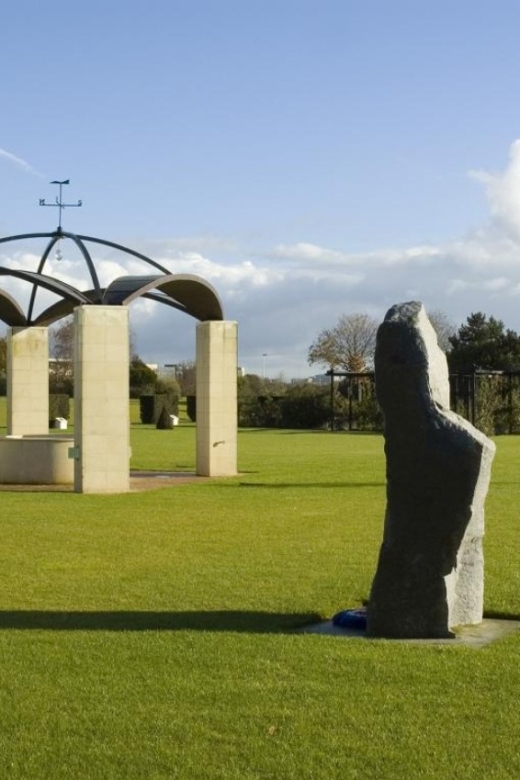
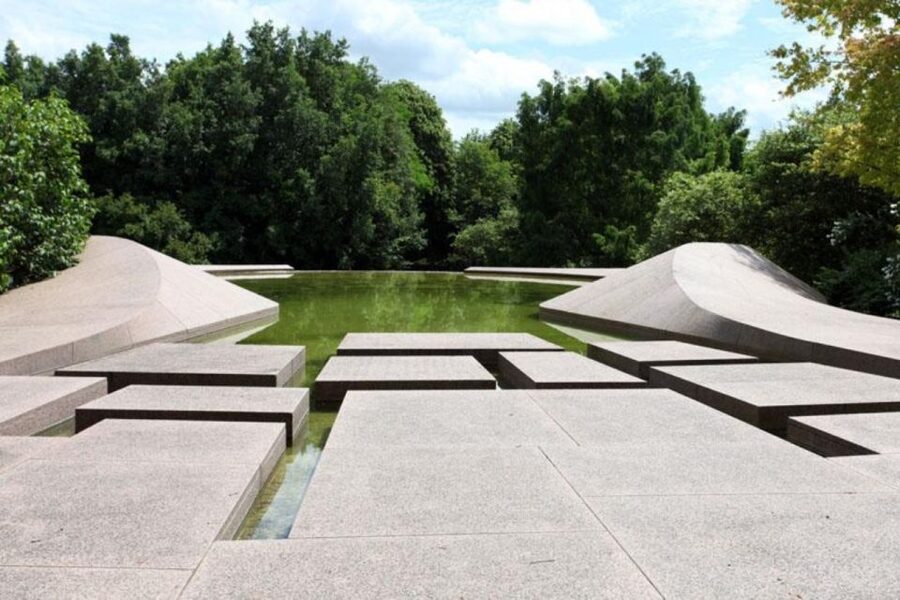
Outside the exhibition areas, three memorial gardens honor the three Allied forces that helped liberate France. They give you a chance to step away from the indoor displays and reflect on what you have seen.
These gardens are not an extra attraction to rush through on the way out. They help change the pace of the visit. After several hours of dates, photographs, films, and testimony, a quiet outdoor space can make the material easier to process.
You can also take a break on the museum lawn. A picnic is allowed there, which gives you a simple way to control your spending. The museum has two on-site restaurants if you prefer to eat there, but the most useful option depends on your schedule and budget.
I would save the gardens for the end if you are visiting in one continuous session. They work well as a final pause before returning to central Caen or continuing to another Normandy site.
Using the optional audio guide app
The official audio guide is a multilingual web app that you download to your phone. It is not included automatically with every entry ticket, so select both the admission and audio guide options when booking.
This detail matters because the audio app cannot be purchased on its own. One booking experience shows how easy it is to think the guide has been included when it has not, so check the selected options before you pay.
The app may be useful if you prefer guided context but do not want to join a scheduled group. It can help you navigate a large museum and choose how much background you want at each section. It also lets you set your own pace, which is useful in the Holocaust galleries and other areas where you may want longer pauses.
This is still an entry ticket, not a guided tour. If you want a live guide, book a separate guided option. Pascal is named as a highly regarded guide in connection with a guided visit, but his services are not part of this museum admission.
How long to allow and how to get there
The ticket is valid for one day, and I would allow at least three to four hours for a worthwhile visit. If you want to read closely, watch the films, visit the Holocaust section, spend time in the gardens, and eat on site, plan most of the day.
One visit of nearly four hours was still not enough to see everything in detail. That is a useful warning. The museum rewards patience, but it is not an efficient stop if you are trying to fit several major Normandy attractions into a single afternoon.
By car, take the northbound ring road and use exit 7 when approaching from Paris on the A13 or Rennes on the A84. By bus, take route 2 from Caen city center.
The museum is wheelchair accessible. Assistance dogs are allowed, but other pets are not. Last entry is 90 minutes before closing, and the museum can alter hours or partially close if visitor numbers create safety problems.
Check opening dates carefully if you are visiting late in the year or in January. The museum closes on Wednesdays in November and December, on December 25 and January 1, and for three weeks in January.
Who will get the most from this ticket?
This is a strong choice for you if you want a serious account of World War II that includes causes, consequences, and civilian experience. It suits history-minded adults, families with older children, and anyone visiting the D-Day beaches who wants a clear overview first.
It is also a good rainy-day plan in Normandy, especially because the museum can fill much of a day. The films and audio material give the exhibitions variety, while the gardens and restaurants let you take breaks without leaving the site.
You may not enjoy it as much if you want a quick, purely military attraction. The museum spends a lot of time on politics, occupation, the Holocaust, postwar division, and peace. Those subjects are central to its purpose, but they require attention.
Should you book the Caen Memorial Museum?
Book it if you want context, not just battlefield sights. At about $24, the ticket offers good value when you give it several hours and use the permanent exhibitions, films, gardens, and on-site facilities.
Choose the audio app if you want help finding your way through a large museum, but make sure you select it with the entry ticket. Skip the app if you prefer to read independently or plan only a brief stop.
My practical advice is simple: visit before touring the Normandy beaches if your schedule allows. You will arrive at the landing sites with a better grasp of what led to D-Day, what happened during the 100 days that followed, and why the liberation carried such a heavy human cost.
FAQ
How long is the Caen Memorial Museum ticket valid?
The ticket is valid for one day. You should allow several hours, and a full day is suitable if you want to see the exhibitions in detail, watch the films, visit the gardens, and take a meal break.
Is the audio guide included with the entrance ticket?
No. The multilingual audio guide is an optional web app and must be selected with the entrance ticket. It cannot be purchased separately.
Is the Caen Memorial Museum a guided tour?
No. The standard activity provides entry to the permanent exhibitions. A guided tour is not included, although separate guided experiences may be available.
How do I reach the museum by car or bus?
By car, use the northbound ring road and exit 7 when coming from Paris on the A13 or Rennes on the A84. By bus, take route 2 from Caen city center.
Is the museum wheelchair accessible?
Yes, the museum is wheelchair accessible. Assistance dogs are allowed, but other pets are not.
When is the museum closed?
The museum is closed on Wednesdays in November and December, December 25, January 1, and for three weeks in January. Last entry is 90 minutes before closing, so check current opening details before setting out.
New audio tours around France
- Lille: City Walk with Audio Guide in 7 Languages on your Phone★ 4.0 · 2 reviews
- Metz Scavenger Hunt and Highlights Self Guided Audio Tour★ 4.5 · 3 reviews
- Dijon with an Archaeologist: A Self-Guided Audio Tour★ 4.5 · 26 reviews
- Carcassonne Walking Tour with Audioguide on Your Smartphone★ 4.5 · 15 reviews
- D-Day private tour Omaha + Utah Beach from Caen with audio guide★ 5.0 · 11 reviews
- D-Day private tour Omaha Beach from Caen with audio guide.★ 4.0 · 5 reviews
- Beaune: A Self-Guided Audio Tour of Burgundy’s Wine Capital★ 5.0 · 2 reviews
- Orange Roman Theatre & Museum E-Ticket with Audio Guide★ 3.5 · 6 reviews
France Audio Tours, compared.
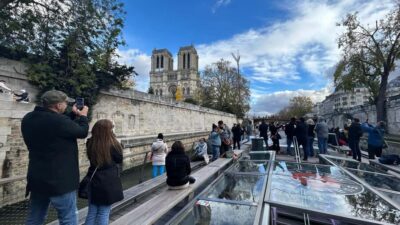
Paris: Illuminations River Cruise with Audio Commentary
Read our review →
Paris: Louvre Museum Hosted Entry and Mona Lisa Audioguide
Read our review →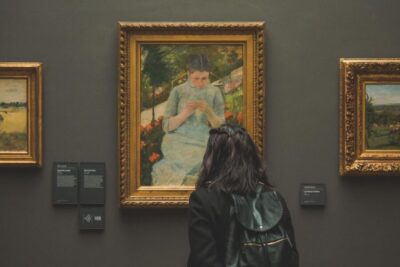
Paris: Orsay Museum Entry Ticket and Digital Audio Guide App
Read our review →
From Paris: Giverny Day Trip with Audio Guide or Live Guide
Read our review →
Paris: Eiffel Tower Access w/ Audioguide and Optional Cruise
Read our review →
Giverny and Monet’s House Half Day Trip from Paris Guide or Audio
Read our review →
Paris: Catacombs Entry & Seine River Cruise with Audio Guide
Read our review →
Paris: Tootbus Panoramic by Night Bus Tour with Audioguide
Read our review →Browse the lists this tour appears in