
Review · CANADA
Smartphone Audio Driving Tour between Kamloops & Revelstoke
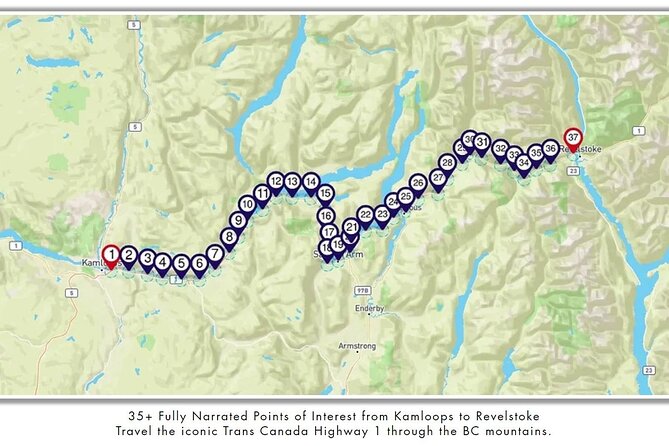
The best thing about this drive is that it turns a long stretch of British Columbia highway into a guided outing without putting you on someone else’s schedule. As you travel between Kamloops and Revelstoke, audio points explain places such as Shuswap Lake, Three Valley Gap, Mount Revelstoke, and the famous Last Spike.
I like the start-and-stop freedom. You can pause for food, photos, walks, or a full attraction visit, then continue when ready. I also like the price: $8.22 covers a whole vehicle or group of up to 15 people, which makes this a smart little add-on for a family road trip.
The main caution is the app. Some people have had trouble keeping the route connected, especially in rental cars, and the commentary can sound too child-focused for some adults. It is also English only, so check that before buying.
Key points to know before you go

- More than 32 audio points: Hear short stories about towns, parks, wildlife, mountain roads, local industries, and railway history.
- One booking per vehicle: Up to 15 people can share the tour, making the low price especially attractive for families and groups.
- Works in either direction: Begin in Kamloops or Revelstoke, with the same flexible format.
- No mobile signal or data required: Download or prepare the tour before setting off, then let it play as you drive.
- The Last Spike is a real stopping point: You can leave the highway and spend as much time there as you wish.
- English commentary only: The format includes quiz questions, puns, and family-friendly material.
Turning a highway transfer into part of the trip
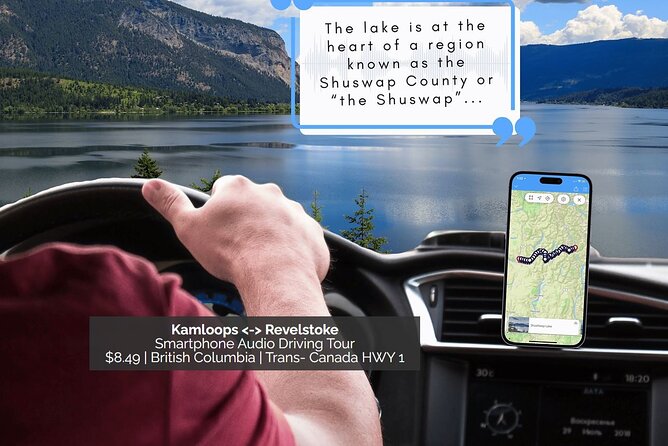
The Kamloops to Revelstoke road is not a quick city hop. It is a scenic route with lakes, river valleys, mountain passes, railway stories, small communities, and several places worth stopping for. The audio tour gives you context as those places pass your window.
You do not need to follow a guide, join a bus, or arrive at a meeting point. You use your own vehicle, place the phone where the driver can ignore it, and let the audio play through the car. That last point matters: the driver should not be operating the app while moving. Set it up before departure and let a passenger handle any adjustments.
The tour takes about two and a half hours as an audio program, but the road trip itself can take much longer once you add meals, viewpoints, parks, and attractions. Think of the listed duration as listening time, not a complete timetable for the drive.
You can take the route in either direction. That helps if your trip begins in Revelstoke, ends in Kamloops, or forms part of a larger British Columbia road trip. The flexible dates also mean you can keep the tour and use it at a suitable point during your plans.
More Driving Audio Tours in Canada
- Cabot Trail: a Smartphone Audio Driving Tour
★ 4.5 · 118 reviews - Icefields Parkway: a Smartphone Audio Driving Tour
★ 4.0 · 118 reviews - Smartphone Audio Driving Tour between Banff and Calgary
★ 4.0 · 25 reviews
How the audio format works in practice
The tour uses your location to trigger commentary as you pass points along the road. You hear explanations about what you are seeing instead of trying to match every lake, mountain, or town with a paper map.
The format is informal and family-friendly. It includes trivia and some playful puns, which can keep children interested during a long drive. If you prefer a serious historical lecture, the tone may feel light. A few sections may also feel only loosely connected to the exact view outside your window.
There is a practical setup issue. One person had difficulty understanding how to use the app in a rental car, and another experienced the route jumping back to the start after connection problems. That does not mean the tour will fail for you, but I would prepare carefully:
- Confirm the booking before leaving.
- Set up the phone while parked.
- Use a passenger to manage the device.
- Test the audio through the car before joining the highway.
- Keep the confirmation and any access instructions available.
- Do not depend on a live mobile signal during the drive.
The tour is advertised as using no signal or data once prepared. That is useful on a mountain route, where coverage can be uneven. Still, the app experience is the part that deserves the most attention before you start.
Kamloops, Chase, and the first lake stories
If you begin in Kamloops, the tour starts by putting the surrounding country into context. The route soon moves toward smaller communities and the Shuswap region, where the commentary shifts from city details to local settlement, recreation, and water.
Chase receives a short history lesson about its name and its main industries. This is the kind of information that is easy to miss when you are simply driving through. You may not need to stop in town, but the audio gives the place a story beyond a roadside sign.
The route also discusses Squilax and its general store, including the unusual history behind that community business. These small details are useful because they give you reasons to pay attention to places that might otherwise seem like brief highway stops.
Shuswap Lake is one of the stronger scenic subjects on this part of the route. The tour explains the area’s connection with water sports and points out that the surrounding farmland is among the most fertile in British Columbia. If you enjoy boating, swimming, or lakeside recreation, you may want to allow extra time here rather than treating the lake as something to view through glass.
A local celebration involving spirited swimmers also gets an explanation. The subject adds a bit of character to the route and shows the tour’s general approach: some points are broad historical notes, while others are odd local facts designed to keep the drive lively.
Wildlife, parks, and things you may pass

The BC Wildlife Park is included as a family-friendly point of interest. The audio tells you who donated the 106-acre zoo and explains the meaning behind its motto, Conservation through Education. You do not have to enter, and the commentary can play as you pass, but families may want to make this a proper stop.
That flexibility is important. Attraction admission is not included, and the tour does not control opening times. The supplied information warns that suggested attractions can be closed or inaccessible due to the season or other conditions. Check separately before building your schedule around any one site.
You also hear about wildlife along the route, including American dippers. These birds have an unusual way of catching food, and the commentary connects the subject to the park boundary as you drive. One person using the tour spotted an eagle, which points to a simple truth about this format: it may tell you what to watch for, but it cannot guarantee what you will see.
Other points cover protected areas and natural features. Mount Griffin Ecological Reserve, about 10 kilometres southeast of the relevant point, is discussed along with the reason it was created. Eagle River Provincial Park gets its name explained, including the story of the person connected with that name.
The audio also refers to a park opened in 2001 that protects a specific natural feature. The supplied details do not identify every park by name, so you should treat these sections as passing commentary rather than a full park guide. They add context, but they do not replace trail information, maps, or local visitor services.
More Smartphone Audio Tours in Canada
- Halifax Churches, Gardens & Graveyards: a Smartphone Audio Walking Tour
★ 4.5 · 25 reviews - Halifax Boardwalk & Seaport: a Smartphone Audio Walking Tour
★ 4.0 · 19 reviews - Explore Halifax with 3 Unique Smartphone Audio Walking Tours
★ 4.0 · 16 reviews - Smartphone Audio Driving Tour between Lake Louise and Calgary
★ 4.0 · 15 reviews
Salmon Arm, Larch Hills, and regional character

As the route continues, the audio explains the meaning of a city’s name and the other reason that city is well known. It also covers Larch Hills and an Olympic event held there since 1960.
These points show why a driving tour can be more useful than a standard attraction ticket. You are not only being sent to major sights. You are getting small pieces of regional identity while moving through the area. That can make a transfer day feel less like dead time.
The commentary includes Malakwa and the story behind its name, along with a brief explanation of Chinook Jargon and pidgin language. This is a more cultural and linguistic subject than the wildlife and lake sections, and it gives the drive some variety.
The route also discusses a feature that held a North American record as of 2020. The exact attraction is something you will hear in context, but you should not assume that every record or title remains current. Treat that kind of detail as a prompt to look more closely, not as a reason to plan your entire day around it.
Three Valley Gap and the approach to Revelstoke
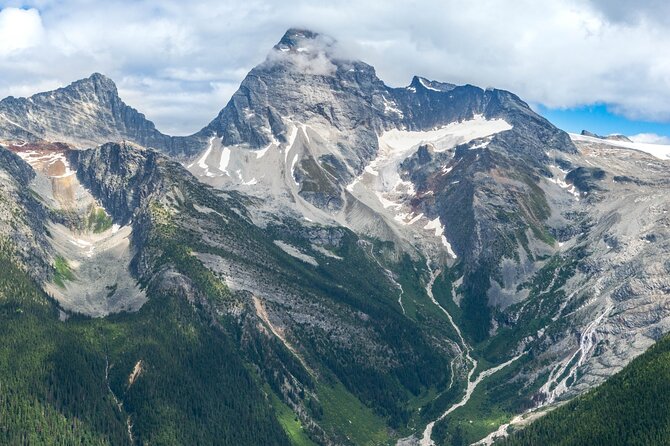
Three Valley Gap is one of the more memorable sections of the route. The audio points out that ghost hunters may find the area interesting, with the subject located right along the highway. That is a playful angle, but it gives the stop a distinct personality.
The tour also discusses the eastern boundary of the valley and estimates how many people may have lived there around 40,000 years ago. This broadens the story beyond recent settlement and railways. You get a sense that the valley has a much longer human past than its modern road and resort facilities suggest.
As you move toward Revelstoke, the audio turns to Mount Revelstoke National Park and the mountain road that reaches the top of Mount Revelstoke. This is useful planning information because the road is an optional side trip, not simply another view from the main highway.
Several other points are drive-by locations rather than formal stops. You can pass them without changing plans, or pull over if a safe access point and your schedule allow. The tour gives you permission to be flexible, but it does not provide attraction tickets or guarantee that each site is open.
Mount Begbie receives a short explanation of its volcanic past. It is the sort of detail that helps you read the mountains as more than dramatic scenery. You may not get a long geology lesson, but you will have a reason to look up and notice the rock around Revelstoke.
The Last Spike and the strongest historical stop
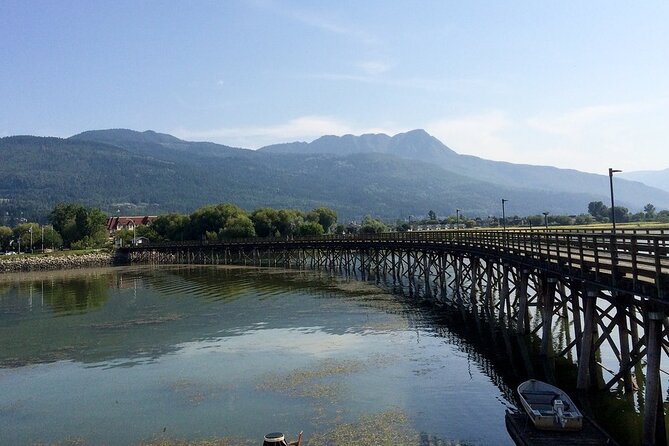
The Last Spike is the clearest destination-style stop on the route. You can stop there for as long as you like, which makes it different from many of the points that simply trigger audio as you pass.
The site recalls the completion of the Canadian Pacific Railway, a major event in the country’s transportation story. The tour gives you historical background while the physical site gives you something concrete to see. If you enjoy railway history, this is one of the places where I would build in extra time.
Do not confuse the tour’s audio duration with the time needed for the Last Spike, BC Wildlife Park, Mount Revelstoke, or any other attraction. The $8.22 price covers the commentary, not admission, parking charges, food, or transport. You are supplying the car and making all decisions about stops.
What the $8.22 price really buys you
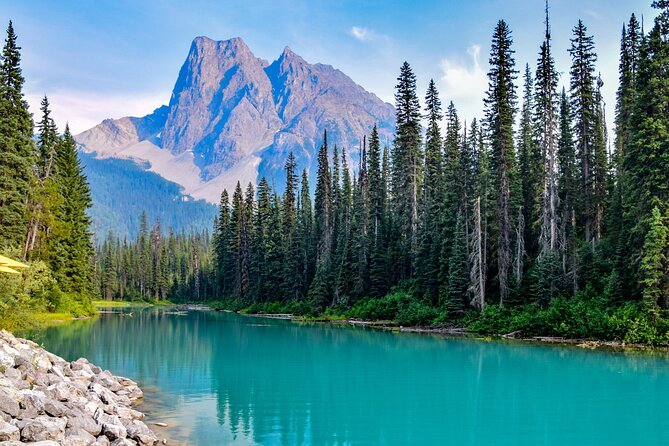
At $8.22 per group, the value is strongest when several people share one vehicle. A family of four is paying very little per person, and a larger private group of up to 15 can use one booking. That is far cheaper than a conventional guided excursion, though it also provides less personal interaction and no driver.
You are paying for structure and context. Without the tour, you might pass Chase, Squilax, Malakwa, Three Valley Gap, or the Last Spike with only a name and a quick view. With it, you get more than 32 audio points, local stories, quiz questions, and prompts about wildlife and history.
The tradeoff is polish. The overall rating is 3.6 from eight ratings, and the experience has clear variation in how well the app and tone work for different people. Some users found the audio connection worked perfectly and made the road trip fly by. Others found the route difficult to control or disliked the child-oriented style.
That makes the price feel fair, but not risk-free. I would buy it for a long drive where a few imperfect sections will not ruin the day. I would be more cautious if you want a refined, adult-focused history program or if you are uncomfortable troubleshooting an app.
Who should book this drive
This tour fits families, couples who like local facts, and anyone making the Kamloops to Revelstoke drive for the first time. It is also a good choice for a group sharing one rental car, provided one passenger can handle setup and playback.
It suits you if you enjoy choosing your own stops. You can skip an attraction, pause the audio, spend an hour at the Last Spike, or use the commentary only for the highway sections.
It is less suitable if you need another language, since the tour is available only in English. It may also frustrate you if you want every comment tied tightly to a visible landmark or if playful puns and quiz questions are not your style.
Free cancellation is available if you cancel at least 24 hours before the start time. Changes or cancellations inside that window are not accepted for a refund. Service animals are allowed, most people can participate, and the activity is private to your group.
Should you book the Kamloops to Revelstoke audio tour?
I would book it as a low-cost road-trip companion, not as a full substitute for planning the route. Its best features are the flexible timing, two-way format, no-data operation, and unusually low group price.
Prepare the phone before you leave, confirm the app works through the car, and let a passenger manage it. If you do that, the tour can turn a long transfer into a string of stories about lakes, towns, animals, mountains, language, railways, and the Last Spike.
Book it if you want extra context without surrendering control of your day. Skip it if you require multilingual audio, polished adult narration, or guaranteed app performance with no setup work.
FAQ
How long does the Kamloops to Revelstoke audio tour last?
The audio tour lasts approximately 2 hours and 30 minutes. Your full drive may take longer because you can stop anywhere and spend as much time as you like at attractions and viewpoints.
Can I begin the tour in Revelstoke instead of Kamloops?
Yes. The tour can be taken in either direction, so you can begin in Kamloops or Revelstoke.
How many people can use one booking?
One booking covers one group of up to 15 people. Only one tour booking is needed per vehicle.
Do I need mobile data or a signal during the tour?
No signal or data is required during the tour. You should prepare the tour before driving, since the phone or tablet and transportation are not provided.
Is the tour available in languages other than English?
No. The tour is offered in English only.
Are attraction tickets included?
No. Attraction tickets are not included, and you must use your own vehicle. Suggested attractions may also be closed or inaccessible because of the season or other conditions.
New audio tours around Canada
- Kelowna E-Bike Bee Tour, Tastings, Organic Lunch & Audio Guide★ 5.0 · 9 reviews
- Jasper National Park Self-Guided Driving Audio Tour★ 4.0 · 4 reviews
- Smartphone Audio Driving Tour between Kamloops and Vancouver★ 3.5 · 5 reviews
- Smartphone Audio Driving Tour between Huntsville & Toronto★ 4.5 · 4 reviews
- Halifax Explosion Smartphone Audio Walking Tour★ 4.0 · 3 reviews
- Edmonton Self Guided Audio Experience★ 3.0 · 2 reviews
- Smartphone Audio Driving Tour between Collingwood and Toronto★ 4.5 · 3 reviews
- A 7th-Gen Local’s View of Downtown Charlottetown: An Audio Tour★ 4.5 · 27 reviews
Canada Audio Tours, compared.
A 7th-Gen Local’s View of Downtown Charlottetown: An Audio Tour
Read our review →

Halifax Churches, Gardens & Graveyards: a Smartphone Audio Walking Tour
Read our review →
Western Canada Self-Driving Audio Guide English and German
Read our review →Browse the lists this tour appears in