
Review · INDIA
Old Delhi – Walking Tour with wireless audio head sets for live commentary
Old Delhi is best understood at walking pace, when a mosque, market, temple, spice stall, and old haveli appear within a few minutes of one another. This tour uses wireless headsets so you can keep listening while moving through noisy lanes, instead of losing the guide every time a rickshaw rattles past. I like the food tastings and the small group limit of 15, which gives you room to ask questions. I also like that the route visits working parts of the city, not just polished monuments.
The main drawback is physical: three hours on foot through crowded streets can be tiring, and this is not recommended if you have difficulty walking. You also need conservative clothing for the religious sites, comfortable shoes, and a willingness to share the lanes with the full force of Old Delhi.
Key points to know before you book
- Wireless headsets matter most in Chandni Chowk, where traffic, shopkeepers, and street noise can make ordinary guiding hard to follow.
- Jama Masjid is the starting point, and the walk returns there rather than ending at a different neighborhood.
- The route mixes major sights with working markets, including a silver bazaar, wedding-shopping area, spice market, and Town Hall.
- Food tastings and snacks are included, along with bottled water.
- Guides such as Ritu and Saurav bring different strengths, with the experience shaped by questions and interests within the group.
- The three-hour walk suits active visitors, but it is not a good choice for anyone who needs frequent sitting or has trouble walking.
Why a walking tour makes sense in Old Delhi
Old Delhi can feel like several cities pressed into one. Jama Masjid gives you a grand religious starting point, but the real lesson comes as the route moves into lanes filled with trade, worship, food, and family businesses. You are not looking at the neighborhood from behind a vehicle window. You are close enough to notice the change in sounds, smells, shop signs, and building fronts.
That closeness is the reason I prefer this kind of introduction to Old Delhi. A guide can explain what you are seeing as it happens, and you can stop to ask why a lane is known for a particular trade or how a religious building fits into local life. The tour covers architecture, culture, and food, so it does not reduce the neighborhood to a single story.
The route is active and sensory. You may find yourself moving from a quiet religious courtyard into a market where the street narrows and the volume rises. That contrast is part of the experience, but it also means you should arrive ready for crowds, uneven walking conditions, and a brisk three-hour outing.
More Audio Walking Tours in the world:
- Sofia: City Monuments Guided Walking Tour with Audio Guide
★ 4.5 · 825 reviews - Florence: 2.5 hour Audio Guided Walking Tour led by Host
★ 4.6 · 293 reviews - Self Guided Classic Freedom Trail Location Aware (GPS) Walking Audio Tour
★ 4.5 · 258 reviews
Starting at Jama Masjid
The meeting point is Jama Masjid in Old Delhi, Delhi 110006. It is one of the area’s major landmarks and is described as the largest mosque in India, making it a fitting place to begin a walk through the old city.
Your guide sets the scene here before leading the group onward. This opening gives you a clear reference point, especially if Old Delhi is new to you. Instead of beginning with a generic city introduction, you start beside a building tied directly to the area’s religious and architectural identity.
Dress conservatively because the walk includes religious places. The tour information does not specify a separate clothing requirement for men and women, so the safest approach is modest clothing that covers shoulders and knees. Comfortable shoes matter more than fashion on this route. Three hours is not an extreme amount of time, but continuous walking through busy lanes can make poor footwear a serious mistake.
The tour ends back at the Jama Masjid meeting point. That is useful if you need to return to a known location, though it means you should plan any later activity around Old Delhi rather than assume the walk will finish near your hotel.
Listening clearly with the wireless headset
The headset is an unusual feature for a walking tour, but it solves a real problem. In a quiet square, you could probably hear a guide without one. Inside Chandni Chowk and the surrounding market lanes, that becomes much harder.
You receive a headset so the guide can speak while the group keeps moving. You do not need to gather tightly around one person every time an explanation begins. That gives you a little more freedom to look at a shopfront, follow the group safely, or avoid blocking a narrow passage.
The audio equipment also helps when the guide needs to explain something while the street remains active. You can listen to commentary about a mosque, temple, market, or building without waiting for the noise to stop. It does not make Old Delhi quiet, of course. It simply keeps the guide’s voice from disappearing into the noise.
I would treat the headset as a practical tool, not a high-tech attraction on its own. Its value depends on the guide using it well and the equipment working properly. The supplied experience includes headsets and live commentary, but does not give technical details about the headset model or whether an individual replacement is available.
From religious spaces to daily life
The route includes Gurudwara Sis Ganj, a Sikh place of worship with a live kitchen. This is one of the more meaningful stops because it connects religious practice with service and food preparation. A live kitchen is not merely a sight to photograph. It gives the guide a way to explain how a place of worship functions as part of the wider community.
Expect respectful behavior at religious sites. Keep your clothing conservative, follow the guide’s instructions, and remember that these are active places of worship rather than museum displays. The tour information confirms the visit, but it does not list exact rules about head coverings, shoe storage, or photography, so ask your guide when you arrive.
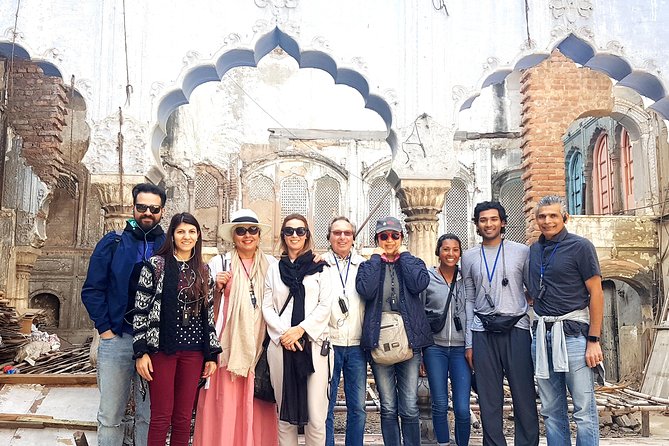
The route also includes a haveli. In Old Delhi, a haveli generally points to the area’s traditional mansion-style architecture, with an emphasis on courtyards and inward-facing living spaces. The exact building or interior access is not specified, so you should not book this expecting a guaranteed private-house visit. The value is in seeing how the old residential fabric fits beside the markets and religious buildings.
This mixture is stronger than a route that only checks off monuments. You see worship, trade, food preparation, and older domestic architecture in the same short walk. The guide’s explanations are important here because many details are easy to miss when you are simply passing through.
More audio tours around the world:
- Barcelona: Sagrada Familia Entry Ticket with Audio Guide
★ 4.6 · 105,312 reviews - Rome: Pantheon Fast-Track Ticket and Official Audioguide
★ 4.5 · 27,353 reviews - Barcelona: Casa Batlló Entry with Self-Audioguide Tour
★ 4.7 · 25,359 reviews - Rome: Colosseum & Forum with Audio Guide App -Optional Arena
★ 4.2 · 24,770 reviews
Chandni Chowk, wedding goods, and silver shops
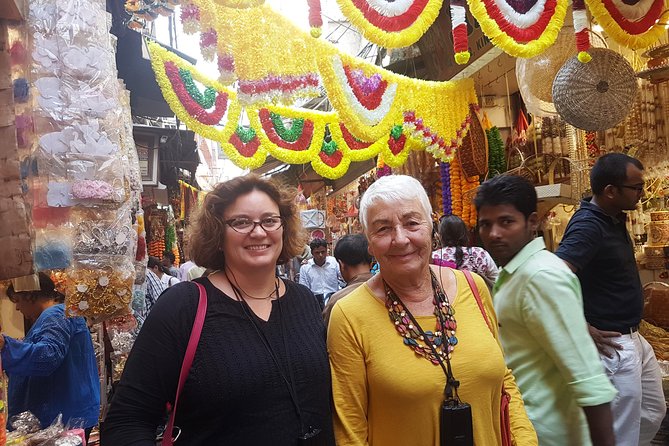
The Old Delhi market area is where the headset should become most useful. Chandni Chowk is included in the walk, and the route passes through a wedding bazaar and a silver bazaar. These stops show how specialized Old Delhi’s commerce can be.
A wedding bazaar offers a look at the city’s elaborate wedding economy, while the silver market points to another traditional trade. The tour does not promise shopping time or purchases, so think of these sections as guided observation rather than a shopping expedition. If you see something you want to buy, ask the guide how much time is available before stopping to negotiate.
Market walks require attention. Keep your belongings secure, stay aware of the group, and do not stop in the middle of a narrow lane for photographs. The group size can reach 15, which is still manageable, but the streets themselves may make the group feel spread out. This is exactly where the wireless system helps you follow the explanation without standing shoulder to shoulder.
Town Hall is another listed stop. It gives the route a civic and architectural point of reference between religious sites and commercial lanes. The supplied details do not promise entry inside, so expect an exterior explanation or a passing visit unless your guide says otherwise.
The spice market and food tastings
The spice market adds smell and color to the walk, but its real value is the chance to connect food with commerce. You are not simply being shown a pile of spices. Your guide can place the market within Old Delhi’s working trade network and help you understand why food is such a central part of the neighborhood.
Food tasting is included, along with snacks and bottled water. The exact dishes, number of tastings, and vendors are not specified, so you should not assume a full meal or a set tasting menu. Consider it a flavorful sample of local street food, not lunch replacement.
This is also the part of the tour where personal preferences matter. If you have allergies, dietary restrictions, or concerns about unfamiliar food, tell the guide before sampling. The supplied information does not state that special diets can be accommodated, so you should ask rather than assume.
I like that the food is built into the walk instead of added as a separate restaurant stop. A small taste in the market keeps the focus on the neighborhood itself. It also gives you a chance to ask about ingredients and local eating habits while you are standing in the place where the food culture is visible.
What the guides add
The quality of this experience depends heavily on the person leading it. Guides named in the supplied material include Ritu and Saurav. Ritu is described as flexible and patient with questions, while Saurav is noted for explaining the surroundings consistently as the group moved between religious sites, streets, and markets.
You should not assume a specific guide unless the booking confirms one. Still, these details suggest the experience is designed around explanation and conversation rather than a memorized march from stop to stop. That matters in Old Delhi, where your questions may be more useful than a long prepared speech.
A good guide can also adjust the pace and emphasis. If you are more interested in architecture, food, religion, or shopping districts, say so early. The tour is only about three hours, so it cannot cover every corner of Old Delhi. Clear questions help you get more from the time available.
The small group limit of 15 supports this style. It is not a private tour, but it is small enough for the guide to hear questions and keep an eye on the group. The experience has also been arranged privately for some bookings, but the stated maximum is 15, so confirm the format if having a private walk is important to you.
Is $56.67 a fair price?
At $56.67 per person, this is not the cheapest way to walk through Old Delhi. The price includes a local guide, live commentary through headsets, bottled water, snacks, and food tastings. It does not include hotel pickup or drop-off.
The value comes from the structure. You are paying for a guide who can explain the city as you move, audio equipment that helps in noisy markets, and included food rather than arranging each part yourself. If you are already comfortable navigating Old Delhi and prefer wandering alone, the price may feel high. If you want context and a clear route without spending hours planning, it is easier to justify.
Group discounts are available, though the specific discount is not provided. The experience is sold with a mobile ticket, and confirmation is sent within 48 hours of booking when space is available. Since the activity is non-refundable and cannot be changed after booking, check your schedule carefully before paying.
Who should take this walk?
I would recommend it to a first-time visitor who wants an organized introduction to Old Delhi without being sealed inside a vehicle. It also suits anyone who learns best by asking questions and tasting food along the way.
It is a good match for people interested in more than monuments. The combination of Jama Masjid, Gurudwara Sis Ganj, a haveli, markets, Town Hall, and the spice district gives you several ways into the neighborhood.
I would be cautious about booking it for young children or anyone who tires easily, unless they are comfortable walking for three hours in crowded streets. The tour is not recommended for people with difficulty walking. It is near public transportation, but hotel transfers are not included, so you must make your own way to Jama Masjid.
Should you book the Old Delhi walking tour?
Book this tour if you want guided context, local food, and close contact with Old Delhi’s working streets. The wireless headsets are especially useful once the route reaches the market lanes, and the small group limit gives the guide a fair chance to answer questions.
Skip it if you want a relaxed, private outing with little walking, guaranteed shopping time, or a full meal. The route is active, the food details are not fixed, and the non-refundable policy leaves little room for a last-minute change.
For most able-bodied visitors who want a strong first look at Old Delhi, the mix is worthwhile. Arrive at Jama Masjid in modest clothing, wear proper shoes, keep your schedule clear for the full three hours, and let the guide help you make sense of the noise.
FAQ
Where does the tour start and finish?
The tour starts at Jama Masjid in Old Delhi, Delhi 110006, India. It ends back at the same meeting point.
How long does the Old Delhi walking tour last?
The tour lasts approximately three hours.
What places are included on the route?
The route includes Jama Masjid, Gurudwara Sis Ganj with its live kitchen, a haveli, the wedding bazaar, silver bazaar, Town Hall, and the spice market.
Are food and drinks included?
Yes. Food tastings, snacks, and bottled water are included. The exact dishes and number of tastings are not specified.
Is the tour suitable for someone who has difficulty walking?
No. The experience is not recommended for people with a difficulty of walking. Comfortable shoes are advised.
How large is the group?
The activity can have a maximum of 15 travelers. Group discounts are available, and the tour includes wireless headsets for live commentary.
New audio tours around the world
- London Panoramic Open Top Bus Tour with Audio Guide★ 4.0 · 209 reviews
- London: British Museum Audio Guide & Small Group Entry★ 3.5 · 81 reviews
- London: National Gallery Audio Tour (No Entry Ticket)★ 3.5 · 11 reviews
- London’s Alternative History: A Self-Guided Audio Tour★ 5.0 · 4 reviews
- London: British Museum’s English Audio Tour with Free Reservation★ 3.0 · 15 reviews
- London: Churchill War Rooms Ticket & Political London Audio Tour★ 4.0 · 83 reviews
- London: British Museum Audio Tour with Free Guaranteed Entry★ 3.0 · 30 reviews
- Houses of Parliament Ticket & Political London Audio Guide★ 4.0 · 13 reviews
India Audio Tours, compared.

Audio Guided Tour Of Ellora Buddhist Caves, Aurangabad on HopOn India App
Read our review →
Audio Guided Walking Tour of Ajanta Caves, Aurangabad on HopOn India App
Read our review →Browse the lists this tour appears in