
Review · ITALY
Cosenza: Bilotti Open-Air Museum Audio Guide
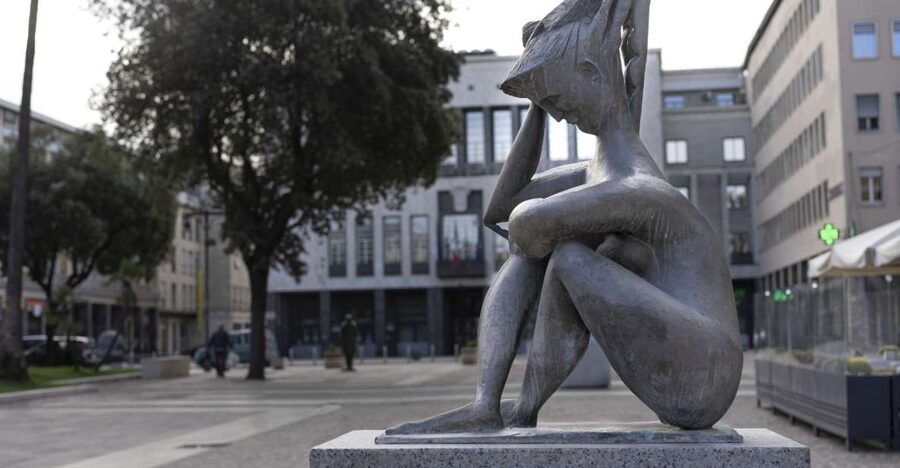
Cosenza’s Bilotti Open-Air Museum turns the city center into a free public art walk, with 29 sculptures placed along Corso Mazzini. You can examine works by Giorgio de Chirico, Mimmo Rotella, Sasha Sosno, Amedeo Modigliani, Salvador Dalí, Giacomo Manzù, Pietro Consagra, and other major artists without entering a traditional museum.
I like the freedom to start at any point on the map, and I like the price: $2.35 buys an audio and text guide for a roughly two-hour visit. The main caution is the app setup. Some people have had trouble receiving or following the guide, so download the app and request activation before you begin walking.
Key points to know before you go
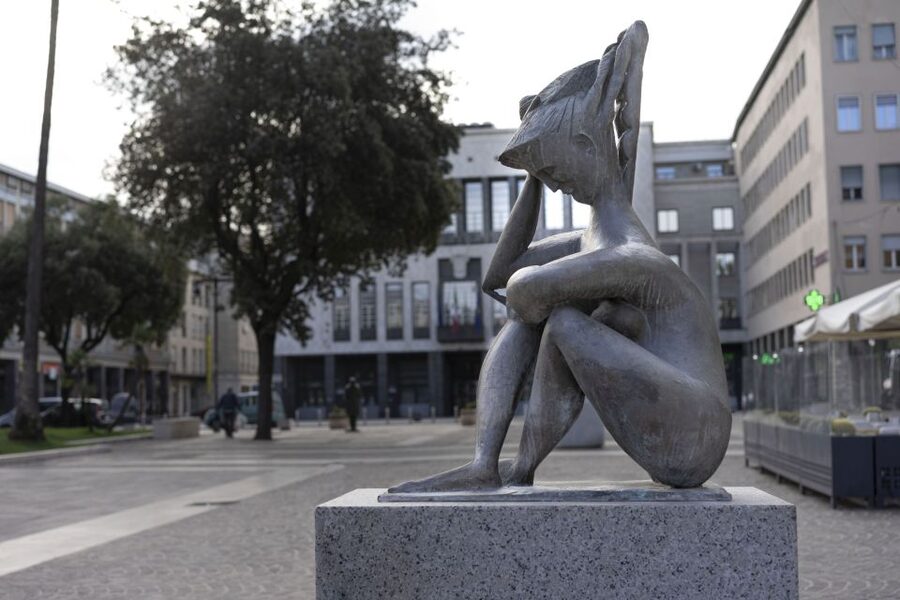
- 29 artworks line Corso Mazzini, one of Cosenza’s main central streets.
- Start anywhere on the route, rather than following a fixed meeting point or group schedule.
- Works include names such as de Chirico, Rotella, Sosno, Modigliani, Dalí, Manzù, and Consagra.
- Audio and written descriptions come in English and Italian.
- The $2.35 price is excellent value if the app works properly on your phone.
- Allow about two hours, and arrange activation before arriving at the first sculpture.
Cosenza’s open-air gallery on Corso Mazzini
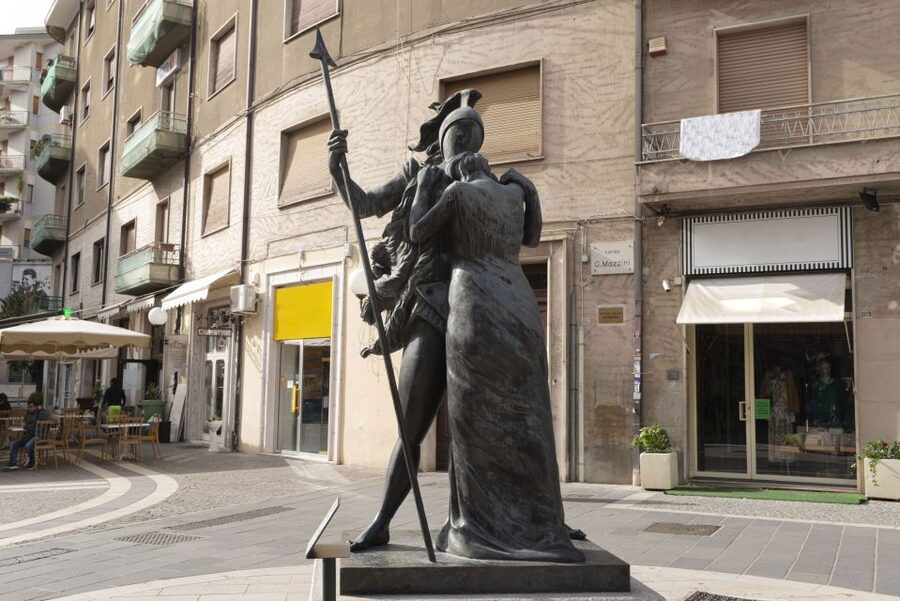
The Bilotti Museum, also called the MAB, is not a closed building with ticket barriers and a single entrance. It is a public art collection spread along Corso Mazzini in central Cosenza. You walk through the city, finding sculptures placed along the street and using the guide to add names, dates, and background to what you see.
That setting changes the feel of the visit. You are not stepping away from Cosenza to look at art in silence. You are seeing art as part of daily city life, with the main street providing the route between pieces. The collection brings modern and contemporary sculpture into an ordinary urban setting, which makes the experience easy to add to a day of shopping, errands, sightseeing, or business appointments.
The collection includes 29 works, so this is more than a quick glance at two or three statues. You can make a proper art walk of it, but the route does not require a full day. Two hours gives you time to locate the works, listen to the descriptions, and pause with the pieces that catch your eye.
More Museum Audio Tours in Italy
- Florence: Uffizi Priority Ticket & Masterpieces Audio App
★ 4.2 · 6,402 reviews - Venice: St. Mark Basilica Ticket, Audioguide+History Gallery
★ 3.9 · 4,780 reviews - Rome: Borghese Gallery Skip-the-Line Ticket & Audioguide
★ 4.3 · 4,318 reviews
What the named artists add to the walk
The list of artists gives you a good sense of the collection’s range. Giorgio de Chirico is associated with dreamlike, architectural scenes and a distinctive view of space. Mimmo Rotella is known for décollage, a technique involving torn advertising posters and layered urban imagery. Sasha Sosno’s work often plays with absence and partial form.
The collection also includes artists such as Amedeo Modigliani, Salvador Dalí, Giacomo Manzù, and Pietro Consagra. These are not obscure names added simply to fill a public street. Their presence gives the walk real art interest, even if you do not normally plan museum visits around sculpture.
I would not expect the audio guide to turn you into an art specialist. Its value is more practical. It gives you a reason to stop at each piece and helps explain why a sculpture belongs in the collection. Without that background, an outdoor artwork can become something you pass in seconds. With a name and a short explanation, you are more likely to notice its shape, material, subject, or connection to the artist.
The works were donated by Carlo Bilotti to the Municipality of Cosenza. That detail matters because it explains why this public collection exists in such an accessible place. You are not paying an additional museum admission to see the sculptures. The small charge is for the digital guide, not entry to the street gallery itself.
How the self-guided route works
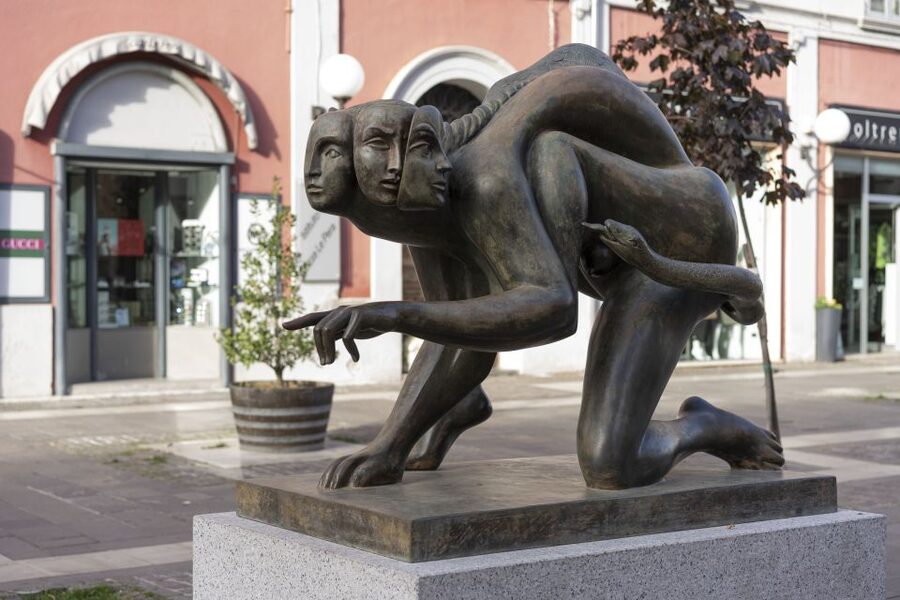
The route is designed to be flexible. You receive geolocated points of interest, so the app can show where the artworks are positioned. You do not need to join a group at a fixed hour, and you can begin from any point on the map.
That flexibility is useful if you are already in central Cosenza. You can begin with the nearest sculpture rather than crossing the city to reach a formal start point. It also works well for people with limited free time. If you have a gap between appointments, you can walk part of Corso Mazzini and continue at your own pace.
The guide is not presented as a live tour with a person leading you. It is an app-based experience, which means you control the speed. Pause when you want to look closely, skip ahead if a piece does not hold your attention, or revisit a description later.
This format also means you must pay attention to the map. One poor experience came from the guide jumping to the end because the app apparently believed the person was already there. The route was then found manually, but the audio information about the artworks was not usable. That is a serious weakness for an experience whose main purpose is interpretation.
Before setting out, make sure the It Guides app is installed from Google Play or the App Store. Open the hamburger menu at the top left of the screen and find the ID code beginning with ITG. You then send that code by WhatsApp or internal message to the contact shown on your voucher. The provider unlocks the guide, which should then appear under My Guides.
Do not leave this process until you are standing beside the first sculpture. The guide has received both excellent and very poor feedback, and the difference appears to be connected to delivery or app operation. Activating it in advance gives you time to correct a problem while you still have internet access and patience.
What you hear and read at the 29 stops
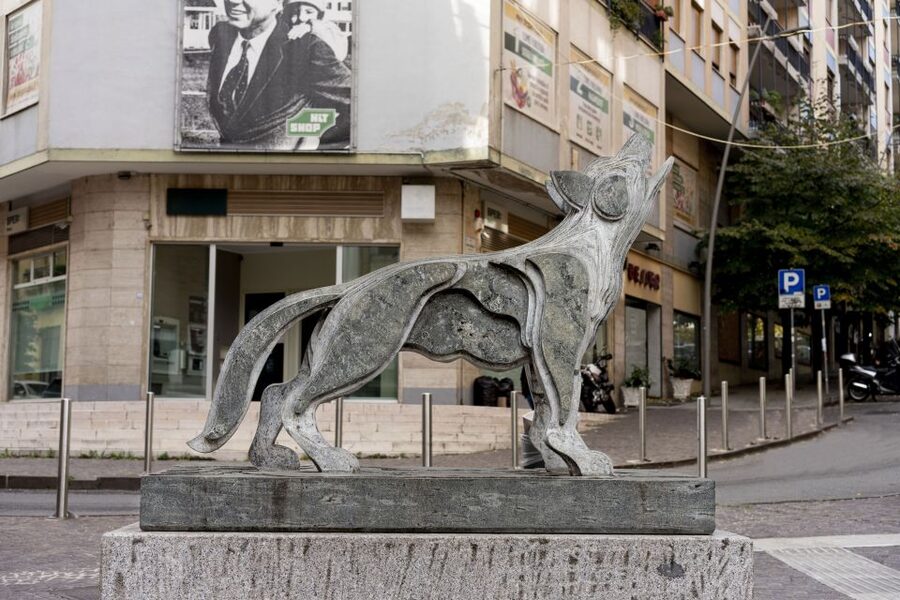
Each point includes an audio description in English and Italian, along with written text in both languages. That is a useful combination. You can listen while walking, then read the text if the street is noisy or if you want to check a name and detail.
English access makes the experience practical for international visitors, while Italian text and audio suit local users and Italian-speaking visitors. If you are visiting Cosenza without an art background, the explanations should help you place each sculpture within the broader collection.
The written option is also important for people who do not enjoy audio tours. Some visitors prefer to look at the work without wearing headphones. Others want to move at a faster pace than the recording. Having both formats lets you use the guide as a reference instead of treating it like a fixed performance.
I would bring earphones if you plan to listen in a busy part of the street. The information provided does not specify whether earphones are included, so assume you need your own. Keep the volume low enough to stay aware of people and traffic around you.
Because no exact order of the 29 works is provided, you should think of the experience as a collection of linked stops rather than a tightly scripted itinerary. The app’s map is the key tool. If you want a smooth visit, check the points before walking and decide whether you prefer to follow them in order or simply visit the nearest sculpture first.
Same sights, a different narrator:
- Rome: Pantheon Fast-Track Ticket and Official Audioguide
★ 4.5 · 27,353 reviews - Rome: Colosseum & Forum with Audio Guide App -Optional Arena
★ 4.2 · 24,770 reviews - Florence: Timed Entry to Michelangelo’s David + Audio App
★ 4.6 · 19,496 reviews - Rome: City Sightseeing Hop-on Hop-off Bus with Audioguide
★ 4.0 · 16,045 reviews
Why the street setting works so well
The best feature here is the contrast between formal art and everyday Cosenza. You can look at a work by a famous artist, then continue down the city’s main street instead of spending the whole visit inside a controlled gallery. That makes the art feel connected to local life rather than separated from it.
Corso Mazzini is described as one of the city’s most beautiful streets, and it gives the collection a natural walking route. The street also makes the experience easy to combine with other time in town. You do not need to build an entire day around the museum.
The public setting has a trade-off. Outdoor sculpture is exposed to the normal distractions of a city. People move around you, the street can be noisy, and your attention may shift from the artwork to the map or traffic. If you need quiet rooms, careful lighting, and long labels beside every object, this will feel less controlled than a conventional museum.
For me, that is part of the appeal, but it will not suit every art lover. The Bilotti Museum works best when you accept that the city is part of the experience.
Is two hours the right amount of time?
The stated duration is two hours. That should be enough for a full walk through the 29 points at a steady pace, with time to listen to the descriptions and stop for photographs or closer viewing.
Your actual pace will depend on how carefully you study each sculpture and how quickly the app directs you between locations. Since you can start anywhere, the visit does not have the feel of a guide rushing a group from one stop to another. You can spend longer with a work by de Chirico or Rotella and give less time to pieces that interest you less.
The two-hour estimate also makes this a reasonable choice for a short stay. You can use it as a focused introduction to Cosenza’s public art rather than a major scheduled excursion. Business visitors with free time may find that especially useful. You get culture and local context without committing to a full-day activity.
If your time is tight, you might still walk past selected sculptures without completing all 29 points. The audio guide is more valuable when you have enough time to follow the map properly, though, so I would not book it for a rushed 30-minute stop.
The $2.35 price and what you actually receive
At $2.35 per person, this is one of the least expensive paid cultural activities you can add to a visit. The street collection itself is free to see, so the fee pays for the digital interpretation, geolocation, and bilingual audio and text.
That is good value when the guide is activated correctly. A successful visit gives you background on 29 artworks for less than the cost of many short city tours. One especially positive assessment described the audio guide as well made and the customer service as effective, while another found it an excellent aid for visiting independently.
The low price should not lead you to expect a personal guide, museum entrance, or elaborate production. You are buying access to an app-based guide. Your phone, internet connection, and correct activation are part of the experience.
The overall rating of 3.4 from nine reviews reflects that mixed picture. Several people found the guide excellent, affordable, and helpful. Two recent one-star experiences describe the guide as not delivered properly or unusable in practice. I would treat the price as a small gamble on reliable app delivery, not as a guarantee of a polished tour.
Who should book the Bilotti audio guide?
I would recommend it to independent visitors who enjoy moving at their own pace and want more context than a casual walk provides. It is particularly suitable if you like modern art, want to see work by internationally recognized artists, or have a free afternoon in central Cosenza.
It also suits people who prefer written information to a live guide. The bilingual text means you can read each explanation, and you can start or stop whenever you like. The format is private rather than group-based, though the supplied information does not state a specific group limit.
This is less suitable if you dislike phone-based activities or find app navigation frustrating. It is also a poor choice if you need a guaranteed, human-led explanation at a precise time. The activation steps are not difficult, but they are not entirely automatic.
There is a contradiction in the practical information. The activity is marked wheelchair accessible, but it is also listed as not suitable for people with mobility impairments. Since the walk takes place along a city street and the information gives no details about curb cuts, surface conditions, or accessible routes between all 29 points, contact the provider before booking if mobility access is important to you.
The experience is also listed as not suitable for people with motion sickness. Since this is a walking audio guide rather than a vehicle excursion, the reason is not explained in the available information. If that warning applies to you, ask the provider for clarification before paying.
My booking advice
Book this if you want an inexpensive, flexible way to give Cosenza’s public art a proper look, and if you are willing to handle the app setup yourself. The collection includes enough major names and enough stops to make the walk worthwhile, while the $2.35 cost keeps the risk low.
Before you go, download It Guides, locate your ITG code, contact the provider using the details on your voucher, and confirm that the Bilotti guide appears under My Guides. If it does not appear, solve that problem before reaching Corso Mazzini.
I would skip it if you want a foolproof experience with no technical steps. The strongest praise centers on the useful, affordable guide and good support, but the poor experiences show that delivery can fail. With activation confirmed, this is a smart small purchase for an art-minded afternoon in Cosenza.
FAQ
Where does the Bilotti Open-Air Museum experience take place?
It takes place along Corso Mazzini in central Cosenza, Calabria.
How many artworks are included?
The guide covers 29 artworks in the open-air museum.
Which artists are represented?
The collection includes works by Giorgio de Chirico, Mimmo Rotella, Sasha Sosno, Amedeo Modigliani, Salvador Dalí, Giacomo Manzù, Pietro Consagra, and others.
How long does the audio guide last?
The stated duration is two hours.
Can I start the walk at any point?
Yes. You can begin from any point shown on the map and follow the open-air museum at your own pace.
Which languages are available?
Audio descriptions and written texts are available in English and Italian.
How do I receive the guide?
Download the It Guides app, find your ID code beginning with ITG in the hamburger menu, and send the code by WhatsApp or internal message to the contact shown on your voucher. The guide should then appear in the My Guides section after it is unlocked.
Is the activity wheelchair accessible?
The activity is marked wheelchair accessible, but the information also says it is not suitable for people with mobility impairments. If you require specific access arrangements, contact the provider before booking.
New audio tours around Italy
- Lecce Walking Tour with Audio and Written Guide by a Local★ 4.0 · 38 reviews
- Private Audio Guided Walking Tour in Lecce★ 4.0 · 7 reviews
- Private Audio Guided Walking Tour in Como★ 3.0 · 3 reviews
- Como Walking Tour with Audio and Written Guide by a Local★ 4.5 · 30 reviews
- Finance and Nobility: Explore medieval Genoa on a self-guided audio tour★ 4.5 · 7 reviews
- Genova Walking Tour with Audio and Written Guide by a Local★ 4.5 · 33 reviews
- Udine Walking Tour with Audio and Written Guide by a Local★ 4.0 · 2 reviews
- Florence: Uffizi Gallery Timed Entry Ticket with Audio★ 3.0 · 3 reviews
Italy Audio Tours, compared.
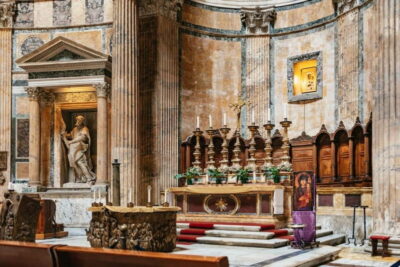
Rome: Pantheon Fast-Track Ticket and Official Audioguide
Read our review →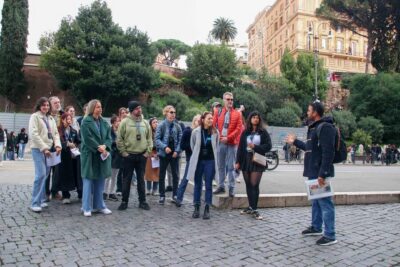
Rome: Colosseum & Forum with Audio Guide App -Optional Arena
Read our review →
Florence: Timed Entry to Michelangelo’s David + Audio App
Read our review →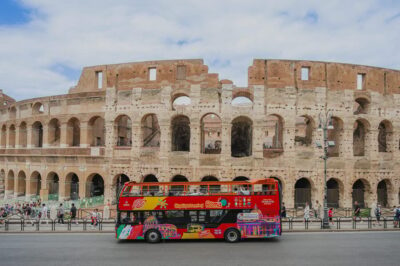
Rome: City Sightseeing Hop-on Hop-off Bus with Audioguide
Read our review →
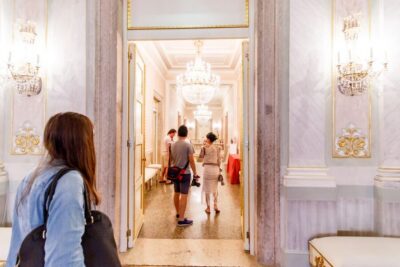
Venice: La Fenice Opera House Entry Ticket with Audio Guide
Read our review →
Rome: Colosseum, Forum, Palatine Hill Entry & Audioguide App
Read our review →
Rome: St. Peter’s Basilica & Dome Entry Ticket & Audio Tour
Read our review →Browse the lists this tour appears in