
Review · SPAIN
Lugo: Cathedral of Santa Maria Entry Ticket and Audio Guide
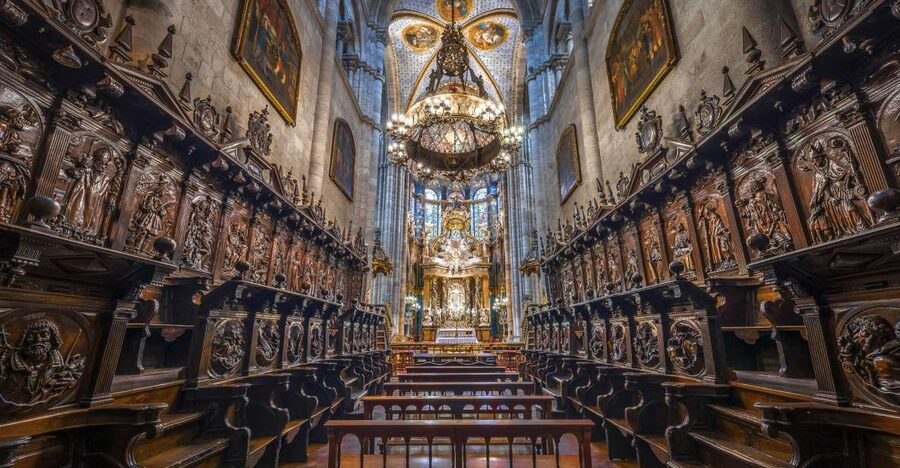
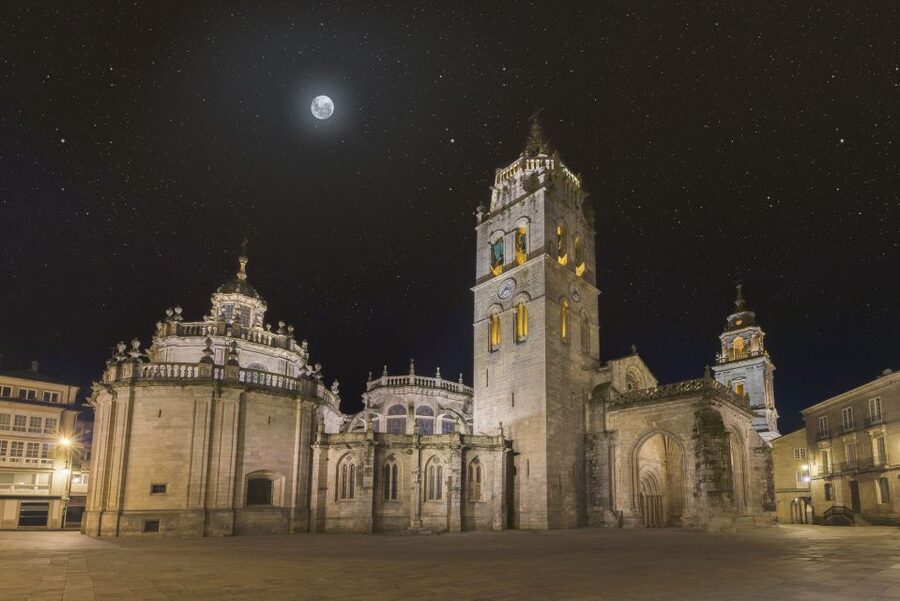
Lugo Cathedral is not a single-style monument. Its long interior records centuries of change, from a Romanesque north door to a Neoclassical west façade and a richly decorated Churrigueresque altar. The result feels like a walk through Spanish church architecture in one compact stop.
I like the low $9 price, especially because it includes the cloister and Cathedral Museum, not just the main church. I also like the freedom to move at your own speed with an audio guide in five languages. The main caution is timing: the opening can run late, and the audio numbering may not always match the objects smoothly.
- Romanesque Christ in Majesty: Look for the cathedral’s finest piece of stone carving.
- Long, narrow interior: Lugo Cathedral has an unusual floor plan among Hispanic cathedrals.
- Churrigueresque altar: See the ornate centerpiece framed by stained glass.
- Cloister and museum included: Your ticket covers more than the main nave.
- Five audio-guide languages: Choose English, Spanish, Portuguese, French, or Galician.
- One-day validity: Visit when it suits your schedule, but enter at least 45 minutes before the 7 PM closing time.
What You Are Really Buying for $9
This is a self-guided cathedral visit, not a guided walking tour with a person leading a group. For $9, you receive entry to Lugo Cathedral, access to the cloister, admission to the Cathedral Museum, and an audio guide.
That package gives the visit more weight than a quick look inside the nave. You can see the building, then use the museum and cloister to understand the art and religious setting around it. If you are already walking Lugo’s historic center, this is an easy cultural stop to add without committing half a day.
The ticket is valid for one day, and you choose your starting time from the available schedule. That flexibility suits a city visit with changing plans. Still, I would not leave it until the final hour. The cathedral closes at 7 PM, and last entry is 45 minutes earlier.
The value depends on how much of the building you explore. If you only glance at the main altar and leave, $9 may feel high for a short visit. If you listen to the guide, see the cloister, and spend time in the museum, the price becomes easier to justify.
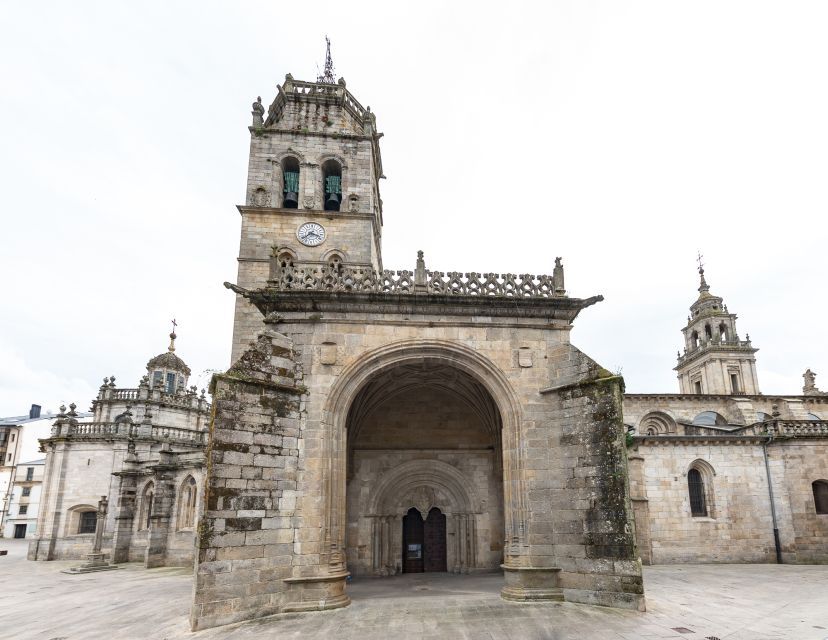
Entering Through Lugo’s Neoclassical Façade
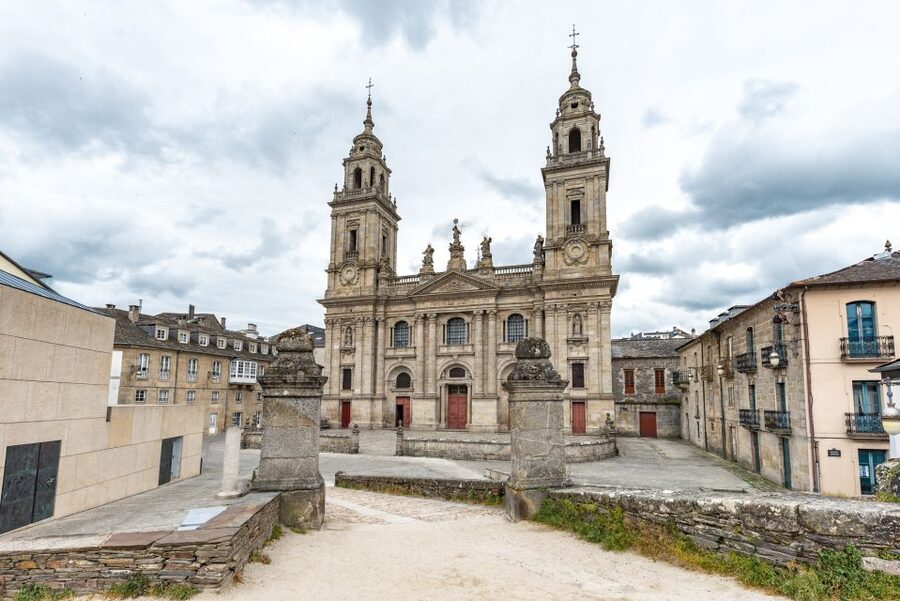
You enter through the cathedral’s Neoclassical façade, where the ticket office and shop are located. All ticket collection takes place inside at that entrance, so do not expect to pick up your ticket at a separate street kiosk.
The façade gives you your first clue that Lugo Cathedral changed over time. Its exterior does not tell one neat architectural story. Instead, it prepares you for a building assembled and altered across many centuries.
A practical warning: the doors may not open exactly at the planned time. One visit began late, with little orientation while people waited. I would build a small buffer into your schedule, especially if you have a train, museum booking, or meal planned immediately afterward.
Bring your passport or identity card. Children also need a passport or identity card. This is a simple requirement, but it is better to have the documents ready than to find yourself searching through your day bag at the entrance.
More Church and Cathedral Audio Tours in Spain
- Cordoba: Mosque-Cathedral E-Ticket with Audio Guide
★ 4.1 · 2,895 reviews - Cathedral and Giralda Entry Ticket with Audio Guide
★ 4.1 · 505 reviews - Granada: Basilica of San Juan de Dios Ticket & Audio Guide
★ 4.6 · 336 reviews
The Cathedral’s Long Romanesque-to-Neoclassical Story
The cathedral’s story reaches back to late Roman times, when a temple was built after the city’s evangelization. Nothing from that original church remains, but the current building can be traced to the 12th century.
Construction and changes continued for centuries. That long timeline explains the mixture of styles you see rather than a single architect’s clean plan. The Romanesque north door, the Neoclassical west front, and later interior decoration each belong to a different stage in the building’s development.
I find this kind of church more interesting when you treat the contrasting parts as evidence. A new façade does not erase the old doorway. A later altar does not remove the medieval plan beneath it. Lugo Cathedral lets you read those changes as you move through the building.
Use the audio guide to put those pieces in order. It is offered in English, Spanish, Portuguese, French, and Galician, so you can choose the language that lets you focus on the art rather than translate every detail in your head.
The guide is included, but it may not always line up perfectly with the numbered points inside. A mismatch between the audio and the on-site numbering has been a problem. If this happens, pause and check the next number rather than assuming you are looking at the wrong feature.
The Main Interior and Its Unusual Floor Plan
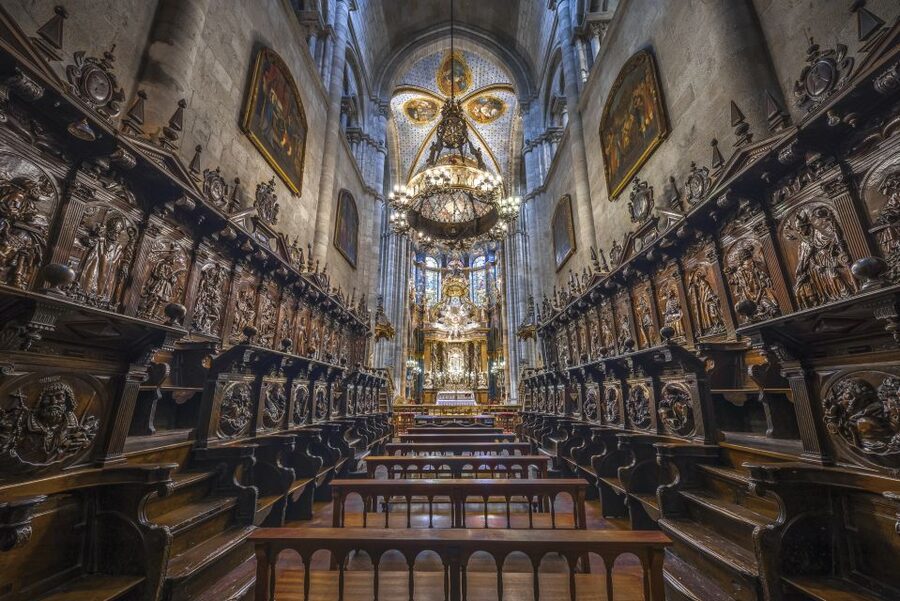
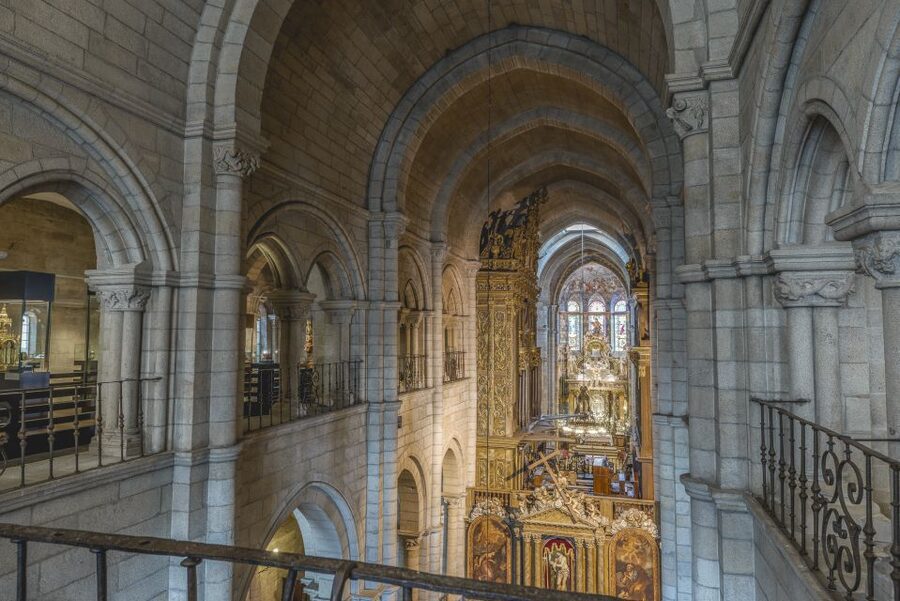
Inside, pay attention to the shape of the cathedral before rushing toward the altar. The floor plan is described as the longest and narrowest of any Hispanic cathedral, an unusual proportion that changes how the interior feels.
A long, narrow church gives you a strong visual pull toward the far end. At the same time, the width does not overwhelm you in the way a broad, monumental floor plan might. You can take in the building as a whole, then move closer to examine individual works.
The audio guide is most useful here because architectural features can blur together when you look without context. Listen for how the building developed, then compare the explanation with the doors, walls, windows, and interior divisions in front of you.
Give yourself time to look up. The church’s identity is not limited to one famous object. Its appeal comes from the combination of structure, decoration, and later additions. You are seeing a medieval foundation shaped by several periods of Spanish religious art.
The visit is self-paced, which helps if you want to spend ten minutes with one detail or move quickly through familiar church architecture. Families and independent visitors may prefer this freedom to a fixed group schedule.
Christ in Majesty, the Key Romanesque Work
One of the most important objects to seek out is the Christ in Majesty, a major example of Spanish Romanesque stone carving. This is the detail to prioritize if your time is short.
Romanesque sculpture often communicates through a clear, formal presentation rather than the softer naturalism found in later art. The work rewards close attention to its posture, expression, and carving. Use the audio guide here, since a short explanation can help you see why the piece matters within the cathedral.
Do not treat it as a quick photo stop. The no-flash rule protects the interior and its art, and it also encourages you to look carefully instead of reducing every object to a snapshot.
Photography is restricted in several ways. Flash photography, tripods, selfie sticks, and video recording are not allowed. Food and drinks, smoking, vaping, alcohol, drugs, and pets are also prohibited. These rules are typical for an active religious building and matter even more if you arrive with children or camera equipment.
Same sights, a different narrator:
- Barcelona: Sagrada Familia Entry Ticket with Audio Guide
★ 4.6 · 105,312 reviews - Barcelona: Casa Batlló Entry with Self-Audioguide Tour
★ 4.7 · 25,359 reviews - Granada: Alhambra Entry Ticket with Audio Guide
★ 4.1 · 5,950 reviews - Casa Batllo Admission Ticket with Intelligent Audio Guide
★ 4.5 · 3,168 reviews
The Churrigueresque Altar and Stained Glass
The ornate Churrigueresque altar is the cathedral’s most theatrical interior feature. Churrigueresque decoration is known for elaborate forms and strong visual detail, and this altar gives the quieter Romanesque elements a very different counterpoint.
The altar is surrounded by stained glass windows, so look at the relationship between the carved decoration and the colored light. The effect is not just about the altar by itself. The windows help frame it and give the area a more layered appearance.
This is a good place to stop listening for a moment and simply look. Then return to the audio guide for the historical and artistic explanation. Since the guide is not a live person, you control the pace and can repeat information if your attention wanders.
The contrast between the altar and the Romanesque Christ in Majesty is one reason the visit works well for people who enjoy comparing styles. You see both the restrained medieval carving and the later taste for ornament in the same building.
The Cloister Adds a Quieter Second Act
The cloister is included in the ticket, so be sure to find it rather than assuming the main church is the whole experience. It offers a change of pace from the long central interior and gives you another way to understand the cathedral complex.
The cloister is also useful for visitors who want a less crowded, slower section of the visit. You can move through it at your own speed and consider how the cathedral functioned as a religious institution, not just as a decorated worship space.
Specific details about every cloister feature are not provided, so I would use the audio guide where available and follow the route indicated inside. Allow enough time to look around instead of treating it as a passageway on the way to the museum.
Because access is included, the cloister improves the value of the $9 ticket. It gives you another architectural setting without adding a second admission charge or requiring a separate booking.
The Cathedral Museum and Its Art Collection
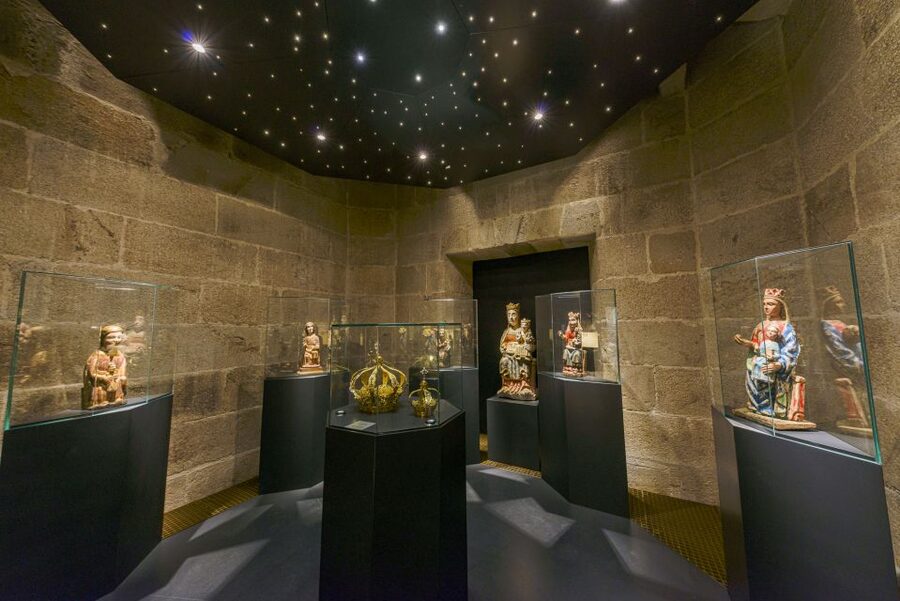
The Cathedral Museum is also part of the admission. Its archaeological exhibition and art collection make this more than a church interior visit.
The archaeological display helps connect the cathedral with the older religious and urban story of Lugo. The building itself reaches back to a 12th-century foundation, while the city’s sacred history began earlier. Museum objects can provide context that is harder to see in the nave.
The collection includes works by Cornielles de Holanda, Joannes de Boloña, and other artists. If you have a particular interest in Spanish sculpture or church art, this section may be the difference between a brief stop and a worthwhile hour.
I would visit the museum after seeing the main cathedral. First, take in the scale and major features. Then use the collection to slow down and look at individual works. This order lets you understand the church as a whole before focusing on smaller pieces.
The supplied details do not give a precise museum size or a fixed route, so plan your time with some flexibility. The important point is that museum entry is already covered, not an optional add-on that raises the cost.
How Long to Allow and When to Go
The ticket is valid for one day, but no fixed visit length is stated. Your pace will depend on how closely you use the audio guide and how much time you give the museum and cloister.
If you only want the main highlights, the visit may feel short. That matters because one booking was judged short for the price. At $9, you will get better value if you plan to see all three parts: cathedral, cloister, and museum.
The cathedral closes at 7 PM, with final entry 45 minutes before closing. Schedules may change because of liturgical events, so check the current opening time before you go. Religious services can affect access even when your visit is mainly cultural.
I would avoid arriving just before the final entry unless you only want a quick look. The building’s long history makes more sense when you give it time, and the museum is easy to miss if you rush.
Access, Rules, and Audio Guide Limits
The cathedral is wheelchair accessible. That makes the visit more practical for people who need step-free access, though the information provided does not specify details for every part of the complex.
The audio guide is available in Spanish, English, Portuguese, French, and Galician. It is a useful inclusion for international visitors and for anyone who wants context without joining a group.
Keep in mind that an audio guide is less responsive than a human guide. It cannot answer a question or adjust its explanation to your interests. The numbering may also be out of sync with the audio, so bring patience and use the guide as support rather than as a perfect route map.
The cathedral remains a religious site. Dress and behave respectfully, keep food and drinks outside, and follow instructions if an area closes for worship. The schedule can change because of liturgical events, so flexibility is part of the plan.
Who Will Get the Most From This Visit
I would recommend this experience to you if you enjoy historic churches, medieval sculpture, Spanish art, or architecture that shows several periods in one place. It is also a good fit if you prefer independent visits rather than a guide setting the pace.
Families can benefit from the flexible format, especially if children need to move on from one feature before adults are ready. The museum and cloister provide variety, although younger children may not stay interested through every audio stop.
This is less suitable if you want a full personal explanation from a local guide or a long organized tour. It is also not ideal if you only have a few minutes and do not plan to visit the museum or cloister.
At $9, the experience makes the strongest case for itself when you value the included extras. The main cathedral alone may feel brief for the price. The full visit, with the audio guide and additional spaces, gives you a fairer return.
Should You Book Lugo Cathedral?
Book it if you want an affordable, self-guided look at one of Lugo’s central historic buildings, especially if you appreciate the contrast between Romanesque carving, later decoration, and Neoclassical design. The Christ in Majesty, Churrigueresque altar, cloister, and museum give you a clear set of priorities.
I would schedule it with enough time to use all the included access, and I would avoid the last entry of the day. Expect the possibility of a delayed opening and an audio guide that may need a little manual matching with the numbered stops.
Skip it only if your plan allows time for the nave and nothing else, or if you need a live guide to explain each detail. For most independent visitors already exploring Lugo’s historic center, the combination of entry, museum, cloister, and five-language audio guide makes this a sensible $9 cultural stop.
FAQ
Where is the entrance to Lugo Cathedral?
The entrance is through the cathedral’s Neoclassical façade. The ticket office and store are inside at the Neoclassical door, where tickets are collected.
What does the ticket include?
The ticket includes entry to Lugo Cathedral, the cloister, the Cathedral Museum, and an audio guide.
Is the audio guide included in the ticket price?
Yes. The audio guide is included with admission.
Which languages are available for the audio guide?
The audio guide is available in Spanish, English, Portuguese, French, and Galician.
How long is the ticket valid?
The ticket is valid for one day. Check availability for the available starting times.
What time does the cathedral close?
The cathedral closes at 7 PM. Last entry is 45 minutes before closing.
Can the opening schedule change?
Yes. The schedule may change because of liturgical events, so check the current timing before your visit.
Is Lugo Cathedral wheelchair accessible?
Yes. The cathedral is wheelchair accessible.
What identification should I bring?
Bring a passport or identity card. Children also need a passport or identity card.
What items are not allowed inside?
Pets, smoking, vaping, food, drinks, selfie sticks, flash photography, tripods, video recording, alcohol, and drugs are not allowed.
New audio tours around Spain
- Entrance to the Alhambra and Generalife with Audio Guide★ 3.5 · 38 reviews
- Alhambra Ticket with Audio Guide in Granada★ 3.5 · 151 reviews
- Montsacopa: An audio tour in the Volcano in the Centre of the City★ 4.5 · 3 reviews
- Mosque-Cathedral of Córdoba E-Ticket with Audio Guide★ 3.5 · 15 reviews
- Cádiz TukTuk Tour with Audio Guide★ 5.0 · 4 reviews
- Vejer de la Frontera: The White Pearl of Andalusia Audio Guide★ 5.0 · 2 reviews
- Bilbao Scavenger Hunt and Highlights Self Guided Audio Tour★ 4.5 · 4 reviews
- Self-Guided Audio Tour-The Surrealist Barcelona of Dalí and Gaudí★ 3.5 · 8 reviews
Spain Audio Tours, compared.
Barcelona: Sagrada Familia Entry Ticket with Audio Guide
Read our review →
Barcelona: Casa Batlló Entry with Self-Audioguide Tour
Read our review →
Granada: Alhambra Entry Ticket with Audio Guide
Read our review →
Casa Batllo Admission Ticket with Intelligent Audio Guide
Read our review →
Madrid: Las Ventas Bullring Tour with Audio Guide
Read our review →
Cordoba: Mosque-Cathedral E-Ticket with Audio Guide
Read our review →
Nerja: Caves of Nerja Entry Ticket with Audio Guide
Read our review →
Madrid: Prado Museum Ticket with In-App Audio Guide
Read our review →Browse the lists this tour appears in